Navigation
Install the app
How to install the app on iOS
Follow along with the video below to see how to install our site as a web app on your home screen.
Note: This feature may not be available in some browsers.
More options
Style variation
You are using an out of date browser. It may not display this or other websites correctly.
You should upgrade or use an alternative browser.
You should upgrade or use an alternative browser.
Pakistan-India Conflict 2025: News Updates and Discussion
- Thread starter Ali_Baba
- Start date
More options
Who Replied?


@hnn
If you had read the Stimson report, you wouldn't have posted it here. Alas it is too late now
Regards
You have to read it in combination with US report for it to make holistic sense. Another brain fart moment for you?
Regards
SoulSpokesman
Trusted Member
@hnn
Let me read out some interesting segments:
Indian missile and standoff air strikes, in contrast, created numerous signatures of their success visible via videos and photos on social media, Indian government-released satellite imagery, and commercial satellite imagery. Indian strikes created damage at a scale difficult for the Government of Pakistan to suppress.
Regards
Let me read out some interesting segments:
- After its apparent downing of Indian aircraft on May 7, Pakistan inflicted virtually no observable damage on Indian military units or facilities, though Indian officials have said there was some damage at four installations.
- India demonstrated an ability to deliver precise standoff attacks across large swathes of Pakistan on each day of the conflict but especially May 7 and May 10. While Pakistani air defenses likely interfered with or intercepted some attempted strikes, Pakistan has a meaningful and serious vulnerability to Indian air attack.
Indian missile and standoff air strikes, in contrast, created numerous signatures of their success visible via videos and photos on social media, Indian government-released satellite imagery, and commercial satellite imagery. Indian strikes created damage at a scale difficult for the Government of Pakistan to suppress.
Regards

Hayabusa
Registered Member

It is interesting that as per Trump, Showbaaz called him to thank him for stopping the war. Modi merely gave a rather curt call- it seems he was unhappy that the war stopped.
Now the question is why was Showbaaz thankful and Modi rather unhappy?
Regards
Simple.
The attempt by Modi to strong-arm Pakistan was a gross miscalculation. He sought to demonstrate India's ability to unilaterally dictate terms, yet Operation Sindoor failed to show that. Ironically, it signaled weakness rather than the intended strength.
Meanwhile, Pakistan capitalized on the situation by adhering to a defensive doctrine prioritizing peace. This smart diplomatic maneuvering paid off where it mattered most by transforming our relationship with Washington from its lowest point into a partnership stronger than it was before.
Also, not forgetting that Pakistan responded fiercely enough on the last day to shock India into agreeing to a ceasefire. The question you should actually be asking to your administration is, why did India agreed to the ceasefire? Signs of weakness if you ask me considering the chest thumping weeks before.


Corax
Trusted Member

Also from the report;@hnn
Let me read out some interesting segments:
Despite Pakistan’s claims of “major damages” at the 15 airbases it targeted, there is no visual evidence—either from social media photos or commercial satellite imagery—currently available to indicate meaningful damage on Indian facilities
- After its apparent downing of Indian aircraft on May 7, Pakistan inflicted virtually no observable damage on Indian military units or facilities, though Indian officials have said there was some damage at four installations.
- India demonstrated an ability to deliver precise standoff attacks across large swathes of Pakistan on each day of the conflict but especially May 7 and May 10. While Pakistani air defenses likely interfered with or intercepted some attempted strikes, Pakistan has a meaningful and serious vulnerability to Indian air attack.
Indian missile and standoff air strikes, in contrast, created numerous signatures of their success visible via videos and photos on social media, Indian government-released satellite imagery, and commercial satellite imagery. Indian strikes created damage at a scale difficult for the Government of Pakistan to suppress.
Regards
- On the first day of hostilities, May 7, India likely lost several aircraft to Pakistani counterair operations. While Indian officials neither acknowledged nor denied the losses, they represent perhaps the most meaningful military costs India experienced during the Four-Day Conflict.
"These strikes appear to have been successful. The Indian Air Force, which had been criticized in 2019 for exaggerating the scale of damage in a one-off strike on Pakistan, now went out of its way to release satellite imagery of nine of the 11 sites (no satellite images were released by the government of the claimed attacks on Rafiqui or Murid). Commercial satellite imagery confirms that attacks occurred at most of the airbases named by the Indian Air Force, though I am aware of no commercial imagery validating Indian claims at Chunian, Arifwala, Pasrur, or Rafiqui.
At some bases, such as Sarghoda and Rahim Yar Khan, India decided to crater runways to temporarily halt takeoffs. (Images of Sarghoda show signs of repair in satellite images captured on May 11. At other locations, notably Sukkur, Bholari, and Jacobabad, large hangers were hit that could have housed aircraft, though there is not clear evidence any planes were hit. Overall, Jeffrey Lewis of the Middlebury Institute of International Studies concludes that the struck bases “suffered some damage, but not of the sort that would disable them.”
@hnn
Let me read out some interesting segments:
- After its apparent downing of Indian aircraft on May 7, Pakistan inflicted virtually no observable damage on Indian military units or facilities, though Indian officials have said there was some damage at four installations.
Hmmm
- India demonstrated an ability to deliver precise standoff attacks across large swathes of Pakistan on each day of the conflict but especially May 7 and May 10. While Pakistani air defenses likely interfered with or intercepted some attempted strikes, Pakistan has a meaningful and serious vulnerability to Indian air attack.
Already covered this in my original post about the US report summary. Unlike Indians we aren't blind to our vulnerabilities. For ref: Listen to your COAS complaining to your local defense companies/suppliers.
Despite Pakistan’s claims of “major damages” at the 15 airbases it targeted, there is no visual evidence—either from social media photos or commercial satellite imagery—currently available to indicate meaningful damage on Indian facilities
Indian missile and standoff air strikes, in contrast, created numerous signatures of their success visible via videos and photos on social media, Indian government-released satellite imagery, and commercial satellite imagery. Indian strikes created damage at a scale difficult for the Government of Pakistan to suppress.
Regards
Since you probably only read the executive summary from Stimpson, which later in essay accepts how it doesn't have proper information on Pakistan's response during 9-10 May, here are some some excerpts you missed (excluding the 7 May IAF losses established by the essay earlier):
- "While I have not found contemporaneous images of drone debris in India from the mornings of May 8 or 9, the Indian government reported by May 9 that there had been several hundred attacks “to test the AD systems and gather intelligence" - again India got called out on false claims
- "There is overwhelming evidence—videos and subsequent debris—of this attack taking place. India reportedly used a mix of Israeli-origin Harpy and Harop (a newer Harpy-variant) drones. Debris consistent with those platforms, as well as British-origin Banshee target drones (likely as decoys), was recovered in several spots across Pakistan" - so no drones shot down by India but plenty shot down by Pakistan
- "Sometime on the morning of May 9 on the east coast, the U.S. view of the conflict shifted because of new “alarming intelligence” ... "the Vice President called Indian Prime Minister Modi to express American concerns that “there was a high probability for dramatic escalation as the conflict went into the weekend,” according to administration officials recounting of the episode" ... "The precise timing of the CNN report is important, because U.S. worries emerged before the dramatic escalation of hostilities on the night of May 9-10" - perhaps you missed this part in your brain fart moment? US already warning India about what's to come.
- "No doubt the escalation in hostilities on the night of May 9-10 further troubled U.S. officials already fearful because of the earlier shift in U.S. intelligence assessments. Around the time Vance was reportedly talking to India’s Prime Minister Modi on May 9, Pakistan’s military spokesperson declined calls for de-escalation and an end to the crisis. “With the damages India did on our side, they should take a hit. So far, we have been protecting ourselves, but they will get an answer in our own timing.” - again Pakistan not hiding the losses on our side but also categorically rejecting call to de-escalation, missed this while strolling through your LaLa Land?
- "We have less of a sense of Pakistan’s goals on May 9-10" ... "Despite Pakistan’s claims of “major damages” at the 15 airbases it targeted, there is no visual evidence—either from social media photos or commercial satellite imagery—currently available to indicate meaningful damage on Indian facilities. Indian officials on the morning of May 10 acknowledged “limited damage” from drone attacks at four locations : Udhampur, Pathankot, Adampur and Bhuj It is possible that a building at an Indian air base at Udhampur shows visible damage, though the available commercial satellite imagery is ambiguous. Indian officials in the same May 10 briefing also acknowledged “several high-speed missile attacks… at several air bases in Punjab,” though did not make official statements about the extent of any resulting damage." - so the essay itself while reporting on Pakistan's response is admitting the limited information it has, the limited evidence "CURRENTLY" available, while your officials are at least partially accepting damage - downplaying damage as always
- "This apparent sequence, if accurate, suggests that Pakistan may have had a largely incomplete understanding of any damage it inflicted upon India the previous night since most of these crucial conversations happened long before most battle damage assessments could be completed. In those final hours, the combination of military escalation alongside U.S. pressure and inducement appear to have led Pakistani leaders to signal that they would cease additional hostilities if India did so as well. Rubio may have pitched this proposal as coming from India, a defensible pose from Rubio since India’s declaratory position after the May 7 attacks was that it would only respond to further Pakistani attacks. Indeed, on their May 10 morning briefing, which began around 11 am New Delhi time, Indian officials stressed, “Indian Armed Forces reiterate their commitment to non-escalation, provided it is reciprocated by the Pakistan Military.” - so Pakistan is still assessing the damage done to India, while India is already ready for CEASEFIRE since the morning, and Rubio is pressuring Pakistan to accept the ceasefire... Hmmm, why? Because India got hammered.
- "As this was occurring, there were several other morning developments taking place around the same time Indian officials were delivering their daily update on May 10, restating India’s offer of reciprocal non-escalation." - so if India had the upper hand why is it screaming and reiterating ceasefire while Pakistan is still conducting "DAMAGE ASSESSMENT"?
Now add to the above the quote of your DCOAS where he mentioned how PA DGMO was telling IA DGMO about the level of information Pakistan has about Indian Vectors - India has been screaming about how "it's cheating" that China is sharing live satellite coverage with PA. Further add to this what the US report mentioned "Pakistan's Military Success over India" - and how Trump has been calling out on IAF's losses. You can cherry pick all you want to keep yourself happy in your LaLa Land, the reality that the world knows is that India was pinned down and was only saved from further damage by POTUS.
I'll spare you the embarrassment of white flags raised by IA in IOJK after the very first night.
Like I said, read the Stimson in combination with US Report, that mentions other sources as well - instead of plain brain farting around.
Regards
Last edited:


Ali_Baba
VIP Member
- Thread starter
- #45,685
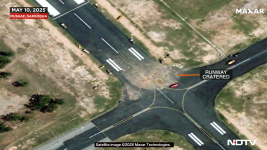
At some bases, such as Sarghoda and Rahim Yar Khan, India decided to crater runways to temporarily halt takeoffs. (Images of Sarghoda show signs of repair in satellite images captured on May 11.
This was by far the most significant practical and real achievement of the IAF in the conflict in that they managed to take out Sarghoda airbase for a few hours of flight operations while its main runway was repaired. Look at the strike below, that hurt. Given how large Sarghoda and important it is to the PAF, the fact that it only has 1 main runway (and 1 child runway that for some odd reason crosses the same main runway), is strategically significant. The missile landed at the intersection of the two. Pakistan needs to rethink the design of this base, and other bases by adding additional parallel runways to minimise the possibility that flight operations are not halted ( pretending you can use "taxi ways" is absurd, they are far too narrow to be used..).
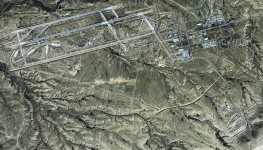
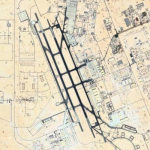
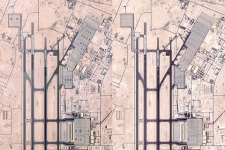
In the age of ultra precise SOW, base design needs to be revisited for the PAF given it has no strategic depth, and missiles like Storm Shadow have changed the game alot. There needs to be runway redundancy built in now.
Look at how well the Nevatim Airbase is designed, that is what Pakistan needs to start moving towards (Iraq had very good airbases that took very sustained and precise operations of a long period of time to take out because of their design).
The Al Udeid Airbase is very well design. That is a difficult airbase to knock out.
Attachments
Last edited:
Also from the report;
There's no denying some weapons got through to targets in Pakistani, but let's see what the report says about those...
- On the first day of hostilities, May 7, India likely lost several aircraft to Pakistani counterair operations. While Indian officials neither acknowledged nor denied the losses, they represent perhaps the most meaningful military costs India experienced during the Four-Day Conflict.
"These strikes appear to have been successful. The Indian Air Force, which had been criticized in 2019 for exaggerating the scale of damage in a one-off strike on Pakistan, now went out of its way to release satellite imagery of nine of the 11 sites (no satellite images were released by the government of the claimed attacks on Rafiqui or Murid). Commercial satellite imagery confirms that attacks occurred at most of the airbases named by the Indian Air Force, though I am aware of no commercial imagery validating Indian claims at Chunian, Arifwala, Pasrur, or Rafiqui.
At some bases, such as Sarghoda and Rahim Yar Khan, India decided to crater runways to temporarily halt takeoffs. (Images of Sarghoda show signs of repair in satellite images captured on May 11. At other locations, notably Sukkur, Bholari, and Jacobabad, large hangers were hit that could have housed aircraft, though there is not clear evidence any planes were hit. Overall, Jeffrey Lewis of the Middlebury Institute of International Studies concludes that the struck bases “suffered some damage, but not of the sort that would disable them.”
correct... that is the part indians dont seem to understand..
just because you put a few holes in the ground it doesnt mean PAF is disabled.. PAF has many runway repair teams as an example
more over nowhere is mentions destruction of PAF planes... ( please correct if needed)


Yasser76
Elite Member
This was by far the most significant practical and real achievement of the IAF in the conflict in that they managed to take out Sarghoda airbase for a few hours of flight operations while its main runway was repaired. Look at the strike below, that hurt. Given how large Sarghoda and important is to the PAF, the fact that it only has 1 main runway (and 1 child runway that for some odd reason crosses the same main runway), is strategically significant. The missile landed at the intersection of the two. Pakistan needs to rethink the design of this base, and other bases by adding additional parallel runways to minimise the possibility that flight operations are not halted ( pretending you can use "taxi ways" is absurd, they are far too narrow to be used..).
In the age of ultra precise SOW, base design needs to be revisited for the PAF given it has no strategic depth, and missiles like Storm Shadow have changed the game alot. There needs to be runway redundancy built in now.
View attachment 160681
Look at how well the Nevatim Airbase is designed, that is what Pakistan needs to start moving towards.
View attachment 160683
Yeah, that was actually a very good strike to give credit where it is due.
Mushaf is an old base, if you look at news bases at Shabaz and Bolhari you will see a parallel taxiway/secondary runway that so not intersect. Harder to take out

Also from the report;
There's no denying some weapons got through to targets in Pakistani, but let's see what the report says about those...
- On the first day of hostilities, May 7, India likely lost several aircraft to Pakistani counterair operations. While Indian officials neither acknowledged nor denied the losses, they represent perhaps the most meaningful military costs India experienced during the Four-Day Conflict.
"These strikes appear to have been successful. The Indian Air Force, which had been criticized in 2019 for exaggerating the scale of damage in a one-off strike on Pakistan, now went out of its way to release satellite imagery of nine of the 11 sites (no satellite images were released by the government of the claimed attacks on Rafiqui or Murid). Commercial satellite imagery confirms that attacks occurred at most of the airbases named by the Indian Air Force, though I am aware of no commercial imagery validating Indian claims at Chunian, Arifwala, Pasrur, or Rafiqui.
At some bases, such as Sarghoda and Rahim Yar Khan, India decided to crater runways to temporarily halt takeoffs. (Images of Sarghoda show signs of repair in satellite images captured on May 11. At other locations, notably Sukkur, Bholari, and Jacobabad, large hangers were hit that could have housed aircraft, though there is not clear evidence any planes were hit. Overall, Jeffrey Lewis of the Middlebury Institute of International Studies concludes that the struck bases “suffered some damage, but not of the sort that would disable them.”
Corrections needed in your post
Chunian claim is not validated
Rahim yar khan is not an airbase. Rafiqui was never hit and all missiles towards rafiqui were successfully intercepted
side-winder
Moderator
Baat tou theek hai.
Users who are viewing this thread
Total: 74 (members: 11, guests: 63)
Pakistan Defence Latest


Country Watch Latest

Latest Posts
-

-

-
Pakistan announces austerity measures to conserve fuel as Gulf conflict spirals (20 Viewers)
- Latest: KingQamaR
-
-
