Operation Ghazab Lil Haq (Pakistan - Afghanistan War)

Failed Pak-Afghan talks on countering terrorism​

Since 2022, Pakistan has seen a spate of attacks by the banned group, and security forces routinely engage in counter-terrorism operations along the north-western border to eliminate the threat.

The spike in incidents followed the TTP ending a ceasefire with the government in November 2022 and vowing to attack security forces, police, and personnel of law enforcement agencies.

Pakistan’s bilateral relations with Afghanistan have also come under strain in recent times as the TTP remains the main point of contention between the two countries. Pakistan has demanded that the rulers in Kabul take action to stop cross-border terrorism.

But the Afghan Taliban deny Islamabad’s allegation of terrorists being allowed to use Afghan soil to carry out attacks in Pakistan.

During a process of dialogue, which followed border clashes between the two countries in October, the two sides had met in an effort to work on mechanisms for lasting peace and stability between the two countries.

On October 25, the second round of talks between the two sides began in the Turkish capital. But, Information Minister Attaullah Tarar then announced that the talks “failed to bring about any workable solution”.
 
Mediators Turkiye and Qatar intervened and managed to salvage the dialogue process with an October 31 joint statement released by Turkiye stating that “further modalities of the implementation will be discussed and decided” during a principal-level meeting in Istanbul on November 6.

But on November 7, after the third round of talks, Defence Minister Khawaja said that talks addressing cross-border terrorism were “over” and “entered an indefinite phase” as negotiators failed to bridge deep differences between the two sides.

Following the failure of the talks, the Afghan Taliban suspended trade ties with Islamabad. Pakistan had already closed its border for trade soon after the October clashes.
 
The patrons of the Kharijites, the contingent of the so-called Islamic Emirate, set off for Delhi to prostrate their foreheads at the door of the polytheist Hindus.

To view this content we will need your consent to set third party cookies.
For more detailed information, see our cookies page.
 
To view this content we will need your consent to set third party cookies.
For more detailed information, see our cookies page.
 
Iran kills afghan refugees and has expelled 1.5 million of them in recent months yet no talib account is calling them "Israel 2.0" and Iran is not facing massive terror attacks inside its border and there is no jihad mounted on them? 🤔
 
Research has proven that the Taliban's fighter jet can stay in the air longer than the Indian Air Force's fighter aircraft Tejas😂

To view this content we will need your consent to set third party cookies.
For more detailed information, see our cookies page.
 

Patience wearing thin with Kabul over TTP​


Foreign Office cautious over Modi's war assurances

Kamran Yousaf
November 22, 2025


foreign office spokesperson tahir hussain andrabi


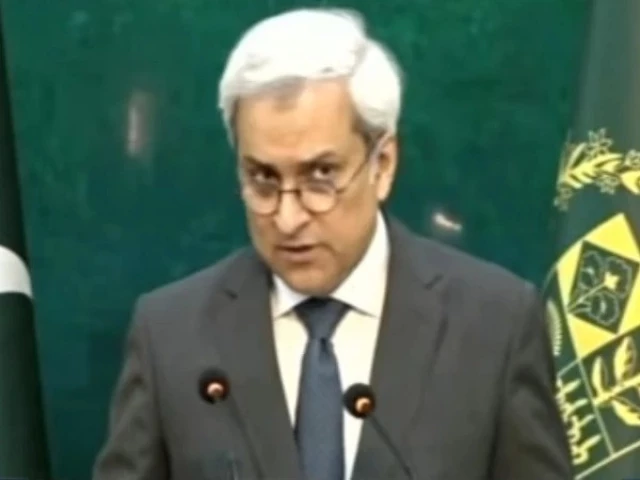
Foreign Office Spokesperson Tahir Hussain Andrabi

ISLAMABAD: Pakistan has reached the limit of its patience over cross-border attacks originating from Afghan soil, Foreign Office spokesperson Tahir Andrabi said on Friday, warning that the country will not allow trade or transit to continue if it puts Pakistani lives at risk.

"We cannot let trade become a licence to kill Pakistanis," he stressed, highlighting that recent attacks on civilians, security forces, and traders have crossed a red line.

The spokesperson underscored that the closure of border crossings and suspension of trade with Afghanistan is a direct response to ongoing support by elements within the Afghan Taliban regime to terrorist outfits, including Fitna al Khwarij and Fitna al Hindustan.

Andrabi emphasised that the success of regional projects such as TAPI, CASA1000, and UAP hinges on Afghanistan halting this support and preventing attacks against Pakistan.

Pakistan welcomed offers of mediation from regional actors, including Turkey, Iran, and Russia, to resolve tensions with Afghanistan, but Andrabi clarified that the delay in the Turkish delegation's visit is due to scheduling and not Pakistan's non-cooperation.

He emphasized that Pakistan remains open to dialogue, but concrete steps and invitations from these countries are awaited before any formal engagement can take place.
 
A high-level Turkish delegation including its foreign, defence ministers and intelligence chief is due to visit Islamabad as part of ongoing efforts to seek a rapprochement between Pakistan and the Taliban regime.

Responding to questions about the Afghan trade minister's visit to India, Andrabi noted that Pakistan respects the sovereignty of Afghanistan and its bilateral engagements, but reiterated that Pakistan-Afghanistan relations must be based on merit, not influenced by third-party involvement.

On the India-Pakistan front, Andrabi took a cautious stance regarding statements by Indian Prime Minister Narendra Modi, saying assurances that India would not engage in war "must be taken with a pinch of salt" given the continuation of hostile rhetoric.

While acknowledging the US role in easing tensions and President Trump's claim of preventing another India-Pakistan conflict, the spokesperson said Pakistan remains vigilant in view of ongoing threats from the Indian leadership.

Turning to international issues, Pakistan reaffirmed its principled support for Palestine, voting in favour of the Gaza resolution at the UN Security Council despite abstentions by China and Russia.

Andrabi criticised Israel's continuing violations of ceasefire agreements and international law, calling on the global community to ensure the protection of holy sites, particularly Al-Aqsa Mosque, and prevent further settler violence.

Pakistan reiterated its support for a just and lasting peace based on a two-state solution.
 

Breakdown in Pak-Afghan ties​

Pakistan’s bilateral relations with Afghanistan have come under strain in recent times as the Tehreek-i-Taliban Pakistan (TTP) remains the main point of contention between the two countries.

Pakistan has demanded that the rulers in Kabul take action to stop cross-border terrorism, but the Afghan Taliban deny Islamabad’s allegations of terrorists being allowed to use Afghan soil to carry out attacks in Pakistan.

During a process of dialogue, which followed border clashes between the two countries in October, the two sides had met in an effort to work on mechanisms for lasting peace and stability between the two countries.

On October 25, the second round of talks between the two sides began in the Turkish capital. But Information Minister Attaullah Tarar then announced that the talks “failed to bring about any workable solution”.

However, mediators Turkiye and Qatar intervened and managed to salvage the dialogue process with an October 31 joint statement released by Turkiye stating that “further modalities of the implementation will be discussed and decided” during a principal-level meeting in Istanbul on November 6.

On November 7, however, after the third round of talks, Defence Minister Khawaja Asif said that talks addressing cross-border terrorism were “over” and “entered an indefinite phase” as negotiators failed to bridge deep differences between the two sides.

Following the failure of the talks, the Afghan Taliban suspended trade ties with Islamabad. Pakistan had already closed its border for trade soon after the October clashes.
 

Users who are viewing this thread

Country Watch Latest

Back
Top