The Economic History of the Last 2,000 Years in 1 Little Graph

LMFAO, India will never reach that level of gdp growth. India isnt China. Not remotely close. China will reach douple or quadruple the gdp it had in year 1

I guess some will always be ahead, like how India is ahead of most of South Asia and soon will be ahead of everyone. That's life.
 

The Economic History of the Last 2,000 Years in 1 Little Graph​

That headline is a big promise. But here it is: The economic history of the world going back to Year 1 showing the major powers' share of world GDP, from a research letter written by Michael Cembalest, chairman of market and investment strategy at JP Morgan.

https://cdn.theatlantic.com/media/mt/business/Screen Shot 2012-06-20 at 9.37.55 AM.png

View attachment 197

In Year 1, India and China were home to one-third and one-quarter of the world's population, respectively. It's hardly surprising, then, that they also commanded one-third and one-quarter of the world's economy, respectively.

Before the Industrial Revolution, there wasn't really any such thing as lasting income growth from productivity. In the thousands of years before the Industrial Revolution, civilization was stuck in the Malthusian Trap. If lots of people died, incomes tended to go up, as fewer workers benefited from a stable supply of crops. If lots of people were born, however, incomes would fall, which often led to more deaths. That explains the "trap," and it also explains why populations so closely approximated GDP around the world.

https://www.theatlantic.com/busines...he-last-2-000-years-in-1-little-graph/258676/
Here is a breakdown of the major ruling kingdoms in South Asia around 1 AD:

### 1. The Kushan Empire (c. 30–375 AD)
* **Region:** Northwestern Indian subcontinent (modern-day Afghanistan, Pakistan, and parts of northern India).
* **Significance:** The Kushans were a Central Asian dynasty (of Yuezhi origin) that became profoundly Indianized. By 1 AD, they were consolidating their power, and they would soon become one of the era's great empires.
* **Key Ruler (around this time):** Kujula Kadphises was the founder who was actively uniting the Yuezhi tribes and expanding into the region formerly ruled by the Indo-Greeks and Indo-Scythians.
* **Note:** They controlled the lucrative Silk Road trade routes, facilitating a massive flow of culture, art, and commerce between China, India, and the Roman Empire. Gandharan art, a unique blend of Greek and Buddhist styles, flourished under their patronage.

### 2. The Satavahana Dynasty (c. 1st century BC – 2nd century AD)
* **Region:** The Deccan Plateau and central India (covering modern-day Maharashtra, Andhra Pradesh, and Telangana).
* **Significance:** The Satavahanas were the primary indigenous power after the decline of the Mauryan Empire. They are often credited with upholding Vedic (Hindu) traditions against foreign influences from the northwest.
* **Key Ruler (around this time):** The early Satavahana chronology is debated, but a significant king around this period was **Satakarni I**, who performed the Vedic *Ashvamedha* (horse sacrifice) to assert his sovereignty.
* **Note:** They were great patrons of Buddhism as well, commissioning numerous Buddhist *stupas*, most notably at Amaravati and Sanchi (where they added gateways to the existing structure).

### 3. The Indo-Greek Kingdoms (c. 200 BC – 10 AD)
* **Region:** Primarily in the northwestern frontier (Gandhara and Punjab).
* **Significance:** These were the remnants of the Greco-Bactrian kingdoms, which had interacted with India since Alexander the Great's campaigns. By 1 AD, they were in a state of terminal decline, being absorbed by the Indo-Scythians (Sakas) and the rising Kushans.
* **Key Ruler (around this time):** **Strato II and Strato III** were likely the last Indo-Greek kings, ruling a small territory in the eastern Punjab.
* **Note:** Their cultural influence, especially in coinage and art (Gandhara school), far outlasted their political power.

### 4. The Indo-Scythians (Sakas) (c. 2nd century BC – 1st century AD)
* **Region:** Succeeded the Indo-Greeks in parts of modern Pakistan and western India (Sindh, Gujarat, Malwa, and Maharashtra).
* **Significance:** Another Central Asian people who migrated into South Asia. They established several kingdoms and satrapies (provinces).
* **Key Ruler (around this time):** **Azes I** (c. 48/47 – 25 BC) or **Azes II** (c. 35–12 BC) are often associated with the start of the "Vikrama Samvat" era (58 BC), one of the most important traditional Indian calendars. By 1 AD, their power was being challenged by the Satavahanas from the south and the Kushans from the north.

### 5. The Three Crowned Kings of Tamilakam (The Deep South)
The southern part of the Indian peninsula, known as Tamilakam, was dominated by three dynastic kingdoms, celebrated in Tamil literature of the Sangam period.

* **Chera Dynasty:** Controlled the southwestern coast (modern-day Kerala and western Tamil Nadu). They were known for their spice trade with the Roman Empire and the Middle East.
* **Chola Dynasty:** Occupied the fertile Kaveri River delta in eastern Tamil Nadu. While they would become a colossal empire later, in 1 AD they were a strong regional power with a significant naval tradition.
* **Pandya Dynasty:** Ruled from the southernmost tip of India (modern-day Madurai and Tirunelveli). They were famous for their pearl fisheries and were described in Greco-Roman texts as a prosperous kingdom.
 
Here is a breakdown of the major ruling kingdoms in South Asia around 1 AD:

### 1. The Kushan Empire (c. 30–375 AD)
* **Region:** Northwestern Indian subcontinent (modern-day Afghanistan, Pakistan, and parts of northern India).
* **Significance:** The Kushans were a Central Asian dynasty (of Yuezhi origin) that became profoundly Indianized. By 1 AD, they were consolidating their power, and they would soon become one of the era's great empires.
* **Key Ruler (around this time):** Kujula Kadphises was the founder who was actively uniting the Yuezhi tribes and expanding into the region formerly ruled by the Indo-Greeks and Indo-Scythians.
* **Note:** They controlled the lucrative Silk Road trade routes, facilitating a massive flow of culture, art, and commerce between China, India, and the Roman Empire. Gandharan art, a unique blend of Greek and Buddhist styles, flourished under their patronage.

### 2. The Satavahana Dynasty (c. 1st century BC – 2nd century AD)
* **Region:** The Deccan Plateau and central India (covering modern-day Maharashtra, Andhra Pradesh, and Telangana).
* **Significance:** The Satavahanas were the primary indigenous power after the decline of the Mauryan Empire. They are often credited with upholding Vedic (Hindu) traditions against foreign influences from the northwest.
* **Key Ruler (around this time):** The early Satavahana chronology is debated, but a significant king around this period was **Satakarni I**, who performed the Vedic *Ashvamedha* (horse sacrifice) to assert his sovereignty.
* **Note:** They were great patrons of Buddhism as well, commissioning numerous Buddhist *stupas*, most notably at Amaravati and Sanchi (where they added gateways to the existing structure).

### 3. The Indo-Greek Kingdoms (c. 200 BC – 10 AD)
* **Region:** Primarily in the northwestern frontier (Gandhara and Punjab).
* **Significance:** These were the remnants of the Greco-Bactrian kingdoms, which had interacted with India since Alexander the Great's campaigns. By 1 AD, they were in a state of terminal decline, being absorbed by the Indo-Scythians (Sakas) and the rising Kushans.
* **Key Ruler (around this time):** **Strato II and Strato III** were likely the last Indo-Greek kings, ruling a small territory in the eastern Punjab.
* **Note:** Their cultural influence, especially in coinage and art (Gandhara school), far outlasted their political power.

### 4. The Indo-Scythians (Sakas) (c. 2nd century BC – 1st century AD)
* **Region:** Succeeded the Indo-Greeks in parts of modern Pakistan and western India (Sindh, Gujarat, Malwa, and Maharashtra).
* **Significance:** Another Central Asian people who migrated into South Asia. They established several kingdoms and satrapies (provinces).
* **Key Ruler (around this time):** **Azes I** (c. 48/47 – 25 BC) or **Azes II** (c. 35–12 BC) are often associated with the start of the "Vikrama Samvat" era (58 BC), one of the most important traditional Indian calendars. By 1 AD, their power was being challenged by the Satavahanas from the south and the Kushans from the north.

### 5. The Three Crowned Kings of Tamilakam (The Deep South)
The southern part of the Indian peninsula, known as Tamilakam, was dominated by three dynastic kingdoms, celebrated in Tamil literature of the Sangam period.

* **Chera Dynasty:** Controlled the southwestern coast (modern-day Kerala and western Tamil Nadu). They were known for their spice trade with the Roman Empire and the Middle East.
* **Chola Dynasty:** Occupied the fertile Kaveri River delta in eastern Tamil Nadu. While they would become a colossal empire later, in 1 AD they were a strong regional power with a significant naval tradition.
* **Pandya Dynasty:** Ruled from the southernmost tip of India (modern-day Madurai and Tirunelveli). They were famous for their pearl fisheries and were described in Greco-Roman texts as a prosperous kingdom.
There was no "india" in the year 1 AD. The Kushan empire, which ruled northern India, was ruled by the YueZhi, a people that originated from the Gansu region in CHINA
 
There was no "india" in the year 1 AD. The Kushan empire, which ruled northern India, was ruled by the YueZhi, a people that originated from the Gansu region in CHINA

The name India was derived from 'Indus' river of undivided Hindustan before 1935. 🕳️
One name of "the Hind land" is India also, derived from the Sankrit name 'Indus' 🙂

The "Jai Hind" define us. 👍

We even throw "Jai Bharat" to rubbish bin .....
🇮🇳
 
The name India was derived from 'Indus' river of undivided Hindustan before 1935. 🕳️
One name of "the Hind land" is India also, derived from the Sankrit name 'Indus' 🙂

The "Jai Hind" define us. 👍

We even throw "Jai Bharat" to rubbish bin .....
🇮🇳

There was never a thing called Hindustan. Prior to the current Indian Republic, there was the "British Raj". Prior to the "British Raj", it was the "Mughal Empire.

There has never been an entity called "Hindustan" that covers the current territory of the Indian Republic, or any of the other territories of the British Raj.

Before the Mughal empire, it was the Suri Empire, before that, the Delhi Sultanate ... we can go on and on... nothing called "Hindustan".

1764349014284.png

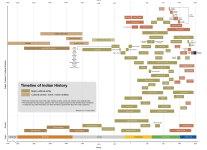
Can you point out where "Hindustan" on this chart ?
 
I was referring the quote about British Empired 'enslaved' these Fijians etc, and took those slaves to Australian continent and to North America.
now, when we find Indian Labors were 'cheaper' than British Labors, since when???? since 1820, when Maratha empire fallen?.......

first how much British labors were worth for labor cost upto 1820? till the fall of Maratha empire which helped them having first hand hold over empire. as below.
means, until Western Labors were 'cheaper' than Indians, how they brought these slaves? at least upto 1890+, Western Labors were 'cheaper' than Indian subcontinent one. :)

look, you Westerners were so poor upto 1820, and things were nearly richer people in India upto 1890+ etc. and Industrial revolution during WW1 and WW2, ...
we find, British labors were cheaper than Indian Onces during British's most of time of presence in India, upto 1890+....

.
=> https://en.wikipedia.org/wiki/Maratha_Empire#History

Maratha Empire​

During the final and Third Anglo-Maratha war (1817-19), the British achieved widespread success in their military endeavours. They successfully removed the Peshwa from power,


800px-India1760_1905[1].jpg


GovernmentAbsolute monarchy (1674–1731)
Federal oligarchy with a restricted monarchial figurehead (1731–1818)

Ultimately, the Third Anglo-Maratha War (1817–1818) resulted in the loss of Maratha independence. It left the British in control of most of the Indian subcontinent. The Peshwa was exiled to Bithoor (Marat, near Kanpur, Uttar Pradesh) as a pensioner of the British.

Maratha Empire - Wikipedia


en.wikipedia.org
en.wikipedia.org

African Slavery abolished 1832 .
Indian Slavery Began

for example

The first people from India came to Jamaica on board the S. Blundel Hunter on May 10, 1845. Two-hundred men, 28 women, and 33 children debarked in Old Harbor Bay. Afterward, the recruitment of Indian immigrants rose some 70 percent, and about 36,400 made the four-month journey from their homeland to Jamaica.

Of the Indian people who came, most were from Agra, Bihar, and Oudh, Bengal, and Nepal. More can from Madras and Punjab after 1900. The immigrants came to work on the sugar estates in Clarendon and Westmoreland, later on becoming the chief cultivators of bananas in St. Mary.
 
African Slavery abolished 1832 .
Indian Slavery Began

for example

The first people from India came to Jamaica on board the S. Blundel Hunter on May 10, 1845. Two-hundred men, 28 women, and 33 children debarked in Old Harbor Bay. Afterward, the recruitment of Indian immigrants rose some 70 percent, and about 36,400 made the four-month journey from their homeland to Jamaica.

Of the Indian people who came, most were from Agra, Bihar, and Oudh, Bengal, and Nepal. More can from Madras and Punjab after 1900. The immigrants came to work on the sugar estates in Clarendon and Westmoreland, later on becoming the chief cultivators of bananas in St. Mary.
@Ali_Baba

We discussed, more than half of British pensioners from South Asia during 1800s was led by Peshwa, the Maratha leadership, who moved to Bithoor- Kanpur with his men after defeat by the year 1818-1820, post#6. 🕳️

Only followers of Abdali of Kabul region were found in this group, while the Kandhar side representatives were found to be salaried of Maratha till 1818...

Note, the Nizam of Hyderabad was qualified for hardy 'peon' level pensioner of then Maratha Empire.....
🇮🇳
 
Last edited:
1766416699862.png


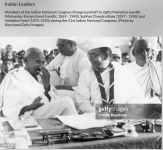
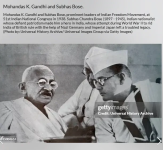
we find, Mr SC Bose was president of Congress more than Mr MDKC Gandhi :coffee:

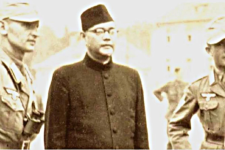
mr Gandhi as Congress president supported British Military in WW2 while the SC Bose joined the Moscow against the West

🇮🇳

.
=>
Subhas Chandra Bose served as the President of the Indian National Congress (INC) in 1938 and was re-elected in 1939. The election in 1939 was contested, and the vote numbers were as follows:
  • Subhas Chandra Bose: 1,580 votes
  • Pattabhi Sitaramayya (Gandhi's candidate): 1,377 votes
Bose won the election by a margin of 203 votes. However, due to ideological differences with Mahatma Gandhi and the Congress Working Committee members who subsequently resigned, Bose also resigned from the presidency in April 1939. Rajendra Prasad was then appointed as his successor.

 
Netaji Shubhas Chandra Bose backed out from the I.C.S even after achieving the second rank meaning being one of the top students, he backed out because he believed that the British system will later control him like a puppet and won't be able to fight for his motherland. He knew that once he will get exposed to the great luxury given by the British he will lose connection with the inside him saying to fight for India.


.
=>
Yes, Subhas Chandra Bose (SC Bose) famously refused the prestigious Indian Civil Service (ICS) post in 1921 after passing the exam with high ranks (4th), choosing instead to join India's freedom struggle against British rule, feeling he couldn't serve his country under colonial rule and inspired by figures like Swami Vivekananda and mentored by C.R. Das, dedicating his life to nation-building.

Key Details:
  • Success in ICS: Bose passed the rigorous ICS exam in England with distinction in 1920, ranking fourth.
  • Reason for Refusal: He resigned before joining, believing his true calling was to fight for India's independence, not to serve the British bureaucracy. He felt chained by the system and wanted to build something free and honest.
  • Inspiration: He was deeply influenced by Swami Vivekananda's ideals and mentored by Chittaranjan Das.
  • Impact: This decision marked his full commitment to the nationalist movement, leading him to become a prominent leader in the Indian National Congress and a legendary figure in India's fight for freedom. 👍
  • 🇮🇳
 
The non-cooperation movement was a political campaign launched on 4 September 1920 by Mahatma Gandhi to have Indians revoke their cooperation from the British government, with the aim of persuading them to grant self-governance.


.
=>
Mahatma Gandhi was the pivotal leader of India's freedom struggle, guiding it through nonviolent civil disobedience (Satyagraha) against British rule, uniting millions through movements like the Non-Cooperation, Salt (Dandi March), and Quit India Movements, ultimately achieving independence in 1947 by challenging unjust laws, promoting self-reliance (Khadi), and advocating for social reforms like Hindu-Muslim unity and ending untouchability.

Key Principles & Methods:
    • Satyagraha (Truth Force/Soul Force):
      The core philosophy of nonviolent resistance, truth, and peaceful protest, developed in South Africa and applied in India.
    • Ahimsa (Non-violence):
      A commitment to not causing harm, which became the bedrock of his campaigns.
    • Swaraj (Self-Rule):
      The ultimate goal of complete independence from British rule, achieved through mass mobilization.
    • Self-Reliance (Swadeshi):
      Promoting Indian goods, especially hand-spun cloth (Khadi), as a symbol of economic independence and unity.
Major Movements Led by Gandhi:
    • Champaran Satyagraha (1917):
      First major Satyagraha in India, supporting indigo farmers against oppressive landlords.
    • Kheda Satyagraha (1918):
      Supported peasants demanding tax relief during crop failures.
    • Non-Cooperation Movement (1920-22):
      Boycott of British institutions, courts, and goods to protest the Rowlatt Act and Jallianwala Bagh massacre, uniting Hindus and Muslims.
    • Dandi March & Civil Disobedience (1930):
      Protest against the British salt monopoly, culminating in making salt illegally, sparking nationwide defiance.
    • Quit India Movement (1942):
      A call for immediate British withdrawal, demanding "Do or Die" for freedom, leading to mass arrests and intensified struggle.
Impact on Freedom Struggle:
    • Mass Mobilization:
      Gandhi brought anti-colonial nationalism to the common masses, making it a truly national movement.
    • Moral Authority:
      His ascetic lifestyle (dhoti, simple living) and fasts as political protest gave him immense moral authority and connected him with the poor.
    • Unified Nationalism:
      He fostered unity among diverse groups (Hindus, Muslims, peasants, women) for a common cause.
 
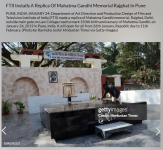
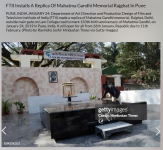
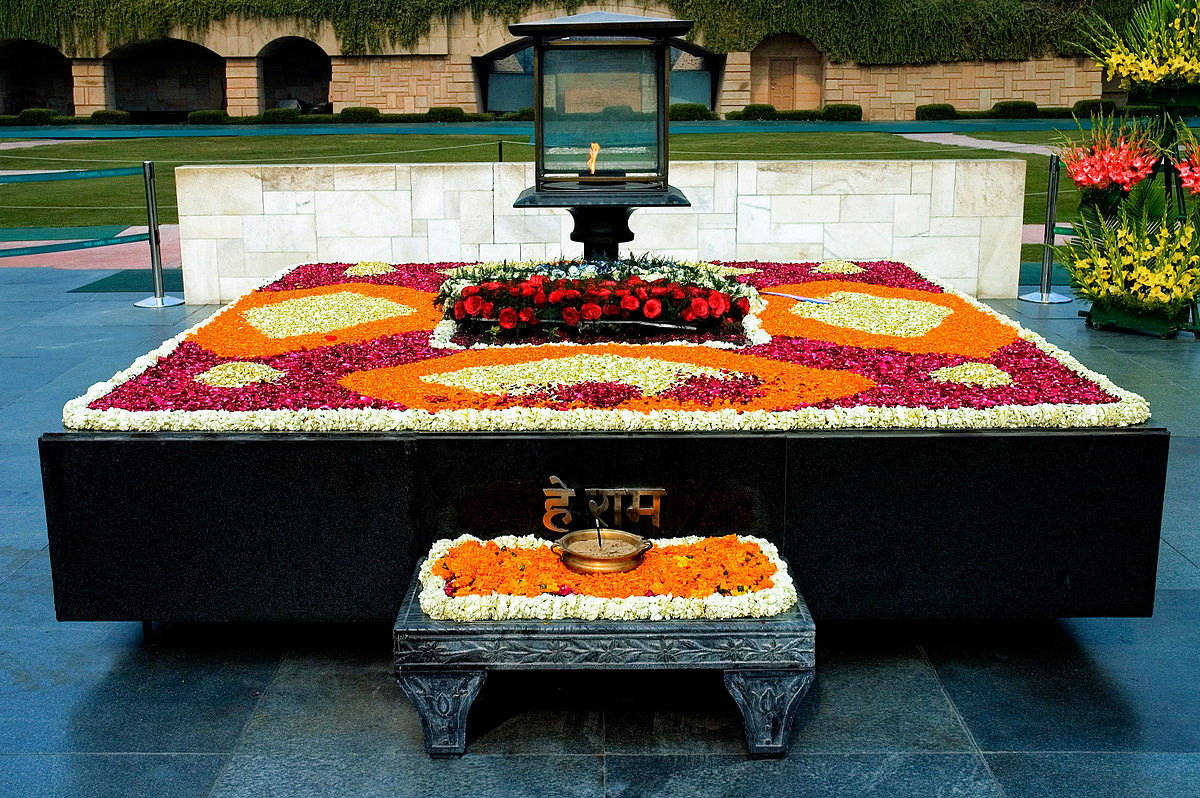
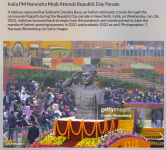
here we find Mr MK Gandhi qualify in Hindu Test, as in the picture Gandhi's smarak in the Parliament house of New Delhi, as below :coffee:
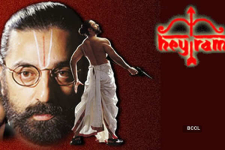
The Word "Hey Ram"/'Lord Ram' said by him, when he was shot down by Hindu Extremists, the man who previously served for RSS. The Godse who resigned from the RSS with 20-30 months for Arm training, for the purpose 🕳️

They were angry for Congress's acceptance for Partition.
Not the Jannah but they didn't want the Gandhi to become president/PM of this side 🙂

Mr Jinnah was never satisfied with non-religious claim of Mr Gandhi...... He will always descriminate Muslims, the Jinnah claimed for "Partition"
🇮🇳
 

Attachments

  • 1766418119638.png
    1766418119638.png
    526.2 KB · Views: 6
  • 1766418241882.png
    1766418241882.png
    526.2 KB · Views: 5
Last edited:
here we find Mr MK Gandhi qualify in "Hindu Test", as in the picture of Gandhi's smarak in the Parliament house of New Delhi, as below :coffee:
The Word "Hey Ram"/'Lord Ram' said by him, when he was shot down by Hindu Extremists, the man who previously served for RSS. The Godse who resigned from the RSS with 20-30 months for Arm training, for the purpose 🕳️

They were angry for Congress's acceptance for Partition.
Not the Jannah but they didn't want the Gandhi to become president/PM of this side 🙂

Mr Jinnah was never satisfied with non-religious claim of Mr Gandhi...... He will always descriminate Muslims, the Jinnah claimed for "Partition"
🇮🇳

1766421232112.png
 
Last edited:
1766433156932.png
Raj Ghat, a memorial to Father of the nation - Mahatma Gandhi, is a simple black marble platform that marks the spot of his cremation on 31 January 1948. It is left open to the sky while an eternal flame burns perpetually at one end. It is located on the banks of the river Yamuna in Delhi, India.
www.gandhisamadhi.org/ en.wikipedia.org/wiki/Raj_Ghat


.
->
1766433309175.png
👍

1766433500749.png
 
1766511540906.png

1766511562705.png

Yes, Subhas Chandra Bose visited Moscow, traveling there in the early 1940s (around 1941) via an Italian passport after escaping British surveillance, hoping for Soviet support against Britain but found the response underwhelming, leading him to Berlin to seek German help for the Indian National Army (INA). :coffee: While Bose's main interactions in Moscow were with German officials and a transit, some declassified files and theories suggest possible Russian involvement or knowledge of his presence even later, as late as 1946, fueling debates about his post-1945 fate, though evidence points to his primary Axis alignment.

Details of the Moscow Visit: :coffee:
  • Escape & Transit (1941): Bose, disguised as an Italian nobleman, traveled to Moscow en route to Berlin using an Italian passport, aiming to leverage Russian anti-British sentiment for India's freedom. ☕
  • Disappointment: The Soviet response in Moscow didn't meet his expectations, and he was quickly handed over to the German Ambassador, Count von der Schulenburg, for onward travel to Germany.
  • Goal: In Berlin, Bose focused on forming the INA with Axis support, a major part of his independence struggle.
  • Later Russian Connection & Theories:
    • Post-1945 Speculation: Even after World War II, some sources and declassified documents hint at Russian awareness or concern about Bose's potential presence in Russia (possibly in Stalin's custody until 1953), with reports emerging about his existence in the USSR as late as 1946.
    • British Intelligence: British ambassadorial cables from Moscow in 1946 discussed reports of Bose being in Russia, indicating Soviet awareness.
  • In essence, Bose's trip to Moscow was a brief but crucial transit point in his daring escape, solidifying his alliance with the Axis powers, though lingering mysteries surround any later Russian involvement. 👍

.


1766511842064.png
 
Last edited:
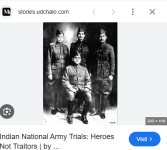
The Indian National Army (INA), or Azad Hind Fauj, was a World War II armed force formed by Indian nationalists, first by Captain Mohan Singh in 1942 and revived by Subhas Chandra Bose in 1943, with Japanese support, to fight for India's independence from British rule. Comprising British Indian Army POWs and Indian civilians in Southeast Asia, the INA launched an invasion of India from Rangoon in 1944 but was halted by the British in Manipur, eventually surrendering in 1945. Its legacy includes inspiring Indian nationalism, notably through the post-war Red Fort trials, and its motto: "Unity, Faith, Sacrifice".
Key Figures:
  • Captain Mohan Singh: Founded the first INA in 1942 from Indian prisoners of war.
  • Subhas Chandra Bose (Netaji): Took leadership in 1943, establishing the Provisional Government of Azad Hind and revitalizing the INA, famously using the slogan "Dilli Chalo" (March to Delhi).

1766512250757.png

 
Last edited:

Users who are viewing this thread

Pakistan Defence Latest

Country Watch Latest

Latest Posts

Back
Top