US pushes Vietnam to decouple from Chinese tech, sources say

Vietnam-China joint venture breaks ground on $319 mln auto plant in northern Vietnam​

By Minh Hue
Fri, October 31, 2025 | 3:53 pm GMT+7

Vietnamese conglomerate Geleximco Group and China’s Chery Automobile on Thursday held a groundbreaking ceremony for their GEL-O&J automobile plant in Hung Yen province.

At the groundbreaking ceremony for the GEL-O&J automobile plant in Hung Yen province, northern Vietnam, October 30, 2025. Photo courtesy of Omoda & Jaecoo Vietnam.

At the groundbreaking ceremony for the GEL-O&J automobile plant in Hung Yen province, northern Vietnam, October 30, 2025. Photo courtesy of Omoda & Jaecoo Vietnam.


Located in the Hung Phu Industrial Park in the former Thai Binh province (now part of Hung Yen province after their merger in July), the project spans 38.1 hectares with a total investment of $319 million. It will be developed in two phases from 2025 to 2029.

The facility is among the largest and most advanced automobile manufacturing projects in Vietnam, and notably, the first Chinese car assembly plant in the country.

Once completed, the factory will have a designed capacity of 120,000 vehicles per year, featuring key workshops for welding, painting, assembly, plastic component production, a logistics center, an expert zone, and a European-standard test track.

The plant is designed under the “Green Factory - Smart Factory” model - an advanced concept currently implemented by Chery globally. It will maximize natural energy use, reuse rainwater, recycle wastewater, and incorporate eco-friendly materials.

The production line will be equipped with automated technologies and a smart management system to enhance energy efficiency and reduce emissions.

The facility will also serve as the main new energy vehicles (NEV) production base for Omoda & Jaecoo Automobile, a subsidiary of Chery Automobile.

Omoda & Jaecoo Vietnam currently distributes SUV models such as Omoda C5, Jaecoo J7, and Jaecoo J7 PHEV (SHS).

A provincial official emphasized that Hung Yen province prioritizes high-tech, environmentally friendly industrial projects consistent with its sustainable development goals.

The local government pledged full support for the investors, from infrastructure and administrative procedures to construction facilitation, ensuring the project’s timely, safe, and efficient implementation.

A representative from Omoda & Jaecoo Vietnam said the construction of the Hung Yen plant marks a strategic step in the brand’s global expansion plan. The company is committed to long-term investment, strict compliance with environmental regulations, and the adoption of intelligent, highly automated production lines.

When fully operational, the plant is expected to create thousands of direct and indirect jobs across the supply chain. The establishment of the GEL-O&J automobile plant represents a milestone in industrial cooperation between Vietnam and China in high technology and underscores Vietnam’s rising role in the global automobile manufacturing network.

Chery Automobile is currently China’s fifth-largest automaker, producing both gasoline-powered and electric vehicles. From January through September, the company exported 1 million vehicles and it aims to sell about 3 million units by the end of this year.
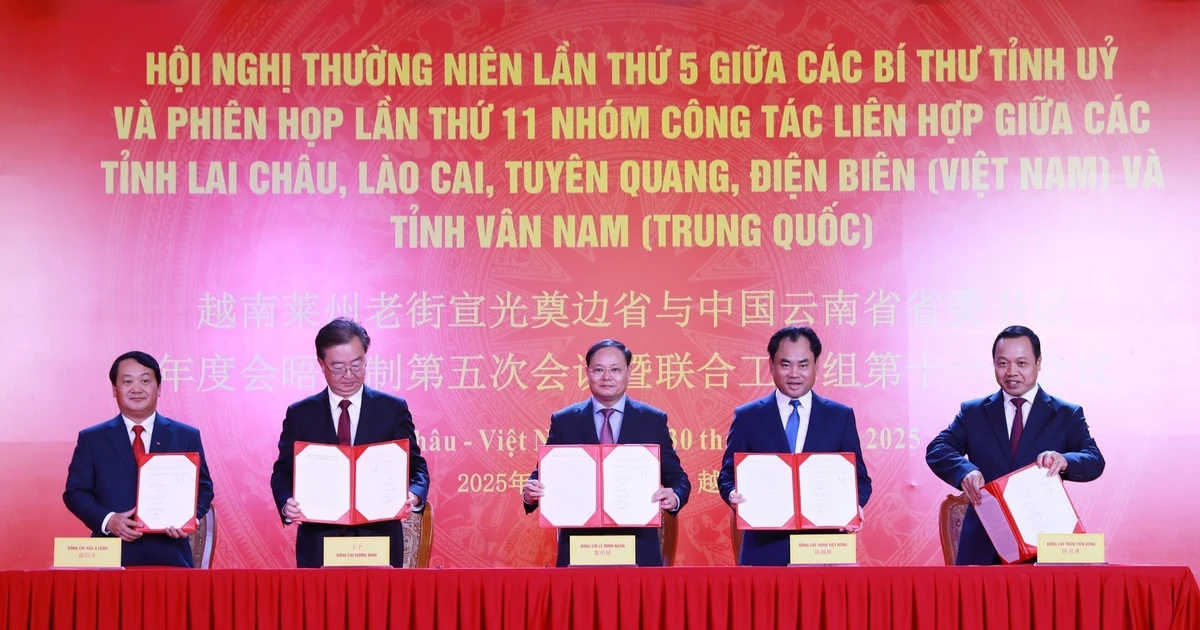

Vietnamese, Chinese localities boost cooperation​

 
From what I see Trump does Taco when meeting fierce resistance or he feels too painful himself. China is a big elephant, not easy for the US to play around with. He should know it from the start.
This 10% fentanyl tariff is just like a banana tariff, an imaginary banana, he can replace it like by let say 10% migrant tariff.
The 40% transshipment is still on table.
I don’t know if Trump will drop it.
Do you think the Chinese government is a fool? Increasing new tariffs is tantamount to restarting the trade war. This trade war was triggered by the USs additional 24% tariffs, and the final negotiations did not even acknowledge that the 24% tariffs were a bargaining chip. Although the trade war between China and the is only on a truce, it is bound to restart, but the US's attempt to create bargaining chips in this way will backfire.
 
In South Korea, the G2 meeting between China and the United States was a historic piece, and this ridiculous trade war finally signaled a year off. What did the United States get from China? Nothing, everything back to the beginning, what did China get from the United States? It turns out that long-arm jurisdiction and rare earth blockade are so effective, and the Chinese will become more and more bold. I have said before that what the Americans are doing now, we will do to the Americans in the future. In the same way. This meeting will at some point become the course of history, an accelerated change in the state of America's debilitating state. It turns out that the powerful United States you imagined also needs to speak politely and cautiously when facing China in reality.
I'm not just wondering if the countries that have signed unfair agreements with the United States are beginning to regret it.
 
Last edited:

Exclusive: Huawei, ZTE seal 5G deals in Vietnam after US tariffs, as ties with China warm​

November 28, 20258:36 AM GMT+8Updated 1 hour ago

  • Vietnam embraces Chinese tech amid strained US relations
  • ZTE, Huawei win major contracts as Vietnam shifts approach
  • Western officials cast doubts on tech cooperation with Hanoi, sources say
HANOI, Nov 28 (Reuters) - China's leading telecommunication firms Huawei and ZTE (000063.SZ), opens new tab have won a string of contracts this year to supply 5G equipment in Vietnam, in another sign of Hanoi's strengthening bonds with Beijing, stirring concern among Western officials, seven people with direct knowledge of the situation told Reuters.

For years, Vietnam was seen as reluctant to use Chinese technology in sensitive infrastructure, but in recent months it has embraced Chinese tech companies as sometimes frosty relations with its northern neighbour have warmed while ties with Washington have soured over tariffs on Vietnamese goods.

While Sweden's Ericsson (ERICb.ST), opens new tab and Finland's Nokia (NOKIA.HE), opens new tab secured contracts for Vietnam's 5G core infrastructure, with U.S. chipmaker Qualcomm (QCOM.O), opens new tab providing network equipment, Chinese companies have begun winning smaller tenders with state-owned operators, so far unreported public procurement data shows.

A consortium including Huawei was awarded a $23 million contract for 5G equipment in April, weeks after the White House announced tariffs on Vietnamese goods. ZTE has won at least two contracts, one last week, totalling more than $20 million for 5G antennas. The first publicly disclosed deal came in September, a month after U.S. tariffs took effect.

Reuters could not establish whether the timing of these wins was linked to U.S. tariffs, but the deals raised concerns among Western officials.

The exclusion of Chinese contractors from Vietnam's digital infrastructure, including undersea fibre-optic cables, has long been identified by Washington as a key condition for support in advanced technologies.

Huawei and ZTE are banned from U.S. telecom networks as an "unacceptable risk" to national security. Sweden and other European countries have similar restrictions.
Ericsson declined to comment on Chinese companies, but said it was "fully committed to support its customers in Vietnam."

Huawei, ZTE, Nokia, Qualcomm, the U.S. embassy in Vietnam, China's embassy, Sweden's foreign ministry or Vietnam's tech ministry responded to requests for comment.


Northern Vietnam province urges Huawei to invest in semiconductors, training​

Mon, February 24, 2025 | 4:55 pm GMT+7

Bac Ninh, the biggest recipient of registered foreign direct investment (FDI) in Vietnam in 2024, has urged Chinese giant Huawei to invest in the province, especially in semiconductors and workforce training.

Bac Ninh Chairman Vuong Quoc Tuan made the suggestion during a recent visit to Huawei's headquarters in Beijing, according to provincial authorities.

Tuan also called on Huawei to advise the province in developing its information-technology (IT) park and invest in manufacturing of high-tech products and electronic items as well as supporting industries.

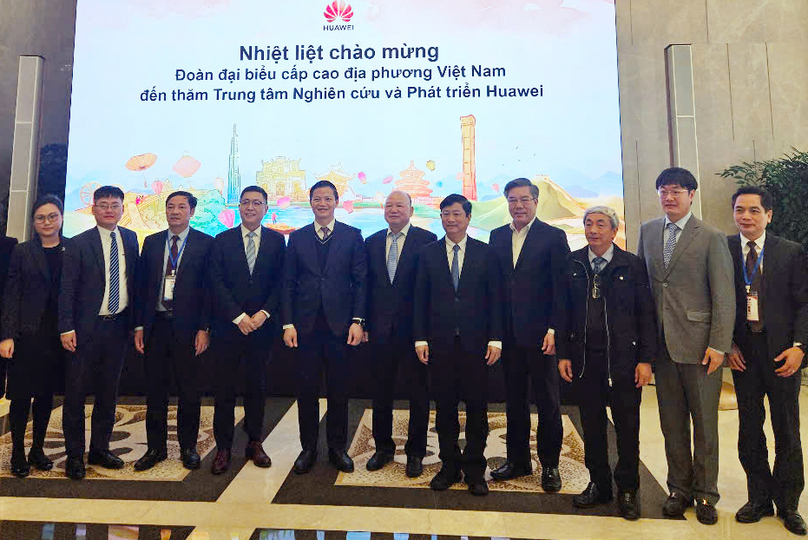
Bac Ninh Chairman Vuong Quoc Tuan (fifth, left) visits Huawei headquarters in Beijing, on February 20, 2025. Photo courtesy of Bac Ninh news portal.

Tuan highlighted that Bac Ninh would focus on attracting foreign investments with modern and eco-friendly technologies. Another priority of Bac Ninh is to push digitalization to serve businesses and citizens, he noted.

Huawei started investing in Vietnam in 1998. The Chinese giant is cooperating with Vietnam in 5G deployment, solar energy, and others.

In May 2024, vice president of Huawei Asia Pacific Zhengjun Zhang affirmed the giant aims to expand activities in Vietnam, including 5G network deployment, digitalization, artificial intelligence, and green transformation.
 

Exclusive: Huawei, ZTE seal 5G deals in Vietnam after US tariffs, as ties with China warm​

November 28, 20258:36 AM GMT+8Updated 1 hour ago

  • Vietnam embraces Chinese tech amid strained US relations
  • ZTE, Huawei win major contracts as Vietnam shifts approach
  • Western officials cast doubts on tech cooperation with Hanoi, sources say
HANOI, Nov 28 (Reuters) - China's leading telecommunication firms Huawei and ZTE (000063.SZ), opens new tab have won a string of contracts this year to supply 5G equipment in Vietnam, in another sign of Hanoi's strengthening bonds with Beijing, stirring concern among Western officials, seven people with direct knowledge of the situation told Reuters.

For years, Vietnam was seen as reluctant to use Chinese technology in sensitive infrastructure, but in recent months it has embraced Chinese tech companies as sometimes frosty relations with its northern neighbour have warmed while ties with Washington have soured over tariffs on Vietnamese goods.

While Sweden's Ericsson (ERICb.ST), opens new tab and Finland's Nokia (NOKIA.HE), opens new tab secured contracts for Vietnam's 5G core infrastructure, with U.S. chipmaker Qualcomm (QCOM.O), opens new tab providing network equipment, Chinese companies have begun winning smaller tenders with state-owned operators, so far unreported public procurement data shows.

A consortium including Huawei was awarded a $23 million contract for 5G equipment in April, weeks after the White House announced tariffs on Vietnamese goods. ZTE has won at least two contracts, one last week, totalling more than $20 million for 5G antennas. The first publicly disclosed deal came in September, a month after U.S. tariffs took effect.

Reuters could not establish whether the timing of these wins was linked to U.S. tariffs, but the deals raised concerns among Western officials.

The exclusion of Chinese contractors from Vietnam's digital infrastructure, including undersea fibre-optic cables, has long been identified by Washington as a key condition for support in advanced technologies.

Huawei and ZTE are banned from U.S. telecom networks as an "unacceptable risk" to national security. Sweden and other European countries have similar restrictions.
Ericsson declined to comment on Chinese companies, but said it was "fully committed to support its customers in Vietnam."

Huawei, ZTE, Nokia, Qualcomm, the U.S. embassy in Vietnam, China's embassy, Sweden's foreign ministry or Vietnam's tech ministry responded to requests for comment.


Northern Vietnam province urges Huawei to invest in semiconductors, training​

Mon, February 24, 2025 | 4:55 pm GMT+7

Bac Ninh, the biggest recipient of registered foreign direct investment (FDI) in Vietnam in 2024, has urged Chinese giant Huawei to invest in the province, especially in semiconductors and workforce training.

Bac Ninh Chairman Vuong Quoc Tuan made the suggestion during a recent visit to Huawei's headquarters in Beijing, according to provincial authorities.

Tuan also called on Huawei to advise the province in developing its information-technology (IT) park and invest in manufacturing of high-tech products and electronic items as well as supporting industries.

Bac Ninh Chairman Vuong Quoc Tuan (fifth, left) visits Huawei headquarters in Beijing, on February 20, 2025. Photo courtesy of Bac Ninh news portal.

Tuan highlighted that Bac Ninh would focus on attracting foreign investments with modern and eco-friendly technologies. Another priority of Bac Ninh is to push digitalization to serve businesses and citizens, he noted.

Huawei started investing in Vietnam in 1998. The Chinese giant is cooperating with Vietnam in 5G deployment, solar energy, and others.

In May 2024, vice president of Huawei Asia Pacific Zhengjun Zhang affirmed the giant aims to expand activities in Vietnam, including 5G network deployment, digitalization, artificial intelligence, and green transformation.
The West doesn’t need to worry too much.
Majority of chinese 5g equipment are not for Vietnamese domestic market. They are for India and other countries who don’t want to buy 5g direct from China. Vietnam certifies the Chinese equipment and acts as reseller. Also, Vietnam provides inspection, installation and services. So those who buy Huawei and ZTE can sleep well at night.
 

Vietnam, China strengthen cooperation in digital economy, green transition​

Friday, 18:11, 28/11/2025

Vietnam and China still have ample room to promote cooperation in digital economy and green transition towards the goal of sustainable development, heard the Vietnam–China Business Seminar, organised in Ho Chi Minh City on November 27, as part of the 2025 Autumn Economic Forum.

Nguyen Loc Ha, Vice Chairman of the municipal People’s Committee, stated that Vietnam–China cooperation has undergone an impressive development journey. In particular, collaboration in the field of logistics has made remarkable progress, fostered goods production and bilateral trade. Vietnam has transformed from an agricultural economy into an important player in the global trade chain, with FDI playing a pivotal role in industrialisation and enhancing export capacity.

HCM City leads Vietnam in attracting investment from China. Currently, there are more than 800 Chinese-invested projects with a total registered capital of nearly US$3 billion, focusing on sectors such as information technology and digital transformation, smart manufacturing and supporting industries, logistics and e-commerce, renewable energy and green technologies.

According to Ha, HCM City and China have numerous opportunities for cooperation in digital transformation and artificial intelligence (AI), smart megacity development, and financial investment connectivity.

The Vietnamese southern metroplis is building a comprehensive innovation ecosystem with the goal of becoming a leading startup and innovation hub in Southeast Asia, and looks forward to cooperating with Chinese enterprises in developing AI, Big Data, the Internet of Things (IoT), and blockchain, he affirmed.

In addition, the innovative mega-city project in HCM City will serve as an ideal space for Vietnam–China technological cooperation, creating modern knowledge infrastructure to support digital economic development, he stated, adding that as a financial hub, HCM City is also ready to cooperate in developing digital financial products, cashless payment systems, and green finance to meet the needs of businesses in both countries.
 

Vietnam's trade surplus with US hits record as exports surge despite tariffs​

December 6, 202512:00 PM GMT+8Updated December 6, 2025
  • Vietnam's surplus with Washington rises to $121.6 billion
  • Vietnam's trade deficit with China up to $104.3 billion
  • Foreign investment inflows up 8.9% in January-November period
HANOI, Dec 6 (Reuters) - Vietnam's trade surplus with the United States, its main market, rose to $121.6 billion in the first 11 months of the year, official data showed on Saturday, as exports surged despite U.S. import tariffs imposed in August on Vietnamese goods.

For the first 11 months of this year, Vietnam recorded a total trade surplus of $20.53 billion - mostly on a positive balance with the United States, the European Union and Japan - which more than offset deficits with China and South Korea.

The trade deficit with China in the January-November period rose 38.1% year-on-year to $104.3 billion.

Finance Minister Nguyen Van Thang on Saturday said foreign investment inflows in the January-November period rose 8.9% from a year earlier to $23.6 billion, while pledges were up 7.4%.
 
Last edited:

Chinese Investment Surge Reshapes Vietnam’s Industrial Landscape

Chinese firms lead record investments in Vietnam, reshaping its economy and industrial base amid U.S. tariff pressures.

By Team StratNews December 10, 2025

vietnam

Chinese companies are deepening their presence in Vietnam, leading investment inflows and sending record shipments to Hanoi despite Washington’s calls for economic decoupling. The two communist neighbours are strengthening cooperation across technology, transport, and manufacturing.

Hanoi has recently approved several projects it once resisted on security grounds, including contracts with Chinese telecoms firms Huawei and ZTE, loans for high-speed rail projects, and clearance for Chinese-made COMAC aircraft to operate with a leading Vietnamese airline.

According to Alexander Vuving of the Asia Pacific Center for Security Studies, Vietnam’s overtures to Beijing reflect a balancing act after trade pledges made to Washington. However, he warned that if this trend continues, Vietnam “may become a ‘torn country’ rather than a ‘swing state’,” risking its ties with Western partners.

Trade Shifts and Technology Transfers

After decades of cautious engagement following the 1979 border war and maritime disputes, Vietnam is now drawing closer to China as U.S. tariffs strain their trade relations. Chinese firms are offering rare technology transfer deals and increasingly view Vietnam as a consumer market rather than merely a manufacturing hub, according to a Reuters review of industry data and interviews.

This trend has accelerated since Washington imposed 20% tariffs on Vietnamese exports. “Vietnamese officials were displeased by what they saw as punitive U.S. measures, and this pushed them to hedge by leaning economically further into China,” said Phan Xuan Dung of the ISEAS-Yusof Ishak Institute in Singapore.

Record Imports and Rising Consumer Demand

Despite U.S. pressure to limit Chinese technology, Vietnam’s imports from China reached around $168 billion by November—up nearly 30% year-on-year and surpassing all of 2024, already a record year. Electronics make up nearly one-third of the imports, much of which are re-exported in goods bound for the U.S., while consumer goods like vegetables and vehicles are also climbing.

Diminishing anti-China sentiment among younger Vietnamese has reinforced this shift. E-scooter maker Yadea sold over 36,000 units in the first ten months of the year, ranking fourth nationwide and emerging as a key rival to domestic EV leader VinFast. BYD, another Chinese electric vehicle giant, is also expanding its dealer and charging network across Vietnam.

Meanwhile, Chinese retail and technology brands are growing rapidly. Real estate agency CBRE noted the expansion of chains such as KKV in Ho Chi Minh City and Hanoi. TikTok, owned by ByteDance, has become Vietnam’s leading shopping platform, while Alibaba’s Lazada and Tencent-backed Shopee and Tiki dominate e-commerce.

Long-Term Investment and Industrial Integration

Chinese investment in Vietnam has been building steadily, but a new phase of joint ventures and technology-sharing has begun. Steve Bui, chairman of the Vietnam China Business Council, said that 12 Chinese companies have either transferred or plan to transfer technology to Vietnamese partners this year, compared with none in 2024.

One such venture involves CNTE, backed by battery maker CATL, which partnered with Delta E&C to establish a factory in northern Vietnam producing battery energy storage systems for export by 2026. Official data shows that from January to November, Chinese and Hong Kong firms pledged over $6.7 billion, making them Vietnam’s largest investors.

At the DEEP C industrial park in northern Vietnam, Chinese manufacturers now represent a quarter of all tenants, up from just 10% in 2019. “What started as tariff hedging has evolved into a strategy focused on both insurance and growth,” said Dan Martin of consultancy Dezan Shira. He added that the growing scale and diversity of Chinese projects “is reshaping Vietnam’s industrial landscape.”
 
…..
last but not least, in economics you make more money with service, aka designing the shoes, not with making the shoes.
Haha ha omg. I remember this used to be the argument of globalists westerners when China offshoring was starting.

So if that logic still stands. Is then America lacking in design as well?
 
Sure, you can ask India, Thailand and Philippines, they can replace China manufacturing. nobody stops Trump of doing so.
as for Vietnam it’s unrealistic. and even if. let say we agree. There is only 1 scenario. Trump can stay as president for life. it makes no sense for anyone to close a deal with the US if he goes out of office in 3.5y. we need at least 10-15 years. but in that scenario we would ask the US massive technology and money transfer as compensation.
A very clear understanding. The biggest risk of cooperating with the United States is uncertainty, as the U.S. president's term is four years. We can see that when Biden is replaced by Trump, U.S. foreign policy changes significantly. Another risk is President Trump's way of handling things, as he changes promised matters at will. The United States and Western countries do not have a complete industrial system, and Vietnam, if it wants to build an industrial chain, will pay a great cost. When Vietnam establishes its industrial chain, the United States will require Vietnamese companies to move to the U.S.
 
A very clear understanding. The biggest risk of cooperating with the United States is uncertainty, as the U.S. president's term is four years. We can see that when Biden is replaced by Trump, U.S. foreign policy changes significantly. Another risk is President Trump's way of handling things, as he changes promised matters at will. The United States and Western countries do not have a complete industrial system, and Vietnam, if it wants to build an industrial chain, will pay a great cost. When Vietnam establishes its industrial chain, the United States will require Vietnamese companies to move to the U.S.
Trump is a psycho. He can change his mind tomorrow or in 5 minutes. He is driven by personal ergo, American first and I don’t know, by hatred, spontaneous moods. How to have a deal with such people?
time for agreement will become better after Trump.
 
Trump is a psycho. He can change his mind tomorrow or in 5 minutes. He is driven by personal ergo, American first and I don’t know, by hatred, spontaneous moods. How to have a deal with such people?
time for agreement will become better after Trump.
Things won’t get better after Trump; the development of the U.S. economy relies on harvesting the global economy through the tides of the dollar.
 
Things won’t get better after Trump; the development of the U.S. economy relies on harvesting the global economy through the tides of the dollar.
I am an optimist, tomorrow is better than today. Will be an interesting race between Rubio, Vance, Hegseth or Bessent.
The dollar is a paper money, as such it’s value is based on trust.
If trust is eroded then people turn to other currencies or gold or other things as we see now. This trend will continue.
 
Trump is a psycho. He can change his mind tomorrow or in 5 minutes. He is driven by personal ergo, American first and I don’t know, by hatred, spontaneous moods. How to have a deal with such people?
time for agreement will become better after Trump.

Well, you still have to stick with this guy for 3 more years.

Only China has the absolute brute strength to tame this old carnivore, and the rest of you will get eaten by him when you are dealing alone.

He doesn't see you as equal partner, but all free meals in his eyes.

The GOP will produce more presidents like Trump, and Dem still has 'those good ole POTUS', but they are not guaranteed to win the 2028 election.

Without China as the backbone for the Asian nations, you will all be consumed alive.
 
I am an optimist, tomorrow is better than today. Will be an interesting race between Rubio, Vance, Hegseth or Bessent.
The dollar is a paper money, as such it’s value is based on trust.
If trust is eroded then people turn to other currencies or gold or other things as we see now. This trend will continue.

Nope, after Trump's era, the US will become even poorer and weaker compared to China.

They will have even less power to harm China, but they will surely go after the small weak nations and exploit them even harder than before.
 

Users who are viewing this thread

Pakistan Defence Latest

Latest Posts

Back
Top