US pushes Vietnam to decouple from Chinese tech, sources say

Chinese firms' involvement in 5G network may deter investors, EU warns Vietnam​

March 24, 20264:27 PM GMT+8Updated 28 mins ago

HANOI, March 24 (Reuters) - The involvement of Chinese vendors in the rollout of ‌Vietnam's 5G network may deter foreign companies from investing in the Southeast Asian nation, a top EU official said on Tuesday.
Instead of threat or blackmail Europe should be more relaxed.
Vietnam 5G core network is made by Viettel with the support of Nokia and Ericsson. As nobody on this planet can escape Chinese supply chain Vietnamese companies buy Chinese telecom equipment, too. Those from Huawei and ZTE. from what people can see are mostly secondary facilities. If we don’t buy from Huawei, can anyone else deliver?

To view this content we will need your consent to set third party cookies.
For more detailed information, see our cookies page.
 
Instead of threat or blackmail Europe should be more relaxed.
Vietnam 5G core network is made by Viettel with the support of Nokia and Ericsson. As nobody on this planet can escape Chinese supply chain Vietnamese companies buy Chinese telecom equipment, too. Those from Huawei and ZTE. from what people can see are mostly secondary facilities. If we don’t buy from Huawei, can anyone else deliver?

To view this content we will need your consent to set third party cookies.
For more detailed information, see our cookies page.


It is about time for China to put rare earth restriction for ASML.

Europe is already vulnerable under the Russian-Ukraine war and Trump trade war, and they are begging for suicide for right now.

China could guarantee to deliver more deadly blow to their economy far more than Russia and Trump could have ever done.
 
Last edited:

China’s Pivot to Vietnam Blows Hole in Trump’s Made-in-USA Plan
A year on from “Liberation Day,” Trump’s tariffs have fueled a change in global supply chains — just not in the way he envisioned.

By Andy Lin, Nguyen Xuan Quynh, Spe Chen and Claire Jiao
March 31, 2026

Fixing the US’s $760 billion trade deficit with Asia was a key priority when President Donald Trump unveiled sweeping global tariffs on April 2, 2025. Declaring a national emergency on “Liberation Day,” he promised to bring back manufacturing to America and reduce the country’s reliance on China.

Under heavy lobbying from US tech companies, consumer electronics including laptops produced across Asia were exempted from the so-called reciprocal tariffs. But those made in China were still subject to separate fentanyl-related taxes of up to 20%.

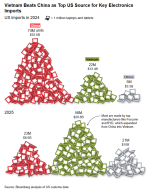
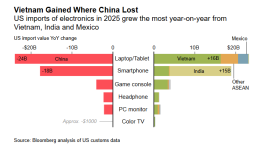
One year later, Trump’s volatile tariff policy has altered supply chains — just not in the way he envisioned. A Bloomberg analysis of shipment-level customs data shows a shift in manufacturing toward Vietnam that begun under Trump’s first term has accelerated, with the country last year surpassing neighboring China as the leading supplier to the US of laptops and game consoles for the first time.

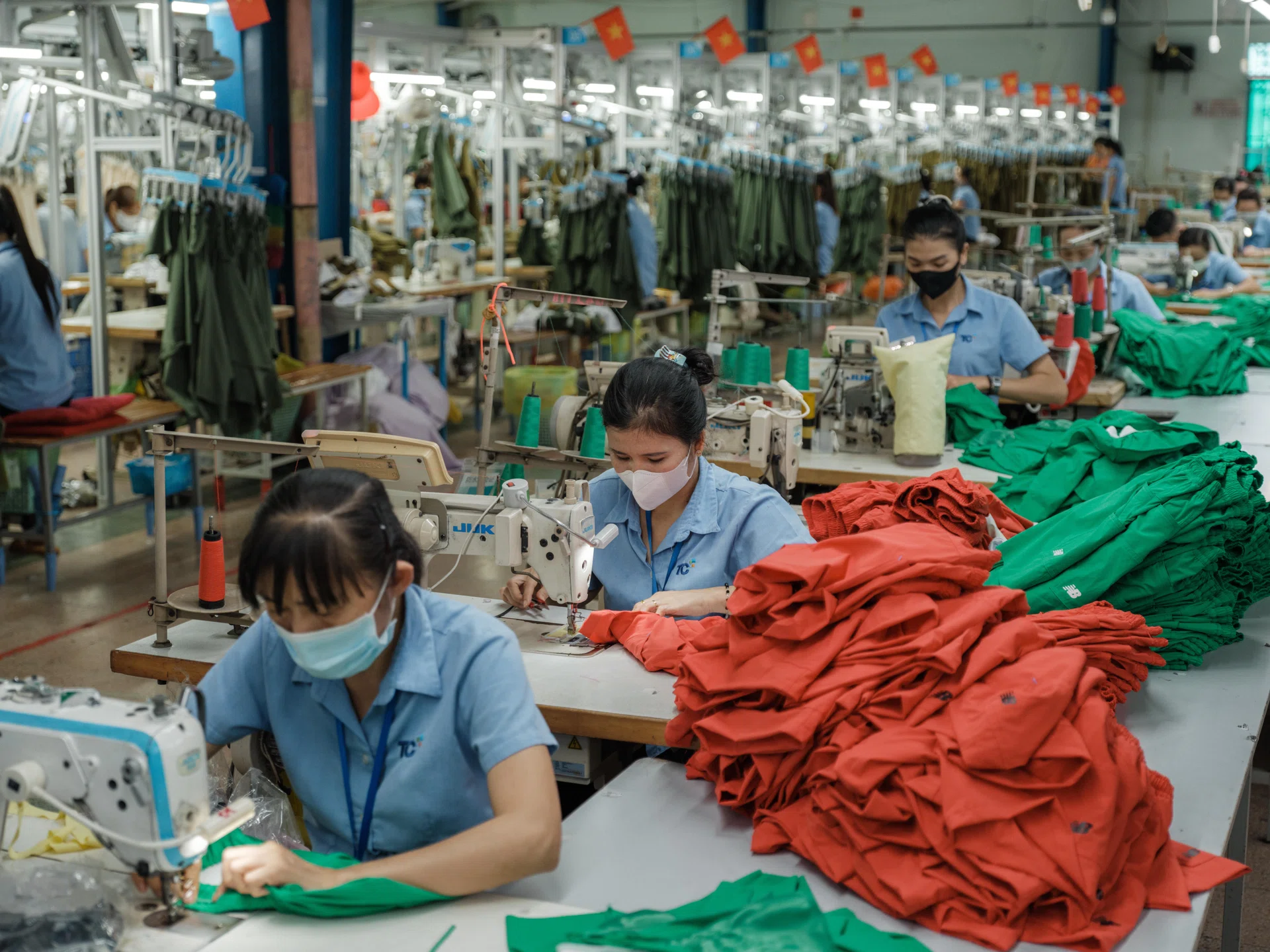
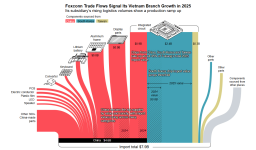
What’s more, the findings showed that the core production of those electronics is still happening in China. Faced with unpredictable tariffs, Chinese manufacturers found a cost-effective workaround: moving low-skilled, final assembly lines across the border to Vietnam, where they have faced lower levies. Vietnamese factories that screw together Chinese-made components and ship them onward added less than 8% of the export value in some cases, the Bloomberg analysis showed.

Although China’s shipments to the world’s biggest economy fell by $51 billion last year, that was more or less offset by the US’s cumulative $49 billion rise in imports from a group of countries including Vietnam, India and Mexico, according to the data. The data also shows the US still bought $130 billion worth of seven big-ticket electronics from overseas last year, falling just over 1% compared with 2024.
1774922483784.png

Labor demand at a Vietnamese industrial park in the northern province of Bac Ninh is so high that first-time factory workers are bused in from remote villages to fill the 1,000 jobs advertised since Lunar New Year, recruiters told Bloomberg News.

“The bonus companies give to new workers reveals how urgently they need workers,” said Nguyen Van Dai outside a Foxconn Technology Group factory, as his team wrapped up a social media livestream advertising vacancies. “Last year, Foxconn had five hiring rounds in which it gave workers a bonus of 15 million dong ($570), the highest amount so far, to meet their orders and expansion plan.”

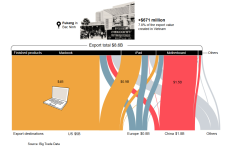
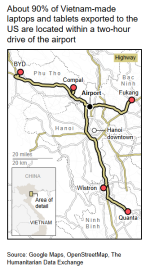
Bloomberg analysis of 2025 data found Fukang Technology Co., a subsidiary of Foxconn, exported $8.6 billion worth of MacBooks, iPads and motherboards for both products and servers, while importing $7.9 billion of various components from China, South Korea and Taiwan. That means at most 7.8% of the export value was created in Vietnam, if all final products at Fukang were exported.

BYD Co., although better known for its electric cars, also makes iPads for Apple Inc. and follows a similar strategy. From its factory in Phu Tho, 100 kilometers (62 miles) outside of Hanoi, it exported $5.1 billion worth of iPads and other products, and imported $4.9 billion of components, generating only 4.5% of the export value in Vietnam. Imports from China accounted for 61% of its inward shipments, almost the same share as Foxconn.

BYD and Foxconn did not respond to requests for comment. Vietnam’s Ministry of Foreign Affairs didn’t immediately respond to a request for comment outside regular business hours.
1774922636153.png
1774923107440.png

The hiring sprees in Vietnam deal a blow to the “Made in USA” agenda touted by Trump, who wants to bring back manufacturing and blue-collar jobs to America.

When Trump hiked tariffs to levels unseen in a century, one of the main reasons he cited was America’s inability to make much of anything. “We import virtually all of our computers, phones, televisions and electronics,” he said in the White House Rose Garden, next to giant placards listing tariff rates for more than 180 countries.

China was the top target, slapped with the highest levies that peaked at 125% during an ensuing trade war. The world’s two largest economies eventually called a one-year truce in October as the trade imbalance narrowed, even as China’s overall surplus soared to the highest ever recorded by pivoting to markets beyond the US. White House spokesman Kush Desai told Bloomberg News that “reshoring manufacturing that’s critical to our national and economic security remains a top priority for President Trump,” adding that he had secured trillions in “high-tech manufacturing investments.”

Not Made In the USA​

Value-added trade flows via third countries have helped China to manage geopolitical risks while exposing the limit of tariffs to curb its export machine.

“Chinese companies are simply much better at controlling costs. They are much more efficient because they have such large supply chains — from upstream, midstream, to downstream, so it’s easier to contain costs at each segment,” said Dan Wang, China director at Eurasia Group.

“Vietnam, in particular, is a very strategic location for Chinese producers.”

In a setback to Trump’s flagship policy, the Supreme Court struck down most of his tariffs earlier this year including the fentanyl duties on China. The White House swiftly turned to launching trade investigations into concerns of excess industrial capacity and labor rights abuses into 16 and 60 economies respectively, including China, Vietnam and other Southeast Asian countries. For now, universal tariffs officially sit at 10% until July 24, with threats they could rise to 15%.

Southeast Asia’s fastest-growing economy, Vietnam has been steadily building as an alternative source for imports since Trump’s first trade war in 2016 that has accelerated since last year. Foxconn, the world’s largest electronics manufacturer, is one of the vanguards expanding capacity from China to Bac Ninh province, the new electronics hub of the region.

Output of smartphones increased 39.4% and laptops surged 130.3% in the province last year, according to provincial government data. Foxconn’s Fukang factory alone exported $8.6 billion of electronics, more than double the value in 2024.

Most of the exports were MacBooks bound for the US, according to Bloomberg analysis of Vietnam’s customs figures from Big Trade Data which collates import and export statistics.
1774922681043.png

At Bac Ninh’s Quang Chau industrial park, workers finishing their shift told Bloomberg that there were recruitment drives almost every month last year allowing some staff to hop between employers and take advantage of fresh bonuses without penalty.

“There is no longer a blacklist like in the past, companies here are so thirsty for labor,” said 38-year-old Ha Thi Mai after finishing overtime at the Fukang factory.

“I have worked overtime almost every day the past two weeks, similar to last year. Thanks to overtime, I have doubled my income.”
1774922760144.png

Her role testing codes on circuit boards is simple, requiring minimal training, no experience or high school certificate. The only challenge, she says, is standing for hours at a time.

Deborah Elms, head of trade policy at the Hinrich Foundation, said the trade flow change “cannot be attributed only to Trump’s tariffs, but market uncertainty sped up supply chain relocation out of China”.

Production in Vietnam increased at the fastest pace in over a year and a half amid a sharp increase in new orders, according to February data from S&P Global Vietnam Manufacturing Purchasing Managers’ Index. Business confidence hit its highest since September 2022, a survey by S&P Global found.

The boom however creates uncertainty for Vietnam: The biggest trade deficit on record could invite scrutiny from Washington, which has agreed a framework for a deal with Hanoi that would put a 20% tariff on imports. The disruption in energy supply caused by the Middle East war poses another possible risk to Vietnam’s manufacturing sector.

Facilitating Chinese companies in evading tariffs also risks possible punishment, with Trump weighing up hefty transshipment penalties. Uncertainty clouds how the US will define or enforce transshipment restrictions, however, with details on verification lacking.

“The optics of being the country with the largest trade surplus against the US means Vietnam is now a bigger target for the administration. It is a strong risk to Vietnam’s economy,” said Jian Xin Heng, senior Asia analyst at BMI.

As the trade tensions unfold between the US and Asia, more under-construction factories are close to becoming operational in Bac Ninh.

“Business is great,” said Nguyen Anh, a recruitment contractor earning high commission in Bac Ninh. “As companies build new facilities and expand their factories, they will need to hire a lot more workers. We’re going to be busy all year round.”
 

China’s Zhongce Rubber to Build USD145 Million Tire Plant in Vietnam to Boost Global Expansion
Tang Shihua
DATE: 40 minutes ago
SOURCE: Yicai

(Yicai) April 2 -- Zhongce Rubber, one of China’s biggest and most diversified tire manufacturers, plans to invest CNY1 billion (USD145 million) to build the first phase of a new factory in Vietnam to better meet rising overseas demand, navigate global trade barriers more effectively and further expand its international footprint.

The factory, which will be located in Ho Chi Minh city, will have an annual capacity of about five million semi-steel radial tires, which are mainly used in passenger cars, the Hangzhou-based firm said yesterday. Construction is set to begin in early July and will take about a year to complete.

Once the plant is fully up and running, it is expected to generate CNY849 million (USD123 million) in additional annual revenue, with an estimated return on investment of 17.5 percent, the company said.

The new factory will mainly target markets in member countries of the Comprehensive and Progressive Agreement for Trans-Pacific Partnership, which is a free trade pact in the Asia Pacific region, as well as Europe and Southeast Asia, it said. Demand for Chinese-brand tires in these regions is steadily growing, and since the firm already has well-established sales channels there, the outlook for the new plant looks good.

Zhongce Rubber, whose clients include major automakers such as BYD, Toyota Motor and Stellantis, said its long-term goal is to become a leading multinational tire company, so it expects to keep building more factories overseas going forward. The firm already has production bases in Thailand and Indonesia, and is currently building another one in Mexico.

In the first half of last year, Zhongce Rubber raked in CNY9.9 billion (USD1.4 billion) in revenue from overseas markets, accounting for 45.4 percent of its total revenue, according to the company’s 2025 semi-annual report.
 

Update: Chinese senior officials to attend ministerial meeting of China-Vietnam "3+3" strategic dialogue in Vietnam​

Source: Xinhua
2026-03-13 19:56:17

BEIJING, March 13 (Xinhua) -- A Chinese foreign ministry spokesperson announced here Friday that at the invitation of the Vietnamese side, member of the Political Bureau of the Communist Party of China (CPC) Central Committee and Minister of Foreign Affairs Wang Yi, member of the CPC Central Committee Secretariat and Minister of Public Security Wang Xiaohong, and Minister of National Defense Dong Jun will be in Vietnam from March 15 to 17 for the first ministerial meeting of the China-Vietnam "3+3" strategic dialogue on diplomacy, defense and public security.

China–Vietnam ‘3+3’ dialogue signals new security architecture in Asia​

Published on 06/04/2026 GMT+7

In a move that signals a shift in regional security architecture, China and Vietnam convened in Hanoi on March 16 for their inaugural “3+3” strategic dialogue. The newly established mechanism departs from the conventional “2+2” format, typically limited to foreign and defense officials, by adding a third pillar: public security.

By bringing together ministers of foreign affairs, defense, and public security, the two countries have created what Chinese Foreign Minister Wang Yi described as a “first-of-its-kind” strategic communication platform. The format reflects a broader, more integrated approach to security, encompassing military coordination, cybersecurity, and internal stability.

While many countries rely on “2+2” dialogues to align foreign policy and defense strategy, the addition of a third component elevates domestic and public security to a top-tier diplomatic concern.

This expanded framework acknowledges a shifting reality: the boundary between domestic and international threats is increasingly blurred. Challenges such as telecom fraud, online gambling, drug trafficking, and cybercrime demand closer coordination between law enforcement, military, and diplomatic channels.

A deepening cooperation

The Hanoi meeting focused on practical areas of high-stakes cooperation. Both sides reached broad consensus on strengthening “political-security collaboration,” including:
  • Law enforcement: Joint action against telecom scams, fugitive repatriation, and asset recovery;
  • Non-traditional security: Information-sharing on data security, energy risks, and environmental challenges;
  • Political security: A shared commitment to resisting “color revolutions” and reinforcing the resilience of their socialist governance systems.

Vietnamese officials described ties with China as an “objective necessity” and a “top priority.” Despite historical tensions, including the 1979 border war and ongoing disputes in the South China Sea, both countries are increasingly opting to compartmentalize differences.

Institutionalized dialogue is seen as a way to prevent localized frictions from undermining a deeply intertwined economic relationship, with China remaining Vietnam’s largest trading partner.

The China-Asia Link

The dialogue also connects bilateral cooperation to wider regional frameworks, including:
  • China–ASEAN cooperation: Reinforcing ties within Southeast Asia;
  • Lancang–Mekong cooperation: Advancing sub-regional development and water governance;
  • Multilateral platforms: Aligning with broader networks such as BRICS.
For Vietnam, this reflects its “bamboo diplomacy,” maintaining strategic autonomy while remaining flexible in engaging major powers. For China, the framework serves as a test case for managing relations with Southeast Asian neighbors, demonstrating that stability can be prioritized even amid persistent maritime disputes.

As both sides prepare for the next ministerial meeting in China, the “3+3” dialogue is set to become a permanent fixture of their relationship. In an evolving global landscape, it suggests that geography is not just a challenge to be managed, but a foundation for a "community with a shared future."
 

Vietnam's To Lam plans China visit next week after winning presidency, sources say​

By Phuong Nguyen and Francesco Guarascio
April 8, 20269:47 AM GMT+8Updated 1 min ago

HANOI, April 8 (Reuters) - Vietnam's top leader To Lam is planning a visit to China next week to meet his counterpart Xi Jinping, three people ‌briefed on the plans told Reuters, in a trip that would closely follow his elevation to the state presidency.

The trip, which is still being planned and could be postponed because of scheduling issues, would cement Vietnam's ties with its much larger neighbour at a time when both are worried about energy security and face tariff pressure from the United States.

The sources declined to be named because in Vietnam details of leaders' overseas trips are considered sensitive. The trip ⁠is expected to take place on 14-17 April, two of the people said.

It would likely be Lam's first overseas trip since he was elected state president on Tuesday, a step that gave him a powerful double mandate to rule the country for the next five years, with a concentration of power which is unusual in Vietnam and similar to China's, where Xi also heads both the party and the state.

China's foreign ministry said it had no information to provide on the possible trip at this stage.

Vietnam's foreign ministry did not respond to a request for comment.

TECH, ENERGY LIKELY ON AGENDA​

The two communist neighbours maintain differing views over boundaries in the South China Sea, which Vietnam calls East Sea, but have recently grown closer, with cooperation breakthroughs in multiple ‌sensitive fields, ⁠including rail links, special economic zones in Vietnam close to China's border and the use of Chinese tech in Vietnam's 5G network.

Possible new agreements on telecom infrastructures and other sensitive sectors may be reached at the meeting or ahead of it, although they may not be announced, officials have said.

Security cooperation, including import of China's surveillance tools, has also been emphasised in recent meetings as police have gained significant leverage in ⁠Vietnam since Lam, a former head of the public security ministry, ascended to the top job.

Hanoi may also ask more help on energy security as it depends on imports from China of oil products, including jet fuel and some fertilisers, for which Beijing has restricted exports due ⁠to a supply crunch caused by the war in the Gulf.

Vietnam urged cooperation on energy security when the two countries' foreign ministers met in mid-March, as Hanoi prepared plans for rationing jet fuel.

Lam travelled to China just after he was first appointed party chief ⁠in August 2024, in his maiden overseas trip in that job.

He had planned to meet Xi shortly after his confirmation as general secretary in January, multiple officials told Reuters, but that visit was postponed for unspecified reasons.
 

Vietnam's To Lam plans China visit next week after winning presidency, sources say​

By Phuong Nguyen and Francesco Guarascio
April 8, 20269:47 AM GMT+8Updated 1 min ago

HANOI, April 8 (Reuters) - Vietnam's top leader To Lam is planning a visit to China next week to meet his counterpart Xi Jinping, three people ‌briefed on the plans told Reuters, in a trip that would closely follow his elevation to the state presidency.

The trip, which is still being planned and could be postponed because of scheduling issues, would cement Vietnam's ties with its much larger neighbour at a time when both are worried about energy security and face tariff pressure from the United States.

The sources declined to be named because in Vietnam details of leaders' overseas trips are considered sensitive. The trip ⁠is expected to take place on 14-17 April, two of the people said.

It would likely be Lam's first overseas trip since he was elected state president on Tuesday, a step that gave him a powerful double mandate to rule the country for the next five years, with a concentration of power which is unusual in Vietnam and similar to China's, where Xi also heads both the party and the state.

China's foreign ministry said it had no information to provide on the possible trip at this stage.

Vietnam's foreign ministry did not respond to a request for comment.

TECH, ENERGY LIKELY ON AGENDA​

The two communist neighbours maintain differing views over boundaries in the South China Sea, which Vietnam calls East Sea, but have recently grown closer, with cooperation breakthroughs in multiple ‌sensitive fields, ⁠including rail links, special economic zones in Vietnam close to China's border and the use of Chinese tech in Vietnam's 5G network.

Possible new agreements on telecom infrastructures and other sensitive sectors may be reached at the meeting or ahead of it, although they may not be announced, officials have said.

Security cooperation, including import of China's surveillance tools, has also been emphasised in recent meetings as police have gained significant leverage in ⁠Vietnam since Lam, a former head of the public security ministry, ascended to the top job.

Hanoi may also ask more help on energy security as it depends on imports from China of oil products, including jet fuel and some fertilisers, for which Beijing has restricted exports due ⁠to a supply crunch caused by the war in the Gulf.

Vietnam urged cooperation on energy security when the two countries' foreign ministers met in mid-March, as Hanoi prepared plans for rationing jet fuel.

Lam travelled to China just after he was first appointed party chief ⁠in August 2024, in his maiden overseas trip in that job.

He had planned to meet Xi shortly after his confirmation as general secretary in January, multiple officials told Reuters, but that visit was postponed for unspecified reasons.


2026-04-09 10:02:00

BEIJING, April 9 (Xinhua) -- At the invitation of General Secretary of the Communist Party of China (CPC) Central Committee and Chinese President Xi Jinping, General Secretary of the Communist Party of Vietnam Central Committee and Vietnamese President To Lam will pay a state visit to China from April 14 to 17.

The announcement was made by Hu Zhaoming, spokesperson for the International Department of the CPC Central Committee, here on Thursday.
 

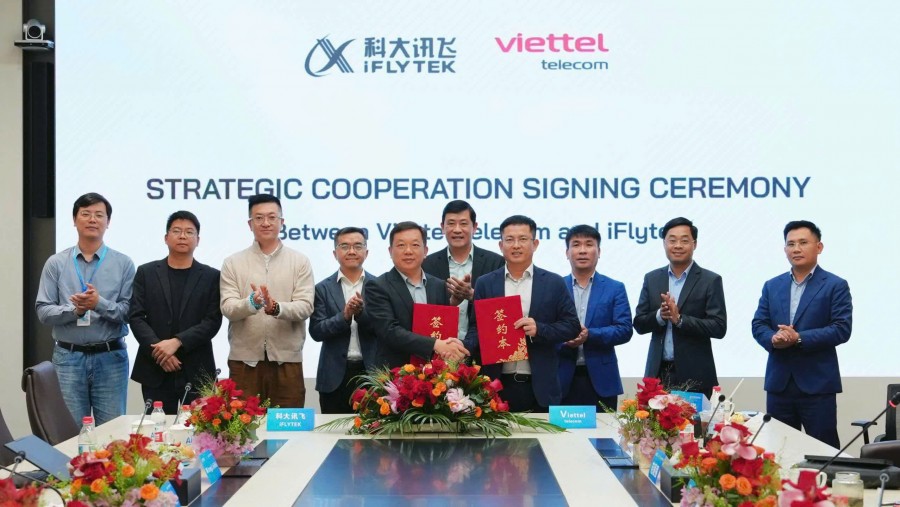
Vietnam's Viettel Telecom, China's iFLYTEK to jointly advance Vietnamese AI voice​

viettel.jpg


Vietnam’s telecommunication giant Viettel Telecom (VTT) and China-based AI company iFLYTEK have signed a strategic cooperation agreement with to develop voice artificial intelligence (AI) technologies for the Vietnamese market, with a focus on speech processing and localization.

The signing ceremony took place on Thursday in Hefei, during a working visit by Viettel Group to iFLYTEK, according to a release of Viettel Group, the parent firm of Viettel Telecom.

Under the agreement, the two sides will focus on three key areas. First, they will jointly develop Vietnamese-language speech technologies, including speech-to-text (STT) and text-to-speech (TTS). This includes localizing AI models to reflect the specific characteristics of Vietnamese, such as tonal marks, regional accents, and natural speech patterns, while ensuring deployment on Viettel’s infrastructure to maintain data security and sovereignty.

Second, the partnership will involve integrating AI technologies into hardware and end-user devices. Speech recognition and related AI models are expected to be embedded into Viettel’s product ecosystem, including smartphones, IoT devices, smart speakers, and telecom hardware systems, with an emphasis on optimizing performance on low-resource devices through edge computing.

Third, the two companies will expand collaboration into broader AI services. This includes natural language processing, sentiment analysis, real-time translation, and intelligent customer service solutions such as virtual call centers.

Viettel said the agreement marks an initial step toward a long-term strategic relationship, with plans to accelerate research and deployment of AI technologies in Vietnam. The partnership also covers joint research and development and co-creation of new products tailored to the Vietnamese market.
 

Vietnam - China Joint Statement

……
……

The two sides agreed to jointly maintain free and open trade and investment, build safe and stable production chains and supply chains, establish a Cooperation Working Group on production chains and supply chains, and promote strengthening cooperation in supply chains and production chains. Encourage and support reputable and reputable businesses of the two countries to invest in each other. Create a fair, favorable and transparent business environment for businesses. Research and promote the high-quality development of economic and trade cooperation zones. Strengthen cooperation in emerging fields such as digital economy and green development. Actively promote cooperation in fields such as smart manufacturing, digital economy, artificial intelligence (AI), quantum technology, semiconductors, high-speed railways; support the two sides in implementing technological cooperation. Supporting businesses of the two countries to deeply cooperate in the field of digital industries such as 5G, big data in accordance with the laws of each country and Vietnam's international commitments, ensuring data security, network security, economic efficiency and long-term benefits of each party. To jointly research and deeply apply digital technologies such as 5G, big data to industrial activities such as smart manufacturing, smart warehousing; promote the traditional manufacturing industry of the two countries to implement digitalization, Internetization, and smartization. Promote financial cooperation and financial support for joint venture projects according to market principles. Research and build open source cooperation mechanisms, promote exchanges between open source organizations, jointly build projects, share achievements, bring cooperation into practice, and share benefits of open source development. Extensively exchange experiences in reform and management of state-owned enterprises between the two countries, and deploy human resource training cooperation. Promoting the role of the Working Group on monetary and financial cooperation between the two countries, strengthening information exchange and sharing of management and policy reform experiences in the monetary and financial fields, effectively implementing the bilateral retail payment connection cooperation project via QR code between Vietnam and China. Researching to expand the scope of payments in local currencies, improving financial risk response capacity. Deepening development cooperation in all fields, promoting overall large symbolic projects and "small but beautiful" civil assistance projects, strengthening cooperation in human resource development. The two sides agreed to accelerate the implementation of aid projects for Vietnam such as building a new facility 2 phase 1 of the Vietnam Academy of Traditional Medicine and Pharmacy, maintaining and preserving the Vietnam - China Friendship Palace; upgrading and renovating roads and improving educational conditions in the northern provinces of Vietnam; researching and implementing railway training classes within the framework of human resource development cooperation aid, creating substantive cooperation achievements.

The two sides agreed to strengthen the connection of science and technology innovation policies, well implement the Science and Technology Cooperation Agreement, and continue to promote the role of the Joint Committee for Science and Technology Cooperation between the two countries. Promote the leading role of science and technology innovation in promoting development, strengthen joint research, train high-quality human resources in the fields of artificial intelligence (AI), healthcare, clean energy, and digital technology. Expand humane exchanges on science and technology; promote youth of the two countries to exchange and cooperate in scientific research human resources and industrial human resources. Promote the combination of science and technology innovation and industrial innovation, promote the role of the ASEAN - China Technology Transfer Center; practically and mutually beneficially implement technology transfer and creative startup cooperation. Strengthen bilateral cooperation in the field of intellectual property such as patents, trademarks, geographical indications.

……
……
 

Việt Nam–China trade set to reach $300 billion in next few years

April 16, 2026 - 19:04
China is currently Việt Nam’s second-largest export market and largest import market.

HÀ NỘI — Bilateral trade between Việt Nam and China is well on its way to reaching the US$300 billion milestone in the near future, supported by strengthened strategic exchanges, high-level engagement and ongoing efforts to remove trade bottlenecks.

China is currently Việt Nam’s second-largest export market and largest import market, with trade between the two countries reaching a record $256.4 billion last year.

In the first quarter of this year, bilateral trade continued to grow, reaching nearly $67 billion. Việt Nam’s exports totalled $16.8 billion, up 26.4 per cent year-on-year, while imports reached $50.1 billion, up 31.6 per cent, according to the National Statistics Office under the Ministry of Finance.

The strong recovery in trade has driven significant growth in import-export activities, especially in imports of raw materials, machinery and equipment from China serving domestic production.

Many Vietnamese products, particularly agricultural and aquatic products as well as processed and manufactured goods like coffee, wood products, footwear, electronics and textiles, are increasingly penetrating the Chinese market.

Bilateral ties have strengthened, supported by frequent high-level exchanges that open up cooperation opportunities, particularly in trade and investment.

Although trade with the billion-consumer market has grown rapidly, the trade structure remains imbalanced, with Việt Nam’s trade deficit with China continuing to widen.

The deficit reached nearly $33.3 billion in the first quarter alone, while it stood at $116 billion last year.

Despite improvements, Việt Nam’s exports largely consist of agricultural products, which have lower value compared to industrial goods.

Meanwhile, imports mainly include high-tech products like machinery, equipment, electronic components and production materials, which are essential for domestic manufacturing and exports and typically cost more.

Trade experts say imported goods from China, especially production materials, are of good quality and competitively priced. Combined with convenient transportation due to geographic proximity, Vietnamese businesses prioritise sourcing from this market.

With a population of 1.4 billion, strong purchasing power and diverse demand, China is an attractive destination for exporters worldwide.

China remains a key market for Vietnamese exports, including agricultural products, textiles, footwear, electronics and seafood.

One positive signal is that China regained its position as the largest importer of Việt Nam’s agricultural products in Q1.

Export turnover of agro-forestry-fishery products reached $16.7 billion, up 6 per cent, with China accounting for over 22 per cent, surpassing the US and Japan.

Notably, exports to China rose by 37.6 per cent, showing the highest growth among major markets.

However, to ensure sustainable growth, production sectors – especially agriculture – must upgrade processing technologies, invest in standardised raw material areas and ensure compliance throughout the production chain.

The Đầu tư (Investment) online newspaper quoted Trần Thanh Hải, deputy director of the Agency for Foreign Trade, as saying that with stricter quality standards, China was no longer an 'easy' market and Vietnamese businesses must continuously update information and adapt their production mindset.

China is reviewing procedures to open its market to more Vietnamese agricultural and aquatic products through official channels, including frozen fruits, citrus, avocado, custard apple, wax apple, herbal medicines and beef, pork and livestock products.

More Vietnamese agricultural products are expected to gain access to this vast market in the near future.

The Ministry of Industry and Trade believes that bilateral trade still has significant room for growth, supported by bilateral agreements and multilateral frameworks such as the ASEAN–China Free Trade Agreement and the Regional Comprehensive Economic Partnership. — BIZHUB/VNS
 
The next few years?
There is a $50 billion gap in reporting the 2025 number.
Vietnam customs $256 billion
China customs $296 billion
I think China counts all, while Vietnam excludes some goods. If adding the unreported and smuggled goods between Viet Nam and China the $300 billion number is very realistic number for 2025.


Vietnam and China have agreed to deepen cooperation in green industry, clean technologies and sustainable development following a high-level exchange programme held in Beijing, as reported by VNA, a partner of TV BRICS.

The event, organised by the Vietnamese Embassy in China together with the International Cooperation Centre under China’s National Development and Reform Commission (NDRC), brought together around 80 officials, diplomats, researchers and industry representatives from both countries to strengthen policy coordination and promote practical cooperation in green development.

The programme featured discussions on green manufacturing, wastewater treatment, waste-to-energy technologies, industrial connectivity and sustainable finance. Delegates from government institutions and research organisations exchanged practical experience on building circular economic zones and scaling environmentally sustainable infrastructure projects.
 

US probes Chinese factories in Vietnam, stoking new tariff fears​

Sources say the inspections are adding to concerns the White House may soon find reasons to pile more levies on the South-east Asian nation
 

Users who are viewing this thread

Latest Posts

Back
Top