PAF F-16 | Discussions

It doesn't matter if you're a viper fanboy or not, the reality is that the F16s will be the last western fighter the PAF will operate, it's not like the PAF has any options other than integrating itself into the Chinese ecosystem or developing it's own. It could acquire the Kaan at some point, and that could be considered "western" as it'll most likely be NATO compatible, but even that comes with it's own risks. The reality is that Chinese systems now provide better capability without any of the operational restrictions, as shown in May.
 
It doesn't matter if you're a viper fanboy or not, the reality is that the F16s will be the last western fighter the PAF will operate, it's not like the PAF has any options other than integrating itself into the Chinese ecosystem or developing it's own. It could acquire the Kaan at some point, and that could be considered "western" as it'll most likely be NATO compatible, but even that comes with it's own risks. The reality is that Chinese systems now provide better capability without any of the operational restrictions, as shown in May.

The Americans don't have anything that is of value as a "new" platform that PAF "could" purchase, that is the reality of it. The F-35 has a logistic support system(basically a remote off switch) that PAF will never buy given the nature of the relationship with the USA.

New build F16s make little sense now ( used F16s do!!! The Iraqi F16s are the best bet if Pakistan/Iraq could sort out a deal that include JF17Cs in return), the current teen series of 15/16/18 as "new builds" are not appropriate given the threats that PAF faces and the capability that PAF needs for the "price" it can afford versus what things cost. The next generation of stealth fighters the Americans are selling, may never be sold to the PAF.

I do think we are seeing the end of USA fighters in the PAF aswell unless the Americans create a "monkey export variant" of the F-47. Trump did allude to selling it overseas in one of his speeches, though whether that was random rambling or "something he heard" is an unknown.

There is a small small small possibility of the GCAP/Tempest if PAF could afford it(highly unlikely and the dynamics of the China-Japan relationship impact on Pakistan will apply there I suspect), but you are more likely to see the Indian's there first given their procurement programmes are even worse than the PAF's.

So, yes the "PAF-F16 | Discussions" thread has an end date, as does USA fighters in the PAF.
 
Last edited:
The Americans don't have anything that is of value as a "new" platform that PAF "could" purchase, that is the reality of it. The F-35 has a logistic support system(basically a remote off switch) that PAF will never buy given the nature of the relationship with the USA.

New build F16s make little sense now ( used F16s do!!! ), the current teen series of 15/16/18 as "new builds" are not appropriate given the threats that PAF faces and the capability that PAF needs for the "price" it can afford versus what things cost. The next generation of stealth fighters the Americans are selling, may never be sold to the PAF.

I do think we are seeing the end of USA fighters in the PAF aswell unless the Americans create a "monkey export variant" of the F-47. Trump did allude to selling it overseas in one of his speeches, though whether that was random rambling or "something he heard" is an unknown.

There is a small small small possibility of the GCAP/Tempest if PAF could afford it(highly unlikely and the dynamics of the China-Japan relationship impact on Pakistan will apply there I suspect), but you are more likely to see the Indian's there first given their procurement programmes are even worse than the PAF's.

So, yes the "PAF-F16 | Discussions" thread has an end date, as does USA fighters in the PAF.
Take a look at your own signature on your posts...it was PAF J10s blasting all those IAF fighters from the sky, not F16s. The PAF was outnumbered almost 2 to 1 in May, and by most accounts it was the handful of J10s that we have that outclassed the very best that the IAF could throw at us. Which leaves you wondering, what could F16Vs do that J10s can't?
 
Take a look at your own signature on your posts...it was PAF J10s blasting all those IAF fighters from the sky, not F16s. The PAF was outnumbered almost 2 to 1 in May, and by most accounts it was the handful of J10s that we have that outclassed the very best that the IAF could throw at us. Which leaves you wondering, what could F16Vs do that J10s can't?
It is still a versatile platform and is a complete package. One aircraft that can do multiple missions whether it's CAP, SEAD, air superiority, standoff strikes etc you name it, the viper can do it.

And we do have around 75 vipers currently in service so it's not like they're going away anytime soon.

You still have a need for 4.5 gen jets in numbers and you can't just replace a backbone of your fleet just like that. We still have 20 odd J-10s in the fleet with still a question of where the other 16 are and when are they being inducted.

Vipers allow a bit of weapons diversity within our fleet and it does allow us to participate in various aerial exercises whilst also having commonality with other allied nations that do operate western aircraft like the viper.

Even if the viper pales in comparison to J-10s in A2A it's still pretty damn good in the A2G stuff and can carry a heftier payload compared to the other aircraft in PAF's fleet.

In the end I think it really is a question of finances, had Pakistan's finances been in a much better than situation than it is right now, I have no doubt PAF would've maintained a half decent number of block V vipers
 
The Americans don't have anything that is of value as a "new" platform that PAF "could" purchase, that is the reality of it. The F-35 has a logistic support system(basically a remote off switch) that PAF will never buy given the nature of the relationship with the USA.

New build F16s make little sense now ( used F16s do!!! ), the current teen series of 15/16/18 as "new builds" are not appropriate given the threats that PAF faces and the capability that PAF needs for the "price" it can afford versus what things cost. The next generation of stealth fighters the Americans are selling, may never be sold to the PAF.

I do think we are seeing the end of USA fighters in the PAF aswell unless the Americans create a "monkey export variant" of the F-47. Trump did allude to selling it overseas in one of his speeches, though whether that was random rambling or "something he heard" is an unknown.

There is a small small small possibility of the GCAP/Tempest if PAF could afford it(highly unlikely and the dynamics of the China-Japan relationship impact on Pakistan will apply there I suspect), but you are more likely to see the Indian's there first given their procurement programmes are even worse than the PAF's.

So, yes the "PAF-F16 | Discussions" thread has an end date, as does USA fighters in the PAF.

Take a look at your own signature on your posts...it was PAF J10s blasting all those IAF fighters from the sky, not F16s. The PAF was outnumbered almost 2 to 1 in May, and by most accounts it was the handful of J10s that we have that outclassed the very best that the IAF could throw at us. Which leaves you wondering, what could F16Vs do that J10s can't?
But remember that there are double the f-16s currently

This will have a strategic element from the American perspective, in the may skirmish the f-16s were not as integrated as the j10s, these upgrades reinforce the spine of integration, and the paf doctrine. As the video mentioned, this increases the relevance of the f-16s, but it also increases the relevance of The Americans
 
It is still a versatile platform and is a complete package. One aircraft that can do multiple missions whether it's CAP, SEAD, air superiority, standoff strikes etc you name it, the viper can do it.

And we do have around 75 vipers currently in service so it's not like they're going away anytime soon.

You still have a need for 4.5 gen jets in numbers and you can't just replace a backbone of your fleet just like that. We still have 20 odd J-10s in the fleet with still a question of where the other 16 are and when are they being inducted.

Vipers allow a bit of weapons diversity within our fleet and it does allow us to participate in various aerial exercises whilst also having commonality with other allied nations that do operate western aircraft like the viper.

Even if the viper pales in comparison to J-10s in A2A it's still pretty damn good in the A2G stuff and can carry a heftier payload compared to the other aircraft in PAF's fleet.

In the end I think it really is a question of finances, had Pakistan's finances been in a much better than situation than it is right now, I have no doubt PAF would've maintained a half decent number of block V vipers
Completely agree, I'm not saying we should get rid of the Vipers anytime soon, the PAF will definitely leverage their full potential until the end of life of their airframes, just like it has done with almost every platform it has ever operated.

But the fact that the Viper fleet has been relegated to second tier since 2019 after the induction of the J10s demonstrates the likely trajectory of the PAF, and it may reflect the capability it needed after the IAF inducted the Rafale/Meteor combo that it couldn't acquire for the Viper fleet (i.e. V upgrade, advanced AMRAAMs, integration of Link16 to its own TDL, etc), not to mention possible restrictions on its future use.

This isn't about waving the flag for one fighter against another, or one country against another, but the capability the PAF needs vs what it can get. Yes, there was a time the Vipers were our top-end, but not anymore, that's what progress is, we move on, adapt and evolve to reflect ground realities and threat perception. I get all the arguments about leveraging the investments in infrastructure, training, and doctrine around the Viper fleet, but using that logic, should we still be using the F86 Sabre then? There comes a point where we need to move on.
 
WoW..., you really did cover EVERYTHING.

Yeah - I was planning on doing that, especially with Quotes ... but clearly you've done a far better job.

You forgot at one point they aren't even sure if they hit an AWAC or EW.

But then what can they do. This is all thanks to their PM & Sleepy Joe Air Chief.
You’re right, the AWACS/EW bit is an example of the same issue: floating a claim, half-owning uncertainty, but still letting the implication linger. That’s exactly the “narrative satisfaction outrunning evidentiary caution” problem. The “we think / we don’t know / but anyway…” is not how disciplined analysis works.

Shiv and Vishnu seem to know their platforms and concepts. But they do lapse into punditry: loose claims, implied successes without evidence, and political snark. That hurts analytical credibility even when the technical content is solid.
 
So we did this to ourselves by wanting to have the capability to nuke indian cities while they already have the ability? Thought Americans followed the concept of keeping the balance. You are the best unpaid lawyer of US MIC on this forum. You
saar, america, china, turkey etc humaray baap kay naukar hain. They should pay for our equiptment with their taxpayer funds, and then do what we tell them to... right?

Sorry, to burst your bubble, but not China, not America, not Turkey, not Russia will allow their equiptment to be used for nuclear delivery/strike.

If you can find me one modern day example of this happening, be my guest.

If you want to use the 80's, great, then we can also talk about a tri China, Pak, America fighter jet project too at that point.

If your neighbour speeds and gets to the store first every day, buying your favourite snack before you do, does that mean you get to say "officer, but HE did that, why is it illegal for me, im just doing what he did".

If you didnt like the conditions, you shouldnt have bought it.
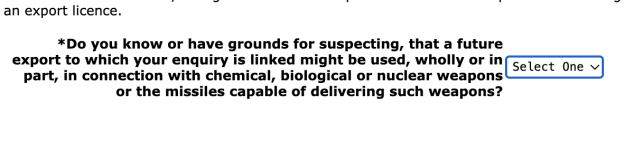
1765969999059.png

This is what it looks like when i apply for an export permit to export controlled goods. What do you think, when F-16s we're exported, the PAF would have said? No sir, never, we wouldnt do such a thing.

What do you think the export licenses were granted on the basis of then?

Just because Pakistan has a need, does not mean the world bends the knee to Pakistan's needs. While Pakistan may have desperately needed a strike asset, Pakistan also knew, if it had turned the F-16's into one, it was not to expect support, because the US selling Pakistan F-16's, which then we're turned into nuclear strikers, which then the US continued to support, is the clearest example of implicit support of strikes on India as it can get.


will defend literally any and everything.
I defend reality, i dont like to live in delusion.
Your whole argument about F-16s being cheap is a lie which is why now you have diverted to “cost vs capability” line.

Well if its regards to capability then J-10Cs knocks the F-16V out of the water any day, every day.

Beside the fact that PL-15 is more affordable and has equal if not better range to AIM 120-D.

And the fact that there is no end user agreement which we have in the F-16s.

What use was that depth of knowledge and tactics when it was the newly acquired J-10Cs which shot down the indian jets while the F-16s hid behind the JF-17s let alone the J-10s.

Dont give baseless arguments and follow your own advice for once - start stating facts, its not me who is being emotional here.
I dont actually know if this drivel is worth replying to, but ill entertain it for fun.

Did you personally develop the AIM120D? Did you strap yourself to it and count every km with a yard stick on a test launch?

Can you tell me the total investment the PAF made into the J10 platform?

Are you privy to the contracts of both? How are you making these assertions without knowing the front page from the back.

Talk about baseless arguments... The entire above is literally pulled straight out of your backside.

I rue wasting my time listening to the QUWA podcast if it had such biased, rude, non-sensical clowns like you speaking there as experts.

You have knowledge but you are clearly biased especially when it comes to American weapons.
Dont let the door hit you on the way out, while you're on your way to worship whatever new system you can get. Aviation, particularly combat aviation is not like buying a new car, yet, for some reason, you seem to think it is.
 
Not gonna throw shade at anyone, but (lately) it feels as if, "IF IT AIN'T VIPER UPGRADE - ITS WORTHLESS".

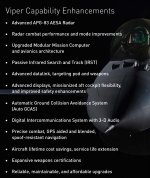
Which brings me to..., do people even know what is: Viper Upgrade

More importantly, do we even need everything that comes with "Viper Upgrade".

Some of the stuff in THAT upgrade is not only f#*kin' expensive, but maybe some stuff we don't need.

F-16 - Viper 01.jpg

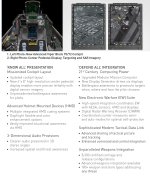
F-16 - Viper 02.jpg

F-16 - Viper 03.jpg

F-16 - Viper 04.jpg
I can only think of 3 Nations that have gone for the Viper Upgrade. Greece, Taiwan & Morocco.

The Auto GCAS is a great piece of equipment, and it has saved a number of lives in the USAF, but I just do not think the PAF needs such an equipment.

Not certain if the EW (Electronic Warfare) in the F-16 is the same one being supplied by L3Harris - or something designed In-House (Lockheed Martin).
 
Sorry if facts hurt your feelings. But cheap in cost could end up very expensive in capability.


Why am I insistent on the F-16? Find me another fighter the PAF has a history of excellence, tactics development, experience and in depth knowledge of.
I believe that equipping both the JF-17 and upgraded F-16s is not contradictory. Pakistan has a large number of third-generation aircraft that need replacing, and the domestically produced JF-17 is the best choice. Upgraded F-16s can continue to be used, and blindly replacing them would waste the airframe's service life and also waste the skills of F-16 pilots.

The J-10CE is an excellent air superiority aircraft, but there are only 20 units. The JF-17 is a multi-role aircraft, but its range and payload are limited. The F-16 can perfectly fill these gaps, achieving a balance between the two.
 
Not gonna throw shade at anyone, but (lately) it feels as if, "IF IT AIN'T VIPER UPGRADE - ITS WORTHLESS".

Which brings me to..., do people even know what is: Viper Upgrade

More importantly, do we even need everything that comes with "Viper Upgrade".

Some of the stuff in THAT upgrade is not only f#*kin' expensive, but maybe some stuff we don't need.

I can only think of 3 Nations that have gone for the Viper Upgrade. Greece, Taiwan & Morocco.

The Auto GCAS is a great piece of equipment, and it has saved a number of lives in the USAF, but I just do not think the PAF needs such an equipment.

Not certain if the EW (Electronic Warfare) in the F-16 is the same one being supplied by L3Harris - or something designed In-House (Lockheed Martin).

Theres two EW options, a NG option and a Harris one.

PAF already uses an older version of viper shield.

APG-83 is a stupidly capable radar, people just think of stuff in terms of ranges and call it. a day, but such levels of commonality with the F-35s APG-81 are a pretty good look, the 81 is probably the cream of the crop of radars.

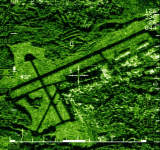
1765972863127.png
This level of fidelity from a SAR image is pretty unmatched, the amount of processing power and backend needed to produce something this good is intense.


1765972961694.png

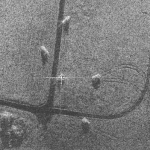
For reference, the APG-76 of the F4.


This turns the falcon into a whole new beast, theres a reason why operators are comfortable extending its life into the 2060's, because its a platform with STILL, tons of growth potential.

It only makes sense its a deeply guarded piece of kit to be fair, 95% software commonality with the F-35 is no joke. Software is king at the end, nobody wants anyone getting their hands on that.
 
I am no fighter jet geek, but there is some interesting subtext in this discussion, if any of the real knowledgeable ones would like to chip in and correct me.


the Chinese fighter jets in the may skirmish demonstrated dominance on electromagnetic disruption, they were able to create a network of silent vision, radars were off, watching and preying on the Indian jets without betraying location, deceiving and distracting. Networked and linked up, culminating in the button being pushed for the pl15

The losses don't represent just losses of jet but a complete failure of Indian war doctrine.

If you throw into the attack package 6 upgraded linked up f-16s, jets which Pakistan knows very very well, aligns the legacy fleet of f16s to the same potent, well considered and well executed doctrine, there is link 16 and there is link 17.

The gentleman on this show, were uncharacteristically complimentary and respectful, they really were, the whole show was to signal that Pafs air warfare doctrine has just strengthened its spine

The f-16 s, in their own words, now relevant for a decade more, in the way the Chinese jets are. The Americans are reinforcing the same dominance they already have across a larger fleet.


India is fighting the war in opeds, on youtube channels, paf quietly going about business
You’re not wrong to read subtext here, and your instincts are broadly aligned with how this episode lands from a Pakistani perspective.

A few clarifications and refinements, building on your points.

First, on the May skirmish and EM/networked warfare:
Pakistan’s position is not based on inference alone. The PAF moved early to anchor its account in radar data, comms recordings, and engagement timelines, presented publicly in a structured briefing. That matters. In modern air combat, credibility rests on sensor fusion and command-and-control records, not on delayed statements. Independent civilian-shot videos from inside India showing fresh wreckage only reinforced what Pakistan was already asserting operationally.

Whether one describes this as “EM dominance” or disciplined EM management, the core issue is that networked, off-board sensing and BVR execution worked as intended. Passive detection, centralised control, and shooter–sensor separation are not speculative concepts, they are how modern air forces plan to fight.

Second, on doctrine vs platform losses:
You’re correct that this was not simply about jets being lost. The more consequential issue is doctrinal stress. Indian strike packages relied heavily on stand-off launches from within their own airspace, yet still encountered an adversary able to cue BVR engagements effectively. That speaks to a mismatch in assumptions about survivability, escalation control, and EM discipline.

Calling it a complete doctrinal failure may be rhetorically strong, but it is fair to say that Pakistan’s air warfare model imposed costs and constraints India did not appear to anticipate.

Third, on F-16 upgrades and doctrinal scaling:
This is where the Indian analysts’ “uncharacteristic respect” becomes revealing. They are not praising Pakistan out of goodwill. They are acknowledging the bitter pill, that a platform Pakistan knows intimately is being re-integrated into a networked battlespace, extending the same logic already demonstrated by Chinese-origin fighters. Link-16 does not replace Link-17; it adds depth and scale, allowing legacy fleets to operate coherently within the same doctrinal framework.

That is why the analysts repeatedly stress “relevance till 2040.” They understand that familiarity plus networking is a force multiplier.

Finally, on narrative vs evidence:
The contrast you draw is fair. Pakistan presented operational data early and then largely disengaged from the media cycle. India’s response has been slower and more narrative-driven. Silence does not automatically equal superiority, but evidence presented once carries more weight than commentary repeated endlessly.

So yes, the subtext you’re picking up is real. The episode is not about celebrating Pakistan; it’s about signalling that Pakistan’s air combat doctrine has matured, held under pressure, and is now being reinforced structurally. That’s why the tone is uneasy rather than dismissive.
 
You’re not wrong to read subtext here, and your instincts are broadly aligned with how this episode lands from a Pakistani perspective.

A few clarifications and refinements, building on your points.

First, on the May skirmish and EM/networked warfare:
Pakistan’s position is not based on inference alone. The PAF moved early to anchor its account in radar data, comms recordings, and engagement timelines, presented publicly in a structured briefing. That matters. In modern air combat, credibility rests on sensor fusion and command-and-control records, not on delayed statements. Independent civilian-shot videos from inside India showing fresh wreckage only reinforced what Pakistan was already asserting operationally.

Whether one describes this as “EM dominance” or disciplined EM management, the core issue is that networked, off-board sensing and BVR execution worked as intended. Passive detection, centralised control, and shooter–sensor separation are not speculative concepts, they are how modern air forces plan to fight.

Second, on doctrine vs platform losses:
You’re correct that this was not simply about jets being lost. The more consequential issue is doctrinal stress. Indian strike packages relied heavily on stand-off launches from within their own airspace, yet still encountered an adversary able to cue BVR engagements effectively. That speaks to a mismatch in assumptions about survivability, escalation control, and EM discipline.

Calling it a complete doctrinal failure may be rhetorically strong, but it is fair to say that Pakistan’s air warfare model imposed costs and constraints India did not appear to anticipate.

Third, on F-16 upgrades and doctrinal scaling:
This is where the Indian analysts’ “uncharacteristic respect” becomes revealing. They are not praising Pakistan out of goodwill. They are acknowledging the bitter pill, that a platform Pakistan knows intimately is being re-integrated into a networked battlespace, extending the same logic already demonstrated by Chinese-origin fighters. Link-16 does not replace Link-17; it adds depth and scale, allowing legacy fleets to operate coherently within the same doctrinal framework.

That is why the analysts repeatedly stress “relevance till 2040.” They understand that familiarity plus networking is a force multiplier.

Finally, on narrative vs evidence:
The contrast you draw is fair. Pakistan presented operational data early and then largely disengaged from the media cycle. India’s response has been slower and more narrative-driven. Silence does not automatically equal superiority, but evidence presented once carries more weight than commentary repeated endlessly.

So yes, the subtext you’re picking up is real. The episode is not about celebrating Pakistan; it’s about signalling that Pakistan’s air combat doctrine has matured, held under pressure, and is now being reinforced structurally. That’s why the tone is uneasy rather than dismissive.

Excellent summing up
 
Even if the viper pales in comparison to J-10s in A2A it's still pretty damn good in the A2G stuff and can carry a heftier payload compared to the other aircraft in PAF's fleet.

This is exactly where the nuance lies. F‑16s have been historically effective in the A2S role - but our F‑16s can't, given their specific constraints.

Correct me if I'm wrong but here’s what our F‑16s can realistically employ/do in the A2S role (which itself is limited to tactical employment):
  1. Mk‑82 / Mk‑84 class unguided bombs
  2. GBU‑10/12/16 (Paveway‑II LGBs) - effective range roughly 10–15 km
  3. GBU‑31/32/38 (JDAM family) - practical employment range roughly 25–40 km
Now context matters here. First, PAF can legally employ the above ordnance only under an official declaration of war by India, to abide by the EUM‑bounded defensive use. Second, these are tactical strike weapons, suitable primarily for permissive or semi‑contested environments e.g. near‑frontline targets (assuming enemy air defenses have already been degraded).

For us, in a high‑intensity, full‑scale war scenario, their operational utility drops sharply. To employ these weapons effectively, our F‑16s must still operate inside or very close to contested airspace, exposing it to:
  1. Enemy IADS
  2. EW and GPS jamming
  3. Fighter interception
  4. Other point and area specific ADS
Even for near‑frontline targets, the limited stand‑off range means our F‑16s would have to offload ordnance well within the enemy’s defensive envelope, which negatively effects survivability and sortie sustainability.

Our F‑16s cannot employ:
  1. JDAM‑ER
  2. JSOW
  3. JASSM
  4. Other long‑range CMs and stand-off land/maritime strike weapons
  5. Modern long‑range anti‑radiation missiles for effective SEAD
These constraints effectively removes our F‑16’s ability to conduct strategic or deep strike, maritime strike, and stand‑off SEAD/DEAD operations. Despite the F-16 platform’s inherent strengths, unfortunately our F‑16 fleet is operationally boxed into a very narrow A2S role 🥲

PS Edit:
Even on A2A role our F-16 is boxed in because of the range on AIM-120-C5, with C8 it will have better operational utility (and though the signaling for that upgrade is there in the current upgrade package, whether C8s will make up the arsenal eventually remains to be seen).
 
Last edited:
I am no fighter jet geek, but there is some interesting subtext in this discussion, if any of the real knowledgeable ones would like to chip in and correct me.


the Chinese fighter jets in the may skirmish demonstrated dominance on electromagnetic disruption, they were able to create a network of silent vision, radars were off, watching and preying on the Indian jets without betraying location, deceiving and distracting. Networked and linked up, culminating in the button being pushed for the pl15

The losses don't represent just losses of jet but a complete failure of Indian war doctrine.

If you throw into the attack package 6 upgraded linked up f-16s, jets which Pakistan knows very very well, aligns the legacy fleet of f16s to the same potent, well considered and well executed doctrine, there is link 16 and there is link 17.

The gentleman on this show, were uncharacteristically complimentary and respectful, they really were, the whole show was to signal that Pafs air warfare doctrine has just strengthened its spine

The f-16 s, in their own words, now relevant for a decade more, in the way the Chinese jets are. The Americans are reinforcing the same dominance they already have across a larger fleet.


India is fighting the war in opeds, on youtube channels, paf quietly going about business
The Pakistan Air Force and the Chinese Air Force have conducted joint exercises multiple times. Both sides consider electronic warfare an important component of modern aerial combat. The J-10CE equipped with electronic warfare pods and the DA20 electronic jammer successfully intercepted the communications of the Indian Air Force, paralyzing its network and enabling Pakistan to achieve victory without any casualties.

India's early warning aircraft flew too far. If they had flown closer, I believe the Pakistan Air Force could have completely shot down all of India’s early warning aircraft. India’s Falcon early warning aircraft was jointly developed by China and Israel in 1996, and due to U.S. obstruction, it was eventually sold to India.

For a long time to come, India has already lost the capability to contest air superiority with Pakistan. In terms of electronic warfare, India is at an even greater disadvantage.
 

Users who are viewing this thread

Back
Top