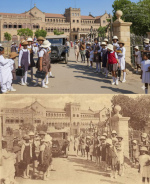
Old pictures of Pakistani Cities

View attachment 167243

AN OPEN AIR BIG SCREEN CINEMA IN KARACHI
1950s - 1970s

In the 70s, Karachi people used to go to watch movies in this biggest open cinema of the city on a big screen in their cars.
Can you tell the name of this cinema and did you ever happen to watch a movie here?

(Photo courtesy: Mr. Obaidullah Kehar)

This living standard of Karachi - Pakistan during 1950s is in match to Bombay, i guess.....
The true Pakistan and it's comparable cities to other parts of this region👍
🇵🇰
 
1766873683812.png


Karachi, Pakistan
·
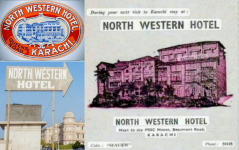
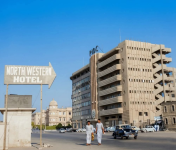
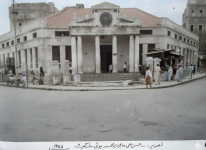
The North Western Hotel — built in 1908 along Queen’s Road near Karachi Cantonment Station — was once one of the city’s grand railway hotels.

Owned initially by the Jewish Wyse family from Austria, it welcomed travelers long before Karachi had modern hotels or highways.

After 1946, it came under the ownership of Agha Mohammad Yusuf, who introduced Agha’s Tavern and Agha’s Grill, making it a popular stop for continental and Pakistani food lovers.

For decades, it stood as a landmark for visitors arriving by train, a reminder of a Karachi that was elegant, quiet, and full of promise.

The hotel was finally demolished in the early 1990s, leaving behind nothing but rare photographs and fading memories.
 
1766873843855.png

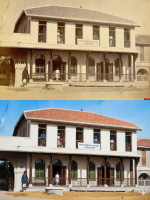
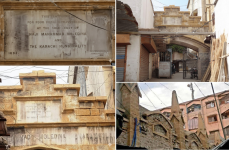
The Forgotten “Maulvi Musafir Khana”: A Lost Piece of Karachi’s Heritage

Hidden beneath the dust of forgotten history lies the “Maulvi Musafir Khana,” a travelers’ lodge built in 1893—54 years before the creation of Pakistan—by a local resident, Mola Deen, in cooperation with the municipal administration. His vision was simple yet noble: to provide free food and lodging to travelers arriving in Karachi from distant regions.

This rest house was also known as the “Maulvi Dharamshala,” a name that reflected the significant contributions of the local Hindu community, who not only supported its construction but also helped fund its operations for many years.

Its location on the bustling Bunder Road was carefully chosen. In those days, pilgrims traveling for Hajj from different cities would first arrive in Karachi and often stay for several days before boarding ships for their onward journey. Since this road led directly to the port, the Musafir Khana served as a convenient and essential stopover.

After the creation of Pakistan, the site took on a new role. It became a shelter for migrants arriving from India, much like several other historic buildings in the city. While some families eventually moved out, many settled permanently, later opening small shops and commercial units within the old structure.

Historians note that the municipal administration maintained the building until around 1955, after which it slowly faded from public memory. Today, most young Karachiites are unaware that such a place ever existed—a forgotten chapter of their city’s rich heritage, lost in the passage of time.
 
1766874963416.png


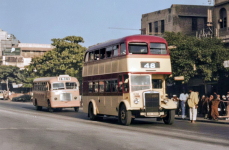
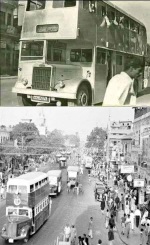
The iconic Double-Decker Bus Route No. 48 once ran through the bustling streets of Karachi, 1957 connecting Jama Cloth Market to Keamari — a vivid reminder of the city’s classic public transport era.

Restored Image
 
1766875057449.png

Hassan Ali Hothi Market, — built in 1926

At the corner of Barnes Street and Nabi Bux Road in old Ranchore Line, this graceful colonial-era marketplace once echoed with the sounds of shopkeepers, buyers, and city life. Once as lively as Empress Market,

It was named after Hasan Ali Hothi (1885–1957) — a generous philanthropist and municipal councillor who donated the land for its construction.

Do you know from which community he belonged?

Silawat Marwari Community belongs to Rajasthan. All historical and other old buildings located in Karachi was built/constructed by this community. They are involve in construction field since Mughal Emperor.
 
1766875233803.png


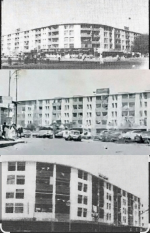
A glimpse of Al-Azam Square (Phase one) Sharifabad Federal B.Area Karachi, in its early days — apartments, shops, and stories frozen in time.
 
1766875281402.png


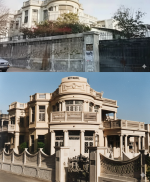
Moti Mahal, located in Jamshed Town, is one of the oldest residential buildings in Karachi. The name “Moti Mahal” translates to “Palace of Pearls.”

This is a restored and colorized version of the original photograph, which was taken before the Partition, when the Kripalani family — the original owners of the property — still lived there. The family remained in residence until 1947, after which they migrated to India following the Partition.
 
1766875326990.png

Parsi Bai Virbaiji School (BVS), Saddar, Karachi (est. 1873, British India) — The exterior of the building was originally part of the founder’s residence, which was later donated and transformed into the school.
 
1766875374790.png


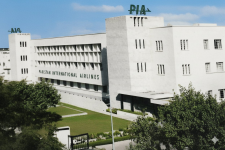
PIA’s operations began from Karachi in 1955 with the establishment of the Pakistan International Airlines Corporation (PIAC).

In 1956–57, a project was launched to construct PIA’s head office near Karachi Airport, aiming to manage all administrative affairs of the new national airline from a single center. The initial construction of the PIA Building was completed between 1958 and 1959.

Designed in a modern architectural style by leading Pakistani and foreign engineers of the time, the building represented contemporary design excellence.

The construction was supervised by the Civil Aviation Department along with PIA’s early Engineering and Finance wings.

According to government records from 1958–60, a huge amount was spent on developing PIA’s core infrastructure, which included the Karachi head office, maintenance base, and staff housing colonies.
 
1766875559406.png


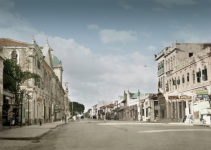
Early 20th Century,
Elphinstone Street .Karachi
Restored image.
Image courtesy: Philip Thornton

— Zaibunnisa Street Saddar Karachi.
 
1766875636977.png


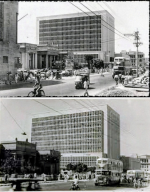
Peshawar
Karachi
 
1766875719721.png


The earlier years of a famous Institution in Saddar known as St. Joseph's Convent Girls School Karachi
 

Users who are viewing this thread

Pakistan Defence Latest

Back
Top