Vietnam Defense and News forum

According to the draft pre-feasibility study report for the North-South High-Speed Rail Project by the Vietnamese Ministry of Transport, the preliminary fare structure for the Hanoi-Ho Chi Minh City route is as follows:

Total distance: Approximately 1541 KM
VIP Class: 6.9 million Vietnamese Dong (1.28 RMB/KM)
Second Class: 2.9 million Vietnamese Dong (0.53 RMB/KM)
Third Class: 1.7 million Vietnamese Dong (0.31 RMB/KM)

In 2007, China established a minimum benchmark fare for high-speed rail: 0.2805 RMB/km.
In actual operation, the fares for Chinese high-speed rail are significantly higher than this benchmark fare, ranging from 0.46 to 0.74 RMB/km. ------ China's high-speed rail system operates under market-based pricing. The construction costs of high-speed rail lines vary significantly across different regions, resulting in considerable differences in ticket prices.

International Comparison: (For ease of comparison, all currency units have been converted to RMB)
Japan: 1.2-1.6
France: 0.85
Germany: 2.86
United States: 1.69

What are the actual prices of airline tickets for flights between Hanoi and Ho Chi Minh City? Vietnamese people would know best.

So, how do commercial companies make a profit?
Round trip air ticket HN-SN costs about $100-$240. Compare to high speed rail is a bit misleading. Those bidders Vinspeed, Thaco, and Vietnam railway operate a mixed model, they mix railway with property business combined with state subsidies.
The companies loan 80% money from the capital market, backed by the government, interest free, then pay back in 30 years or so.
The companies get access to the lands along the route, they develop and sell the properties.
The aim is making profit by selling properties.
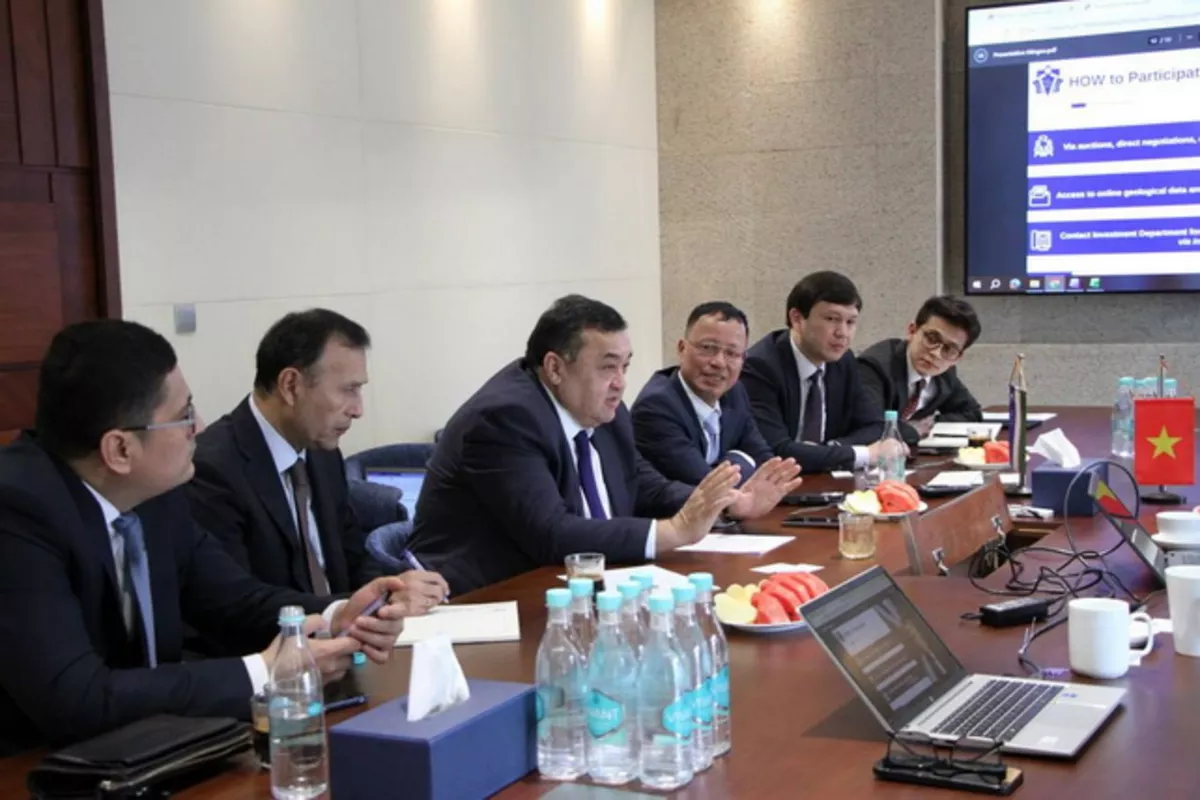
 
Vietnam’s Vingroup Seals Major Investment MoU with Uzbekistan

photo: UzDaily.uz

Vietnam’s Vingroup Seals Major Investment MoU with Uzbekistan​


Vietnam’s Vingroup has signed a Memorandum of Understanding (MoU) with Uzbekistan’s Ministry of Investment, Industry and Trade, marking a major step toward expanding bilateral economic cooperation and launching multi-sector investment projects in the country.

The agreement opens long-term investment opportunities for the Vietnamese conglomerate in Central Asia and strengthens economic ties between Vietnam and Uzbekistan, The Caspian Post reports via Uzbek media.

The signing ceremony was attended by Uzbekistan’s Deputy Minister of Investment, Industry and Trade Ilzat Kasimov and Vingroup Vice Chairman and CEO Nguyen Viet Quang.

Under the MoU, the two sides agreed to jointly explore and develop strategic cooperation opportunities in urban development, sustainable transport, tourism, leisure infrastructure, and other investment projects aligned with Uzbekistan’s development priorities.

Urban development: Uzbekistan is prepared to allocate around 1,000 hectares of land in a priority area of Tashkent for the creation of a large integrated urban complex. The project envisions residential neighborhoods, commercial and cultural zones, public facilities, and the establishment of a “Vietnam Town” - a modern district designed to promote cultural exchange and economic cooperation.

Sustainable transport: Vingroup proposed introducing electric taxis and urban mobility services based on VinFast electric vehicles, including the development of charging infrastructure. The initiative is expected to support Uzbekistan’s green transition and improve the quality of transport services in major cities.

Tourism and leisure infrastructure: The parties are also considering the creation of an integrated tourism and recreational hub featuring hotels, entertainment facilities, golf courses, and related infrastructure to unlock the country’s tourism potential.

The Uzbek government pledged to support Vingroup on regulatory issues, land allocation, licensing, and coordination with local authorities. In turn, Vingroup will prepare concept proposals, feasibility studies, and engage companies from its corporate ecosystem to implement the projects.

“We welcome Vingroup’s interest in cooperation. The company is a strategic partner for jointly exploring and implementing investment initiatives that align with Uzbekistan’s socio-economic priorities,” Kasimov said.

Nguyen Viet Quang noted that Uzbekistan is a high-potential market. “Through this memorandum, Vingroup aims to explore cooperation opportunities and develop urban areas, sustainable transport, and projects that bring tangible benefits to local communities,” he said.

The implementation of the MoU is expected to create favorable conditions for long-term economic growth, attract investment, and strengthen Uzbekistan’s position as a key investment hub in Central
 
@Michael
That’s another example, Vingroup makes money by selling properties, building shopping centers in Uzbekistan.. They will hardly make profit by selling cars.
Vietnam’s capitalism is some sort of HK’s capitalism. Most rich people make money by amassing property.

 
@Michael
That’s another example, Vingroup makes money by selling properties, building shopping centers in Uzbekistan.. They will hardly make profit by selling cars.
Vietnam’s capitalism is some sort of HK’s capitalism.
I completely understand what you mean. I also know that they will find other ways to generate profits.

However, we need to carefully review the figures. This financial gap is too large to be filled by real estate profits alone.
 
I completely understand what you mean. I also know that they will find other ways to generate profits.

However, we need to carefully review the figures. This financial gap is too large to be filled by real estate profits alone.
Where you can do a risk free business? There is none.

But If the gov gives 80% money interest free plus cheap lands that’s almost a risk free ticket to making money. The Vietnamese are very keen on property, only second to football, they don’t trust paper money. Most Vietnamese in overseas in Germany, France, US or elsewhere own property in most cases multiple properties.
 
Another example with a mix railway and property

A private company “Hoa binh” (peace) presents the first prototype of urban elevated “golden train”. Seems the people are retired railway engineers.

The idea: electric railway and social housing in a combo. The company promises cheap rail fare, low noise, cheap social housing, low land use, little to no state subsidies, low production costs by using domestic materials and manufacturing.

To view this content we will need your consent to set third party cookies.
For more detailed information, see our cookies page.
 
Where you can do a risk free business? There is none.

But If the gov gives 80% money interest free plus cheap lands that’s almost a risk free ticket to making money. The Vietnamese are very keen on property, only second to football, they don’t trust paper money. Most Vietnamese in overseas in Germany, France, US or elsewhere own property in most cases multiple properties.
Hanoi and Ho Chi Minh City are the two absolute core urban areas in Vietnam. The central region is almost negligible in comparison. This is a typical "dumbbell configuration." This characteristic is more suitable for the development of the civil aviation industry. Similar examples include the East Coast and West Coast urban clusters in the United States.

The Vietnamese government wants to use the North-South high-speed rail line to drive development in the central region along the route. Based on this objective, high-speed rail is indeed a very good choice.

However, high-speed rail is an extremely expensive project. In addition to the massive initial investment, its daily operating costs are also very high. Currently, most high-speed rail lines globally are operating at a loss. This doesn't even account for the return on initial investment.

Vingroup's proposal does mention that 80% of the project's funding would be provided by the government through a 35-year interest-free loan, as well as development rights for land surrounding the stations.
However, even with full interest-free loans from the government and development rights for surrounding land, it would still be difficult to operate profitably.
The civil aviation industry between Hanoi and Ho Chi Minh City is very developed, and its prices are already lower than the minimum operating cost per unit of high-speed rail.
The development of Vietnam's central region will take at least several decades.

Even without considering the return on initial investment (which you can consider as a completely free gift), and only considering daily operating and maintenance costs, this high-speed rail line will incur huge annual losses in its early stages. This cannot be offset by the development rights of the land surrounding the stations.

Reference data:
Indonesia's Jakarta-Bandung High-Speed Rail
Annual operating cost: Approximately US$155 million (labor, electricity, maintenance, etc. Excluding return on investment, loan interest, depreciation, and other indirect operating costs)
Annual revenue: Approximately US$130 million in 2024
The length of the North-South high-speed railway in Vietnam is ten times that of this high-speed railway.
 
Hanoi and Ho Chi Minh City are the two absolute core urban areas in Vietnam. The central region is almost negligible in comparison. This is a typical "dumbbell configuration." This characteristic is more suitable for the development of the civil aviation industry. Similar examples include the East Coast and West Coast urban clusters in the United States.

The Vietnamese government wants to use the North-South high-speed rail line to drive development in the central region along the route. Based on this objective, high-speed rail is indeed a very good choice.

However, high-speed rail is an extremely expensive project. In addition to the massive initial investment, its daily operating costs are also very high. Currently, most high-speed rail lines globally are operating at a loss. This doesn't even account for the return on initial investment.

Vingroup's proposal does mention that 80% of the project's funding would be provided by the government through a 35-year interest-free loan, as well as development rights for land surrounding the stations.
However, even with full interest-free loans from the government and development rights for surrounding land, it would still be difficult to operate profitably.
The civil aviation industry between Hanoi and Ho Chi Minh City is very developed, and its prices are already lower than the minimum operating cost per unit of high-speed rail.
The development of Vietnam's central region will take at least several decades.

Even without considering the return on initial investment (which you can consider as a completely free gift), and only considering daily operating and maintenance costs, this high-speed rail line will incur huge annual losses in its early stages. This cannot be offset by the development rights of the land surrounding the stations.

Reference data:
Indonesia's Jakarta-Bandung High-Speed Rail
Annual operating cost: Approximately US$155 million (labor, electricity, maintenance, etc. Excluding return on investment, loan interest, depreciation, and other indirect operating costs)
Annual revenue: Approximately US$130 million in 2024
The length of the North-South high-speed railway in Vietnam is ten times that of this high-speed railway.
Small but important difference: Indonesia’s HSR was built by China, Vietnam’s HSR will be built by Vietnamese engineers.
Building HSR is imperative to any country independent development. like building own cars, planes, tanks, ships, missiles, rockets, engines, etc. we can’t rely on foreigners.
You are right. HSR is expensive. But what are other options? Not building it?
There is a joke in Viet Nam, we eat instant noodles to save money to buy a house.
 
Vietnam mobility show 2025

hybrid a big competitor to full electric
Vinfast with new models from Minio, mini Van, mini school bus to bikes
big show for carmakers Vietnam, China, Korea and Japan
Carmakers from Germany, and other countries under the radar

To view this content we will need your consent to set third party cookies.
For more detailed information, see our cookies page.
 
Against all negative projections Vietnam’s population will continue to rise till 2059.
To view this content we will need your consent to set third party cookies.
For more detailed information, see our cookies page.
 
Hanoi changing fast
The US bombed almost everything to ashes during the war. Wars with China, Cambodia followed by western sanctions did the rest what remained.

To view this content we will need your consent to set third party cookies.
For more detailed information, see our cookies page.
 
How a company as Vingroup singlehanded builds entire cities and infrastructure?
A group of “Viet kieu”, literally means returning Vietnamese from abroad, looking houses to buy in Da Nang
Not cheap
Same price or even higher than in San Jose, San Diego, Los Angeles, places where most Vietnamese live.

To view this content we will need your consent to set third party cookies.
For more detailed information, see our cookies page.
 
Small but important difference: Indonesia’s HSR was built by China, Vietnam’s HSR will be built by Vietnamese engineers.
Building HSR is imperative to any country independent development. like building own cars, planes, tanks, ships, missiles, rockets, engines, etc. we can’t rely on foreigners.
You are right. HSR is expensive. But what are other options? Not building it?
There is a joke in Viet Nam, we eat instant noodles to save money to buy a house.
That's a big ambition and great leap forward considering Vietnam currently doesn't have any HSR tech and building HSR experience and it wants to build 1500 km North-South HSR with its own engineers, partly or all ? Germany or South Korea is not going to bring their own engineers to the project ? That's a big risk.
 
That's a big ambition and great leap forward considering Vietnam currently doesn't have any HSR tech and building HSR experience and it wants to build 1500 km North-South HSR with its own engineers, partly or all ? Germany or South Korea is not going to bring their own engineers to the project ? That's a big risk.
I am engineer I have no clue from railway. From what I see, Yes, HSR is difficult but it is not the most difficult thing to make ever. I did say this years ago: we can do that no problem at all, we just need 2 things: money and technology. We need blueprint. we start from there then we improve and develop own national HSR version.

Vinspeed and Thaco will hire German and Korean senior engineers and consultants. No mass of foreign workers and engineers needed.
 

Users who are viewing this thread

Pakistan Defence Latest

Country Watch Latest

Back
Top