Vietnam Defense and News forum

Vietnam replaces China as largest source of int'l students at Korean universities​

International students attend interviews at booths run by about 20 companies during the TU Global Job Fair 2025, held at Tongmyong University in Busan, Nov. 6. Yonhap

International students attend interviews at booths run by about 20 companies during the TU Global Job Fair 2025, held at Tongmyong University in Busan, Nov. 6. Yonhap
By Jung Da-hyun
  • Published Dec 24, 2025 4:15 PM KST
  • Updated Dec 24, 2025 6:00 PM KST

Korea hits major milestone in quest to become global education hub​

Korea’s international student population reached a record 300,000 this summer as universities looked overseas to offset domestic shortages. Long dominated by students from China, foreign enrollment is now diversifying, according to recent data presented during the Korean Association of Foreign Student Administrators (KAFSA) winter conference, where officials from nearly 200 universities gathered to discuss shifting trends.

In its place, a growing influx from Southeast Asia is reshaping the landscape, reflecting broader changes in regional economic ties and the expanding reach of Korean soft power.

The most striking increase has come from Vietnam. Since 2017, enrollment from the country has surged, overtaking China this year as the largest source of international students.

According to data from the Ministry of Justice, the number of international students staying in Korea reached a record high of 305,329 as of August.

Although enrollment figures from the Ministry of Education showed 253,000 international students as of April, residency and visa data suggest the government has effectively met its 2027 goal of attracting 300,000 students, nearly two years ahead of schedule.

As of August, Vietnamese students totaled 107,807, compared to 86,179 Chinese students, according to justice ministry data. Uzbekistan ranked third with 18,155 students, followed by Mongolia at 17,870, Nepal at 15,515 and Myanmar at 8,903.

An education ministry official said the rise in Vietnamese enrollment has been driven in part by a surge in students enrolled in Korean language programs. While the ministry does not track the sources of growth on a country-by-country basis, the official said demand for studying in Korea continues to rise across Asia, underscoring the country’s growing appeal as an education destination.

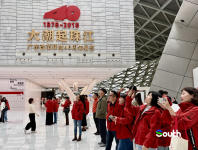
International students wearing traditional clothing pose for a selfie during the Ajou International Day event held at Ajou University in Suwon, Gyeonggi Province, Nov. 6. Yonhap

International students wearing traditional clothing pose for a selfie during the Ajou International Day event held at Ajou University in Suwon, Gyeonggi Province, Nov. 6. Yonhap

Regional trends in international enrollment reveal a widening divide. While Seoul remains home to the largest international student population overall, with 82,911 students, the fastest growth has been recorded outside the capital.

North Chungcheong Province exemplifies this trend, with international student numbers jumping 92.1 percent from a year earlier to 10,537.

The sharp increase has been largely driven by the province’s flagship K-international student initiative, which frames globalization of higher education as a pillar of regional development.

Since April, the provincial government has been piloting a localized student visa program that relaxes financial requirements for international students enrolled in fields tied to key regional industries, such as semiconductors, secondary batteries, bioengineering and cosmetics.

The program also allowed students who meet the minimum requirement of a Level 3 score in the Test of Proficiency in Korean to work up to 30 hours per week, offering greater flexibility than standard student visa restrictions with the aim of improving students’ financial stability while studying.

The economic impact of these initiatives is significant.

Research by the Chungbuk Research Institute estimated that attracting 10,000 international students generates about 212.2 billion won ($145.75 million) a year in spillover effects, underscoring how local governments are increasingly viewing international students not just as learners, but as contributors to regional revitalization.

Despite the overall rise in international student numbers, their academic concentration remains skewed away from science and engineering. STEM majors accounted for just 19 percent of international students.

The imbalance has persisted even as the government rolls out a series of initiatives to draw more international students into science and engineering, alongside expanded support measures targeting STEM fields.

In addition, the number of foreign faculty at Korean universities has declined in contrast to the rise of international student enrollment.

The number of full-time foreign professors fell 2.2 percent from a year earlier to 4,348, making up about 5 percent of all full-time faculty. The figure marks a continuing downward trend. Korea had more than 6,000 foreign full-time faculty members in 2014, but numbers have steadily declined since then.

Foreign faculty ratios are a key measure of internationalization used by global university ranking agencies such as QS, underscoring the need for diversity not only among students but also within the ranks of faculty.
international students
higher education


international students
higher education
Jung Da-hyun Profile Image
Jung Da-hyun

Jung Da-hyun is a reporter at The Korea Times, covering social issues in Korea, including foreign residents, education, environment and politics. Driven by a deep interest in people’s stories, she focuses on investigative and feature reporting through direct interviews and field coverage. She received the Amnesty International Korea Media Award for her “Deepfake Crisis at Schools” series. Reach her at [email protected]. Always open to hearing your stories.
 
A country on the fast track to first world.

What you can do without religious zealots holding you back!!
Not so quick
In 2045, so we are still 20 years away according to gov projection. and $1 trillion in infrastructure investment, upgrading industrial and manufacturing.
As for Bangladesh, I think first and foremost political stability domestic and abroad, administration reform, education, infrastructure investment.
Actually that’s all, the basic formula for all countries.
 
Not so quick
In 2045, so we are still 20 years away according to gov projection. and $1 trillion in infrastructure investment, upgrading industrial and manufacturing.
As for Bangladesh, I think first and foremost political stability domestic and abroad, administration reform, education, infrastructure investment.
Actually that’s all, the basic formula for all countries.

Good luck, bro!

According to this Lady - Sylhetis are genetically closer to Vietnam than Indians.

Ever since hearing that I have become very fond of Vietnamese people and your food. 😂
 
VF3
seems the guys have fun.
To view this content we will need your consent to set third party cookies.
For more detailed information, see our cookies page.
 
Planning to visit Vietnam next month. Hope to see your wonderful country and some of its stunning sights.

In particular, given my interest in all things military, the Cu Chi tunnels will be a highlight. The battlefield around Dien Bien Phu may be a bridge too far this time.
 
Vingroup surprisingly withdraws from the bid of building North-South HSR. The company will focus on building the HSR northern and southern sections and multiple other projects across Vietnam.

So as it is Thaco remains the sole bidder for the $61 billion HSR.

To view this content we will need your consent to set third party cookies.
For more detailed information, see our cookies page.

I saw this news reported in the Chinese media today.

I think this is a wise move by Vingroup. Vietnam's north-south high-speed rail project is not something they can afford.
 
I saw this news reported in the Chinese media today.

I think this is a wise move by Vingroup. Vietnam's north-south high-speed rail project is not something they can afford.
That’s expected. The company received a warning from the central bank about the risk of credit rating due to high leverage. In addition the gov doesn’t want a monopoly on the high speed railway. Vingroup has received contracts to build two HSR sections, getting the third HSR section is not good.
 
Although Vietnam is the largest steelmaker in ASEAN, no company until now can make special steel for HSR, but that’s about to change.
Vinmetall and Hoa Phat steel rail soon churn out steel rail tracks for high speed rail.

To view this content we will need your consent to set third party cookies.
For more detailed information, see our cookies page.
 
How to make money from nothing or why land prices double from 40m to 80m per square meter after Vingroup launched the construction of Hanoi sporting area.
925,000 billion VND is about 35 billion USD

To view this content we will need your consent to set third party cookies.
For more detailed information, see our cookies page.
 
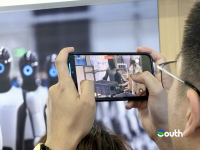
A Vietnamese media group visits Shenzhen with special interests on robots that the Chinese want to deploy to control Vietnam border. Some people may want to copy and make clones.
1766747106995.png
1766746866627.png
1766746782671.png
 
Vietnam builds one of world’s most advanced waste to energy power plant using German technology. House and industrial wastes are sorted, burned by 1,000 degree Celsius with minimum environmental pollution.

To view this content we will need your consent to set third party cookies.
For more detailed information, see our cookies page.
 

Sun Group breaks ground on Vietnam’s Van Don casino resort​

Published December 26, 2025
4 Min Read
clipboard_image_d3ab9635dd4d19b54428ef00db719bd9-860x573.jpg

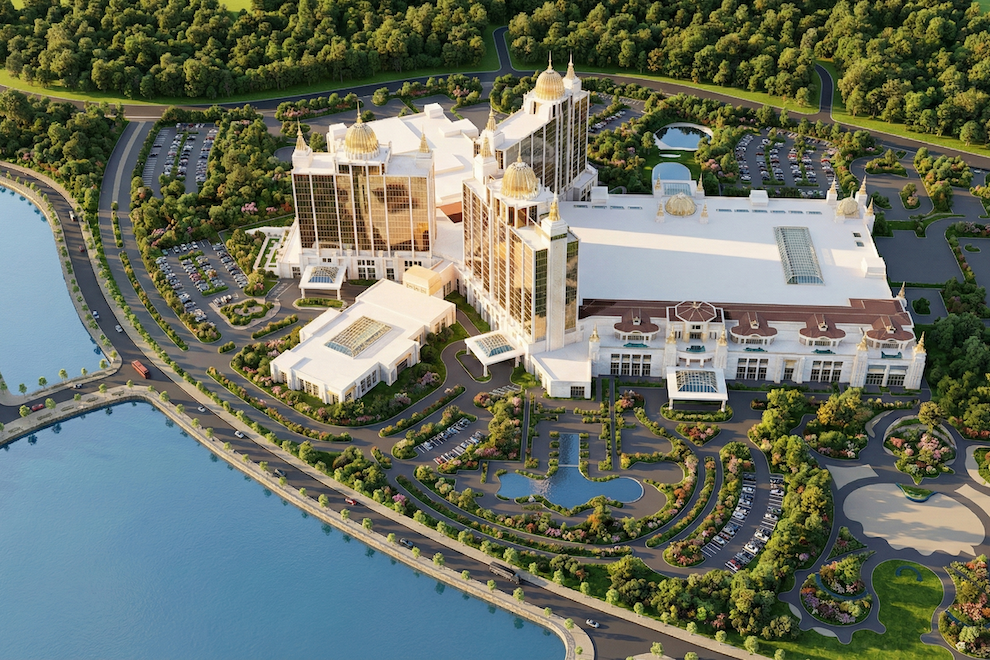
Vietnam’s Sun Group broke ground on December 19 on what it calls an “integrated casino tourism services complex”, located in the Van Don Economic Zone in the country’s Quang Ninh province. The project is being promoted as a large-scale investment, with a total price tag of “up to US$2 billion”, Sun Group said in a press release.

The complex is being developed across a site exceeding 244 hectares (603 acres), the company added.

Sun Group stated: “The project is planned under a modern ‘resort city’ model, aiming to create a regional-scale entertainment and tourism destination meeting international standards, integrating a wide range of tourism, accommodation, commercial, and entertainment functions, and operating on a 24/7 basis.”

Sun Group said in August that it had been selected by the country’s authorities as the investor for a US$2-billion resort scheme at Van Don, on the northern coast of Vietnam, which would be permitted to include a “high-class casino”.

The Van Don project was approved in principle by the country’s prime minister in a decision dated June 27 this year. The concept, however, dates back further. It was included in a 2017 government decree establishing a pilot scheme permitting Vietnamese nationals to gamble at selected casinos; eventually, the Van Don development – which had already been linked at the time in media reports to Sun Group – did not move ahead until now.

According to the latest company press release, the resort’s first phase will feature “a large-scale hotel complex under the Marriott brand with thousands of international-standard rooms, combined with beachfront resort villas, commercial shophouse zones, and a comprehensive system of large-scale service and entertainment amenities.”

Casino-Van-Don-Sun-Group.png

Sun Group stated in the release that a “key highlight” of the project (pictured in an artist’s rendering) is the “pilot casino gaming and entertainment area allowing Vietnamese citizens to participate in accordance with government policy”.

The firm added that the casino would enhance Van Don’s tourist attractiveness and help to “establish a model capable of competing with major global entertainment destinations” such as Macau, Singapore and Las Vegas, in the US state of Nevada.

According to the press release, the casino component is scheduled to be inaugurated in 2028, with full project completion targeted for the fourth quarter of 2034.

The document quoted Nguyen Thai Hoai Anh, deputy general director of Sun Group, as saying: “With the orientation toward developing a world-class resort city, together with the pilot policy allowing Vietnamese citizens to participate in gaming entertainment, we expect the project to contribute to the formation of a new, well-regulated, and sustainable service sector.”

She added: “More importantly, it will serve as a driving force helping Van Don move closer to its goal of becoming a modern marine economic zone and a regional-scale tourism and entertainment hub, delivering long-term value to the community and the local economy.”
 
That’s expected. The company received a warning from the central bank about the risk of credit rating due to high leverage. In addition the gov doesn’t want a monopoly on the high speed railway. Vingroup has received contracts to build two HSR sections, getting the third HSR section is not good.
According to the draft pre-feasibility study report for the North-South High-Speed Rail Project by the Vietnamese Ministry of Transport, the preliminary fare structure for the Hanoi-Ho Chi Minh City route is as follows:

Total distance: Approximately 1541 KM
VIP Class: 6.9 million Vietnamese Dong (1.28 RMB/KM)
Second Class: 2.9 million Vietnamese Dong (0.53 RMB/KM)
Third Class: 1.7 million Vietnamese Dong (0.31 RMB/KM)

In 2007, China established a minimum benchmark fare for high-speed rail: 0.2805 RMB/km.
In actual operation, the fares for Chinese high-speed rail are significantly higher than this benchmark fare, ranging from 0.46 to 0.74 RMB/km. ------ China's high-speed rail system operates under market-based pricing. The construction costs of high-speed rail lines vary significantly across different regions, resulting in considerable differences in ticket prices.

International Comparison: (For ease of comparison, all currency units have been converted to RMB)
Japan: 1.2-1.6
France: 0.85
Germany: 2.86
United States: 1.69

What are the actual prices of airline tickets for flights between Hanoi and Ho Chi Minh City? Vietnamese people would know best.

So, how do commercial companies make a profit?
 

Users who are viewing this thread

Pakistan Defence Latest

Back
Top