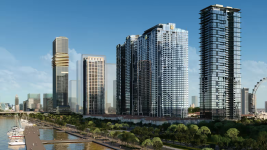
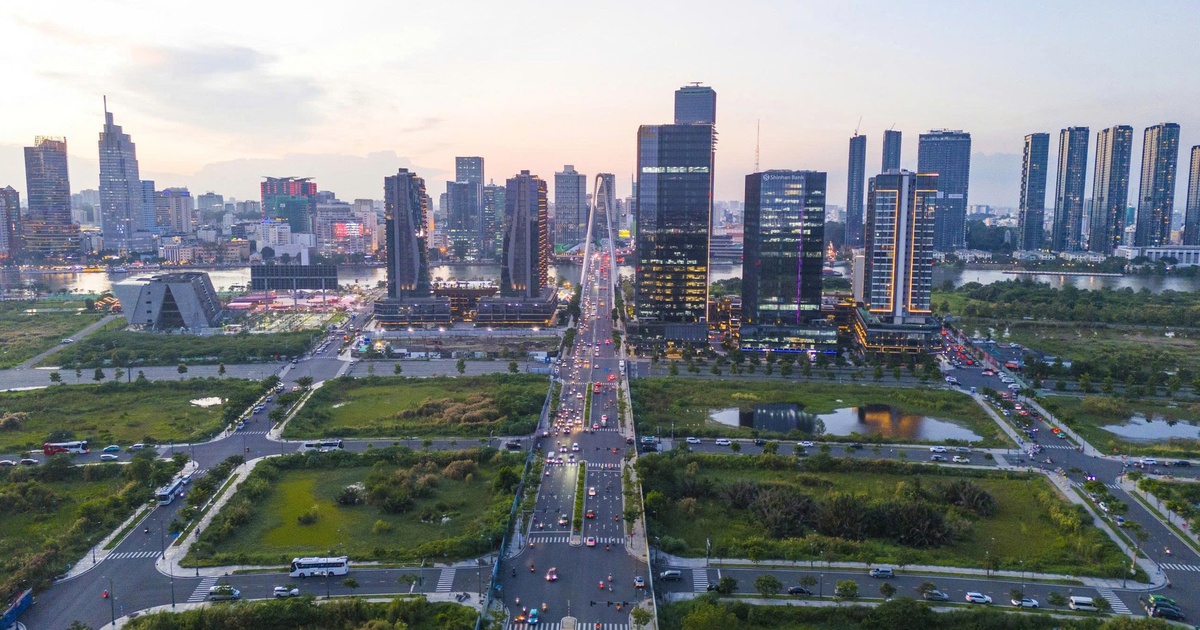
Vietnam's recent rise also reinforces Bangladesh's failings.
The Vietnamese were ravaged by a horrific war that devastated them but they arose - to use that much-used cliche - like a phoenix from the ashes.
This was from last year.
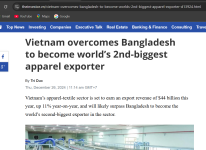
Vietnam’s apparel-textile sector is set to earn an export revenue of $44 billion this year, up 11% year-on-year, and will likely surpass Bangladesh to become the world’s second-biggest exporter in the sector.

theinvestor.vn
They may not have overtaken us in garments exports.....yet.
But they could do soon.
Read this:
Bangladesh and Vietnam : Two Post-War Journeys, Two Very Different Development Stories
KHAN TARIQUL ISLAM, FCA
Lead Consultant- Former Banker
December 11, 2025
INTRODUCTION
Bangladesh and Vietnam - both countries began their modern histories standing on the same kind of rubble. War-scarred economies, shattered infrastructure, food insecurity, almost no industry, and a global perception that survival itself would be a struggle. In the mid-1970s, the world looked at Bangladesh and Vietnam as two of the poorest nations on earth, each trying to rebuild from conflict with very little in hand.
Vietnam pushed aggressively into structural reforms. It opened markets, diversified exports, strengthened its bureaucracy, cleaned up the investment climate, and slowly built a manufacturing powerhouse that now competes with Thailand, China, and Malaysia. Its export base expanded across electronics, machinery, agriculture, footwear, textiles, and high-tech assembly lines. Foreign investors lined up because Vietnam made itself predictable, efficient, and disciplined.
Bangladesh took a different road. The country made important progress in human development and built an impressive ready-made garments industry, but remained stuck with a narrow export base, weak institutions, politicised banking, chronic revenue shortages, and a private sector dominated by a few vested interests. Instead of widening its industrial footprint, Bangladesh doubled down on RMG for decades and allowed other sectors to wither. While Vietnam used reforms to create opportunities, Bangladesh layered exceptions, patronage, and forbearance until they turned into structural constraints.
Today the contrast is stark. Vietnam’s exports are larger than its GDP; Bangladesh’s exports struggle to reach a quarter of GDP. Vietnam brings in tens of billions in FDI every year; Bangladesh barely attracts a fraction of that. Vietnam turned governance, discipline, and diversification into hard economic power. Bangladesh survived, even grew, but did so with a fragile foundation that now shows its cracks in the banking system, the fiscal structure, and the competitiveness of its industries.
The Bangladesh War started and ended in 1971. In
1972, Bangladesh’s entire economy was 4worth barely
USD 6.3 billion, and the average citizen lived on about
USD 94 a year. The Vietnam War continued for decades ended in 1975. In
1976, Vietnam’s GDP was roughly
USD 4.5 billion, and per-capita income hovered around
USD 95.Half a century later, the scale of the divergence is impossible to ignore. Bangladesh’s GDP has grown to
USD 460–470 billion, and per-capita income now sits around
USD 2,700–2,800.Vietnam, with a far smaller population, has reached
USD 430–450 billion, but its per-capita income is much higher,
USD 4,300–4,500 .
Two nations began at nearly the same point in history. Five decades later, they tell two very different economic stories — one shaped by diversification and discipline, the other constrained by concentration and hesitation. The gap didn’t appear overnight; it was built by choices. The rest of this article explains how those choices created two completely different futures — and what Bangladesh can still change before this divergence becomes irreversible.
POLITICAL DEVELOPMENT AFTER THE WARS: STABILITY, INSTABILITY, AND THEIR ECONOMIC CONSEQUENCES
Bangladesh: From Coups and Street Battles to Dominant-Party Rule and Now a Fragile Transition
Bangladesh emerged from the 1971 war with a parliamentary constitution and huge moral authority concentrated in Sheikh Mujibur Rahman. Within four years, that experiment collapsed. In 1975, Mujib abolished multi-party competition and introduced a one-party BAKSAL system; a few months later he was assassinated in a coup, triggering a long period of military interventions, counter-coups and short-lived governments. Ziaur Rahman and later Hussain Muhammad Ershad both ruled as military strongmen, formally reintroducing multiparty politics but keeping real power under uniforms until mass protests forced Ershad from office in 1990.
The 1990s and early 2000s brought a form of competitive democracy, but it was intensely confrontational. The BNP and Awami League alternated in power, and hartals, boycotts and street violence became normal instruments of politics. Precisely because trust was so low, the parties agreed on a non-partisan caretaker system to run elections, which worked reasonably well in 1991, 1996 and 2001. But the 2007–08 military-backed caretaker government showed how easily that mechanism could be hijacked.
Once Sheikh Hasina returned to power in 2009, she removed the caretaker system through the Fifteenth Amendment in 2011 and consolidated de facto one-party dominance. Elections in 2014 and 2018 were boycotted or widely criticised as uncompetitive. Opposition leaders were jailed, security forces were used against critics, and the media space shrank. Human rights organisations routinely described this period as a damaged or hollowed democracy in which formal institutions existed but checks and balances were systematically weakened.
That long phase of “stable authoritarianism” ended violently in 2024. Student-led quota protests turned into a nationwide uprising; security-force repression killed hundreds, possibly more than a thousand people; and Hasina fled the country in August 2024. An interim government led by Muhammad Yunus, backed by the military and protest leaders, took over, banned the Awami League under a revised anti-terrorism framework, and promised reforms and new elections.
Today, Bangladesh is in a politically sensitive transition. On paper, its freedom score has improved and press and internet freedom have recovered somewhat under the interim administration. But the country still has banned parties, open questions about the role of the military, reports of retaliatory abuses, and national elections now pushed to 2026, with the caretaker system restored only for elections after that. In other words, Bangladesh oscillates between periods of open confrontation and periods of tight control. That pattern has repeatedly disrupted long-term policy consistency, weakened institutions, and made every change of government feel existential rather than routine.
Vietnam: After the War, Authoritarian Continuity with High Policy Stability
The Vietnam War was not a short conflict; it spanned two decades and reshaped an entire nation. The fighting began in the mid-1950s, and the United States entered the war formally in 1965 after a decade of advisory support. Full-scale combat continued until 1973, and the war finally ended with the fall of Saigon in April 1975. The human cost was staggering: more than 58,000 American soldiers were killed, over 150,000 were wounded, and more than 1,500 are still listed as missing in action. For Vietnam, the losses were far greater — millions of civilians and soldiers dead, displaced, or maimed, entire regions destroyed, croplands poisoned, and infrastructure reduced to rubble. As if the devastation were not enough, the country then endured nearly 19 years of U.S. trade sanctions and economic isolation until the embargo was lifted in 1994. The war and the long embargo together pushed Vietnam into deep poverty, leaving it one of the poorest countries in the world at the time — a starting point that makes its later economic transformation even more remarkable.
Vietnam’s political story after 1975 is almost the mirror image. There was no alternation of parties, no coups, no real electoral competition. The Communist Party of Vietnam (CPV) has remained the single centre of power from the fall of Saigon to today. The state was highly repressive in the immediate post-war period and remained ideologically rigid until the mid-1980s, but the political structure itself did not fracture.
The real turning point was Đổi Mới in 1986, when the Party leadership authorised a shift from central planning to a market-oriented “socialist-oriented” economy. That reform was entirely top-down and executed within the one-party system: ministries, provincial committees and state enterprises were expected to deliver growth as a political mandate. Since then, leadership has changed only through controlled Party congresses and internal reshuffles, not through competitive elections or street uprisings.
By every democratic metric, Vietnam remains an authoritarian state. Freedom House classifies it as “Not Free” with a global score around 20/100; political opposition is banned in practice, independent media are not allowed, and recent years have seen some of the harshest crackdowns on activists and online speech in decades. Anti-corruption drives have toppled presidents and senior officials, but always within Party-managed procedures rather than through open political competition.
At the same time, that continuity has produced a very high degree of macro-political stability. Investors and domestic actors operate under a predictable one-party framework. Development strategies are written into five-year and ten-year plans, and the Party is now even debating targets like 10 percent annual growth and upper-middle-income status by 2030. Governance is far from clean, but the rules of the game change slowly and rarely under crisis pressure, which is very different from Bangladesh’s stop-go pattern of coups, uprisings, and boycotts.
How Political Stability Helped or Hurt Development
For development, the difference is not “democracy versus authoritarianism” in theory, but
how each system actually behaved. Bangladesh had more pluralism on paper, but its politics were often zero-sum, personalised, and street-centric. Successive governments used the state to reward allies and punish opponents; opposition parties responded with boycotts and shutdowns. Economic reforms were frequently politicised, reversed, or undercut by patronage. Periods of rapid growth happened, but they were never underpinned by a stable, rules-based political settlement.
Vietnam’s system violated many civil and political rights, yet it provided a consistent framework for long-term economic decision-making. The CPV could commit to export-led industrialisation, invite FDI, build industrial zones, sign trade agreements and then follow through over decades without fearing that an opposition victory would immediately tear up the strategy. That continuity helped create the environment in which Vietnam climbed up the value chain, while Bangladesh remained stuck in a narrow, RMG-centric model.
Right now, Bangladesh is in flux: freer than during the late Hasina years by some indicators, but still in a risky transitional phase with banned parties, unsettled rules of competition, and a heavy imprint of the security forces on politics. Vietnam, in contrast, remains a tightly controlled one-party state under the CPV, with little political freedom but a high degree of regime stability and clear continuity in economic strategy.
Vietnam converted political continuity into a coherent development project, even at the cost of political freedoms. Bangladesh never managed to turn its messy, competitive politics into a stable, rules-based system, and when it finally achieved “stability” under one dominant party, that stability came with institutional capture and democratic erosion rather than with disciplined, broad-based development.
BANGLADESH — THE DEVELOPMENT TRAJECTORY
From War to a Fragile Market Economy
Bangladesh emerged from the 1971 war with an economy that was broken in every direction: GDP under USD 10 billion, industrial output barely functioning, and exports so small that jute alone accounted for almost everything. Through the late 1970s and 1980s, the country slowly moved from state control to private enterprise. Remittances became a lifeline and light manufacturing started taking root, but the institutional base stayed thin.
The Growth Phase
By the early 2000s, the economy began expanding faster. Urbanisation accelerated, the labour force became more integrated into global supply chains, and the ready-made garments sector created a stable export engine. Over time, the numbers shifted dramatically:
- GDP (2024) roughly USD 460–470 billion, making Bangladesh the 35th-largest economy globally.
- GDP per capita around USD 2,700–2,800, though this masks deep structural weaknesses.
- Remittances consistently USD 20–22 billion per year, one of the biggest inflows in South Asia.
But the biggest driver of external earnings remained exports, and here the structural imbalance became stark.
The Export Reality
Bangladesh exports goods worth roughly
USD 55–60 billion a year. The issue isn’t the size — the issue is the concentration.
- Exports as % of GDP: only 12–13 percent, one of the lowest among export-dependent developing economies.
- RMG share: about 84–86 percent of total exports.
- Non-RMG exports: barely USD 9–10 billion, spread thinly across jute, leather, frozen fish, light engineering, pharmaceuticals, and others.
In other words, four-fifths of the country’s export income depends on a single product category built on low wages, low technology, and razor-thin margins. This is not diversification; it is survival with concentration risk.
A Growing Mismatch in the Economy
Today Bangladesh shows both strength and strain:
- The domestic economy is bigger, but still dependent on consumption rather than productivity.
- The export engine is strong, but dangerously narrow.
- The banking sector has grown, but also carries NPL ratios above 30 percent (economic reality) and capital shortfalls in the tens of billions of dollars when measured accurately.
- Public revenue remains stuck at 7.5–8 percent of GDP, limiting state capacity.
- Private investment stagnates around 23 percent of GDP, far below what is needed for a transformation.
Bangladesh has made important gains — human development, poverty reduction, women’s employment, and steady growth for two decades. But the structural foundation of the economy has not kept pace. Too much depends on RMG, too little has diversified, and institutional weaknesses have accumulated into systemic risks.
This is the backdrop against which Vietnam’s story becomes striking, because both countries started from the same post-war ashes, yet built two very different economic architectures.
VIETNAM — THE DEVELOPMENT TRAJECTORY
From War Devastation to Economic Reforms
Vietnam stepped out of the long Indochina and Vietnam Wars with a level of destruction comparable to Bangladesh’s own post-1971 situation. Through the late 1970s, the economy was centrally planned, ration-driven, and isolated. Inflation ran above 300 percent, agriculture barely met subsistence needs, and industrial output was stagnant.
Everything changed in
1986, when Vietnam launched
Đổi Mới, a sweeping reform program that opened markets, encouraged private enterprise, liberalised trade, and welcomed foreign investment. This single shift rewired the country’s economic DNA.
The Growth Take-Off
Over the next three decades, Vietnam built one of the most successful development trajectories in Asia, combining export expansion, manufacturing depth, and disciplined governance.
Key numbers show the magnitude of the transformation:
- GDP (2024): about USD 430–450 billion, nearly identical to Bangladesh despite having half the population.
- GDP per capita: around USD 4,300–4,500, almost 60–70 percent higher than Bangladesh.
- FDI inflow: roughly USD 20–30 billion per year, among the highest in the developing world relative to GDP.
Vietnam’s growth model did not rely on one sector. It deliberately built multiple export engines.
The Export Machine
Vietnam’s external sector tells the real story of its rise:
- Exports (2024): approximately USD 355–370 billion.
- Exports as % of GDP: over 90–100 percent, one of the highest ratios in the world.
- Top export sectors: electronics, computers, machinery, phones, footwear, textiles, agriculture, furniture, seafood.
Unlike Bangladesh, no single category dominates.
- Electronics + phones: roughly 35–40 percent of total exports.
- Textiles & garments: 10–12 percent.
- Footwear: 6–8 percent.
- Agriculture & seafood: 8–10 percent.
- Furniture & wood products: 7–8 percent.
This is what a diversified export base looks like — multiple industries, each building technology, skills, supply chains, and long-term competitiveness.Vietnam didn’t just build factories; it built ecosystems.
A High-Discipline Economic Structure
Vietnam’s development model stands out for its coherence:
- Public revenue: around 18–20 percent of GDP, giving far more fiscal space than Bangladesh.
- Investment rate: often 30–32 percent of GDP, supporting infrastructure and industrial expansion.
- Banking sector: not free of problems, but supervised with tighter discipline and rapid interventions when needed.
- Business environment: predictable, export-oriented, and aggressively investor-friendly.
- Labour and skills: steady migration into high-value manufacturing and technology assembly.
Vietnam turned its reforms into a long-term growth strategy, not a temporary boost. It kept export diversification at the centre of its policy, resisted elite capture of the financial system, and aligned its bureaucracy around attracting global industry leaders. That is why Samsung, Intel, Apple suppliers, Nike, and hundreds of multinational firms built major bases in Vietnam.Vietnam’s development story is not just about growth; it is about intentional, disciplined, export-driven transformation — the kind Bangladesh has struggled to achieve despite similar starting conditions.
BANGLADESH VS VIETNAM — THE DIVERGENCE IN KEY ECONOMIC INDICATORS
Population
- Bangladesh: about 170 million ; Vietnam: about 100 million
GDP (USD, 2024) and GDP per capita (USD)
- Bangladesh: 460–470 billion; Vietnam: 430–450 billion
- Bangladesh: 2,700–2,800; Vietnam: 4,300–4,500
External Sector
- Exports of goods (USD) - Bangladesh: 55–60 billion; Vietnam: 355–370 billion
- Exports as % of GDP - Bangladesh: 12–13 percent; Vietnam: 90–100 percent
- Foreign exchange reserve (USD) – Bangladesh : 31 billion ; Vietnam : 86 billion
- FDI inflow (annual) - Bangladesh: 2–3 billion; Vietnam: 20–30 billion
- Export concentration - Bangladesh: RMG accounts for 84–86 percent of exports; Vietnam: Highly diversified; no single sector above 40 percent
Public Finance
- Public revenue (% of GDP) - Bangladesh: 7.5–8 percent; Vietnam: 18–20 percent
- Public debt ( % of GDP) – Bangladesh : 40% ; Vietnam : 34%
Investment rate (% of GDP)
- Bangladesh: 22–23 percent; Vietnam: 30–32 percent
Banking sector NPLs (economic reality)
- Bangladesh: above 30 percent; Vietnam: around 5 percent officially; 8–10 percent adjusted
Business environment
- Word Bank Doing Business Ranking (2020) – Bangladesh : Rank 168th ( out of 190 economies ) ; overall score 45; Vietnam : Rank 70th ( out of 190 economies ) ; overall score 69.8; Vietnam
- Transparency International’s Corruption Perception Index (CPI) – Bangladesh: Scored 23 out of 100 indicating high perceived corruption; Vietnam: Scored 40 out of 100, significantly higher score than Bangladesh.
Graduation from United Nations “Least Developed Country (LDC)” Status
- Bangladesh : 2026 ( earliest possible year); Vietnam : 2019
What These Numbers Reveal
Bangladesh and Vietnam started from nearly identical post-war poverty, but their economic paths gradually pulled apart. Vietnam built a production-driven, export-heavy model. Bangladesh grew too, but remained tied to a narrow base.Vietnam uses its 100 million people to produce USD 355–370 billion in exports. Bangladesh, with 70 million more people, produces barely USD 55–60 billion. That single contrast explains almost everything else: Vietnam attracts ten times more FDI, invests more of its GDP every year, and earns far more fiscal space through higher revenue.
Bangladesh’s structure is built around one pillar — garments — which delivers income but not transformation. Vietnam built multiple pillars: electronics, machinery, phones, footwear, agriculture, furniture, seafood. None of them dominate, but together they create depth, technology, and resilience. Even in banking, the difference is about discipline. Bangladesh’s NPL crisis reflects years of forbearance and political interference. Vietnam’s numbers aren’t perfect, but the system is intervened, recapitalised, and corrected far more aggressively.
Two countries began with similar handicaps. One used reforms to create a diversified export machine. The other relied on a single sector and allowed weaknesses to accumulate. The outcome is visible in every indicator.
HOW BANGLADESH’S ECONOMY ARRIVED HERE
A Narrow Export Base That Never Broadened
When garments took off in the 1980s and 1990s, it seemed like the beginning of a wider industrial transformation. But Bangladesh never moved beyond that first step. RMG slowly absorbed almost the entire export landscape, eventually rising to 84–86 percent of total exports. Other sectors never received comparable policy attention, and there was no serious push into technology, electronics, machinery, or mid-level manufacturing. What emerged was an export economy tied overwhelmingly to a single product line built on low wages rather than industrial depth.
A Revenue System That Starved the State
For decades, Bangladesh has operated with a tax-to-GDP ratio of just 7.5–8 percent. Without borrowing, this leaves the state chronically short of funds. It struggles to invest in modern infrastructure, build the institutions needed for advanced industry, support research or innovation, or improve public services. Vietnam, by collecting more than double this share of GDP in revenue, gave itself the fiscal space to plan, invest, and reform at scale — something Bangladesh never achieved.
A Banking System Undermined by Influence and Forbearance
A well-functioning banking system is the backbone of any developing economy, yet Bangladesh weakened its own by tolerating chronic dysfunction. High NPLs were allowed to persist for years. Large-scale rescheduling and evergreening became routine. Boards were captured, lending was often influenced, and losses were understated through inadequate provisioning. When banking discipline erodes, the real economy loses its engine, and that is exactly what happened.
Policy Capture by a Small Circle of Interests
Much of the country’s economic architecture has long been shaped by a small group of powerful interests. Incentives, permissions, credit access, and regulatory exceptions frequently flow to the same circle. This distorts competition, prevents new sectors from emerging, pushes entrepreneurs toward rent-seeking over innovation, and diverts resources from productivity toward influence. Over time, such concentration leaves the economy brittle and inward-looking.
Too Much Dependence on Remittances
Remittances provide stability, but they have also masked structural weaknesses. Bangladesh receives USD 20–22 billion a year from its workers abroad, and that money supports millions of families. Yet this inflow reduces the pressure to diversify exports, hides low productivity at home, and encourages a development model built on migration rather than domestic job creation. Vietnam chose a different path by building industries rather than relying heavily on foreign labour.
Investment That Stagnated at Low Levels
Private investment in Bangladesh has been stuck around 22–23 percent of GDP for years — far too low for a large economy aiming for structural transformation. Bureaucratic hurdles, shifting regulations, land and logistics bottlenecks, and the high cost of finance created by weak banks all depress private-sector expansion. Vietnam consistently invested more than 30 percent of its GDP, and the effects are visible in its infrastructure, industrial zones, and manufacturing depth.
Infrastructure That Improved, But Expensively and Slowly
Bangladesh did build roads, bridges, ports, and power plants, but the process was often costly, slow, and inefficient. Projects frequently ran at higher costs than comparable countries, suffered from long delays, and delivered mixed quality. While infrastructure expanded, the inefficiencies reduced its developmental impact and limited its ability to support advanced, diversified industry.
Human Development Gains That Did Not Translate Into High-Value Jobs
Bangladesh made genuine progress in education, health, and female labour participation. But these gains did not convert into the kind of mid-skill and high-skill jobs that drive long-term growth. The result has been widespread youth underemployment, limited upward mobility, and a slow transition toward higher-value industries. The skills improved, but the economy did not evolve fast enough to absorb them.
A Slow and Hesitant Reform Culture
Countries like Vietnam reform in waves — bold, coordinated, and consistent. Bangladesh tends to move in half-measures, negotiated exceptions, temporary compromises, and crisis-driven decisions. Reforms do occur, but too slowly and too softly to shift the structure of the economy. The hesitation to confront vested interests, enforce discipline, or overhaul failing systems has kept Bangladesh from fully transforming despite decades of growth.
Đổi Mới: A Reform That Actually Reformed
Vietnam did not simply announce reforms in 1986 — it lived them. The state opened trade, allowed private ownership, welcomed foreign investors, and pushed its bureaucracy to treat growth as a national mission. These reforms were not cosmetic adjustments; they fundamentally changed how the Vietnamese economy functioned. The country built a system that could adapt, compete, and scale, and this commitment to real reform laid the foundation for everything that followed.
A Clear Bet on Manufacturing and Exports
While Bangladesh doubled down on a single product category, Vietnam built an entire ladder of industries. It invited global firms to plug directly into its supply chains and used that integration to expand into electronics, phones, machinery, furniture, agriculture, footwear, and other high-value sectors. Over time, each of these industries became meaningful contributors to exports. The result is an export base so diversified that no single sector controls the economy or its future.
Predictability for Investors
Vietnam earned something foreign investors value deeply: stability. Rules do not shift overnight, and although bureaucracy is not perfect, it functions with reasonable consistency. Investors feel they know what they are getting into, and that predictability alone attracts billions of dollars in long-term commitments each year. Bangladesh, by contrast, shifts rules frequently, offers informal exceptions, and often links decisions to influence — making investment feel uncertain and fragile.
A Disciplined Bureaucracy
Vietnam’s bureaucracy is far from flawless, but it operates with a discipline that strengthens economic outcomes. Approvals move faster, contracts are enforced with greater reliability, politically connected disruptions are rarer, and ministries work with clearer targets. When the machinery of the state runs with discipline, the private sector can run faster, and Vietnam understood this early.
Banking Supervision That Intervenes — Not Looks Away
Vietnam has faced its share of bad loans, but its central bank does not allow problems to rot for decades. Troubled banks have been merged, recapitalised, cleaned up, or forced into leadership changes. Supervisors intervene early, insist on stronger provisioning, and push institutions to confront losses rather than hide them. This discipline protects the financial system and preserves confidence among investors, something Bangladesh has never managed to do.
High Investment and High Savings
For years, Vietnam has invested more than 30 percent of its GDP — a level far above Bangladesh’s 22–23 percent. The difference is visible everywhere: in modern industrial zones, efficient ports, logistics that reduce export costs, and reliable power systems that manufacturers can depend on. High investment created the backbone of Vietnam’s rise, and it continues to sustain the country’s industrial competitiveness.
A Culture of Continuous Reform
Vietnam reforms in waves. When something stops working, it is fixed. When a bottleneck emerges, policymakers cut through it. When global markets shift, Vietnam adjusts its strategy quickly. This rhythm of continuous reform keeps the country aligned with global demand, preventing it from getting stuck defending old structures or old interests.
Stronger State Capacity and Higher Revenue
Vietnam’s public revenue stands at nearly 18–20 percent of GDP, giving the state large fiscal room to invest in infrastructure, workforce training, industrial clusters, and export-support programs. Bangladesh, operating with a revenue ratio of just 7.5–8 percent, simply cannot attempt these transformations at the same scale. Vietnam built the fiscal foundation to drive development; Bangladesh never did.
Social Stability and Long-Term Planning
Vietnam built a compact with its citizens: economic transformation in exchange for stability and discipline. This understanding allowed the state to pursue long-term planning through five-year targets, sectoral roadmaps, and coordinated investment corridors. Vietnam’s development has never been accidental; it has been planned, sequenced, and delivered with consistency.
THE COST OF A ONE-PRODUCT ECONOMY — HOW RMG CAPTURED BANGLADESH AND BLOCKED DIVERSIFICATION
Bangladesh’s rise in ready-made garments is one of the most remarkable stories in global manufacturing. Millions of women entered the workforce, exports expanded rapidly, and the country secured a stable source of foreign exchange at a moment when no other sector could deliver comparable momentum. But this success carried a silent cost: it crowded out everything else.
RMG Became the Centre of Gravity
Over the years, garments did not just dominate export earnings; they shaped ideas, incentives, and national development priorities. Today, RMG accounts for 84–86 percent of all export earnings, while non-RMG exports combined barely reach USD 9–10 billion — a fraction of Vietnam’s diversified export portfolio. Electronics, pharmaceuticals, engineering goods, agro-processing, and ICT all remained small because RMG absorbed most of the policy oxygen. Once a single industry grows that large, it inevitably shapes national policy, and that is exactly what happened.
Incentives Flowed to One Sector, Not the Economy
Instead of designing a broad industrial strategy, Bangladesh concentrated decades of incentives around the garment sector. Faster VAT refunds, easier bond facilities, cheaper financing, special export subsidies, and priority treatment in customs, ports, and policymaking all reinforced RMG’s dominance. These privileges strengthened garments but forced other sectors to fight for scraps. Whenever a new industry tried to emerge, it faced the same obstacle: RMG enjoyed better margins because it received better incentives. No new sector could compete with a champion protected by policy.
Policy Capture Became Structural
Because RMG is the backbone of the export economy, its influence over government decisions became enormous. Major fiscal, trade, and industrial policies were often shaped after negotiations with the RMG lobby. This was not corruption but structural dependence. Over time, that dependence became dangerous because it shut out alternatives. Export diversification strategies never reached full implementation, specialised industrial zones for non-RMG sectors remained promises, high-tech and mid-tech industries found little space to grow, and high import tariffs were maintained to protect inefficient domestic producers — raising cost structures for new industries dependent on imported inputs. The end result was simple: the economy worked for garments, not the other way around.
Lost Decades of Potential in New Industries
Vietnam did not grow because its garment sector failed; it grew because it ensured that garments did not overshadow everything else. Bangladesh had similar opportunities in electronics assembly, automotive components, pharmaceuticals, leather footwear, agro-processing, ceramics, and digital services. But none of these sectors received the long-term, coordinated support that RMG enjoyed. Diversification requires active policy, not slogans, and Bangladesh never took that step.
A Fragile Export Structure in a Changing World
Global markets are shifting in ways that make overdependence on one product dangerous. Automation is reducing the advantage of cheap labour. Near-shoring is pulling production closer to Europe and the US. Fashion cycles have become unpredictable. Sustainability standards are rising. Competition from Vietnam, Cambodia, and Ethiopia is tightening. When four-fifths of export earnings come from one product line, the entire balance-of-payments structure becomes vulnerable to every global shock. One sharp downturn in global apparel demand can destabilise the whole economy.
No Country Has Become High-Income With One Export
Every country that rose from low-income to middle-income and beyond — Korea, Malaysia, China, Vietnam — did so through diversification. No economy has climbed the income ladder with one dominant export category. Bangladesh’s extreme concentration is not a strength; it is a risk disguised as success.
The Way Forward
Bangladesh does not need to abandon RMG — it needs to stop allowing the sector to overshadow everything else. The goal is not to shrink garments but to expand the rest. This requires targeted incentives for new industries, lower tariffs on raw materials and machinery, dedicated industrial zones for electronics, machinery, and engineering, export-linked skills training, R&D and productivity programs, and banking discipline that channels credit toward promising sectors instead of political priorities. Bangladesh can build a multi-sector export engine, but not while one sector dominates policy, politics, and planning.
WHY VIETNAM’S RMG INDUSTRY PULLED AHEAD — AND WHY BANGLADESH’S REMAINS STUCK IN THE LOW END
Bangladesh and Vietnam are both major garment exporters, but they do not compete in the same segment of the market. Bangladesh operates at the low end of global fashion, while Vietnam is climbing steadily into mid- and high-value categories. This divergence reflects deep differences in competitiveness, skills, productivity, and industrial strategy.
Value Addition: Vietnam Internalises, Bangladesh Outsources
Bangladesh’s value addition in RMG remains around 25–30 percent on average, while Vietnam’s stands at 45–55 percent — almost double. Vietnam built fabric mills, dyeing units, accessory clusters, automation capabilities, and material-science capacity, allowing it to internalise more of the value chain. Bangladesh still imports most fabrics, accessories, dyes, chemicals, and modern components, keeping it dependent on external suppliers. Vietnam’s ability to capture more value translates into higher profits, better wages, and greater resilience.
Product Positioning: Bangladesh in Basics, Vietnam in Premium Lines
Bangladesh dominates in low-cost basics such as T-shirts, polo shirts, sweaters, jeans, and simple knitwear — items treated by buyers as commodities with thin margins. Vietnam produces a mix of basics and higher-value items including sportswear, performance apparel, outerwear, fashionwear, technical fabrics, branded goods, licensed products, and high-quality woven garments. This has made Vietnam a preferred supplier for Nike, Adidas, Lululemon, Uniqlo, and premium Japanese and Korean brands. In short, Bangladesh sells volume; Vietnam sells complexity.
Productivity Gap: Fewer Workers, Higher Output in Vietnam
Bangladesh relies on labour abundance rather than labour productivity. Vietnam relies on skills, technology, and lean manufacturing. Vietnamese factories often produce the same unit in 40–50 percent fewer minutes. Their machinery utilisation is higher, automation more widespread, processes more sophisticated, and worker training more structured, with supervisors formally certified. Bangladesh still operates many lines manually with outdated methods and limited training. Vietnam’s workers produce more value per hour; Bangladesh compensates by hiring more workers.
Integration With Global Supply Chains
Vietnam is deeply integrated into supply chains spanning Japan, Korea, China, Singapore, the US, and the EU. This leads to shorter lead times, better design collaboration, and continuous upgrading. Bangladesh is primarily tied to buyer-driven supply chains where foreign brands dictate designs, materials, lead times, and margins. Vietnam participates in design and development; Bangladesh largely follows instructions.
Industrial Upgrading: Vietnam Keeps Climbing, Bangladesh Stays Flat
Vietnam invests heavily in textile R&D, synthetic fiber production, performance fabrics, digital cutting, automated stitching, high-end dyeing, and robotics in finishing lines. Bangladesh invests mostly in new sewing lines, factory expansion, compliance, and incremental improvements. Vietnam’s strategy pushes the industry up the value curve; Bangladesh’s keeps it anchored at the bottom.
Market Access and Trade Agreements
Vietnam has access to trade agreements that Bangladesh does not, including CPTPP, EVFTA, and RCEP. These agreements give Vietnam zero-duty access to major markets, while Bangladesh pays 12–16 percent duty in those same markets. This alone shifts many buyers toward Vietnam for mid-range and premium orders.
Branding and Reputation
Vietnam has built a reputation for quality, speed, reliability, and the capacity to handle complex orders with strong compliance. Bangladesh is seen as dependable for volume and price, but limited in sophistication, slower on lead times, and still improving on compliance perception. Reputation affects pricing power, and Vietnam earns the premium.
The Bottom Line
Both countries export garments, but the nature of those exports could not be more different. Vietnam exports high-value, high-margin, high-complexity garments. Bangladesh exports low-cost, low-margin basics. Vietnam’s RMG sector serves as a springboard into mid-tech and high-tech industrialisation. Bangladesh’s RMG sector has become a comfort zone that keeps the economy reliant on cheap labour. This single difference helps explain why Vietnam’s total exports are seven times larger, its per-capita income far higher, and its industrial ecosystem much deeper.
Over the last ten years, the garment industries of Bangladesh and Vietnam have not simply grown differently; they have grown in opposite directions. What began as a difference in scale has evolved into a difference in structure, ambition, and strategic intent.
Export Growth (2013–2023)
Bangladesh’s RMG exports rose from about USD 21–22 billion to roughly USD 45–47 billion. The growth was strong, but almost entirely rooted in expanding the same low-end basics, which meant that margins barely improved. Vietnam’s RMG exports grew from approximately USD 17–18 billion to nearly USD 50–55 billion. But unlike Bangladesh, Vietnam’s growth came from upgrading into sportswear, outerwear, high-tech fabrics, and branded products. Vietnam increased both volume and value; Bangladesh increased volume alone. Bangladesh grew horizontally, while Vietnam grew vertically.
Value Addition Trend
In Bangladesh, value addition stayed stuck around 25–30 percent for a decade because the sector remained dependent on imported yarn, fabric, chemicals, and accessories. Manufacturers preferred cheap imports over long-term investment in upstream capacity. Vietnam’s value addition rose steadily to 45–55 percent as the country built local fabric mills, dyeing units, chemical clusters, and synthetic fiber factories. As value addition rose, so did profits, wages, and resilience. Vietnam built garments as an ecosystem; Bangladesh kept garments as an assembly line.
Product Complexity
Nearly 75–80 percent of Bangladesh’s garment exports consist of basic knit and woven items, with limited presence in performance wear, functional garments, technical textiles, outerwear, or high-end sportswear. Buyers come to Bangladesh for price, not for capability. Vietnam, in contrast, has built strong and rising capacity in sportswear, outerwear, athleisure, winter apparel, and technical fabrics — categories that require sophisticated design, materials, and production. Higher complexity yields better prices, stronger buyer dependence, and more stability.
Supply Chain Depth
Bangladesh imports 60–70 percent of its raw materials and relies heavily on global suppliers for fabric and accessories. This dependence extends lead times by 10–15 days. Vietnam’s domestic textile sector integrates tightly with its garment factories, supported by deep investment from Korean, Japanese, and Taiwanese firms. This gives Vietnam some of the shortest lead times in Asia. Shorter lead time translates directly into higher competitiveness.
Diversification Inside the RMG Sector
Bangladesh’s product mix is highly concentrated. Factories rarely upgrade lines because margins in basics feel “safe,” and incentives reward volume over sophistication. Vietnam’s factories constantly shift toward higher-margin products, invest in automation, upgrade machinery, and improve skills. Vietnam uses garments as a bridge to build industries like electronics, footwear, furniture, and machinery. Bangladesh uses garments to stay on the first rung of the ladder.
What This Decade Tells Us
Bangladesh’s RMG sector is large but flat. Vietnam’s RMG sector is large but rising. Bangladesh wins by price; Vietnam wins by capability. Bangladesh’s garment growth lifts the economy but cannot transform it. Vietnam’s garment growth pushes its economy into higher technology, higher productivity, and broader diversification. The decade-long trends make one reality clear: Bangladesh is relying on garments for survival, while Vietnam is using garments for transformation.
RMG Export Share in Bangladesh — Historical Trend
These are approximate values from publicly available export-records:
- 1983–84: RMG made up only about 3.9% of Bangladesh’s total exports.
- Mid 1980s: Share climbed into the teens (12–16%).
- 1990–1992: RMG’s share jumped to 50–60% of total exports.
- Late 1990s – early 2000s (around 2002): RMG + textile & apparel broadly accounted for 77% of exports.
- Mid-2000s (2005): RMG’s share hovered around 75% of total exports.
- 2012–2015: Share climbed to around 80–81%.
- 2017–2018: Share reached 83–84%.
- 2022–2023: RMG remained dominant, accounting for about 84–85% of Bangladesh’s total merchandise exports.
What This Trend Means
The rise in RMG’s share of exports from under 4 percent in the early 1980s to over 80 percent by the 2010s shows how rapidly garments became the backbone of Bangladesh’s export economy. From the 1990s onward, the sector shifted from a small niche to the de facto driver of export earnings. The consistently high share through the 2000s and 2010s reflects not only stability but also extreme concentration: for decades, Bangladesh’s export base has remained very narrow. Even in the early 2020s, roughly four out of every five dollars the country earns from merchandise exports still comes from garments.
Bangladesh RMG: Value Addition Trend (2000–2024)
Summary: Value addition has stayed mostly flat, stuck around 25–35% for two decades.
2000–2005
Value addition: 25–30%
- Heavy reliance on imported fabric and accessories.
- Knitwear performed better than woven, because backward linkage in knits was stronger.
2006–2010
Value addition: 28–32%
- Some expansion of spinning and knitting, but woven remained overwhelmingly import-dependent.
- Rising global cotton prices reduced net retention for many factories.
2011–2015
Value addition: 30–33%
- After the global recession and Rana Plaza, factories upgraded compliance but not upstream capacity.
- Knitwear reached 40 percent value addition in some clusters, but woven stayed ~20–22 percent.
2016–2020
Value addition: 30–34% overall
- Slight improvement due to local yarn production and accessory industry growth.
- Overall average stayed between 30–32 percent, held back by slow progress in fabric mills, dyeing, and finishing.
2021–2024
Value addition: 32–35%
- Bangladesh grew in volume, not in value or sophistication.
- Woven still imports 60–70% of its raw materials.
- Knit has improved, but the combined average value addition remains in the low 30s.
Two Decades of Stagnant Value Addition in Bangladesh’s RMG Sector
Over the last twenty years, Bangladesh’s RMG industry has grown bigger, but not deeper. Value addition has remained stuck in a narrow band of
25–35 percent, barely moving despite the sector’s massive expansion. Knitwear improved because backward linkage expanded locally, but woven apparel — which still relies on importing
60–70 percent of its fabric — kept the national average low. From 2000 to 2024, the industry added more factories, more export volume, more workers, and more compliance cost, but it didn’t build the upstream textile base needed to raise value retention.
The sector became the world’s second-largest exporter of garments without building enough spinning, weaving, dyeing, chemical, or textile-engineering capacity at home. The result is a production system that assembles what others design, using materials others produce, for prices others dictate. It earns foreign exchange but captures little of the value chain. Meanwhile, Vietnam steadily pushed its value addition from
35–40 percent to
45–55 percent by investing in fabric mills, synthetic fibers, performance textiles, high-end dyeing, and integrated industrial clusters. Bangladesh’s value addition flatlined; Vietnam’s climbed.
This stagnation explains why Bangladesh sells massive volume yet earns thin margins, why wages here lag behind competitors, why productivity remains modest, and why diversification into higher-value garments never took off. For twenty years, Bangladesh increased scale but didn’t increase sophistication. The industry grew, but the depth of the industry did not.
THE WAY FORWARD — WHAT BANGLADESH MUST DO NOW BEFORE THE GAP BECOMES PERMANENT
Bangladesh stands at a decisive moment. The strengths that powered the last three decades — low-cost labour, garments, remittances, and incremental infrastructure — will not carry the country into upper-middle-income status, let alone high-income status. The next phase requires a new growth model rooted in diversification, productivity, governance, and disciplined institutions. The roadmap is clear, but it demands reform ambition and political will on a scale Bangladesh has never undertaken before.
Move Beyond a One-Product Export Economy
Bangladesh cannot rely on garments indefinitely. Global markets are shifting toward automation, near-shoring, and higher-value supply chains. The next twenty years must be about building a multi-engine export economy: electronics assembly, pharmaceuticals, light engineering, footwear and leather, agro-processing, auto components, and digital services. This shift requires sector-specific incentives, lower input tariffs, efficient industrial zones, strong logistics, and export-linked training programs. New industries must receive the same strategic support that once built the RMG sector.
Expand Fiscal Capacity Through Revenue Reform
Bangladesh cannot reach upper-middle-income status with a tax-to-GDP ratio stuck at 7.5–8 percent. No country ever has. The state must raise this to at least 12–15 percent over the next decade. This means widening the tax net, ending discretionary exemptions, digitising administration, and enforcing compliance predictably. Without sufficient fiscal capacity, nothing moves — not infrastructure, not industrial development, not technology or education reforms. Vietnam’s far higher revenue capacity is one of the foundations of its sustained rise.
Rebuild and Discipline the Banking System
No economy can transform with a financial system weighed down by high NPLs, repeated rescheduling, politically driven lending, and chronic capital shortfalls. Bangladesh must enforce full IFRS 9 provisioning, restructure failing banks, remove compromised boards, impose real losses on negligent owners, and restore the credibility of the central bank and the reliability of financial reporting. Credit must flow to productive, export-oriented sectors rather than to influence-driven borrowers. Without a functioning financial backbone, every other reform will stall.
Break the Cycle of Policy Capture
A small circle of beneficiaries has shaped Bangladesh’s economic policies for decades. This concentration of influence blocks competition, suppresses innovation, and prevents new sectors from emerging. Bangladesh needs rules that apply to everyone — not exceptions negotiated privately. Reforms only succeed when vested interests no longer monopolise policymaking. Diversification, investment, and technology upgrading all depend on breaking this cycle.
Attract Real FDI, Not Cosmetic Commitments
Bangladesh receives USD 2–3 billion in FDI each year; Vietnam attracts USD 20–30 billion. The gap is not accidental. Investors go where policies are predictable, approvals are fast, contracts are enforceable, and the financial system is trustworthy. If Bangladesh wants global companies to choose it as a long-term base — not just a low-cost outsourcing location — it must fix these fundamentals. Diversified FDI is essential for scaling new industries beyond garments.
Invest in Skills, Technology, and Productivity
Millions of young Bangladeshis enter the labour market every year, but too few find skilled, meaningful work. Bangladesh needs a serious national strategy to align education with industry needs: technical institutes near industrial zones, export-linked training programs, incentives for firms to upgrade worker skills, and partnerships with global manufacturers. The demographic dividend will evaporate unless the labour force transitions from low-wage assembly to mid- and high-value production.
Re-engineer Infrastructure for Competitiveness
Infrastructure must evolve from megaprojects to a seamless logistics ecosystem. Bangladesh needs modern ports, faster customs clearance, efficient warehousing, cold chains, expressways, and uninterrupted industrial power. Competing globally requires reducing lead times and lowering logistics costs — areas where Vietnam has moved far ahead.
Create a Predictable, Rules-Based Business Environment
Long-term investment only happens when rules are stable, regulations are consistent, contracts are honoured, and institutions operate without political interference. Bangladesh must deliver policy predictability, transparent approvals, and time-bound decision-making. A rules-based environment will attract the global firms that now prefer Vietnam, India, and Mexico.
Reform With Speed, Not Hesitation
Bangladesh has too often relied on half-measures, temporary fixes, and improvised compromises. Vietnam moved quickly enough to stay ahead of global shifts. Bangladesh now needs reforms that are bold, clear, time-bound, and insulated from political manipulation. Delay has become the greatest risk.
Restore Confidence Through Governance
Whether it is international markets, investors, development partners, or citizens, every stakeholder is watching governance. Bangladesh must show that institutions matter, rules matter, and data is honest. Corruption cannot remain an acceptable cost of doing business. Without governance reforms, every other reform — banking, exports, investment — will remain stuck on paper.
MACRO BENCHMARKS FOR SUCCESS — WHAT BANGLADESH MUST ACHIEVE TO CLIMB THE LADDER
Below are the
minimum macroeconomic indicators Bangladesh must meet — first to become an
upper-middle-income country, and then a
high-income economy. They are not theoretical targets; they are the actual thresholds nations like Vietnam, Malaysia, China, and Thailand crossed on their way up.
Indicators Needed to Reach Upper-Middle-Income Status (2035–2045)
Income & Growth
- GNI per capita raised from USD 2,700 to USD 4,500–5,000
- Annual GDP growth sustained at 6.5–7.5% for a decade
- Manufacturing contributing 30–35% of annual incremental GDP
Exports
- Total exports expanded from USD 55–60 billion to USD 120–150 billion
- RMG share reduced from 84–85% to 60–65%
- New sectors each scale to USD 10–20 billion in exports: electronics, pharmaceuticals, engineering, agro-processing, ICT
Investment & Savings
- Gross investment increased to 28–32% of GDP
- Domestic savings raised to 25–28% of GDP
Fiscal Capacity
- Tax-to-GDP ratio lifted to 12–15%
- Public investment in infrastructure and skills at 5–6% of GDP
Financial Sector
- Genuine NPL ratio below 5%
- Credit to the private sector expanded to 45–50% of GDP
Human Capital & Skills
- Skilled labour force increased to 40–45%
- Tertiary technical and engineering enrolment doubled
FDI
- Annual FDI inflows raised from USD 2–3 billion to USD 8–10 billion
Indicators Needed to Reach High-Income Status (2045–2060)
Income & Structure
- GNI per capita increased to USD 13,500–15,000+
- Economy shifted to 60–70% mid- and high-tech manufacturing & services
Innovation & Productivity
- R&D spending increased from under 0.5% to 2–3% of GDP
- TFP contributes 40–50% of total GDP growth
Human Capital
- Skilled or semi-skilled workforce reaches 70% of total labour
- STEM enrolment hits 35–40% of tertiary education
Investment & Finance
- Gross investment maintained at 30–35% of GDP
- Modern capital markets supply 20–25% of corporate financing
- NPLs kept below 3%
Fiscal Strength
- Tax-GDP ratio reaches 18–20%
- Public debt stabilised below 55% of GDP
Exports
- Total exports reach USD 350–450 billion
- RMG share reduced below 40%
- Major non-RMG sectors reach USD 20–50 billion each
Urbanisation & Infrastructure
- Urbanisation reaches 60% with planned metropolitan zones
- Logistics, digital networks, and deep-sea port capacity match Malaysia/Vietnam
- Renewable energy exceeds 40% of generation
Governance & Stability
- Strong rule of law, credible regulation, transparent policymaking
- Stable, predictable, competitive political environment
This Is Bangladesh’s Window
These benchmarks are ambitious but achievable if Bangladesh commits to a new development model. What the country needs now is discipline — in institutions, in export strategy, in financial governance, in revenue mobilisation, and in the political settlement that underpins long-term planning.
THE POLITICAL AND ECONOMIC CHALLENGES IN BANGLADESH’S PATH
A Political System That Must Deliver Stability Without Stagnation
Bangladesh stands at a delicate political moment. The transition away from dominant-party rule has opened space for reform but also created uncertainty. The challenge is to build a political settlement that is neither confrontational nor authoritarian — a system with regular elections, predictable transitions, functioning institutions, and public trust. Without this stability, investors, domestic businesses, and development partners will remain cautious.
Institutional Weakness and Policy Capture
For decades, economic policymaking has been shaped by a small circle of beneficiaries whose influence has distorted incentives and blocked competition. Breaking this pattern requires political will, institutional autonomy, and a clear separation of regulatory authority from vested interests. Without institutional reform — in banking, revenue administration, public procurement, and regulation — the next phase of development will remain fragile.
A Narrow Export Base in a World of Shocks
Bangladesh’s extreme export concentration leaves it vulnerable to global fashion cycles, automation, near-shoring, and geopolitical disruptions. Without diversification, external shocks can rapidly become domestic crises. The country must prepare for a future in which cheap labour is no longer enough, and global buyers demand speed, complexity, compliance, and sustainability.
A Financial System Under Persistent Stress
High NPLs, capital shortfalls, weak governance, and regulatory forbearance have undermined financial-sector resilience. If reforms fail, Bangladesh risks a prolonged period of slow credit growth, high lending costs, and rising financial instability — all of which can derail industrial transformation.
Demographic Pressure Without Job Creation
Bangladesh’s youth population is large and increasingly educated, but economic opportunities have not kept pace. The mismatch between skills and industry needs, combined with slow job creation, threatens to create economic frustration. Without new sectors, productivity growth, and investment in mid-skill jobs, the demographic dividend could fade into a demographic burden.
Global Competition and Emerging Constraints
Bangladesh is not competing against the world as it existed in the 1990s; it is competing against Vietnam, India, Cambodia, Ethiopia, and Mexico — all aggressively integrating into global value chains. Bangladesh’s policies must evolve faster than its competitors, or it risks losing market share in both manufacturing and services.
CONCLUSION — TWO PATHS, TWO OUTCOMES, AND THE CHOICES BANGLADESH MUST MAKE NOW
Bangladesh and Vietnam began their post-war journeys from remarkably similar starting points: devastated economies, extreme poverty, limited industrial bases, and almost no integration with the world. Vietnam, however, chose a path of disciplined reforms, export diversification, and institutional strengthening. Bangladesh chose a path of narrow specialization, delayed reforms, and recurring compromises. The result is a widening gap in competitiveness, productivity, and financial stability.
Vietnam built an industrial ecosystem; Bangladesh built a single export engine. Vietnam used reforms to attract capital; Bangladesh used incentives to protect incumbents. Vietnam strengthened institutions; Bangladesh tolerated exceptions. Vietnam moved with speed; Bangladesh moved when forced.
The lesson is not that Vietnam had fewer challenges or more advantages — it had neither. It carried the scars of a catastrophic war, endured nineteen years of U.S. sanctions, and rebuilt from levels of poverty that would have crushed many nations. What changed its destiny was not luck, but intent: clear strategy, coherent execution, and a political settlement that allowed long-term planning.
Bangladesh now faces a similar moment of reckoning. The model that delivered early success is running out of road. A one-product economy cannot carry a nation of 170 million into the future. A banking system weakened by chronic forbearance cannot finance new industries. A revenue base stuck at 8 percent of GDP cannot support world-class infrastructure, innovation, or education. And an economy shaped by negotiated exceptions cannot compete with nations driven by rules, discipline, and competitiveness.
Yet Bangladesh’s potential remains immense. The country has entrepreneurial energy, a strategic geographic position, a young workforce, and a track record of resilience. The question is whether it can turn this potential into transformation. The choices over the next decade will determine whether Bangladesh becomes an upper-middle-income economy that stands beside Vietnam, or whether it remains constrained by the very structures that once powered its rise.
The opportunity is still open — but it is narrowing. Nations do not leap into the future by accident. They advance because they choose to, and because they sustain that choice with discipline. Bangladesh must now make that choice with clarity, courage, and urgency.
INTRODUCTION Bangladesh and Vietnam - both countries began their modern histories standing on the same kind of rubble. War-scarred economies, shattered infrastructure, food insecurity, almost no industry, and a global perception that survival itself would be a struggle.

www.linkedin.com