'Fear in the streets': Venezuelans uncertain about what might happen next
Nicole Kolster,BBC News Mundo in Caracas,
Gustavo Ocando,reporting from Maracaiboand
Alice Cuddy,reporting from Cúcuta, on the Colombia-Venezuela border
Reuters
In the days since the seizure of Nicolás Maduro, Venezuelans have been coming to terms with an uncertain future as a new reality begins to set in.
Marcelo, a student based in Caracas, is among those welcoming Maduro's seizure, although he is careful not to celebrate publicly.
"There are still allies of Maduro that are in power, so there are a few reasons why we don't celebrate outside of our houses," he told the BBC World Service. "But I can assure you that the majority of the people of Venezuela are very happy for what happened."
He is not the only one exercising caution. The BBC has been asking people how they feel about recent events, and what might happen next. Many of those opposed to Maduro's government asked to remain anonymous, fearing for their safety.
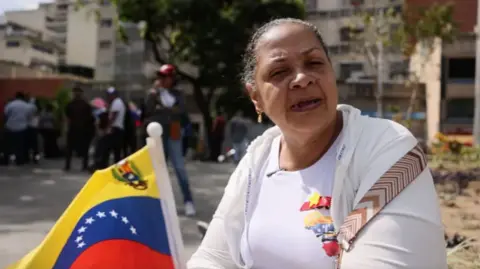
But there are also those who support him. Rosa Contreras says she felt "humiliated" by the United States.
"It seems so easy how they took our president away," the 57-year-old said.
Rosa Contreras was dismayed at the apparent ease with which Nicolás Maduro was seized by the US
Dozens of people are reported to have been killed in the operation that led to the Venezuelan leader and his wife being seized from his compound in Caracas, before being taken to the US where they face drug trafficking and weapons charges.
The Cuban government says 32 members of its security forces were among those killed.
Shortly after Maduro and his wife, Cilia Flores, were taken by US troops, President Donald Trump said his administration would "run" Venezuela.
But exactly what that would look like remains unclear. Maduro's vice-president, Delcy Rodríguez, has taken power in the interim. Far from a Maduro opponent, Rodríguez was his closest lieutenant.
Since she was named interim president, police have been patrolling the streets and journalists have been detained.
Speaking to the BBC at a rally calling for the jailed leader's release, Rosa Contreras said the image of Maduro waving after arriving in the US had inspired her to take to the streets to show her continuing support for Maduro.
"He had an attitude that sent us a message: if I'm standing here, you have to stand here, stand tall and keep going," she said.