Japan Defence and General News Discussions

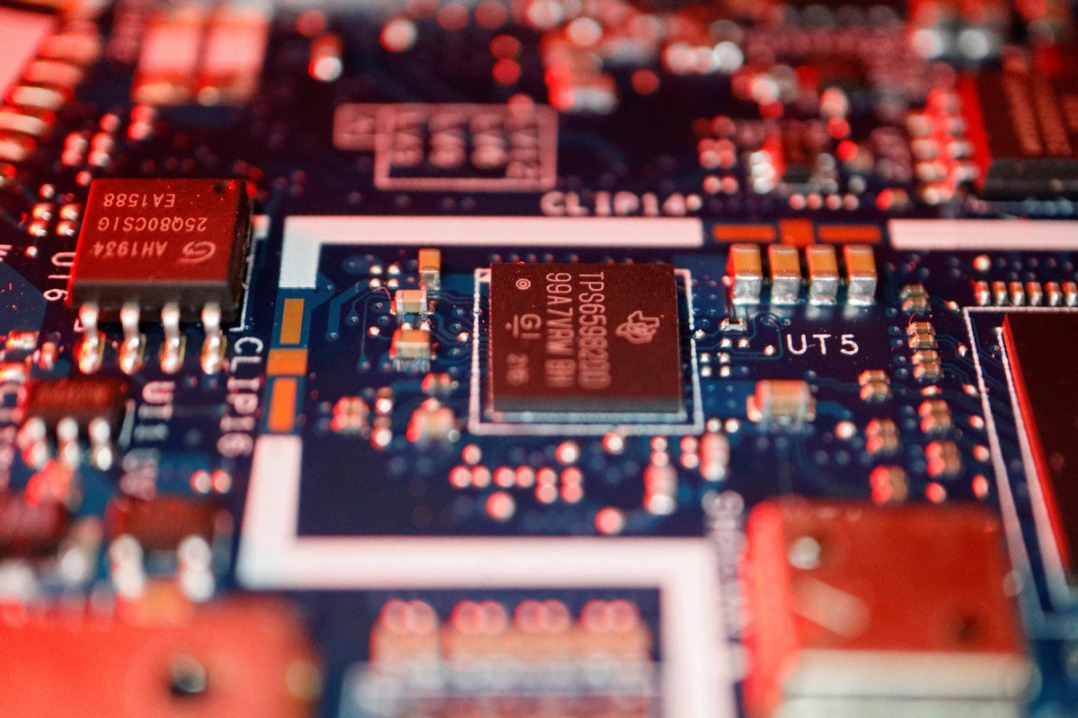
Also, Japan is an indispensable part of the western semiconductor supply chain.

Japan's entire semiconductor industry is way more important than the TSMC.

Japan's photoresist is one of the most crucial components for ASML's DUV/EUV lithography machines.

China has developed its own photoresist, and Japan has put this sanction on China years ago, so China will now destroy Japan's photoresist industry by banning all raw materials.

It is one stone two birds for China, and Trump's amateur admin is simply too dumb to figure out.
Yes, China is developing photoresist. China developing turbojet engines, turbojet passenger aircraft and many things more under development. When we will see the results?
Now Ccp starting full economic war with Japan I don’t think that’s the greatest idea ever. Takaichi is not Maduro. Japan is not Venezuela. You can’t fly in and take over Tokyo.
 
Yes, China is developing photoresist. China developing turbojet engines, turbojet passenger aircraft and many things more under development. When we will see the results?
Now Ccp starting full economic war with Japan I don’t think that’s the greatest idea ever. Takaichi is not Maduro. Japan is not Venezuela. You can’t fly in and take over Tokyo.
They are not under development, but there are already substitute companies in China. Moreover, the raw materials for photoresist have been monopolized by China.

We can kill Japanese photoresist companies by cutting off the source of raw materials, while allowing photoresist users to use Chinese photoresist. Japan has no right to complain.

Japan once banned the export of photoresist to China, as well as the export of lithography machines and semiconductors to China. So China has every reason to ban the export of goods to Japan, although there are many types of goods that China prohibits, the essence remains unchanged.

The Japanese right-wing has cooperated with Trump to disrupt global economic integration, so it should not complain that China is using the same means to deal with it.
 

China unfazed by Japan's possible bans​

Domestic chipmakers express calibrated confidence, eye homemade substitutes

By Ma Si | China Daily | Updated: 2026-01-09 09:48

If Japan moves to restrict the export of photoresist — a key material in semiconductor manufacturing — to China, Beijing is prepared to cope with the challenge, and can find both domestic and foreign alternatives to fill the gap, corporate executives and experts said on Thursday.

Recent market speculation suggests Japan may consider restricting exports of photoresist, the light-sensitive "ink" essential for etching microscopic circuits onto silicon wafers, to China. Japan commands over 70 percent of the global photoresist market, according to Japanese media outlet Nikkei. This potential move is viewed as a possible response to China's latest ban on exporting dual-use items to Japan.

However, a chorus of voices from within China's semiconductor ecosystem is expressing not panic, but a calibrated confidence, underpinned by strategies of domestic substitution and supply chain diversification.

Though challenges exist, the immediate reaction from key industry players is one of operational calm. "From the actual situation on the market end, we have not heard of any customer production being affected so far," Yi Rongkun, general manager of Xiamen Hengkun New Material Technology Co Ltd, a Chinese company involved in photoresist-related business, told China Daily.

Yi said he acknowledges the industry's proactive mindset, adding, "Of course, the basic consensus within the industry is still to prepare for rainy days and prevent worst-case scenarios."

This sentiment is echoed by sources from leading Chinese chipmakers like Semiconductor Manufacturing International Corp and Huahong Group. Sources from the two companies told China Daily that no current ban exists yet and point to "significant progress" in domestic photoresist production potential.

Jiangsu Nata Opto-electronic Material, which has developed one of China's first batches of self-developed photoresist for ArF DUV (argon fluoride deep ultraviolet) lithography — a type of high-end photoresist — said the company's revenue from ArF photoresist exceeded 10 million yuan ($1.43 million) in 2024, and it maintained a stable supply of ArF photoresist in 2025.

Financial markets have delivered a bullish verdict on the Chinese photoresist sector's prospects. Shares of companies in the photoresist and related materials sector opened significantly higher on Thursday. Shanghai Pret Composites Co Ltd, for instance, surged by the daily limit of 10 percent.

Industry players such as Jiangsu Nata Opto-electronic Material and Anhui Guofeng New Materials Co Ltd also saw substantial gains. This investor optimism reflects a growing belief in the viability and commercial future of China's semiconductor materials industry, betting that geopolitical pressures will fuel, not cripple, its growth, experts said.

Such confidence stems from what appears to be a multilayered strategic preparation. Roger Sheng, vice-president of research at the US market research company Gartner, said: "We believe there must be contingency plans for Japanese chip-related products, if Japan retaliates. Photoresist, materials, equipment — there must already be alternative substitution plans."

Sheng highlighted diversified options from South Korean supplies, noting that South Korean President Lee Jae-myung just visited China.

He also pointed to a critical nuance tempering the challenge: "The photoresist we need isn't at the EUV (extreme ultraviolet) level," referring to the advanced grade required for the cutting-edge chips, which remains a harder-to-replace segment.

Experts argue that any disruptions would primarily accelerate two existing trends: the rapid development of China's local photoresist sector and a pivot to alternative foreign suppliers.

He Hui, semiconductor research director at UK-based tech research firm Omdia, provided a clear analysis.

"If Japan cuts off the supply of photoresist to China, it would only accelerate the industrialization of China's local self-sufficiency. We could import from South Korea or other countries," she said.

Domestic alternatives are already available for some applications, though not yet for all. More importantly, she said, is drawing a direct parallel to a historical precedent: Japan's 2019 export restrictions on key materials, including photoresist, to South Korea.

That move, amid a political dispute, initially squeezed chipmakers like Samsung and SK Hynix but ultimately catalyzed South Korea's drive for supply chain independence.

"It actually increased South Korea's local substitution," she said, suggesting that China is poised to follow a similar, if not faster, path.

An executive from a Chinese semiconductor equipment company who declined to be named, voiced a common belief in stronger resilience, stating plainly: "Even if it (the ban) were real, it would be fine. Our capacity to withstand this is stronger than South Korea's."

The current discourse reveals a strategic shift in China's semiconductor approach. The era of passive reliance on a single foreign supply chain is being consciously phased out, experts added.

 
Yes, China is developing photoresist. China developing turbojet engines, turbojet passenger aircraft and many things more under development. When we will see the results?
Which of the aboved mentioned programs that you haven't seen results?
 
Which of the aboved mentioned programs that you haven't seen results?
Weird question. Take Comac aircraft. China still buys engines, flight computer, hydraulics, landing gear, etc. and many other parts.
And when Chinese companies can produce photoresist or chemical film?
 
Weird question. Take Comac aircraft. China still buys engines, flight computer, hydraulics, landing gear, etc. and many other parts.
And when Chinese companies can produce photoresist or chemical film?
China has already produced several military jet engines for J-20 , J-35 and Y-20 in the last couples of years and CJ-1000 engine is almost done, everyone was amazed by the development of China's engine and chip making technology and you sound like China makes little progress, that's so funny.

China now leads in 90% of key technologies of future
 
Japan and Germany are falling behind fast in all technological fronts

Chinese tech opens shop in Germany: Can Europe still catch up in cutting-edge technology?

Jan 9, 2026
To view this content we will need your consent to set third party cookies.
For more detailed information, see our cookies page.
 
Weird question. Take Comac aircraft. China still buys engines, flight computer, hydraulics, landing gear, etc. and many other parts.
And when Chinese companies can produce photoresist or chemical film?
Interestingly, China has launched an anti-dumping investigation into Japanese photoresist.
 
S.Korea used to be a semi conductor powerhouse, now is falling behind too

Korean semiconductor technology falls behind China in all areas: Survey​

 
Yes, China is developing photoresist. China developing turbojet engines, turbojet passenger aircraft and many things more under development. When we will see the results?
Now Ccp starting full economic war with Japan I don’t think that’s the greatest idea ever. Takaichi is not Maduro. Japan is not Venezuela. You can’t fly in and take over Tokyo.

Well, China's aerospace industry has already been matured, and the jetliner will be the last puzzle to complete.

And the US aerospace industry also fully depends on China's rare earth supply chain.

Now the real jewel on the crown is the EUV lithography, and China is developing it by using its 100% indigenous technologies, and the prototype is already available since last year.

Japan's photoresist is an indispensable part for the ASML lithography machines, and without it, all ASML equipment will be turned into a pile of scrapped metals.

Don't you think by nuking Japan's semiconductor industry is a great solution to disrupt the entire western semiconductor supply chain?

This is the unlimited technological warfare, and it was started by the US, and they are not going to be the one to stop it.
 
There is actually another reason.

The current economic situation in Japan is actually quite poor. Japan's inflation is rising, and the Japanese government can only raise interest rates. However, the interest rate hike did not drive the appreciation of the yen, and instead the yen depreciated to its lowest point since 1989. This is still in the context of global currency appreciation relative to the US dollar.

The depreciation of the Japanese yen did not drive up Japan's exports, but instead brought in imported inflation due to the depreciation. For the sake of inflation, the Japanese government needs to continue raising interest rates. And Japan's debt ratio is the largest in the world. Market distrust has led to the collapse of the bond market. So the Japanese economy has entered a death spiral.

The situation is the same as that of Türkiye and Argentina before hyperinflation. It is very convenient for China to help Japan enter hell earlier at this time.


btw: I suggest friends living in Japan to short Japanese treasury bond bonds. The price of yen treasury bond bonds continues to decline, and the rise of yield can be 100% confirmed.
 
Last edited:
China has already produced several military jet engines for J-20 , J-35 and Y-20 in the last couples of years and CJ-1000 engine is almost done, everyone was amazed by the development of China's engine and chip making technology and you sound like China makes little progress, that's so funny.

China now leads in 90% of key technologies of future
That’s a different challenge. Making turbofans for military aircraft is much easier than for passenger aircraft. Even harder to make than making semiconductor in nanometer.
Military have money, they care less about fuel consumption, weight, reliability, service and many other things.
A passenger aircraft falling from the sky killing hundreds of people makes more headlines than a single jet pilot.
 
Should not impose maximum demands on Japan, it will end very ugly otherwise. and China will not go unscathed. I read the dual use restrictions. From what I understand Ccp only imposes on rare earth and associated technology. The Japanese will find a way out.
One of the most famous recent historical Chinese generals named 左宗棠(Zuo Zongtang) that recovered China's Xinjiang from Russia about 150 years ago made insightful judgmental summary of the character of Japanese race that is still very much valid today as such "知小礼而无大义,拘小节而无大德,重末节而轻廉耻,畏威而不怀德,强必盗寇,弱必卑伏" or translated "Knowing minor etiquette but lacking great righteousness, being bound by trivialities but lacking great virtue, valuing minor details while disregarding integrity and shame, fearing power but not cherishing virtue, when strong will inevitably become thieves and robbers, when weak will inevitably become subservient.". You see the Japanese only bow to force or might, try to be reasonable with them is useless and stupid. China has learned its lesson well enough dealing with the Japanese in recent times.
 
That’s a different challenge. Making turbofans for military aircraft is much easier than for passenger aircraft. Even harder to make than making semiconductor in nanometer.
Military have money, they care less about fuel consumption, weight, reliability, service and many other things.
A passenger aircraft falling from the sky killing hundreds of people makes more headlines than a single jet pilot.

China has built the 6th gen variable cycle engine which is way harder to build than jetliner engine.

China can independently build the EUV lithography machine, unlike ASML which is only a mere assembler, it is jewel of the high tech which is way above than making a jetliner engine.

Actually, China has its 35 tonnes CJ-2000 running for over 3000 hours almost a year ago, and it gonna maiden flight with China's C929 in couple of years.

 
That’s a different challenge. Making turbofans for military aircraft is much easier than for passenger aircraft. Even harder to make than making semiconductor in nanometer.
Military have money, they care less about fuel consumption, weight, reliability, service and many other things.
A passenger aircraft falling from the sky killing hundreds of people makes more headlines than a single jet pilot.
Even that is almost done, China's engine development is just as stunning as in other sectors.


搜狗截图20260110142620.jpg
 

Users who are viewing this thread

Pakistan Defence Latest

Country Watch Latest

Latest Posts

Back
Top