Japan Defence and General News Discussions

Japan seeks support as fears rise over China’s rare earth grip​

By Yoshiaki Nohara and Erica Yokoyama
Bloomberg

Jan 10, 2026
Japan is ramping up efforts to reach out to its Group of Seven peers and beyond amid mounting concerns over China’s grip on rare earths as the dispute with Beijing escalates.

Finance Minister Satsuki Katayama said she will meet with counterparts of other industrialized democracies to discuss critical minerals during a trip to the U.S. starting Sunday, while Defense Minister Shinjiro Koizumi is also set to hold talks with his U.S. counterpart on Thursday. At home, Prime Minister Sanae Takaichi will be holding a summit with South Korea’s Lee Jae Myung next week to reaffirm the alliance between the two key U.S. allies.

"The fundamental consensus among the G7 nations is that it is unacceptable for countries to secure monopolies through non-market means,” Katayama told reporters on Friday, referring to China’s past actions regarding critical minerals. "This poses a crisis for the global economy and is extremely problematic for economic security.”

 
China has built the 6th gen variable cycle engine which is way harder to build than jetliner engine.

China can independently build the EUV lithography machine, unlike ASML which is only a mere assembler, it is jewel of the high tech which is way above than making a jetliner engine.

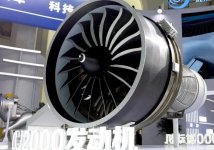
Actually, China has its 35 tonnes CJ-2000 running for over 3000 hours almost a year ago, and it gonna maiden flight with China's C929 in couple of years.

What you mean with ASML as mere assembler? Because the company buys parts from other companies? Are you serious? Which company in the world can make from A to Z? Be a shoe or lithography? There is none.
But relax, about turbofans, the Russians tried but failed. I have 0 knowledge but from what I see and read, no doubt, China will eventually make it. It’s not if but when.
 

China’s CJ-2000 Engine Is Coming - A Serious Threat to Rolls-Royce​

To view this content we will need your consent to set third party cookies.
For more detailed information, see our cookies page.

To view this content we will need your consent to set third party cookies.
For more detailed information, see our cookies page.
 
What you mean with ASML as mere assembler? Because the company buys parts from other companies? Are you serious? Which company in the world can make from A to Z? Be a shoe or lithography? There is none.
But relax, about turbofans, the Russians tried but failed. I have 0 knowledge but from what I see and read, no doubt, China will eventually make it. It’s not if but when.

ASML is dependent on the technologies from USA/Japan/Germany.

Their light source comes from Cymer (American company), but Cymer's laser technology is backed by Trumpf which is a German company.

Japan also has the equivalent of Cymer known as Gigaphoton, and they also produce the indispensable photoresist for ASML.

The German Zeiss provides the indispensable optical lenses for ASML.

And Netherlands itself cannot develop these technologies, but China can handle all these technologies by itself to build its 100% indigenous DUV/EUV machine.
 
Last edited:

China begins choking off exports of rare earths to Japan: WSJ​

KYODO NEWS - Jan 09, 2026 - 23:35

img_5d350e0ec902699dcebe6c55e4080760438576.jpg
Photo taken in Beijing on Jan. 8, 2026, shows the periodic table written in Chinese. (Kyodo)

TOKYO - China has begun choking off exports of rare earths and rare-earth magnets to Japanese companies, the Wall Street Journal reported Thursday, following Beijing's tightening of export controls on dual-use items.

The rare earth export restrictions are the latest move by China amid an escalating diplomatic row between Beijing and Tokyo over Prime Minister Sanae Takaichi's remarks in November on a Taiwan contingency.

Her comments suggested Japan would act in the event of coercive measures against Taiwan, a self-ruled democratic island that Beijing views as its own territory.

The measure is likely to deal a blow to firms that use rare earths to produce components for global chipmakers, automakers and defense contractors, according to the U.S. newspaper, which referred to the "critical minerals as an economic weapon."

Following Takaichi's remarks, China has ramped up its pressure on the Japanese economy, with Beijing on Tuesday tightening its exports to Japan of dual-use items that have both civilian and military applications, with rare earths possibly included.

China, though, said such controls on dual-use items to Japan are not expected to impact "normal civilian trade," amid concerns in Tokyo that the move could affect rare earth exports used in a wide range of products, from autos to defense equipment.

Trade industry sources reported earlier that China-bound exports of Japanese sake and food items have been delayed. The slow customs clearance in China is believed to be part of its measures in response to Takaichi's remarks.

According to the sources, the Japanese Embassy in Beijing has received inquiries from affected companies. The mission has urged China to properly handle trade procedures and ensure transparency, a source familiar with bilateral relations said.


China Weaponizes Rare Earths for the First Time in 16 Years...Japan Left Powerless​

by Lee Hyunwoo
Pubilshed
11 Jan.2026 06:00(KST)

To view this content we will need your consent to set third party cookies.
For more detailed information, see our cookies page.


■ Broadcast: The Asia Business Daily 'So Jongseop's Current Affairs Show'

■ Host: Political Specialist So Jongseop

■ Director: PD Ma Yena

■ Guest: Reporter Lee Hyunwoo

China has finally played its rare earth card against Japan. The Chinese Ministry of Commerce announced a comprehensive export control measure on dual-use materials, including rare earths, destined for Japan. This is the first time in 16 years, since 2010, that China has used rare earths as a diplomatic weapon. The Japanese stock market plummeted immediately after the announcement, sending shockwaves through Japan's business community.

Japan relies on China for 70% of its rare earths..."6 trillion won loss every three months under export controls"​

China Weaponizes Rare Earths for the First Time in 16 Years...Japan Left Powerless [Sisa Show]
Reuters Yonhap News

Japan relies on China for about 70% of its rare earth supply. Rare earths are essential minerals for manufacturing electronics, semiconductors, and advanced weaponry. If China's measure continues for three months, Japan is expected to incur losses exceeding 660 billion yen, or more than 6 trillion won. In effect, China has precisely targeted a critical vulnerability in the Japanese economy through its rare earth restrictions.

Stronger than 2010, with secondary boycotts included. This latest action by China is far more stringent than the 2010 rare earth restrictions. In 2010, the export controls targeted only rare earths, but this time, all dual-use materials that could be diverted for military use are included. Not only rare earths, but also semiconductor materials and equipment, and any items with potential military applications, are subject to the controls. It is reported that more than 1,000 items are now regulated.

What is particularly noteworthy is that a 'secondary boycott' measure has also been introduced. Third countries selling dual-use materials imported from China to Japan will also be subject to sanctions. This is a tactic the United States has often used against China, but now China is employing it in reverse. This measure was not part of the 2010 restrictions. It is being assessed that China is mobilizing every available means to pressure Japan.

In a statement, the Chinese Ministry of Commerce said, "The Japanese leader made inappropriate remarks regarding Taiwan, which constitutes a blatant interference in China's internal affairs," and "Because this seriously violates the One China principle, we have taken this measure." The direct trigger was Prime Minister Sanae Takaichi's comment that Japan would intervene in the event of a Taiwan emergency. China has made it clear that unless Prime Minister Takaichi retracts her statement, it will continue to escalate the sanctions.

Japan has no countermeasures...Prime Minister Takaichi, ahead of general election, refuses to retract Taiwan remarks​

China Weaponizes Rare Earths for the First Time in 16 Years...Japan Left Powerless [Sisa Show]
AFP Yonhap News

The Japanese government currently has no effective card to play in response to these restrictions. Even within Japan, there are voices saying that unless Prime Minister Takaichi retracts her statement about intervening in Taiwan, there is no practical solution. Prime Minister Takaichi has said she will reflect on her remarks, which were more hardline than those of the previous administration, but she continues to refuse to retract them.

Prime Minister Takaichi also finds herself in a position where backing down is not easy. The policy of treating a Taiwan emergency as a national crisis and intervening is directly linked to the US-Japan alliance. Considering relations with the United States, it is difficult for her to retract her statement. Moreover, her core support base-the conservative right-wing forces in Japan-are united by anti-China sentiment. With Prime Minister Takaichi preparing to dissolve the lower house and call a general election, showing any sign of yielding to China could put her at a political disadvantage.

The Japanese right-wing's view of the Taiwan issue is fundamentally different from that of the Chinese government. The Japanese right argues that Taiwan was never Chinese territory. Their logic is that Taiwan was under Japanese rule and became independent after Japan's defeat in World War II, but was never part of China. This perspective is similar to that of Taiwan's ruling Democratic Progressive Party. It directly contradicts the One China principle asserted by China, which is why the Chinese government continues to react so strongly.

Even the US government officially recognizes the One China principle, so if the Japanese government continues to reject it, China is expected to maintain sanctions by any means necessary. Although Chinese companies will also be affected, there are concerns that the rare earth export controls will persist. If Japan continues to resist, China may announce specific rare earths to be restricted and further escalate the situation.

After the 2010 rare earth restrictions, Japan reduced its dependence on China from 84% to 57%, but last year it climbed back up to 69-70%. The continued high demand is due to the low prices of Chinese rare earths. Japan is in a difficult position to respond immediately.

A warning message for Korea and neighboring countries as well​

China Weaponizes Rare Earths for the First Time in 16 Years...Japan Left Powerless [Sisa Show]
Yonhap News Agency

The timing of China's rare earth export control announcement is also notable. The announcement came during President Lee Jaemyung's visit to China. This is being interpreted as a strong warning to the Korean government. Korea also relies on China for more than 80% of its rare earth supply. The message is clear: if Korea finds itself in conflict with China, it could face the same situation as Japan. By showing what is happening to Japan, China is warning that Korea could suffer even greater consequences if it pursues policies that go against China.

During President Lee Jaemyung's visit, sensitive topics such as the West Sea structure issue and the exclusive economic zone between the two countries were discussed. China is seen as openly demonstrating its ability to take tough measures to apply pressure in these negotiations, using rare earth export controls as a bargaining chip.

The West Sea structure issue is also a matter of concern for the United States. The US has emphasized the strategic flexibility of US Forces Korea, stating that if a military conflict breaks out in Northeast Asia, some US troops in Korea could be redeployed elsewhere. The area where the West Sea structures are concentrated is on the route from the US Forces Korea headquarters in Pyeongtaek to Taiwan. While the structures are currently used as fish farms, in an emergency they could block naval passages or be converted into drone landing bases, which is why the US is opposed to them.

There is analysis that when President Lee Jaemyung tried to discuss the West Sea structure issue with China during his visit, China played the rare earth card first to assert its leverage. At a time when the Korean government is focusing on lifting the ban on Korean cultural content and strengthening economic cooperation, China has brought out the sensitive rare earth export control card.

Ultimately, the weaponization of rare earths is not just an issue for Japan and Korea. China is also engaged in territorial disputes over maritime boundaries with Southeast Asian countries. There are growing concerns that almost every country in East Asia could become a target of pressure, diplomatic isolation, or economic blockade using rare earths as a weapon.

 
ASML is dependent on the technologies from USA/Japan/Germany.

Their light source comes from Cymer (American company), but Cymer's laser technology is backed by Trumpf which is a German company.

Japan also has the equivalent of Cymer known as Gigaphoton, and they also produce the indispensable photoresist for ASML.

The German Zeiss provides the indispensable optical lenses for ASML.

And Netherlands itself cannot develop these technologies, but China can handle all these technologies by itself to build its 100% indigenous DUV/EUV machine.
China’s UUV don’t use Zeiss optics? Ah come on, when coming down to high precision optics and mechanics nobody can beat Germany and Japan. That’s the reality.

Airbus made 766 aircraft in 2025. How many Comac aircraft China made last year? Nobody knows because China doesn’t report the number. Obviously you have a problem with mass production. if China just expands production to Vietnam we will produce I don’t know let take the number, 100 jets a year for you. What we need is as always money and technology.
 
  • Haha
Reactions: ety
China’s UUV don’t use Zeiss optics? Ah come on, when coming down to high precision optics and mechanics nobody can beat Germany and Japan. That’s the reality.
Realistically speaking, in certain fields of precision machinery and precision optics, Germany and Japan are indeed ahead of China. That's a fact.

However, China has always had relevant institutions researching and manufacturing these products. While they may not be as advanced as German and Japanese companies in terms of top-tier products, they are sufficient for our needs. And in some areas, they have already surpassed them.

You might not know this, but China has a very large company in the field of optics: Phoenix Optics.
They produce a large quantity of civilian optical products and also collaborate with and manufacture products for related companies in Japan and Germany. Some of the optical products you buy from German and Japanese companies may have core components manufactured by them.
They also produce military-grade and laboratory-grade optical products.
Airbus made 766 aircraft in 2025. How many Comac aircraft China made last year? Nobody knows because China doesn’t report the number.
In the civil aviation sector, all companies adopt a global supply chain cooperation model. Every Airbus or Boeing commercial aircraft currently in operation contains components manufactured by Chinese companies. Similarly, commercial aircraft from COMAC also utilize components supplied by companies from other countries. This is a standard international practice.

COMAC has always been transparent about all its production, manufacturing, and sales activities. You are simply living in an information bubble and haven't been paying attention to them.
 
Last edited:
Realistically speaking, in certain fields of precision machinery and precision optics, Germany and Japan are indeed ahead of China. That's a fact.

However, China has always had relevant institutions researching and manufacturing these products. While they may not be as advanced as German and Japanese companies in terms of top-tier products, they are sufficient for our needs. And in some areas, they have already surpassed them.

You might not know this, but China has a very large company in the field of optics: Phoenix Optics.
They produce a large quantity of civilian optical products and also collaborate with and manufacture products for related companies in Japan and Germany. Some of the optical products you buy from German and Japanese companies may have core components manufactured by them.
They also produce military-grade and laboratory-grade optical products.

In the civil aviation sector, all companies adopt a global supply chain cooperation model. Every Airbus or Boeing commercial aircraft currently in operation contains components manufactured by Chinese companies. Similarly, commercial aircraft from COMAC also utilize components supplied by companies from other countries. This is a standard international practice.

COMAC has always been transparent about all its production, manufacturing, and sales activities. You are simply living in an information bubble and haven't been paying attention to them.
You still don’t say how many Comac aircraft were made last year, how many were delivered.
 
You still don’t say how many Comac aircraft were made last year, how many were delivered.
In 2025, COMAC delivered a total of 41 aircraft. This included 25 C909s and 16 C919s.

No one is concealing this data. This information is publicly available. If you are interested, you can track the details of each aircraft.

We fully acknowledge that there is a huge quantitative gap between COMAC and the two giants, Boeing and Airbus. This is a fact. COMAC is still a newcomer in this industry. This industry requires decades of accumulation and experience.

However, your statement that "China doesn’t report the number" is clearly your personal bias.
 
In 2025, COMAC delivered a total of 41 aircraft. This included 25 C909s and 16 C919s.

No one is concealing this data. This information is publicly available. If you are interested, you can track the details of each aircraft.

We fully acknowledge that there is a huge quantitative gap between COMAC and the two giants, Boeing and Airbus. This is a fact. COMAC is still a newcomer in this industry. This industry requires decades of accumulation and experience.

However, your statement that "China doesn’t report the number" is clearly your personal bias.
Ok I am biased but not on this topic. Can you post the source in English (or Chinese)? Google search engine and AI will pick up and makes available.
 
Ok I am biased but not on this topic. Can you post the source in English (or Chinese)? Google search engine and AI will pick up and makes available.
On the Weibo platform, this blogger specializes in tracking developments related to COMAC. He has special connections with official institutions. The information he publishes is more comprehensive and accurate than that released by official sources.


Users who are viewing this thread

Pakistan Defence Latest

Latest Posts

Back
Top