Russia-Ukraine War - News, Discussions & Updates

Status
Not open for further replies.
To view this content we will need your consent to set third party cookies.
For more detailed information, see our cookies page.


Many dead Russians
 
Is this the last aid package? Seems they haven't sent any artillery piece since last year. I wonder how many M777 are left?

In WW1 both sides built 6,000 artillery pieces a year just to replace worn out pieces. This war is tiny by comparison. Both sides only have like 100 pieces total.

The US has sent a total of 198 155mm howitzers of which we know 142 are M777s and 18 M109s. That leaves 38 of which we don’t know the type. Also Canada and Australia sent an additional 10 M777s.

77 M777s are recorded as damaged or destroyed by Oryx, 40 being destroyed.

So Ukraine should have 75-100 M777s still in operation factoring in repairs, and possibly up to 38 more since we don’t know the type from past packages.
 
The US has sent a total of 198 155mm howitzers of which we know 142 are M777s and 18 M109s. That leaves 38 of which we don’t know the type. Also Canada and Australia sent an additional 10 M777s.

77 M777s are recorded as damaged or destroyed by Oryx, 40 being destroyed.

So Ukraine should have 75-100 M777s still in operation factoring in repairs, and possibly up to 38 more since we don’t know the type from past packages.
Sure, Ukraine has "75-100" M777 still in operation.....the only issue is...again.....the lack of shells for them!! All those artillery pieces become sitting ducks if they dont have enough shells to shoot, especially while on the battlefield. US stalling Ukraine...not a good sign.
 
Sure, Ukraine has "75-100" M777 still in operation.....the only issue is...again.....the lack of shells for them!! All those artillery pieces become sitting ducks if they dont have enough shells to shoot, especially while on the battlefield. US stalling Ukraine...not a good sign.

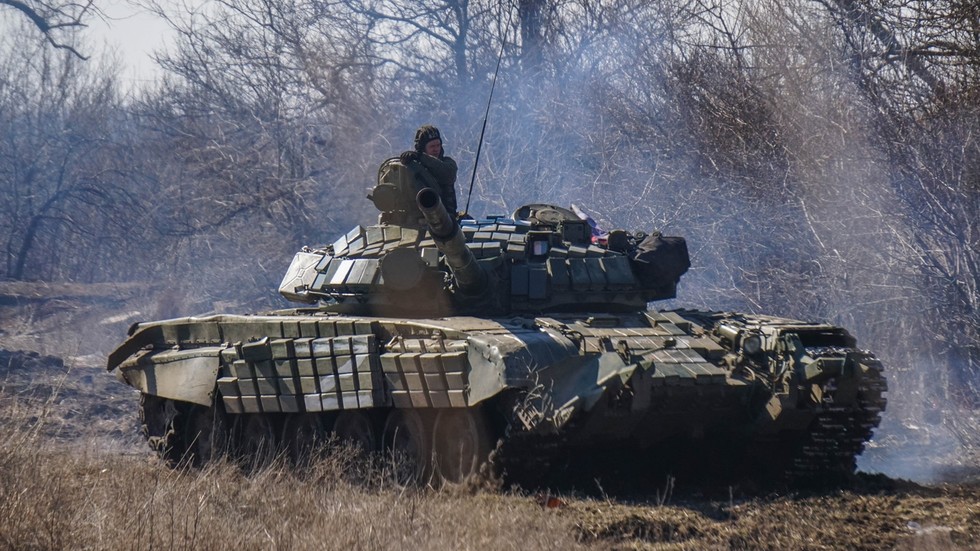
I doubt there's that many left. About 80 were hit by drones or artillery. Some are worn out or cannibalized for parts. My guess is there are about 20 to 30 left.
 
Oh dear:-

Ukraine was dearly fu(ked by the Zions:-


Russian military liberates key Donbass stronghold – Moscow​

Full control of Maryinka, a town immediately to the west of Donetsk, has been achieved, Russian Defense Minister Sergey Shoigu has said
Russian military liberates key Donbass stronghold – Moscow

FILE PHOTO. © Sputnik/Mikhail Andronik
Russian troops have fully liberated Maryinka, a key town in the Donetsk People’s Republic (DPR), Russian Defense Minister Sergey Shoigu announced on Monday.
Maryinka – which has been legally part of Russia since last year's referendums – was a major Ukrainian military for many years. It is located immediately to the west of the city of Donetsk.
The minister broke the news during a meeting with Russian President Vladimir Putin. “Today, assault units with the troop grouping South fully liberated the town of Maryinka to the southwest of Donetsk,” Shoigu stated.
The liberation of the town opens up new opportunities for Russian troops and further damages Ukraine’s military capabilities, the minister said. The town, which has been the scene of fighting for nearly a decade since the early stages of the conflict in then-Ukrainian Donbass, had been turned into a major stronghold by Kiev’s forces, Shoigu noted. An extensive network of underground tunnels and reinforced concrete bunkers was installed on almost every street, he added.
The Russian president congratulated all the troops involved “at different stages” in the struggle for Maryinka, stating that its liberation is an important milestone that will have a positive impact – pushing Ukrainian forces away from Donetsk, as well as providing Russian troops with wider operational freedom, Putin said.
READ MORE: Ukrainian shelling hits mall, kills woman in Donbass (VIDEO)
The fighting over the DPR town intensified in recent months, with Russian forces gradually seizing control of key locations. The fighting left the town heavily damaged with no structure left intact, videos from Maryinka shared online show.
Apart from serving as a stronghold for the Ukrainian military, Maryinka has also been one of the key staging points for attacks on Donetsk itself. The city has been subjected to indiscriminate missile and artillery shelling by Ukrainian forces on an almost daily basis during the conflict.
 
To view this content we will need your consent to set third party cookies.
For more detailed information, see our cookies page.


US military budget is 877 billion usd. 10% is enough for Ukraine.

The US is drowning in debt.
 
122 mm HIMARS

To view this content we will need your consent to set third party cookies.
For more detailed information, see our cookies page.
 
Putin periodically reports to his boss about the progress of Donba coal and Slavic women.

To view this content we will need your consent to set third party cookies.
For more detailed information, see our cookies page.
 
To view this content we will need your consent to set third party cookies.
For more detailed information, see our cookies page.


To view this content we will need your consent to set third party cookies.
For more detailed information, see our cookies page.


To view this content we will need your consent to set third party cookies.
For more detailed information, see our cookies page.


To view this content we will need your consent to set third party cookies.
For more detailed information, see our cookies page.


To view this content we will need your consent to set third party cookies.
For more detailed information, see our cookies page.
 
To view this content we will need your consent to set third party cookies.
For more detailed information, see our cookies page.


To view this content we will need your consent to set third party cookies.
For more detailed information, see our cookies page.
 

Russia’s electronic warfare tactics are helping it turn the tide against Ukraine​


How Russia’s electronic warfare units turned the tide against Ukraine's Western weapons​


Joe Barnes

At first, Ukraine noticed its GPS-guided 155mm Excalibur artillery shells suddenly started veering off target.

Then rockets fired with Himars, which Kyiv once boasted had “scalpel-like” accuracy, began missing their targets. In some areas, they almost always missed.

The same happened to JDAM guided bombs supplied to Ukraine’s air force by the United States.
Frantic investigation eventually discovered they had all fallen victim to a new threat – Russian jamming. Moscow has quietly developed a knack for taking out some of Ukraine’s most prized missiles and rockets.

It is a rare but crucial example of Russian technological advantage in a war that has been slowly tipping in Moscow’s favour.

Along almost the entirety of the front lines, an invisible wall of electromagnetic pulses now stretches like a shield.

An elaborate network of radio, infrared and radar signals hurled into the skies over the battlefield provides Russian forces with unprecedented protections in some areas.

‘Their electronic warfare is better than ours’​

And it’s not just Ukrainian missiles that are now failing to reach their targets. Perhaps more significant is Russia’s ability to counter the array of cheap, sometimes off-the-shelf, drones upon which Ukraine has become reliant for reconnaissance and long-range strikes.

Ukrainians know they are now at a disadvantage.

One front-line soldier, whose 120mm mortar unit regularly uses Chinese-made Mavic drones to spot targets, told The Telegraph: “They’ve always had good electronic warfare since the start of the full-scale invasion. But now it is better than us.”

Another person with knowledge of the front lines said: “It’s getting pretty intensive but nothing high-tech, just the same Russian stuff – power in quantity not quality.”

“It remains a major problem along the front,” Andrey Liscovich, of the Ukraine Defence Fund, recently told the Geopolitics Decanted podcast.

He explained Ukrainian forces are in a “continual game of cat and mouse” with their Russian enemy as they jostle for control of the airwaves.

The radio frequencies used to fly both first-person view attack drones and spotter UAV are “getting jammed quite comprehensively”.

Devices deployed by the Russians either scramble their guidance systems or simply sever the radio-control links with their operators.

Some drones crash to the floor without hitting their targets, while others hover uncontrolled in the air until their batteries run out.

Truck-mounted Shipovnik-Aero ‘especially effective’​

A report by Royal United Services Institute, the defence and security think tank, suggests Russia has deployed one major electronic warfare system every six miles along the front line.

The truck-mounted Shipovnik-Aero is said to have proved especially effective against Ukrainian drones.

With a range of six miles, it can block drones and also acquire the coordinates of the pilot’s location, within one metre, in order to direct retaliatory artillery fire.

On parts of the front lines not covered by the more sophisticated systems, Russian soldiers use smaller, trench-based devices.

The battery-powered systems have ranges between 50 and 100 metres, and are not often switched on 24 hours a day to conserve power.

In these areas, it is often easier to hit targets because the machines are either not in operation or the drones get close enough for losing signal.

But in the zones more densely covered by electronic warfare jammers, Ukrainian soldiers are taking more and more precautions before launching their precious drones.

They deploy to the front line using spectrum analysers to work out which frequencies are being jammed nearby.

The main counter-measure is reprogramming drones, which is not simple when they have been purchased off the shelf or constructed using readily available commercial parts.

Often analogue signals are favoured over digital because the results are closer to a degradation of the video feed rather than a full blackout.

Another tactic is to send a swarm of drones, as not every frequency can be blocked at the same time.
More sophisticated counter-measures, which are used by Nato countries, are largely seen as out of Ukraine’s reach.

The US has an export ban on the transfer of electronic warfare devices that is policed by the State Department because of fears its technologies will fall into enemy hands.

And then there is the cost, which would force Kyiv’s military to fight in an entirely different fashion, according to Hamish de Bretton-Gordon, a former Nato commander.

Western counter-measures cost millions​

Systems used by Western militaries cost thousands, while Ukrainian drone manufacturers aim to keep their units as cheap as possible, forcing them to piggyback on consumer technologies.

Reports suggest that FPV drones costing as little as $260 have been used by Ukraine to take out Russian tanks.

Meanwhile, the Watchkeeper UAV operated by the British military costs millions of pounds but features in-built electronic warfare countermeasures.

“It’s a dilemma, and only the Ukrainians will answer whether it is better that they lose 50 per cent of their $500 drones or go for the next step, which are very much more expensive, to counter that,” Mr de Bretton-Gordon said.

Volodymyr Zelensky, Ukraine’s president, this week announced that it would seek to manufacture a million drones for its war efforts.

“Quantity has a quality all of its own,” Mr de Bretton-Gordon added. “Even if they lose half of those through electronic counter-measures, they are still going to have a huge impact.”

Technology is at the top of the Ukrainian military’s shopping list, with the country’s top general warning that if its forces do not get new kit, Russia will be able to “turn any city into another Bakhmut in a matter of months”.
 
To view this content we will need your consent to set third party cookies.
For more detailed information, see our cookies page.
 

Russia’s electronic warfare tactics are helping it turn the tide against Ukraine​


How Russia’s electronic warfare units turned the tide against Ukraine's Western weapons​


Joe Barnes

At first, Ukraine noticed its GPS-guided 155mm Excalibur artillery shells suddenly started veering off target.

Then rockets fired with Himars, which Kyiv once boasted had “scalpel-like” accuracy, began missing their targets. In some areas, they almost always missed.

The same happened to JDAM guided bombs supplied to Ukraine’s air force by the United States.
Frantic investigation eventually discovered they had all fallen victim to a new threat – Russian jamming. Moscow has quietly developed a knack for taking out some of Ukraine’s most prized missiles and rockets.

It is a rare but crucial example of Russian technological advantage in a war that has been slowly tipping in Moscow’s favour.

Along almost the entirety of the front lines, an invisible wall of electromagnetic pulses now stretches like a shield.

An elaborate network of radio, infrared and radar signals hurled into the skies over the battlefield provides Russian forces with unprecedented protections in some areas.

‘Their electronic warfare is better than ours’​

And it’s not just Ukrainian missiles that are now failing to reach their targets. Perhaps more significant is Russia’s ability to counter the array of cheap, sometimes off-the-shelf, drones upon which Ukraine has become reliant for reconnaissance and long-range strikes.

Ukrainians know they are now at a disadvantage.

One front-line soldier, whose 120mm mortar unit regularly uses Chinese-made Mavic drones to spot targets, told The Telegraph: “They’ve always had good electronic warfare since the start of the full-scale invasion. But now it is better than us.”

Another person with knowledge of the front lines said: “It’s getting pretty intensive but nothing high-tech, just the same Russian stuff – power in quantity not quality.”

“It remains a major problem along the front,” Andrey Liscovich, of the Ukraine Defence Fund, recently told the Geopolitics Decanted podcast.

He explained Ukrainian forces are in a “continual game of cat and mouse” with their Russian enemy as they jostle for control of the airwaves.

The radio frequencies used to fly both first-person view attack drones and spotter UAV are “getting jammed quite comprehensively”.

Devices deployed by the Russians either scramble their guidance systems or simply sever the radio-control links with their operators.

Some drones crash to the floor without hitting their targets, while others hover uncontrolled in the air until their batteries run out.

Truck-mounted Shipovnik-Aero ‘especially effective’​

A report by Royal United Services Institute, the defence and security think tank, suggests Russia has deployed one major electronic warfare system every six miles along the front line.

The truck-mounted Shipovnik-Aero is said to have proved especially effective against Ukrainian drones.

With a range of six miles, it can block drones and also acquire the coordinates of the pilot’s location, within one metre, in order to direct retaliatory artillery fire.

On parts of the front lines not covered by the more sophisticated systems, Russian soldiers use smaller, trench-based devices.

The battery-powered systems have ranges between 50 and 100 metres, and are not often switched on 24 hours a day to conserve power.

In these areas, it is often easier to hit targets because the machines are either not in operation or the drones get close enough for losing signal.

But in the zones more densely covered by electronic warfare jammers, Ukrainian soldiers are taking more and more precautions before launching their precious drones.

They deploy to the front line using spectrum analysers to work out which frequencies are being jammed nearby.

The main counter-measure is reprogramming drones, which is not simple when they have been purchased off the shelf or constructed using readily available commercial parts.

Often analogue signals are favoured over digital because the results are closer to a degradation of the video feed rather than a full blackout.

Another tactic is to send a swarm of drones, as not every frequency can be blocked at the same time.
More sophisticated counter-measures, which are used by Nato countries, are largely seen as out of Ukraine’s reach.

The US has an export ban on the transfer of electronic warfare devices that is policed by the State Department because of fears its technologies will fall into enemy hands.

And then there is the cost, which would force Kyiv’s military to fight in an entirely different fashion, according to Hamish de Bretton-Gordon, a former Nato commander.

Western counter-measures cost millions​

Systems used by Western militaries cost thousands, while Ukrainian drone manufacturers aim to keep their units as cheap as possible, forcing them to piggyback on consumer technologies.

Reports suggest that FPV drones costing as little as $260 have been used by Ukraine to take out Russian tanks.

Meanwhile, the Watchkeeper UAV operated by the British military costs millions of pounds but features in-built electronic warfare countermeasures.

“It’s a dilemma, and only the Ukrainians will answer whether it is better that they lose 50 per cent of their $500 drones or go for the next step, which are very much more expensive, to counter that,” Mr de Bretton-Gordon said.

Volodymyr Zelensky, Ukraine’s president, this week announced that it would seek to manufacture a million drones for its war efforts.

“Quantity has a quality all of its own,” Mr de Bretton-Gordon added. “Even if they lose half of those through electronic counter-measures, they are still going to have a huge impact.”

Technology is at the top of the Ukrainian military’s shopping list, with the country’s top general warning that if its forces do not get new kit, Russia will be able to “turn any city into another Bakhmut in a matter of months”.

Here's an example of EW.

To view this content we will need your consent to set third party cookies.
For more detailed information, see our cookies page.


Some more Leopard 2 tanks have been lost.

To view this content we will need your consent to set third party cookies.
For more detailed information, see our cookies page.


Russians are buying lots of FPV from China.

To view this content we will need your consent to set third party cookies.
For more detailed information, see our cookies page.
 
Putin periodically reports to his boss about the progress of Donba coal and Slavic women.

To view this content we will need your consent to set third party cookies.
For more detailed information, see our cookies page.

Again what is “winning”?

Taking Kiev will likely never happen.
If Putler was smart he wound stop now and be happy with his gains. But crazed dictators haven’t proven to be smart through history.
 
Xi vassals are supplying more and more shells to Russian army

To view this content we will need your consent to set third party cookies.
For more detailed information, see our cookies page.


Again what is “winning”?

Taking Kiev will likely never happen.
If Putler was smart he wound stop now and be happy with his gains. But crazed dictators haven’t proven to be smart through history.

Yeah. IMO China wants Donba coal. Coal is needed for China's power plants. China also needs millions of Slavic women to offset gender imbalance in China.
 
Status
Not open for further replies.

Users who are viewing this thread

Latest Posts

Back
Top