Energy Sectors / Industries / Projects

I Would Consider River Transport And Inland Refineries
 
I Would Consider River Transport And Inland Refineries
I made a big thread about how we should turn indus river system into a highway of sorts
but IG the conclusion, was that it wasn't possible

They removed all the old content from that older PDF, so i cant access it now for some reason.
 
I made a big thread about how we should turn indus river system into a highway of sorts
but IG the conclusion, was that it wasn't possible

They removed all the old content from that older PDF, so i cant access it now for some reason.


What Do You Mean Not Possible ??? There Are Entire Papers Of Pakistan Engineering Council On It Not To Mention Feasibility Studies Of Western Consultants Saying The Area From Kalabagh To Bin Qasim Is Navigable
 
ISLAMABAD:
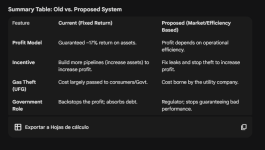
Following the government's plan to restructure gas utilities, the Oil and Gas Regulatory Authority (OGRA) has decided to review the existing gas pricing formula based on return on fixed assets, keeping in view current gas sector dynamics and market liberalisation.


The government had tasked the OGRA with restructuring the two public gas utilities by doing away with the fixed asset-based return. According to officials, the regulator hired consultancy firm KPMG to review the formula, and it has submitted its report.

The regulator has started consultations with stakeholders to change the gas pricing formula and has scheduled a public hearing here on Friday to consider the views of stakeholders.

Since 2018, OGRA has been allowing a market-based rate of return to the gas utilities, namely Sui Northern Gas Pipelines Limited (SNGPL) and Sui Southern Gas Company (SSGC), on the value of their average net fixed assets in operation for each financial year.

OGRA said that, considering the latest gas sector dynamics, including demand and supply conditions, price volatility, market liberalisation and international benchmarking undertaken across the world, it has decided to review the existing gas pricing formula based on the rate of return (ROR) through an independent consultant, in line with the approved terms of reference.

"OGRA, after receipt of the first draft report as furnished by M/s KPMG, has decided to call a public consultation with all stakeholders as per its ToRs and the relevant legal provisions to ensure transparency and inclusive stakeholder engagement," the regulator said.


The gas utilities are opposing the proposal to shelve the guaranteed asset-based return formula and have asked the government to continue with the current pricing regime.

The gas pipeline network continues to expand, resulting in higher gas prices and increased profits for the utilities, but this expansion has also led to gas shortages across the country. SNGPL's operating cost surged from Rs66 billion in the financial year 2019-20 to Rs94 billion in 2023-24. At the same time, its earnings swelled from Rs19 billion to Rs38.9 billion, despite a drop in gas supply.

The utilities, SNGPL and SSGC, are of the view that the current asset-based return cannot be abandoned. They argue that several benchmarks, including unaccounted-for-gas (UFG), are linked to the asset-based return regime.

However, a number of industries have repeatedly criticised the fixed rate of return, arguing that the profits of the utilities are rising while gas supplies are shrinking due to continued expansion of the pipeline network.

At present, gas companies are facing a circular debt of Rs2.6 trillion, which has choked the entire energy chain. Liquefied natural gas (LNG) has been a major factor behind the accumulation of circular debt, as SNGPL has to pay billions of rupees for LNG supplies procured through Pakistan State Oil (PSO).

The present government has also opened the gas market by allowing gas utilities to allocate 35% of their gas to third parties. As a result, the regulator has received several applications from private parties seeking licences to market gas.

Oil and gas exploration companies had welcomed the government's decision to increase gas allocation to private parties from 10% to 35%, saying it would help improve their cash flows by enabling them to secure better prices from private buyers.

The exploration companies are also facing cash flow constraints due to the circular debt issue and are of the view that the mounting debt has slowed the pace of their development projects.
 
Another great reform to end GAS circular debt. Looks like Asim Munir isn't going to rest till everything is reformed to reduce government losses apart from DHA.

1767972822154.png
 
LESCO faces 1,100 MW shortfall as Matiari-Lahore HVDC line is affected; Lahore residents endure up to eight hours of power cuts; many urban centers experience 3-6 hours of loadshedding, while rural areas face up to 12 hours


Power distribution companies (Discos) across Pakistan have implemented forced loadshedding after the electricity shortfall surged to nearly 4,000 MW, including a 1,100 MW shortfall in the Lahore Electric Supply Company (Lesco) alone, impacting five districts.


The situation has persisted for several days, primarily due to dense fog in the southern region, which has caused repeated tripping of power plants. Consumers have been experiencing long hours of forced loadshedding, with urban areas facing three to six hours and rural areas enduring six to 10 hours daily.

Lahore residents are facing 8-10 hours of loadshedding, disrupting business operations and daily activities. The power cuts have also caused water shortages in several areas, as tube-wells cannot function during outages, leaving residents without access to warm water during the cold weather.


As per reports, Lesco has been facing a shortfall of over 1,100 MW during peak hours. CEO Ramzan Butt said that the company had no option but to resort to loadshedding due to reduced supply from the national grid. The company is also struggling with a lack of solar power generation, as fog has impacted the performance of solar systems, which many consumers had been relying on.

On Monday evening, Lesco’s total demand for electricity was 3,241 MW, but the supply from the national grid was only 2,160 MW, resulting in a significant shortfall of almost 1,100 MW.

Additionally, hydel power generation remains minimal this winter. The electricity demand has increased by approximately 2,000 MW compared to last year, driven by extensive use of heating appliances, according to an anonymous official.


The reduction in gas supply to Lahore-based power plants and the shutdown of a unit at the Sahiwal Coal Power Plant have further strained generation capacity. As a result, Discos have been forced to implement loadshedding in Punjab, Sindh, and other provinces.

The situation has worsened in the past few days as several southern power plants went off-grid due to fog-induced tripping. The Matiari-Lahore High Voltage Direct Current (HVDC) transmission line, which supplies power to Punjab, especially Lahore, has been affected. However, officials expect improvements soon, as work is underway to restore these plants.

https://www.facebook.com/sharer.php...g-as-electricity-shortfall-surges-to-4000-mw/
https://twitter.com/intent/tweet?te...ortfall-surges-to-4000-mw/&via=ePakistanToday
https://www.linkedin.com/shareArtic...g+as+electricity+shortfall+surges+to+4,000+MW
https://api.whatsapp.com/send?text=...g-as-electricity-shortfall-surges-to-4000-mw/
 
A grim situation. Luckily, it is winter.
 
The Duffers Ruling Us Wanted Our Export Industry To Stop Using Their Captive Power Plants, So They Imposed An Unsustainable Levy To Force Them To Buy Power From This Highly Substandard National Grid.

At This Point, I Am Convinced Our Ruling Elite Are Deliberately Destroying The Economy
 
kal hamare 9 se 3 bajy light gai . ur week k ander alehda jati ha
 
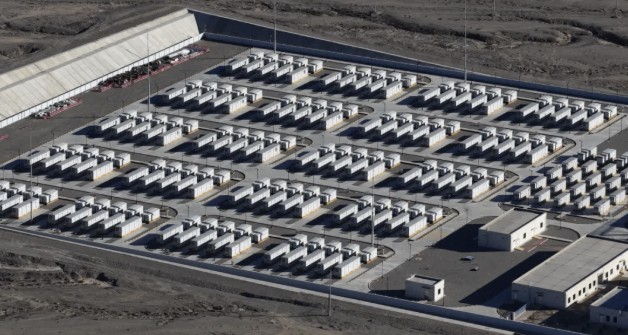
Battery Storage backup is required on a large scale.


China’s largest supercapacitor-based hybrid energy storage system has been successfully connected to the grid in northwest China, marking a milestone for hybrid of supercapacitor and lithium-based energy storage system.

The Jiayuguan NingSheng 500 MW/1,000 MWh independent energy storage project, invested by China National Nuclear Corporation (CNNC), completed commissioning and achieved grid connection in the early hours of Dec. 30, 2025, according to official disclosures. The project is located in Jiayuguan, Gansu province, within the Jiaxi photovoltaic industrial park, a key renewable energy hub in China’s northwest.

The project adopts a hybrid configuration combining 475 MW/1,000 MWh of lithium iron phosphate (LFP) batteries with a 25 MW supercapacitor system capable of 60-second discharge. While battery storage provides long-duration energy shifting and peak shaving, the supercapacitor segment delivers millisecond-level response, enabling frequency regulation, inertia support, and rapid grid stabilization.


So Exports are Falling and Projected To Fall Further Under These Circumstances, Multinationals are Exiting, FDI Is Decreasing But These Jokers Ruling Us Are Saying This Will Be The Last IMF Program :rofl: :rofl: :rofl:


To view this content we will need your consent to set third party cookies.
For more detailed information, see our cookies page.
 
Hey Guys!! Wanna Hear Another Joke

To view this content we will need your consent to set third party cookies.
For more detailed information, see our cookies page.
 

Users who are viewing this thread

Pakistan Defence Latest

Latest Posts

Back
Top