
Navigation
Install the app
How to install the app on iOS
Follow along with the video below to see how to install our site as a web app on your home screen.
Note: This feature may not be available in some browsers.
More options
Style variation
You are using an out of date browser. It may not display this or other websites correctly.
You should upgrade or use an alternative browser.
You should upgrade or use an alternative browser.
Energy Sectors / Industries / Projects
- Thread starter ghazi52
- Start date
More options
Who Replied?

hydrabadi_arab
Trusted Member
ISLAMABAD: The Asian Development Bank has approved $330 million in loans for Pakistan’s Second Power Transmission Strengthening Project, aimed at expanding the national transmission network and enabling the evacuation of low-cost renewable and hydropower to major demand centres.
According to ADB, the project will build a new 500-kilovolt transmission line of about 290 kilometres and upgrade key grid infrastructure supplying Islamabad and Faisalabad.
The lender said the investments will ease constraints in Pakistan’s north–south power corridor and allow the transfer of up to 3,200 megawatts of clean energy from hydropower plants in the north to load centres. ADB said this would reduce reliance on imported fuels and support a lower-cost power mix.
ADB’s financing package includes a $285 million loan from ordinary capital resources and a $45 million concessional loan.
National Grid Company of Pakistan Limited (NGC) — formerly NTDC — will execute the project. ADB said the financing will help NGC expand and modernise transmission assets, strengthen institutional capacity, improve financial management, and support outreach and gender-equity initiatives.
ADB Country Director Emma Fan said the project reflects the bank’s partnership with Pakistan to expand transmission capacity and integrate low-cost hydropower into the grid, with the stated aim of lowering system costs and improving access to clean electricity.
ADB said the project aligns with Pakistan’s National Power Policy 2021, Vision 2025 and the country’s 2021 Nationally Determined Contributions, and is expected to improve grid reliability and lower technical losses.
According to ADB, the project will build a new 500-kilovolt transmission line of about 290 kilometres and upgrade key grid infrastructure supplying Islamabad and Faisalabad.
The lender said the investments will ease constraints in Pakistan’s north–south power corridor and allow the transfer of up to 3,200 megawatts of clean energy from hydropower plants in the north to load centres. ADB said this would reduce reliance on imported fuels and support a lower-cost power mix.
ADB’s financing package includes a $285 million loan from ordinary capital resources and a $45 million concessional loan.
National Grid Company of Pakistan Limited (NGC) — formerly NTDC — will execute the project. ADB said the financing will help NGC expand and modernise transmission assets, strengthen institutional capacity, improve financial management, and support outreach and gender-equity initiatives.
ADB Country Director Emma Fan said the project reflects the bank’s partnership with Pakistan to expand transmission capacity and integrate low-cost hydropower into the grid, with the stated aim of lowering system costs and improving access to clean electricity.
ADB said the project aligns with Pakistan’s National Power Policy 2021, Vision 2025 and the country’s 2021 Nationally Determined Contributions, and is expected to improve grid reliability and lower technical losses.

ghazi52
THINK TANK: CONSULTANT

- Thread starter
- #153
‘Govt will not procure power in future’
During the day, the minister also met Frederic Ribieras, CEO of GE Vernova’s Hydro Power, to discuss Pakistan’s clean energy transition, private-sector investment, and collaboration in hydropower and energy storage.
“The minister reiterated the government’s shift toward a market-driven power sector, noting that future power generation will be led by the private sector as the government will not procure power in future,” the Power Division said.
He highlighted transmission constraints and encouraged global investors to explore business-to-business (B2B) opportunities, stating that companies like GE Vernova could serve as strong technical and investment partners.
According to Leghari, Pakistan is pursuing a least-cost energy strategy and recently achieved nearly 56% clean energy generation.
The minister emphasised the need for Battery Energy Storage Systems (BESS) due to challenges in wind power take-off.
“Mr Ribieras suggested pumped-storage hydropower as another option. The minister welcomed the idea and said the government is open to reviewing all least-cost solutions.”
Ribieras expressed interest in hydropower technologies, the Power Division said. “The minister supported this interest and said a list of potential investment projects can be shared with GE Vernova.”
During the meeting, Leghari also highlighted the privatisation of Discos and stressed stronger coordination with the Power Planning & Monitoring Company (PPMC), especially for initiatives like AMI meter deployment where GE Vernova’s expertise could be beneficial.
“GE Vernova’s leadership appreciated Pakistan’s policy direction and showed interest in hydropower and storage opportunities. It was agreed during the meeting to maintain close engagement to advance sustainable, reliable, and cost-effective energy solutions for Pakistan,” the Power Division said.
During the day, the minister also met Frederic Ribieras, CEO of GE Vernova’s Hydro Power, to discuss Pakistan’s clean energy transition, private-sector investment, and collaboration in hydropower and energy storage.
“The minister reiterated the government’s shift toward a market-driven power sector, noting that future power generation will be led by the private sector as the government will not procure power in future,” the Power Division said.
He highlighted transmission constraints and encouraged global investors to explore business-to-business (B2B) opportunities, stating that companies like GE Vernova could serve as strong technical and investment partners.
According to Leghari, Pakistan is pursuing a least-cost energy strategy and recently achieved nearly 56% clean energy generation.
The minister emphasised the need for Battery Energy Storage Systems (BESS) due to challenges in wind power take-off.
“Mr Ribieras suggested pumped-storage hydropower as another option. The minister welcomed the idea and said the government is open to reviewing all least-cost solutions.”
Ribieras expressed interest in hydropower technologies, the Power Division said. “The minister supported this interest and said a list of potential investment projects can be shared with GE Vernova.”
During the meeting, Leghari also highlighted the privatisation of Discos and stressed stronger coordination with the Power Planning & Monitoring Company (PPMC), especially for initiatives like AMI meter deployment where GE Vernova’s expertise could be beneficial.
“GE Vernova’s leadership appreciated Pakistan’s policy direction and showed interest in hydropower and storage opportunities. It was agreed during the meeting to maintain close engagement to advance sustainable, reliable, and cost-effective energy solutions for Pakistan,” the Power Division said.
ghazi52
THINK TANK: CONSULTANT
- Thread starter
- #155
In 2025, WAPDA provided a total of 33 billion 12 crore units of affordable electricity to the National Grid.
The cost of Wapda Pin electricity is only Rs 3 83 per unit, which subsidizes the entire power sector.
WAPDA also achieved significant targets in 2025 on projects under construction in water and electricity sectors
December 30, 2025:
2025 has been a satisfactory year for the pan electricity and water sectors in Pakistan. During 2025 WAPDA continuously provided large quantities of eco-friendly and affordable pan electricity to the National Grid and several of its under-construction projects despite diverse and complex issues. Important goals also achieved.
The cost of Wapda Pin electricity is only Rs 3 83 per unit, which subsidizes the entire power sector.
WAPDA also achieved significant targets in 2025 on projects under construction in water and electricity sectors
December 30, 2025:
2025 has been a satisfactory year for the pan electricity and water sectors in Pakistan. During 2025 WAPDA continuously provided large quantities of eco-friendly and affordable pan electricity to the National Grid and several of its under-construction projects despite diverse and complex issues. Important goals also achieved.
ghazi52
THINK TANK: CONSULTANT
- Thread starter
- #156
In year 2025, WAPDA's 22 hydel power stations cumulatively generated 33.12 billion units - about 30 percent of the total generation in the system.
WAPDA’s hydel electricity with a tariff of just Rs. 3.83 per unit kept on subsidising the country's entire power sector this year too, thus, significantly contributing towards economic stability and social development in Pakistan.
If compared with the basket tariff, WAPDA’s hydel electricity stands out to be the most affordable energy in Pakistan. Besides, it is the most suitable source of energy with zero carbon emission during its generation in the perspective of climatic phenomenon across the globe.
As per the details of WAPDA's hydel generation in 2025,
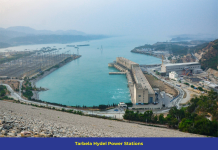
Tarbela Hydel Power Station contributed 14.3 billion units, while Tarbela 4th Extension 5.6 billion units, Ghazi Barotha Hydel Power Station 6.5 billion units,
Mangla Hydel Power Station 3.6 billion units,
Warsak Hydel Power Station 0.77 billion units
and Chashma Hydel Power Station 0.79 billion units.
Balance 1.56 billion units were generated by 3 High-Head Hydel Power Stations, Jinnah Hydel Power Station and other Small Hydel Power Stations.
WAPDA’s hydel electricity with a tariff of just Rs. 3.83 per unit kept on subsidising the country's entire power sector this year too, thus, significantly contributing towards economic stability and social development in Pakistan.
If compared with the basket tariff, WAPDA’s hydel electricity stands out to be the most affordable energy in Pakistan. Besides, it is the most suitable source of energy with zero carbon emission during its generation in the perspective of climatic phenomenon across the globe.
As per the details of WAPDA's hydel generation in 2025,
Tarbela Hydel Power Station contributed 14.3 billion units, while Tarbela 4th Extension 5.6 billion units, Ghazi Barotha Hydel Power Station 6.5 billion units,
Mangla Hydel Power Station 3.6 billion units,
Warsak Hydel Power Station 0.77 billion units
and Chashma Hydel Power Station 0.79 billion units.
Balance 1.56 billion units were generated by 3 High-Head Hydel Power Stations, Jinnah Hydel Power Station and other Small Hydel Power Stations.
ghazi52
THINK TANK: CONSULTANT
- Thread starter
- #157
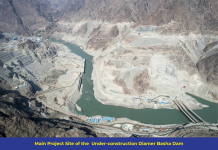
During year 2025, construction work kept progressing at a satisfactory pace on WAPDA's eight under-construction Projects including
Diamer Basha Dam,
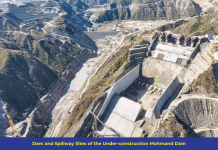
Mohmand Dam,
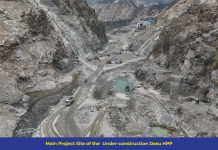
Dasu,
Tarbela 5th Extension
and Greater Karachi Bulk Water Supply Scheme, known as K-IV.
During the year, Mohmand Dam Project achieved a major milestone, as filling of Main Dam started in August.
Likewise, Diamer Basha Dam and Dasu Hydropower Project are all set for placing/pouring roller-compacted-concrete (RCC) on main dams during 2026, as pre-requisites are nearing completion on both Projects for the purpose.
It is worth mentioning that WAPDA’s under-construction Projects, on their compeletion, will add 9.7 million acre feet (MAF) to the water storage and double the installed power generation capacity from 9,500 mega watt (MW) to about 20,000 MW.
Besides, 560 million gallon per day (MGD) will also be made available for municipal use - 260 MGD for Karachi through K-IV Phase-I and 300 MGD for Peshawar through Mohmand Dam.
Diamer Basha Dam,
Mohmand Dam,
Dasu,
Tarbela 5th Extension
and Greater Karachi Bulk Water Supply Scheme, known as K-IV.
During the year, Mohmand Dam Project achieved a major milestone, as filling of Main Dam started in August.
Likewise, Diamer Basha Dam and Dasu Hydropower Project are all set for placing/pouring roller-compacted-concrete (RCC) on main dams during 2026, as pre-requisites are nearing completion on both Projects for the purpose.
It is worth mentioning that WAPDA’s under-construction Projects, on their compeletion, will add 9.7 million acre feet (MAF) to the water storage and double the installed power generation capacity from 9,500 mega watt (MW) to about 20,000 MW.
Besides, 560 million gallon per day (MGD) will also be made available for municipal use - 260 MGD for Karachi through K-IV Phase-I and 300 MGD for Peshawar through Mohmand Dam.
ghazi52
THINK TANK: CONSULTANT
- Thread starter
- #158
2025: WAPDA Generates 33.12 Billion Units Hydel Electricity
Rs. 3.83 Per unit Hydel Electricity Subsidises Pakistan's Entire Power Sector
WAPDA. Also Achieves Several Key Targets on Under-Construction Projects
December 30, 2025: Outgoing 2025 proved to be a satisfactory year for Hydropower and Water Sectors in Pakistan.
WAPDA contributed consistently high quantities of clean, green and low-cost hydel electricity to the National Grid, and could also achieve several key targets on its under-construction mega Projects despite diverse and serious challenges.
In year 2025, WAPDA's 22 hydel power stations cumulatively generated 33.12 billion units - about 30 percent of the total generation in the system. WAPDA’s hydel electricity with a tariff of just Rs. 3.83 per unit kept on subsidising the country's entire power sector this year too, thus, significantly contributing towards economic stability and social development in Pakistan.
If compared with the basket tariff, WAPDA’s hydel electricity stands out to be the most affordable energy in Pakistan. Besides, it is the most suitable source of energy with zero carbon emission during its generation in the perspective of climatic phenomenon across the globe.
Rs. 3.83 Per unit Hydel Electricity Subsidises Pakistan's Entire Power Sector
WAPDA. Also Achieves Several Key Targets on Under-Construction Projects
December 30, 2025: Outgoing 2025 proved to be a satisfactory year for Hydropower and Water Sectors in Pakistan.
WAPDA contributed consistently high quantities of clean, green and low-cost hydel electricity to the National Grid, and could also achieve several key targets on its under-construction mega Projects despite diverse and serious challenges.
In year 2025, WAPDA's 22 hydel power stations cumulatively generated 33.12 billion units - about 30 percent of the total generation in the system. WAPDA’s hydel electricity with a tariff of just Rs. 3.83 per unit kept on subsidising the country's entire power sector this year too, thus, significantly contributing towards economic stability and social development in Pakistan.
If compared with the basket tariff, WAPDA’s hydel electricity stands out to be the most affordable energy in Pakistan. Besides, it is the most suitable source of energy with zero carbon emission during its generation in the perspective of climatic phenomenon across the globe.
ghazi52
THINK TANK: CONSULTANT
- Thread starter
- #163
Pakistan to get Advanced Metering Infrastructure in five Discos
- This is to modernise electricity distribution system
- Estimated financial impact of Transmission and Distribution losses currently stands at $1 billion per annum
Mushtaq Ghumman
January 5, 2026
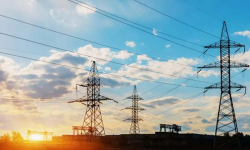
ISLAMABAD: The government is set to install Advanced Metering Infrastructure (AMI) in five power Distribution Companies (Discos) to modernise the electricity distribution system, as the estimated financial impact of Transmission and Distribution (T&D) losses currently stands at around USD 1 billion per annum, sources close to the Managing Director of the Private Power and Infrastructure Board (PPIB) told Business Recorder.
To facilitate this key project, the federal government has approached the World Bank (WB) to act as Transaction Advisor.
The Managing Director of PPIB has acknowledged that Pakistan’s power sector is facing serious operational and financial challenges, primarily due to high technical and commercial losses, weak recoveries, outdated metering systems, and limited visibility over electricity consumption patterns.
T&D losses currently stand at approximately 18 per cent of total power supply, translating into an estimated annual financial loss of Rs 265 billion. These structural inefficiencies undermine sector sustainability, burden consumers, and restrict fiscal space for critical investments.
ghazi52
THINK TANK: CONSULTANT
- Thread starter
- #164
With the objective of modernising the distribution system, reducing losses, improving recoveries, enhancing system efficiency and reliability, and restoring consumer trust, PPIB has been tasked with hiring a private AMI Services Provider (AMISP) for the installation and operation of the AMI system in five Discos—Lahore Electric Supply Company (LESCO), Multan Electric Power Company (MEPCO), Peshawar Electric Supply Company (PESCO), Hazara Electric Supply Company (HAZECO), and Quetta Electric Supply Company (QESCO).
The project will be implemented under the Public Private Partnership (PPP) mode in consultation with key stakeholders, including the Power Planning and Monitoring Company (PPMC), Power Information Technology Company (PITC), and the relevant Discos.
“As this activity is being carried out for the first time under the PPP mode, it has been decided to engage a suitable Transaction Advisor (TA) to provide end-to-end advisory services for the successful execution of AMI transactions,” said Shah Jahan Mirza in a letter to the World Bank’s Islamabad office.
He added that the TA would be responsible for undertaking technical, commercial, and legal due diligence; developing the business case; PPP structuring; assisting in the execution and management of the procurement process, including preparation of bidding documents; and providing support through project award, agreement execution, and financial close.
The project will be implemented under the Public Private Partnership (PPP) mode in consultation with key stakeholders, including the Power Planning and Monitoring Company (PPMC), Power Information Technology Company (PITC), and the relevant Discos.
“As this activity is being carried out for the first time under the PPP mode, it has been decided to engage a suitable Transaction Advisor (TA) to provide end-to-end advisory services for the successful execution of AMI transactions,” said Shah Jahan Mirza in a letter to the World Bank’s Islamabad office.
He added that the TA would be responsible for undertaking technical, commercial, and legal due diligence; developing the business case; PPP structuring; assisting in the execution and management of the procurement process, including preparation of bidding documents; and providing support through project award, agreement execution, and financial close.
hydrabadi_arab
Trusted Member
The government has unveiled a plan to shift the country’s oil supply system from road transport to pipelines, a move aimed at reducing transportation costs and providing relief to consumers.
According to the Petroleum Division, diesel supply across Pakistan is currently 100 percent dependent on road transport, while around 60 percent of petrol supply relies on transportation by tankers. Under the new plan, oil movement through pipelines will be expanded in phases. In the first phase, a pipeline will be laid from Faisalabad to Tahlian.
To curb illegal oil supply chains, the government has also initiated the implementation of a tracking system to monitor fuel movement more effectively.
Federal Minister for Petroleum Ali Pervaiz Malik shared these details while briefing journalists on the petroleum sector. He said that a reform agenda in the petroleum sector has already been implemented, resulting in stability in gas prices.
The minister stated that the flow of circular debt in the gas sector has been brought down to zero. However, he emphasized that fuel already consumed, whether by the government or consumers, must still be paid for.
Ali Pervaiz Malik further said that a high-powered committee has been formed to address payment-related issues of three government-owned companies. He added that steps are being taken to attract new investment into the sector, while special focus is being given to resolving issues faced by the oil supply chain and oil marketing companies (OMCs).
He noted that OMCs are facing payment-related issues with the Federal Board of Revenue (FBR). Several meetings have already been held with the Ministry of Finance on this matter, and progress is expected within the next 1-10 days.
Regarding the LPG sector, the petroleum minister announced that a new policy will be introduced. He explained that while the LPG sector is currently deregulated, prices are still being regulated.
Ali Pervaiz Malik referred to the Reko Diq project and stressed that long-term policies are essential for the sustainable development of Pakistan’s mining sector.
According to the Petroleum Division, diesel supply across Pakistan is currently 100 percent dependent on road transport, while around 60 percent of petrol supply relies on transportation by tankers. Under the new plan, oil movement through pipelines will be expanded in phases. In the first phase, a pipeline will be laid from Faisalabad to Tahlian.
To curb illegal oil supply chains, the government has also initiated the implementation of a tracking system to monitor fuel movement more effectively.
Federal Minister for Petroleum Ali Pervaiz Malik shared these details while briefing journalists on the petroleum sector. He said that a reform agenda in the petroleum sector has already been implemented, resulting in stability in gas prices.
The minister stated that the flow of circular debt in the gas sector has been brought down to zero. However, he emphasized that fuel already consumed, whether by the government or consumers, must still be paid for.
Ali Pervaiz Malik further said that a high-powered committee has been formed to address payment-related issues of three government-owned companies. He added that steps are being taken to attract new investment into the sector, while special focus is being given to resolving issues faced by the oil supply chain and oil marketing companies (OMCs).
He noted that OMCs are facing payment-related issues with the Federal Board of Revenue (FBR). Several meetings have already been held with the Ministry of Finance on this matter, and progress is expected within the next 1-10 days.
Regarding the LPG sector, the petroleum minister announced that a new policy will be introduced. He explained that while the LPG sector is currently deregulated, prices are still being regulated.
Ali Pervaiz Malik referred to the Reko Diq project and stressed that long-term policies are essential for the sustainable development of Pakistan’s mining sector.
Users who are viewing this thread
Total: 1 (members: 0, guests: 1)
Pakistan Defence Latest


Country Watch Latest
-
 Trump orders military base mass shooter to be executed by firing squad (16 Viewers)
- Latest: AZ_HighCountry
-

-
-

-
Latest Posts
-
-

-
-
Trump orders military base mass shooter to be executed by firing squad (16 Viewers)
- Latest: AZ_HighCountry
-