China Science And Technology News

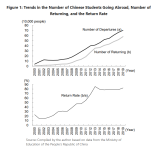
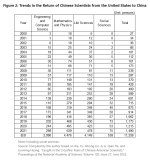
The Wave of Chinese Researchers Returning Home under the Trump Administration

First published in Japanese on October 20, 2025. English version updated on December 19, 2025.

1768300623143.png1768300648707.png
 

Zheng Yu, ‘rising star’ in chemical engineering from MIT, quits US for China

The researcher who specialises in wearable devices has taken up a position at Peking University
Zheng Yu was identified as a “rising star” by MIT. Photo: Handout

Dannie Peng in Beijing
Published: 9:00pm, 14 Jan 2026 Updated: 9:32pm, 14 Jan 2026


A leading young Chinese chemical engineer has left the Massachusetts Institute of Technology to return home to Peking University.

Zheng Yu recently completed her postdoctoral training in bioelectronics in the US but has now joined the Chinese university’s college of chemistry and molecular engineering as an assistant professor.

According to her Peking University webpage, Zheng is working on wearable and implantable electronic devices, such as smart bandages that are used to monitor health.

Her research focuses on special materials that allow electronic devices to understand the biological signals sent by the body.

Zheng graduated from Nankai University in Tianjin in 2017 before heading to Stanford University in the US for her PhD, where she worked with Zhenan Bao, a chemical engineer best known for her work in areas such as flexible electronics and electronic skin.

She has spent the past three years at MIT, where she was selected for the university’s rising stars programme in chemical engineering in 2022.

The following year her PhD won an award for young chemists sponsored by the International Union of Pure and Applied Chemistry and the chemical multinational Solvay.

Zheng’s work has been published in leading academic journals, including Nature Energy, Science and the Journal of the American Chemical Society.

She has also received an award for excellence in graduate polymer research from the American Chemical Society, as well as a travel grant from the American Institute of Chemical Engineers.

China’s top-tier research institutions are increasingly becoming a magnet for rising academic stars who studied in leading Western universities.

Xie Zhenfei, an HIV vaccine researcher at Harvard University, joined the State Key Laboratory of Virology and Biosafety at Wuhan University in October.

Last March, nuclear physicist Liu Chang, formerly a research physicist at the Princeton Plasma Physics Laboratory, left the US for a position at Peking University researching nuclear fusion.
 
Good move. She probably would have some difficulties applying for research fund in US anyway.
 
Good move. She probably would have some difficulties applying for research fund in US anyway.

I was going to mention this as well. Over the last several years, many doctoral students been shut off from receiving funding for research due to national security concerns.
 
Trumpi's America is also another huge factor.

It is. He's turned it into a national security issue during his first term, and the Democrats have continued that policy.

But in the long run, it's better for China if these individuals return and prepare new, better students. The goal should be for the Chinese government to relax rules and fund extensive research in the country.
 
I was going to mention this as well. Over the last several years, many doctoral students been shut off from receiving funding for research due to national security concerns.

Those concerns are very real and significant.
 
Don't worry, many Indians in the US will be rooted out soon too no matter how much you people cheer on Trumpy and companies against Chinese.
Ok.

  • Please enter a message with more than 5 characters.
 
  • Dislike
Reactions: ety
Those concerns are very real and significant.

I believe that our institutions are breeding grounds for groundbreaking ideas.

The U.S. is now controlling access, as it feels we've given too much away.
 
I believe that our institutions are breeding grounds for groundbreaking ideas.

The U.S. is now controlling access, as it feels we've given too much away.

It is okay. Corrective measures are being taken, and it will all be more secure soon enough. What is more important is keeping it secure going forward.
 

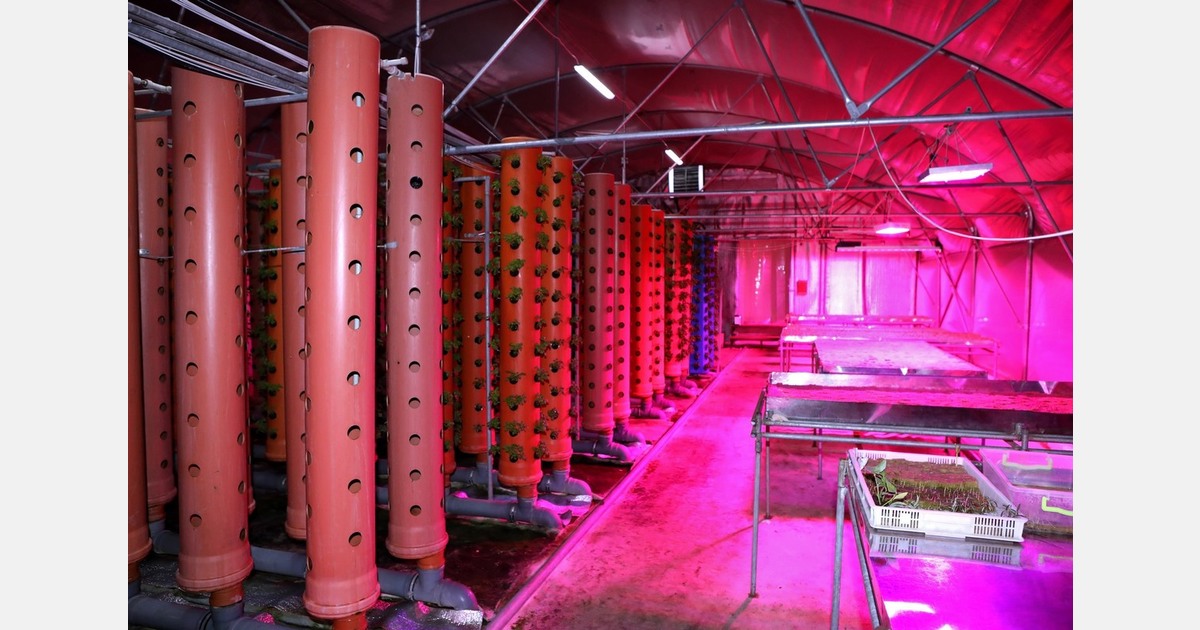
China: Taking a tour of the world's first unmanned, ultra-high-rise indoor vertical farm​

Fri 16 Jan 2026

To view this content we will need your consent to set third party cookies.
For more detailed information, see our cookies page.


Traditional farming faces a plethora of mounting challenges. One attempt at a solution is vertical farming – a new model designed to make food production more resilient. In Chengdu, capital of Southwest China's Sichuan Province, the Institute of Urban Agriculture at the Chinese Academy of Agricultural Sciences has built the world's first unmanned, ultra-high-rise indoor vertical farm, which went into operation at the end of 2023. Join People's Daily reporter Xu Zheqi and Kenyan student Michael Isoe Nyambira as they unpack the secrets of this vertical plant factory.


China takes a manned submersible to the “forbidden ground” 5,277 meters below the Arctic, and what it records on the Gakkel Ridge could change maps and theories​


By ECONEWS
Published On: January 16, 2026 at 12:30 PM
1768619894729.jpeg

For the first time, scientists have used a crewed scientific submersible to slip beneath thick Arctic pack ice and reach a hidden mountain range on the ocean floor.
A Chinese expedition used the deep-sea vessel Fendouzhe to dive 5,277 meters and survey the eastern Gakkel Ridge, a previously unseen stretch of seafloor between Greenland and Siberia.

Working from the new research ship Tan Suo San Hao, the team carried out 43 dives during a roughly three month voyage. Reports from Nature and from official Chinese science agencies say the mission opens a rare window on a region that could host unusual deep-sea life and reveal how a fast-warming Arctic is changing.

Reaching one of Earth’s last untouched seafloors​

The Gakkel Ridge is an underwater volcanic mountain chain buried beneath sea ice that runs between Greenland and Siberia. It forms part of the global network of mid-ocean ridges where tectonic plates move apart and new ocean crust slowly forms, usually far from public attention.

Scientists had previously seen the ridge only on sonar maps and in a few short surveys with uncrewed vehicles. A 2003 Nature study on the western Gakkel Ridge revealed hot hydrothermal vents there, but the eastern side stayed off limits, so Huang has called this sector the last piece of the puzzle.

A new way to dive beneath drifting ice​

To reach the ridge safely, the Ministry of Natural Resources and the Chinese Academy of Sciences ran a joint Arctic mission pairing Fendouzhe with the ice-capable research ship Tan Suo San Hao. The report describes a ship-submersible coordination method that let the crew work where sea ice covered over 80 percent of the water and Fendouzhe completed 32 dives.

To view this content we will need your consent to set third party cookies.
For more detailed information, see our cookies page.


Before each dive, the icebreaking ship opened a temporary pool in the pack ice so the submersible could slip into the sea and begin its descent. On the way back up, Fendouzhe paused below the surface, used sonar and cameras to search for open water, then rose through a gap or waited while the ship cleared one, with the Jiaolong submersible joining some dives to test cooperative work under ice.

Samples that could rewrite Arctic history​

During almost one hundred days at sea, the team collected sediment cores, rocks, seawater, and biological samples along the ridge. They also mapped undersea hills and canyons with cameras and sonar, replacing blurred outlines on earlier maps with detailed footage from the seafloor.

One main goal is to see whether the eastern Gakkel Ridge has hydrothermal vents, underwater hot springs that feed animals living from chemical energy instead of sunlight. A 2003 Nature paper and a 2022 Nature Communications study on the western ridge already showed such life there, so the new samples may uncover similar extreme ecosystems and guide ideas about life in dark oceans on icy moons such as Europa.

Why this deep Arctic mission matters for the rest of us​

On the surface, the expedition took place far from everyday worries like winter heating bills or slippery sidewalks after a snowstorm. Yet what happens along the Arctic seafloor feeds into the same climate system that shapes bitter cold snaps or oddly mild winters many people notice when they step outside to scrape ice from a windshield.

Mid-ocean ridges help move heat and chemicals through the deep ocean, and the Arctic is warming much faster than the global average. Detailed data from places like the Gakkel Ridge can sharpen climate models that guide long-term planning for coasts and cities, which eventually feeds into decisions about everything from flood defenses to building codes.

Experts stress that this mission is only a first step, and for the most part the raw samples and video will now sit in laboratories for years of detailed study. A hidden basin that no one had visited is now on the scientific map, and its secrets may slowly change how we think about Earth’s deep ocean and the changing Arctic above.

The official statement was published on “Chinese Academy of Sciences”.

Image credit: CAS -China Academy of Sciences


WeRide robotaxi fleet surpasses 1,000 vehicles, with fully driverless commercial operations already achieved in Guangzhou, Beijing, and Abu Dhabi​

Jan 16, 2026, 1:58 PM GMT+8

  • WeRide aims to operate tens of thousands of robotaxis globally by 2030.
  • WeRide's robotaxi fleet in Abu Dhabi is approaching single-vehicle profitability.
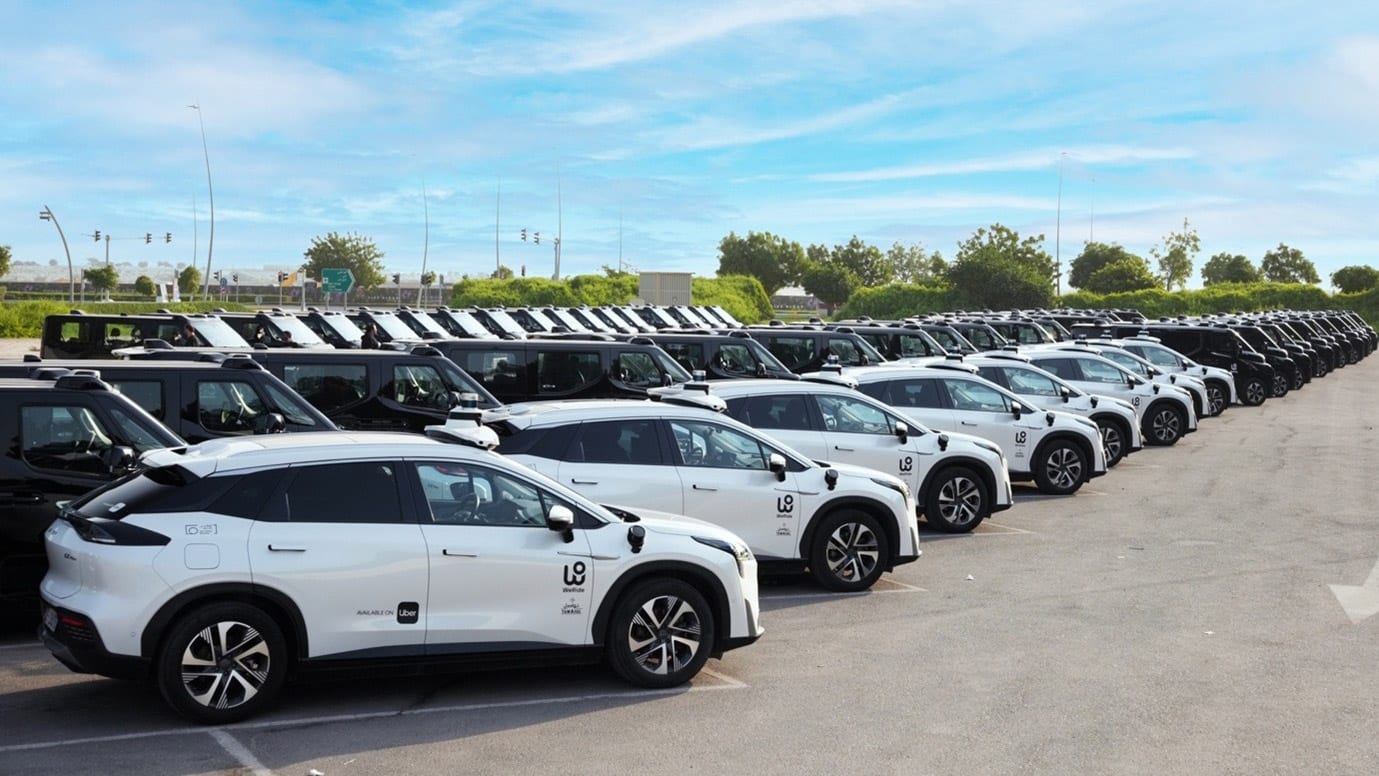
WeRide robotaxis.
(Image credit: WeRide)

Chinese autonomous driving technology company WeRide (NASDAQ: WRD) announced Friday that its global robotaxi fleet has reached 1,023 vehicles, surpassing the key milestone of 1,000.

This milestone represents a significant leap forward and a crucial step toward scaling autonomous driving for commercial deployment, the company said.

WeRide's robotaxis are currently operating in over 10 core cities worldwide, with fully driverless commercial operations already achieved in Guangzhou, Beijing, and Abu Dhabi, according to the company.

WeRide's robotaxi fleet in Abu Dhabi is approaching single-vehicle profitability, it said.

WeRide aims to operate tens of thousands of robotaxis globally by 2030.

Founded in 2017, WeRide has secured autonomous driving licenses in eight countries: China, the UAE, Singapore, France, the US, Saudi Arabia, Belgium, and Switzerland.

Currently, WeRide conducts autonomous driving R&D, testing, and operations across over 40 cities in 11 countries worldwide.

In September 2024, WeRide announced a partnership with US ride-hailing giant Uber Technologies (NYSE: UBER).

The company was listed on the Nasdaq Stock Exchange on October 25, 2024, becoming one of the earliest public companies in the autonomous driving sector.

On November 6, 2025, WeRide was listed on the Hong Kong Stock Exchange.
 

Users who are viewing this thread

Back
Top