Winter Storm
Why Northeast Winter Storms Can Be Difficult To Forecast
Population density, differences in temperatures and the tracks of winter storms can bring major uncertainties into the forecast.
By weather.com meteorologists
When a winter storm is threatening the East Coast, you'll hear the word "uncertainty" from meteorologists in the days leading up to the storm.
There are signs in the models for a potentially significant snowstorm, but the important details on track, timing and strength remain unclear and will determine where and how much snow falls.
That's probably frustrating, since you want specifics. However, it's the nature of the setup along the East Coast that can often create difficulties in determining whether you'll see a foot of snow or a slushy inch followed by rain.
1. Major Population At Stake
First and foremost, the population potentially impacted by a winter storm in the Northeast Megalopolis is huge, topping 50 million people.
The amount of attention and scrutiny snowfall forecasts draw in the Northeast is equally as large, given the massive impact on schools, businesses and commerce.
With so much at stake, subtle differences in the track and evolution of a storm can be the difference between a high, moderate or low-impact event. These impacts not only affect those in the Northeast but can also send ripples of disruption into other parts of the country by disrupting transportation.
Compare that to a similarly difficult forecast situation in a lower-population region of the U.S., where the scrutiny and impacts are far less.
2. Blame The Atlantic Ocean
The Interstate 95 corridor's close proximity to the Atlantic Ocean can take some of the blame for the difficult snowstorm forecasts in the Northeast.
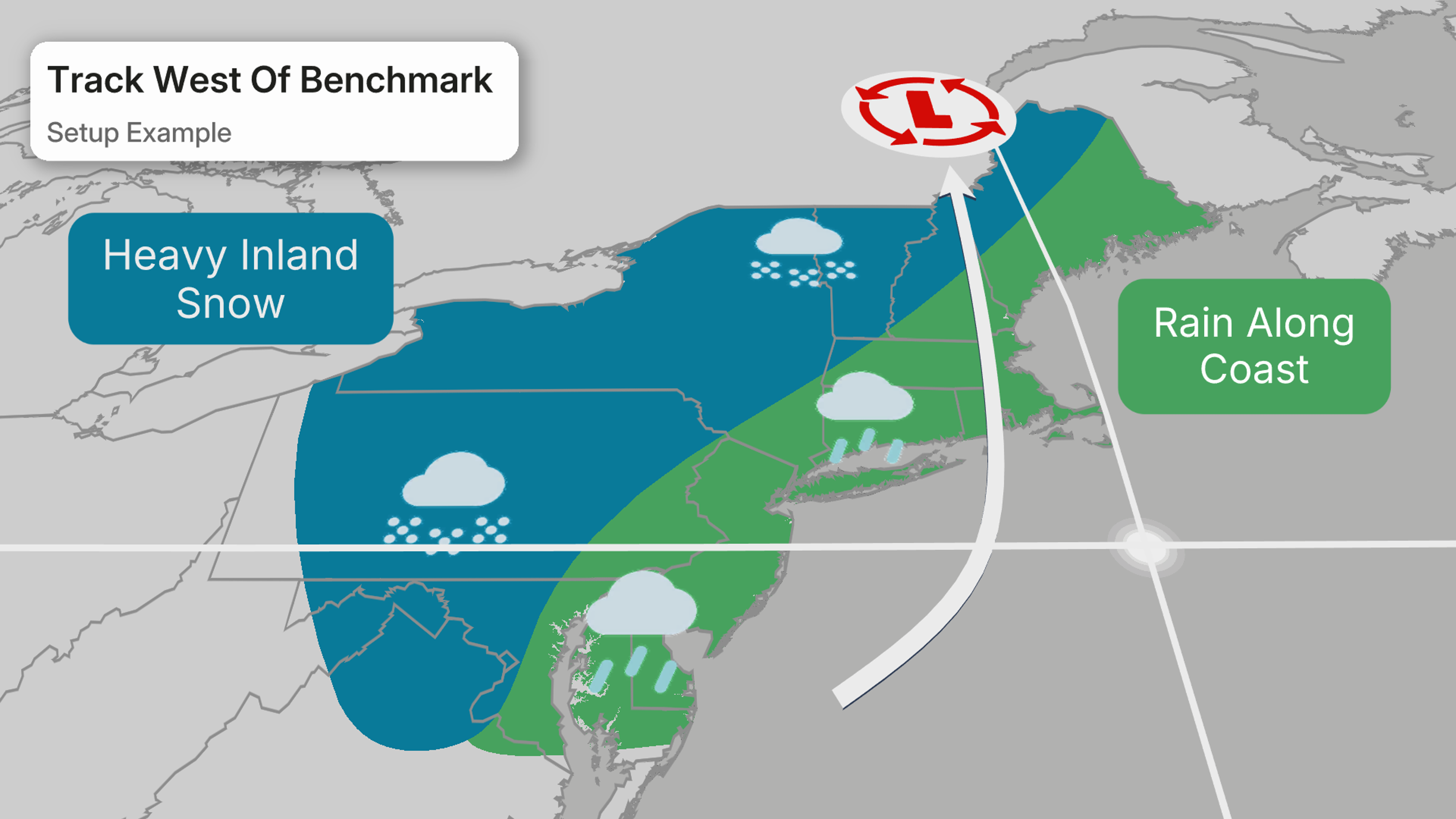
In coastal storm setups, the Megalopolis can be a battleground between cold air over land and relatively mild air over the Atlantic Ocean.
Which air mass wins out and for how long can be the difference between a walloping snowstorm near the coast or a messy mix of precipitation.
Another hurdle: intensifying low-pressure systems can create their own cold air through a process called dynamic cooling. This can counteract the warmer Atlantic air, allowing precipitation to remain in the form of snow.
The I-95 corridor can be a battleground between cold air in place over land and relatively warmer air pulled in by the coastal low-pressure system.