Navigation
Install the app
How to install the app on iOS
Follow along with the video below to see how to install our site as a web app on your home screen.
Note: This feature may not be available in some browsers.
More options
Style variation
You are using an out of date browser. It may not display this or other websites correctly.
You should upgrade or use an alternative browser.
You should upgrade or use an alternative browser.
Vietnam Defense and News forum
- Thread starter Viet
- Start date
More options
Who Replied?


- Thread starter
- #1,758
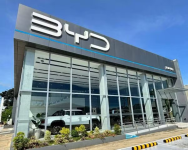
That’s an interesting deal. BYD gives technology in making batteries to Kim Long motor. 6GWh annually would equal production of 100,000 electric cars a year.
More interesting, once the company learns how to make the battery it can produce at much higher scale.

 news.az
More interesting, once the company learns how to make the battery it can produce at much higher scale.
Why BYD’s battery know how matters for Vietnam’s EV ambitions | News.az
Vietnam’s Kim Long Motor has announced a partnership with China’s BYD to develop a 130 million dollar electric vehicle battery plant in ce...
news.az
- Thread starter
- #1,759
Vietnam’s crypto pilot targets $200 billion market from overseas wallets
- By Thisanka Siripala
- Updated: January 27 2026 11:00 AM UTC

CONTENTS
1. A market without a rulebook2. Crypto faces the tax net
3. Startups are not welcome
4. Proving technical muscle
5. Crypto is too popular to ignore
6. A capital market experiment
SHARE LINK:
In this post:
- Vietnam ranks among the top global markets for crypto adoption, with transaction volumes estimated at more than $200 billion annually.
- Under the crypto exchange license pilot, applicants must hold at least $400 million in capital, with 65% coming from institutional investors and foreign ownership capped at 49%.
- Only five applicants will be selected in the initial phase.
Techcombank and its securities arm, Techcom Securities (TCBS), are the first to submit an application. Both meet the minimum charter capital requirement of 10 trillion dong (approx. $400 million) and are primarily backed by institutional shareholders.
There are also roughly eight other Vietnamese securities firms and banks that have expressed interest in submitting an application.
But the government only plans to license a small initial group of five crypto platforms.
On January 26, Vietnamese lawmaker Hai Nam Nguyen stressed the importance of properly assessing and calibrating risk to match Vietnam’s domestic realities.
“The volatility of digital and crypto assets can be even greater than that of traditional securities markets…. Our priority is innovation with risk control, investor protection, and system safety.”
Once Vietnam’s first licensed crypto exchange starts operating, crypto traders will have six months to link their wallets with government-approved platforms or face criminal penalties.
A market without a rulebook
Before the launch of the pilot on January 20, there were no crypto exchanges licensed in Vietnam and no legal channels to apply for one.This led to residents opening an estimated 20 million wallets with offshore crypto exchanges such as Binance, Bybit and OKX, as well as peer-to-peer (P2P) channels like Remitano.
“Unregulated crypto flows moving offshore could make it harder for Vietnam to track capital and may eventually pressure the local currency,” said Huy Pham, Associate Professor in Finance at RMIT University, Vietnam.
Crypto faces the tax net
Crypto trading has flourished in the absence of a formal legal framework. It is widely used for remittances, salary payments and online trading, averaging about $600 million in daily transactions.See also Japan starts working on new crypto regualtion
“Crypto traders have avoided taxes for a long time, and when companies pay salaries in crypto, employees often don’t pay tax because there’s no clear regulation,” said Pham.
The government now wants to rein in the outflow of untaxed crypto held on foreign exchanges.
Vietnam’s Digital Technology Industry Law came into effect on January 1, 2026, providing a foundation for tax authorities to develop management and oversight policies for digital assets.
Startups are not welcome
The crypto pilot program was designed to attract the country’s largest financial institutions. It has set a high bar for entry, with some of the world’s steepest minimum capital and shareholder requirements.HCMC Blockchain Association General Secretary Tran Xuan Tien said the requirements act as a “filter” in selecting financial institutions with a genuine capacity and in turn, creating a robust environment for foreign investors.
Proving technical muscle
Crypto exchange license applicants must also demonstrate specialized expertise and robust cybersecurity systems.Huy Pham said technological capacity is the last thing he is worried about as Vietnam embarks on growing its domestic crypto industry.
“The technological know-how is already here in Vietnam,” he said.”We have companies that could help with tracking crypto flows and detecting suspicious transactions.”
Vietnam is home to a hive of blockchain developers such as Verichains, Kyber Network, Sky Mavis, U2U Network and ONUS. The government is also working to attract foreign fintech companies.
In June 2025, Vietnam designated digital assets alongside AI and semiconductors as core drivers of its future economy under the Digital Technology Industry Law. The new law uses tax breaks, land incentives and state-backed R&D support to lower the cost of setting up a blockchain business.
See also Illinois court slams Mt Gox CEO Mark Karpeles in scam case
Crypto is too popular to ignore
Vietnam is already one of Asia’s largest crypto markets. Chainalysis estimated more than $230 billion in crypto transactions between July 2024 and June 2025, placing Vietnam third worldwide, behind India and South Korea.The integration of crypto trading is set to bring a $200 billion boost to the local economy. While Pham debates that estimate, even a lower figure of $50 billion would still deliver substantial economic growth.
A capital market experiment
“At the beginning, we’re going to see two separate markets to reduce the risk for the Vietnamese,” Huy Pham said, adding that tokenized products carry “very high” risks and are not yet available to Vietnamese residents.“When the digital literacy of the Vietnamese improves these products could be offered domestically,” Pham said. “They want to test out those products first on a foreign investor base because they don’t want the Vietnamese to get scammed.”
However, limiting exchanges to domestic users could create liquidity constraints, similar to the so-called kimchi premium seen in South Korea.
“If liquidity isn’t high, it’s hard for an exchange to make money,” Pham said. “Spot trading alone generates thin margins and exchanges would need to scale to be profitable. ”
He believes allowing futures products would make exchanges much more commercially sustainable.
- Thread starter
- #1,762

- Thread starter
- #1,763
EU and Vietnam to Expand Cooperation on Minerals, Chips and ‘Trusted’ 5G
The European Union and Vietnam are set to boost trade and investment in critical minerals, semiconductors, and strategic infrastructure, according to a draft joint statement seen by Reuters. The statement is expected to be adopted on Thursday during a visit by European Council President Antonio Costa to Hanoi, coinciding with Vietnam’s recent reappointment of To Lam as the country’s top leader. The two sides plan to elevate diplomatic ties to Vietnam’s highest level, comparable to relationships the country maintains with the United States, China, and Russia. While the draft is not legally binding, it carries significant political weight and signals both parties’ intention to expand strategic cooperation, including in sectors where China has historically dominated.
With information from Reuters.

 moderndiplomacy.eu
The European Union and Vietnam are set to boost trade and investment in critical minerals, semiconductors, and strategic infrastructure, according to a draft joint statement seen by Reuters. The statement is expected to be adopted on Thursday during a visit by European Council President Antonio Costa to Hanoi, coinciding with Vietnam’s recent reappointment of To Lam as the country’s top leader. The two sides plan to elevate diplomatic ties to Vietnam’s highest level, comparable to relationships the country maintains with the United States, China, and Russia. While the draft is not legally binding, it carries significant political weight and signals both parties’ intention to expand strategic cooperation, including in sectors where China has historically dominated.
Critical Minerals and Semiconductor Cooperation
Vietnam possesses significant deposits of rare earths, gallium, and tungsten materials essential for defense, electronics, and high-tech industries but has largely untapped processing capacity. The draft statement emphasizes promoting “trade and investment in goods, services, and technologies that support sustainable mining and processing” of these resources. Cooperation in semiconductors is another priority, with Vietnam already hosting major chip packaging, testing, and assembly operations, including Intel and Amkor Technology. Earlier this month, Vietnam began construction of its first domestic semiconductor production facility. European and Dutch firms, such as ASML, are also exploring expanding their supply chains and providing equipment to Vietnam, underscoring the EU’s interest in deepening technological collaboration.5G, Infrastructure, and Defense
The draft document highlights “trusted communications infrastructure” as a key area of collaboration, particularly in 5G networks and satellite connectivity. While European companies Ericsson and Nokia are leading Vietnam’s 5G rollout, Hanoi has also awarded some contracts to Chinese companies, including Huawei, raising Western security concerns. Both sides intend to strengthen security cooperation, and the EU will consider transferring “non-sensitive technology and know-how” to Vietnam. Investment in infrastructure, including Vietnam’s ambitious nationwide high-speed railway project, is also on the agenda, reflecting shared economic and strategic priorities.Geopolitical Context: U.S., China, and Russia
The statement carries subtle critiques of other major powers. EU President Costa warned of “coercive trade practices” and emphasized the importance of a “rules-based international order,” signaling concern about U.S. tariffs and unilateral measures. The draft also reaffirmed support for WTO reform and respect for territorial integrity, calling for a just and sustainable peace in Ukraine amid Russia’s aggression. The statement further encourages maritime security cooperation and stability in the South China Sea, where China’s territorial claims conflict with Vietnam’s interests. These measures reflect a broader EU strategy to strengthen partnerships in the Indo-Pacific while balancing against geopolitical pressure from both Washington and Beijing.Analysis: Strategic and Economic Implications
The EU-Vietnam initiative reflects a dual strategy of economic opportunity and geopolitical hedging. For the EU, expanding trade in critical minerals, semiconductors, and 5G technology supports industrial competitiveness while securing supply chains increasingly reliant on China. For Vietnam, the partnership provides access to European technology, investment, and diplomatic support, bolstering its security and economic sovereignty amid competing U.S. and Chinese influence. The emphasis on “trusted” infrastructure, sustainable mining, and maritime security also signals a careful balancing act: both sides aim to deepen cooperation without overtly antagonizing Beijing. Overall, the agreement positions Vietnam as a critical hub in the EU’s broader strategy to diversify trade, secure technology, and strengthen strategic partnerships in the Indo-Pacific region.With information from Reuters.
EU and Vietnam to Expand Cooperation on Minerals, Chips and ‘Trusted’ 5G
The European Union and Vietnam are set to boost trade and investment in critical minerals, semiconductors, and strategic infrastructure, according to a draft joint statement seen by Reuters.
moderndiplomacy.eu
- Thread starter
- #1,766
Surprise
Vietnam rail company Vinspeed is chosen as rail contractor in BAT build and transfer model.
54 km, 350 kmh double-track 1,435mm gauge
The $4 billion money for the HSR construction comes from the local gov. The city owns the HSR and gets all the money it will earn from lands along the route.

Vietnam rail company Vinspeed is chosen as rail contractor in BAT build and transfer model.
54 km, 350 kmh double-track 1,435mm gauge
The $4 billion money for the HSR construction comes from the local gov. The city owns the HSR and gets all the money it will earn from lands along the route.
- Thread starter
- #1,767
Vietnam Holds Firm as South Korea’s Third-Largest Trading Partner on Semiconductor Surge
Posted on January 26, 2026 by Korea Bizwire in Business, Economy, Top News, Trade with 0 Comments
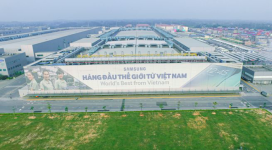
Samsung Electronics’ factory in Thai Nguyen Province, northern Vietnam (image provided by Samsung Electronics)
SEOUL, Jan. 26 (Korea Bizwire) — South Korea’s trade with Vietnam continued to deepen last year, with the Southeast Asian nation holding its position as Korea’s third-largest trading partner for a fourth consecutive year, underscoring the growing importance of export diversification beyond China and the United States.
According to data released Monday by the Ministry of Trade, Industry and Energy and the Korea International Trade Association, South Korea’s exports to Vietnam rose 7.6 percent in 2025 from a year earlier to $62.8 billion. Imports from Vietnam climbed 11.7 percent to $31.8 billion, lifting total bilateral trade to $94.5 billion — a 9 percent increase from the previous year.
The figure ranked behind only China, with $272.7 billion in trade, and the United States, with $196.2 billion, making Vietnam South Korea’s third-largest trading partner. Vietnam first overtook Japan for the No. 3 spot in 2022 and has retained the ranking ever since.
South Korea posted a $31 billion trade surplus with Vietnam last year, the second largest among its trading partners after the United States. The surplus widened by $1.1 billion from the previous year, reflecting strong export momentum led by semiconductors.
Chip exports to Vietnam surged 36.7 percent to $24.7 billion, making semiconductors Korea’s top export item to the country. The gains came amid a global boom in artificial intelligence and data center investment, which pushed South Korea’s overall semiconductor exports to a record $173.4 billion in 2025, up 22.2 percent from a year earlier.
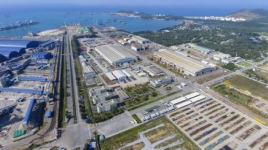
This photo provided by HD Korea Shipbuilding & Offshore Engineering Co. shows a manufacturing complex of Doosan Vina in Vietnam. (Yonhap)
Trade between the two countries has expanded dramatically since diplomatic ties were established in 1992, when bilateral commerce totaled just $500 million. More than three decades later, trade has grown nearly 190-fold, with the export mix shifting from labor-intensive goods such as textiles to high-value products including chips and wireless devices.
The 2014 Korea–Vietnam free trade agreement played a pivotal role in accelerating that growth. Since the pact took effect in 2015, bilateral trade has more than tripled, rising from roughly $30 billion to nearly $95 billion. Vietnam climbed from Korea’s eighth-largest trading partner in 2014 to fourth the following year, before advancing to third place in 2022.
Much of the trade is driven by Korean investment in Vietnam, where manufacturers export intermediate goods to local factories and reimport finished products. Samsung Electronics alone produces more than half of its global smartphone output in Vietnam and accounts for about 20 percent of the country’s total exports.
The company has continued to expand its footprint, including the opening of a large research and development center in Hanoi in 2022.
In recent years, exports of consumer goods such as cosmetics and food products have also risen, buoyed by the popularity of Korean culture.
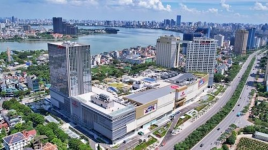
Lotte Mall West Lake Hanoi, a large shopping mall in Vietnam, has been operating successfully since its opening in 2023. (Image courtesy of Lotte Shopping)
Vietnam, in turn, has become a central pillar of Korea’s broader trade strategy. Korean officials say the country is a key market in efforts to reduce reliance on the world’s two largest economies.
“Amid a rapidly shifting global trade environment, Vietnam stands out as a strategic partner for diversifying Korea’s export markets,” a trade ministry official said, adding that Seoul would continue supporting mutually beneficial trade in semiconductors and consumer goods alike.
Yellow is Okay
Registered Member
Surprise
Vietnam rail company Vinspeed is chosen as rail contractor in BAT build and transfer model.
54 km, 350 kmh double-track 1,435mm gauge
The $4 billion money for the HSR construction comes from the local gov. The city owns the HSR and gets all the money it will earn from lands along the route.
View attachment 175667
Lao Dong just "edited" their article into BOO model.
- Thread starter
- #1,769
From the media, the HSR will be built on investment model. Vinspeed provides the money, it builds and operates then transfers to the state when the license is expired. The city ultimately owns the HSR.Lao Dong just "edited" their article into BOO model.
At the end of the day it doesn’t matter BOO or BT or investment model the HSR is built by a Vietnamese company, the owner is Vietnamese.
- Thread starter
- #1,770
Ineco brings the Spanish stamp to Vietnam's first high-speed railway line

Ho Chi Minh
JANUARY 15, 2026
Ineco will participate in the development of the future North-South high-speed line in Vietnam, a strategic corridor of 1,541 kilometres that will connect the cities of Hanoi and Ho Chi Minh City. The project, declared a priority by the Vietnamese National Assembly, involves an estimated investment of 67 billion dollars and is a key milestone in the promotion of sustainable mobility in the region.
The consortium in which Ineco participates, together with the French company Artelia, its subsidiary in the country Artelia Vietnam, RCIC as a local partner and with the collaboration of Renfe International Projects, will be in charge of the feasibility study, as well as the development of the basic engineering, necessary to specify the scope, technical requirements and costs of the following construction phases.
During the more than ten months of the contract, Ineco will lead fundamental disciplines such as the railway layout, civil works, tunnels, structures, architecture, electromechanical installations, energy supply and BIM methodology. Its participation in this project highlights the value of its accumulated experience of more than 30 years in the development of high-speed railways, as well as its in-depth knowledge of the Spanish railway model, considered one of the most efficient in the world.
Spanish High-Speed Rail: A Global Benchmark
Spain has the most extensive high-speed network in the European Union and the most competitive average construction cost, thanks to a strategy based on public-private collaboration and a commitment to innovation and sustainability. This model, in which Ineco has played a fundamental role, has become a benchmark for other countries that are committed to efficient, safe and environmentally friendly mobility.
With a presence on five continents and more than 130 projects underway in 34 countries, Ineco acts as a strategic agent in the internationalisation of the Spanish infrastructure model. Participation in projects such as the one in Vietnam not only strengthens the external projection of public engineering but also opens the door to other Spanish companies in the sector, generating opportunities for economic, technical and commercial cooperation.

Ineco brings the Spanish stamp to Vietnam's first high-speed railway line
Ineco will participate in the development of the future North-South high-speed line in Vietnam, a strategic corridor of 1,541 kilometres that will connect the cities of Hanoi and Ho Chi Minh City. The project, declared a priority by the Vietnamese National Assembly, involves an estimated...
Users who are viewing this thread
Total: 8 (members: 0, guests: 8)
Pakistan Defence Latest
-
 PTI Murad Saeed in Afghanistan, was 'controlling KP govt' from there: Rana Sanaullah (13 Viewers)
- Latest: Psyko70
-
-
PAF pilot highlights how chinese J10C fighters has edged US F16's (8 Viewers)
- Latest: White Privilege
-

-
 Federal cabinet gives nod to imposition of emergency in KP; summary sent to president (13 Viewers)
- Latest: Cipher212
Country Watch Latest

Latest Posts
-
-
PTI Murad Saeed in Afghanistan, was 'controlling KP govt' from there: Rana Sanaullah (13 Viewers)
- Latest: Psyko70
-
 Israel declares all Arab states as Illegitimate Official government declaration (20 Viewers)
- Latest: muhammed45
-
-