US Economy - News, Updates and Discussion

Trump nominates Kevin Warsh as new chair of Federal Reserve

Donald Trump has just announced his nomination for the new chair of the Federal Reserve.

He's nominating Kevin Warsh, who served as a Fed governor from 2006 to 2011.

The central bank has been under political pressure from the White House about how it sets interest rates.
 

Trump says Warsh 'will never let you down' as he confirms nomination

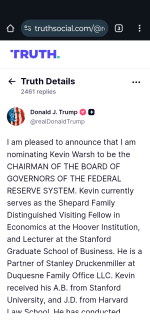
Announcing his nomination on Truth Social, Donald Trump writes: "I have known Kevin for a long period of time, and have no doubt that he will go down as one of the GREAT Fed Chairmen, maybe the best.

"On top of everything else, he is 'central casting,' and he will never let you down."
 

What do we know about Kevin Warsh?

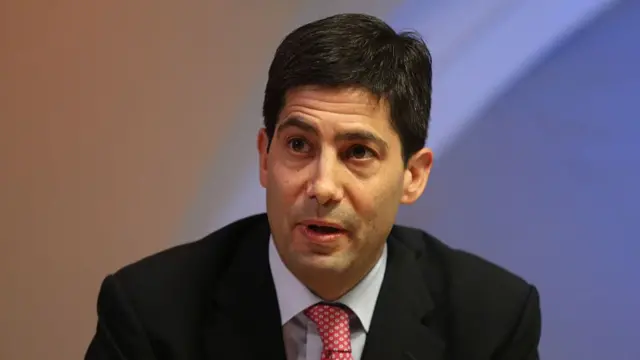
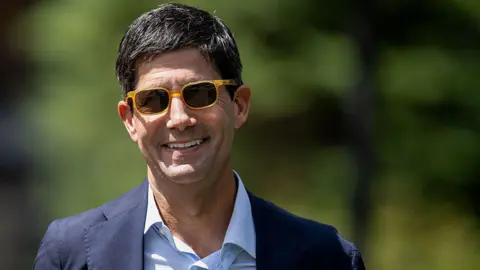
Kevin Warsh, a white man with dark hair wearing a suit.


Kevin Warsh, who served as a Fed governor from 2006 to 2011, has been an outspoken Fed critic, lambasting everything from the central bank's heavy reliance on data to its use of assets on its balance sheet.

The 55-year-old economist, a fellow at the right-leaning Hoover Institution who serves on the board of UPS, had also been considered for Fed chair during Trump's first term.

He briefly overtook Trump loyalist Kevin Hassett in prediction markets last month before falling back to second place.

Warsh had a relatively "hawkish" reputation in his first stint as Fed governor, meaning that he tended to favour higher interest rates and focused on concerns about inflation.

But he is now seen as a voice that would support lower rates in the near term.

"He thinks you have to lower interest rates," Trump told the Wall Street Journal in December. "And so does everybody else that I've talked to."

Warsh also has close family connections to Trump's orbit. His father-in-law, billionaire businessman Ronald Lauder, is a long-time Trump donor and ally.
 

Fed held interest rates this week - as current chair stressed important of 'credibility'

p0mxqcqs.jpg


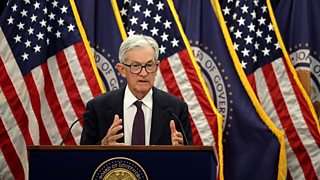
Jerome Powell explains why Federal Reserve left interest rates unchanged

Trump's nomination comes days after the Federal Reserve voted to hold interest rates - with its current chair, Jerome Powell, defending the importance of the central bank's independence.

On Wednesday, the Fed said it would keep its key lending rate between 3.5% to 3.75%.

Donald Trump has frequently criticised Powell for not cutting rates quickly enough.

Federal prosecutors recently opened a criminal investigation over testimony Powell gave to the Senate about renovations to Fed buildings.

Powell declined to comment on the probe as he spoke on Wednesday, but said that if a central bank lost its independence "it would be hard to restore the credibility of the institution".

Powell previously said he believed the federal investigation stemmed from Trump's anger at the pace of interest rate cuts.
 

Why the US dollar hit a four-year low and could fall further​


Natalie Sherman
Business reporter

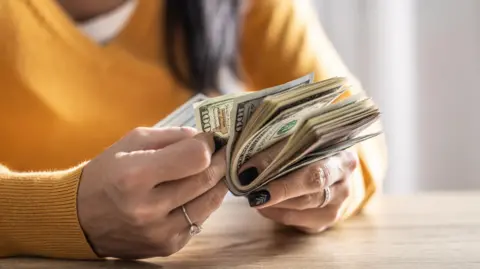
SimpleImages via Getty A close-up of the hands of a woman in a yellow sweater with a ring and dark nail polish counting many American $100 bills


SimpleImages via Getty
A close-up of the hands of a woman in a yellow sweater with a ring and dark nail polish counting many American $100 bills

After a dramatic 2025, when US President Donald Trump's tariff announcements sent the dollar tumbling, traders of the currency were expecting a quieter year.

Recent weeks have shattered that complacency.

The dollar dropped to its lowest point in four years on Tuesday against a basket of currencies, hitting multi-year lows against the Euro and the pound as it fell 3% in roughly a week.

That slide has since slowed down, but analysts say the reprieve is likely to be temporary.

"Most people would think the dollar should, could, and would weaken further this year," said Chris Turner, global head of financial market research at ING. "The jury's out on the timing but less so on the direction."

A weaker dollar reduces purchasing power for Americans - something overseas travellers know all too well. If that carries on, analysts say it risks fuelling inflation inside the US, as Americans face higher prices for imports.

The falls have also raised bigger questions about whether the dollar's status as the world's go-to currency - which for decades has helped keep borrowing costs in the US relatively low - might be under threat.

So what is driving down the dollar and what does it mean?
 
Where is the money going? Is this 'sell America'?

The shift from the dollar has helped to fuel a surge in the price of gold, sending its price doubling over the last year, as investors seek a low-risk place to put their money.

And though other national currencies appeared to get little boost from redirected funds last year, there are signs that could be starting to change.

The Euro and pound were among the currencies to see their values leap against the dollar this month, while eleven of the 19 emerging market currencies tracked by Oxford Economics also gained more than 1%.

Global investors might also be turning against the US, with pension funds in Amsterdam and Denmark cutting back holdings of US Treasuries.
1769776794883.png

Bloomberg via Getty Images

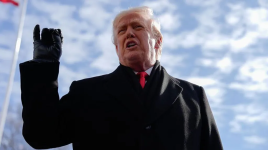
US President Donald Trump speaks to members of the media on the South Lawn of the White House before boarding Marine One in Washington, DC, US, on Tuesday, Jan. 27, 2026. Bloomberg via Getty Images

However, Turner of ING said he thought markets were still well way from a "full 'sell America' narrative", noting that the sell-off action has been largely limited to the dollar.

He and others noted that the US stock market is still hovering around record highs, while moves in the market for US government debt have been relatively contained.

Still, ING is expecting the dollar to fall another 4% to 5% this year, as growth prospects outside of the US improve.

Does Trump actually want a weaker US dollar?

For now, the dollar's falls remain small enough that the impact for American consumers is likely to amount to "noise", Brooks said.

But what happens next will depend in part on US economic performance and how quickly the US central bank will lower interest rates.

Trump has mounted an intense campaign for lower interest rates more quickly and is expected to install someone more sympathetic to those demands to lead the bank in the next few months.

If rates do fall, that might lower the dollar further as investors chase higher returns elsewhere.

But the White House could see that as a good thing, as Trump and other White House officials have previously welcomed the idea of a weaker dollar, which can help make US exports more competitive.

"It doesn't sound good, but you make a hell of a lot more money with a weaker dollar... than you do with a strong dollar," Trump said in July. This week, asked about the falls, he said he thought the currency was "doing great".

Brooks said a sustained drop in the dollar's value could help boost US firms - but warned that the pay-off might be limited if it happens for the "wrong reasons".

If it's the market rendering a verdict on poor policies, he warned "that is probably a very important signal".
 

Gold slumps 4pc as bets of a more hawkish Fed chair rise

Reuters
January 30, 2026

Gold slid more than 4 per cent on Friday on rumours the Federal Reserve could get a more hawkish chair, but was still on track for its strongest monthly gain since 1980 as investors flocked to the safe haven amid lingering geopolitical and economic strains.

Spot gold lost 3pc to $5,232.57 per ounce, as of 05:20 GMT, after falling more than 5pc earlier. It scaled a record high of $5,594.82 on Thursday.

Prices have risen more than 20pc so far in January, heading for a sixth straight monthly gain and the largest monthly advance since 1980.

US gold futures for February delivery fell 1.8pc to $5,225.0 per ounce on Friday.

“So, a potentially less dovish Fed Chairman pick, a rebound in the dollar, and gold giving way to overbought conditions have contributed to the decline in the price of the precious metal,” KCM Chief Trade Analyst Tim Waterer said.

US President Donald Trump said on Thursday he intends to announce his pick to replace Fed Chair Jerome Powell on Friday, with speculation intensifying that the nod will go to former Fed Governor Kevin Warsh.
 
Kevin Warsh is the son-in-law of Ronald Lauder, the President of the World Jewish Congress and a supporter of Netanyahu.

Screenshot_20260130-214626.png
 
Real gross domestic product (GDP) increased at an annual rate of 3.3 percent in the fourth quarter of 2023 (table 1), according to the "advance" estimate released by the Bureau of Economic Analysis. In the third quarter, real GDP increased 4.9 percent.

Real GDP increased 2.5 percent in 2023 (from the 2022 annual level to the 2023 annual level), compared with an increase of 1.9 percent in 2022 (table 1).

Current-dollar GDP increased 6.3 percent, or $1.61 trillion, in 2023 to a level of $27.36 trillion
60% of which is circular debt spending amongst Silicon Valley tech bros...all vaporware, no real growth or tangible increase in production...
 

Will Trump's pick to lead US central bank get him the change he wants?​


Natalie Sherman
BBC Business reporter

Bloomberg via Getty Images Kevin Warsh, former governor of the US Federal Reserve, wearing sunglasses and smiling at the Allen & Co. Media and Technology Conference in Sun Valley, Idaho, US, on Wednesday, July 9, 2025.


Kevin Warsh has previously worked at the Federal Reserve and on Wall Street
Donald Trump has been calling for change at the US central bank.

Now, with Jerome Powell's term as Federal Reserve chairman poised to end in May, he could be about to get his wish.

On Friday, the US president announced Kevin Warsh - a conservative whom he had passed over for the post, to his regret, during his first term - as his choice to replace Powell.

"Warsh "is 'central casting' and he will never let you down," Trump declared on social media as he announced the decision.

The irony of the choice was lost on no one. Warsh has made his name as a supporter of higher interest rates - a reputation he has tried to shed in recent opinion articles and media appearances.

It's a position that would seem to put him at odds with Trump, a self-described "low interest rate guy", who has criticised Powell for not cutting interest rates quickly enough and who has made no secret that his choice to lead the Fed should be on board with his views.

It remains to be seen whether Warsh's selection will lead to the bank Trump wants.
 
Warsh brings a traditional background to the job: an Ivy League education, a prior stint at the Fed, as well as time on Wall Street and at the Hoover Institution - a conservative economic think tank.

Supporters say he is sensitive to concerns about the bank's independence and alert to the risks if its policies serve short-term political aims rather than the wider economy.

Lee Ohanian, an economics professor at UCLA and senior fellow at the right-leaning Hoover Institution, who has known Warsh for years, said taking directions from Trump "would diminish the Fed. It would diminish the office of the chairman, and it would create tremendous turmoil in the financial markets. Kevin knows that".

In Congress and on Wall Street, where Trump's attacks on Powell have caused alarm, Warsh's potential independent streak is seen as a plus.

His nomination has drawn praise from establishment figures including former Secretary of State Condoleezza Rice, and Mohamed el-Erian, a high-profile economist with a long career on Wall Street.

Critics have questioned whether it is the fact that Warsh's father-in-law, Ronald Lauder, is a Trump donor and friend that got him the job.

Others say his record as a policymaker is poor, noting that Warsh opposed economic stimulus during the 2008 financial crisis as he fretted the policies would lead to inflation – a minority view then and now.

Congressman Don Beyer, a Democrat from Virginia, accused Warsh of showing "willingness to wildly alter his views...based on who is in the White House".

But on balance, many in financial circles see him as a responsible pick.

"There appears to be at least some degree of comfort with a Warsh-led Fed vs. the other choices," Wells Fargo analysts said on Friday - noting that his relatively sparse public profile in recent years implies a degree of uncertainty.

"Investors should be thankful," Jeffrey Roach, chief economist for LPL Financial, told the BBC.
 

Walmart hits $1 trillion in market value for the first time

  • Walmart's stock has outpaced the 16% rise in the benchmark S&P 500
Reuters
1770141750756.png
Walmart became the first retailer ever to hit $1 trillion in market valuation on Tuesday, riding on a year-long rally that has seen its shares rise nearly 26%.

The latest milestone for the company came just two weeks after Walmart replaced British drugmaker AstraZeneca in the tech-focused Nasdaq-100 Index, home to the most valuable non-financial companies listed on the index.

The Bentonville, Arkansas-based chain has cashed in on wealthier consumers choosing the convenience of faster deliveries and flocking to the retailer for discretionary categories, such as apparel and furniture.

U.S. households, particularly low- and middle-income earners, have been under mounting financial strain for some time due to persistent inflation and a cooling job market. Tariffs and uncertainty surrounding the recent U.S. government shutdown have also weighed on spending.

Despite the challenging backdrop, Walmart’s stock has outpaced the 16% rise in the benchmark S&P 500.
 
Warsh brings a traditional background to the job: an Ivy League education, a prior stint at the Fed, as well as time on Wall Street and at the Hoover Institution - a conservative economic think tank.

Supporters say he is sensitive to concerns about the bank's independence and alert to the risks if its policies serve short-term political aims rather than the wider economy.

Lee Ohanian, an economics professor at UCLA and senior fellow at the right-leaning Hoover Institution, who has known Warsh for years, said taking directions from Trump "would diminish the Fed. It would diminish the office of the chairman, and it would create tremendous turmoil in the financial markets. Kevin knows that".

In Congress and on Wall Street, where Trump's attacks on Powell have caused alarm, Warsh's potential independent streak is seen as a plus.

His nomination has drawn praise from establishment figures including former Secretary of State Condoleezza Rice, and Mohamed el-Erian, a high-profile economist with a long career on Wall Street.

Critics have questioned whether it is the fact that Warsh's father-in-law, Ronald Lauder, is a Trump donor and friend that got him the job.

Others say his record as a policymaker is poor, noting that Warsh opposed economic stimulus during the 2008 financial crisis as he fretted the policies would lead to inflation – a minority view then and now.

Congressman Don Beyer, a Democrat from Virginia, accused Warsh of showing "willingness to wildly alter his views...based on who is in the White House".

But on balance, many in financial circles see him as a responsible pick.

"There appears to be at least some degree of comfort with a Warsh-led Fed vs. the other choices," Wells Fargo analysts said on Friday - noting that his relatively sparse public profile in recent years implies a degree of uncertainty.

"Investors should be thankful," Jeffrey Roach, chief economist for LPL Financial, told the BBC.
Some of the most whackiest right wing ideas and idealogues come out of the Hoover Institute. Death spiral of US economy will be pressed in high gear...he's going to lower interest rates as Trump is demanding to spread more easy/free money to his fellow zionist billionaries and we might slip into hyper inflation.
 

Users who are viewing this thread

Pakistan Defence Latest

Back
Top