Navigation
Install the app
How to install the app on iOS
Follow along with the video below to see how to install our site as a web app on your home screen.
Note: This feature may not be available in some browsers.
More options
Style variation
You are using an out of date browser. It may not display this or other websites correctly.
You should upgrade or use an alternative browser.
You should upgrade or use an alternative browser.
Chinese Submarines News & Discussions
- Thread starter Michael
- Start date
More options
Who Replied?

 I saw it.

nang2
Registered Member


Nuclear one can achieve this by submerging deeper. Diesel subs are primarily used for shallow waters.Diesel subs do have one big advantage. They are quieter than most nuclear while submerged.


KingQamaR
Elite Member
Nuclear one can achieve this by submerging deeper. Diesel subs are primarily used for shallow waters.
Subs running on batteries make less noise than reactors. It’s the pumps that run on the nuclear ones that give them away. Regardless of depth.


Subs running on batteries make less noise than reactors. It’s the pumps that run on the nuclear ones that give them away. Regardless of depth.
Modern western SSN are as quiet as the ocean itself.
The reason HMS Vanguard of the Royal Navy and the french Le Triomphant collided on their patrol in the Atlantic because neither submarine could detect each other with their advanced passive sonar until they literally bumped into each other. Ironically an accident proves how quiet those massive SSBN were.
Seawolfs S6W reactor's main coolant pumps were so quiet that When the head of Naval Reactors, Admiral McKee, toured the contractor's facility, he put his hand on the pump and asked when they were going to turn it on. The contractor employees told him it was already running. And this was US technology from 1990s.
On the other hand diesel electric sub's quietness entirely depend on batteries. And when they run on diesel engines to recharge the batteries they are way louder.
Also, nuclear submarine can do fast evasive maneuver for extend period of time. Diesel electric boats (even when equipped with AIP) attempting to do the same will run out of batteries real quick leaving them exposed.
KingQamaR
Elite Member
Modern western SSN are as quiet as the ocean itself.
The reason HMS Vanguard of the Royal Navy and the french Le Triomphant collided on their patrol in the Atlantic because neither submarine could detect each other with their advanced passive sonar until they literally bumped into each other. Ironically an accident proves how quiet those massive SSBN were.
Seawolfs S6W reactor's main coolant pumps were so quiet that When the head of Naval Reactors, Admiral McKee, toured the contractor's facility, he put his hand on the pump and asked when they were going to turn it on. The contractor employees told him it was already running. And this was US technology from 1990s.
On the other hand diesel electric sub's quietness entirely depend on batteries. And when they run on diesel engines to recharge the batteries they are way louder.
Also, nuclear submarine can do fast evasive maneuver for extend period of time. Diesel electric boats (even when equipped with AIP) attempting to do the same will run out of batteries real quick leaving them exposed.
The theory behind the sea wolf was no pumps , instead thermal expansion. The heat would push cooling fluid forward in a constant rate? @Arif nuclear subs reactors are always running . While AIP/diesel subs can fully turn off their engines and become completely silent.

Shui
Registered Member
A bit inaccurate, YJ-19 is torpedo launch, there is another VLS version bigger HCM missile.
Shui
Registered Member
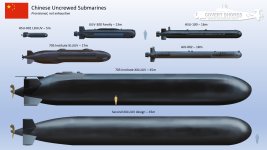
It's here!
The diameter and length, equipped with Hypersonic HCM and partnering with other ULUUV.
Last edited:

Beijingwalker
VIP Member
First Chinese Type 09V Nuclear Powered Attack Submarine Appears At Bohai
Published on 12/02/2026 The new Type 09V submarine is larger than the existing Type-093 Shang class. Although details remain limited, it is distinguished by prominent X-form rudders. Illustration by HI Sutton.
Submarine yard Bohai Shipbuilding earlier this week moved the first Chinese Type 09V (or 095) nuclear powered attack submarine (SSN) into the launch bay at the yards facilities in Huludao. Naval News has received a number of detailed satellite photos showing the new design in the flooded drydock.
Update 13/02/2026: Imagery IQ kindly provided an SAR image (© Umbra), of the new boat, added further below.
Relevant sources have not consented to publishing of the high resolution imagery in question. Therefore this article provides a graphic accurately describing the observations outlined below. It is important to note that several aspects of the new design are preliminary estimates.
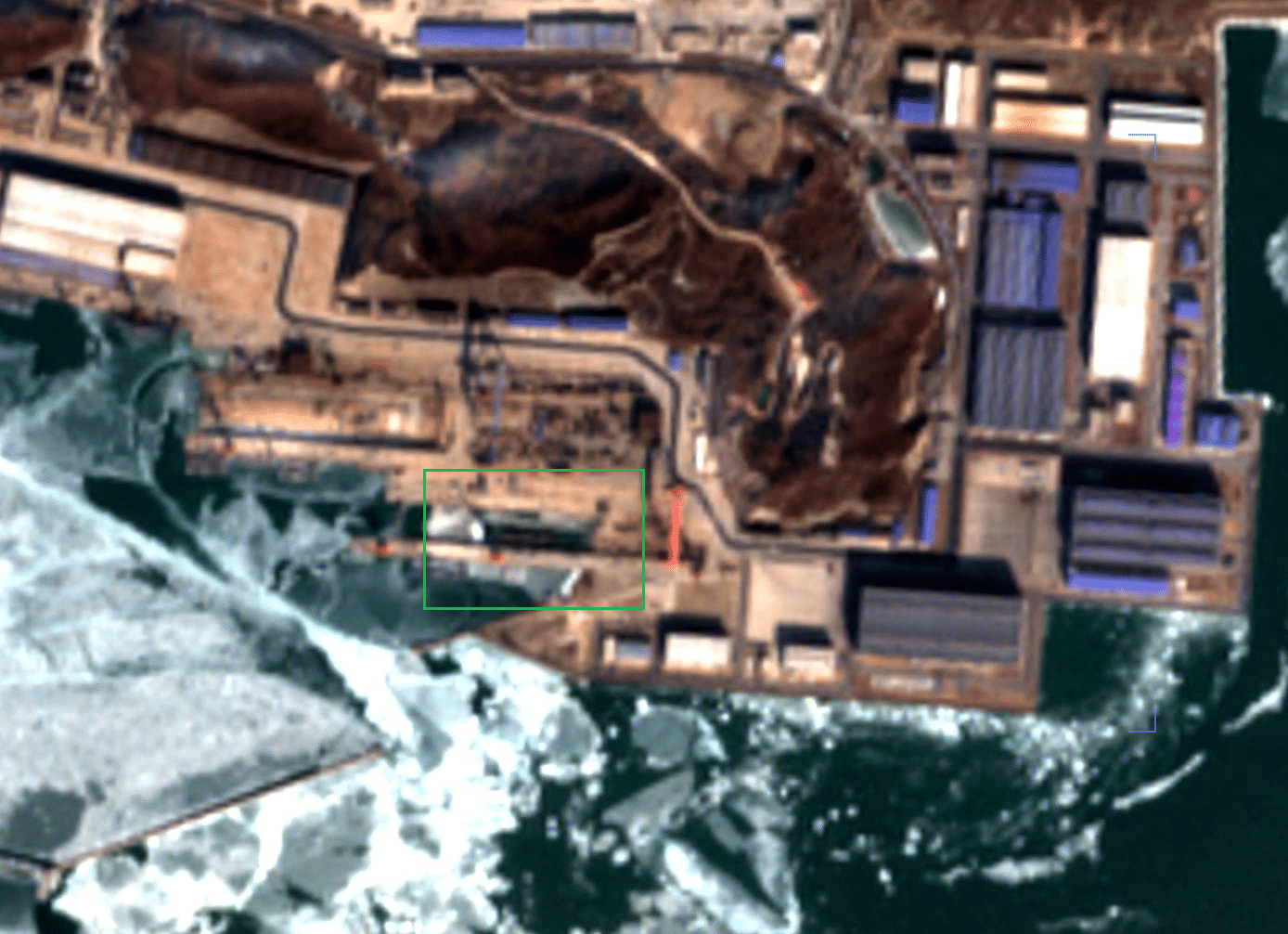 Sentinel-2 L2A imagery of the new submarine in the launch dock at Bohai, on February 9. Image via EOS Land Viewer.
Initial lower resolution imagery dated February 9, such as available via Sentinel-2 L2A suggested the launch of another Type 09IIIB (093B) SSGN. Bohai has since 2022 launched an estimated seven or eight hulls of these guided missile nuclear powered submarines for the Chinese Navy. Type 09IIIB itself is based on the previous Type 09III-lineage, albeit with significant revisions. However, detailed imagery of the boat shows distinct characteristics in line with a new clean sheet design.
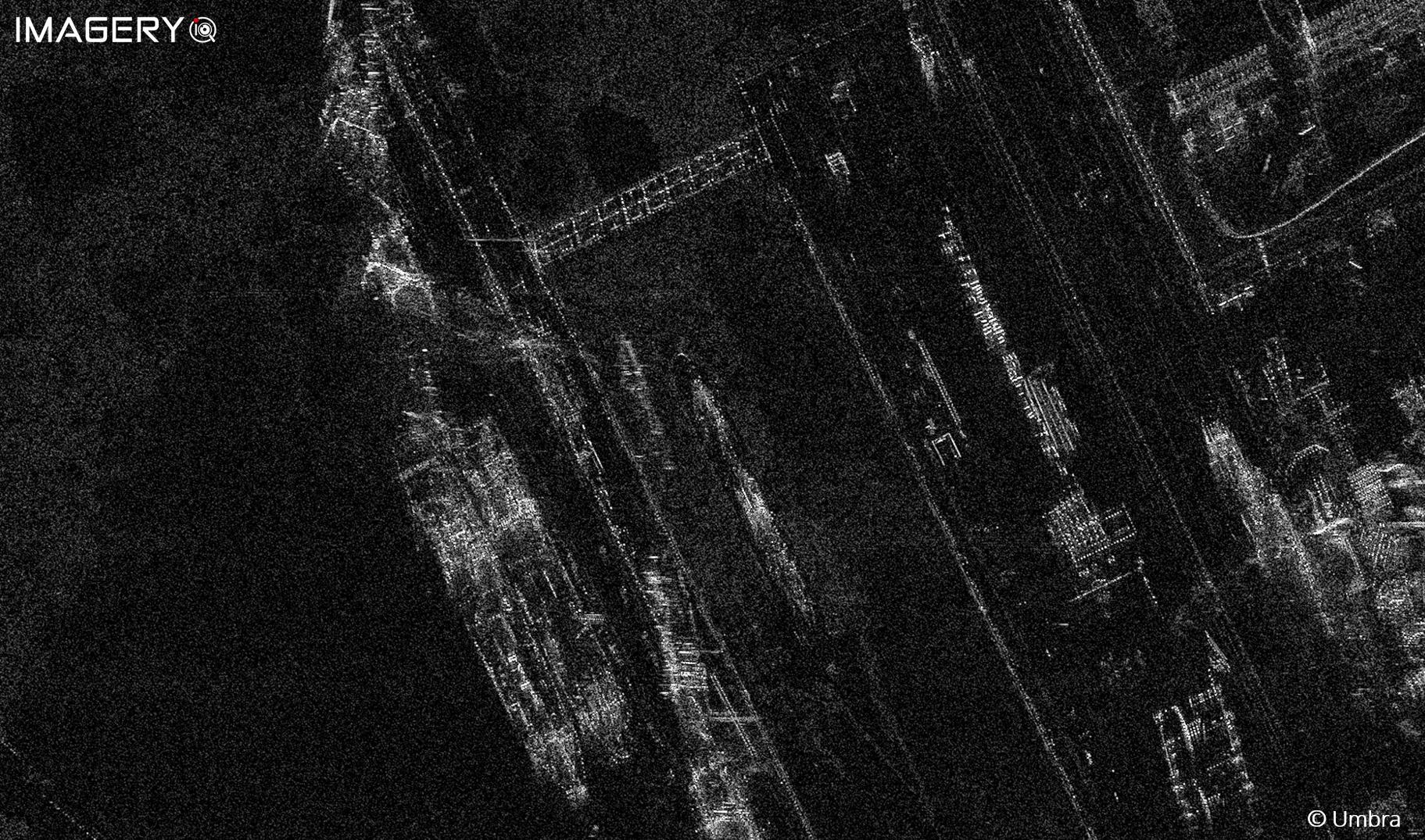 SAR image of Type 09V SSN at Bohai, dated 11/02/2026. The boat is awaiting relocation to a fitting out pier after leaving the flooded drydock. Photo provided by Imagery IQ, © Umbra.
Wider beam and X-type stern controls
The new boat measures roughly 110-115 metres in overall length. This figure is not significantly different to previous Type 09III SSN. However, unlike the older boats the new design is notably wider, at an estimated beam of 12-13 metres. These dimensions would result in an estimated displacement of 9,000 to 10,000 tons submerged. Such a size is considerably larger than the approximately 7,000 tons of the narrower Type 09III-family boats.

 Previous generation Type 09IIIA (left) and 09IIIB (right) SSN. Images via Chinese state and social media.
Additionally, the new SSN features a prominent X-tail rudder arrangement with very large control surfaces. The configuration is a first for Chinese nuclear powered submarines. It is also similar to the arrangement previously observed on a different new and smaller design at Wuchang Shipbuilding in Wuhan in 2024, termed the “Type 041” or “Zhou-class” by American officials and Western media.
VLS and pump jet likely, hull design uncertain
The Type 09V in the imagery availabe shows an unfinished open compartment behind the sail. This segment is plausibly a VLS for antiship- and land-attack missiles. Such an arrangement would be similar to the preceding Type 09IIIB SSGN. The present state of the segment in question leaves the exact nature and configuration of this space uncertain for now. Type 09IIIB in comparison appears to carry 18 launchers in a three abreast-arrangement for AShM and LACM. An alternative explanation is that the open space relates to ongoing work on the reactor compartment.
The imagery available to Naval News does not reveal the forward dive planes. No control surfaces are discernable on the relatively conventional sail. An early impression is that the new boat will use retractable hull-mounted dive planes. Such a step contrasts with the fairwater planes used by previous Chinese nuclear powered and conventional boats, with the exception of the Russian Kilo-class. Finally, the propulsion arrangement is also obscured. However, Type 09V almost certainly uses a pump-jet, as opposed to a skewback propeller. The former would be in line with Type 09IIIB and adequately meet the performance envelope on a new generation nuclear powered design.
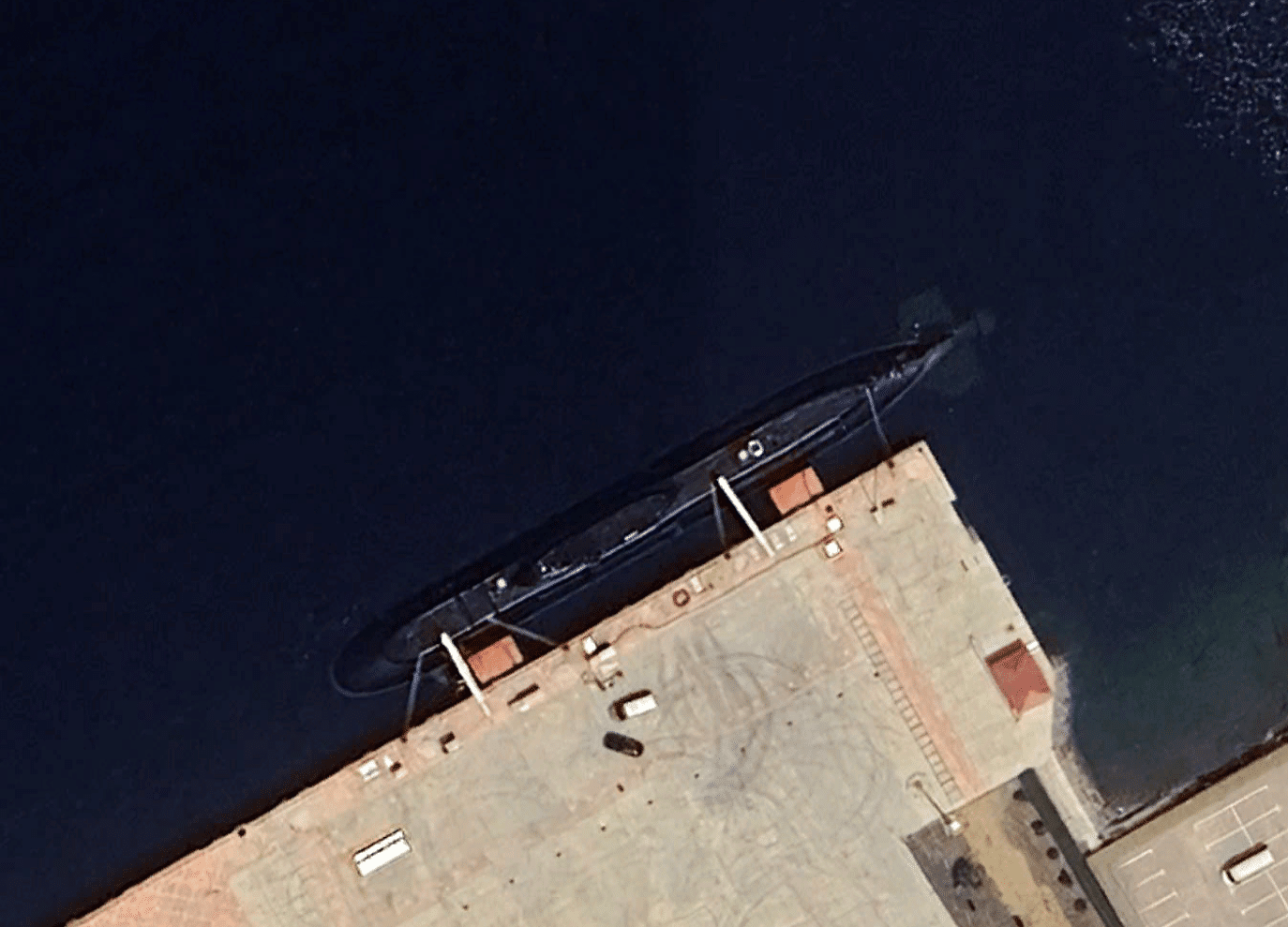 Chinese Type 032 test submarine at Xiaopingdao. Note the pump-jet fitted to the boat as part of an overhaul several years ago, in support of Type 09IIIB- and Type 09V-development. Image via Google Earth.
The high waterline indicated by the visible red-painted lower hull suggests reduced reserve buoyancy compared to earlier Chinese submarine designs. This characteristic may imply a single-hulled design for Type 09V. All previous PLAN submarines, both nuclear and conventional, have used a double hull-arrangement.
Single hulled designs are generally more efficient for maximising internal space in comparison with a full length double hull-layout. On the downside a single hull is more demanding in terms of hydrodynamically efficient external shaping. Regardless of single hull-, double hull-, or a hybrid-layout the wider beam likely also points to the prospective next generation Chinese ballistic missile submarine, termed Type 09VI, or 096, adapting a derivative of the Type 09V baseline hull.
Chinese submarine modernisation compelling regional responses
Several characteristics remain speculative for now, as this article mentions. This includes the torpedo tube arrangement, the type and configuration of sonar arrays and the exact nature of the guided missile armament. Nevertheless, the appearance of this new generation SSN would seem to underline that Chinese efforts to significantly improve and expand the PLAN fleet of nuclear powered submarines are proceeding at pace.
As noted in previous articles at Naval News and in analysis elsewhere, Bohai is capable of substantial production for new SSN and SSBN. The appearance of the new Type 09V and future Chinese submarine production will likely provide additional impulses to fielding nuclear powered submarines elsewhere in the region.
Australia is already prominently pursuing a future fleet of SSN under the AUKUS-agreement. Additionally, both Japan and South Korea in recent years repeatedly floated such a step in relevant debates. Seoul in particular appears set to pursue its own SSN-fleet, possibly in collaboration with the United States. Other countries not capable of operating nuclear powered designs will plausibly establish or enhance conventional submarine services. Additional investments into sea- and airborne ASW capabilities are also likely across regional navies.
Chinese Type 09V Next Generation SSN Appears At Bohai
Chinese shipbuilder Bohai this week moved the first Type 09V new generation nuclear powered attack submarine into the launch bay at Huludao.
 www.navalnews.com


BonPlan
Registered Member

most if not all nuclear reactor can run at low power using just natural convection.Subs running on batteries make less noise than reactors. It’s the pumps that run on the nuclear ones that give them away. Regardless of depth.
This criterion may drive the reactor design.
Users who are viewing this thread
Total: 4 (members: 0, guests: 4)


