Chinese Submarines News & Discussions

what is this based off of? any data/fact to back this up?

Nobody knows anything yet obviously.

But for whatever reason the PLAN launched 6-8 Type 93B in the last several years.

Bohai being built for increased production.

They seem to be satisfied enough to produce multiple units.

Overall, they are improving and the West has a chauvanistic tendency to underestimate others.
 
With type 095 and 096, they should be very close technologically to US nuke subs I think. But, the biggest difference is scale of nuke subs, US now has over 60 and China has total of a dozen, some latest reports say about 30 though, don't know for sure, but advanced type 095 and 096 are just getting started.

The Type 095/096 are electric rim-driven shaftless which is a generation ahead of the most advanced US SSN/SSBN.

If China wants to replicate the same performance of the best US nuclear submarines, it should have produced the Type 095/096 back in 2015-2020.

Because back in 2015-2020, China's military technology was comparable to the US, and now it has already out leagued it.

The 6th gen aircraft is a prime example of that, as the US is struggling to catch up China, and it looks like they are going to fail to catch up China at this rate.
 
The Type 095/096 are electric rim-driven shaftless which is a generation ahead of the most advanced US SSN/SSBN.

If China wants to replicate the same performance of the best US nuclear submarines, it should have produced the Type 095/096 back in 2015-2020.

Because back in 2015-2020, China's military technology was comparable to the US, and now it has already out leagued it.

The 6th gen aircraft is a prime example of that, as the US is struggling to catch up China, and it looks like they are going to fail to catch up China at this rate.
Yes, that's also the impression I sort of getting after reading about type 095 and 096, they are ahead somewhat. But, I just want to be conservative on Chinese nuke subs now so not to under estimate your adversary.
 
Yes, that's also the impression I sort of getting reading about type 095 and 096, they are ahead somewhat. But, I just want to be conservative on Chinese nuke subs now though not to under estimate your adversary.

We don't underestimate the US.

The US simply doesn't live up to our expectation.

They might never be able to overcome China's rare earth stifling strategy, and believing that they can keep building up high performance nuclear subs that require a lot of rare earth is quite laughable.
 
We don't underestimate the US.

The US simply doesn't live up to our expectation.

They might never be able to overcome China's rare earth stifling strategy, and believing that they can keep building up high performance nuclear subs that require a lot of rare earth is quite laughable.
Just hope China will keep the lid on exports of military grade rare earth to US no matter what. China has to build type 095 and 096 fast in substantial number.
 
Nobody knows anything yet obviously.

But for whatever reason the PLAN launched 6-8 Type 93B in the last several years.

Bohai being built for increased production.

They seem to be satisfied enough to produce multiple units.
They also produced Type 054'As etc which are outdated vessels. This means nothing. It could just be the best they have.

Overall, they are improving and the West has a chauvanistic tendency to underestimate others.
Oh as if, the west does the opposite, the biggr the threat, the more funding.
 
China’s 09V sub signals shift in Pacific’s undersea power
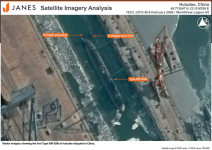
Satellite imagery of a new Chinese nuclear attack submarine should be ringing alarm bells in Washington
By GABRIEL HONRADA
FEBRUARY 17, 2026

China’s first Type 09V nuclear attack submarine (SSN) surfacing at Bohai isn’t just a new hull in the water—it may be its boldest bid yet to break out of the First Island Chain and rewrite the undersea balance in the Western Pacific.

This month, Naval News reported that China has moved the first of its next-generation Type 09V (or Type 095) SSN into a launch bay at the Bohai Shipbuilding Heavy Industry yard in Huludao, satellite and radar imagery show, marking a significant milestone in the People’s Liberation Army Navy’s (PLAN) undersea modernization program.

The vessel, first spotted in a flooded drydock, distinguishes itself from existing Type 093/ Shang-class submarines through a noticeably wider beam of about 12–13 meters and an estimated submerged displacement of 9,000–10,000 tons — well above the roughly 7,000 tons of earlier SSNs — and features prominent X-form stern control surfaces not previously seen on Chinese nuclear subs.

The design may incorporate a pump-jet propulsion system and may include a vertical launch system (VLS) for cruise missiles. However, key aspects such as sonar, torpedo fit, and hull form remain unconfirmed. PLAN’s expanded nuclear submarine production at Bohai, which has launched multiple upgraded Type 093B boats since 2022, underlines China’s push for a more capable fleet.

The Type 09V’s emergence is likely to influence Indo-Pacific naval planning, adding pressure on regional powers like Australia, Japan and South Korea to bolster anti-submarine and, in some cases, nuclear submarine capabilities.

The Type 09V may be the latest in a long evolution in Chinese SSN design. Christopher Carlson and Howard Wang outline this evolution in an August 2023 China Maritime Studies Institute (CMSI) report.

The writers trace developments from the noisy, first-generation Type 091 Han—incrementally improved with new sonar, anechoic coatings, and propellers—to the Type 093 Shang series, which introduced better hydrodynamics, towed arrays, and Russian-derived noise-reduction techniques.

Carlson and Wang then highlight a shift toward third-generation designs emphasizing quieter reactors with partial natural circulation and hybrid or electric propulsion concepts to reduce acoustic signatures.

Their discussion of higher-power, quieter reactor options and advanced propulsion architectures shows the technical foundation for a larger, stealthier, more capable successor class—laying the engineering and design logic for the emergence of the Type 09V as a true next-generation Chinese SSN.

Technical progress, however, matters less in isolation than how China intends to employ these boats. Edward Feltham mentions in an October 2023 article for the Naval Association of Canada that SSNs can perform similar roles as conventional attack submarines (SSKs), such as attacking ships and submarines with torpedoes and anti-ship missiles, executing covert special operations forces (SOF), and collecting visual and electromagnetic intelligence.

However, Feltham emphasizes that the primary advantage of SSNs lies in their nuclear propulsion, which enables higher transit speeds and eliminates the need to return to periscope depth for main battery recharging. He also notes that Chinese literature on SSNs often emphasizes their key benefit: the capacity for long-range missions.

That outward push is increasingly tied to how China is using its surface fleet. In line with that, J. Michael Dahm and Allison Zhao mention in a June 2023 CMSI report that the PLAN has already deployed Shang-class SSNs and Song-class submarines into the Western Pacific and Indian Ocean, creating new command and control (C2) challenges but demonstrating growing confidence in long-range undersea operations.

Dahm and Zhao link this to China’s pursuit of more secure, reliable submarine communications and joint command structures, which would allow SSNs to penetrate chokepoints, evade adversary anti-submarine warfare assets, and operate persistently beyond the First Island Chain as part of a broader power-projection and deterrence posture.

In terms of power projection beyond the First Island Chain, China’s SSNs are likely to serve as part of a larger carrier strike group protecting the formation against undersea threats.

Such roles may become increasingly important as China operates its carriers beyond the First Island Chain. In a China Power article this month, Bonny Lin and other writers detail a sharp expansion in China’s carrier operations into the Western Pacific beyond the First Island Chain in 2025, signaling a transition from episodic deployments to more routine “far seas” operations.

Lin and others note that the Liaoning sailed beyond the Second Island Chain for the first time. At the same time, they emphasized that Liaoning and Shandong operated simultaneously outside the First Island Chain, a PLAN first.

They also point out that China’s carrier strike groups spent nearly twice as many days beyond the chain as in 2024, flew more sorties, and conducted longer deployments with escorts, reflecting maturing carrier air wing integration, sustainment, and blue-water command-and-control—steps toward normalizing sustained power projection.

While the Type 09V likely marks a qualitative improvement, it is far from clear that it resolves China’s deepest problem at sea: survivability.

Ryan Martinson, in a June 2025 Center for International Maritime Security (CIMSEC) article, cites PLAN officers expressing concern in the November 2023 issue of Military Art, a prestigious journal published by the Chinese Academy of Military Science, that China’s submarines cannot reliably achieve stealth or survivability against the US undersea surveillance system.

The officers say that Chinese submarines face a “very high” probability of detection when leaving port and a “fairly high” chance of being tracked and intercepted even in the near seas, undermining their strategic and operational utility.

These officers warn that US satellites, seabed sensors, ships, aircraft, and unmanned systems create near “unilateral transparency,” threatening transit safety and even the survivability of China’s nuclear ballistic missile submarines (SSBNs), forcing the PLAN to prioritize counter-surveillance and survivability measures.

In line with those caveats, Edward Black and Sidharth Kaushal mention in an October 2025 article for the Royal United Services Institute (RUSI) that China’s SSNs still face intertwined technical and geographic constraints despite visible progress.

Black and Kaushal stress that while iterative fixes, including airbag isolation to dampen mechanical noise and vibration, plus redesigned sails to reduce hydrodynamic drag, and pump-jet propulsion could improve subsequent SSN classes, China remains a generation behind Western and Russian powerplants, and chokepoint geography—especially the Bashi Channel—still exposes SSNs during egress.

In sum, the Type 09V signals China’s ambition to close the qualitative gap in undersea warfare, but in a Western Pacific increasingly defined by pervasive sensors and shrinking margins for concealment, the real test will not be what the submarine can carry or how fast it can sail, but whether it can remain unseen long enough to matter.

 
Mr Cute Orca talks about Type 095.

1771365438659.jpeg
 
HBcac6ma4AAqIRE
 

China is building submarines faster than ever, think tank says. Why that’s a problem for Washington​


China is building submarines faster than ever, think tank says. Why that’s a problem for Washington​

By
Brad Lendon
Feb 16, 2026


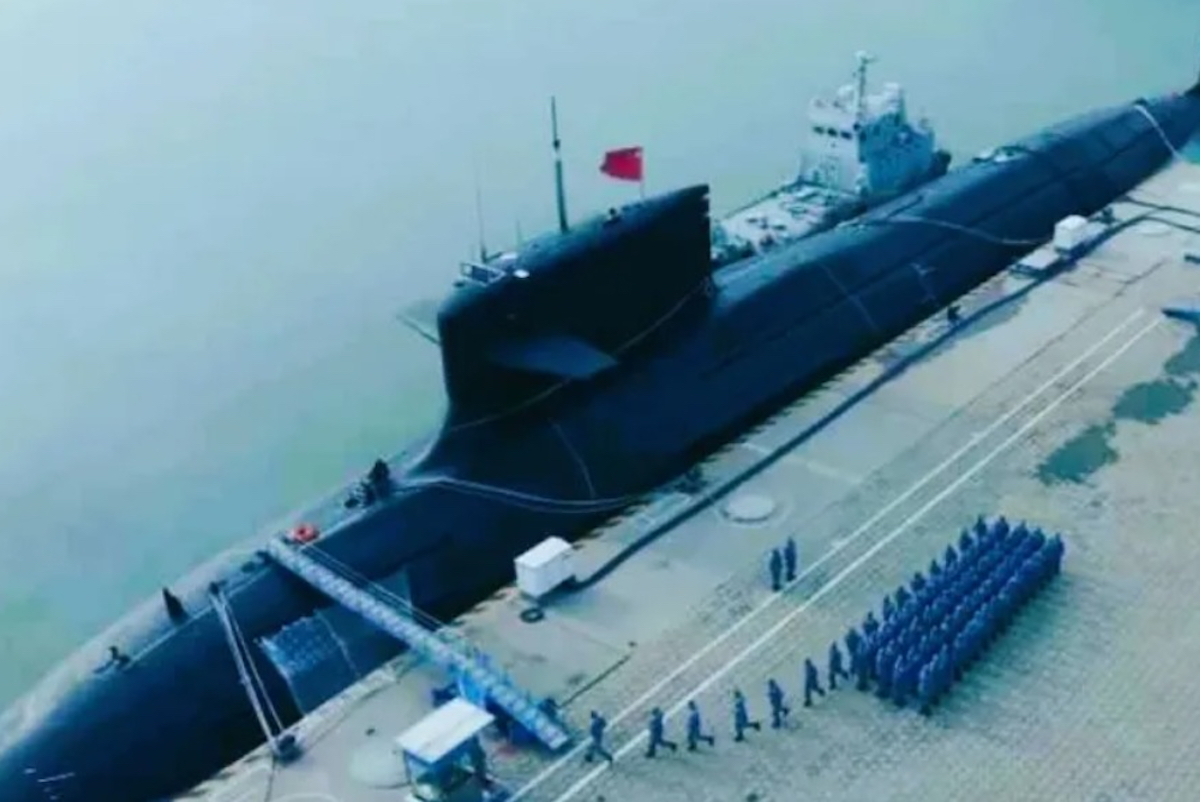
A Chinese navy nuclear-powered submarine takes part in a naval parade off the eastern port city of Qingdao to mark the 70th anniversary of the founding of Chinese People's Liberation Army Navy, on April 23, 2019.

A Chinese navy nuclear-powered submarine takes part in a naval parade off the eastern port city of Qingdao to mark the 70th anniversary of the founding of Chinese People's Liberation Army Navy, on April 23, 2019.
Jason Lee/Reuters
China has ramped up its production of nuclear-powered submarines over the past five years to the point where it is launching subs faster than the United States, threatening to negate a sea-power advantage that has long belonged to Washington, a new think tank report says.

The buildup in the People’s Liberation Army Navy’s nuclear-powered sub force includes both ballistic-missile and attack subs, the report from the International Institute for Strategic Studies (IISS) says.

During the years 2021 to 2025, China’s submarine building surpassed that of the US in both numbers of subs launched – 10 to 7 – and tonnage – 79,000 to 55,500, says the report, which looked at shipyard satellite imagery to draw estimates of China’s construction.

Beijing does not disclose fleet numbers.


It’s a stark turnaround from the 2016 to 2020 period, when China only added three subs (23,000 tons) to the US Navy’s seven (55,500 tons), according to the IISS analysis.

The numbers represent subs launched but not necessarily completed and added to the active-duty fleet, where the US still maintains a large advantage.

As of early 2025, China had 12 active nuclear-powered submarines, six ballistic-missile boats and six guided-missile or attack boats, according to the IISS’ “Military Balance 2025.” The US had 65 total subs, with 14 of those being ballistic-missile boats.

China also maintains a large conventionally powered sub fleet, with 46 boats, according to the “Military Balance.”


The US has zero conventionally powered subs which – unlike nuclear-powered subs – need to refuel regularly.

Related vertical video
115069_MexicoPeaceRally vrtc.00_00_17_15.Still002.jpg

Exclusive: Satellite images show dramatic growth of China’s military production sites

To accommodate its nuclear-powered sub fleet growth, Beijing has significantly expanded the Huludao yard of Bohai Shipbuilding Heavy Industry Co. in northern China, according to the report, headlined “Boomtime at Bohai.”

It comes after a Congressional Research Service report to Congress last month said the US Navy is falling well behind its submarine-building goal of two Virginia-class attack boats per year, with US shipyards delivering only 1.1 to 1.2 subs a year since 2022.


The US is also building new Columbia-class ballistic-missile submarines, but that program is at least a year behind schedule, with first-in-the-class USS District of Columbia not expected to be delivered to the Navy until 2028, the admiral in charge of the program told Breaking Defense last week.

“The greater numbers in the water present a growing challenge to (the US and other Western) countries as they struggle to increase their own output,” the IISS report says.

The IISS report highlights two Type 094 ballistic-missile subs (SSBNs) that have been launched at the Huludao shipyard. With the ability to fire nuclear-armed ballistic missiles, the Type 094s add to Beijing’s growing nuclear triad of land-based intercontinental ballistic missiles and bombers, it says.

Related article
Handout image from South Korea's Navy of the Jang Yeongsil submarine that launched on October 22, 2025 in Geoje, South Korea.

US submarines are outnumbered in the Pacific. South Korea has a plan to help

9 min read

And China has even better SSBNs in the works, the IISS says.


“The Type-096, is still expected to begin production at Bohai this decade, entering service either in the late 2020s or early 2030s,” it says.

Besides the SSBNs, the PLA Navy’s nuclear-powered launch numbers for the past five years include at least six guided-missile sub (SSGN) hulls, the report says. These boats have the vertical launch system (VLS), which could be used to fire new high-speed anti-ship missiles displayed at China’s Victory Day parade in Beijing last fall.

But the IISS report isn’t all bad news for Washington and its allies.

“Chinese designs almost certainly lag behind US and European boats in terms of quality,” the report says.


The newest Chinese subs are not believed to be as quiet as US ones, leaving the stealth advantage to the US Navy.

Still, experts say, in naval combat, the larger force usually prevails. And China already possesses the world’s-largest fleet of destroyers, frigates and surface combatants.

Meanwhile, Washington has struggled to keep up.

Navy Secretary John Phelan last summer told a US House of Representatives hearing that US naval construction was in dire straits.

Related article
US President Donald Trump arrives to announce the US Navy's new Golden Fleet initiative, unveiling a new class of warships, at Mar-a-Lago in Palm Beach, Florida, on December 22, 2025. President Donald Trump on December 22 announced a new class of heavily armed warships that will be named after himself -- an honor usually reserved for US leaders who have left office. Two of the Trump-class ships will be built initially but that number could grow substantially in the future, according to the president, who said they will be some of the most lethal surface warfare ships and the largest battleship in the history of our country. Trump made the announcement at his Mar-a-Lago residence in Florida alongside Pentagon chief Pete Hegseth, Secretary of State Marco Rubio and Navy Secretary John Phelan, with images of the planned high-tech vessels on stands nearby.

Trump’s new battleship plan could transform the US Navy – or sink it

9 min read

“All of our programs are a mess,” Phelan said.


“I think our best one is six months late and 57% over budget … That is the best one,” he testified.

When it comes to submarine numbers over the next five years, the Congressional Research Service (CRS) report says US attack sub numbers are expected to hit the “bottom of the valley” to 47 in 2030, as aging Los Angeles-class attack boats are retired.

An increase to 50 attack subs is not expected until 2032 – if construction goals are reached – the report says. But it notes that plans to sell three to five Virginia-class subs to Australia as part of the AUKUS deal could hamper plans to increase the US fleet in the short term.

The upcoming sub force “valley” was first noted in 1995, the CRS report says, adding, it “could lead to a period of heightened operational strain for the SSN force, and perhaps a period of weakened conventional deterrence against potential adversaries such as China.”


I know it is biased Western media, but there is no harm in talking about it.
 
Faster but not fast enough.
 
They also produced Type 054'As etc which are outdated vessels. This means nothing. It could just be the best they have.


Oh as if, the west does the opposite, the biggr the threat, the more funding.

Before you discount the video give it a watch.

It's pretty decent.

To view this content we will need your consent to set third party cookies.
For more detailed information, see our cookies page.
 

Users who are viewing this thread

Pakistan Defence Latest

Country Watch Latest

Latest Posts

Back
Top