Chinese Submarines News & Discussions

In technology less and less.
But in kind of experience & training, it's not the case.
It has now become a cliche. If the technology lags behind, you will focus on the technological gap. After the technology has caught up, you will focus on the training and experience. It is really boring.
 

China surpasses U.S. in nuclear submarine production with 10 boats launched in five years


According to new data, China launched 10 nuclear-powered submarines totaling 79,000 tons between 2021 and 2025, exceeding US output in both number and displacement.

On February 16, 2026, the International Institute for Strategic Studies (IISS) stated that China launched 10 nuclear-powered submarines totaling 79,000 tons between 2021 and 2025, exceeding US output in both number and displacement. Satellite imagery and industrial data indicate that the expansion includes Type 094 ballistic missile and Type 093B guided-missile submarines built at Huludao. The production rate matches the US Navy’s planned 1+2 annual submarine target set for 2028, whose own submarine production continues to face workforce and maintenance constraints.

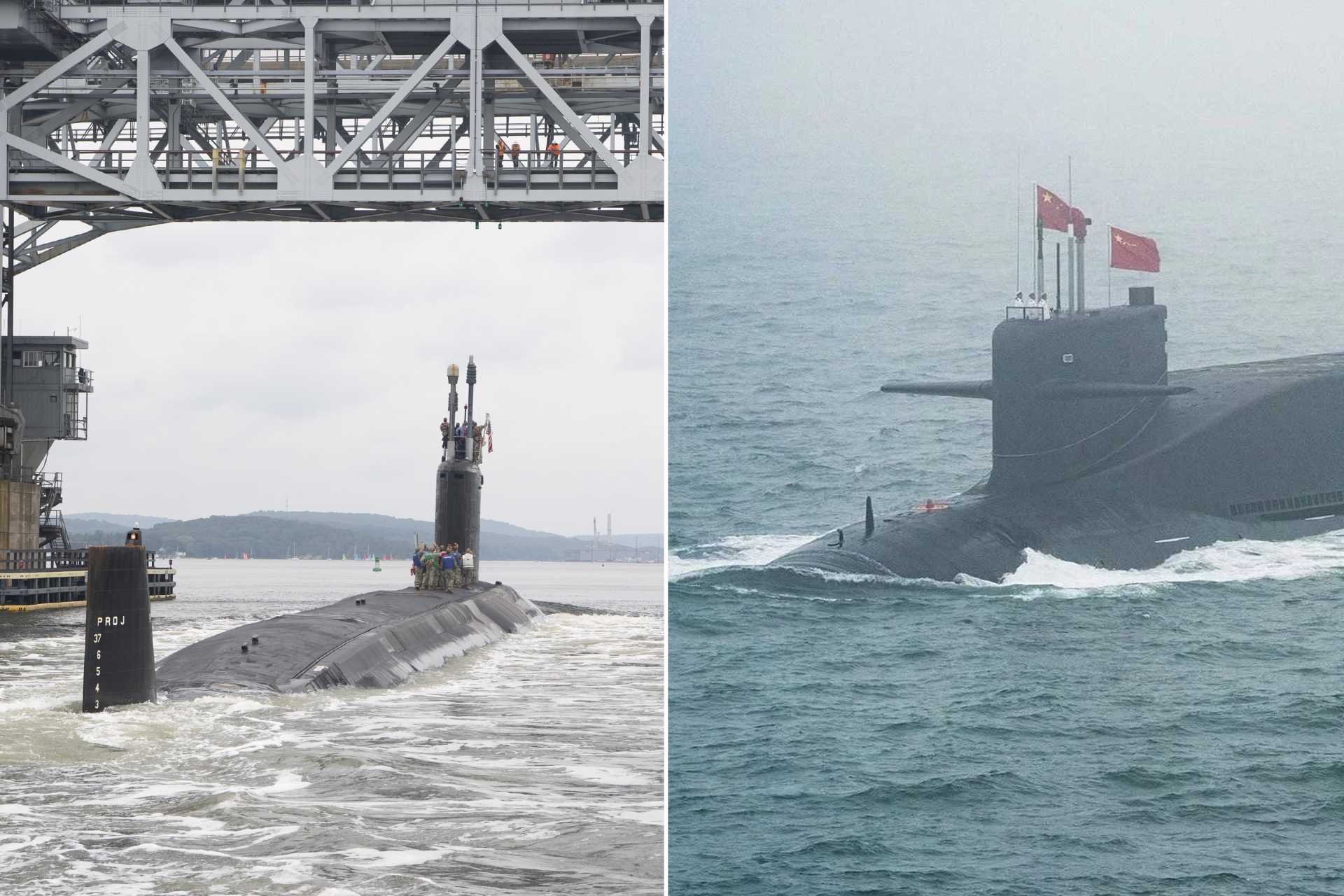
China reached a 1+2 annual nuclear submarine production rhythm in 2024–2025, matching the U.S. Navy’s planned one ballistic and two attack submarines per year target for 2028. (Picture source: US Navy and 战情解码君)

China reached a 1+2 annual nuclear submarine production rhythm in 2024–2025, matching the U.S. Navy’s planned one ballistic and two attack submarines per year target for 2028.

The IISS outlined the acceleration of China’s nuclear-powered submarine production between 2021 and 2025, showing that Beijing surpassed the United States in both the number of boats launched and total displacement during that period. China launched 10 nuclear-powered submarines totaling 79,000 tonnes, while the United States launched seven boats totaling 55,000 tonnes. This marked a reversal of the 2016 to 2020 period, when China launched three submarines displacing 23,000 tonnes compared with seven US boats displacing 55,500 tonnes. The increase followed a prior decade, 2011 to 2020, during which China launched seven nuclear-powered submarines in total. The recent output includes ballistic-missile and guided-missile variants and coincides with the expansion of submarine construction infrastructure at Huludao. The higher tempo places China at a launch rhythm comparable to the US Navy’s stated objective of delivering one ballistic-missile submarine and two attack submarines per year by 2028.

China’s nuclear submarines are constructed by Bohai Shipbuilding Heavy Industry Co. at Huludao in Liaoning province, where production capacity increased between 2019 and 2022 with the addition of a second submarine construction hall and supporting facilities. Early 2026 imagery showed six Type 094 ballistic missile submarine hulls distributed across Huludao, the 1st Submarine Base at Jianggezhuang, the Xiaopingdao test facility, and the 2nd Submarine Base at Yalong Bay on Hainan Island. Accounting for submarines on patrol or under refit, a seventh Type 094 was launched in 2024 and an eighth in 2025. These additions expand China’s sea-based nuclear deterrent as part of its nuclear triad alongside land-based intercontinental ballistic missiles and strategic bombers. As of early 2025, China operated 12 nuclear-powered submarines, consisting of six ballistic missile units and six guided-missile or attack submarines. In addition, it maintained 46 conventionally powered submarines, while the United States operated an all-nuclear submarine fleet.

Now recognized by U.S. officials as China’s first credible naval nuclear deterrent, the Type 094 Jin-class submarine measures 137 meters in length with a beam of 11.8 meters and a submerged displacement of 11,000 tons. It is powered by a pressurized water reactor driving a single shaft and achieves submerged speeds exceeding 20 knots, with endurance limited primarily by crew and maintenance factors. Each boat carries 12 submarine-launched ballistic missiles, initially the JL-2 with a range of 7,200 km and more recently the JL-3 with a range exceeding 10,000 km, enabling coverage of the western continental United States from patrol areas in the South China Sea. Armament also includes six 533 mm torpedo tubes for self-defense against surface and subsurface threats. The sonar suite incorporates a bow-mounted sonar and the H/SQC-207 flank array system for passive and active detection. Acoustic performance remains a constraint, with noise levels previously assessed as higher than those of late Cold War Soviet submarines, limiting patrol areas primarily to protected waters.

Parallel to the ballistic missile submarine fleet expansion, China has increased output of the Type 093B Shang III nuclear-powered guided-missile submarine, an improved variant of the earlier Type 093A built in the 2010s. The first Type 093B was completed in April and May 2022, followed by five additional hulls by the end of 2024, at least two more in 2025, and a likely ninth boat in early 2026, indicating a sustained production rate of two per year. The Type 093B incorporates a vertical launch system with 12 cells, expanding missile options beyond torpedo-launched weapons. These cells are expected to carry high-speed anti-ship missiles displayed during China’s Victory Day parade in September 2025, aligning with a focus on naval combat operations in the Western Pacific rather than long-range land-attack missions. In February 2026, a larger new guided-missile submarine design was launched at Huludao, and fitting-out activity consistent with the next-generation Type 095 nuclear-powered attack submarine was observed on February 9, 2026. A future Type 096 ballistic-missile submarine is expected to enter production later this decade, potentially carrying 16 to 24 submarine-launched ballistic missiles with further acoustic improvements.

In 2023, the US Navy set a target of achieving a “1+2” annual production rhythm by 2028, consisting of one Columbia-class ballistic-missile submarine and two Virginia-class attack submarines. If China launched one Type 094 and two Type 093B submarines in both 2024 and 2025, it achieved an equivalent 1+2 output in those years. US submarines are larger and incorporate more complex systems, which increases construction time and workforce requirements. The United States currently operates 65 submarines, including 14 ballistic-missile boats and 51 attack or guided-missile submarines. The Columbia-class program aims to replace the 14 Ohio-class ballistic-missile submarines, with the first-in-class, USS District of Columbia, now expected for delivery in 2028. The US Navy fields no conventionally powered submarines, unlike China’s mixed fleet composition.

US submarine production faces structural constraints linked to workforce shortages, supply chain strain, and maintenance backlogs. Virginia-class submarines have been delivered at a rate of 1.2 to 1.3 per year since 2022, below the target of two per year. The industrial base involves more than 4,000 suppliers and requires about 9 million labor hours per vessel, while a 25% staffing shortfall was recorded in 2022. About one-third of the US attack submarine fleet is unavailable at any given time due to maintenance or drydock periods, reducing operational availability. Projections indicate the attack submarine force could decline from 50 to 47 boats by 2030 as Los Angeles-class submarines retire faster than replacements enter service. The AUKUS agreement also commits the United States to transfer three to five Virginia-class submarines to Australia in the early 2030s, adding pressure to production schedules. To mitigate these constraints, more than $5 billion has been allocated to strengthen the supply chain and workforce development, with a goal of increasing the production to 2.33 submarines per year by the late 2020s.

The broader naval balance in the Indo-Pacific reflects both quantitative and qualitative factors. China’s navy operates more than 370 battle force ships and is projected to reach 435 by 2030, while US fleet plans continue to face schedule and cost pressures. Chinese submarines, including the Type-093 and Type-094 classes, have undergone incremental improvements but retain hull designs that limit acoustic reductions compared with US and European counterparts. Deployment patterns for Type-094 submarines concentrate on the South China Sea, where layered maritime and air defenses provide protection. The introduction of the JL-3 missile extends strike range without requiring patrols deep into the Pacific. The expected introduction of the Type 096 later in the decade and the ongoing construction of Type 095 attack submarines signal continued emphasis on undersea modernization. The combined effect of higher launch rates, infrastructure expansion at Huludao, and steady class development is reshaping the pace and scale of China’s nuclear submarine force growth relative to the United States.

 
To view this content we will need your consent to set third party cookies.
For more detailed information, see our cookies page.
 
The Type 041 will become the affordable nuclear sub for many developing nations.
I don’t think so. This mini reactor likely contains more advanced technology and sensitive secrets than the reactor used on the 093. Reactor miniaturization is always among the most closely guarded technologies.
 
I don’t think so. This mini reactor likely contains more advanced technology and sensitive secrets than the reactor used on the 093. Reactor miniaturization is always among the most closely guarded technologies.

Maybe more advanced than the earlier Type 093, but not the prestige known as the Type 093B which is no any less advanced than any Virginia class model before the block v.

BTW, China will probably deploy a dozen of the Type 095 and 20-30 Type 093B before exporting the Type 041.
 
News from February of this year:
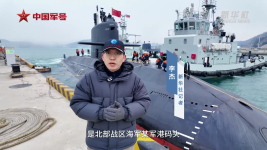
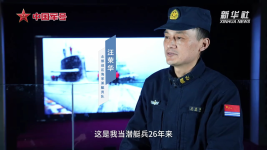
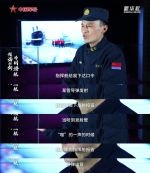
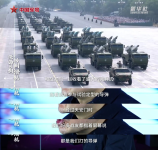
A submariner from the PLA Navy was interviewed by a CCTV reporter and hinted that his submarine (Type 039B) had participated in the testing and finalization of the YJ-19 missile.
1773499322347.png
1773499346791.png
1773499375249.png
1773499435458.png
1773499499954.png
====================================
This news story is relatively low-profile and has not yet sparked much discussion.

If this news story continues to gain momentum, I suspect that before long, certain individuals will once again start fabricating "news"—claiming that China is about to sell the YJ-19 to Pakistan......
 

China’s Own Seawolf-class Submarine: The Type 095​

Published on 25/03/2026

China’s Own Seawolf-class Submarine: The Type 095 General physical comparison of China's new Type 095 submarine to the U.S. Navy's Seawolf-class.

In the high-stakes world of submarine acquisition, true performance-first designs are exceedingly rare. The immense cost involved almost always forces trade-offs, shaping vessels around budget, strategy, and industrial constraints as much as pure capability. Until now the U.S. Navy’s Seawolf-class stood as the benchmark of an uncompromising approach to undersea warfare. Now, it appears that China’s latest nuclear-powered attack submarine, the Type 095 (also known as Type 09V), is built with a similarly ambitious philosophy.

The U.S. Navy’s Seawolf-class represents a pinnacle in uncompromising submarine design, intended to dominate the undersea battlespace. Now China is building a new submarine which is, in key respects, a lot like the Seawolf-class.

The Chinese Navy’s (PLAN) latest nuclear-powered submarine, the Type 095, is considerably larger than the preceding Type 093 Shang-class. Its size is very similar to the U.S. Navy’s Seawolf-class, and the analogy works on several levels.

Seawolf

The Seawolf was an uncompromised design, intended from the start to be the best. But that came at a huge price tag. So after the collapse of the Soviet Union in 1991 only three of the incredibly expensive Seawolfs were ever built, and the subsequent Virginia-class were, most importantly, cheaper. Over time the Virginias have been able to benefit from technological advances which the Seawolfs couldn’t, but the older boats remain the gold standard.


In China similar progression is playing out, but in reverse. The current Type 093B Shang-class, of which at least four are in service, is just the latest iterative development of the -093 family. It features a vertical launch system (VLS) for cruise missiles, and slightly refined hydrodynamics, but otherwise is a lengthened version of earlier -093s much like the latest Virginias. The new Type 095 class, of which the lead boat is fitting out, is a fresh design completely. And it is much more like the Seawolf.


Golden ratio​

An initial surprise is that the Type 095 is, despite always expected to be a larger boat, not longer than the preceding Type 093 Shang-class. In fact it may be slightly shorter. Yet it is noticeably wider, with the beam increased to around 12 meters from around 11 meters. This makes it almost the same size as the Seawolf-class.

While there is no suggestion that it is a straight copy of the American design, there is some sense in these new dimensions; there was a hydrodynamic logic in Seawolf’s specifications. Like a whale or other marine creature there is an optimum length-to-beam ratio which optimizes drag and allows the creature to go faster, or use less energy. Counter-intuitively the shorter-fatter Seawolf has a much more efficient hull design than the later, more compromised, Virginia-class.

Its length of 108 meters and beam of 12 meters give it a relatively short length-to-beam ratio of 1:9. Meanwhile the Virginia-class are longer and thinner (115 meters by 10 meters) resulting in a much higher length-to-beam ratio of 1:11.5. Although this compromise allows the Virginias to be cheaper to build and almost match the Seawolf’s overall capabilities, it comes at the cost of speed. The maximum speeds of the U.S. boats is classified, but the Seawolf is understood to be significantly faster.

The Type 095’s estimated length-to-beam ratio is also around 1:9 (length approximately 105-108 meters, beam around 12 meters). The Chinese could have made it slimmer but being a bottom-up design, they chose a more optimum hull form, close to the Seawolf’s. Together with a relatively pointed bow and large X-form rudders this suggests that the Type 095 is designed for a high underwater speed.

Type 095: Not just a copy of​

Where the Type 095 deviates from the Seawolf is the inclusion of a vertical launch system (VLS) immediately behind the sail. This will allow it to carry additional land-attack or anti-ship cruise missiles, possibly consisting of the DH-10A land-attack cruise missile and either YJ-17 or YJ-20 hypersonic missiles.

China is far beyond the era iteratively improving Cold War Soviet designs. Yet they likely remain behind in some nuances of nuclear submarine construction. So there may still be elements of Russian technology transfer for the Type 095, but exactly what, and how consequential it is to China’s ambitions, remains elusive.

The Type 095 also adopts X-form rudders and, possibly, turbo-electric drive, features of the U.S. Navy’s next-generation SSN(X) too. As time goes by we may learn more about the Chinese boat, but as usual China seems in no hurry to reveal even the most basic details.


China’s deep-sea missile test points to a harder-to-track launch threat

Charles Mitchell
March 26 2026

“Solid rocket engines are characterised by simple construction, high reliability, and superior stealth capabilities,” the researchers wrote in a paper cited by the South China Morning Post. That line explains why an underwater engine test at a simulated 200-meter depth matters beyond a single laboratory result. The engineering challenge is not simply getting a rocket to burn underwater. It is sustaining ignition, pressure control, and thrust while cold seawater and intense external pressure disrupt the exhaust plume at the exact moment a missile would need predictable performance.

For decades, submarine-launched ballistic missiles have depended on stealth, but their launch profiles still carry technical limits. Even advanced systems are generally associated with launch depths of about around 30 metres, because the transition from submerged release to stable ascent is one of the hardest phases to control. A deeper firing point complicates detection and tracking, since it widens the zone from which a submarine or fixed underwater launcher could operate while giving surveillance systems less certainty about the point of origin.

The Chinese team addressed that problem with what it described as a deep-water simulation platform. According to the published description, the setup combined compressed air and stable-pressure tanks with sensors and high-speed cameras to recreate conditions at 200 meters underwater. The motor under test used a solid propellant and burned for about five seconds, long enough to capture the critical ignition window and the pressure behavior that follows.

The most revealing result was not that the engine lit. It was that ignition at depth triggered an intense, millisecond-scale interaction between hot exhaust gas and surrounding seawater before a stable flow path formed. Researchers said the motor maintained combustion pressure close to ground-test levels, but thrust still fell sharply under external pressure. The reported penalty was 32.7% lower thrust than at the surface, a figure that turns the test into a design benchmark rather than a simple demonstration. It shows that deep launch may be feasible, but only with enough margin in propulsion, control authority, and structural resilience to absorb a major performance loss at the moment of exit. That distinction matters.

In missile engineering, underwater launch is often separated into cold-launch and hot-launch concepts, with cold launch ejecting a missile before the main motor ignites and hot launch relying on the missile’s own engine during departure. This test focused on underwater ignition behavior, which is the harder part of any deeper launch concept because the exhaust must establish a stable channel against surrounding water pressure. The result therefore has implications not only for submarine weapons but also for pre-positioned underwater weapons such as deep-water missiles or guided mines powered by solid rocket motors.

The broader significance is strategic, but it begins with plumbing, pressure vessels, combustion stability, and sensor data. If a rocket motor can be designed to survive deeper submersion and still produce controlled thrust, undersea launch architecture becomes less tied to traditional submarine firing envelopes. That would not eliminate the difficulties of guidance, ascent, or deployment, but it would push the boundary on where launch systems could be hidden and how difficult they might be to locate before use.

 
According to X, China has launched a another Type 093B in late March or early April.

So by 2026, China has launched 1 Type 093B in January, 1 Type 095 in February, 1 Type 093B in late March/early April.
 
From now on we can build as many advanced SSNs, SSGNs and SSBNs as we please!
 
From now on we can build as many advanced SSNs, SSGNs and SSBNs as we please!

At this rate, it is very likely at 40-50 nuclear submarines for those traditional models like the Type 093/094 and type 095/096 by 2030, not counting the retired Type 091/092 and those small non-traditional nuclear battery/AIP hybrid like the Type 041.
 

Users who are viewing this thread

Pakistan Defence Latest

Country Watch Latest

Latest Posts

Back
Top