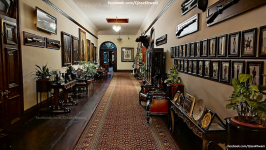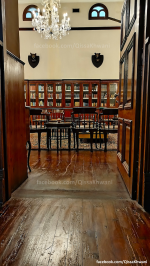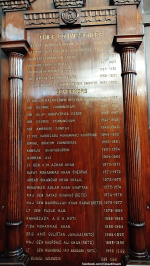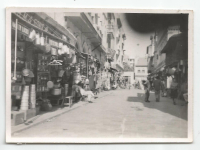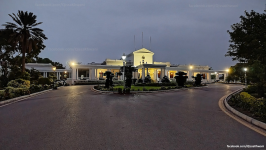
Residences of Peshawar Cantonment: The Governor’s House is more than a residence. For more than a century it has stood majestically as a custodian of the political and social history of the province.
The NWFP was created in 1901 by carving it out of the Punjab, where the region had previously been administered from Lahore since 1850s by the Lieutenant Governor of Punjab. With the creation of the new province, an administrative centre had to be established at Peshawar.
The province was officially established on 9 November 1901, with a Chief Commissioner appointed to head it, the office later evolving into that of a Governor in 1932. Serving also as the Viceroy's agent, he supervised Commissioners in the settled districts and Political Agents in the tribal areas.
His headquarters were established at Peshawar during the winter months and at Nathia Gali in the summer. With the birth of the new province came the need for residences, offices, courts and other public buildings for the colonial administration.
Foremost among these was a Government House, intended as the official residence of the Chief Commissioner. It was conceived not merely as a residence but as a complete estate, with gardens, parkland, stables, servants’ quarters and accommodation for the many guests and dignitaries who visited the provincial headquarters.
The proposal for the Government House took shape soon after the province’s formal inauguration in April 1902, when Lord Curzon, the Viceroy of India, held a grand durbar at Shahi Bagh. An earlier proposal had suggested modifying an existing old Commissioner’s residence on the site.
That building had long served as the Commissioner’s House and carried a dramatic episode from the early frontier period: it was on its veranda that Col Frederick Mackeson, then Commissioner of Peshawar, was fatally stabbed by an assailant presenting a petition in 1853.
When the plans for alteration were reviewed, however, the Viceroy Curzon, well known for his admiration of architectural monuments, found the proposal inadequate. He recommended demolishing the old structure and erecting an entirely new and grand building, one that would reflect the prestige and authority of the newly created province.
Construction was accordingly undertaken on the same site. The building was designed by officers of the Royal Engineers, notably Col GK Scott-Moncrieff with assistance from Capt HS Rogers, while Mr MacDonald Executive Engineer PWD helped with the plans.
The project also enjoyed the personal attention of Col Harold Deane, the first Chief Commissioner, who took keen interest in every aspect of its design and construction. Completed in Oct 1903 at a cost of about Rs. 92,000, the opening of the Government House was marked by a grand ball and reception.
Now, nearly 125 years later, the Governor’s House still stands as an architectural landmark and a silent witness to the region’s political and social history.
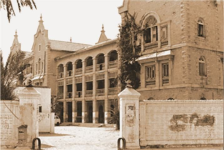
Architecturally, the building reflects the stately Greco Roman style typical of imperial public architecture of the period. The design centred on a large ceremonial Darbar Hall with a gallery and balcony that served as the social heart of the residence.
From it opened the principal reception rooms including the drawing room, dining room, billiard room and private apartments. The ball room featured a music gallery from which a live orchestra could play during formal dinners and dances.
Practical considerations were also incorporated: long straight passages allowed ventilation during Peshawar’s hot summers, while fireplaces and hot water pipes provided warmth in winter. The Chief Commissioner’s study was placed in a corner with its own entrance so that tribal chiefs and visitors could meet him without passing through the private parts of the house.
The celebrated Mayo School of Art in Lahore, today the National College of Arts, was commissioned to decorate the main hall and billiard room, while Capt Rogers developed designs for the drawing and dining rooms.
A summer residence was later built at Nathia Gali in 1904, reflecting the established practice of seasonal migration to the hills during the hot months.
In 1932 the administrative head of the province was elevated from Chief Commissioner to Governor, and the residence became known as the Governor’s House.
Like many colonial residences, the Government House functioned as more than a dwelling. It was a symbol of imperial authority and also a stage for ceremony and diplomacy.
Within its halls visiting international dignitaries were received with elaborate protocol, while successive occupants left their own imprint on the building’s décor and traditions. Though altered and expanded over the years, it still serves as the official residence of the Governor of KP.
Over the years its halls have received numerous rulers, statesmen and dignitaries from across the world. Among them were Mrs Kennedy, the legendary boxer Muhammad Ali, Diana, Princess of Wales and the Libyan leader Muammar Gaddafi.
Little known is the fact that beneath the tranquil lawns of the Governor’s House lies a hint of Peshawar’s remote antiquity.
In 1906, labourers removing earth from the grounds chanced upon an earthen vessel buried nearly ten feet below the surface.
Inside were silver punch-marked coins which the finders hastily divided among themselves and began disposing of in the bazaars. When the authorities learned of the discovery, the Deputy Commissioner managed to recover 61 specimens.
The coins were then examined by the American archaeologist DB Spooner, curator of the Peshawar Museum, who dated them to around the 6th century BC.
The discovery suggests that the mound on which the residence stands may conceal traces of a much earlier settlement, adding yet another fascinating layer to the long and continuous history of Peshawar, often regarded as one of the oldest living cities in Asia.
(AJ)