Old pictures of Pakistani Cities

1773513832387.png

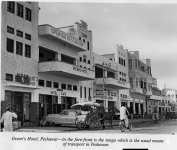
The Graceful Days of Peshawar’s Horse-Drawn Tangas!
--------------------------------
There was a time in the historic city of Peshawar when the rhythmic sound of horses’ hooves along the streets was a familiar and comforting part of everyday life.

The horse-drawn tanga was then the most common means of mobility, used with modesty, pride, and honour. People travelled not in haste but with a calm dignity,and the slow,steady pace of the carriage reflected the gentle rhythm of life itself.

In those days,the tanga was more than just a vehicle; it was a symbol of simplicity and social grace. Families travelled in it with decorum, and the tangawalas were known for their courtesy, honesty, and sense of responsibility.

The clip-clop of horses through the streets near places such as Qissa Khwani Bazaar and around the historic Bala Hisar Fort created an atmosphere that was both lively & reassuring.

In the outskirts of Peshawar, particularly in the villages like Tehkal 'Palosi & Landi Arbab, the tangas once played an even more vital role in daily life. At one time more than fifteen tangas used to be operated in the surrounding villages. They were not merely a means of transport but an essential part of the community’s identity & routine.

Every morning children rode these tangas to their schools and colleges. The sound of the horses’ hooves echoing through the village lanes seemed to announce the beginning of a new day.

These rides were not simply journeys from one place to another; they were shared experiences where passengers knew one another and travelled together in comfort and familiarity.

In earlier days, prosperous families often kept a private horse and tanga for household use.
Our own family too possessed a spirited horse and a beautifully decorated carriage used exclusively for family travel.

Gradually, however, time changed the scene. Roads improved, motorcycles and motorcars became common, and the number of tangas steadily declined.

Today only a single tanga remains & can somehow be seen in the village, though many people still choose to ride it occasionally. Perhaps it is because this humble carriage keeps them connected with their past and reminds them of a simpler way of life.

Once considered a comfortable and even prestigious mode of transport, tangas had their own stands in towns, and many people preferred them particularly for journeys to the courts and markets. They symbolized grace, civility, and refined social conduct.

Today the sight of a horse-drawn tanga has become rare, yet whenever it appears it revives an entire chapter of the past.
It reminds us that while modern progress has increased speed and convenience, something of life’s simplicity, human warmth, & closeness to nature has quietly faded away.

Even so, the tanga continues to occupy a place of honour in our memories and cultural heritage, carrying with it the fragrance of a gentler and more graceful age. !!!!!
 
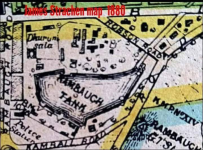
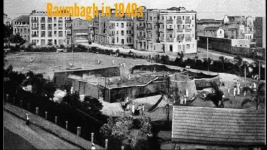
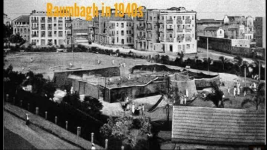
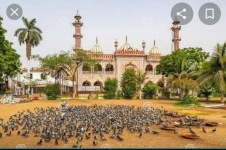
Ram Bagh Karachi
1880


1773602851312.png


1940's

1773602817737.png


1773602965777.png

1773602935569.png
 
1773514531498.png


Residences of Peshawar Cantonment: The Governor’s House is more than a residence. For more than a century it has stood majestically as a custodian of the political and social history of the province.

The NWFP was created in 1901 by carving it out of the Punjab, where the region had previously been administered from Lahore since 1850s by the Lieutenant Governor of Punjab. With the creation of the new province, an administrative centre had to be established at Peshawar.

The province was officially established on 9 November 1901, with a Chief Commissioner appointed to head it, the office later evolving into that of a Governor in 1932. Serving also as the Viceroy's agent, he supervised Commissioners in the settled districts and Political Agents in the tribal areas.

His headquarters were established at Peshawar during the winter months and at Nathia Gali in the summer. With the birth of the new province came the need for residences, offices, courts and other public buildings for the colonial administration.

Foremost among these was a Government House, intended as the official residence of the Chief Commissioner. It was conceived not merely as a residence but as a complete estate, with gardens, parkland, stables, servants’ quarters and accommodation for the many guests and dignitaries who visited the provincial headquarters.

The proposal for the Government House took shape soon after the province’s formal inauguration in April 1902, when Lord Curzon, the Viceroy of India, held a grand durbar at Shahi Bagh. An earlier proposal had suggested modifying an existing old Commissioner’s residence on the site.

That building had long served as the Commissioner’s House and carried a dramatic episode from the early frontier period: it was on its veranda that Col Frederick Mackeson, then Commissioner of Peshawar, was fatally stabbed by an assailant presenting a petition in 1853.

When the plans for alteration were reviewed, however, the Viceroy Curzon, well known for his admiration of architectural monuments, found the proposal inadequate. He recommended demolishing the old structure and erecting an entirely new and grand building, one that would reflect the prestige and authority of the newly created province.

Construction was accordingly undertaken on the same site. The building was designed by officers of the Royal Engineers, notably Col GK Scott-Moncrieff with assistance from Capt HS Rogers, while Mr MacDonald Executive Engineer PWD helped with the plans.

The project also enjoyed the personal attention of Col Harold Deane, the first Chief Commissioner, who took keen interest in every aspect of its design and construction. Completed in Oct 1903 at a cost of about Rs. 92,000, the opening of the Government House was marked by a grand ball and reception.

Now, nearly 125 years later, the Governor’s House still stands as an architectural landmark and a silent witness to the region’s political and social history.

Architecturally, the building reflects the stately Greco Roman style typical of imperial public architecture of the period. The design centred on a large ceremonial Darbar Hall with a gallery and balcony that served as the social heart of the residence.

From it opened the principal reception rooms including the drawing room, dining room, billiard room and private apartments. The ball room featured a music gallery from which a live orchestra could play during formal dinners and dances.

Practical considerations were also incorporated: long straight passages allowed ventilation during Peshawar’s hot summers, while fireplaces and hot water pipes provided warmth in winter. The Chief Commissioner’s study was placed in a corner with its own entrance so that tribal chiefs and visitors could meet him without passing through the private parts of the house.

The celebrated Mayo School of Art in Lahore, today the National College of Arts, was commissioned to decorate the main hall and billiard room, while Capt Rogers developed designs for the drawing and dining rooms.

A summer residence was later built at Nathia Gali in 1904, reflecting the established practice of seasonal migration to the hills during the hot months.

In 1932 the administrative head of the province was elevated from Chief Commissioner to Governor, and the residence became known as the Governor’s House.

Like many colonial residences, the Government House functioned as more than a dwelling. It was a symbol of imperial authority and also a stage for ceremony and diplomacy.

Within its halls visiting international dignitaries were received with elaborate protocol, while successive occupants left their own imprint on the building’s décor and traditions. Though altered and expanded over the years, it still serves as the official residence of the Governor of KP.

Over the years its halls have received numerous rulers, statesmen and dignitaries from across the world. Among them were Mrs Kennedy, the legendary boxer Muhammad Ali, Diana, Princess of Wales and the Libyan leader Muammar Gaddafi.

Little known is the fact that beneath the tranquil lawns of the Governor’s House lies a hint of Peshawar’s remote antiquity.

In 1906, labourers removing earth from the grounds chanced upon an earthen vessel buried nearly ten feet below the surface.

Inside were silver punch-marked coins which the finders hastily divided among themselves and began disposing of in the bazaars. When the authorities learned of the discovery, the Deputy Commissioner managed to recover 61 specimens.

The coins were then examined by the American archaeologist DB Spooner, curator of the Peshawar Museum, who dated them to around the 6th century BC.

The discovery suggests that the mound on which the residence stands may conceal traces of a much earlier settlement, adding yet another fascinating layer to the long and continuous history of Peshawar, often regarded as one of the oldest living cities in Asia.
(AJ)
 

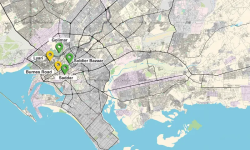
CULTURE: KARACHI’S MEMORY MAP

Muhammad Omar Iftikhar
March 19, 2026

1773923632546.png

Cities hide their history in plain sight. Karachi is no different. The past of this city by the sea is not buried in books but is spoken every day by its people, and especially its bus conductors.

Indeed, the names given to Karachi’s areas and localities were not set at random; they have strong links to history. From a small fishing settlement called Kolachi, from which Karachi derives its name, to the various suffixes and affixes added to its areas during the pre-colonial and post-Partition eras, each name reflects an episode in the city’s evolution.

The famous neighbourhoods of Mithadar and Kharadar preserve this early history. In the 18th century, Karachi was surrounded by defensive walls, with two entry points or gates. The gate facing the sea was called Kharadar, derived from the Sindhi words khara [salty] and dar [gate], meaning “the gate of salt water.”

The other gate faced towards the Lyari River and was called Mithadar, from meetha meaning sweet, or “the gate of sweet water.” Although the walls of the old city no longer exist, the names of these gates survived and continue to identify prominent areas of the city today.

Saddar is another iconic area of Karachi. The name derives from the Persian and Urdu word sadr, meaning centre. During British rule, Saddar became the administrative and commercial hub of the city, with government buildings, markets and offices located there.

Karachi’s history is not only preserved in archives and museums. It lives in the names of its neighbourhoods, each reflecting an episode in the city’s long and layered past…
 
Some of the older parts of Karachi derive their names from the colonial era, which left a lasting mark on the city’s map.

Burnes Road was named after Dr James Burnes, a British official who served in Sindh during the 19th century.

Clifton was named after a seaside town in England, reflecting the British tendency to replicate familiar place names in their colonies.

When residential quarters were built for British civil officers, the locality became known as Civil Lines, another important district of Karachi. Similarly, the marketplace where British soldiers would occasionally shop became known as Soldier Bazaar.

Moving towards the sea, the popular picnic spot Hawke’s Bay was named after Bladen Wilmer Hawke, a British aristocrat who owned a beach house in the area during the 1930s.

Religious landmarks have also shaped the city’s geography. For instance, Guru Mandir takes its name from a historic temple dedicated to the Hindu deity Shiva. Although the temple building is no longer operational, the locality continues to be known by this landmark.

The period after Partition created another wave of names that continue to exist today. Named after Pakistan’s first prime minister, Liaquat Ali Khan, the area of Liaquatabad is a major residential and commercial locality of the city.

However, it is still widely known by its older name, Lalukhet. This name comes, reportedly, from a farmer named Lalu, who owned agricultural land in the area before Partition. When the government acquired the land to build housing for incoming migrants, the settlement informally became known as Lalukhet, or “Lalu’s field.”
 
Golimar is another place whose name originated during the colonial era. The name Golimar means “fire the bullet.” The area was once used as a shooting range by the British military, which is how the locality acquired its name. In the same way, Nazimabad, established in 1952, links its name with Khawaja Nazimuddin, Pakistan’s second governor-general.

During the early years after Pakistan’s creation, government planning produced several distinctive names for Karachi’s localities. F

ederal B Area, for instance, was developed when Karachi served as the country’s capital. The area was part of a housing scheme created for federal government employees working in the capital.

Nearby lies the locality known as Buffer Zone, which was originally intended to separate government installations from nearby residential areas.
 
Paposh Nagar, another well-known area of Karachi, received its name because workshops there produced shoes and leather goods during the 1950s and 1960s. The name literally means “town of footwear.”

The area called Lyari, one of the oldest settlements in Karachi, takes its name from the Sindhi word lyar, referring to a type of tree that grows along riverbanks. Similarly, the area of Malir derives its name from the Sindhi language, referring to greenery, fertile land or a valley, as the region was once known for orchards and agricultural settlements.

Manghopir, another historic locality, takes its name from the Sufi saint Pir Mangho, whose shrine and traditions remain important to residents of the area.

Karachi’s localities were also named during the rise of industrial and administrative planning. SITE is an acronym for Sindh Industrial Trading Estate, a major industrial zone in the city, while Baldia Town takes its name from the Urdu word baldia, meaning municipality.

Shah Faisal Colony was named after King Faisal of Saudi Arabia, reflecting the diplomatic and cultural ties between Pakistan and the Kingdom.
 
Some of Karachi’s important markets also retain names rooted in the colonial era. Lea Market and Bolton Market are two names familiar to almost every Karachiite. Lea Market was named after Sir James Lea, a British commissioner of Sindh, while Bolton Market was named in honour of Charles Bolton, a municipal official during the colonial period. Though these names may appear ordinary today, they reflect the administrative structures that once governed the city.

For Karachi’s residents, the names of these areas are part of everyday life. Yet hidden within them is a rich history of culture, geography and memory. These names reveal the origins of the city and show how language and history continue to shape the identity of Karachi’s neighbourhoods.
 
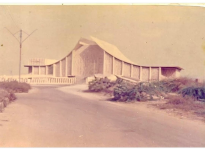
Karachi casino, 1970's


1774200780939.png
 

Users who are viewing this thread

Pakistan Defence Latest

Country Watch Latest

Back
Top