Iran - Israel/US War: Israel-US declare war on Iran, Iran responds

Iwo Jima is 8 square miles which is roughly the same size as Kharg Island.

Almost, but Kharg is 20 square miles so more than twice as big.

During the invasion, what was supposed to be a few day battle turned into a 5 week campaign. 21,000 Imperial Japanese troops, mostly hidden IN the island, managed to inflict 26,000 US casualties.

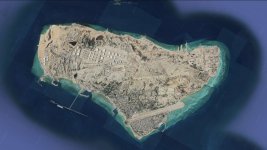
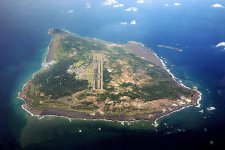
A bit different topography and foliage

Kharg

1773462970133.jpeg

Iwo jima

1773463062767.jpeg

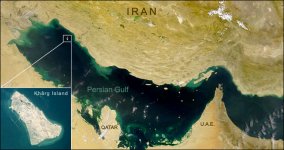
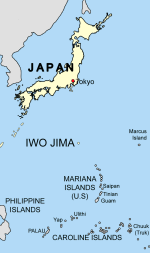
But the big factor is the distance

Kharg island from Iranian coastland

1773463179455.jpeg

Iwo Jima from Japan mainland

1773463223754.png

I don’t expect the standing IRGC force their to put much up a HUGE fight with US air assets able to pummel the island from afar with stand off munitions.

The key challenge for US if they do not do a methodical sweep and just decide to bull charge that island without clearing the coastline, is holding it will be very challenging. Especially if Iran decides to go scorched earth on it.

Furthermore, there is actually a small civilian population of about 8000 Iranian civilians on the island which makes collateral damage for America an issue as well.

All in all it’s not a walk in the park type operation as some people on here say (not you) and the most challenging aspect is holding it without losing so many bodies it becomes a political embarrassment.

I just don’t see it as beneficial for US. Either way it results in higher prices in oil even if it’s successful initial assault
 
Iwo Jima is 8 square miles which is roughly the same size as Kharg Island. During the invasion, what was supposed to be a few day battle turned into a 5 week campaign. 21,000 Imperial Japanese troops, mostly hidden IN the island, managed to inflict 26,000 US casualties.

Not a very accurate comparison imo. Iwo jima was mostly mountains heavily dug in troops and arty. Considering the importance there is probably an entire irgc commando battalion on the island fighting over what is an urban mess of very flammable infrastructure. This limits the options of capturing it without destroying it to basically nill. So if you’re gonna destroy it anyway just bomb it. Why fight for the scraps
 
All of us are here 24/7 yet we have failed to catalogue the IRGC strikes on Yehoodis & US bases/assets one by one. Zios are trying so hard to hide their losses, downplay them, dub them as dubious to build a narrative of "victory", entire wiki package on this war is literally full of references from Haartez, JPost, Debka, NY, WP and whatnot, all zio MSM. I saw the aviation losses page and literally they are counting decoys and Painted shadows as "aerial losses" while downplaying their drones and jets as "friendly fire" and "MIA".

This aint about Iran.

The myth or aura of "superior western tech" is washed away in this conflict where their 4+ gen jets fell, 50+ MALE UCAVs dropped like mosquitos, PAC failed, THAAD failed, Iron Dome failed, David Sling failed, Their entire ISR network failed, Billions of USD gone on ground and air, entire USN failed to open the strait ....

They do not want the world to see the tech failure so they are resorting to narrative. Entire western world stands on this belief that they are superior people who easterners like Iranians or Russians cant rival at all because we are inferior. Some of us must take responsibility to catalogue our own strikes and operational victories otherwise I fear after the war all of this will be gone.
 
Furthermore, there is actually a small civilian population of about 8000 Iranian civilians on the island which makes collateral damage for America an issue as well
Sorry to interject but US doesnt care about civilian casualties. We would be naive to believe that US would not bomb a place just because there are civilians.
 
View attachment 185467
View attachment 185468
View attachment 185469
The data covers activity from February 28th to March 12th. During this period, we observed the following key metrics:

  • Total Missiles Fired: 2,495
  • Total Drones Launched: 2,795
  • Total Barrages from Lebanon: 261
  • Total Barrages from Iran: 196
  • Peak Activity Date: Monday, March 2nd, with 1,028 total combined incidents.

1. Daily Activity Over Time: This chart shows the trend for each activity type. You can see a significant spike in both missiles and drones between February 28th and March 2nd, followed by a general decline.

2. Total Attacks by Country: Based on the regional data, the UAE recorded the highest number of incidents (1,797), followed by Kuwait (682) and Bahrain (285).

3. Weapon Breakdown by Country: This visualization breaks down the type of weapons used (Drones, Cruise, and Ballistic) for each country. Drones are the most frequently used weapon across almost all regions.


Summary of Regional Data


CountryDronesCruiseBallisticTotal
UAE1,43902291,797
Kuwait4250226682
Bahrain173086285
KSA110014170
Iraq12012

Insights

  • Trend Analysis: Activity was heaviest at the end of February and the beginning of March. By mid-March, daily counts for both missiles and drones dropped significantly (below 100 per day).
  • Regional Focus: The UAE and Kuwait account for the vast majority of the recorded incidents in the regional breakdown.
  • Weaponry: Drones appear to be the primary tool used, outnumbering ballistic missiles in most regions except for Jordan, where only ballistic incidents were recorded.


Comparative analysis with Joint US/Israeli Strikes vs Iran:
View attachment 185473

Analysis of Strike Data (Feb 28 – Mar 12)

The campaign started with an unprecedented opening salvo. In the first 12 hours alone, nearly 900 strikes were recorded, targeting Iranian nuclear facilities, air defenses, and leadership compounds.

By March 12, cumulative reports from the Associated Press and sources indicated the total number of coalition airstrikes had surpassed 6,000.


DateEstimated StrikesKey Developments
Feb 281,200Opening wave; assassination of Supreme Leader Ali Khamenei.
Mar 2700Strikes on Hezbollah infrastructure in Lebanon to prevent escalation.
Mar 5400Second major wave targeting IRGC command centers.
Mar 12150Focus shifts to neutralizing naval assets near the Strait of Hormuz.


Trends and Observations


  • Initial Shock Phase: The highest concentration of strikes occurred between Feb 28 and March 2. This "decapitation" phase aimed to dismantle the Iranian command structure and nuclear capabilities immediately.
  • Sustained Attrition: After the initial week, the strike volume decreased as the coalition shifted toward precision targeting of mobile missile launchers and internal security facilities (like Basij bases).
  • The Trendline: As shown in the generated analysis, there is a clear negative exponential trend. This suggests that the coalition successfully neutralized many primary targets early on, transitioning from mass bombardment to specific "mopping up" operations by mid-March.
---
View attachment 185476
View attachment 185477

Dashboard Analysis: Comparison & Pressure Index

The data shows a clear pattern of "action and reaction" throughout the two-week period.

DateTotal Iranian ActivityCoalition StrikesPressure Ratio
Feb 281,0061,2001.19 (Coalition leads)
Mar 21,0287000.68 (Iran offensive peak)
Mar 101012502.48 (Coalition suppression)
Key Insights

Opening Parity (Feb 28 – Mar 1): The conflict began with massive volume on both sides. On February 28, the Coalition launched roughly 1.2 strikes for every 1 Iranian incident, indicating an immediate and aggressive counter-offensive.

Iranian Peak (March 2): Monday, March 2nd, saw the highest volume of Iranian activity (1,028 incidents). During this specific 24-hour window, Iranian barrages actually outpaced the number of reported Coalition counterstrikes (700), marking the most intense period of the offensive.

Suppression and Dominance (March 9 – March 12): As Iranian activity began to collapse due to attrition (dropping from over 1,000 daily incidents to fewer than 150), the Coalition maintained a high pressure.

On March 10, the Coalition was launching 2.5 strikes for every 1 Iranian launch, suggesting they had successfully gained air superiority and were systematically dismantling remaining infrastructure.

Pressure Index Trend: The second graph ("Coalition Pressure Index") highlights that while Iran had high volume early on, the Coalition's ability to sustain strikes relative to the incoming threat increased significantly as the conflict matured.


--
this doesnt take into account the fact that iran is now using newer, higher quality missiles. and that interceptors are drying up, so higher proportion of hits, despite lower total fired
 
To view this content we will need your consent to set third party cookies.
For more detailed information, see our cookies page.


We know the new so-called not-so-supreme leader is wounded and likely disfigured. He put out a statement yesterday — a weak one, actually — but there was no voice, and there was no video. It was a written statement.”

Every accusation is a confession
 
And they needed a gay Brit to gain independence :rofl: :rofl:

They stayed for 800 years under Persian Empires then around 600 under Ottomans. The same Ottomans who could not move an inch into Iran despite 13 wars (14th to 19th century), colonized these "superior" Peninsulars for 6 centuries LOL. But I am no racist. Look at the valor of Iraqis, Lebanese, Yemenites, they wont just bow down in front of Zios.
 
Iraqi officials are telling Al-Jazeera a part of the missile defense battery was hit. Not sure if just the radar alone

To view this content we will need your consent to set third party cookies.
For more detailed information, see our cookies page.
 
Iraqi officials are telling Al-Jazeera a part of the missile defense battery was hit. Not sure if just the radar alone

To view this content we will need your consent to set third party cookies.
For more detailed information, see our cookies page.

To view this content we will need your consent to set third party cookies.
For more detailed information, see our cookies page.
 

Users who are viewing this thread

Pakistan Defence Latest

Back
Top