Turkish UAV/UCAV Projects

K2 KAMIKAZE UAV AI -Powered Autonomous Swarm Flight AI Vision -Based: Navigation & Targeting & Engagement 2000+ km Range 200 kg Warhead Short Unprepared Strip Takeoff 800 kg Takeoff Weight Reusable for Multiple

To view this content we will need your consent to set third party cookies.
For more detailed information, see our cookies page.


NEW UAV FROM BAYKAR!
 
Baykar has revealed its surprise that will shake the defense world:

K2 Kamikaze UAV!

▪️Flies autonomously in a swarm with artificial intelligence support

▪️Performs navigation, targeting, and engagement with image processing algorithms

▪️Has a range capacity of over 2000 kilometers

▪️Carries a 200 kilogram warhead

▪️Takeoff weight of 800 kilograms

▪️Returns to the runway in case of mission cancellation

▪️Capable of takeoff from short runways

▪️Wingspan of 10 meters, length of 5.1 meters, and height of 2.1 meters

📍Takeoff tests from the ramp in Keşan revealed the plan for K2's deployment on the TCG ANADOLU runway.
 
AI give the drones a boost, it can communicate and go to a strategic approach. Flying low and zig zag like the video, this was a big surprise from Baykar.
 
While the specs are impressive the cost of this thing might be way too high for a kamakazi drone

To view this content we will need your consent to set third party cookies.
For more detailed information, see our cookies page.
 
While the specs are impressive the cost of this thing might be way too high for a kamakazi drone

To view this content we will need your consent to set third party cookies.
For more detailed information, see our cookies page.

It depends.

This drone has a better payload compared to the Iranian Shahed and boasts a longer range as well. It's likely that it can function as an ISR or EW platform, meaning it can carry mission-specific payloads and is probably much tougher to take down. It can fly more complex routes and is likely capable of tracking and searching for moving targets. If you deploy 10 of these drones to strike a specific target in Tel Aviv, and the first one successfully hits, the others will abort the mission and head back to the airbase in Konya. This way, the drones won't go to waste. Hardpoints = expanded capabilities. The tactical options on the battlefield are endless.

It's probably more expensive than the Shahed, but Baykar has massive production capabilities and customers. In the end, the difference could be negligible.

This drone is what Iran currently lacks in its portfolio. Producing a simple Shahed drone is not a very difficult task for a country like Turkey.
 
While the specs are impressive the cost of this thing might be way too high for a kamakazi drone

To view this content we will need your consent to set third party cookies.
For more detailed information, see our cookies page.

Baykar makes a lot of staffs in-house including composite materials used in the airframe. And, it's doing extensive R&D for engines too. Moreover, most of the subsystems like turbo-diesel engines, radars, sensors etc. are procured using the Turkish eco system. Upscaling in production #s is another factor. As a result, they somehow mange to keep the cost quite low. For example, I read somewhere the production cost for a TB2s at the factory gate is ~1m$. According to Selchuk Bayraktar (Baykar's CTO), he can produce 20 (twenty) KIZILELAs for the lifetime cost of a single F-16....
 
It depends.

This drone has a better payload compared to the Iranian Shahed and boasts a longer range as well. It's likely that it can function as an ISR or EW platform, meaning it can carry mission-specific payloads and is probably much tougher to take down. It can fly more complex routes and is likely capable of tracking and searching for moving targets. If you deploy 10 of these drones to strike a specific target in Tel Aviv, and the first one successfully hits, the others will abort the mission and head back to the airbase in Konya. This way, the drones won't go to waste. Hardpoints = expanded capabilities. The tactical options on the battlefield are endless.

It's probably more expensive than the Shahed, but Baykar has massive production capabilities and customers. In the end, the difference could be negligible.

This drone is what Iran currently lacks in its portfolio. Producing a simple Shahed drone is not a very difficult task for a country like Turkey.

This is nearly a TB-2 size drone so the cost difference isn't just in the mere few thousands but in the hundreds of thousands.
 
I never claimed it was cheaper. The Iranians launch dozens of Shaheds to strike a single target, each costing around 20K USD. It's not cost-effective either if you need to send out many every time you want to hit a specific target, but, no doubt, it definitely has its role in every modern conflict, just like the K2. There's no one-size-fits-all solution in modern warfare. What I'm saying is that this drone addresses a crucial gap in our military capabilities. It definitely has its merits. I can assure you that Pakistan will be the first to buy these. It's just right for what you guys need on the current battlefield in Afghanistan AND especially India. Hindutva will have a melt down over this drone. I see it coming.
This is nearly a TB-2 size drone so the cost difference isn't just in the mere few thousands but in the hundreds of thousands.
 
While the specs are impressive the cost of this thing might be way too high for a kamakazi drone

To view this content we will need your consent to set third party cookies.
For more detailed information, see our cookies page.

I just saw this post too and was thinking the exact same thing

You ideally want something cheap and easy to manufacture in this category otherwise it defeats the purpose, it is functionally just like a loitering missile otherwise
 
I can assure you that Pakistan will be the first to buy these. It's just right for what you guys need on the current battlefield in Afghanistan AND especially India. Hindutva will have a melt down over this drone. I see it coming.
Maybe India, but not Afghanistan, it is overkill and at the same time not economical considering they have no air defence

Far cheaper options to achieve the same outcome, we have domestic designs but no mass production
 
I never claimed it was cheaper. The Iranians launch dozens of Shaheds to strike a single target, each costing around 20K USD. It's not cost-effective either if you need to send out many every time you want to hit a specific target, but, no doubt, it definitely has its role in every modern conflict, just like the K2. There's no one-size-fits-all solution in modern warfare.
I also want to add, that saturation is a benefit in itself.

Launching higher numbers requires more interceptors and a better wide-area detection mechanism for these low-flying drones, this was a tactical benefit for Iran, not a weakness, and perhaps even the main reason itself that it penetrated towards the targets successfully.

I do agree there is no one solution to all conclicts, context is important. But which area in particular do you think this filled in your military capability gap?
 
It can and it shall. lol

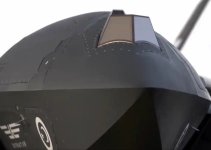
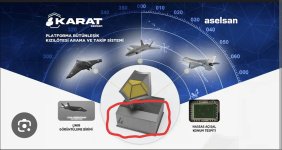
IRST on top

EOTS on the bottom. and the Radar in the middle.

View attachment 185644

No it can't, look carefully. IRST is literally mounted on the (relatively) small radome.

1773471162764.jpeg

Most of IRST unit is underneath the radome.

1773471109037.jpeg

It eats up the space where radar array is supposed to be.

The current sensor config for KE is either AESA + EOTS or EOTS + IRST. Not all three at once.

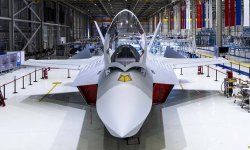
Look at KAAN's IRST placement. It is behind the radome.

1773471462541.jpeg
 
The K-2 kamikaze Drone bridges the gap between ultra cheap mass kamikaze Drones and high price Cruise Missiles ( $1-2 million )


Israeli HAROP kamikaze Drone costs $700.000 per unit
If BAYKAR delivers on the promised specs at their typical pricing model then K-2 likely in the $200,000 range per unit , maybe even less

----------------------------------------------------------------------

The K-2 is a technologically much more advanced platform, especially compared to the Iranian-made Shahed-136


-- range of 2.000+ km for deep strike capability
-- EO/IR gimbal Camera for long-range precision strike capability
-- AI-powered autonomous swarm flight (Shahed-136 no true autonomy/swarm)

-- Shahed-136 vulnerable to jamming , while the K-2 with AI-based visual navigation, GPS-denied/EW-resistant

-- Shahed-136 is one-way kamikaze Drone , while the K-2 designed for multiple missions if not kamikaze ... (can return if not expended)

-- Shahed-136 is with Truck/rail launcher ... K-2 is with more flexible ops

-- Iranian Shahed-136 has 50 kg warhead to compare with the K-2 ( 200 kg )
(K-2 can create an effect equivalent to an MK-82 Bomb)


So , If you need precision deep strikes on high-value/hardened targets with smart tactics (swarms, EW resistance) then K-2 is superior
 
"Isn't their large size and cumbersome nature contrary to the kamikaze logic?" you might ask. Let me answer, if you'll allow me.

At first glance it might seem so, but it's not. This is actually a dangerous kamikaze drone. It's dangerous for three reasons:

1- It doesn't require a launch platform. It can take off from any road that's smooth enough. Remember, in the Iran-US & Israel conflict, launch platforms are the primary targets.

2- It can dive towards the target with its payload, but its primary purpose is to release the explosive payload from a distance and return. This tactic makes interception quite difficult.

3- It can operate using AI-powered swarm logic. This is not the case with the Shahid-type drones used by Iran. Therefore, its attack patterns adapt to the situation. Consequently, the attack patterns of this swarm are not easily predictable.
 

Users who are viewing this thread

Pakistan Defence Latest

Latest Posts

Back
Top