Iranian Navy | News and Discussions

Sahand was sunk by Harpoon and Sabalan by PGM. But whatever you say Captain Hack-Hook
That for Joshan , 5 SM-2 hit and one missed Harpoon, Iranian boat also used Harpoon that missed

2 harpoon strike at Sahand again 1 missed and what made most of damage to Sahand was those skipper bombs
Sabalan was hit with PGM
 
Care to name which destroyer carries mostly harpoon?

Even 30 year old Arleigh Burke destroyer USS Laboon in Red Sea right now only has just 2 harpoon missile launchers compared to its 90 cell VLS set up.

Iran relies on Qadir and Noor as the backbone of its anti ship fleet. Houthi’s have used C-802 going back to Obama era on US navy ships with no success.
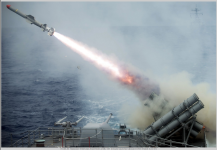
this is MK-141 harpoon launcher
1710835070200.png
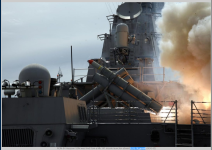
1710835286588.png
2 harpoon launcher mean 8 harpoon
now tell me what alternative they have that can fired vertically
 
this is MK-141 harpoon launcher
View attachment 27302
View attachment 27303
2 harpoon launcher mean 8 harpoon
now tell me what alternative they have that can fired vertically

what you fail to mention is those same destroyers carry 90 cells VLS which can fire block V tomahawks which can hit moving ships at sea. That is in addition to the LACM which is stealth anti ship cruise missile Navy fighters and destroyers can carry.

Also Navy currently in competition for a new anti ship missile to completely replace remaining harpoon. Not that anyone was going to challenge US Navy in ship to ship warfare the last 30+ years. So they took their time. They have that luxury when their ships are accompanied by powerful helicopters and fighter jets. What support does Iran have protecting their ships? f-4’s? F-5’s? Nothing?

So again why are you defending Iran’s use of C-802 as the backbone of its anti ship fleet…..in 2024?
 
what you fail to mention is those same destroyers carry 90 cells VLS which can fire block V tomahawks which can hit moving ships at sea. That is in addition to the LACM which is stealth anti ship cruise missile Navy fighters and destroyers can carry.

Also Navy currently in competition for a new anti ship missile to completely replace remaining harpoon. Not that anyone was going to challenge US Navy in ship to ship warfare the last 30+ years. So they took their time. They have that luxury when their ships are accompanied by powerful helicopters and fighter jets. What support does Iran have protecting their ships? f-4’s? F-5’s? Nothing?

So again why are you defending Iran’s use of C-802 as the backbone of its anti ship fleet…..in 2024?
a question what will be the difference between Tomahawk block VA and Harpoon when it come to defend yourself against them ?
are you suggesting being vertically launched make defense against them harder?
 
So again why are you defending Iran’s use of C-802 as the backbone of its anti ship fleet…..in 2024?
very simple Iran don't have any other type of missile that can fulfill that role and missile based on SM-2 have somehow lighter warhead
 
a question what will be the difference between Tomahawk block VA and Harpoon when it come to defend yourself against them ?

That’s like asking what is difference between any cruise missile and every cruise missile is like Harpoon.

If you need to asking such things then please refrain from providing analysis.

are you suggesting being vertically launched make defense against them harder?

No one said such things besides you. You said what other missile do these destroyers have to target ship beside harpoon and I showed you they use Tomahawk Block V and LACM and their is a future anti ship missile coming in 2027.

With 90 VLS a US destroyer can run various weapon loadouts depending on the mission. The 8 harpoon missiles are just redundant measures where as the 8 C-802s on Iranian Mowj are it’s primary weapon. See the difference?

These ships are usually accompanied by helicopter and fighter jets and other escort ships. Meanwhile Iranian Mowj are usually only accompanied by a supply ship if on significant deployment far from PG.

very simple Iran don't have any other type of missile that can fulfill that role and missile based on SM-2 have somehow lighter warhead

Exactly my point. In 25 years Iran has not yet moved from C-802 based design. Shows you the major flaw in all of these IRIN vessels. Doesn’t matter how big you build them, the [offensive] weaponry is outdated and need of modernization.

There is no Ya Ali naval variant (does this CM even exist anymore?) and no Paveh navel variant. Iran has a handful of LACM they could convert to naval variant anti ship form if they so choose.

We are still waiting for the supersonic CMs they promised us a few years ago while the powers that be race towards hypersonic CMs.
 
Exactly my point. In 25 years Iran has not yet moved from C-802 based design. Shows you the major flaw in all of these IRIN vessels. Doesn’t matter how big you build them, the [offensive] weaponry is outdated and need of modernization.

There is no Ya Ali naval variant (does this CM even exist anymore?) and no Paveh navel variant. Iran has a handful of LACM they could convert to naval variant anti ship form if they so choose.

We are still waiting for the supersonic CMs they promised us a few years ago while the powers that be race towards hypersonic CMs.
There is Qadr-747 (IIRC) LACM with claimed 2000km range installed on some IRGC ships
 
That’s like asking what is difference between any cruise missile and every cruise missile is like Harpoon.

If you need to asking such things then please refrain from providing analysis.
I'm still wonder why you think intercepting Tomahawk is harder than Harpoon

No one said such things besides you. You said what other missile do these destroyers have to target ship beside harpoon and I showed you they use Tomahawk Block V and LACM and their is a future anti ship missile coming in 2027.
the talk is about c-802 deriviate missile is obsolete . and lacm and tomahawk is not according to you
we are not talking about future project
These ships are usually accompanied by helicopter and fighter jets and other escort ships. Meanwhile Iranian Mowj are usually only accompanied by a supply ship if on significant deployment far from PG.
so here we are talking about size of the navy ?you are still didn't provide any alternative for Noor Qader and Abu-Mahdi missile if you are talking about the number of missile
you fail to consider the size of ship. this is the armament of some other ships of fairly same size

Type 056 corvette (NATO codename Jiangdao)
ADA class Corvette
  • Builders: Turkey (Istanbul Naval Shipyard)
  • Type: Corvette (Patrol and Anti-Submarine Warfare)
  • Displacement: 2400 tons
  • Range: 3,500 nautical miles
  • Complement: 93 including aviation officers, with accommodation for up to 106
  • Armament: 1 × 76 mm (retractable for lower radar cross section, guidance by fire control radar and electro-optical systems), A position, 2 × 12.7 mm Aselsan STAMP Stabilized Machine Gun Platform (guidance by Laser/IR/TV and electro-optical systems, automatic and manual modes), B position, 8 Harpoon SSM, 21 × RAM (PDMS), 2 × 324 mm Mk 32 triple launchers for Mk 46 torpedoes
  • Ships in class: 10
  • Commissioned: 2011–present
  • Status: In service
Braunschweig-class corvette
Khukri-class corvette
  • Builders: India Mazagon Dock Limited, Garden Reach Shipbuilders and Engineers
  • Type: Corvette
  • Displacement: Full load: 1,350 tonnes
  • Propulsion: 2 diesel engines, 14,400 hp each, 2 shafts and cp props
  • Speed: 25 knots
  • Range: 4,000 miles at 16 knots
  • Complement: 79 including 10 officers
  • Armament:
    • 1 × AK-176 76 mm gun
    • 16 × Kh-35
    • 2 × Strela-2M SAM MANPADS
    • 2 × AK-630 CIWS
  • Ships in class: 4
  • Operator: Indian Navy (2 ships), Vietnam People's Navy (1 ship)
  • Commissioned: 1989–1991
  • Status: 3 ships in service, 1 decommissioned
Pohang-class corvette
Sa'ar 5 (Eilat)-class corvette
  • Builders: United States (Ingalls Shipbuilding)
  • Type: Guided-missile corvette
  • Displacement: 1227 tons
  • Armament: 8 Harpoon SSM; ; 8 Gabriel SSM; 2 Barak 1 launchers; 20 mm Phalanx CIWS; 2 × Mk 32 torpedo launchers (6 tubes)
  • Powerplant: 1 General Electric LM-2500 gas turbine; 2 MTU type 12V1163 TB82 diesels; total SHP 30,000
  • Speed: 32 knots (59 km/h)
  • Range: 3,500 nautical miles (6,480 km)
  • Ships in class: 3
  • Operator: Israeli Navy
  • Commissioned: February 1993
  • Status: In active service
Steregushchy-class corvette
  • Builders: Russia
  • Type: Corvette
  • Displacement: 1,950 tonnes
  • Propulsion: 2 shaft CODAD, 4 16D49 diesels 24.000 hp (17.9 MW), power supply AC 380/220V, 50 Hz, 4 × 630 kW diesel genset
  • Speed: 27 kn (50 km/h)
  • Range: approx. 4,000 nmi (7,400 km) at 17 kn (31 km/h)
  • Aircraft: 1 Kamov Ka-27
  • Armament:
    • 1 × Arsenal A-190 100 mm
    • 2 × MTPU pedestal machine gun 14.5 mm
    • 2 × AK-630M 30 mm
    • 1 × Kashtan-M CADS
    • 8 × Kh-35 missiles
    • 4 × 400 mm torpedo tubes
  • Countermeasures
    • Fire control radar: Ratep 5P-10E Puma for A-190
      HOT FLASH radar
    • Air search radar: Furke-E 3D, E/F band
    • Sonar: Zarya-ME suite, bow mounted. Vinyetka low frequency active/passive towed array
  • Ships in class: 3 + 3 Laid down
  • Operator:
    23px-Naval_ensign_of_Russia.svg.png
    Russian Navy
  • Commissioned: 2007
  • Status: In active service
well wonder which load-out you consider appropriate for ships in this size. until we build larger ships or other designs the talk about what type of missile or vls is useless , you must remove something to make room for vls now can you tell me what part of Moudge ship you want to remove?
There is no Ya Ali naval variant (does this CM even exist anymore?) and no Paveh navel variant. Iran has a handful of LACM they could convert to naval variant anti ship form if they so choose.
Ya-Ali was not supposed to be ship launched at first it was supposed to be released from f-4
by the way don't Abu-Mahdi fill the role of ship launched ya-Ali or paveh for you ?
 
Last edited:
well wonder which load-out you consider appropriate for ships in this size. until we build larger ships or other designs the talk about what type of missile or vls is useless , you must remove something to make room for vls now can you tell me what part of Moudge ship you want to remove?
I dont think you necessarily have to remove anything,one of the biggest problems is the very poor use of space on some of the moudge class boats,with the dena being a particularly egregious example as it still uses the massive old alvand style stack rather than the sahands newer low profile single or the new twin stacks from the deylaman,not to mention that huge unused area behind the radar mast that was originally used for the turbines air intake on the alvand..
Another example are the helo pads that are far larger than they need to be,I`m honestly surprised that they didnt fit hangers.
The ultra conservative nature of the ships designers I think is also a part of the problem.
Did the irin ever actually get around to even designing a vls,much less building a prototype of it?.
Thats part of the problem right there I think.
 
Did the irin ever actually get around to even designing a vls,much less building a prototype of it?.
Thats part of the problem right there I think.
I presume yes as General Khanzadi (head of IRIN at the time) said in 2019 that VLS had passed its tests and they were installing VLS on some Moudge class ships
 

RUNNING ON EMPTY: HOW BUDGET CUTS HAVE DAMAGED IRANIAN NAVAL AVIATION​

  1. Aviation Features
  2. Running on Empty: How budget cuts have damaged Iranian Naval Aviation


By Babak Taghvaee 27th June 2023
FEATURE

Repeated budget cuts have had a drastic impact on Iranian Naval Aviation, as Babak Taghvaee discovers.
Once one of West Asia’s largest and most potent naval forces, the Iranian Navy currently lacks modern equipment, including helicopters and fixed-wing aircraft. As the Islamic Revolutionary Guard Corps (IRGC) has priority when it comes to Iran's annual defense budgets, the Iranian Navy has faced a lack of funding, making it difficult to maintain and operate the existing fleet of 33 helicopters, eight aircraft, and nine hovercraft of its Navy Aviation (IRINA). Today, only 16 helicopters, five aircraft, and three hovercraft are operational simultaneously in the force.
Seen landing on IRINS Makran forward base, is one of 16 IRINA ASH-3Ds (serial 8-2301) and the oldest of its kind in Iran.
Seen landing on IRINS Makran forward base, is one of 16 IRINA ASH-3Ds (serial 8-2301) and the oldest of its kind in Iran. Ali Naderi
In Exercise ‘Zolfaghar 1401’ which took place six months ago, from December 29, 2022, until January 2, 2023, six helicopters, two aircraft, and two hovercraft of the IRINA, alongside several of its support ships, frigates, and other vessels of the Navy, participated in joint exercise . They worked alongside Iranian Army Aviation AH-1J Sea Cobra Attack Helicopters, and Iranian Air Force Su-24MK and F-4E Phantom II fighter-bombers, and many drones. The exercise was staged in the Oman Sea off the Jask coastline.

The Twin Twelves fleet

The Iranian Navy currently operates 12 Italian-built Agusta-Bell AB.212ASV (Anti-Surface Vessel) utility helicopters which, in the past, could launch Nord AS.12 anti-ship and anti-tank missiles. All in service with the 11th Helicopter Squadron at the Iranian Navy’s 2nd Naval Aviation Base in Bushehr, they currently form the backbone of the search and rescue capability of IRINA. Although currently only seven are operational simultaneously, they are incredibly active in terms of performing search and rescue (SAR) and medical evacuation (MEDEVAC) missions.
As mentioned above, the home base of the fleet is Bushehr but the Iranian Navy always has one AB.212 on deployment at Jask, Konarak, and Rash to provide SAR helicopters in all four Maritime Zones of Iran; the Caspian Sea, Persian Gulf, Hormuz Strait, and Oman Sea. In addition to SAR and MEDEVAC, the Iranian Navy Marines often use these helicopters during hostage rescue operations and anti-piracy missions.
IRINA’s D139 Free Bird ultralight training aircraft during the December 3, 2019, handover ceremony.
IRINA’s D139 Free Bird ultralight training aircraft during the December 3, 2019, handover ceremony. Fatemeh Razavi
With the depletion of stocks of AS.12 anti-ship missiles in service of IRINA during the Iran-Iraq war, the AB.212ASVs capable of using the missile had their targeting sight units (TSU) dismantled and removed. In addition, the 6-2415, 6-2416, and 6-2418, the three surviving AB.212ASVs of the Iranian Navy, had their LN-66 X-Band surface surveillance and short-range navigation radar removed after the Iran-Iraq war (1980-1988).
In the past 30 years, the Iranian Helicopter Support and Renewal Company (IHSRC), which performs depot maintenance of AB.212s of IRINA, has slightly upgraded and modified some of them. Most of the modification work has been done on their instrumentation, and as a result, multifunction displays capable of showing GPS-integrated moving maps have been installed.
Also, since the late 1990s, IHSRC has restored the attack capability of several AB.212s, through which they regained the ability to use weapons. So far, they have been capable of using GPU-2/A lightweight gun pods (fitted with the M197 20 mm cannons inside) and LAU-68 rocket launchers capable of using 2.75-inch fin-folding unguided rockets. In addition to these, an AB.212 was equipped with anti-ship radar and was wired to carry and launch C-704KD anti-ship missiles. The Iranian Navy decided to halt plans for equipping the helicopters with anti-ship missiles but kept the capability to use LAU-68 rocket pods and GPU-2/A gun pods on some.
IRINA’s last surviving Dassault Falcon 20E (serial 5-2803) is currently in storage.
IRINA’s last surviving Dassault Falcon 20E (serial 5-2803) is currently in storage. Babak Taghvaee
One of the AB.212ASWs, 6-2406, was deployed with IRINS Makran forward base as a part of the 75th Fleet of the Iranian Navy, including IRINS Sahand, a Moudge-class frigate.
They left Bandar Abbas on May 10, 2021, and sailed in the Indian and Atlantic Oceans, the English Channel, and the Baltic Sea to participate in the Russian Navy Day parade at St Petersburg on July 25, 2021. Armed with guns and rocket pods, 6-2406 escorted the ships as they passed from the Gulf of Aden and Bab al-Mandab Strait on their way back to Iran after the parade.

The Sea King fleet

In 1974 the Iranian government ordered 18 ASH-3D Sea King helicopters from Agusta for use by the Imperial Iranian Navy. Their deliveries began in 1976 and continued after the Islamic Revolution. Of the 18 helicopters ordered, 13 had nose-mounted AN/APN-195 weather radars which, besides their use as anti-submarine helicopters, also had SAR roles. The remaining five helicopters had LN-66 search radar installed at the bottom of their fuselage, and they were wired to use and launch Sea Killer anti-ship missiles. However, under the Islamic regime, their anti-ship missiles remained undelivered. Four of these helicopters were delivered to the Iranian Navy in 1981.
Another of the Fokker 27-400M Troopships (serial 5-2601) of IRINA’s 15th Transport Squadron.
Another of the Fokker 27-400M Troopships (serial 5-2601) of IRINA’s 15th Transport Squadron. Babak Taghvaee
In 1980 the Iranian Navy also received two AS.61A-4 Sea King VIP helicopters previously used for the transportation of the Shah and other members of the Royal Family in the Iranian Air Force. These two helicopters, 8-2319 and 8-2320, were also operated by the 12th Anti-Submarine Warfare Squadron of the Iranian Navy, which since 1976 was the operator of ASH-3Ds at the 1st Naval Aviation Base, west of Bandar Abbas.
Iranian Navy Sea Kings were heavily used for various missions such as cargo transport, SAR, combat search and rescue (CSAR), and MEDEVAC. Three of these helicopters were later wired to use AGM-65A Maverick air-to-surface missiles for anti-shipping missions during the war. These three helicopters fired tens of Mavericks at Iraqi and non-Iraqi oil tankers, which carried the exported Iraq oil from Umm Al-Qasr port and the oil terminals of Kuwait and Saudi Arabia.
Three ASH-3Ds were lost during the Iran-Iraq war, while another was lost in 2004 during a post-disaster relief operation after the Bam earthquake. Starting from 1993, Iranian Navy, which faced substantial budget cuts, began storing and cannibalizing its older ASH-3Ds, resulting in the airworthiness of only six of them in the 12th ASW Squadron in 2008.
An  IRINA ASH-3D (serial 8-2313) ahead of a night flight.
An IRINA ASH-3D (serial 8-2313) ahead of a night flight. Keyvan Tavakkoli
As a result of the Iranian Navy awarding a contract to IHSRC in 2009 nine ASH-3Ds which had been kept in storage in Bandar Abbas since the early 1990s, were restored, overhauled, and marginally upgraded under a ten-year-long program. This increased the number of airworthy and operational ASH-3Ds to 11 in 2017. However, within the past two years the decline in the Iranian Navy’s budget has resulted in a further reduction in the number of operational ASH-3Ds . Now, only seven of 16 ASH-3Ds are kept active simultaneously.
During the Iranian Navy Day parade over the Oman Sea on November 27, 2022, two ASH-3Ds of the 12th ASW Squadron, 8-2306 and 8-2311, which are on deployment in Jask, participated alongside three AB.212ASVs serial numbers 6-2406, 6-2412 and 6-2416, and an RH-53D Sea Stallion 9-2703.

The Sea Stallion fleet

In 1975, the procurement office of the Iranian Ministry of War (now Ministry of Defence) placed an order for six Sikorsky RH-53D Sea Stallion mine-sweeping helicopters for the Imperial Iranian Navy. They were delivered with complete equipment, including Mk 104 Acoustic Minesweeping Device and Mk 105 Magnetic Influence Minesweeping Systems in 1976 and 1977. In 1978, the Iranian Ministry of War began negotiations to procure 12 more RH-53Ds, but the Islamic Revolution in 1979 terminated all of these plans.
One of the four Bell 412EP utility helicopters (serial SN-2202) of the IRGCNA.
One of the four Bell 412EP utility helicopters (serial SN-2202) of the IRGCNA. Ali Naderi
 
Later the Iranian Navy received three RH-53Ds that the US Navy had left behind in Tabas and Bam after the failed hostage rescue operation ‘Eagle Claw’ on April 25, 1980 – two airworthy and one badly damaged (see Operation Eagle Claw, CAJ July, p90-95). Two were put into service and the damaged helicopter was cannibalized for parts to keep the examples delivered before the Islamic Revolution operational. These RH-53Ds served with the 13th Minesweeping Squadron at the 2nd Naval Aviation Base in Bushehr.
The Iranian Navy heavily used the RH-53Ds during the Iran-Iraq war. Their main task was the transportation of troops and weapons, and also MEDEVAC. During the Siege of Abadan, they, together with ASH-3Ds as well as Iranian Army CH-47C Chinooks, were used to evacuate thousands of people from the city. Also, they were widely used for minesweeping operations in the Persian Gulf to create safe passage for oil tankers carrying Iranian exported petrochemical products.
SN-2104 is one of six Mi-171 multi-purpose helicopters of the IRGCNA.
SN-2104 is one of six Mi-171 multi-purpose helicopters of the IRGCNA. Ali Naderi
The Iranian Navy lost one RH-53D, 9-2705, during an exercise in Hengam Island in November 1996. Before that, another RH-53D, which had its tail section damaged during the first year of the Iran-Iraq war, withdrew from service. Two other RH-53Ds had been cannibalized for their parts, leaving just three examples operational simultaneously. This number was dropped to only two in 2007, but later the Iranian Navy contracted to restore and repair three RH-53Ds, including one cannibalized for its parts in IHSRC. These two helicopters, along with 9-2704, 9-2702, and 9-2703, returned to service in 2009, 2012, and 2017 respectively.
In 2016, the Iranian Navy restored the minesweeping equipment of the RH-53Ds and the following year it had three operational RH-53Ds. Subsequently, one equipped with Mk.15 Magnetic Influence Minesweeping System carried out its task during the second day of exercise 'Velayat 95' on February 27, 2017. A similar operation was carried out during the second stage of the exercise, 'Prophet Mohammad,' in the Oman Sea on January 23, 2018.
One of the six IRINA RH-53D Sea Stallions (serial 9-2702) pictured in Nowshahr in September 2012.
One of the six IRINA RH-53D Sea Stallions (serial 9-2702) pictured in Nowshahr in September 2012. Babak Taghvaee
The Iranian Navy currently has just two of six RH-53Ds operational simultaneously. Two are in the hands of IHSRC for depot maintenance, while two have been cannibalized for their parts at Bushehr. One of the two operational RH-53Ds, 9-2703, has always been deployed to the 1st Naval Aviation Base at Bandar Abbas for minesweeping operations when needed. The helicopter participated in the Navy Day parade in the Oman Sea on November 27, 2022.

Fixed-Wing Aircraft

In February 1979, when the Shah’s government fell following the Islamic revolution, the Imperial Iranian Navy had 13 fixed-wing aircraft comprising three Rockwell Commander 500S liaison aircraft, two Rockwell Commander 690A liaison aircraft, four Dassault Falcon F20E fast jets, and four Fokker 27-400M Troopship light transport aircraft. They were widely used for MEDEVAC, transportation of Iranian Navy personnel, observation, and maritime surveillance missions during the Iran/Iraq war the following year.
One of the Falcon 20Es was delivered to the newly formed Islamic Revolutionary Guard Corps Air Force during the war. After the Iran-Iraq war, as the Navy’s budget was reduced, all three Rockwell Commander 500S, two Rockwell Commander 690As, the remaining three Falcon 20Es, and one Fokker 27-400M were withdrawn from use. The Rockwell Commanders ended up in Tehran’s Aerospace Exhibition Center, where they were later scrapped, while two of the Falcon 20Es were scrapped for their parts, one more Falcon 20E and the Fokker 27-400M were cannibalized by the Iranian Aircraft Industries (IACI).
Another of the six RH-53Ds (serial 9-2701) of IRINA’s 13th Minesweeper Squadron.
Another of the six RH-53Ds (serial 9-2701) of IRINA’s 13th Minesweeper Squadron. Ali Naderi
When the Iranian Navy’s budget was increased in 2009, the sole Fokker 27-400M, 5-2602 and the Falcon 20E, 5-2803, which had yet to be scrapped, were restored and overhauled by IACI and Iran Aseman Airlines respectively. The Iranian Navy could not afford the cost of the Falcon 20E’s restoration so it had the aircraft leased to the Iranian government for three years and finally began operating it for two years between 2012 and 2014. The aircraft is currently in storage again due to budget cuts.
In 2017, the Iranian Navy managed to have all four Fokker 27s operational simultaneously. They were in use for the transportation of personnel and their families between Tehran, Bushehr, Bandar Abbas, Konarak, and Jask as a part of the Sahand (Iranian Navy Air Service) Airlines operations. Due to more budgetary pressures, only two are currently operational. At the time of writing (May 2023), another example was under Check 5 (the heaviest maintenance inspection of Fokker 27) in IACI.
One of four Fokker 27-400M Troopships (serial 5-2602) of IRINA’s 15th Transport Squadron.
One of four Fokker 27-400M Troopships (serial 5-2602) of IRINA’s 15th Transport Squadron. Ali Naderi
In addition to the Falcon 20E and Fokker 27s, the Iranian Navy has operated three Iranian-made D139 Freebirds since December 3, 2019. The ultralight aircraft are used for pilot training at the 1st Naval Aviation Base in Bandar Abbas. Priced at €195,000, the Freebird is an ultralight version of the D139 Blue Bird light aircraft designed and developed by the Dorna Aircraft Company, owned by Yaqoub Entesari, an Iranian Aerospace Engineer.
As mentioned at the beginning of this article, the Iranian Navy’s budget reductions have resulted in a decrease in the number of airworthy and operational aircraft and helicopters compared to five years ago. A key reason behind the budget cuts is that the Islamic Revolutionary Guard Corps (IRGC) Navy has requested more money is allocated to its own Naval Aviation branch, formed in the 1990s.
As a result of the increase in budget, the IRGC Navy Aviation (IRGCNA) force now has six Mi-171 multipurpose helicopters, including one capable of launching the Chinese-designed C-802KD anti-ship missiles, three Shahed-278 light helicopters used for training, four Bell 206B Jet Ranger II light helicopters (including one capable of launching C-704KD anti-ship missiles!), and four Bell 412EP utility helicopters mainly used by the IRGCNA’s Special Forces.
Ebrahim Raisi, president of the Iranian Islamic Regime, used this AB.312ASV, 6-2415, for his flight to IRINS Sahand, a Moudge-class frigate, on November 27, 2022.
Ebrahim Raisi, president of the Iranian Islamic Regime, used this AB.312ASV, 6-2415, for his flight to IRINS Sahand, a Moudge-class frigate, on November 27, 2022. Amir Zamani
The IRGCNA also operates five Russian-built AeroVolga LA-8 and 18 Iranian-made Bavar-2 amphibious aircraft. In addition, there are three ultralight aircraft used for pilot training in the IRGC Navy. These aircraft and helicopters are based south of the 1st Naval Aviation Base of the Iranian Navy.
While the number of operational or airworthy aircraft and helicopters of the Iranian Navy is declining, IRGCNA is adding one Bell 412EP to its fleet each year, with up to 12 operational over the next five years. Also, more Mi-171s are planned to be ordered from the Ulan-Ude Helicopter Manufacturing Plant. It remains to be seen whether this will cause problems for the IRINA or not.

Topics​

Read more about
Thumbnail

Originally published in Combat Aircraft Journal​


Users who are viewing this thread

Pakistan Defence Latest

Country Watch Latest

Latest Posts

Back
Top