Navigation
Install the app
How to install the app on iOS
Follow along with the video below to see how to install our site as a web app on your home screen.
Note: This feature may not be available in some browsers.
More options
Style variation
You are using an out of date browser. It may not display this or other websites correctly.
You should upgrade or use an alternative browser.
You should upgrade or use an alternative browser.
IFX Indonesian Fighter Experiment (KF21/IFX program)
- Thread starter Indos
- Start date
More options
Who Replied?
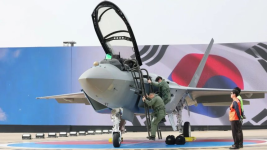


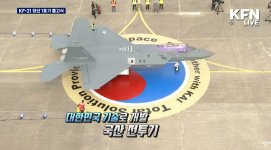
S. Korea rolls out first serial production KF-21 fighter for frontline squadron
Congrats
Mohid Afzal
Registered Member

Congrats to all who were involved in this project.
Mohid Afzal
Registered Member
What is the expected production rate of the KF-21 and how long will it take before Indonesian Ari Force starts recieving it's units?

Indos
INT'L MOD
- Thread starter
- #338
What is the expected production rate of the KF-21 and how long will it take before Indonesian Ari Force starts recieving it's units?
I dont know about the production rate in South Korea
About Indonesian Air Force starts receiving the planes ? It is reported to be block 2 that is still undergoing development, expected for the block 2 development completion is in 2028.
For Indonesia, it is expected that Indonesia will likely produce the planes in the country + local development in Indonesia for IFX (SK propose the development to start from 2029 as it is intended to give one test bed prototype for Indonesian Aerospace around that year).
Indonesian aerospace under Danantara has big potency to accelerated the local production of KF21/IFX in Indonesia as Danantara has another idle asset in Kertajati, West Java, for Indonesian Aerospace production line and MRO line expansion.
Production line of KF21 in current production facility in Indonesian Aerospace is near completion phase (physical building and some production equipments have already been there)
Indonesian Aerospace has already used Kertajati for its MALE UCAV drone maiden flight
Mohid Afzal
Registered Member
I dont know about the production rate in South Korea
About Indonesian Air Force starts receiving the planes ? It is reported to be block 2 that is still undergoing development, expected for the block 2 development completion is in 2028.
For Indonesia, it is expected that Indonesia will likely produce the planes in the country + local development in Indonesia for IFX (SK propose the development to start from 2029 as it is intended to give one test bed prototype for Indonesian Aerospace around that year).
Indonesian aerospace under Danantara has big potency to accelerated the local production of KF21/IFX in Indonesia as Danantara has another idle asset in Kertajati, West Java, for Indonesian Aerospace production line and MRO line expansion.
Production line of KF21 in current production facility in Indonesian Aerospace is near completion phase (physical building and some production equipments have already been there)
Indonesian Aerospace has already used Kertajati for its MALE UCAV drone maiden flight
3 more questions if you don't mind.
Q1, How exactly does Indonesia intend to develop the IFX? Will there be a big percentage of ToT given to Indonesia?
Q2, How many changes do you think IFX will have compared to KF-21? Like any sort of sort of changes in frame design can be expected?
Q3, In the future when local production in Indonesia starts, how much of the KF-21 do you think will be produces locally? I know you guys will produce the wings of all KF-21's but much of do you expect it to increase? like any plans for purchasing more blueprints for the fuselag etc?
P.S, if incase I asked something sensitive then please just let me know which part it is.
Indos
INT'L MOD
- Thread starter
- #340
3 more questions if you don't mind.
Q1, How exactly does Indonesia intend to develop the IFX? Will there be a big percentage of ToT given to Indonesia?
Q2, How many changes do you think IFX will have compared to KF-21? Like any sort of sort of changes in frame design can be expected?
Q3, In the future when local production in Indonesia starts, how much of the KF-21 do you think will be produces locally? I know you guys will produce the wings of all KF-21's but much of do you expect it to increase? like any plans for purchasing more blueprints for the fuselag etc?
P.S, if incase I asked something sensitive then please just let me know which part it is.
1. Well the TOT things is more on composite production and important data during development and flight tests, while the rest will be from experience developing KF21 from the start (2011) using the latest design tech and software.
The TOT things is also coming from Indonesian (about to retired) and Korean very senior engineers supervision to Indonesian junior engineers through this program (during design development and initial production(prototyping and early mass production))
Other on going programs like continuous development of CN235, NC212 and N219, Black Eagle MALE UCAV (with weapon integration) development, MRO TOT from Rafale and KF21 programs, development of KT-1 program (Korean Aerospace has move both the plane development and production to Indonesia), and also a decade long Falcon Star program (F16 refurbishment and upgrade in Indonesia) are likely improving Indonesian Aerospace testing and system integration capability (both are important for any plane development)
2. The change is only on the components as Indonesia see KF21 program to also gain independent. It is to avoid getting export license restriction from sensitive countries (component producers). And it is also likely to integrate more local avionics from local producer like InfoGlobal. All of them of course needs cooperation with South Korea.
Actually some physical changes like more strenghten wings to accommodate bigger fuel tanks are reported to likely be the future of block 2 variants, so this is why I said the changes with Korean version will likely be in components only, while physical changes will be pretty minimal.
I dont say that the components will be much different, but gradually Indonesia is likely to reduce the component from "certain countries (Non Korean) " to set up ITAR free plane. It is also to prepare for potential components embargo, so the ability and the right of Indonesian aerospace to change and install new components on the system are things that what I try to explain about this KF21 - IFX version program try to achieve
In general I believe both Korea and Indonesia will likely continue to cooperate in this program for long time as not only more save to cooperate with the same country from the start, but also it relates to both nation interests to keep improving its bilateral cooperation where KFX/IFX (KF21) program has become a symbol of trust, closenes and cooperation between two countries since 2009 where political elites in both countries understand the importance of it.
3. Indonesia is planned to produce left wings, tail, and pylon for all KF21 globally. It should have done all of them from prototyping stage, but due to Indonesia government under Jokowi we are not having production facility to produce high grade composite (similar with F35 level) yet, only pylons that have been produced. So actually since the start until current mass production, Indonesian Aerospace has already produced components for KF21 program, but only pylons due to previous government stupidity.
I expect for all production facility, including for final assembly and composite production to be completed either in 2027 or 2028. It will be great if it can be completed this year though.
4. How much KF21 will be produced locally ? I think it is likely will be pretty many since we have the production line in Indonesia and we are projected to be the 4 biggest economy in 2045 in GDP nominal term(already 7th biggest in PPP)
Mohid Afzal
Registered Member
1. Well the TOT things is more on composite production and important data during development and flight tests, while the rest will be from experience developing KF21 from the start (2011). The TOT things is also coming from Indonesian (about to retired) and Korean very senior engineers supervision to Indonesian junior engineers through this program (during design development and initial production(prototyping and early mass production))
Other on going programs like continuous development of CN235, NC212 and N219, Black Eagle MALE UCAV (with weapon integration) development, MRO TOT from Rafale and KF21 programs, development of KT-1 program (Korean Aerospace has move both the plane development and production to Indonesia), and also a decade long Falcon Star program (F16 refurbishment and upgrade in Indonesia) are likely improving Indonesian Aerospace testing and system integration capability (both are important for any plane development)
2. The change is only on the components as Indonesia see KF21 program to also gain independent. It is to avoid getting export license restriction from sensitive countries (component producers). And it is also likely to integrate more local avionics from local producer like InfoGlobal. All of them of course needs cooperation with South Korea.
Actually some physical changes like more strenghten wings to accommodate bigger fuel tanks are reported to likely be the future of block 2 variants, so this is why I said the changes with Korean version will likely be in components only, while physical changes will be pretty minimal.
3. Indonesia is planned to produce left wings, tail, and pylon for all KF21 globally. It should have done all of them from prototyping stage, but due to Indonesia government under Jokowi we are not having production facility to produce high grade composite (similar with F35 level) yet, only pylons that have been produced. So actually since the start until current mass production, Indonesian Aerospace has already produced components for KF21 program, but only pylons due to previous government stupidity.
I expect for all production facility, including for final assembly and composite production to be completed either in 2027 or 2028. It will be great if it can be completed this year though.
4. How much KF21 will be produced locally ? I think it is likely will be pretty many since we have the production line in Indonesia and we are projected to be the 4 biggest economy in 2045 in GDP nominal term(already 7th biggest in PPP)
Thank you for answering
Indos
INT'L MOD
- Thread starter
- #342
Lee hails S. Korea-Indonesia partnership for KF-21 fighter jets as 'model' defense cooperation
By Chae Yun-hwan
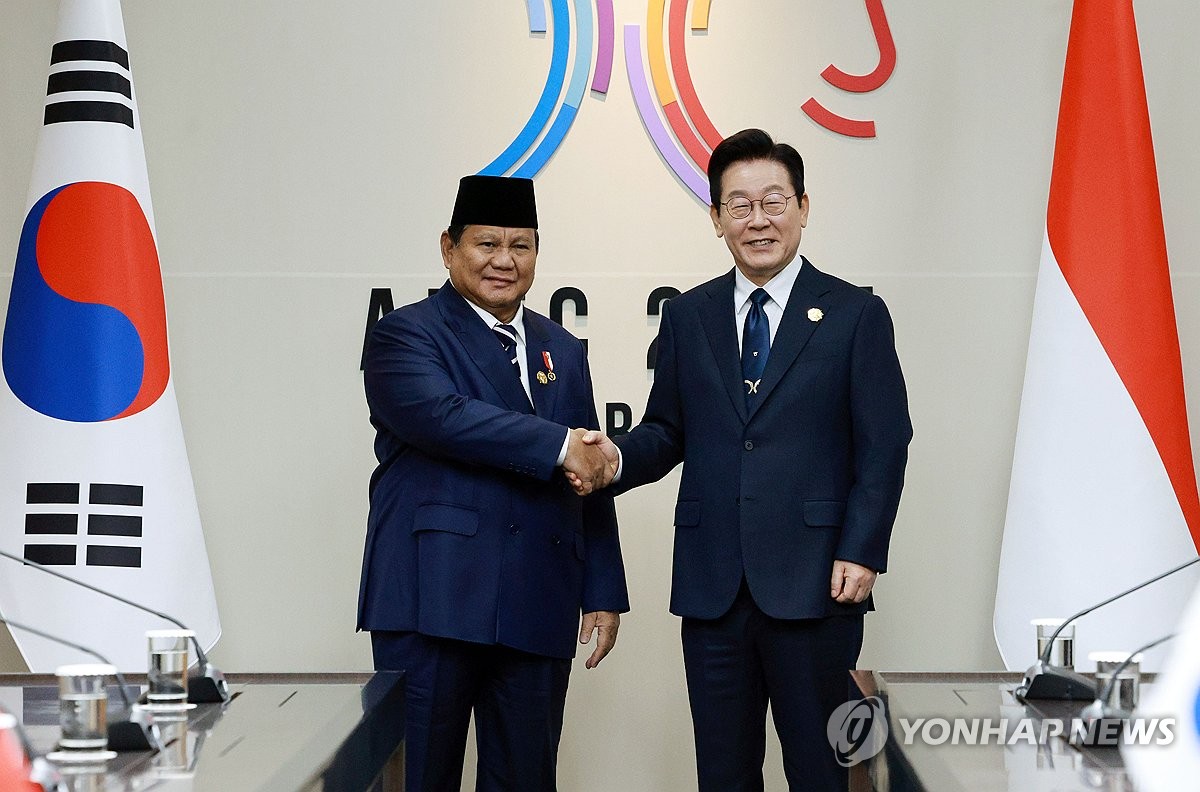
SEOUL, March 31 (Yonhap) -- President Lee Jae Myung has voiced hope for deeper bilateral ties with Indonesia, touting their joint development of the KF-21 fighter jet as a "model example" of global defense cooperation.
Lee made the remarks in an interview with the Indonesian newspaper Kompas released Tuesday, a day ahead of his summit talks with Indonesian President Prabowo Subianto in Seoul.
"Korean-Indonesian joint development of a next-generation fighter jet is a model example and potential global benchmark of international defense industry cooperation," Lee said.
"I hope that our mutual success will help us expand our defense cooperation in a wider range of areas, including naval vessels and air defense systems."
South Korea launched the KF-21 development program in 2015 to acquire a homegrown supersonic fighter, with Jakarta signing on as a partner.
The first production model of the jet rolled out on the tarmac last week, with Seoul planning to sign a deal to export 16 units to Indonesia.
Lee also noted the roles played by the two countries have become more "prominent" as established international norms and institutions are being challenged.
"The two countries, sharing the values of democracy, a rules-based international order and free trade, have served as important pillars, working together closely to advance multilateralism," he said.
Lee said his country's technologies and experience in economic development along with Indonesia's human and natural resources would enable them to prevent overdependence on specific markets and to diversify their economic structures.
He said the two countries plan to announce a road map for cooperation during Prabowo's state visit, which he said will serve as a new milestone in shaping the next decade of bilateral ties.
Lee hails S. Korea-Indonesia partnership for KF-21 fighter jets as 'model' defense cooperation | Yonhap News Agency
By Chae Yun-hwan SEOUL, March 31 (Yonhap) -- President Lee Jae Myung has voiced hope fo...
Indos
INT'L MOD
- Thread starter
- #343
With the KF-21EJ, Le Boramae acquires the electronic escort capability that is lacking elsewhere
By Fabrice Wolf
March 31, 2026
Launched in December 2015, the KF-21 program is progressing methodically, with a Block 2 expected in 2028. While international success for this promising aircraft has been slow in coming, after several false starts, a recent announcement could well place it at the center of potential acquisitions for several air forces. Indeed, KAI recently unveiled the KF-21EJ, for Escort Jammer, the electronic warfare variant of the aircraft dedicated to neutralizing enemy air defenses to destroy them or to protect more vulnerable aircraft.
To date, only one modern Western combat aircraft has this capability, the American EA-18G Growler, which will no longer be produced from 2027, while the need for this type of equipment has increased considerably since the lessons learned from Ukraine, Iran or Pakistan.
The KF-21 Boramae program has been progressing methodically since 2015.
The program follows a block architecture. The first operational deployment is based on Block 1, a version primarily dedicated to air-to-air missions and possessing only a limited number of capabilities. Block 2, currently under development, aims for completion in 2028. Its design prioritizes internal upgrades that will allow for the upgrading of the initial aircraft, expanding their air-to-ground and air-to-surface capabilities, as well as their cooperative engagement capabilities.
Currently, KAI's aircraft sensors have not yet reached full maturity. AESA radar testing is expected to continue until at least 2028 before widespread integration. The South Korean Defense Development Agency (ADD) has initiated the final phase of testing and evaluation for this IJ-band radar, which operates at a frequency of 8 to 12 GHz and has a detection range of approximately 100 kilometers. Initial deployments will therefore rely on sensors undergoing controlled maturation.
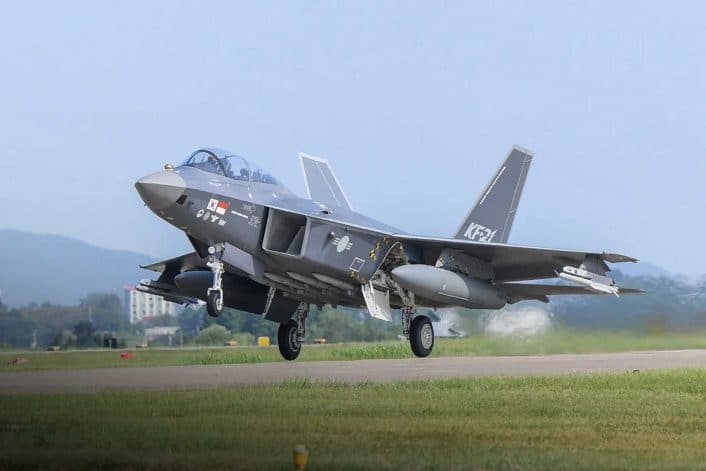
KAI reported in January 2026 that it had conducted over 1,600 accident-free test flights with the seven prototypes produced. This critical mass of testing validates the essential flight envelopes, strengthens basic safety for entry into service, and confirms the airframe's ability to accommodate additional functions. It also allows for industrialization planning and the initiation of performance verifications expected by the manufacturer and ROKAF before the first deliveries.
Seoul committed approximately $1,4 billion in 2024 to secure an initial batch of 20 aircraft, following the start of mass production in July 2024. The first production aircraft was publicly unveiled a few days ago. A series of checks by the manufacturer and the ROKAF (Royal Korean Air Force) is expected to lead to deployment in September. The narrow window between these checks and the planned entry into service underscores the importance of operational risk mitigation tools during the fleet's ramp-up phase.
For further :
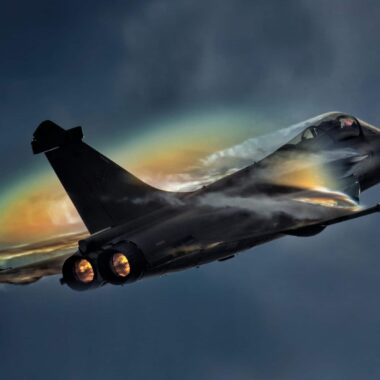
Rafale Electronic warfare: why do Paris and New Delhi have a unique window in 2025?
The Indian Air Force (IAF) relaunched development in 2025 on an aircraft dedicated to electronic warfare and SEAD missions, following the cancellation of the "Desi Growler." Available information describes a pragmatic refocusing on mature building blocks, from the UEWS to a High-Power Jammer with…
Even though Block I remains limited, the multirole base of the KF-21 is establishedOn the air-to-air side, the Meteor, AIM-120 AMRAAM, IRIS-T, AIM-9 Sidewinder, and ASRAAM Advanced Short Range Air-to-Air Missile are or will soon be certified. On the air-to-ground side, the arsenal is expected to include, in particular, the German Taurus KEPD 350 cruise missile, the American AGM-84 Harpoon anti-ship missile and AGM-65 Maverick air-to-ground missile, as well as the British Brimstone and SPEAR 3 tactical munitions, and JDAM and GBU guided bombs. However, the operational value of these munitions depends heavily on the opening of access corridors and the protection of formations, hence the importance of a dedicated electronic warfare capability.
The KF-21EJ adds an electronic escort capability against air defenses.
In this context of timing and sensor maturity, KAI presented the KF-21EJ, a version dedicated to electronic attacks against enemy air defenses. The aircraft carries electronic warfare pods and can operate alone or in cooperation with other KF-21 Boramae aircraft, to provide electronic escort for attack formations, produce jamming and suppression effects to weaken enemy radars, and thus protect the formation.
The Block 2 trajectory remains focused on internal changes that allow for the upgrading of Block 1 standards, which aligns with the addition of specialized payloads. The pod-and-play architecture, adopted since mid-2025, enables the combination of platforms and sensor or transmitter modules without a major airframe redesign. It facilitates the integration of electronic warfare components while preserving fleet coherence and compatibility between production batches.
The KF-21EJ opens up new modes of operation based on flexible electronic escort and coordinated suppression and destruction (SEAD) operations against air defenses. The weaponry already validated on the KF-21 benefits directly from electromagnetic protection, both in penetration and in support of stand-off fire. This combination allows for more robust attack formations in contested environments, combining jamming, decoys, and opportunistic strikes against detected and geolocated transmitters.
With large-scale integration of AESA radar unlikely before 2028, an escort jammer provides a useful penetration and protection capability from the outset. This is a pragmatic response to reduce operational risk before the sensors reach full maturity, by securing approaches and degrading the effectiveness of targeted surface-to-air defenses during the ramp-up of onboard systems.
The Block 3, also designated KF-21EX, will incorporate an internal bomb bay with a capacity of up to 2,000 pounds for GBU-31 JDAMs, GBU-39 SDB Small Diameter Bombs, or air-to-air missiles. This upgrade will enhance stealth, reduce drag, increase top speed, and lower fuel consumption, without diminishing the KF-21EJ's relevance. The podded system is positioned as a sustainable complement, not a competing alternative to the blocks currently under development.
The electronic escort requirements of European and global armies
As mentioned above, the period leading up to 2028 remains crucial, as AESA testing is expected to continue at least until that date. Initial deliveries could therefore be limited in terms of detection capabilities. Hence the importance of proactive protection before the sensors reach full maturity. A variant dedicated to electronic warfare opens up penetration routes and masks formations, while the fighter's organic detection and countermeasures capabilities are further strengthened.
The use of pod-based escort addresses this need by mitigating some of the operational risk during the ramp-up phase. The pod-and-play approach and the use of a mixed fleet allow for a gradual increase in electromagnetic effects without significant modifications. The objective is to achieve a sufficient level of jamming, deception, and suppression, while maintaining fleet availability and industrialization trajectories compatible with the milestones set by the client state.
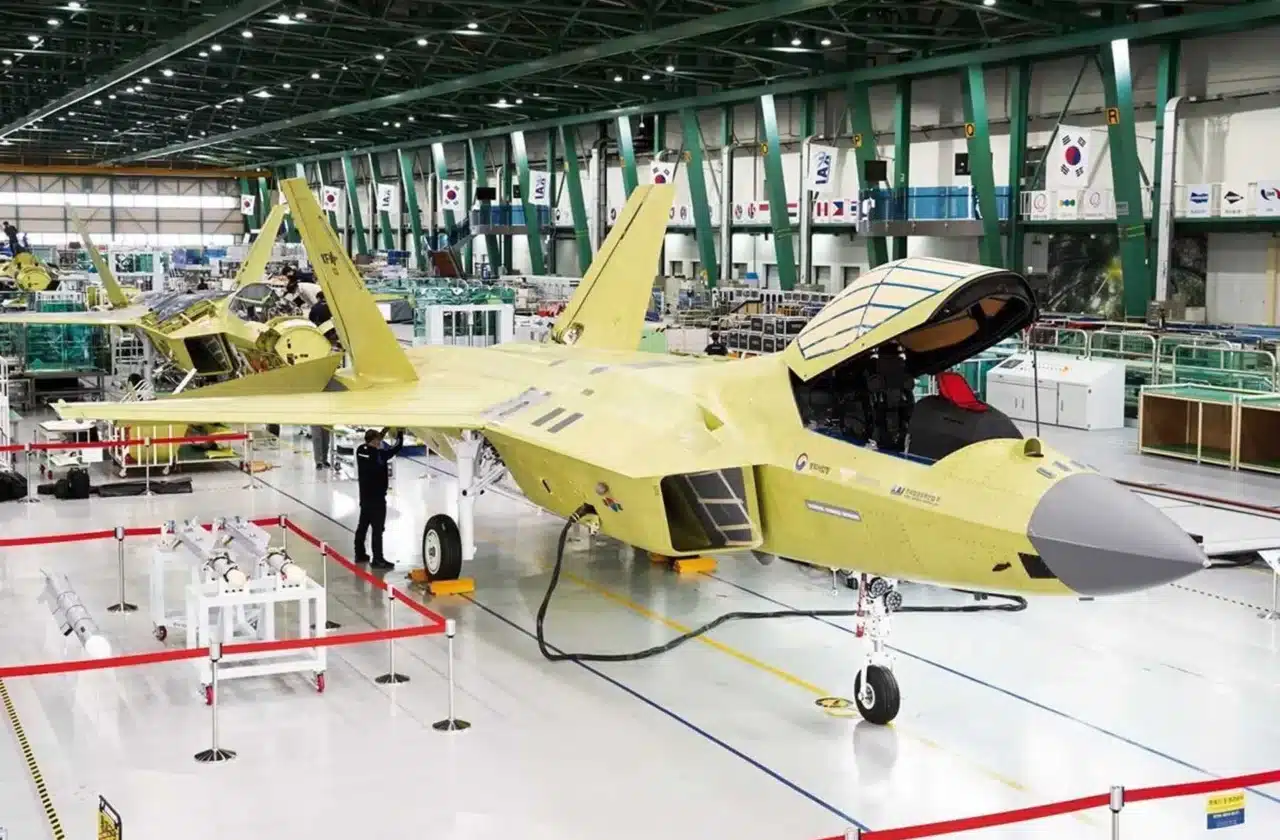
The internal upgrades favored by Block 2 allow for the retrofitting of first-series aircraft, facilitating a consistent capability increase across the fleet. This approach reduces downtime compared to intensive conversions requiring extensive structural work. The Indian experience illustrates this point. The Desi Growler concept, involving the conversion of Su-30MKIs around DRFM (Digital Radio Frequency Memory) modules and Rudram anti-radar missiles, was shelved due to integration difficulties and budgetary constraints.
The Indian Air Force (IAF) has relaunched the development of an aircraft dedicated to electronic warfare and defense suppression missions in 2025, following the cancellation of the Desi Growler. The lessons learned focus on modularity and podderization, which mitigate risks to both schedule and costs while allowing for a gradual increase in capabilities. This approach adapts to the realities of electrical resources, hardpoints, and software systems, without causing any lasting service disruption.
The KF-21EJ can operate alone or in pairs with KF-21s to provide coordinated escort during missions to suppress or destroy defenses. This option is part of a broader doctrinal trend toward expanding the kill chain, including anti-radar missiles and combat drones.
The KF-21EJ becomes a considerable export asset for the Boramae
The effort undertaken in 2024 to secure an initial batch of 20 aircraft and the prospect of a September deployment impose a significant time constraint on entry into service. Mass production began in July 2024, and a series of industrial and military verifications must be completed before the first deployments. Any capability that reduces risk during initial operations becomes essential. Electronic escort is one of the pragmatic solutions to guarantee the immediate operational utility of the delivered airframes while preserving the possibility of future upgrades.
The Electronic Jammer (EJ) provides electronic warfare escort and defense suppression or destruction options, increasing the robustness of the KF-21's weapons packages. Its value is independent of the timeline for the full-scale integration of the AESA radar. Its introduction improves the survivability and effectiveness of formations without waiting for the completion of sensor testing. It also expands the range of effects in combined missions, from guard jamming to stand-off fire support against prioritized surface-to-air missile systems.
The commercial environment is evolving with positive signs, notably the expectation of an export agreement for 16 aircraft with Indonesia during the state visit scheduled for March 31 to April 2. Simultaneously, the platform's performance, cost-effective maintenance, and adaptability are bolstering international interest. This combination increases the likelihood of securing agreements, and a native electronic warfare escort capability differentiates the offering from competing solutions lacking a comparable organic variant.
As previously mentioned, the Block 3 will incorporate an internal bomb bay with a capacity of up to 2,000 pounds, with an expected impact on stealth, drag, top speed, and fuel consumption, while also accommodating GBU-31 JDAMs, GBU-39 SDBs, or air-to-air missiles. This roadmap supports a gradual upgrade from Block 2 to the KF-21EX, without compromising the EJ's strengths. The podded design can evolve in parallel with the different blocks, without major structural divergence, thus securing the investment throughout its entire lifecycle.
Finally, the alignment between a tight delivery schedule, a still-consolidating sensor maturity, and a now tangible export ambition creates direct interest in an electronic escort variant. The EJ fits into the capability framework by providing immediately valuable protection and penetration capabilities, while remaining compatible with the retrofit of Block 1 to Block 2 systems. It supports the commercial competitiveness of an already attractive program and helps maintain the balance between operational requirements, fleet availability, and technological maturity trajectories to 2028.
Conclusion
The limited maturity of sensors, expected to last until at least 2028, and the pressure of a planned September deployment necessitate immediate protection for the first batches of the KF-21. The pod-based KF-21EJ Escort Jammer provides electronic warfare escort capabilities and SEAD suppression and DEAD destruction of air defenses, operable independently or in tandem with the Boramae. Combined with internal Block 2 upgrades and Block 1 retrofits, this approach ensures fleet availability and adherence to industrial milestones, while simultaneously enhancing the robustness of the weapons packages in contested environments.
A native electronic warfare escort option further differentiates the export offering, while a deal for 16 aircraft with Indonesia is expected during the visit from March 31 to April 2, at this stage only as an intention. Indeed, the Boramae is positioned in a segment whose necessity has become evident again during recent conflicts in Iran, Pakistan, and Ukraine, while no offering in this area, beyond self-protection and stealth capabilities, is currently available in Europe or the United States.
While 4th generation aircraft remain the backbone of many air forces around the world, the EJ version of the Boromae, backed by the planned scalability of the aircraft, constitutes a very attractive offer in a market that is otherwise under considerable strain.
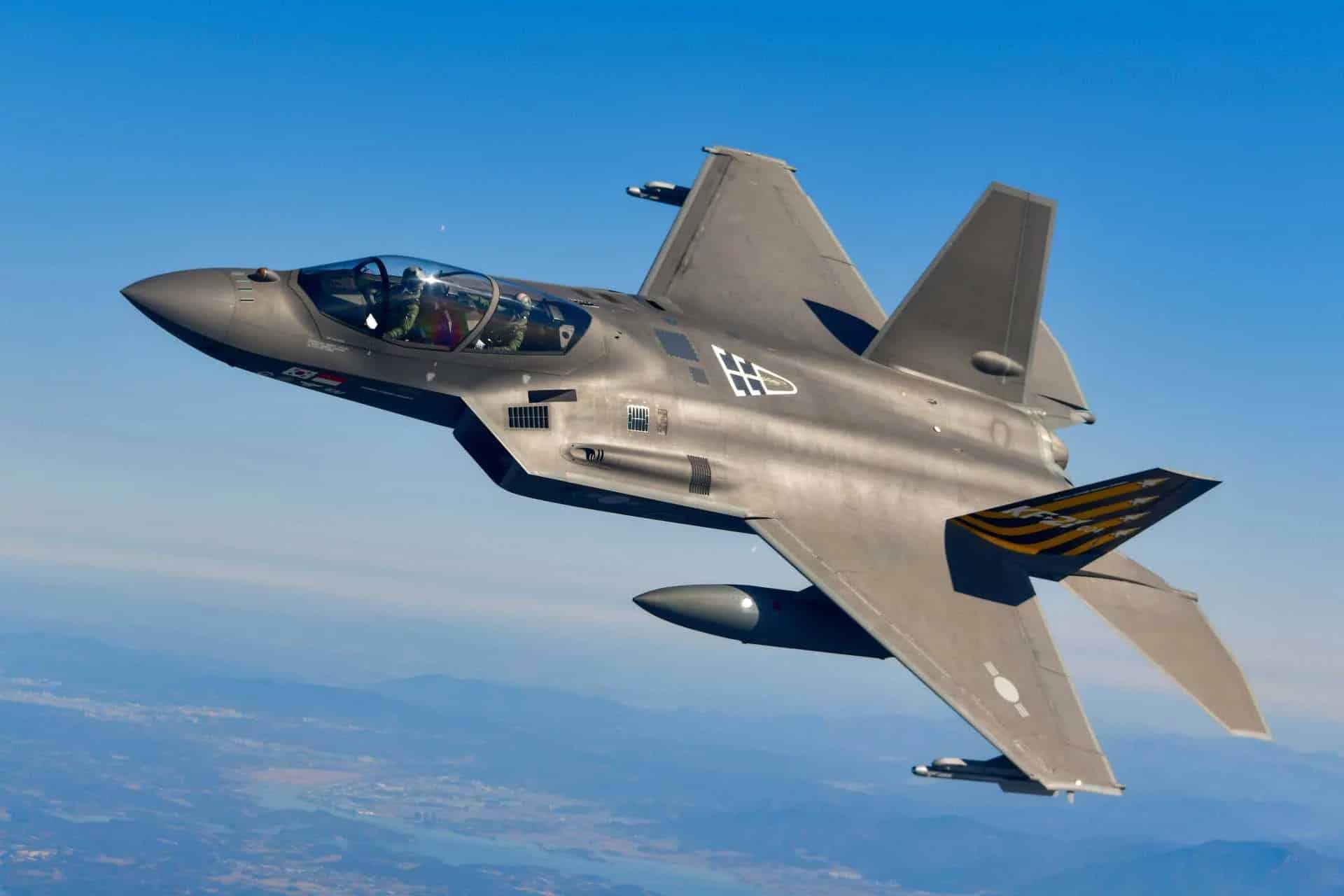
With the KF-21EJ, Le Boramae acquires the electronic escort capability that is lacking elsewhere
KAI recently unveiled the KF-21EJ, for Escort Jammer, the electronic warfare variant of the aircraft dedicated to neutralizing opposing air defenses to destroy them or to protect more vulnerable aircraft.
 meta-defense.fr
Indos
INT'L MOD
- Thread starter
- #344
Korea rolls out first production KF-21, as escort jammer concept emerges
By Roy Choo
-
March 31, 2026
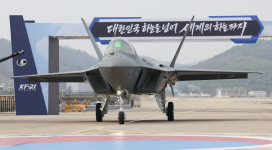
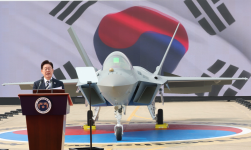
 Manufacturing of the first production KF-21 began in July 2024, with completion achieved in less than two years. Its roll-out comes five years after unveiling of the first prototype. (Presidential Office)
The first serial-production KF-21 Boramae fighter rolled out of Korea Aerospace Industries’ (KAI) Sacheon facility in South Gyeongsang on 25 March. The twin-seater, with tail number ‘26-001’, taxied under its own power to a ceremony attended by South Korean President Lee Jae Myung.
The aircraft is scheduled to undergo further performance verification before entering service with the Republic of Korea Air Force (ROKAF) in September.
KF-21s will replace the ROKAF’s F-4 Phantom and KF-5 Tiger II fighters. The F-4s retired in 2024, while the KF-5s will follow in due course.
Lee remarked in his speech: “The fighter jet standing proudly before you embodies the fervent aspiration for self-reliant national defence that our people have dreamed of for over half a century.”

This marked a major milestone in the KF-21 programme, originally unveiled by then president Kim Dae-jung in 2001. The go-ahead for the project was given in 2015, and it was formally launched as the KF-X project the following year.
The programme reached a key point with the rollout of its first of six prototypes in April 2021. A 42-month testing campaign followed, concluding in January this year. The six prototypes carried out 955 ground tests and 1,601 flight tests. The system development phase of the programme is currently ongoing.
The ROKAF has 40 KF-21 Block I aircraft on order, with 20 planned for production by 2027 and a further 20 by 2028.
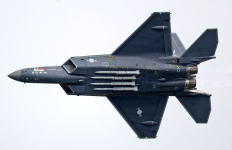
The Block I configuration is optimised primarily for air-to-air missions, and is capable of carrying four MBDA Meteor missiles in recessed attachment points along the central fuselage. It will also be equipped with IRIS-T infrared-guided missiles for within-visual-range engagements, as well as precision-guided munitions for a limited air-to-ground capability.
The air force plans to subsequently place an order for Block II aircraft, a variant that adds expanded air-to-ground capabilities such as the Korean Air-Launched Cruise Missile and other improvements.
The future Block III version of the jet, also referred to as the KF-21EX, is planned to have internal weapons bays.
 This screengrab shows a KF-21 escort jammer concept, one of several potential future evolutions of the aircraft. (KAI)
Revealed in a video sequence during the 25 March roll-out was a concept of a KF-21EJ (escort jammer) electronic warfare variant, among other potential future evolutions of the aircraft.
The video clip showed the KF-21EJ configured with jamming pods, as well as the Korean Anti-Radiation Missile, a new anti-radiation weapon for suppression and destruction of enemy air defences missions.
At the ceremony, the president also emphasised that the KF-21 could play a key role in boosting South Korea’s rapidly growing defence export sector. To date, Indonesia – a development partner in the KF-21 programme – and the Philippines have been identified as the most promising prospective export customers.
by Roy Choo
Korea rolls out first production KF-21, as escort jammer concept emerges - Asian Military Review
The first serial-production KF-21 Boramae fighter rolled out of Korea Aerospace Industries’ Sacheon facility in South Gyeongsang on 25 March.
 www.asianmilitaryreview.com
Indos
INT'L MOD
- Thread starter
- #345
So KF21 contract ceremony is likely made in Indonesia with the supplier from Indonesian Aerospace. This is something that become Indonesia demand (if the deal is reached, the contract should be signed in Indonesia).
I speculate this since the signing cooperation (things that is likely related to KF21 program) is between Danantara CEO (Roslan Roeslani) with Korean export financing. Danantara is Indonesian SOE superholding which manage all SOE including Indonesian Aerospace
Other possible agreement is in intelectual property where I speculate that KF21 program is part of it
No specific mention about KF21 yet in this event, but Prabowo is expected to visit Korean Aerospace in this 3 days visit.
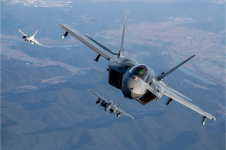
Before the plane touching down on Korean Aerospace, Korean Aerospace is expected to fly KF21 with Indonesian test pilot to welcome Prabowo. There are two Indonesian test pilots there, so it could be two KF21 fighters will welcome Prabowo. Interesting event to watch.
I speculate this since the signing cooperation (things that is likely related to KF21 program) is between Danantara CEO (Roslan Roeslani) with Korean export financing. Danantara is Indonesian SOE superholding which manage all SOE including Indonesian Aerospace
Other possible agreement is in intelectual property where I speculate that KF21 program is part of it
No specific mention about KF21 yet in this event, but Prabowo is expected to visit Korean Aerospace in this 3 days visit.
Before the plane touching down on Korean Aerospace, Korean Aerospace is expected to fly KF21 with Indonesian test pilot to welcome Prabowo. There are two Indonesian test pilots there, so it could be two KF21 fighters will welcome Prabowo. Interesting event to watch.
Users who are viewing this thread
Total: 1 (members: 0, guests: 1)
Pakistan Defence Latest


Country Watch Latest

Latest Posts
-

-

-
 Yemen Civil War News and Discussion.. an evolving situation (34 Viewers)
- Latest: Mighty_Dragon_Strike
-
-
