UAV-Augmented WiFi Mesh (UAWM)/FLYNET

RescueRanger

Meme Lord
Joined
Sep 20, 2008
Messages
36,063
Reaction score
82,718
Reputation
39,769.5
Country of Origin
Country of Residence
Pakistan has a long and tragic history of man-made and environmental disasters, primarily due to its diverse geography—ranging from the high-altitude glaciers of the north to the arid plains and coastal regions of the south. The frequency of these disasters is increasing. Since 2010, Pakistan has been ranked consistently among the top 10 countries most vulnerable to climate change, despite contributing less than 1% of global greenhouse gas emissions. [1]

Based on available data, the occurrence of global natural disasters in 2021 was 13 % higher than the average over the last 30 years.[2]

The United Nations defines a disaster as “a serious disruption of the functioning of a society, causing widespread human, material, or environmental losses which exceed the ability of the affected society to cope using its own resources. ” - Source: United National International Strategy for Disaster Reduction(2004) Living with risk: a global review of disaster reduction Initiatives.

Types of disasters:
Disasters are often categorized by their cause, which can be divided into four main groups as follows:
1. Natural disasters
2. Technological disasters
3. Social disasters
4. Complex disasters and failed states
In turn these natural events may trigger:
• floods
• tsunamis
• landslides or mudslides
• avalanches (snow slides)
• excessive erosion
• wildfires; and
• crop failure.

Natural disasters:
These result from environmental impacts. There are geophysical events such as volcanoes and earthquakes. These events can be very concentrated, with their impact felt only in a localized area. Other environmental events are hydro metrological. These are experienced over a much wider area and include:
• windstorms (hurricanes, typhoons, cyclones)
• heavy rain or snow
• drought; and
•excessive high or low temperatures

Biological events are another type of natural disaster. These include:
• insect plagues; and
• disease epidemics.

Technological disasters
Adverse physical events can also be caused by human activity, such as
• industrial and technological incidents involving explosions or chemical and radiation emissions
• accidents during the transportation of hazardous materials
• structural failures of bridges, buildings, power lines, dams or mines
• vehicle and train accidents; and
• unexploded ordinance.

Social disasters
Technological disasters are accidental failures of man-made facilities. There are also failures of the social order, where community behaviour breaks down, for example, in order of increasing magnitude:
• demonstrations
• stampedes
• riots
• terrorism
• conflict; and
• war.

Complex disasters and failed states
The final category of disaster recognizes the importance of good governance and the rule of law in a stable society. When this fails, perhaps due to war or a major natural disaster, a complex set of failures occurs, with economic, social, physical and environmental consequences, all within a state of insecurity.

Emergencies
The Inter-Agency Standing Committee defined complex emergencies as: “A humanitarian crisis in a country, region or society where there is total or considerable breakdown of authority resulting from internal or external conflict and which requires an international response that goes beyond the mandate or capacity of any single agency and/ or the ongoing United Nations country program.” UN Office for the Coordination of Humanitarian Affairs (1999) OCHA Orientation Handbook on Complex Emergencies
1774568217985.png
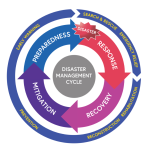
Figure 1: Disaster and Emergency Management Cycle

Overview of Pakistan's three tiered Disaster Management System:
1774568386460.png
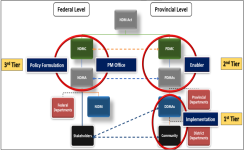
Figure 2: Overview of three Tiers Pakistan's Disaster. Management System
  • NDMA. Lead agency for national coordination, federal resource allocation, interagency liaison and international humanitarian engagement.
  • PDMAs. Operational units at provincial level, responsible for planning, early warning dissemination and coordination of response.
  • DDMAs. Frontline entities for local response, rescue, relief mobilization, community engagement.
  • Local Government and Community Groups. Local government/ Municipal level disaster management committees, community volunteers, civil society and the private sector
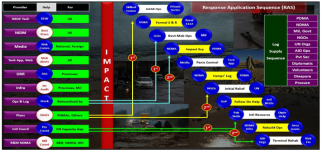
How Pakistan responds to disasters, who does what:
1774568591044.png
Figure 3: Response Application Sequence of NDMA.

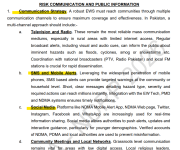
Despite the robust and detailed response application sequence of the National Disaster Management System, there is a key weak link in the chain presented in this document, one which has been exposed time and time again during disasters and complex emergencies. The one of communication, as per the Government's own disaster communication strategy is reliant on SMS alerts to the public, a system plagued with vulnerabilities and lack of redundancies should the network fail post incident.
1774568839226.png
Figure 4: Excerpt taken from the National Disaster Management Plan 2026 (C) Govt. Of Pakistan.

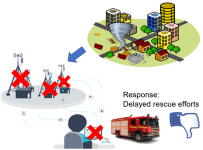
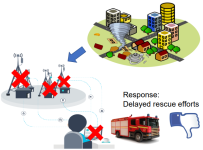
It is widely claimed that the community impacted by a disaster are often the true first responders to any incident immediately after the incident. During such times communication is key, any breakdown in communication can not only cause distress and public anxiety, it can lead to misinformation, incorrect damage assessments and delayed assistance:
1774569026740.png
Figure 5: Graphic demonstrating the impact compromised communication networks can have on post-disaster assistance.


In Survival there is a golden rule known as the "Survival Rule of 3's":
  • 3 Minutes without Air (Asphyxiation): Brain damage can begin after 3–6 minutes of oxygen deprivation (e.g., drowning, choking).
  • 3 Hours without Shelter (Exposure): In extreme, harsh environments (extreme heat or cold), shelter is the immediate priority to prevent death from hypothermia or hyperthermia.
  • 3 Days without Water (Dehydration): While 3 days is typical, this can drop below 2 days in extreme heat, or exceed 5 days in cold, temperate conditions.
  • 3 Weeks without Food (Starvation): Humans can survive roughly 30–40 days without food if they have adequate water, though body function declines significantly.
  • 3 Seconds/Months (Survival Mindset/Connection): Sometimes included, highlighting the need for a calm mindset (seconds) to prevent panic, and the long-term need for human contact (months).
The absence of short-term communication can be fatal impact because communication is readily available everywhere in the modern world. For example, communication systems were cut off due to power outage for several days in the Northern Pakistan and Kashmir which occurred as a direct result of the 2005 Pakistan Earthquake. The situation where about several hundred base stations and thousands of wired communication systems were broken makes sharing of information and news extremely difficult, if not impossible.

Whilst large corporations have explored novel methods to assist in post disaster communication including services such as Starlink and Lifeline. In emerging markets and developing countries, a more cost-effective and grassroots solution is required to provide rapidly deployable connectivity in austere environments following a crisis or disaster.
 
Source:
Self project- please refer to bibliography
Attachments

  • 1774569054654.png
    1774569054654.png
    180.8 KB · Views: 0
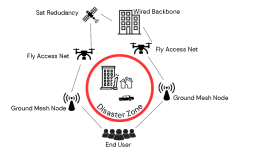
The Solution: an architecture for a drone-based communication infrastructure for disaster response. The drones form a Wi-Fi mesh network to forward the location of victims.
Modern commercial and hobbyist drones can be solution for disaster and crisis areas. It has been used throughout the pre-sale of broadcasting such as broadcasting relay, weather observation and unmanned security. The battery is mainly used as a power source which affects flight time and payload.
There are diverse methods such Bluetooth, cellular, and Wi-Fi for establishing a communication infrastructure by deploying small lightweight drones acting as mesh nodes or access points.

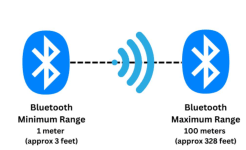
The characteristics vary depending on each method. In the case of Bluetooth, it is mainly used when low power is needed in a short distance.
1774570075147.png
Figure 6: Minimum and Maximum range in standard Bluetooth adapters

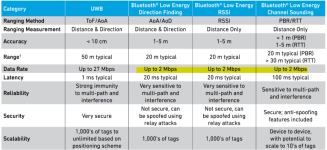
By frequency hopping technology, interference problem is reduced. But, it is difficult to transmit high-capacity of data such as pictures or videos since the transmission speed is slower than that of Wi-Fi.
1774570152499.png
Figure 7: Data rate limitations of Bluetooth

In the case of cellular, it provides communication service over a wide area based on the base station and has the advantage that handover problem is the least. However, it is difficult to relay cellular networks via a mesh node and both voice and data quality are impacted the further away from the base station the mesh node gets.
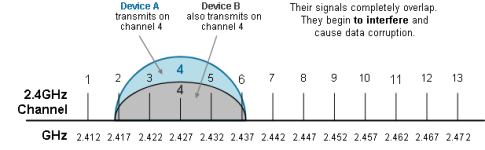
Finally, in the case of Wi-Fi, interference between devices using the same channel may occur but it is possible to transmit data with high-speed and can be easily accessed through a general laptop or smart phone without extra receiver. Also, the distance of communication can be increased through the network constructing wireless mesh topology.
1774570360863.png
Figure 7: An example of how Wi-Fi channel congestion may lead to interference and data corruption.

A wireless mesh network is a technology using wireless LAN that enables a low-cost and efficient network to be established where a network infrastructure is not built. Mesh nodes are connected to each other, and each node is a host and router.

Unlike other wireless networks, it is possible to increase the communication capacity according to the number of nodes and hops, and it is emerged as a promising technology for broadband Internet because it uses hardware based on IEEE 802.11.

Limitation: The limited transmission range of Wi-Fi presents a challenge for the alertmessage to be broadcasted effectively.

Selection of platform:

Generic Chinese 10" quadcopter drone
1774570576488.png
Figure 8: Generic 10" quadcopter drone

Due to the obvious benefits of Wi-Fi and LoRa, it is proposed to deploy a hybrid Wi-Fi LoRa ad-hoc network which leverages smartphones and IoT devices as nodes in a mesh.

Limitation: These works focuses on transmission of short burst information via messages, not the images, which provide more insights about the emergency status.

Proposed rapid deployment FANET (Fly Access Network) Mesh:
1774571549356.png7
Figure 9: Proposed FANET Mesh

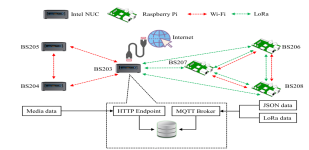
Network Infrastructure: 1774571655613.png
Figure 10: Network Infrastructure
 
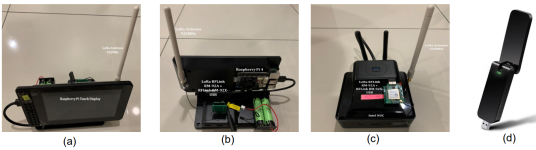
Test Bed:
1774571883541.png
Figure 11: (a) Raspberry Pi 4 (front view). (b) Raspberry Pi 4 (rear view). (c) Intel NUC. (d) TP-Link Archer T4U AC1300.

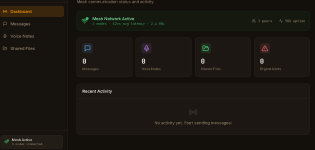
UI Design:
1774571940803.png
Figure 12: Use friendly UI

BATMAN Advanced script:
1774572005916.png
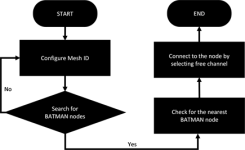
Figure 13: BATMAN Advanced script diagram
---
Next steps (Trial stage - mesh will be deployed in Africa as a test case). I will update this thread as it progresses.
---

Bibliography:
  1. Sheen, D.-H. (2015) Comparison of Local Magnitude Scales in South Korea. Journal of the Geological Society of Korea, 51, 415-424. https://doi.org/10.14770/jgsk.2015.51.4.415
  2. Premkumar, R. (2014) Wireless Networks for Disaster Relief. Technical Report, Washington University, St. Louis.
  3. Masaru, F. (2011) ICT Responses to the Great East Japan Earthquake. http://www.soumu.go.jp/main_sosiki/joho_tsusin/eng/presentation/pdf/111208_1.pdf
  4. Wang, H.Y., Hovy, E. and Dredze, M. (2015) The Hurricane Sandy Twitter Corpus. Proceedings of the World Wide Web and Public Health Intelligence, 20-24.
  5. Hern, A. (2015) The Facebook Launches Aquila Solar-Powered Drone for Internet Access. The Guardian. https://www.theguardian.com/technol...ered-internet-drone-with-span-of-a-boeing-737
  6. John, G. (2015) Welcome to the Space Jam: How United States Regulators Should Govern Google and Facebook’s New Internet-Providing High Altitude Platforms. American University Business Law Review, 4, 471-503.
  7. Matolak, D.W. (2015) Unmanned Aerial Vehicles: Communications Challenges and Future Aerial Networking. International Conference on Computing, Networking and Communications (ICNC), 16-19 February 2015, Garden Grove, CA, 567-572. https://doi.org/10.1109/ICCNC.2015.7069407
  8. Zeng, Y., Zhang, R. and Lim, T.J. (2016) Wireless Communications with Unmanned Aerial Vehicles: Opportunities and Challenges. IEEE Communications Magazine, 54, 36-42. https://doi.org/10.1109/MCOM.2016.7470933
  9. Akyildiz, I.F. and Wang, X.D. (2005) A Survey on Wireless Mesh Networks. IEEE Communications Magazine, 43, S23-S30. https://doi.org/10.1109/MCOM.2005.1509968
  10. Daniel, S., König, A. and Hollick, M. (2011) Routing Performance of Wireless Mesh Networks: A Practical Evaluation of BATMAN Advanced. IEEE 36th Conference on Local Computer Networks (LCN), 897-904. [Citation Time(s):1]
  11. Palazzi, C.E., Brunati, M. and Roccetti, M. (2010) An OpenWRT Solution for Future Wireless Homes. IEEE International Conference on Multimedia and Expo (ICME), 19-23 July 2010, Suntec City, 1701-1706. https://doi.org/10.1109/ICME.2010.5583223
  12. Marc, C. (2014) Survey of Low Altitude Unmanned Aerial Vehicles. Technical Report, Washington University, St. Louis. [Citation Time(s):1]
  13. Iperf: The Ultimate Speed Test Tool for TCP, UDP and SCTP Test the Limits of Your Network + Internet Neutrality Test. https://iperf.fr/
 
Excellent analysis bro…..
Its what im working on. :). Cheap mesh internet sokution for poor countries when the network is damaged or diarupted by disasters or crisis.

Think basically Wifi Range extenders in the sky relaying a wifi signal from a fixed point like a command vehicle/tent/building.
 
Test Bed:
View attachment 188549
Figure 11: (a) Raspberry Pi 4 (front view). (b) Raspberry Pi 4 (rear view). (c) Intel NUC. (d) TP-Link Archer T4U AC1300.

UI Design:
View attachment 188550
Figure 12: Use friendly UI

BATMAN Advanced script:
View attachment 188551
Figure 13: BATMAN Advanced script diagram
---
Next steps (Trial stage - mesh will be deployed in Africa as a test case). I will update this thread as it progresses.
---

Bibliography:
  1. Sheen, D.-H. (2015) Comparison of Local Magnitude Scales in South Korea. Journal of the Geological Society of Korea, 51, 415-424. https://doi.org/10.14770/jgsk.2015.51.4.415
  2. Premkumar, R. (2014) Wireless Networks for Disaster Relief. Technical Report, Washington University, St. Louis.
  3. Masaru, F. (2011) ICT Responses to the Great East Japan Earthquake. http://www.soumu.go.jp/main_sosiki/joho_tsusin/eng/presentation/pdf/111208_1.pdf
  4. Wang, H.Y., Hovy, E. and Dredze, M. (2015) The Hurricane Sandy Twitter Corpus. Proceedings of the World Wide Web and Public Health Intelligence, 20-24.
  5. Hern, A. (2015) The Facebook Launches Aquila Solar-Powered Drone for Internet Access. The Guardian. https://www.theguardian.com/technol...ered-internet-drone-with-span-of-a-boeing-737
  6. John, G. (2015) Welcome to the Space Jam: How United States Regulators Should Govern Google and Facebook’s New Internet-Providing High Altitude Platforms. American University Business Law Review, 4, 471-503.
  7. Matolak, D.W. (2015) Unmanned Aerial Vehicles: Communications Challenges and Future Aerial Networking. International Conference on Computing, Networking and Communications (ICNC), 16-19 February 2015, Garden Grove, CA, 567-572. https://doi.org/10.1109/ICCNC.2015.7069407
  8. Zeng, Y., Zhang, R. and Lim, T.J. (2016) Wireless Communications with Unmanned Aerial Vehicles: Opportunities and Challenges. IEEE Communications Magazine, 54, 36-42. https://doi.org/10.1109/MCOM.2016.7470933
  9. Akyildiz, I.F. and Wang, X.D. (2005) A Survey on Wireless Mesh Networks. IEEE Communications Magazine, 43, S23-S30. https://doi.org/10.1109/MCOM.2005.1509968
  10. Daniel, S., König, A. and Hollick, M. (2011) Routing Performance of Wireless Mesh Networks: A Practical Evaluation of BATMAN Advanced. IEEE 36th Conference on Local Computer Networks (LCN), 897-904. [Citation Time(s):1]
  11. Palazzi, C.E., Brunati, M. and Roccetti, M. (2010) An OpenWRT Solution for Future Wireless Homes. IEEE International Conference on Multimedia and Expo (ICME), 19-23 July 2010, Suntec City, 1701-1706. https://doi.org/10.1109/ICME.2010.5583223
  12. Marc, C. (2014) Survey of Low Altitude Unmanned Aerial Vehicles. Technical Report, Washington University, St. Louis. [Citation Time(s):1]
  13. Iperf: The Ultimate Speed Test Tool for TCP, UDP and SCTP Test the Limits of Your Network + Internet Neutrality Test. https://iperf.fr/
Excellent job sir . you always ahead of time in Paksitan
 
Pakistan has a long and tragic history of man-made and environmental disasters, primarily due to its diverse geography—ranging from the high-altitude glaciers of the north to the arid plains and coastal regions of the south. The frequency of these disasters is increasing. Since 2010, Pakistan has been ranked consistently among the top 10 countries most vulnerable to climate change, despite contributing less than 1% of global greenhouse gas emissions. [1]

Based on available data, the occurrence of global natural disasters in 2021 was 13 % higher than the average over the last 30 years.[2]

The United Nations defines a disaster as “a serious disruption of the functioning of a society, causing widespread human, material, or environmental losses which exceed the ability of the affected society to cope using its own resources. ” - Source: United National International Strategy for Disaster Reduction(2004) Living with risk: a global review of disaster reduction Initiatives.

Types of disasters:
Disasters are often categorized by their cause, which can be divided into four main groups as follows:
1. Natural disasters
2. Technological disasters
3. Social disasters
4. Complex disasters and failed states
In turn these natural events may trigger:
• floods
• tsunamis
• landslides or mudslides
• avalanches (snow slides)
• excessive erosion
• wildfires; and
• crop failure.

Natural disasters:
These result from environmental impacts. There are geophysical events such as volcanoes and earthquakes. These events can be very concentrated, with their impact felt only in a localized area. Other environmental events are hydro metrological. These are experienced over a much wider area and include:
• windstorms (hurricanes, typhoons, cyclones)
• heavy rain or snow
• drought; and
•excessive high or low temperatures

Biological events are another type of natural disaster. These include:
• insect plagues; and
• disease epidemics.

Technological disasters
Adverse physical events can also be caused by human activity, such as
• industrial and technological incidents involving explosions or chemical and radiation emissions
• accidents during the transportation of hazardous materials
• structural failures of bridges, buildings, power lines, dams or mines
• vehicle and train accidents; and
• unexploded ordinance.

Social disasters
Technological disasters are accidental failures of man-made facilities. There are also failures of the social order, where community behaviour breaks down, for example, in order of increasing magnitude:
• demonstrations
• stampedes
• riots
• terrorism
• conflict; and
• war.

Complex disasters and failed states
The final category of disaster recognizes the importance of good governance and the rule of law in a stable society. When this fails, perhaps due to war or a major natural disaster, a complex set of failures occurs, with economic, social, physical and environmental consequences, all within a state of insecurity.

Emergencies
The Inter-Agency Standing Committee defined complex emergencies as: “A humanitarian crisis in a country, region or society where there is total or considerable breakdown of authority resulting from internal or external conflict and which requires an international response that goes beyond the mandate or capacity of any single agency and/ or the ongoing United Nations country program.” UN Office for the Coordination of Humanitarian Affairs (1999) OCHA Orientation Handbook on Complex Emergencies
View attachment 188524
Figure 1: Disaster and Emergency Management Cycle

Overview of Pakistan's three tiered Disaster Management System:
View attachment 188525
Figure 2: Overview of three Tiers Pakistan's Disaster. Management System
  • NDMA. Lead agency for national coordination, federal resource allocation, interagency liaison and international humanitarian engagement.
  • PDMAs. Operational units at provincial level, responsible for planning, early warning dissemination and coordination of response.
  • DDMAs. Frontline entities for local response, rescue, relief mobilization, community engagement.
  • Local Government and Community Groups. Local government/ Municipal level disaster management committees, community volunteers, civil society and the private sector
How Pakistan responds to disasters, who does what:
View attachment 188526
Figure 3: Response Application Sequence of NDMA.

Despite the robust and detailed response application sequence of the National Disaster Management System, there is a key weak link in the chain presented in this document, one which has been exposed time and time again during disasters and complex emergencies. The one of communication, as per the Government's own disaster communication strategy is reliant on SMS alerts to the public, a system plagued with vulnerabilities and lack of redundancies should the network fail post incident.

View attachment 188530
Figure 4: Excerpt taken from the National Disaster Management Plan 2026 (C) Govt. Of Pakistan.

It is widely claimed that the community impacted by a disaster are often the true first responders to any incident immediately after the incident. During such times communication is key, any breakdown in communication can not only cause distress and public anxiety, it can lead to misinformation, incorrect damage assessments and delayed assistance:
View attachment 188532
Figure 5: Graphic demonstrating the impact compromised communication networks can have on post-disaster assistance.


In Survival there is a golden rule known as the "Survival Rule of 3's":
  • 3 Minutes without Air (Asphyxiation): Brain damage can begin after 3–6 minutes of oxygen deprivation (e.g., drowning, choking).
  • 3 Hours without Shelter (Exposure): In extreme, harsh environments (extreme heat or cold), shelter is the immediate priority to prevent death from hypothermia or hyperthermia.
  • 3 Days without Water (Dehydration): While 3 days is typical, this can drop below 2 days in extreme heat, or exceed 5 days in cold, temperate conditions.
  • 3 Weeks without Food (Starvation): Humans can survive roughly 30–40 days without food if they have adequate water, though body function declines significantly.
  • 3 Seconds/Months (Survival Mindset/Connection): Sometimes included, highlighting the need for a calm mindset (seconds) to prevent panic, and the long-term need for human contact (months).
The absence of short-term communication can be fatal impact because communication is readily available everywhere in the modern world. For example, communication systems were cut off due to power outage for several days in the Northern Pakistan and Kashmir which occurred as a direct result of the 2005 Pakistan Earthquake. The situation where about several hundred base stations and thousands of wired communication systems were broken makes sharing of information and news extremely difficult, if not impossible.

Whilst large corporations have explored novel methods to assist in post disaster communication including services such as Starlink and Lifeline. In emerging markets and developing countries, a more cost-effective and grassroots solution is required to provide rapidly deployable connectivity in austere environments following a crisis or disaster.
As an eyewitness to the Wenchuan Earthquake of May 12, 2008, I can share some of my firsthand experiences with you.

In the aftermath of the earthquake, all mobile communication networks suffered severe disruptions. The only service that managed to remain barely operational was China Telecom's PHS wireless local loop system. All other networks—including GSM, CDMA, and others—were rendered completely inoperable.

Yet, this was not the most critical issue. The truly gravest problem was that no one knew the truth.

During that period, old-fashioned tools—such as walkie-talkies, radios, and amateur radio transceivers—devices that people rarely used in their daily lives, suddenly became essential electronic equipment. However, because the disaster struck so abruptly, the government was completely overwhelmed and unable to mount an effective response. Consequently, a chaotic storm of false information swirled across walkie-talkies, radios, and airwaves...

Those were truly tragic days.

Subsequently, the Chinese government significantly increased its investment and response capabilities in this sector. The Ministry of Emergency Management was established.
1774596903258.png
 
Its what im working on. :). Cheap mesh internet sokution for poor countries when the network is damaged or diarupted by disasters or crisis.

Think basically Wifi Range extenders in the sky relaying a wifi signal from a fixed point like a command vehicle/tent/building.
The hovering endurance of multi-rotor drones is too short.

I am not very knowledgeable about communication technology. However, I do know that there is a type of antenna capable of extending the transmission range of a Wi-Fi signal to 10–30 kilometers (in unobstructed environments).
 
The hovering endurance of multi-rotor drones is too short.

I am not very knowledgeable about communication technology. However, I do know that there is a type of antenna capable of extending the transmission range of a Wi-Fi signal to 10–30 kilometers (in unobstructed environments).
Yes the problem comes with LOS (line of sight). Signals break up when they hit a tall building or mountain over long distances.

Plus the further you are from the signal base station the slower your D/S downstream speed will be.

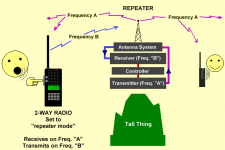
This is why when you use a small walkie talkie outside you lose signal:
1000015772.png
This proble is solved by using a repeater - a tower antenna thar repeats and extends the signal.

This is what mesh networking does. The solution is designed to deploy at fast pace in poor countries following a disaster to provide emergency communication, not replace them.

The endurance problem can be solved by replacing stock batteries of the quads - providing between 4-6 hours operation per node.

Again this concept is to provide emergency communication - not replace the entire infrastructure.
 
Yes the problem comes with LOS (line of sight). Signals break up when they hit a tall building or mountain over long distances.

Plus the further you are from the signal base station the slower your D/S downstream speed will be.

This is why when you use a small walkie talkie outside you lose signal:
View attachment 188587
This proble is solved by using a repeater - a tower antenna thar repeats and extends the signal.

This is what mesh networking does. The solution is designed to deploy at fast pace in poor countries following a disaster to provide emergency communication, not replace them.

The endurance problem can be solved by replacing stock batteries of the quads - providing between 4-6 hours operation per node.

Again this concept is to provide emergency communication - not replace the entire infrastructure.
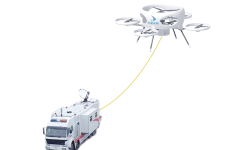
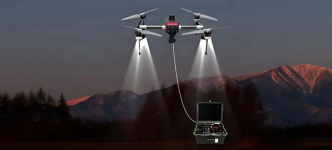
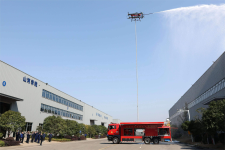
Chinese emergency response agencies frequently utilize a type of tethered multi-rotor drone. This aircraft is capable of sustained flight over extended periods. Currently, it can be equipped with various payloads—such as communication systems, lighting fixtures, and surveillance equipment—and can even be fitted with fire hoses to assist in extinguishing fires in high-rise buildings.

Essentially, the multi-rotor drone is connected to the ground via a cable, through which ground-based equipment supplies power to the aircraft.
1774597718064.png
1774597734339.png
1774597776895.png
 
Chinese emergency response agencies frequently utilize a type of tethered multi-rotor drone. This aircraft is capable of sustained flight over extended periods. Currently, it can be equipped with various payloads—such as communication systems, lighting fixtures, and surveillance equipment—and can even be fitted with fire hoses to assist in extinguishing fires in high-rise buildings.

Essentially, the multi-rotor drone is connected to the ground via a cable, through which ground-based equipment supplies power to the aircraft.
View attachment 188588
View attachment 188589
View attachment 188590
Yes this is exactly the concept im working on 😍
 
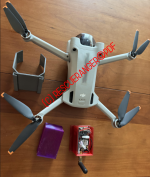
Been a while since this was updated - since the last time we tried the Raspberry Pi 4 testbed, we decided to use the LILYGO T-Beam Supreme (ESP32-S3) and due to weight issues along with some rules surrounding UAV kit registration for flights with the PCAA we decided to settle for a presently registered Dji Magic 3 Pro for continued testing.
1795256692474.png
*Pakistan Civil Aviation Authority UAV drone registration etched on top of drone is blurred to avoid abuse of registration number.

For the terminal after much testing with friends working on the project we decided to drop the old UI which only worked on Windows Machines and opted for opensource Solar_OS:


For the terminal we have tested ESP32 along with a Lillygo communicator.

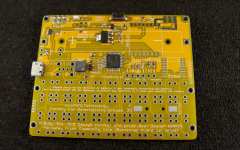
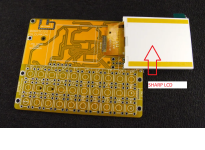
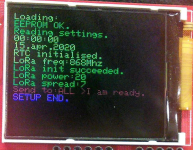
We have also been playing around with building a custom low cost communicator to work with the Mesh and node based on the schematics provided by Corvus.
1795258553934.png
1795258620974.png

1795258652066.png
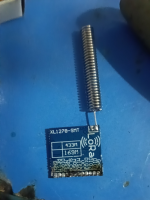
Tested using 868Mhz module - replacing it with 433mhz lora-sx1278blong range rf wireless module drf1278f was a pain the backside:
1795259032382.png
WHOOPS... :ROFLMAO:
-
Due to regulatory requirements any further testing for FlyNet mesh will require PTA approval which we are working on for Pakistan, our sister project in Nigeria has been very productive and this will open up avenues for aid workers and community first responders to provide emergency mesh communication in large scale disasters where traditional communication networks are compromised or disrupted.
-
More on this hopefully in 2027!
 

Users who are viewing this thread

Back
Top