Navigation
Install the app
How to install the app on iOS
Follow along with the video below to see how to install our site as a web app on your home screen.
Note: This feature may not be available in some browsers.
More options
Style variation
You are using an out of date browser. It may not display this or other websites correctly.
You should upgrade or use an alternative browser.
You should upgrade or use an alternative browser.
Chinese Aircraft Carriers - Liaoning, Shandong, Fujian and the future
- Thread starter SiliconBit (silicon0000)
- Start date
More options
Who Replied?


Beijingwalker
VIP Member

China’s First Nuclear-Powered Aircraft Carrier Will Challenge US Sea Power
FEB 25, 2026 AT 03:00 AM EST
By Micah McCartney
New satellite imagery obtained by Newsweek shows work advancing on China’s fourth aircraft carrier, with defense analysts increasingly convinced the vessel will be nuclear-powered — a step that would give it far greater range, endurance and sustained speed than its conventionally powered predecessors.
China already possesses the world’s largest navy by hull count and is launching major warships at roughly three times the rate of the United States.
A nuclear carrier would mark a major milestone in President Xi Jinping’s drive to build a “world-class military” by mid-century, and would place China in a club occupied by only two other nations: the U.S., which operates 11 nuclear carriers, and France with its Charles de Gaulle.
What the Imagery Shows
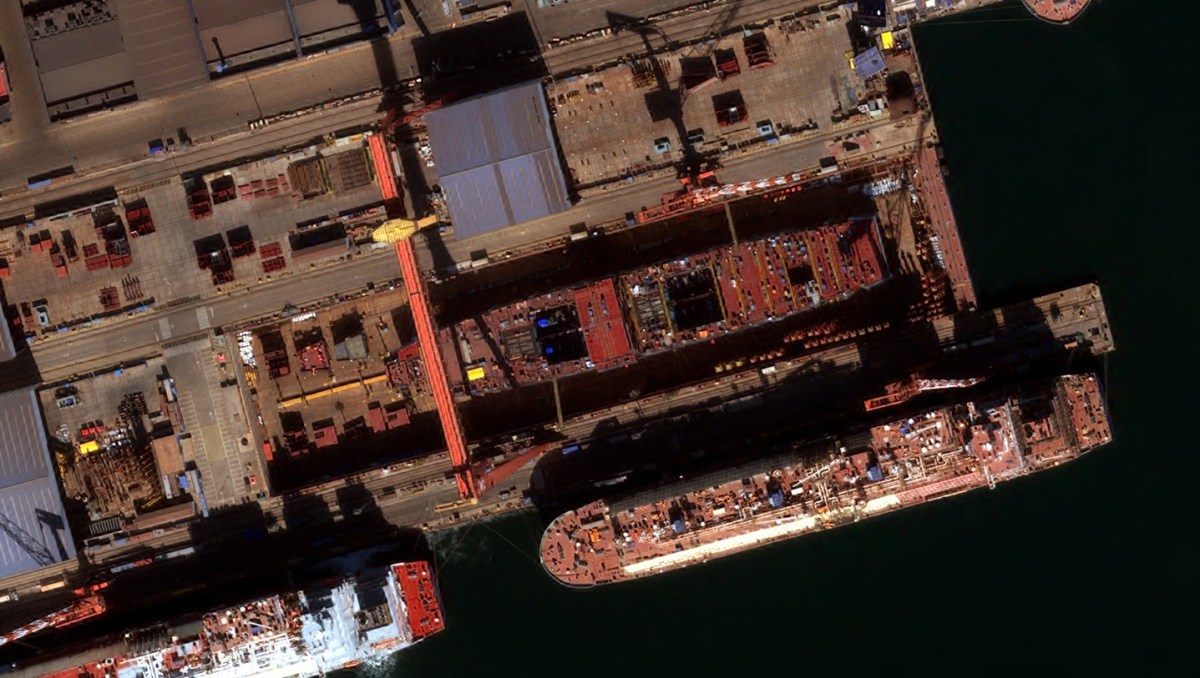
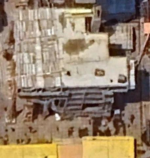
The vessel, known publicly as the Type 004, is under construction at the Dalian shipyard in Liaoning province. Recent imagery suggests work is shifting from basic hull assembly to engine rooms and features analysts believe are intended for nuclear reactors.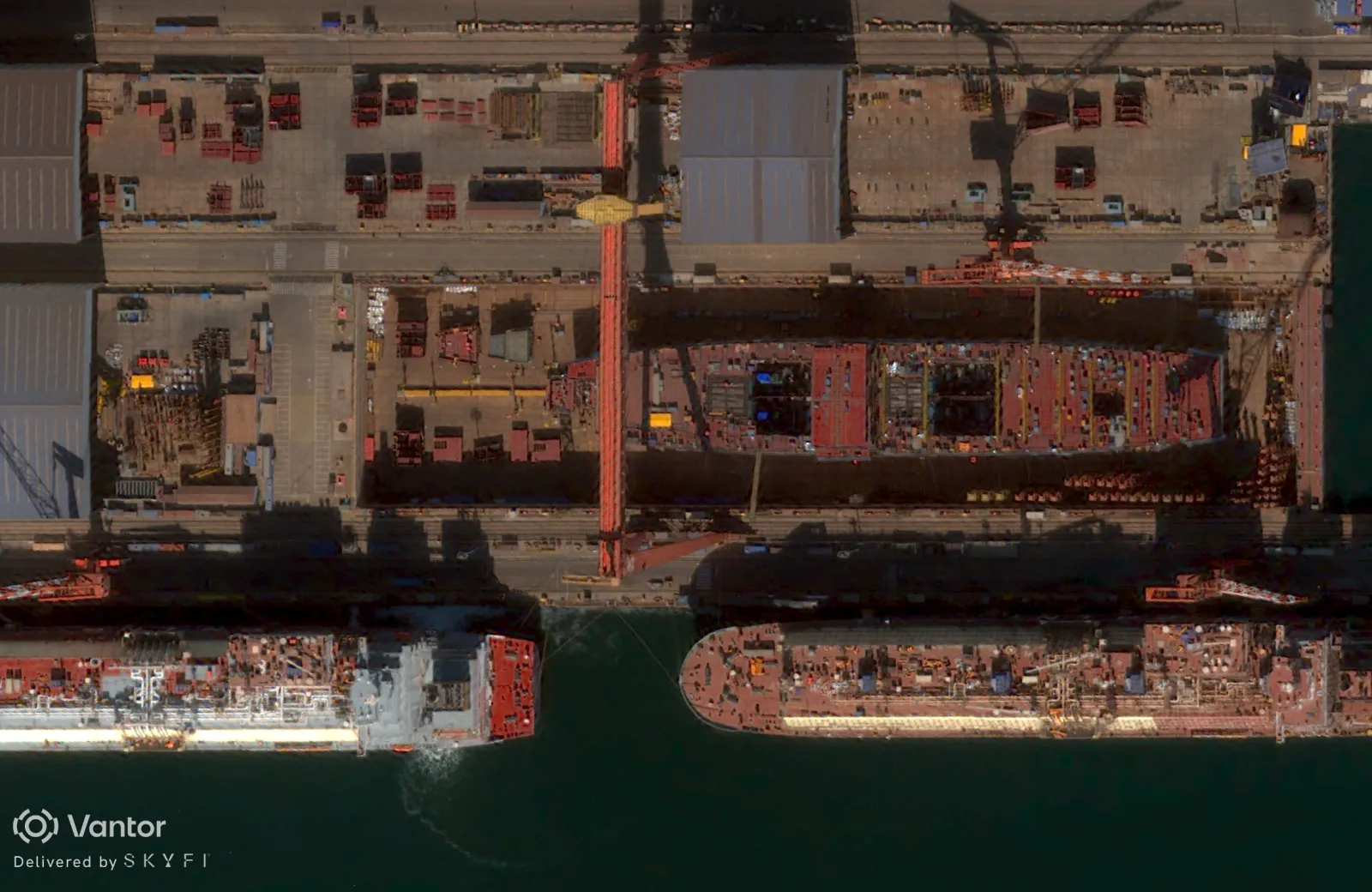
Satellite imagery provided by SkyFi shows the construction on the Type 004 aircraft carrier in Dalian, China, on February 17, 2026. | Powered by Vantor. Delivered by SkyFi
In February 17 satellite photos provided by SkyFi, what appear to be two shielded reactor compartments and as many as four engine rooms are visible inside the hull, according to Tom Shugart, a former U.S. Navy submariner and adjunct senior fellow at the Center for a New American Security.
“It increases my confidence that this will be a nuclear-powered carrier—to the point that I’d call it extremely likely,” Shugart said, noting similarities to early construction images of the U.S. Navy’s Ford-class carriers, which use two reactors.
He pointed to parallels with the USS Enterprise, which has two reactors and four shafts. Based on build sequencing visible in the images, Shugart said the Type 004 appears roughly where Enterprise was about two years into construction.
Frederik Van Lokeren, a former Belgian naval officer and independent defense analyst, reached a similar conclusion. He pointed to a raised rectangular section between two large square openings in the hull — one believed to be an engine room, the other likely reserved for reactor containment.
“I am very confident that this vessel will be nuclear powered and that the two large openings will be where the reactor containment units go,” he said. He also noted indications that China may have acquired turbines capable of handling higher steam pressures than those believed to power the Type 003 carrier Fujian, another potential sign the ship is designed for nuclear propulsion.
Chinese shipyards also tend to build faster than their U.S. counterparts, Van Lokeren said. While fitting out engine rooms and installing reactor containment will take months, those steps would likely come before completion of the upper hull and flight deck.
Strategy and Prestige
The Fujian, China’s first indigenously designed and most advanced carrier to date, entered service in November. U.S. defense officials believe China plans to field a total of nine within a decade.Chinese officials have not confirmed whether the Type 004 will be nuclear-powered.
“The future development plans for China’s aircraft carriers will be comprehensively considered based on national defense needs,” Liu Pengyu, spokesperson for China’s Embassy in Washington, D.C., previously told Newsweek, adding that China’s military modernization is not directed at any third party.
Analysts say the expansion is about both military capability and national prestige.
Collin Koh, senior fellow at Singapore’s Institute of Defence and Strategic Studies, said the buildup fits Beijing’s long-term shift from a near-seas “green-water” navy to a “blue-water” force capable of sustained operations beyond the First Island Chain — a line of U.S.-aligned territories and partners that Washington sees as key to containing the People’s Liberation Army Navy in a regional conflict.
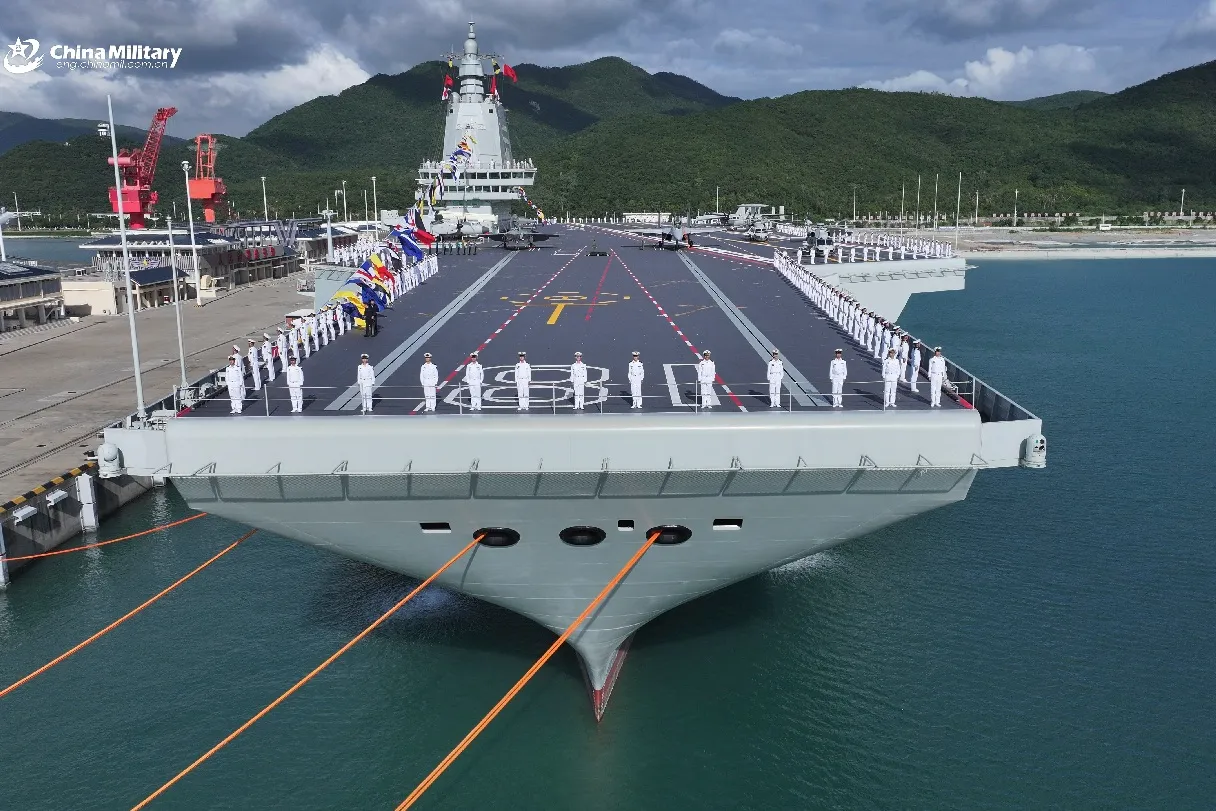
Sailors man the rails during the commissioning ceremony for China's third aircraft carrier, the CNS Fujian, in Hainan Province on November 5, 2025. | Chinese Defense Ministry
The trajectory echoes a three-step maritime vision laid out decades ago by Adm. Liu Huaqing, who led the PLA Navy in the 1980s. The later phases envision pushing operations to the Second Island Chain and eventually boasting a carrier force with global reach comparable to that of the U.S. Navy.
Yet the buildup comes at a time when aircraft carriers face losing relevance in the face of drone swarms and hypersonic missiles—technologies China itself has invested heavily in as part of its anti-access/area-denial strategy.
“To be sure, Chinese thinkers have long recognised the threat posed to aircraft carriers,” Koh said. “But this doesn’t appear to have weakened what they see as a strategic requirement for future campaigns. Some argue that, despite the threat environment, effective countermeasures can be developed.”
Then there's the matter of status. "Aircraft carriers remain the lynchpin of naval power,” Koh said, “which in turn anchors sea power in the broader strategic sense.”
Newsweek reached out to China's Defense Ministry by email with a request for comment.
SkyFi is a self-service Earth Intelligence platform that allows users to run built-in geospatial analytics, task satellites, and access archived imagery.
China’s first nuclear-powered aircraft carrier will challenge US sea power
China hopes to field a total of nine carriers within the decade, the Pentagon believes.
 www.newsweek.com

Michael
VIP Member
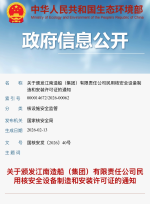
Jiangnan Shipyard obtained a license for the manufacture and installation of civilian nuclear safety equipment on February 13, 2026.
==============================================
Please note: This is a license for a civilian nuclear facility. Licenses for military nuclear facilities are not publicly disclosed.
Based on this news, we can make some further analyses:
1. Jiangnan Shipyard obtained a license for a military nuclear facility a long time ago.
2. They are likely to mass-produce nuclear-powered ships (both military and civilian), reducing the cost and maintenance of this high-end power system to an extremely low level.
==============================================
Please note: This is a license for a civilian nuclear facility. Licenses for military nuclear facilities are not publicly disclosed.
Based on this news, we can make some further analyses:
1. Jiangnan Shipyard obtained a license for a military nuclear facility a long time ago.
2. They are likely to mass-produce nuclear-powered ships (both military and civilian), reducing the cost and maintenance of this high-end power system to an extremely low level.
Via HailingTX20/SDF:
„Apparently, the red circle marks the location of the first overhang(flare). It looks like the flight deck sponsons are finally starting to take shape. We'll probably get better pictures soon:“
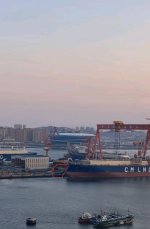
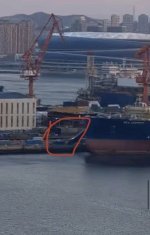
„Apparently, the red circle marks the location of the first overhang(flare). It looks like the flight deck sponsons are finally starting to take shape. We'll probably get better pictures soon:“
ChineseTiger1986
Registered Member

Jiangnan Shipyard obtained a license for the manufacture and installation of civilian nuclear safety equipment on February 13, 2026.
View attachment 182141
==============================================
Please note: This is a license for a civilian nuclear facility. Licenses for military nuclear facilities are not publicly disclosed.
Based on this news, we can make some further analyses:
1. Jiangnan Shipyard obtained a license for a military nuclear facility a long time ago.
2. They are likely to mass-produce nuclear-powered ships (both military and civilian), reducing the cost and maintenance of this high-end power system to an extremely low level.
This is for the certification of the 24000 TEU with the thorium based molten salt reactor.
Because China is absolutely serious about using the MSR + CO2 generator for the next-gen supercarrier, and the civilian 24000 TEU will first serve as a test bed for this new propulsion technology.
ChineseTiger1986
Registered Member
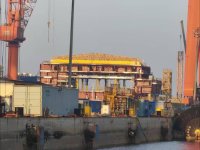
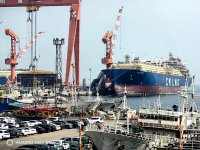
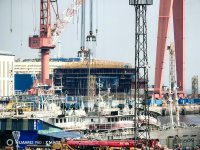
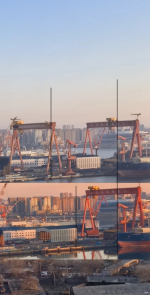
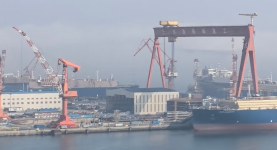
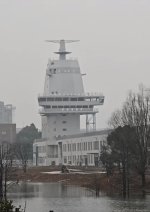
According to China Shipbuilding Industry Group Power, the EMALS of Fujian is powered by gas turbines as the indispensable integrated part of its DC system.



Beijingwalker
VIP Member
The nuclear propulsion of the Chinese Type 004 aircraft carrier is becoming
ByFabrice Wolf
March 31, 2026
https://meta-defense.fr/en/2026/03/31/type-004-porte-avions-nucleaire-dalian/
Satellite images of the construction of China's future Type 004 aircraft carrier by the Dalian shipyards in February 2026 showed two armored reactor compartments and a structure resembling a containment structure inside the ship's hull, supporting the hypothesis of a nuclear-powered aircraft carrier.
Following on from the Fujian, a Type 003 aircraft carrier equipped with three EMALS electromagnetic catapults, these observations reinforce the hypothesis of a new capability and technological leap underway in this area, for the naval industry but also the Chinese Navy, potentially giving it, if the facts are indeed confirmed, just how quickly the technological and capability gap with the US Navy is narrowing.
The aircraft carrier Fujian validates the CATOBAR transition of China's naval air arm
The transition from the STOBAR standard (ski jump + arresting wires) to the CATOBAR standard (catapults + arresting wires) with the arrival of the Fujian in the summer of 2025 has enabled the Chinese carrier air group to use heavier platforms and support much more intense activity, marking a clear leap in capability and potentially placing the Chinese Navy at the level of the only two navies still possessing these skills, the US Navy and the French Navy.The Fujian's sea trials in spring 2024 validated this ramp-up, with catapult launches and high-rate landings of the three main fixed-wing aircraft of the Chinese Air Force: the J-15T heavy fighter-bomber, the J-35 stealth multirole medium fighter, and the KJ-600 forward air surveillance aircraft. This transition now provides a technical and doctrinal foundation on which the next Chinese aircraft carrier could be designed, in continuity and without doctrinal break.
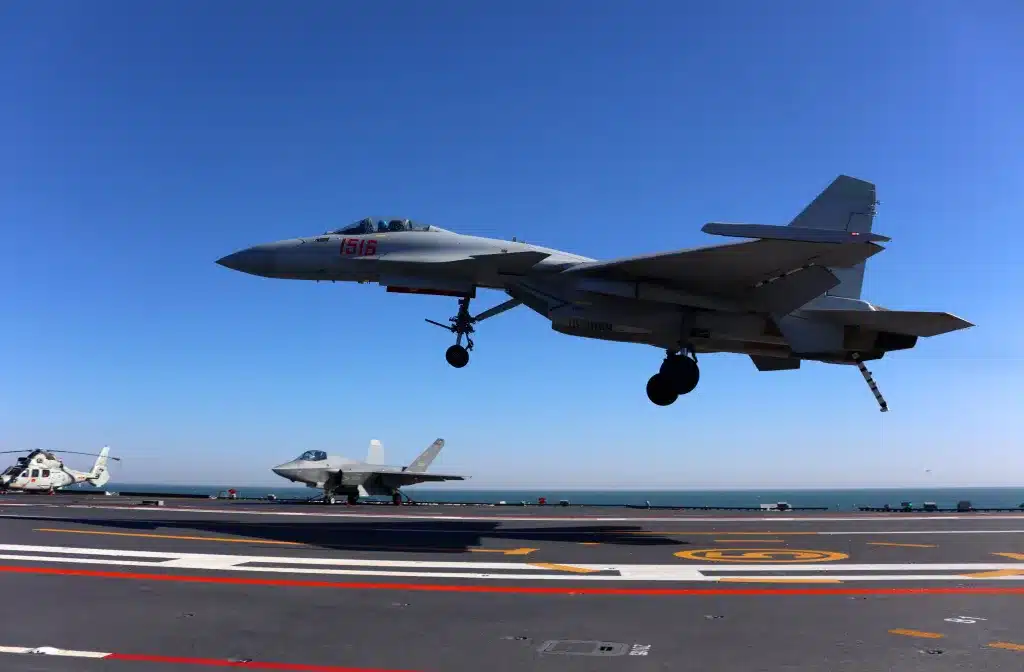
Le Type 003 Fujian aircraft carrierIt therefore serves as a benchmark for capability in this historic category change, with three electromagnetic catapults, an expanded flight deck, and fully electric propulsion, very close to nuclear propulsion, but with electricity generated by thermal turbines. The ship approaches or exceeds 85,000 tons and carries nearly fifty aircraft, with a flight rate of around 120 to 130 air maneuvers per day, 50% to 65% of that of the two STOBAR aircraft carriers already in service with the Beijing fleet.
The Fujian's timeline also sheds light on recent industrial developments, with a launch in June 2022 and official commissioning in November 2025. This sequence has allowed for the acquisition of expertise related to electromagnetic catapults and the expanded flight deck. It establishes the CATOBAR as the new standard for the Chinese Navy and prepares for the arrival of a new ship by reusing all the components already mastered, from deck layout to deployment procedures and the logistical flows of sustained air operations.
While the Fujian represents a considerable advance in capability, technology, and doctrine, it suffers from a significant, if not insurmountable, weakness. Indeed, as previously mentioned, the Fujian's propulsion system is conventional, necessitating very frequent refueling at sea and reducing the internal volume available for storing aviation fuel, munitions, and spare parts. The long-term reliability of the electromagnetic catapults and arresting wires also needs to be confirmed, with the initial availability risk falling short of the theoretical potential. These factors guide the priorities of the future aircraft carrier, starting with range and sustainability.
Observations from the Dalian shipyards reinforce the hypothesis of nuclear propulsion for the Type 004
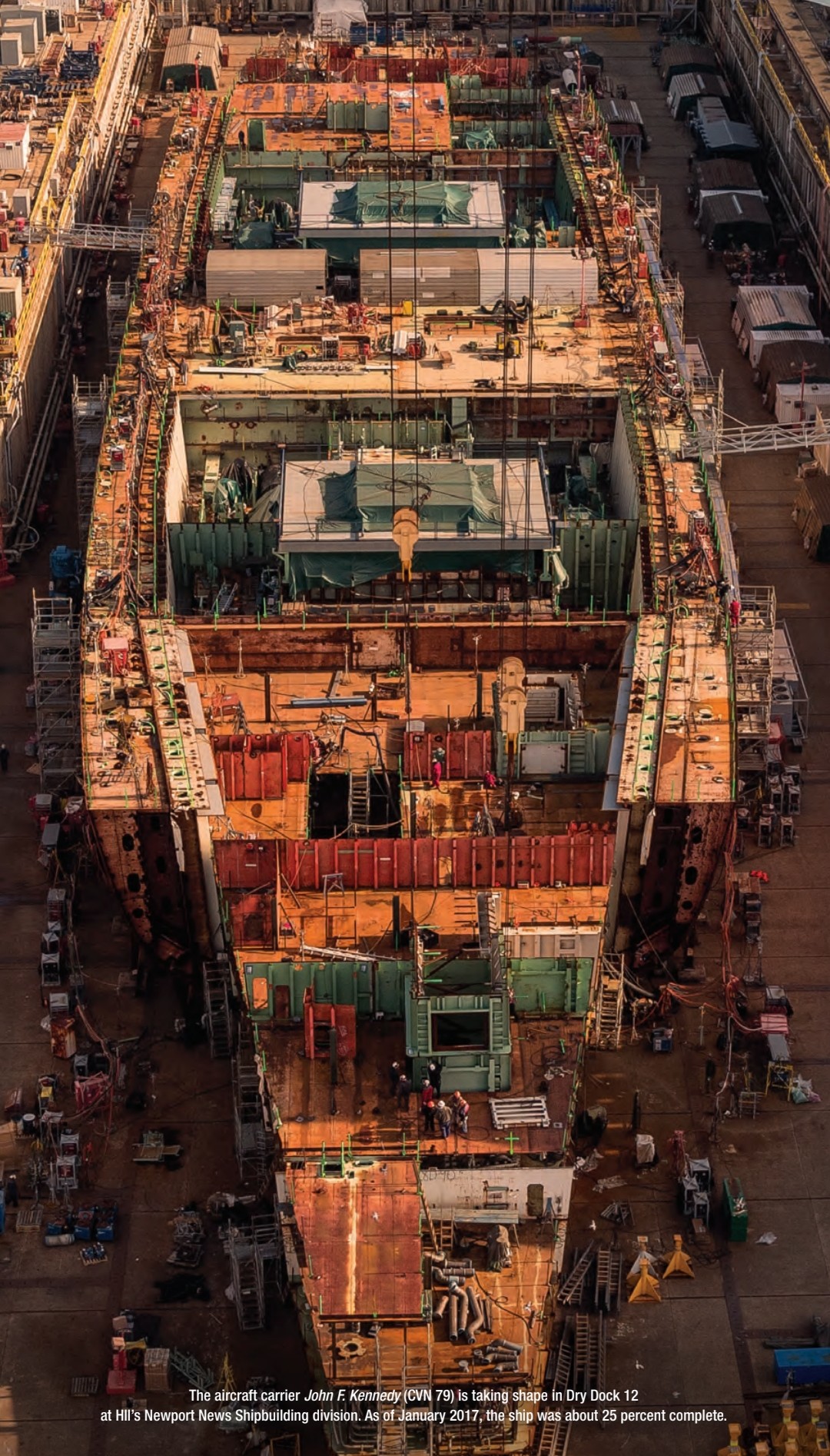
It is precisely this nuclear propulsion, which could give the future Chinese aircraft carrier increased military capabilities, that is now the focus of intense attention from Western navies and intelligence services. However, images captured on February 17, 2026, by SkyFi show precisely that internal components of the future Type 004They reveal what appear to be two armored reactor compartments and several engine rooms at the heart of the hull under assembly. These physical clues, consistent with naval reactor propulsion, significantly strengthen the likelihood of a nuclear option for the ship.A new series of images, photographs, and satellite views, published this week, also highlights a central structure resembling a nuclear containment vessel. Its position at the heart of the hull in Dalian provides strong evidence of unconventional propulsion. It reinforces the interpretation drawn from the sections already visible, linking the internal layout of the compartments and sections to the likely placement of two independent and protected propulsion blocks.
A partial official signal emerged in March 2026 when Political Commissar Yuan Huazhi confirmed, for the first time, the construction of a fourth aircraft carrier, without specifying its propulsion system. This announcement coincided with the release of new satellite images by an international media outlet in late February, showing visible progress on the hull. Lacking official details on the propulsion system, the imagery and cross-referencing guide interpretations while awaiting more precise information.
Meanwhile, open-source analyses have suggested the installation of turbines based on images circulating on social media, an observation that remains unconfirmed and open to interpretation. Other reports from February mentioned the construction of new sections, including the bow and the volumes intended for the side hangars, consistent with the acceleration visible in commercial images since the end of summer. Overall, this outlines a clear construction trajectory, despite the still incomplete technical details.
The nuclear propulsion of the Chinese Type 004 aircraft carrier is becoming more evident
Satellite images of the construction of China's future Type 004 aircraft carrier by the Dalian shipyards in February 2026 showed two armored reactor compartments and a structure resembling a containment structure inside the ship's hull, supporting the hypothesis of a nuclear-powered aircraft...
 meta-defense.fr
Beijingwalker
VIP Member
China’s Aircraft Carriers Have a ‘Missile Shield’ the U.S. Navy Can’t Crack
Published April 1 2026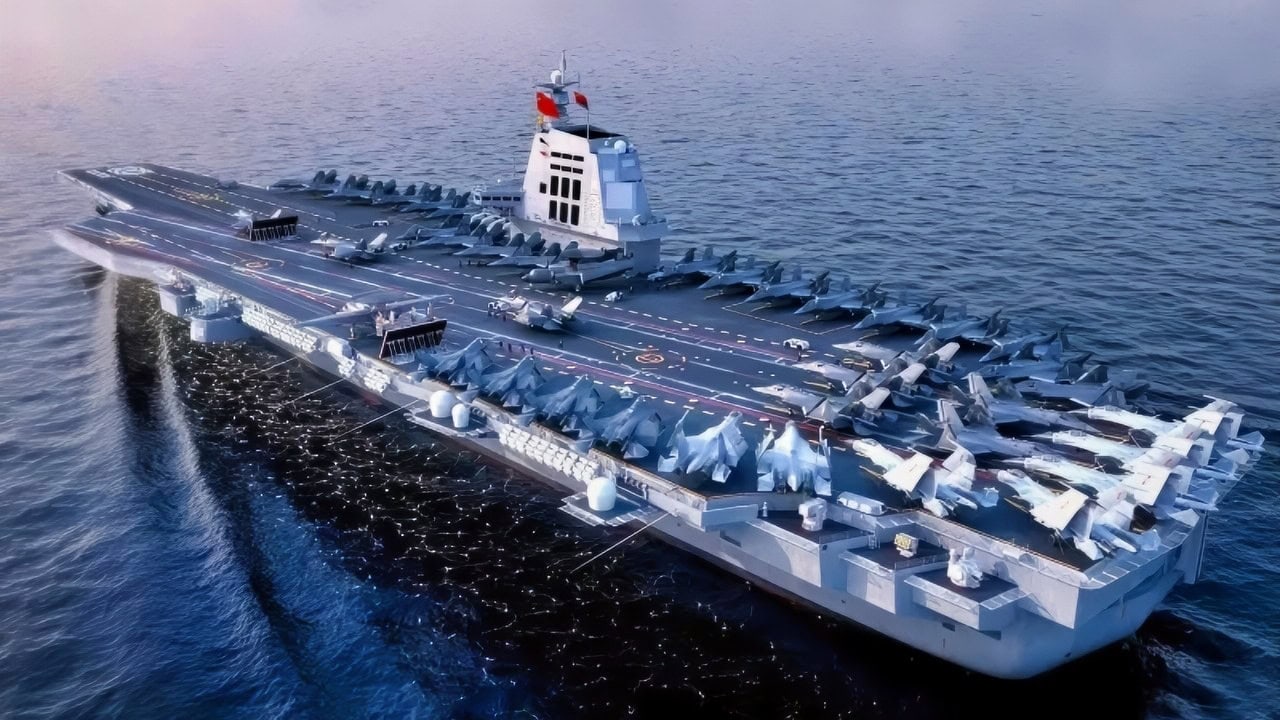
China Aircraft Carrier Mock Up Image.
The Chinese Navy’s Aircraft Carriers Are Backed Up By Missiles; The U.S. Navy Has a Clear Challenge To Deal With
The People’s Republic of China (PRC) issues a warning to the United States Navy: you are not allowed to challenge the First Island Chain, which includes territories from Kamchatka through Japan and Taiwan down to the Philippines.The Message from Beijing: Keep Out of the First Island Chain
China has developed a smart defensive strategy that combines favorable geography, missile saturation through anti-access/area-denial (A2/AD) tactics, and a cheaper, risk-tolerant carrier approach. Unlike the United States Navy, however, China has not made the carrier the centerpiece of its naval warfare strategy.Instead, the Chinese have positioned long-range missiles within the A2/AD network across the region as the core of their grand strategy.
The carriers and other elements of the Chinese Armed Forces are simply parts of that larger plan.
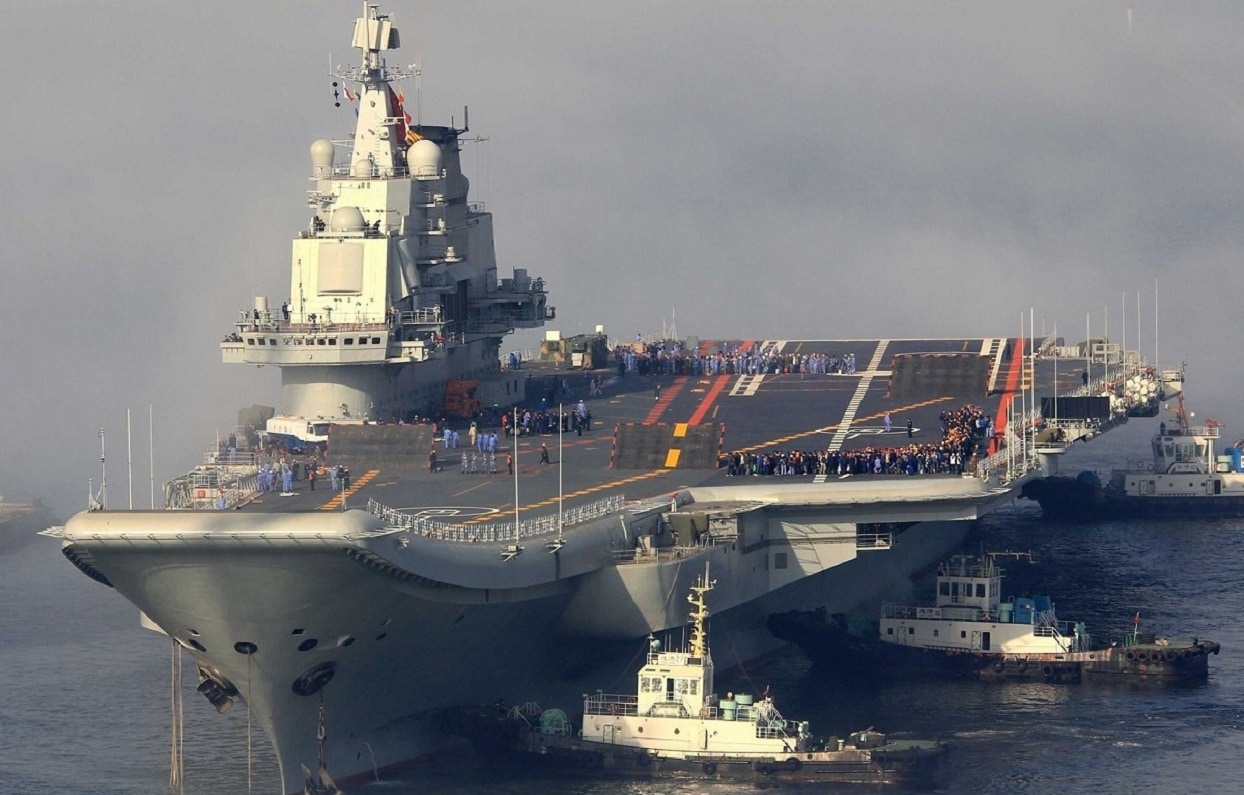
Image: Chinese Internet.
Since the Chinese are likely to fight any major war in their region, that defensive, geographical advantage becomes a key feature of any Chinese war plan when they face off against the Americans and their regional allies.
Essentially, the Chinese military has spent nearly a decade building a defensive A2/AD ring around the First Island Chain.
Geography as a Weapon: China’s Built-In Advantage
Chinese forces have built man-made islands in the South China Sea (SCS).They have expanded their A2/AD network to target areas deep inside the East China Sea, the Sea of Japan, and even threaten US military bases as far as the Second Island Chain with long-range missiles and hypersonic weapons.
If the Chinese People’s Liberation Air Force (PLARF) successfully develops the Xi’an H-20 long-range strategic stealth bomber, China will gain an even greater ability to strike American targets within the Second Island Chain.
So, the A2/AD is a shield or bubble that allows the Chinese Armed Forces to carry out sweeping offensives against perceived enemies within the First Island Chain.
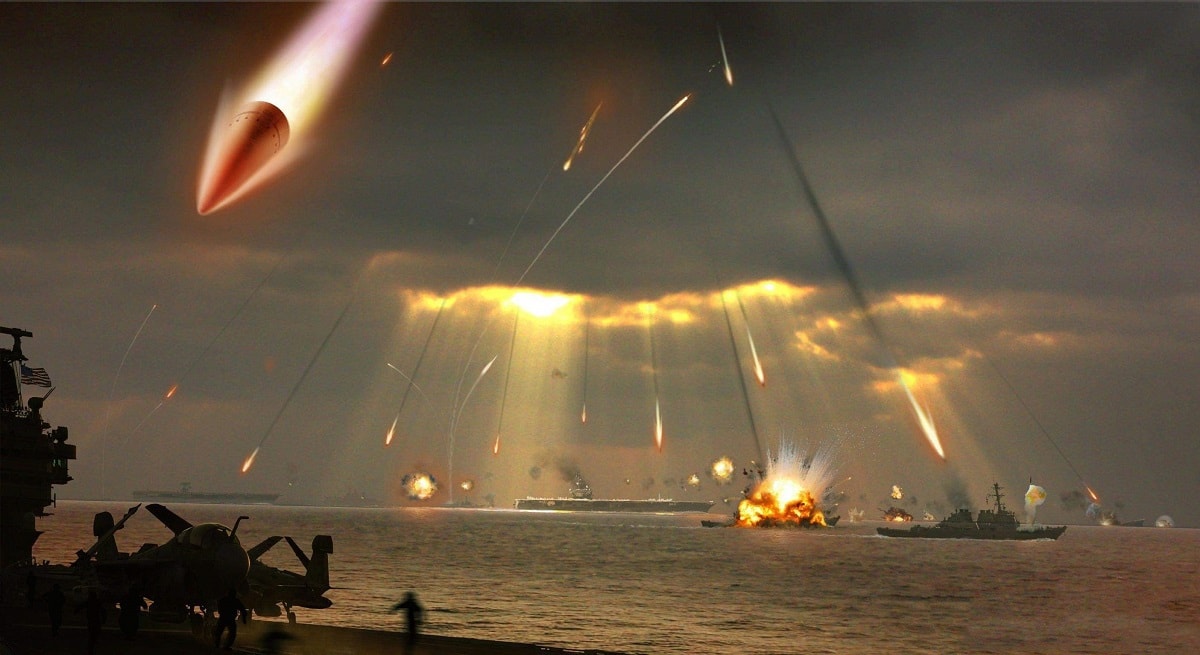
Depiction of Chinese missiles attacking the U.S. Navy. Image: Chinese Internet.
Consider that China and Japan, a key US ally in the Indo-Pacific, were at odds toward the end of last year, with Beijing and Tokyo clashing over China’s claim that Japan was displaying unwanted “renewed militarism.”
The Great “Missile Wall” of China
It got so bad, in fact, that China began posting maps of Japan showing how China’s massive missile arsenal could effectively strangle Japan the same way that the Houthis in Yemen, with their missiles, have been cutting off the Red Sea and the Strait of Bab el-Mandeb for years, or the way Iran today is strangling the Strait of Hormuz. Japan did not back down initially.Although things cooled when it became clear at the start of this year that President Donald Trump would not vociferously support Tokyo.
This was probably because the American president wanted to maintain stable relations with China to secure his highly publicized new trade agreement with Beijing. It was also, however, likely because he fully understood the scale and nature of China’s military threat.
Washington quietly concedes that China’s A2/AD bubble acts as a protective shield, enabling Chinese forces to operate freely and even dominate the First Island Chain—mighty Japan is not immune from the kind of warfare China will impose.
This is especially true for places like Taiwan and even the Philippines.
Safe Inside the Bubble: How China Uses Aircraft Carriers Differently (‘Missile Shield’)
Enter China’s expanding fleet of aircraft carriers.As you can see, China has demonstrated to the world that aircraft carriers are becoming increasingly obsolete thanks to its A2/AD networks. It has left many observers puzzled, trying to understand why the Chinese would invest so much time and money into building their own fleet of advanced carriers if, in fact, the carrier was made obsolete by A2/AD.
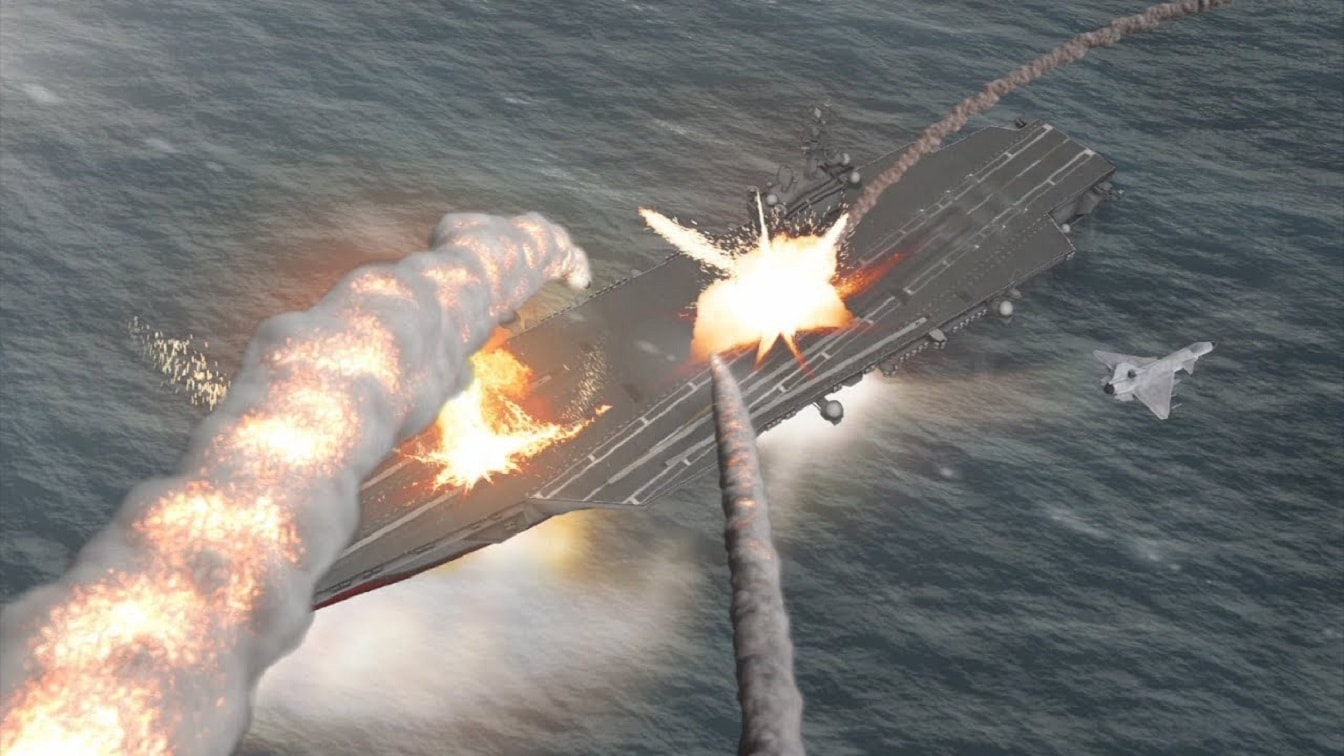
YouTube Screenshot of a Simulation of China Firing a DF-21 ASBM.
Well, the answer is straightforward. Using the carrier as a power-projection tool outside one’s own region’s protective boundaries is irresponsible. Within one’s own area, operating under the shield of a regional A2/AD network, carriers can be quite effective.
While American carriers might struggle to penetrate the Chinese A2/AD bubble surrounding the First Island Chain, within that chain, thanks to those defenses, China’s carriers would theoretically have free rein to impose their will. AKA, the missile shield that allows China’s carriers to dominate a fight, potentially.
In other words, the Chinese have adopted a strategy of denial. Beijing believes that without reliable military support from the United States during a geopolitical crisis, even Japan would find it hard to resist the PRC’s overwhelming force. Any capabilities that advanced countries like Japan, Taiwan, or the Philippines have are not designed for a prolonged war of attrition.
The Grim Reality: America Watching from the Outside
China, on the other hand, is built not just for a war of attrition. China’s military is designed to be protected by a vast and comprehensive A2/AD network that will strike down any defenders and shield Chinese attackers—all while denying those defenders access to their strong American ally.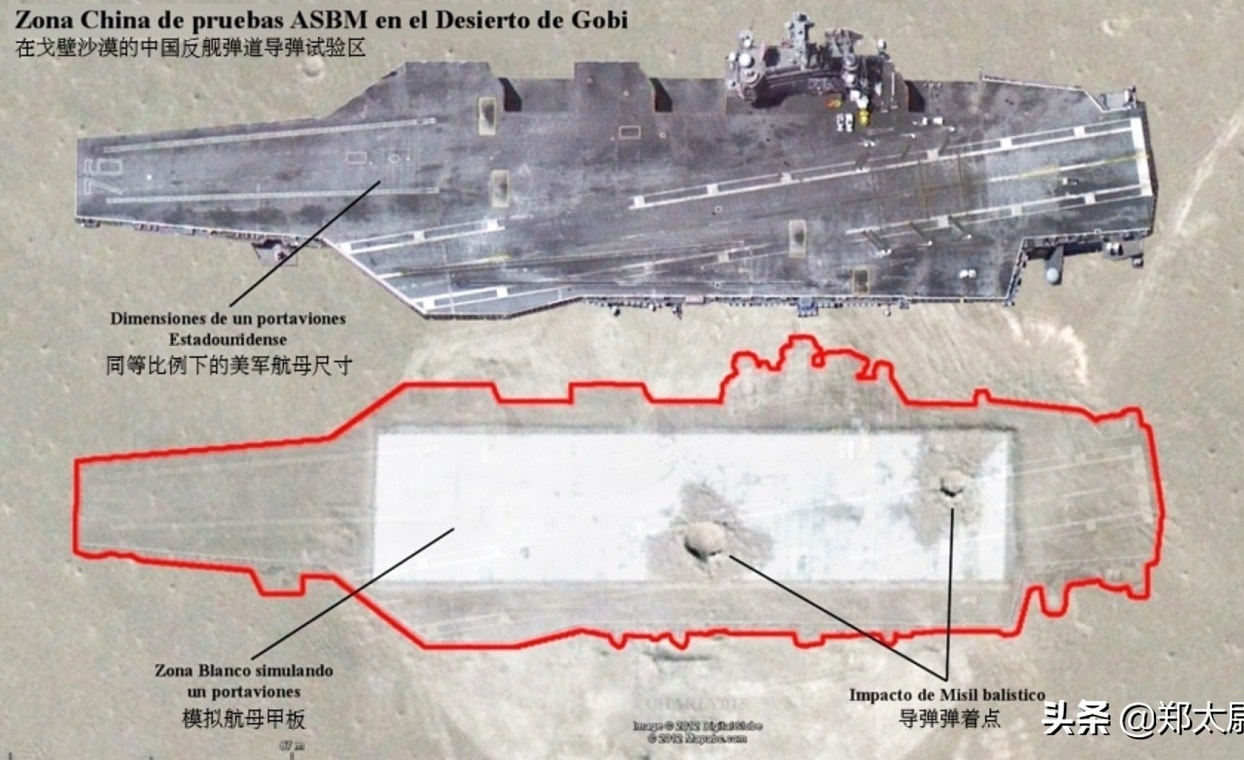
Image from the now closed WantChinaTimes. This shows a mock attack on a U.S. Navy aircraft carrier.
This is called overmatch. Regarding the First Island Chain, China’s A2/AD network provides them with that advantage. Additionally, their carrier force guarantees China’s dominance.
At this point, all the United States can do is watch somewhat helplessly as the Chinese take control of US partners within the First Island Chain.


Users who are viewing this thread
Total: 2 (members: 0, guests: 2)
Pakistan Defence Latest

Country Watch Latest
-
-
 India Races Towards A 200-Ship Fleet By 2035 To Counter China And Pakistan (11 Viewers)
- Latest: Pakistani Dragon
-

-

-
Latest Posts
-

-
-

-
 UK Racism against Muslims and Brown people: Why are blacks in the UK given a free pass by white english racists? (13 Viewers)
- Latest: Wingzero30
-
