People often struggle to understand asymmetric warfare. The common idea of war is simple: you hit the enemy with everything you have, as efficiently as possible, aiming for a quick victory.
Asymmetric warfare works differently. It is based on
lure, lure, and lure again, and only then ambush. The goal is not a quick victory, but to wear down the adversary through attrition, targeting economic, political, and psychological pressure much more than pure military destruction.
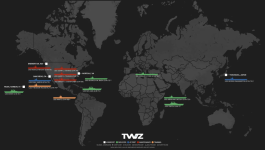
U.S. Navy stationed 700 km off the Iranian coast - Can Iran attack those ships? Yes, it can. Those ships, operating at 700 km, are already at the limit of the F-18’s combat radius, the main aircraft on American carriers.
During the conflict with the Houthis, the Yemenis launched Sayyad/Quds-Z0 missiles with an 800 km range. Today, they already speak of Palestine-2 and Quds-4 versions that easily exceed 1,000 km.
If the Houthi arsenal is essentially Iranian technology, what is the real range of Iran’s anti-ship missiles today? It certainly goes well beyond 700 km.
In conclusion, asymmetric warfare is not a 50-meter sprint. It is a carefully planned marathon. The Iranians know that the critical point is maintaining control over the Strait of Hormuz. That’s why they try to lure the ships closer,
a bait the U.S. Navy has so far refused to take.