Navigation
Install the app
How to install the app on iOS
Follow along with the video below to see how to install our site as a web app on your home screen.
Note: This feature may not be available in some browsers.
More options
Style variation
You are using an out of date browser. It may not display this or other websites correctly.
You should upgrade or use an alternative browser.
You should upgrade or use an alternative browser.
Indian Politics and Internal News
- Thread starter culivert
- Start date
More options
Who Replied?


Sam6536
Registered Member

Market reset: India pulls the plug on Chinese CCTV makers
CP Plus: India enforces a ban on Chinese video surveillance companies like Hikvision and Dahua, transitioning the CCTV market to domestic brands with new certification regulations coming into effect.
 telecom.economictimes.indiatimes.com
I think local Indian servers would've been more preferable but it is what it is.
INS_Vikrant
Registered Member
Its days like these we as a nation should forever be grateful to Vajpayee ji who showed tremendous resolve in making India a nuclear weapon state defying western pressure. Knowing fully well the kind of International backlash and sanctions that would follow.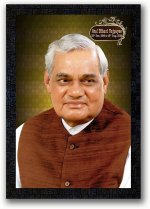

Corax
Trusted Member

I thought it was Indira Gandhi with the "peaceful" nuclear test called "Smiling Buddha".Its days like these we as a nation should forever be grateful to Vajpayee ji who showed tremendous resolve in making India a nuclear weapon state defying western pressure. Knowing fully well the kind of International backlash and sanctions that would follow.View attachment 190957
INS_Vikrant
Registered Member
I thought it was Indira Gandhi with the "peaceful" nuclear test called "Smiling Buddha".
Smiling Buddha nuclear test demonstrated India has acquired the capability to build nuclear weapons however we didn't proceeded to make them due to several geopolitical and economic implications.
vasanthm
SpeedLimited
Nine police officers have been sentenced to death in India over the deaths in custody of a father and son in 2020..
P Jeyaraj, 58, and his son Benicks, 38, both died in jail in the southern state of Tamil Nadu - days after they were detained for allegedly keeping their mobile phone shop open in breach of lockdown rules during the Covid-19 pandemic.
The two men were stripped and ruthlessly assaulted in front of each other, the sentencing judge said on Monday - describing the case as a clear abuse of authority.
"They did this with the intention of killing," he said.
The officers, who were found guilty of murder last month, will be able to appeal against their sentences.
"They attacked unarmed people. They should not be forgiven. They should not be given lesser sentences based on their age or family background. They are all educated," the judge also said of the officers at sentencing.
Ten police officers in total were arrested over the brutal deaths of the father and son but one of the accused died of Covid in 2020.
The case triggered protests in Tamil Nadu, with state opposition lawmakers among those who took to the streets.
Opposition leader Rahul Gandhi and Indian cricket star Shikhar Dhawan were among those who demanded justice for the two men on social media.
The deaths also brought the issue of police brutality in India back into the limelight.
Rights groups say hundreds of people die while in custody in India every year. They point out that torture and abuse to extract confessions from suspects have become part of policing.
Earlier this year, several UN experts called on India to undertake major reforms to modernise policing in line with international human rights standards.
P Jeyaraj, 58, and his son Benicks, 38, both died in jail in the southern state of Tamil Nadu - days after they were detained for allegedly keeping their mobile phone shop open in breach of lockdown rules during the Covid-19 pandemic.
The two men were stripped and ruthlessly assaulted in front of each other, the sentencing judge said on Monday - describing the case as a clear abuse of authority.
"They did this with the intention of killing," he said.
The officers, who were found guilty of murder last month, will be able to appeal against their sentences.
"They attacked unarmed people. They should not be forgiven. They should not be given lesser sentences based on their age or family background. They are all educated," the judge also said of the officers at sentencing.
Ten police officers in total were arrested over the brutal deaths of the father and son but one of the accused died of Covid in 2020.
The case triggered protests in Tamil Nadu, with state opposition lawmakers among those who took to the streets.
Opposition leader Rahul Gandhi and Indian cricket star Shikhar Dhawan were among those who demanded justice for the two men on social media.
The deaths also brought the issue of police brutality in India back into the limelight.
Rights groups say hundreds of people die while in custody in India every year. They point out that torture and abuse to extract confessions from suspects have become part of policing.
Earlier this year, several UN experts called on India to undertake major reforms to modernise policing in line with international human rights standards.



Master Chief
Trusted Member
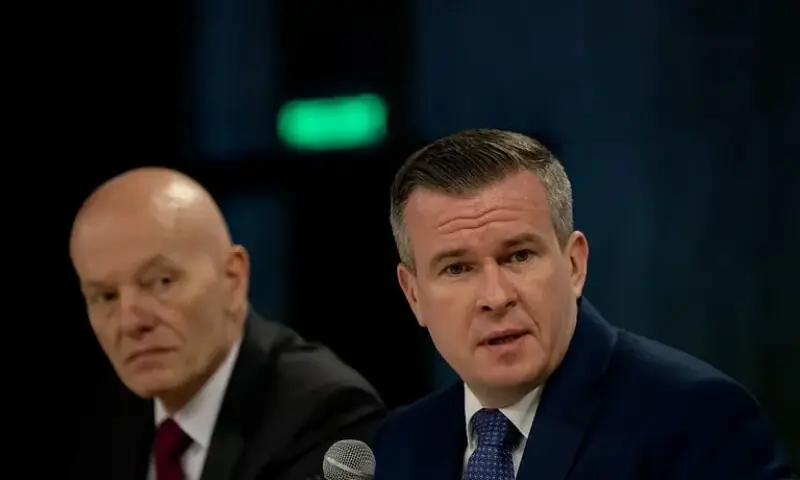
World Anti-Doping Agency targets India’s performance-enhancing drugs production
India’s National Anti-Doping Agency (NADA) collected 7,113 urine and blood samples out of which 260 tested positive in 2024 says WADA.
www.dawn.com
It's worse than you think.
There is a cottage industry churning out drugs cheats in this nation, with big pharma providing the lead point for a tidy little supply chain.
No surprise the Secular Republic of India has provided world sports with the HIGHEST ANNUAL NUMBER OF DRUGS CHEATS for 3 years running.
Neojinnah
Registered Member

Political turmoil in Indian border state as nine million lose voting rights
Snigdhendu BhattacharyaKolkata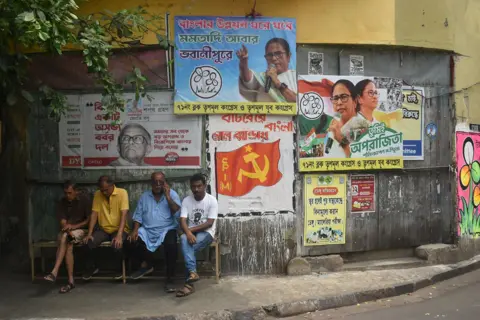
Sudipta Das / NurPhoto via Getty Images
Parties have been campaigning ahead of the upcoming West Bengal Legislative Assembly Election in West Bengal
Muhammad Daud Ali, a former Indian army technician, recently discovered that he was no longer a voter in his home state of West Bengal.
His name - and those of his three children - had been struck off the electoral rolls despite valid documents, including his passport and service records. Only his wife remained on the list.
Ali, 65, and his children are among nine million voters - about 12% of West Bengal's 76 million electorate - who have been removed from the 2026 rolls as part of the Special Intensive Revision (SIR) exercise. Voting to elect a new state government will take place later this month in this eastern Indian state.
Of these nine million, more than six million names were struck off as absentee or deceased voters, while the fate of another 2.7 million - including families like Ali's - remains undecided and will be determined by tribunals.
Thirteen states and federally-administered territories have undergone the SIR process so far, but West Bengal is the only one where it was followed by an additional layer of special adjudication.
India's Election Commission says the revision is meant to weed out duplicate or outdated entries and add genuine voters. But the exercise has been mired in controversy and faced legal challenges ever since it was first held in the state of Bihar last year.
It has become particularly contentious in West Bengal, where the ruling Trinamool Congress party (TMC) is locked in a bitter standoff with the poll body.
Gyanesh Kumar, the chief election commissioner, has said the revision exercise's aim is to ensure a "pure electoral roll" with no eligible voters excluded and no ineligible persons included.
The tensions have been fuelled by remarks from political leaders, including from Prime Minister Narendra Modi, who have suggested in campaign speeches that the clean-up is aimed at identifying so-called "illegal Bangladeshi infiltrators" - a term the TMC says is being used to refer to Muslims. However, many Hindu voters have also been left out from the list.
India shares a 4,096km (2,545-mile) largely porous and partly riverine border with Bangladesh and a significant stretch of it runs through West Bengal. This has added a fraught political edge to debates over migration and voter rolls in the state.
West Bengal is also home to India's second-largest Muslim population, accounting for roughly 14% of the country's 172 million Muslims, according to the 2011 census.
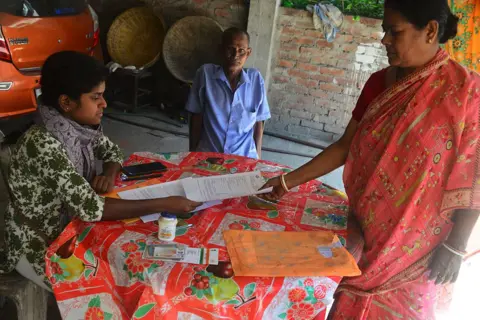
Nine million voters - about 12% of West Bengal's 76 million electorate - have been removed from the 2026 rolls
Home to more than 70 million voters, the state has been governed by Chief Minister Mamata Banerjee's TMC since 2011, with Modi's Bharatiya Janata Party (BJP) as its main challenger.
With the fourth-highest number of India's parliamentary seats, West Bengal remains a key prize the BJP has yet to win. In the 2021 assembly polls, it secured about a quarter of the state's 294 seats.
Banerjee's party alleges the roll revision exercise has disenfranchised millions - particularly Muslims - to benefit the BJP, a charge both the party and the Election Commission deny.
After repeated legal challenges, the Supreme Court allowed the Election Commission to proceed with the April polls without settling all disputes over the deletions. As a result, the fate of 2.7 million voters remains undecided.
Their cases lie at the heart of the controversy.
These voters had submitted enumeration forms linking them to the 2002 electoral roll - widely regarded as the last "clean" list.
Yet the poll panel used a new, AI-driven process to flag what it called "logical discrepancies" in their records, treating them as doubtful voters.
Despite subsequent re-verification, people like Ali were excluded.
Constituency-wide data compiled by political parties suggests that around 65% of the 2.7 million in limbo are Muslims.
Overall, Muslims account for 3.11 million - about 34% - of the nine million removed, significantly higher than their 27% share in West Bengal's population, according to the 2011 census.
Ali and his children must now approach a tribunal set up on the Supreme Court's direction. But with the rolls frozen and elections due later this month - on 23 and 29 April - they see little chance of restoring their voting rights in time.
"I am dumbstruck. I feel deeply hurt and insulted. How can they conduct the elections without solving our disputes? I simply have no idea who to seek justice from," Ali told the BBC.
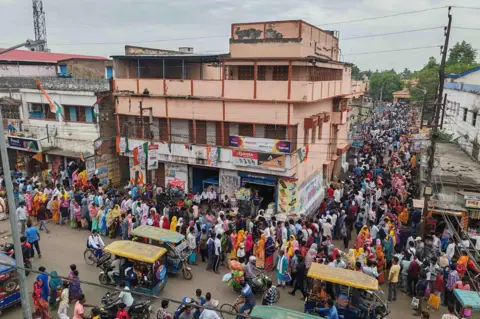
People queue up to submit papers during the revision exercise in Birbhum district
The deletion of such a large number of names has sharpened concerns over errors, exclusion risks and the criteria used to determine "valid" voters.
"There is no example of an election happening in India with voters' rights remaining suspended," said political scientist Sibaji Pratim Basu.
He says leaving out 2.7 million voters is such an "absurd proposition".
"This is a shame for democracy," he added.
But federal minister Sukanta Majumdar, a BJP leader from the state, says the revision exercise was necessary in the national interest.
"The constitution says only Indian citizens can choose prime ministers and chief ministers. Therefore, purging non-citizens was important," he told the BBC.
Asked about elections taking place while the status of 2.7 million voters remains unresolved, Majumdar blamed the state government, alleging it had "slowed the process" by taking the matter to the Supreme Court. He also dismissed allegations that the poll panel was favouring the BJP.
The impact of the overall revision has been uneven, with sharp cuts in some urban pockets in the state.
In the state capital, Kolkata city, nearly 29.6% of voters were struck off the rolls in the north and 27.5% in the south - among the highest rates in the state.
Paschim Bardhaman district saw the second-highest drop, with the electorate shrinking 16.9%. About 80% of those deleted are Hindus, many from Hindi-speaking communities with roots in northern India.
Border districts with Bangladesh - North 24-Parganas, Nadia, Murshidabad, Malda, Uttar Dinajpur and Cooch Behar - also saw heavy deletions.
North 24-Parganas alone lost 1.26 million voters (15%), with most deletions mirroring its Hindu-majority profile.
Murshidabad, India's most Muslim-populous district, saw 749,000 names (13%) struck off, broadly reflecting its demographics.
These border districts have become the epicentre of the controversy, where most exclusions occurred in the final phase - under the "logical discrepancy" category.
Muslims bore the brunt in districts like Murshidabad and Malda, while Dalit Hindus - especially from the Bangladeshi migrant Matua community - were hardest hit in North 24-Parganas and Nadia.
In the central Indian state of Madhya Pradesh, too, large numbers were flagged under "logical discrepancy". But with no elections due until 2028, voters there have more time to resolve their status.
The issue has since eclipsed almost every other campaign theme.
At her election rallies, Banerjee said she would petition the Supreme Court of India again.
"How can the elections start without solving the cases of 2.7 million voters?" she asked.
On Friday, the court said they would hear the case on 13 April, offering a narrow and uncertain window for relief.
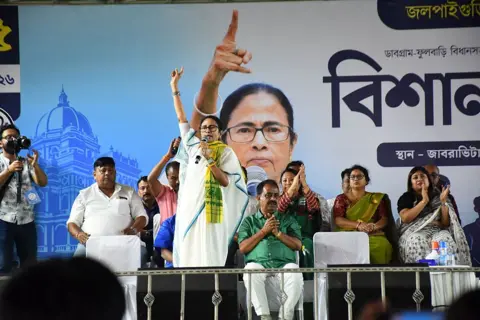
Mamata Banerjee alleges the roll revision exercise has disenfranchised millions - particularly Muslims
Mukulika Banerjee, an anthropologist at the London School of Economics, says the pattern of exclusion in West Bengal indicates that certain categories of the population may have been "selectively targeted".
Banerjee says voting is not just a procedural right but a deeply meaningful act - especially for marginalised communities.
"By denying them their right to vote, one takes away one of their fundamental rights, and one that is hugely meaningful to them and allows them to assert their voice."
She recalls a voter in West Bengal's Sundarbans telling her: "If we don't vote, no-one will even bother to remember that poor people exist."
In Harishchandrapur, a constituency in Malda district along the Bangladesh border, 35-year-old Hasnara Khatun is furious.
"I am very angry," she says, adding that her father, grandfather and great grandfather have been voters.
Now, five of the seven members of their family have their voting rights suspended.
"We have been effectively turned into non-citizens. Who knows what comes next?
"The system can't be trusted anymore. Therefore, the legal battle will go on, but we won't stop protests either," says Khatun.
Snigdhendu Bhattacharya is a Kolkata-based independent journalist
Neojinnah
Registered Member
Killer of Graham Staines and sons released to hero’s welcome in India
By Morning Star News Apr 24, 2025 10:09 EDT 8 mins read
One of the Hindu extremists sentenced to life in prison for burning Australian missionary Graham Staines and his two young sons to death in India 25 years ago was given a hero’s welcome after he was released on April 16.
Mahendra Hembram walked out of Keonjhar jail last week, freed by the Odisha State Sentence Review Board for “good behavior.” Hembram, 50, emerged from prison to supporters who garlanded him and chanted the Hindu slogan, “Jai Shri Ram [Hail lord Rama].”
“The way Hembram was welcomed with garlands and taken on a celebration procession by a crowd shouting Hindu slogans was a shocking sight for anybody believing in peace and tranquillity of a society,” Ajay Singh, a Catholic priest and a human rights activist in Odisha, told Morning Star News.
John Dayal, spokesperson for the United Christian Forum, was equally shocked.
Stay informed with The Christian Daily Newsletter
Sign up
“The obscene welcome accorded to the convict on his release was to be seen to be believed, and totally exposes the politics of the release,” Dayal told Morning Star News.
Hembram immediately proclaimed his innocence, though in 2002 he once declared himself the sole culprit for the murders, according to court records.
After his release from the prison some 200 kilometers from Bhubaneshwar, capital of Odisha state, Hembram told reporters, “I spent 25 years in jail after being falsely implicated in an incident related to religious conversion. Today, I have been released.”
Jailer Manaswini Naik explained the legal basis for release.
“Hembram has been released following a decision by the State Sentence Review Board. The prison directorate informed about it in a letter on Tuesday [April 15]. He has been released after 25 years because of good behavior in accordance with the rules.”
 Get Breaking News on WhatsApp
Join our WhatsApp channel for instant updates on Christian news worldwide
Follow Now
The release reopened wounds from one of India’s most shocking hate crimes and turned attention to the pending remission plea of Dara Singh, the main perpetrator who remains imprisoned in the same facility.
Crime that Shocked the World
Staines, then 58, and his sons Philip, 10, and Timothy, 6, were burned alive while sleeping in their station wagon outside a church building in Manoharpur village, Keonjhar District, on Jan. 22, 1999. The Australian missionary had worked with leprosy patients in Baripada since arriving in India in 1965.
A Hindu mob targeted Staines for allegedly backing religious conversions, according to a retired police officer stationed in Keonjhar that night.
“Accusing Staines of promoting conversion, Hembram allegedly assaulted him and his two children,” the officer reportedly recalled. “The mob was being led by Dara and Hembram, who were raising slogans against Staines. Staines was pleading mercy. Hembram and Dara forced the foreigner and his two children inside their van and set it on fire by pouring kerosene.”
Witnesses reported the victims had spread straw over their vehicle for warmth. When they tried to escape the flames, the mob, armed with lathis (long wooden poles), prevented them from exiting, leading to their deaths. Their skeletal remains were later recovered.
Then-President K.R. Narayanan condemned the murders, calling them part of “the world’s inventory of black deeds.”
Investigation and Convictions
The Central Bureau of Investigation arrested 51 people in connection with the crime between 1999 and 2000. Hembram was captured Dec. 9, 1999, while Singh evaded authorities until Jan. 31, 2000, when then-Mayurbhanj Superintendent of Police (SP) Y.B. Khurania, now Odisha’s director general of police, arrested him in a forest.
Within three years, 37 suspects were acquitted.
During the trial, Hembram displayed erratic behavior. On Feb. 1, 2002, he “lost mental composure and declared himself the sole culprit and claimed that others were innocent,” according to court records.
Evidence against Singh mounted when suspect Dayanidhi Patra testified that he witnessed him setting fire to the vehicle.
On Sept. 22, 2003, a designated CBI court in Bhubaneswar sentenced Singh to death and 12 others, including Hembram, to life imprisonment. One juvenile was tried separately.
The Orissa High Court later acquitted 11 convicts but upheld the sentences for Singh and Hembram. In 2005, however, it commuted Singh’s death sentence to life imprisonment, a decision the Supreme Court upheld in 2011. The juvenile was released in 2008 following an appeal.
“Though the Christian community in India had not opposed the remission of the death penalty imposed on Dara Singh and his co-conspirators then, we did expect that the guilty murderers would remain in jail for life,” Dayal said.
Supreme Court Controversy
In January 2011, when the Supreme Court upheld the life sentence, a two-judge bench consisting of Justices P. Sathasivam and B.S. Chauhan made controversial observations that later sparked widespread debate.
The court initially stated the intention behind the murders was “to teach a lesson to Graham Staines about his religious activities, namely converting poor tribals to Christianity.”
Civil society organizations condemned these remarks as unwarranted. In a rare move, the same Supreme Court bench acted suo motu on Nov. 17, 2021, to expunge its own observations.
The court deleted the controversial passage and replaced it with: “However, more than 12 years have elapsed since the act was committed, we are of the opinion that the life sentence awarded by the High Court need not be enhanced [to the death penalty] in view of the factual position discussed in the earlier paras.”
The bench also struck another contentious statement that had read, “It is undisputed that there is no justification for interfering in someone's belief by way of ‘use of force,’ provocation, conversion, incitement or upon a flawed premise that one religion is better than the other.”
It was replaced with a simpler declaration: “There is no justification for interfering in someone's religious belief by any means.”
Reactions
Congressman Manickam Tagore condemned Hembram’s release on social media platform X, posting, “A hate-fuelled murderer who burned alive Graham Staines and his two little sons is now walking free. Mahendra Hembram’s release is a celebration for Sanghis [right-wing Hindu nationalists], but a dark stain on Indian justice. What message does this send?”
Ajay Singh, the activist priest in Odisha (formerly Orissa) state, emphasized that Hembram and Dara Singh’s crime should not be treated as a “simple murder.”
“This is a rarest of the rare crime against humanity, where Staines and his sons were burnt alive in a most barbaric way, and if murderers like Hembram and Dara Singh are released and that release celebrated in this manner, that will send a wrong message to those who indulge in such crimes,” the priest said.
The Vishwa Hindu Parishad (VHP), affiliated with the ruling Bharatiya Janata Party’s (BJP) Hindu nationalist parent Rashtriya Swayamsevak Sangh (RSS), applauded the release of Hembram.
“It is a good day for us. We welcome the government’s decision,” said VHP Joint Secretary Kedar Dash.
Odisha state’s current BJP Chief Minister Mohan Majhi had previously supported Dara Singh’s release during his tenure as Keonjhar Member of Legislative Assembly. Dayal noted that, with the current chief minister of Odisha as one of the main activists seeking Dara Singh’s release, “The political clamor for his release too is on the rise.”
Legal Process
Hembram, initially detained at Jharpada Jail in Bhubaneswar, was sentenced to life imprisonment on Sept. 22, 2003. Over the course of 25 years, he was transferred to facilities in Cuttack, Berhampur, Baripada and Anandpur Sub-Jail before arriving at Keonjhar Jail on Sept. 28, 2011.
Prison officials gave Hembram a cordial farewell, presenting him with a bank passbook containing earnings from prison labor.
The release follows Odisha’s 2022 premature release policy. Guidelines specify minimum 14-year sentences for life convicts before considering remission, with serious murder cases requiring 20-25 years. Age considerations apply for female convicts over 60 and males over 65.
Another 30 murder convicts also were released on April 16, having served 14 to 25 years.
“The government decided to release several life convicts who have served more than 14 years in prison,” Keonjhar jail superintendent Manaswini Nayak told media.
Jharpada Jail Senior Superintendent Manoranjan Pratihari detailed the process.
“The state sentence review board, led by the home secretary, recommends releases based on district collectors’ and SPs’ remarks,” he said. “Following the board’s approval, files proceed through the chief minister’s office, with final remission approval from the governor.”
Official sources confirmed 14 life convicts were released between 2023 and 2024.
Dara Singh’s Pending Plea
Attention now focuses on Dara Singh’s appeal. On March 19, the Supreme Court directed the Odisha government to decide within six weeks on his remission plea.
“Learned counsel representing the state of Odisha submits that the government is deliberating on the issue and will shortly take a decision on whether to remit the sentence,” the court stated. “We deem it appropriate to adjourn the matter for six weeks.”
Singh’s lawyer, Vishnu Shankar Jain, cited the Supreme Court’s precedent in releasing A.G. Perarivalan, who served more than 30 years for the assassination of former Prime Minister Rajiv Gandhi in 1991.
“I am seeking a direction [for Singh] to be released from jail on this ground,” Jain said.
Singh’s petition claims that after 24 years of incarceration he has “repented” of consequences of actions taken in a fit of “youthful rage.”
“In the fervor of youth, fuelled by impassioned reactions to the brutal history of India, the petitioner’s psyche momentarily lost restraint,” the plea states.
The petition notes Singh was never granted parole, including when his mother died, preventing him from performing her last rites.
Singh continues serving concurrent life sentences for separate murders of a Muslim trader and a Catholic priest, the Rev. Arul Das. The case will be heard in early May, potentially concluding one of modern India’s most divisive criminal proceedings.
Christian support organization Open Doors ranks India 11th on its 2025 World Watch List of countries where Christians face the most severe persecution. India stood at 31st place in 2013 but has steadily fallen in the rankings since Narendra Modi came to power as prime minister.
Religious rights advocates point to the hostile tone of the National Democratic Alliance government, led by the Hindu nationalist BJP, which they say has emboldened Hindu extremists in India since Modi took power in May 2014.
Neojinnah
Registered Member
Two Muslim youths Mohammed Azam and Wajahat injured after alleged attack by Manish
Aligarh, Uttar Pradesh, witnessed a violent clash on Thursday that left two Muslim youths injured, sparking conflicting versions from the victims’ family and the police.
The injured individuals have been identified as Mohammed Azam, a shopkeeper, and Mohammed Wajahat, an employee at the same shop. Both sustained serious injuries and are currently receiving medical treatment.
According to the victims’ family, the incident began when Manish, along with his associates, allegedly made abusive and derogatory comments targeting the Muslim community. Mohammed Zeeshan, brother of Azam, claimed that Wajahat objected to the slurs, which provoked the attackers.
“Wajahat was talking when Manish came and started abusing Muslims. When Wajahat opposed it, they began thrashing him,” Zeeshan said. “My younger brother Azam intervened to stop the beating, after which 8-10 people pounced on both of them.”
The family alleged that the group assaulted the victims with stones, punches, and kicks. Azam suffered injuries to his lips, neck, and head, and is said to be in serious condition.
Zeeshan firmly denied any prior personal dispute, insisting the attack stemmed purely from the objection to communal abuses. The accused reportedly live in a nearby street to the victims’ cloth shop.
The local police, however, have offered a markedly different account. Senior officers, including the Superintendent of Police (City), stated that the clash was rooted in a long-standing financial and administrative dispute over a dharamshala (religious shelter) near Delhi Gate police station.
According to police, Mohammed Azam is a tenant running a shop inside the dharamshala premises. The conflict reportedly arose over the chairmanship of the dharamshala and the collection of rent. When a rival faction attempted to collect rent from the tenant, a scuffle broke out between the two parties.
Police described the injuries as minor and confirmed that both victims were provided medical treatment. They have registered a case based on the written complaint and assured that legal action would be taken against all individuals involved in the assault.
The police maintained that the entire episode pertains to a property dispute and rent-related issues, not communal tensions.
As investigations continue, the contrasting claims have added complexity to the case, with both sides presenting sharply different motives behind the violence. Further details are awaited as authorities proceed with their probe.

Two Muslim youths Mohammed Azam and Wajahat injured after alleged attack by Manish
Aligarh, Uttar Pradesh, witnessed a violent clash on Thursday that left two Muslim youths injured, sparking conflicting versions from the victims’ family and the police. The injured individuals have…
 muslimmirror.com
Neojinnah
Registered Member
Delhi: Ayaan Saifi, a 19-year old, stabbed to death in nation’s capital on April 30
https://www.linkedin.com/shareArtic...bbed+to+death+in+nation’s+capital+on+April+30Man stabbed in Trilokpuri: While media focusses on the just concluded state polls, and television channels turn the other way, two media outlets, The Tribune and Observer Post report the stabbing of 19 year old Ayaan Saifi on April 30
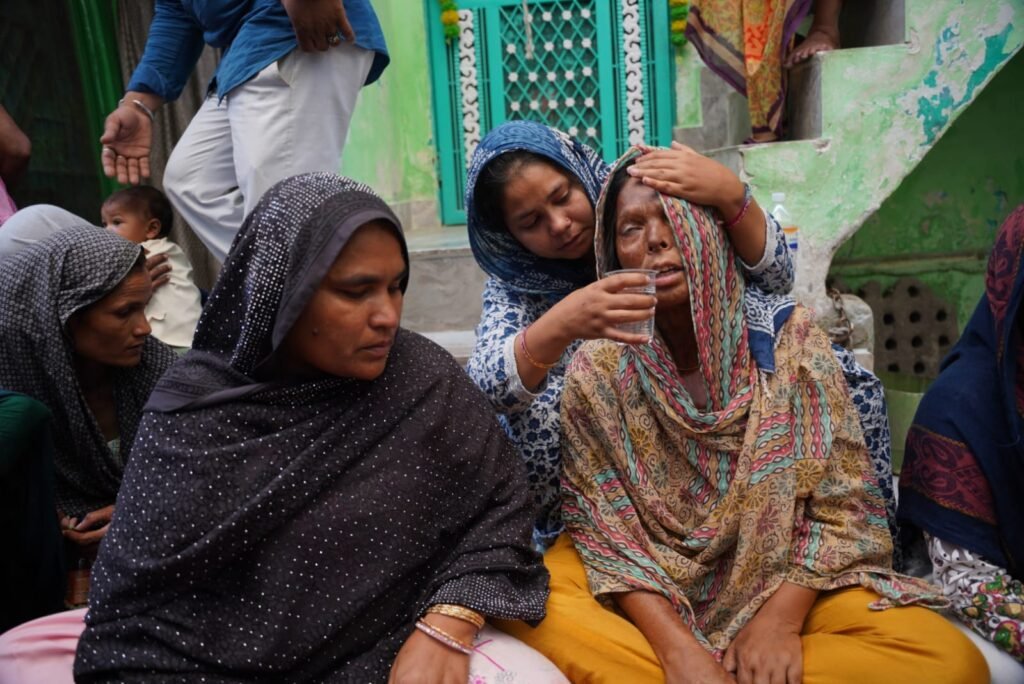
Image: Meer Faisal/The Observer Post
A 16-year-old Muslim boy was stabbed to death in East Delhi’s Trilokpuri area on Thursday evening, April 30, with his family alleging that he was deliberately targeted by a group of young men over a prior dispute he was not involved in. Two accused identified, hunt on to nab them. The crime has been reported in The Tribune. Details have also been published on the portal Observer Post.
According to these reports, the victim, identified as Ayaan Saifi, was an only child who was pursuing his studies while also helping his mother with daily work, according to family members.
The tragic incident took place near a local park in Trilokpuri, a densely populated working-class locality in East Delhi that has witnessed tensions and violent clashes in the past. Eyewitnesses and relatives allege that a group of 6 to 8 men entered the park armed with knives and chased Ayaan before attacking him.
“They surrounded him and stabbed him repeatedly, in the back, stomach, and legs. Even his hand was badly injured,” a relative who claimed to have witnessed the incident said as reported by the media. The family has alleged that the attack was premeditated and linked to an earlier dispute involving a local individual, referred to as “Vakil.” They claim Ayaan had no direct involvement in the matter but was targeted regardless.
“He had no enmity with anyone. They killed him over someone else’s issue,” a family member said. Ayaan was rushed to Lal Bahadur Shastri Hospital in critical condition. According to the family, he briefly regained consciousness during which his statement was recorded by the police.
“He named several attackers. The police recorded everything on video,” a relative alleged, adding that family members were initially not allowed to meet him inside the hospital.
The family further claimed that Ayaan had received threats in the past and that a complaint had been filed months earlier, but no preventive action was taken.
Ayaan Faizi sustained serious stab injuries in East Delhi’s Trilokpuri late on Thursday night. Reports stated that, according to the police, information about the incident was received at the Mayur Vihar police station around 10 pm, following which a team rushed to the hospital where the victim was admitted. After initial treatment, he was shifted to the AIIMS Trauma Centre for advanced care.
Further, police forces stated that preliminary inquiry revealed that the victim, along with a complainant, was near his residence in Trilokpuri when two persons attacked him with knives.Based on the complainant’s statement and medical examination, a case has been registered under relevant sections of the Bharatiya Nyaya Sanhita (BNS) and an investigation has been initiated.
The police have also stated that both accused had been identified and teams are conducting continuous raids to apprehend them. “Technical surveillance, CCTV footage analysis and local intelligence are being utilised to ensure their early arrest,” an officer said. Further investigation is underway, the police said.
Related:
As lynchings “normalise” in ‘New India, a Bihar imam is ‘thrashed, pushed’ from train to die in Bareilly
Bihar under BJP: Hate attacks against Muslims spiral, one dies
Delhi: Ayaan Saifi, a 19-year old, stabbed to death in nation’s capital on April 30 | SabrangIndia
Man stabbed in Trilokpuri: While media focusses on the just concluded state polls, and television channels turn the other way, two media outlets, The Tribune and Observer Post report the stabbing of 19 year old Ayaan Saifi on April 30
 sabrangindia.in
Neojinnah
Registered Member
Muslim Cleric Allegedly Assaulted, Thrown Off Train in UP; Post-Mortem Shows Fractures in All Ribs
Akanksha Kumar
18 hours ago
Imam Tousif Raza's body had been found near the railway tracks in Uttar Pradesh’s Bareilly district on April 27. A day ago, he had called his wife thrice in distress while he was allegedly being attacked on a train.
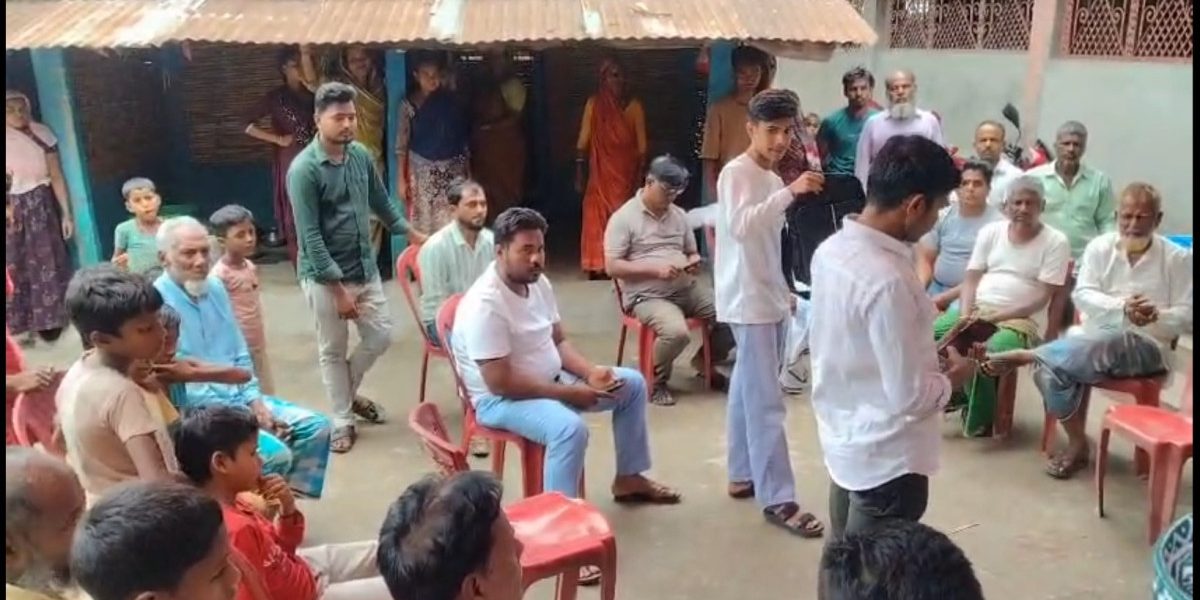
Locals gathered outside Tousif's house in Bakhotoli village. Photo: By arrangement.
New Delhi: Shortly before he died, Imam Tousif Raza called his wife and pleaded for help, saying fellow passengers were beating him. Days later, a post-mortem report accessed by The Wire recorded multiple ante-mortem injuries, including fractures in all ribs. His family has alleged that he was assaulted on board a train before his body was found near railway tracks in Bareilly.
On April 26, 2026, 29-year-old cleric Mohammad Tousif Raza spoke to his wife, Tabassum, three times in quick succession around 9:45 pm.
Screenshots of Tousif’s call log, seen by The Wire, show that one of them was a video call. His wife’s number is saved as ‘Jaan’ (beloved) in his phone. His last calls to Tabassum comprise what could be a crucial piece of evidence: a 29-second audio recording that suggests he was attacked by a group of men while travelling on the Rishikesh-to-Muzaffarpur Special Train.
Tousif who had got married two years ago was returning after taking part in the annual Urs in Bareilly held between April 24 and 25. A blood-stained and soiled railway ticket, later recovered from Tousif’s pocket, with an ironic ‘Shubh Yatra (Happy Journey)’ message on it, from Bareilly Junction in Uttar Pradesh to Siwan junction in Bihar, is another painful reminder of what would be his last journey home.
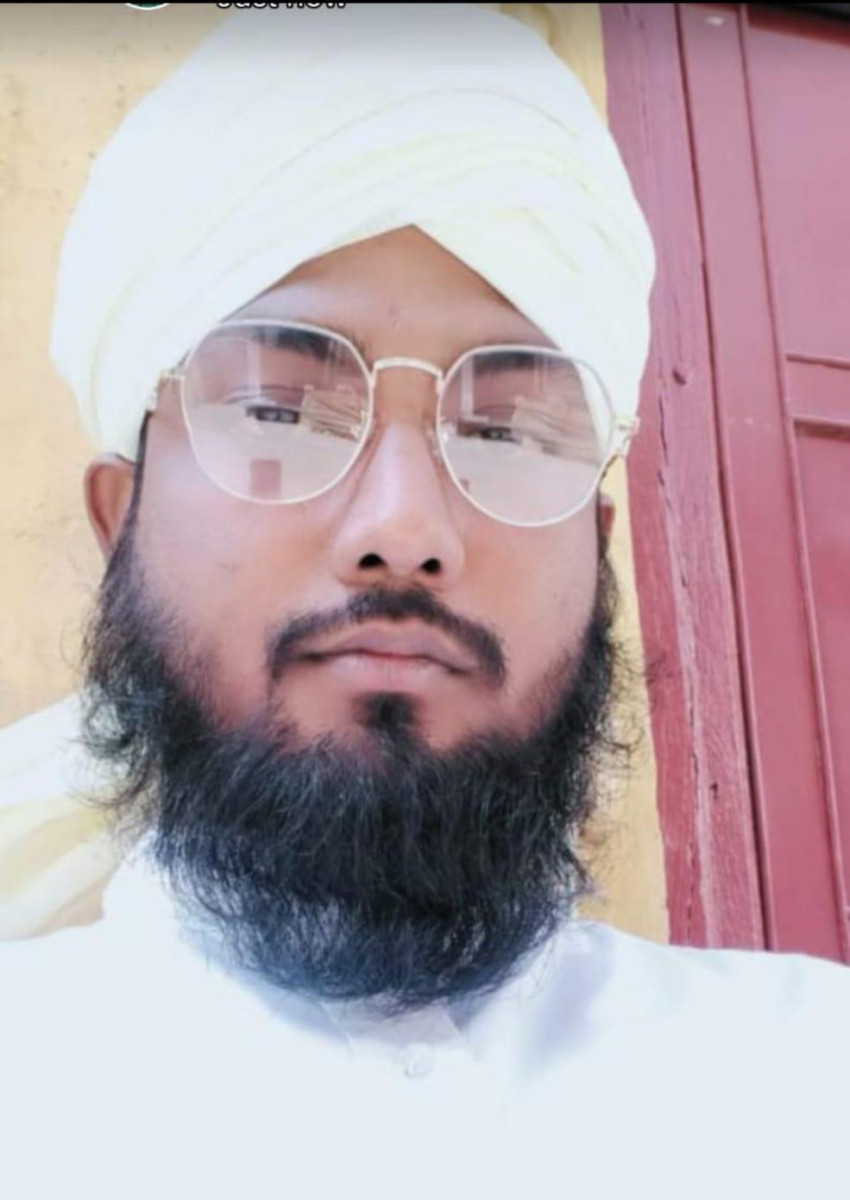
File photo of Tousif Raza. Photo: By arrangement.
Frantic after receiving Tousif’s calls, Tabassum tried to reach him several times. Her subsequent calls went unanswered, the family learnt about Tousif’s death the following morning, on April 27.
Speaking to local reporters, Tousif’s father, Mohammad Abul Hussain, said, “At 7 am, my daughter-in-law informed me that Tousif had been assaulted and that there was no response on his mobile phone after that. Around 9:30 am, I called my son’s number again. This time, someone identifying himself as a member of the Bareilly police answered the call and said that my son was in a serious condition and needed medical attention.”
Advertisement
“My other son, Razzaq, then called Tousif’s number again and insisted on speaking with him. This time, the voice at the other end said, ‘How can we make you speak with your brother? He is no more’,” Hussain added.
Tousif’s body had been found near the railway tracks in Uttar Pradesh’s Bareilly district on April 27.
‘Skull cap he usually wore had fallen off’
On April 30, Mujahid Alam, a former Janata Dal (United) MLA who is currently with the Rashtriya Janata Dal, met Tousif’s family at Bakhotoli village in Bihar’s Kishanganj district.
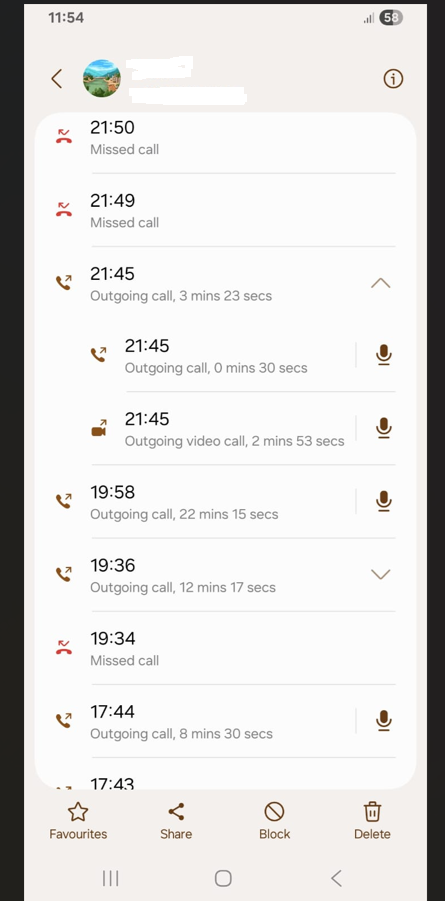
Screenshot of outgoing calls from Tousif’s phone to his wife.
Speaking to The Wire about the sequence of events as narrated by Tousif’s family, Alam said, “He [Tousif] told his wife in the local Surjapuri dialect that some people on board the train were physically assaulting him and that they were drunk. He then asked her to call the Shahjahanpur police and file a complaint.” Shahjahanpur, around 80 km from Bareilly, was the next stop after the station from where Tousif had boarded the train.
Advertisement
In the 29-second audio call recording between Tousif and Tabassum, accessed by The Wire, Tousif can be heard saying: “These guys are saying all sorts of things and are beating me. Call the police. Please help.” Midway through the recording, he is also heard pleading with fellow passengers, “Brother, please see, these people are harassing me.”
According to Alam, “When his wife called him again on video, she saw someone pulling Tousif by the collar and repeatedly slapping him. Soon after, the mobile screen suddenly went black. During the video call, she also noticed that the skullcap he usually wore had fallen off, and he was unable to speak properly as someone held him by the collar.”
Though the family managed to retrieve the initial audio recording from Tousif’s mobile after his final rites, they have no evidence related to the video call. “She [Tabassum] lives in a village; it did not occur to her at that moment to take a screenshot or record the video call on another phone,” former MLA Mujahid Alam told The Wire.
‘He was killed and then body thrown away’
Advertisement
On May 1, Tabassum, while speaking to local media in Bihar’s Kishanganj, voiced her apprehensions surrounding her husband’s death.
“They [those assaulting Tousif] were accusing him of theft. He even opened his bag and showed them books, telling them that he teaches at a madrassa. My husband was killed deliberately. I want justice now,” she told reporters.
“If this had been an accident, then my husband’s mobile phone would not have been in such good condition. You can see there is not even a scratch on his phone,” Tabassum further said.
Speaking over the phone from Bakhotoli village in Kishanganj, Tousif’s younger brother, Tauheed Raza, told The Wire, “Based on the audio clip, we are 100% sure that he [Tousif] was killed on board the train and then the body was thrown away.”
Tauheed, who works at a guest house in Delhi, rushed to Bareilly on April 27 after learning about his brother’s death. Recounting the injuries on Tousif’s body, he told The Wire, “Anyone who saw the body would conclude that he was murdered. There were injury marks on his head, wounds around his eyes, injuries on his shoulders and several other places. Both his legs were fractured, one hand was fractured, and there were injuries on both sides of his torso as well.”
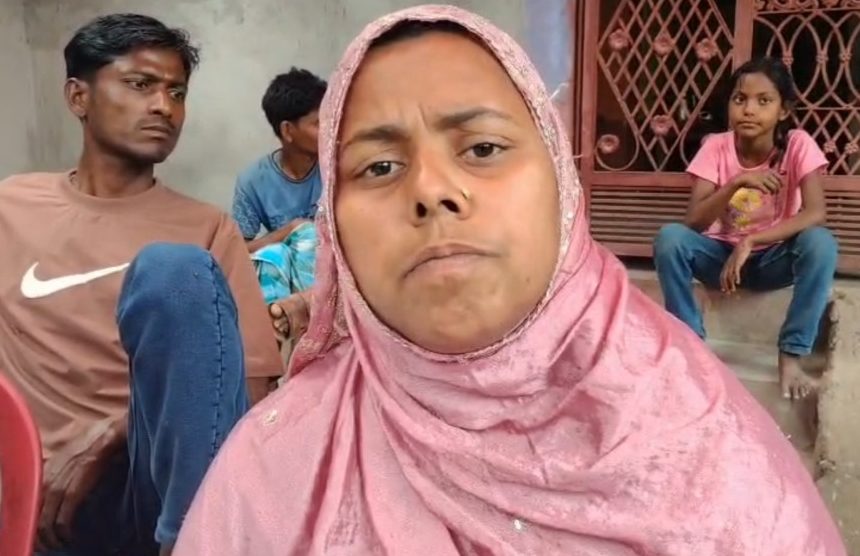
Tabassum, wife of Tousif, speaking to reporters on 1 May.
The family has not yet filed a formal complaint. Tauheed, while speaking to this reporter, confirmed that while they were earlier not in a state to pursue the case, they now plan to file a complaint in Bareilly based on a lawyer’s advice.
Post-Mortem report states ‘all ribs fractured’
In a six-page post-mortem report dated April 27, 2026, accessed by The Wire and signed by Dr Ashutosh Parashari at Bareilly’s Post Mortem House, the cause of Tousif’s death is recorded as “hemorrhagic shock and coma.”
Under the column titled ‘Opinion’, the medical officer concluded that the injuries were “antemortem in nature”, meaning they were sustained before death.
The post-mortem report records a total of five injuries:
- Injury No. 1: Lacerated wound (12 cm × 9 cm), brain deep, on the parieto-occipital region (back of the head)
- Injury No. 2: Contusion (6 cm × 5 cm) on the apex of the right shoulder
- Injury No. 3: Contusion (8 cm × 5 cm) on the dorsal surface of the right forearm, with underlying bone fracture
- Injury No. 4: Contusion (35 cm × 30 cm) on the chest
- Injury No. 5: Abrasion (16 cm × 8 cm) on the right flank region
The post-mortem report also notes injuries to both the left and right lungs, which were described as “lacerated”. Under the column for chest wall, ribs/sternum and cartilage, the medical officer recorded: “All ribs are fractured.”
Police’ response
Between April 30 and May 1, the official X handle of Bareilly Police put out three responses in connection with Tousif Raza’s death.
In its first official response shared on X at 7.13 pm on April 30, the Bareilly Police stated: “It is being alleged on social media that the deceased Tousif Raza was attacked and then pushed off the train. Such allegations are misleading and devoid of facts.”
According to the statement on behalf of the Bareilly Police, “based on evidence collected and examination of the body, it has come to light that owing to excessive heat the deceased sat near the gate of train and dozed off following which he lost his balance and fell from the train with serious injuries inflicted on head, limbs, trunk and face resulting in his death.”
The same day, on April 30, at 11:51 pm, in their second response on the incident, the official X handle of Bareilly Police posted a video statement of the Superintendent of Police, Manush Pareek. “Following the formalities related to the Panchayatnama (identification of body) while the body was handed over to the family members from Kishanganj, they thought it to be an accident, however, today they are suspecting that physical assault preceded the victim’s death. We have spoken with the family and apprised them that once a complaint is filed necessary legal action will be taken,” said SP Pareek.
Speaking to The Wire, Bareilly SP Manush Pareek, while responding to a question on why the police had not initiated any action so far, said, “I have spoken with the family and told them that we will initiate legal proceedings once they file a complaint since the scene of crime was here. There is no contradiction per se. We have even told the family that even if their local guardians want to file a complaint we will proceed.”
Commenting further on the legal procedure, SP Pareek said, “In order to start an investigation, we need an FIR or a formal complaint.”
When asked whether the nature of injuries mentioned in the post-mortem report – such as ‘all ribs fractured’ – suggested accidental injuries, SP Manush Pareek told The Wire, “Without proper investigation and without expert’s opinion, we can’t say anything. It would be too early to comment.”
Underlining the technicalities associated with such incidents, another police official familiar with the matter, who did not wish to be named, told The Wire, “Since the incident as is being mentioned in the audio pertains to what happened inside the train so the case falls under the jurisdiction of the GRP (Government Railway Police) and RPF (Railway Protection Force) so whenever crime is registered investigation will be done by GRP police station in Bareilly.”
Demand for probe
Tousif’s death has triggered political reactions, with Bhim Army chief Chandra Shekhar Azad and AIMIM president Asaduddin Owaisi asking Union Railway Minister Ashwini Vaishnaw to order a probe into the incident.
Meanwhile, Bareilly-based organisation All India Muslim Jamaat sent a letter on April 28 to Uttar Pradesh chief minister Yogi Adityanath, seeking a CBI probe into the case. “Such incidents with Muslims on board a train have been reported earlier as well, if a train journey will also attain communal colour then what will happen to the democratic structure”, states the letter issued on behalf of the All India Muslim Jamaat. In 2023, an RPF constable had killed three Muslim passengers travelling on the Jaipur-Mumbai Superfast Express.
Speaking to The Wire, Maulana Shahbuddin Razvi Barelvi, national president of the All India Muslim Jamaat, said, “It is our apprehension that this seems to be an incident related to mob lynching. So we have asked for a probe in order to ascertain facts related to the case.”
Muslim Cleric Allegedly Assaulted, Thrown Off Train in UP; Post-Mortem Shows Fractures in All Ribs
Imam Tousif Raza's body had been found near the railway tracks in Uttar Pradesh’s Bareilly district on April 27. A day ago, he had called his wife thrice in distress while he was allegedly being attacked on a train.
 thewire.in
Sam6536
Registered Member
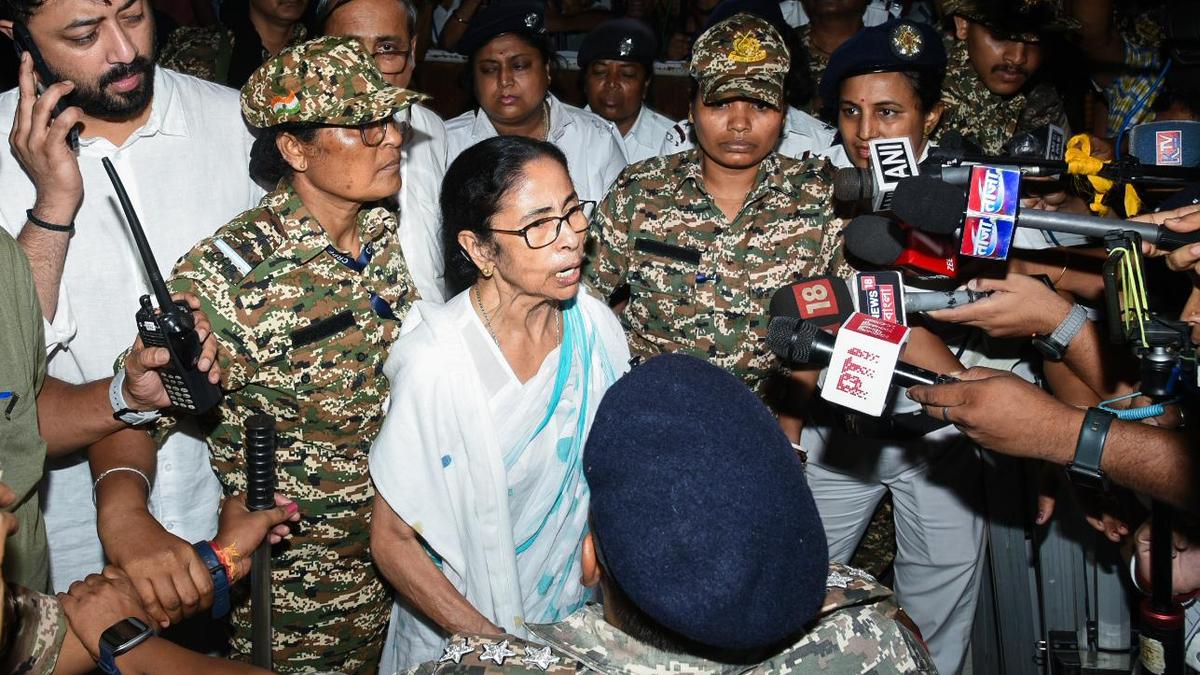
West Bengal election results updates: Result on final seat awaited, as BJP crosses majority mark
Bengal Assembly Election Results 2026 LIVE: Get real-time updates on TMC, BJP & Congress leads, winners, seat count and vote share across all constituencies.
BJP set to win by a big margin in West Bengal. TMC will be removed from power after 3 consecutive terms of Mamta Banerjee (15yrs).
Hopefully Bengal gets it's share of development now. TMC blocked a lot of central projects and schemes, so I expect most of them to get the go ahead.
Users who are viewing this thread
Total: 1 (members: 0, guests: 1)
Pakistan Defence Latest
-

-

-
-
 Pakistan blocks airspace for Russian flight carrying Bangladesh's nuclear fuel (4 Viewers)
- Latest: Musings
-
 PAF pilot highlights how chinese J10C fighters have left US F16's Obsolete (5 Viewers)
- Latest: imadul
Country Watch Latest
-
 Discussion of the F-47 Design, Development, and Progressing Toward First Flight and Manufacturing (12 Viewers)
- Latest: Hamartia Antidote
-

-
-

-
Latest Posts
-
Discussion of the F-47 Design, Development, and Progressing Toward First Flight and Manufacturing (12 Viewers)
- Latest: Hamartia Antidote
-
-
-
-