Pakistan Minerals and Mining Updates

It is a good article, but it is a mischaracterization to describe Barrick's review as a routine one. The company has specifically said it was triggered by a deterioration in the security situation and affects financial closure. In the worst case, depending on the result of the review, this could result in significant delays or even Barrick deciding to move out.


Doesn't matter if Barrick gold pull out, they will be paid $3bn to buy their 50% share. Reko Diq in current stage of development cannot be stopped or delayed anymore. There is gold/copper rush going on in the world and Pakistan have last remaining unexplored reserves.
 
Doesn't matter if Barrick gold pull out, they will be paid $3bn to buy their 50% share. Reko Diq in current stage of development cannot be stopped or delayed anymore. There is gold/copper rush going on in the world and Pakistan have last remaining unexplored reserves.

Their is a a lot of interest in Pakistan at the moment, you have to read the undercurrent

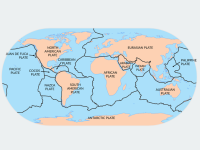
If you look at the earths tectonic plates, you see fault lines, if look at Pakistan those fault lines run through it, when plates meet, they push up the land and resources that are far too deep to get at, get pushed to the surface

This is one project, but this will lead to multiple projects across Pakistan

It's upto Pakistan to be ready and invest in our own companies that through support can start to develop our own resources
 
So see map below,
See the lines running through Pakistan, can always be dangerous with earthquakes etc but they are also serious targets for multiple mining projects

Pakistan, Afghanistan, Central Asia etc are resource rich and mostly completely untapped

Plate-Tectonics-Map-Major-Plates-0.png
 

Pakistan increases Reko Diq investment to $244 million as Barrick reviews project​

Ismail Dilawar
4686559-1456420563.jpg

KARACHI: The state-run Pakistan Petroleum Limited (PPL) has invested an additional Rs14 billion ($50.2 million) equity in the multi-billion-dollar Reko Diq copper-gold mine, the company said in its latest financial report on Thursday, as the project’s Canadian operator reviews the project following recently deadly attacks.

Canada’s Barrick Mining Corporation owns a 50 percent share in Reko Diq in the southwestern Balochistan province, along with three Pakistani federal state-owned enterprises including PPL that own 25 percent, while the Balochistan government has the remaining 25 percent share in the project.

The Canadian company announced earlier this month it planned to “immediately” begin a comprehensive review of all aspects of the Reko Diq project following coordinated attacks in Balochistan on Jan. 30-31 that killed 36 civilians and 22 security forces personnel.

“With respect to the Reko Diq project, the company has made further equity investment in Pakistan Minerals Private Limited (PMPL) during the period amounting to Rs14,025 million ($50.2m),” PPL told its shareholders in its financial statement for the half year ending at Dec. 31.

The additional equity has increased PPL’s total cost of investment in the PMPL to Rs68.1 billion ($243.6 million), it added.

The PMPL is a special purpose vehicle formed to manage the federal government’s 25 percent stake in the Reko Diq project. It is a consortium of three state-owned enterprises (SOEs) namely the PPL, the Oil & Gas Development Company Limited (OGDCL) and Government Holdings (Private) Limited (GHPL) which is responsible for handling financing, equity contributions and strategic, legal or technical dealings with partners like Barrick.

“The project continued to advance site works during the period (July-December FY26),” the PPL said. “The operator (Barrick) is undertaking a review of all aspects of the project, including with respect to the project’s security arrangements, development timetable and capital budget.”

This week, Balochistan Chief Minister Sarfraz Bugti assured investors that Pakistan has the “capacity and capability” to secure the Reko Diq project amid surging militancy.

The PPL explores, drills, and produces oil and natural gas. Its current portfolio, together with its subsidiaries and associates, consists of 47 exploratory blocks that include one offshore Block-5 in Abu Dhabi and one onshore block in Yemen.

In December, PPL signed a strategic Deed of Assignment under which it assigned 25 percent of its participating interest (PI) and operatorship of Eastern Offshore Indus C block to Turkish Petroleum Overseas Company, a unit of state-owned Türkiye Petrolleri Anonim Ortaklığı.

Assigning 20 percent PI each to OGDCL and Mari Energies Limited, the company has retained the remaining 35 percent PI to play a key role in the block’s development.
 

OGDC invests $25 million in Reko Diq this quarter; project on track for 2028​


Pakistan’s largest E&P says Barrick corporate changes won’t delay world-class copper-gold mine
By
Monitoring Desk


Pakistan’s Oil and Gas Development Company Limited (OGDC) has invested $25 million in the Reko Diq project this quarter, part of a total $75 million injected by Pakistan Minerals Private Limited (PMPL) as mine development continues without delay.


Management emphasized that corporate changes at Barrick, the project’s 50% partner, will not impact progress. “No delays are expected so far as work at the mine is still ongoing,” the briefing report noted during a session attended by Topline Securities.

Reko Diq, located in Balochistan, is one of the world’s largest undeveloped copper and gold deposits. Ownership is split 50% Barrick, 25% federal SOEs including OGDC, and 25% Government of Balochistan (15% fully funded, 10% free-carried). Production is targeted for 2028.

OGDC also provided updates on its other development projects. Of six planned ventures, Jhal Magsi and Dakhni are complete. The remaining four—Uch, KPD-TAY, Bettani, and Sinjhoro—are under construction and expected online over 2HFY26–FY27.

Once operational, these projects are projected to add roughly 215 million cubic feet per day (mmcfd) of gas and 5,342 barrels per day (bpd) of oil, boosting domestic energy output.


The briefing underscored OGDC’s commitment to sustained investment in strategic energy projects, maintaining momentum despite market shifts and corporate changes at international partners.
 

From slurry to sovereignty
 
To view this content we will need your consent to set third party cookies.
For more detailed information, see our cookies page.
 
Barrick Mining, the operator of Reko Diq Project, has extended its review by 12 months citing escalating security concerns in Balochistan and the broader Middle East.

What does it really mean? Red alert: “Review” Is corporate language for serious doubt. Barrick is not withdrawing – the company has actually reaffirmed ‘long-term value’. Barrick is not pausing – the company is recalibrating. In effect, Barrick is doing three things. One-reviewing capital allocation. Two-reviewing delivery strategy. Three-reviewing timeline.

Why does this really matter? Reko Diq is Pakistan’s single largest FDI (Foreign Direct Investment) anchor. Under Phase 1, the capital expenditure is estimated at $6-7 billion with expected output of 250,000 tons of copper and 300,000 ounces of gold. Annual export potential: $4.37 billion. Every year of delay shifts cash flows into the future, resulting in a Net Present Value (NPV) loss of approximately $1.5 billion. Heightened security risks drive up the required rate of return, adding another $3 billion in value erosion, while also necessitating an extra $1 billion in capital expenditure.

Furthermore, one year of delay equals one full year of lost production — and at today’s spot prices, copper at $12,169 per ton and gold at $4,433 per ounce, that lost production alone is worth $4.37 billion. In total, each year of delay costs Pakistan between $10 billion and $12 billion. Red alert: A one-year delay at Reko Diq is not a delay. It is a $10-12 billion event. A “review’ by Barrick will trigger risk re-rating by lenders raising insurance premiums and political risk cover costs.

The Government of Pakistan must now understand that this is not about one project – this is about whether Pakistan can become a $100 billion mining destination or another stranded resource story. Here’s the uncomfortable truth: Barrick has not delayed because of copper prices. Barrick has not delayed because of gold prices. Barrick has not delayed because of engineering risk. Barrick has delayed because Pakistan’s risk premium moved. The 2028 production target is almost certainly gone. Red alert: This is not a mining delay. This is a sovereign signal failure.

Pakistan’s mineral wealth lies buried at an estimated $6 trillion — and Reko Diq has emerged as the flagship project symbolising Islamabad’s ability to attract serious foreign direct investment.

A prolonged delay will do three things, and none of them are good. One: It will devastate investor confidence in Pakistan’s entire mining sector. Two: It will invite intense scrutiny from the IMF and other multilateral lenders. Three: It will shred the government’s carefully crafted economic reform narrative. The three things the Government of Pakistan can and must do. One: Declare Reko Diq a National Security Asset — formally and legislatively. Not a press release. Not a minister’s statement. A formal parliamentary resolution designating the project corridor as a protected national economic zone, with dedicated military-grade security infrastructure, and a dedicated force command structure that reports directly to the Prime Minister.

Two: Establish a credible, independent Security Assurance Framework for Barrick. The government must engage a third-party international security risk firm — acceptable to both Barrick and its project finance lenders — to audit, certify and continuously monitor security arrangements. Verbal assurances from Islamabad carry no weight in the boardroom in Toronto. Independent certification does.

Four: Send a delegation to Toronto — now, not later. Pakistan’s Finance Minister and the Chief Minister of Balochistan should be on a plane to Barrick’s headquarters at 161 Bay Street within 30 days. Not to negotiate. Not to lobby. But to listen — to understand precisely what Barrick needs to see before it releases capital.

By all accounts, Reko Diq is a world-class orebody. But a world-class deposit still needs a workable security and political environment to become a mine. Right now, Balochistan does not provide that. Reko Diq will produce copper—but first, Pakistan must produce certainty.

—The writer is a journalist and political analyst.

Is the Reko Diq project in trouble?
 
Barrick Mining, the operator of Reko Diq Project, has extended its review by 12 months citing escalating security concerns in Balochistan and the broader Middle East.

What does it really mean? Red alert: “Review” Is corporate language for serious doubt. Barrick is not withdrawing – the company has actually reaffirmed ‘long-term value’. Barrick is not pausing – the company is recalibrating. In effect, Barrick is doing three things. One-reviewing capital allocation. Two-reviewing delivery strategy. Three-reviewing timeline.

Why does this really matter? Reko Diq is Pakistan’s single largest FDI (Foreign Direct Investment) anchor. Under Phase 1, the capital expenditure is estimated at $6-7 billion with expected output of 250,000 tons of copper and 300,000 ounces of gold. Annual export potential: $4.37 billion. Every year of delay shifts cash flows into the future, resulting in a Net Present Value (NPV) loss of approximately $1.5 billion. Heightened security risks drive up the required rate of return, adding another $3 billion in value erosion, while also necessitating an extra $1 billion in capital expenditure.

Furthermore, one year of delay equals one full year of lost production — and at today’s spot prices, copper at $12,169 per ton and gold at $4,433 per ounce, that lost production alone is worth $4.37 billion. In total, each year of delay costs Pakistan between $10 billion and $12 billion. Red alert: A one-year delay at Reko Diq is not a delay. It is a $10-12 billion event. A “review’ by Barrick will trigger risk re-rating by lenders raising insurance premiums and political risk cover costs.

The Government of Pakistan must now understand that this is not about one project – this is about whether Pakistan can become a $100 billion mining destination or another stranded resource story. Here’s the uncomfortable truth: Barrick has not delayed because of copper prices. Barrick has not delayed because of gold prices. Barrick has not delayed because of engineering risk. Barrick has delayed because Pakistan’s risk premium moved. The 2028 production target is almost certainly gone. Red alert: This is not a mining delay. This is a sovereign signal failure.

Pakistan’s mineral wealth lies buried at an estimated $6 trillion — and Reko Diq has emerged as the flagship project symbolising Islamabad’s ability to attract serious foreign direct investment.

A prolonged delay will do three things, and none of them are good. One: It will devastate investor confidence in Pakistan’s entire mining sector. Two: It will invite intense scrutiny from the IMF and other multilateral lenders. Three: It will shred the government’s carefully crafted economic reform narrative. The three things the Government of Pakistan can and must do. One: Declare Reko Diq a National Security Asset — formally and legislatively. Not a press release. Not a minister’s statement. A formal parliamentary resolution designating the project corridor as a protected national economic zone, with dedicated military-grade security infrastructure, and a dedicated force command structure that reports directly to the Prime Minister.

Two: Establish a credible, independent Security Assurance Framework for Barrick. The government must engage a third-party international security risk firm — acceptable to both Barrick and its project finance lenders — to audit, certify and continuously monitor security arrangements. Verbal assurances from Islamabad carry no weight in the boardroom in Toronto. Independent certification does.

Four: Send a delegation to Toronto — now, not later. Pakistan’s Finance Minister and the Chief Minister of Balochistan should be on a plane to Barrick’s headquarters at 161 Bay Street within 30 days. Not to negotiate. Not to lobby. But to listen — to understand precisely what Barrick needs to see before it releases capital.

By all accounts, Reko Diq is a world-class orebody. But a world-class deposit still needs a workable security and political environment to become a mine. Right now, Balochistan does not provide that. Reko Diq will produce copper—but first, Pakistan must produce certainty.

—The writer is a journalist and political analyst.

Is the Reko Diq project in trouble?
Posted already
 

Reko Diq saga continues
 

Users who are viewing this thread

Back
Top