j_hungary
Professional

Xi and Putin are probably just sitting at their palace and laughing at us.Anyone who actually thought China was going to directly intervene in this war was chock full of hopium
Follow along with the video below to see how to install our site as a web app on your home screen.
Note: This feature may not be available in some browsers.
Xi and Putin are probably just sitting at their palace and laughing at us.Anyone who actually thought China was going to directly intervene in this war was chock full of hopium

Xi and Putin are probably just sitting at their palace and laughing at us.

 responsiblestatecraft.org
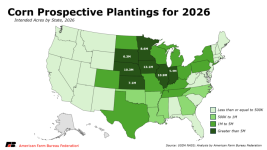
Did the math for corn. The expense of fertilizer is now 46% of the current market price for each bushel of corn (@ 50 bushels/acre average yield).Trump risks war backlash from the heartland: American farmers
Even if Gulf shipping reopens tomorrow, supply lags and energy costs are driving fertilizer and other input costs sky high — just in time for planting season
Reporting | Global Crises
Blaise Malley
Apr 14, 2026
Fertilizers like these make up somewhere between 33% and 45% of operating expenses for major American corn and wheat crops, according to nonprofit Farm Action.
“The price of [dry urea] in January to February was $560 per ton,” Ben Vig, a farmer and former state representative in North Dakota, told Responsible Statecraft. “At the end of March it was $770 per ton.” According to Vig, that amounts to costs of $140 per acre to fertilize wheat and $135 per acre to fertilize corn, an increase of nearly $40 per acre.
Even though about three-quarters of the fertilizer used in the United States is produced inside the country, domestic costs are nonetheless dependent on the international market. The United States relies on imports of ingredients (potash, phosphate, nitrogen) used in fertilizers made here, as well as fertilizers themselves, such as ammonia and urea, whose production depends heavily on natural gas. Disruptions to gas supplies and rising energy costs in the gulf are pushing prices even higher for American farmers.
"Our biggest struggles are our inputs, be it fertilizer, seed, chemical, parts," one farmer in Nebraska recently told PBS. "There has been so much drastic markup in all of these. And I just kind of feel like the farmer's kind of painted in the corner."
The timeline for recovery may not align with the realities of the agricultural season. Even if shipments begin to move again, the structure of the fertilizer supply chain and the timing of the disruption mean relief may not come quickly.
“To get product from around the world, we have to put the order in, and once we put the order in, it takes four weeks for a cargo ship to go from one side of the planet to another, and then it all goes to [an import hub in] New Orleans, and it takes three to four weeks from a cargo ship to a barge, and then the barge up the river,” Vig told RS. “So, we’re looking at maybe a seven-week period.”
With the Midwest planting season in April and May, some farmers did place their spring orders before the current spike, but many others either locked in fertilizer at elevated prices or cut back orders. Roughly one-quarter of farmers had not placed their orders by early April, according to the Department of Agriculture, and will now be left scrambling to secure supply if shipments resume.
As fertilizer prices surge at a critical moment for planting, some lawmakers are becoming increasingly concerned that the disruption could lead to a crisis.
“In addition to the needless loss of life in the Middle East, fertilizer and diesel costs are skyrocketing at the beginning of growing season, adding to the struggles farmers have faced since the beginning of President Trump’s second term,” Sen. Peter Welch (D-Vt.), who sits on the Senate Committee on Agriculture, told RS in a statement. “At a time when global food insecurity was already on the rise due to this administration’s aid cuts and climate change, this war threatens to turn global hunger into a full-blown crisis.”
Without a sustained de-escalation that restores both production capacity and confidence in global shipping routes, the fertilizer market is likely to remain tight, with the risk that today’s disruption leads to lower crop yields and higher food prices in the months ahead.
Any further details about the ships who they belonged to,?US destroyer interdicts two Iranian oil tankers
Reuters has reported that a US destroyer has interdicted two oil tankers attempting to leave Iran and ordered them to turn around.
Citing a US official who spoke on the condition of anonymity, it said the incident occurred on Tuesday.
According to the official, the ships had departed from Chabahar port on the Gulf of Oman and were contacted by the warship via radio communication.
Unfortunately noAny further details about the ships who they belonged to,?

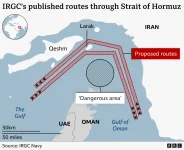
Of course; they want the channels to go through Iranian territorial waters and not Oman's.
So much for that "it's just an extra $20 at the pump" comment. It's flippant remarks like those that make me wonder just how out of touch some people are with reality.Did the math for corn. The expense of fertilizer is now 46% of the current market price for each bushel of corn (@ 50 bushels/acre average yield).
View attachment 192423
Look at all of the inputs that go into producing a bushel of corn or wheat. All negatively impacted. Just as I have been saying.Trump risks war backlash from the heartland: American farmers
Even if Gulf shipping reopens tomorrow, supply lags and energy costs are driving fertilizer and other input costs sky high — just in time for planting season
Reporting | Global Crises
Blaise Malley
Apr 14, 2026
Fertilizers like these make up somewhere between 33% and 45% of operating expenses for major American corn and wheat crops, according to nonprofit Farm Action.
“The price of [dry urea] in January to February was $560 per ton,” Ben Vig, a farmer and former state representative in North Dakota, told Responsible Statecraft. “At the end of March it was $770 per ton.” According to Vig, that amounts to costs of $140 per acre to fertilize wheat and $135 per acre to fertilize corn, an increase of nearly $40 per acre.
Even though about three-quarters of the fertilizer used in the United States is produced inside the country, domestic costs are nonetheless dependent on the international market. The United States relies on imports of ingredients (potash, phosphate, nitrogen) used in fertilizers made here, as well as fertilizers themselves, such as ammonia and urea, whose production depends heavily on natural gas. Disruptions to gas supplies and rising energy costs in the gulf are pushing prices even higher for American farmers.
"Our biggest struggles are our inputs, be it fertilizer, seed, chemical, parts," one farmer in Nebraska recently told PBS. "There has been so much drastic markup in all of these. And I just kind of feel like the farmer's kind of painted in the corner."
The timeline for recovery may not align with the realities of the agricultural season. Even if shipments begin to move again, the structure of the fertilizer supply chain and the timing of the disruption mean relief may not come quickly.
“To get product from around the world, we have to put the order in, and once we put the order in, it takes four weeks for a cargo ship to go from one side of the planet to another, and then it all goes to [an import hub in] New Orleans, and it takes three to four weeks from a cargo ship to a barge, and then the barge up the river,” Vig told RS. “So, we’re looking at maybe a seven-week period.”
With the Midwest planting season in April and May, some farmers did place their spring orders before the current spike, but many others either locked in fertilizer at elevated prices or cut back orders. Roughly one-quarter of farmers had not placed their orders by early April, according to the Department of Agriculture, and will now be left scrambling to secure supply if shipments resume.
As fertilizer prices surge at a critical moment for planting, some lawmakers are becoming increasingly concerned that the disruption could lead to a crisis.
“In addition to the needless loss of life in the Middle East, fertilizer and diesel costs are skyrocketing at the beginning of growing season, adding to the struggles farmers have faced since the beginning of President Trump’s second term,” Sen. Peter Welch (D-Vt.), who sits on the Senate Committee on Agriculture, told RS in a statement. “At a time when global food insecurity was already on the rise due to this administration’s aid cuts and climate change, this war threatens to turn global hunger into a full-blown crisis.”
Without a sustained de-escalation that restores both production capacity and confidence in global shipping routes, the fertilizer market is likely to remain tight, with the risk that today’s disruption leads to lower crop yields and higher food prices in the months ahead.
You love singing the bluesSo much for that "it's just an extra $20 at the pump" comment. It's flippant remarks like those that make me wonder just how out of touch some people are with reality.