US Economy - News, Updates and Discussion

Will consumers receive money from the tariff refund Trump program?​

The tariff refund Trump payouts go directly to businesses that originally paid the tariffs. Companies are not legally required to pass refunds to customers who paid higher prices. However, firms like FedEx have indicated they may return funds where tariffs were collected directly. Broader consumer refunds will likely depend on ongoing lawsuits and company policies.
Good luck to the average consumer.
 
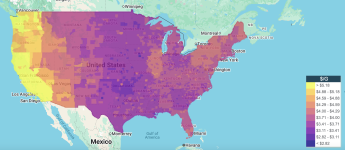
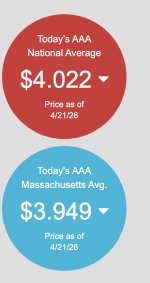
In other news, gasoline is starting to drop a bit in my area while #2 diesel still averages $5.99 / gallon.
 
In other news, gasoline is starting to drop a bit in my area while #2 diesel still averages $5.99 / gallon.

$5.40 for diesel and $4.35 for regular unleaded in the greater Chicagoland area.

The main concern is grocery costs. In my area, they've risen by 10-15%.
 
$5.40 for diesel and $4.35 for regular unleaded in the greater Chicagoland area.

The main concern is grocery costs. In my area, they've risen by 10-15%.
As I keep pointing out, in spite of what Raptor claims is "just another 20 bucks at the pump", it goes far beyond that.
 
As I keep pointing out, in spite of what Raptor claims is "just another 20 bucks at the pump", it goes far beyond that.

Indeed it does. And much of the supply chain for just about everything has yet to pass on the rising costs of transportation. Inflation generally is set to rise across the board - on everything.
 
The rise is quick, but going back to "normal" prices will take months if not more

Even if the war ends, supply chains will take months if not years to get back to normal and repair the damage

This is why the war is in ceasefire mode, even with the chest beating the ear is too destructive and costly


This is why Iran understands it has the position to force a favourable outcome and a reduction or end to sanctions or it will continue to shut the hormuz
 
The rise is quick, but going back to "normal" prices will take months if not more

Even if the war ends, supply chains will take months if not years to get back to normal and repair the damage

This is why the war is in ceasefire mode, even with the chest beating the ear is too destructive and costly


This is why Iran understands it has the position to force a favourable outcome and a reduction or end to sanctions or it will continue to shut the hormuz
Any rollback will still be inflated from where it started at. And that will become the new norm.

The damage for this year is already done. Farmers are already dealing with it. The consumer is starting to deal with it and will experience it more throughout the year.

Here in the US, any bad weather, be it too wet or too dry, will have an impact on grain crops in the Midwest. And that too will further impact the consumer.
 

US 'won't dictate terms' of free trade talks, says PM Carney​


Nadine YousifSenior Canada reporter
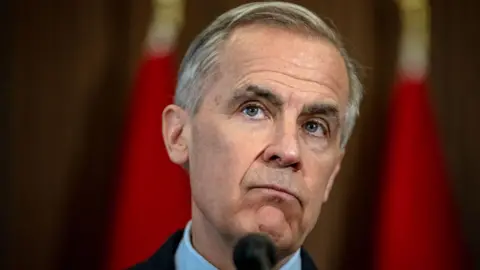
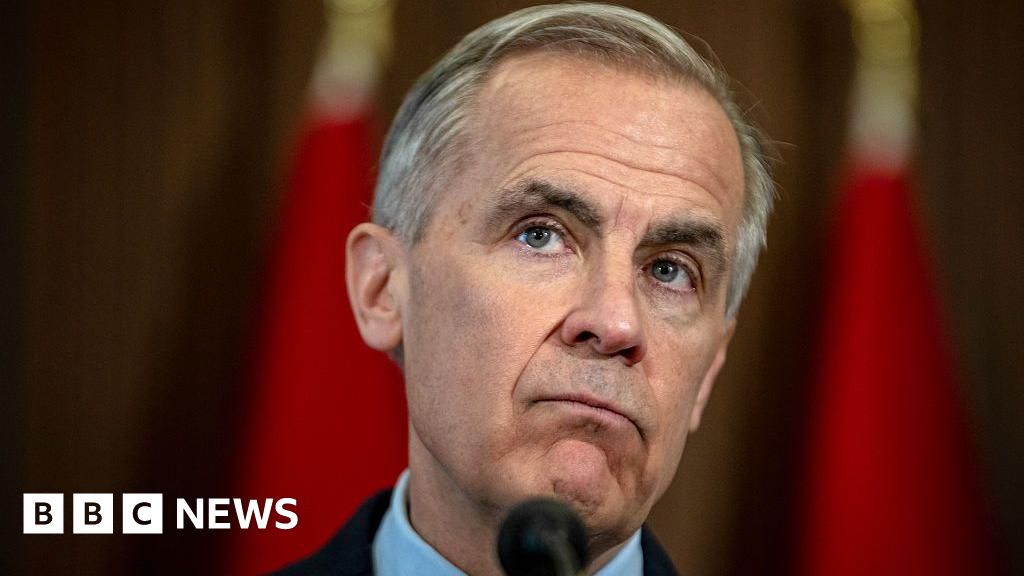
Getty Images A close up image of Mark Carney, who looks out at the distance with a quizzical expression. Behind him is a blurred red background. He is standing at a podium.
Getty Images
Prime Minister Mark Carney said Canada will not let the US dictate the terms of free trade negotiations between the two countries.
Canadian Prime Minister Mark Carney has ruled out making concessions ahead of further talks with the US while a top US official warned the two countries remain fundamentally misaligned on trade.

The comments come at a tense time for US-Canada trade and as the future of a major North American free trade deal remains unclear.

On Wednesday, US trade representative Jamieson Greer told Congress that Canada is "doubling down on globalisation when we're trying to correct for the problems of globalisation".

Carney meanwhile told reporters that Ottawa will not let the US "dictate the terms" of free trade negotiations. "It's not a case where there is someone making demands, and a supplicant," he said.

He added: "We have a negotiation, we can come to a mutually successful outcome - it will take some time."

Canada, the US and Mexico are staring down a deadline of 1 July for a mandatory review of the free trade agreement between the three countries, called the USMCA.

Mexico is due to start formal bilateral negotiating rounds with the US in May, Greer's office has said. He and Mexican President Claudia Sheinbaum met on Monday.

Formal talks between the US and Canada have yet to get underway, though trade officials are in communication.


Canada has already made some concessions to the US. In June, it dropped a planned tax on big US technology firms after the Trump administration flagged it as an irritant.

On Tuesday, Carney convened a new advisory committee on Canada-US trade relations, with their first meeting set for next week.

Jean Charest, a former Quebec premier who sits on the new advisory committee, told broadcaster Radio-Canada that the US is looking for "a lot of concessions from Canada" before bilateral talks began.

The US has raised several trade irritants it hopes to see resolved.

Among them is the decision by most Canadian provinces to remove US liquor from shelves due to tariffs.

"There are two countries that have retaliated economically against the United States in the past year - the People's Republic of China and Canada," Greer said.

He warned there may "have to be an enforcement action to deal with this issue".

Another is dairy quotas, a longtime irritant for the US, which were brought up again by US commerce secretary Howard Lutnick on Wednesday, who told a Senate committee that Canada treats US dairy farmers "poorly".


Last year, President Donald Trump accused Canada of charging "extraordinary tariffs to our dairy farmers - up to 400 per cent".

Canadian dairy is produced under a supply-management system, which strictly controls production quotas and imports to support local farmers.

Some US dairy products are allowed in Canada tariff-free up to a certain limit. That limit has never been reached, however, according to the US Department of Agriculture.


p0nfhw61.jpg


0:49
Canada: Ties to US are 'weaknesses we must correct'
Dominic LeBlanc, the Canadian minister responsible for US-Canada trade, told the Globe and Mail newspaper on Wednesday that dairy is off the table.

"We've been very clear with them," LeBlanc said.

But he added that Ottawa has "solutions to most of what the Americans raise".

"We're happy to sit down and go through that with them. But it's got to be part of a larger, more comprehensive arrangement," he said.


Greer also said that he hopes that negotiators can "get over the hump on some of these things to have significant talks".

It is unclear when Canadian and American negotiators will formally sit down to hash out these disagreements, though both have signalled it is unlikely a deal will be reached by the July deadline.

Still, Greer, speaking to the House committee, said the US goal with USMCA talks is to "make sure that we maintain market access into these countries".

In the case a deal is not reached, the USMCA could be subject to annual reviews until it is set to expire in 2036.
 

Dollar Use in Global Trade Rose to High Amid War, Swift Says​


The ongoing conflict in the Middle East is solidifying the US dollar’s dominant role in global trade, according to one measure of activity in the interbank foreign-exchange markets.

The greenback’s portion of international transactions rose to a record 51.1% in March, up from 49.2% a month earlier, according to the latest data compiled by global financial messaging service Swift, or the Society for Worldwide Interbank Financial Telecommunication. That’s the highest share since 2023 when the Belgium-headquartered consortium revised how it collects the transaction data.

 
To view this content we will need your consent to set third party cookies.
For more detailed information, see our cookies page.
 
To view this content we will need your consent to set third party cookies.
For more detailed information, see our cookies page.

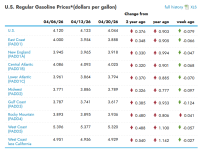
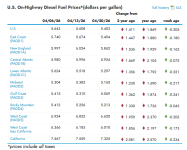
Yet, gasoline is only now starting to drop slightly and diesel fuel is still an average of $6 / gallon in my area. Overall, from the EIA:

1776990705966.png
1776990724770.png
 

Trump: "We want to surpass China in industry."​

Saturday, April 25, 2026 - 3:12 PM
The president Donald Trump stated this Saturday that the United States aims to "outpace China in industry," highlighting cryptocurrencies and artificial intelligence as the two pillars of this strategic competition.

"We want to surpass China in the industry. We are leading in crypto. We are leading in AI. And I truly feel that I have an obligation as president to ensure that all our industries are functioning well," Trump stated, according to a statement released by the official Rapid Response 47 account of the White House.

The president emphasized that cryptocurrencies have ceased to be a marginal phenomenon and have become "mainstream": "Banks have them. People have them," he stated, thus justifying his administration's institutional support for the sector.

Regarding artificial intelligence, Trump was categorical: "We are leading China by a long shot in AI," reaffirming a stance he had already expressed in February of this year in an interview with NBC News, where he also predicted that AI will surpass the impact of the Internet.

These statements come at a time of escalating technological rivalry between the two powers. On April 17, the White House's science and technology advisor, Michael Kratsios, accused Chinese entities of conducting "industrial-scale campaigns" to steal American AI models, as the House of Representatives unanimously passed legislation to sanction such practices.

The Secretary of the Treasury, Scott Bessent, described the competition with China in artificial intelligence in terms of "pass or fail," labeling AI as "the largest industry anyone has ever seen."

The Trump administration has backed its words with concrete actions since the start of its second term.

In March 2025, Trump signed the executive order that created the Strategic Bitcoin Reserve, funded by assets seized in judicial proceedings and at no cost to taxpayers.

In addition, he signed the GENIUS Act, the first regulatory framework in the United States for so-called stablecoins.

In the field of artificial intelligence, the White House published on April 17 a policy framework for AI that seeks to centralize federal regulation and prevent a fragmentation of state laws that could hinder competitiveness against Beijing.

The administration also attracted over $2.7 trillion in technology investments, including $90 billion in the state of Pennsylvania.

China, for its part, denounced U.S. actions in artificial intelligence as a "suppression" of its technological development.

Industry experts assessed in April that Chinese AI models are "months behind" their American counterparts, although Beijing holds advantages in talent reserves and electrical capacity for data centers.

The diplomatic weight of Trump's statements will be put to the test in the coming weeks: the president is scheduled to have a meeting with Chinese President Xi Jinping in Beijing on May 14 and 15, where technology and trade will be the central topics on the agenda.
 

Users who are viewing this thread

Back
Top