China Science And Technology News

Why you always heavily moderate the Chinese section? do you hate China?
You should moderate US section more, lots of absurd BS there.
I love the Chinese. I moderate where moderation is required.
End of this discussion. Have a very nice day 😊
 

China surpasses US in research spending – the consequences extend far beyond scientific ranking and clout

Published: April 24, 2026 1.29pm BST
搜狗截图20260425141257.png

China’s rapid rise in science has hit a milestone. The country’s investment in research and development has reached parity with – and by purchasing power measures has surpassed – that of the United States, according to a March 2026 report from the Organisation for Economic Co-operation and Development. Both nations have crossed the US$1 trillion threshold on research spending.

For 80 years, the U.S. operated the most productive scientific and technological enterprise in human history. Breakthroughs and advances that came from American labs included the internet; the mRNA vaccine; the transistor and its children, semiconductors and microprocessors; the Global Positioning System; and many more.

U.S. scientific and technological leadership was nurtured by sustained public investment in research universities and federal laboratories, as well as a culture of open inquiry. These investments turned scientific discovery into economic strength – accounting for more than 20% of all U.S. productivity growth since World War II.

In contrast, China had previously spent little to nothing on research and development. Some estimates show that China was among the lowest research spenders worldwide in 1980.

As a policy analyst and public affairs researcher, I study international collaboration in science and technology and its implications for public and foreign policy. I have tracked China’s rise across every major database for more than a decade.

The most recent reports showing that China is now outspending the U.S. on scientific and technological research is a turning point worth understanding clearly because, historically, global leadership in one sector – including technology and warfare – feeds into others. U.S. dominance is in question.

China’s systematic and unrelenting rise​

China’s R&D spending milestone caps a series of achievements that have arrived in rapid succession.

In 2019, China surpassed the U.S. in its share of the top 1% most-highly cited papers – what some call the Nobel class of research. By 2022, it had taken first place globally in most-cited papers overall.

In 2024, China overtook the United States in total scientific publications – the first time any nation has displaced American dominance since the U.S. itself surpassed the United Kingdom in 1948. Researchers found that China overtook the United States in scientific output even earlier. That same year, China pulled ahead in the Nature Index, which tracks publications in the world’s most selective scientific journals, posting a 17% advantage over the U.S. in outlets long considered the gold standard of scientific excellence.

In 2024, Chinese entities also filed roughly 1.8 million patent applications, compared to the U.S.’s 603,191 applications.

Given these milestones, it’s possible to argue that China is quickly taking the lead in global science and technology. These are not isolated data points. They mark a structural shift in where the world’s scientific frontier is being built.

More science is good – the problem lies elsewhere​

China’s ascent is, in one sense, good news. More knowledge, generated by more researchers across more institutions, expands the global pool of discovery from which everyone can draw. The world benefits when science thrives.

The problem is not that China is investing, but that the U.S. is not.

First, the U.S. is divesting from basic, open science. Federal R&D spending in the U.S. peaked in 2010 at roughly $160 billion and fell by more than 15% over the following five years. Federal investment in research and development has been in a long, slow slide – from a peak of 1.86% of gross domestic product in 1964 to about 0.66% in 2021.

The federal government is no longer the largest spender in R&D: It funded about 40% of basic research in 2022, while the business sector performed roughly 78% of U.S. R&D. While not a problem in itself, industry has simultaneously withdrawn from open scientific publication over the past four decades, shifting from research toward development. The result is a shrinking pool of openly shared scientific knowledge precisely as public investment in it also contracts.

Under the second Trump administration, U.S. government science agencies have been slow-walking proposals for new research. Current budget cuts from the White House threaten to deepen cuts to government spending significantly.

The second is the active restriction of scientific exchange: tightening access to U.S. institutions, scrutinizing international collaborations and raising barriers to foreign-born researchers. These policies, though intended as security measures, work against the openness that has historically made American science productive and attractive to global talent.

I describe this issue as an example of the stockyard paradox, in which securing research assets may weaken the very system these measures aim to protect.

Disinvestment cuts deeper than it appears​

The deeper danger for the U.S. economy is that disinvestment and selective engagement in research erodes the capacity to use cutting-edge science regardless of where it is produced.

Absorbing and applying cutting-edge knowledge, whether developed in Boston or Beijing, requires maintaining research institutions and trained workforces, as well as active participation in global networks. This is not a passive process. You cannot free-ride on Chinese science if you have dismantled the institutional and human capital needed to evaluate, translate and apply it.

A nation that hollows out its research base not only falls behind but also progressively loses its ability to benefit from science, including in technologies it is already able to access.

Talent compounds the problem. The U.S. built its scientific dominance partly by being the destination of choice for the world’s most ambitious researchers. The U.S. leads the world in Nobel Prizes, but, notably, 40% of the Nobel Prizes in chemistry, medicine and physics that were awarded to Americans since 2000 were won by immigrants. The flow of foreign talent is not guaranteed. It follows opportunity, funding and openness.

Researchers who might once have come to American universities are finding welcoming alternatives in Europe, China and elsewhere.

A decision point, not a trend line​

China’s milestone in research funding arrives at a moment when the U.S. is deciding whether to maintain its scientific leadership.

Scientific infrastructure does not decline gradually and recover on demand. Doctoral scientists represent a decade or more of training; tacit laboratory knowledge lives in working research groups, not in documents. Once talented young researchers leave the pipeline – or international talent redirects to other countries – the capacity is very hard to rebuild. Early warning signs are already visible in the U.S. system: thousands of NIH grants terminated, a collapse in international applications and an exodus of early-career scientists.

What is at stake is not a ranking. It is whether the U.S. maintains the institutional capacity – the universities, the federal laboratories, the graduate pipelines, the culture of open inquiry – that made those returns on scientific investment possible in the first place.

China’s rise did not create this decision point, although it brings it into sharp relief. Does the U.S. still want to lead in science? The Information Technology and Innovation Foundation, a nonprofit think tank, estimates that a 20% cut in federal research and development starting in fiscal year 2026 would shrink the U.S. economy by nearly $1 trillion over 10 years and reduce tax revenue by around $250 billion. Others point out that the scientific enterprise has contributed at least half of U.S. economic growth.

That is a lot to lose.


DeepSeek is back: China's AI claims to surpass ChatGPT and Gemini in key benchmarks​

4e89657cbaa4a127de56e02f55be68f26491175ae158bedb831d0d8594d7161f.webp

Chinese AI startup DeepSeek has officially released preview versions of its highly anticipated DeepSeek-V4 models. The much-awaited update from DeepSeek comes more than a year after its R1 and V3 models went viral last year and broke all notions of US supremacy in the AI race.

The latest model from DeepSeek comes with significant architectural upgrades, multiple reasoning modes, and a massive one-million-token context window.

DeepSeek's new AI model:

The new DeepSeek-V4 series of models is split into a Pro and Flash model. The flagship DeepSeek-V4-Pro features a massive 1.6 trillion total parameters, while the V4-Flash is a smaller model with 284 billion parameters.

Both models support an ultra-long context length of one million tokens (approximately 750,000 words).

The new DeepSeek-V4 models come in three reasoning modes: Non-think, Think High, and Think Max. DeepSeek says the Non-think mode is aimed at daily tasks and low-risk decisions, while Think High is for questions that require complex problem-solving and planning. Meanwhile, Think Max is for handling the hardest coding and math problems.

On a Hugging Face page for the model, DeepSeek says that the V4 Pro Max and V4 Pro "significantly advance the knowledge capabilities of open-source models, firmly establishing [them] as the best open-source model available today." It adds that the model achieves top-tier performance in coding benchmarks and significantly bridges the gap with leading closed-source models on reasoning and agentic tasks.

DeepSeek vs ChatGPT vs Gemini vs Claude:

DeepSeek also revealed benchmark data for its new model against existing models from rivals such as OpenAI's GPT-5.4, Anthropic's Claude Opus 4.6, and Google's Gemini 3.1 Pro.

DeepSeek-V4-Pro-Max leads in coding and mathematical performance, topping the Apex Shortlist, a benchmark focused on high-difficulty reasoning and problem-solving, with a score of 90.2%. It also achieves a Codeforces rating of 3206, which shows strong real-world competitive programming ability, and ties for first place on SWE Verified, a benchmark that evaluates performance on practical software engineering tasks.

However, the model lags behind its American counterparts in general knowledge and broader reasoning. Gemini 3.1 Pro leads on SimpleQA-Verified, a benchmark designed to test factual accuracy and question answering, while GPT-5.4 ranks highest on Terminal Bench 2.0, which measures how effectively models can use tools and operate in agent-like environments.

DeepSeek says the V4-Pro-Max achieves these results while being far more efficient, using nearly 10 times less memory than its V3.2 model when handling long inputs.

Notably, DeepSeek's new model launch comes just hours after OpenAI launches its latest GPT-5.5 model which is seen as the company's answer to Claude's dominance in the coding world. The popularity of DeepSeek early last year had led to a trillion-dollar stock market selloff since its open-source AI model was built at a fraction of the cost compared to the American rivals.


China's Greenhouse Tech Is Revolutionizing Farming - Here's How​

JONATHAN SAYERS
Wed, April 22, 2026 at 9:17 PM GMT+8

A greenhouse featuring vertical farming systems growing several small green plants.

A greenhouse featuring vertical farming systems growing several small green plants. - 4045/Shutterstock

According to NASA, greenhouses cover more than 5,000 square miles worldwide as of 2024. That's about a 43-fold increase over the 116 square miles of greenhouses that existed in 1987. Much of that boom occurred in China, which is now home to most of the world's greenhouses. But for China, sheer numbers aren't the sole point of interest. The country's greenhouse technologies, not to mention its burgeoning farming robots, are actively revolutionizing the farming industry.

In a 2025 article published in the Greenhouse Plant Production Journal, Mani Jabbari et al. explain that "cultivating fruit crops in greenhouses represents an important shift in contemporary horticulture." One way that China is driving this innovation is by leading the global indoor production of both peaches and nectarines using solar greenhouses. China is also leading this shift by positioning itself as one of the world's leading investors in vertical farms, which require advanced and costly temperature regulation systems.

Advanced protected cropping systems like high-tech glass greenhouses can overcome agricultural and climate-related limitations to achieve higher food production using fewer resources, which directly addresses socioeconomic concerns like poverty. According to Bin Guo et al. in a 2024 journal article published in Applied Sciences, "The protected cultivation of fruit trees has become one of the pillar industries for poverty alleviation and rural revitalization in many areas in China." Other nations are making similar moves; for instance, the U.S. more than doubled its own protected cultivation between 2009 and 2019.

China is building more solar-powered greenhouses​

Two greenhouses in a golden field equipped with solar panels on their rooftops.

Two greenhouses in a golden field equipped with solar panels on their rooftops. - Bartus Daniel/Shutterstock

Research in China is also pushing advancements in solar collection tech in tandem with greenhouse development. This comes as no surprise for a nation that's so heavily invested in solar power. In fact, one Chinese solar farm is creating fertile soil in the desert; it's easy to imagine how that same technology helps indoor crops flourish using clean energy.

One way that China is revolutionizing its solar thermal industry is through the development of systems that leverage surplus solar energy for greenhouses. In many cases, solar panels can and do send excess energy straight back to the local power grid, but the ability to repurpose surplus energy on-site is especially beneficial for farming needs. Energy-saving solar greenhouses are being developed to great effect in northern China to enable winter harvesting, although energy costs, ventilation control, and proper lighting are among the main challenges impacting their operation.

If China can tackle those problems at scale, though, and succeed at efficiently storing surplus solar energy for seasonal use, they may devise a roadmap for other nations to overcome the difficulties associated with operating solar greenhouses during the winter.

The rest of the world is still playing catch-up on greenhouse tech​

A top-down view of a greenhouse filled with several small green plants.

A top-down view of a greenhouse filled with several small green plants. - JaySi/Shutterstock

In the farming industry, sustainability is a constant concern. Greenhouse operators need to manage labor costs, energy costs, regulatory compliance, and economic demands simultaneously, all the while accounting for future hurdles that may arise in each of those departments. By leveraging automation in farming processes, however, Chinese greenhouse tech is rapidly bringing the nation toward its sustainability goals. China uses smart agriculture and AI-powered optimization to improve factors like fertilizer efficiency, pesticide use, and energy management in its greenhouses.

In a statement to Greenhouse Grower, Atlas Greenhouse CEO Mark Davis said, "The biggest challenge [for greenhouse manufacturers] as it relates to new larger construction projects is foreign competition." It's difficult for the U.S. to catch up to China's greenhouse tech when the latter is dominating the race by hosting roughly 60% of the world's greenhouses. Not only that, but the U.S. has always outputted far more CO2 emissions per capita than China has, making it even more crucial for them to make greater strides in the realm of environmental sustainability.

Energy efficiency is a pursuit that extends far beyond agriculture, of course. It's a problem without a single clear answer — wind turbines take a decade to pay off, and the same is often true of solar panels, which can take up to 14 years to pay off in the U.S.. Regardless, the Chinese government is currently aiming for carbon neutrality by the year 2060, while the U.S. has a more ambitious goal of net-zero emissions by 2050. Even though China is currently the world's leading source of overall CO2 emissions, the nation is making promising progress with its rapid developments in greenhouse technology.

 
The Idea That China Can't Have AI Chips Is Nonsense - Jensen Huang

To view this content we will need your consent to set third party cookies.
For more detailed information, see our cookies page.
 
China unveils world's first zero-carbon-emission battery

Chinese scientists led by Xie Heping at Shenzhen University have invented the ZC-DCFC—the world's first zero-carbon-emission direct coal fuel cell that electrochemically oxidizes pulverized coal straight into electricity

  • No combustion or steam turbines are required, and no CO₂ emissions are released into the atmosphere—the pure CO₂ produced is captured on-site and converted into valuable chemicals.
  • Efficiency is significantly higher than conventional coal plants (capped at ~40% by the Carnot limit).
  • The tech could even work directly on deep coal seams 2 km underground.
To view this content we will need your consent to set third party cookies.
For more detailed information, see our cookies page.
 

China Bets on Robotic Hands and Arms, Surpassing Human Precision​

Inside Beijing's First Robot Training Center108 Robotic Arms Assemble Parts Non-StopArm and Hand Technology Seen as Path to ProfitTargeting Precision Industries Like Semiconductors

Published 2026.04.29. 17:36:55

At the Shijingshan Humanoid Robot Training Center, Beijing's first robot training facility, visited on Nov. 28, 108 robots were performing a range of tasks without pause — from folding towels and placing bread in toasters to picking parts on production lines and painting engines. Converted from an abandoned factory in just 22 days, the facility serves as a kind of "robot school," where robots repeatedly learn movements to be deployed on industrial sites.

Few of the machines here are humanoid robots with full human-like forms. Most consist only of a torso and face equipped with lidar (object-recognition sensors) and arms — or just arms alone. That is because the Beijing center is operated by RealMan, a company specializing in robotic arms. Unlike humanoids used mainly for exhibitions and performances, RealMan focuses on mass-producing robotic arms that can be applied to actual industrial settings. The company has secured 8,000 clients, including BYD, Huawei and Samsung, with annual shipments reaching 100,000 units. Robotic arms, built around shoulder, elbow and wrist joints, can achieve a wide working range and varied angles, giving them an edge in precision processes such as welding and painting.

The company said it opened the training center last year and rapidly accumulated 71 types of real-task data — including vision, touch and motion trajectories — to boost precision. Since opening the center in March last year, it has operated robots in three shifts of eight hours a day for a year, securing about 3 million data entries. Building on this, the company recently established an unmanned factory in Changzhou, automating the production process for its own robots that was previously handled by workers.

Various types of robotic hands are on display at LinkerBot's headquarters in Beijing's Haidian district. Beijing — Jung Da-eun, Correspondent - Seoul Economic Daily International News from South Korea

Various types of robotic hands are on display at LinkerBot's headquarters in Beijing's Haidian district. Beijing — Jung Da-eun, Correspondent

Another robotics firm, LinkerBot, based in Beijing's Haidian district, focuses on hands. Along with arms, robotic hands are essential to precision industries such as semiconductors, medical devices and aerospace, but their high technical difficulty has made them one of the toughest challenges in robotics development. Elon Musk has also cited robotic hands as a key factor behind delays in the mass production of Tesla's Optimus. LinkerBot has developed a robotic hand with up to 43 degrees of freedom (DoF), exceeding the human level of 20 DoF. The company claims it has maintained performance comparable to global peers by developing its own motors and sensors, while lowering prices to one-tenth of rival products. Cumulative shipments have surpassed 10,000 units, and the company secured 1.5 billion yuan in Series B funding this year. LinkerBot also operates a separate training center in Shenzhen, where it accumulates data and refines its "hand movements."

China is pursuing a strategy of lowering public resistance to robots through "dancing humanoids" while focusing on profitable industrial robots — particularly robotic hands and arms. Facing an aging population and rising labor costs, China has become home to 54 percent of the world's new industrial robot installations, reflecting a rapid pace of adoption. As a result, China's robotic arm market grew from 17.83 billion yuan in 2022 to 20.89 billion yuan last year. The robotic hand market is also expected to post annual growth of about 90 percent on average from 2024 through 2030.

A RealMan robotic arm repeatedly folds a towel at the Humanoid Robot Training Center in Beijing's Shijingshan district on the 28th. Beijing — Jung Da-eun, Correspondent - Seoul Economic Daily International News from South Korea

A RealMan robotic arm repeatedly folds a towel at the Humanoid Robot Training Center in Beijing's Shijingshan district on the 28th. Beijing — Jung Da-eun, Correspondent


From ‘Machine Intelligence’ To ‘Swarm Intelligence’: China Builds A Global Intelligent Economy Of The Future

April 30, 2026

a-266-800x445.jpeg


The Chinese economy is undergoing a fundamental transformation driven by artificial intelligence and advanced technologies that will reshape global economic dynamics for decades to come. In 2026, for the first time, the government work report emphasized the imperative need to create “new forms of intelligent economy” and deepen the comprehensive “AI plus” initiative across all sectors of the national economy. The value of China’s core artificial intelligence sector exceeded 1.2 trillion yuan (approximately 174 billion dollars) in 2025, with over 6,200 specialized enterprises operating actively in the industry. This transformation signifies a profound shift from the traditional digital economy model toward deep integration of artificial intelligence with conventional sectors, fundamentally altering production methods, service delivery, and economic organization.

From Swarm Intelligence to Industrial Transformation: China’s Accelerated AI-Driven Economic Leap

Artificial intelligence is rapidly ceasing to be merely a technological tool and is becoming a fundamental structural element of the economy, directly influencing resource allocation mechanisms, industry organization patterns, and service delivery models. During the prestigious Zhongguancun Forum 2026 held in Beijing, advanced robotic systems were presented that have progressed dramatically from “single machine intelligence” to sophisticated “swarm intelligence,” enabling autonomous collaboration in complex teams without direct human participation or supervision. This technological leap represents a qualitative change in how production systems can be organized and managed. The next critical steps in China’s AI strategy include systematically scaling artificial intelligence applications across diverse sectors such as manufacturing, agriculture, education, and healthcare. Comprehensive plans also encompass building robust open source communities, developing the intelligent agents industry, and creating large-scale computing clusters capable of handling massive data processing requirements. China’s fundamental strengths in this transformation include exceptionally rich data resources generated by its vast population, a complete industrial system spanning all manufacturing categories, and a remarkably wide spectrum of practical applications that enable rapid transformation of theoretical technology into tangible economic value.

During the annual Boao Forum for Asia 2026 conference, prominent business leaders and policymakers emphasized that artificial intelligence is no longer a standalone technological tool but rather a fundamental transformative force fundamentally changing how various industries function, compete, and create value. Companies across sectors must urgently transform themselves from traditional hardware suppliers to comprehensive solution providers that enable sophisticated data-driven decision-making processes. In the education sector, artificial intelligence is enabling genuinely personalized teaching tailored to individual student needs and learning patterns—an educational ideal that remained practically unattainable for over 2,000 years of pedagogical history. During the nine-day Spring Festival holiday period, approximately 4 million people over 60 years old used AI-based mobile applications for the first time to order food delivery services, demonstrating technology’s penetration into everyday life across all demographic segments. The number of orders placed using artificial intelligence recommendation systems in lower-tier cities and counties also increased significantly, conclusively demonstrating that advanced technology is contributing to highly practical everyday applications rather than remaining confined to elite urban centers.

Profits of China’s largest industrial companies increased by an impressive 15.2% year-on-year in the first two months of 2026, reaching a substantial total value of 1.02 trillion yuan. The growth rate accelerated dramatically by 14.6 percentage points compared to the full year 2025 performance, indicating strengthening economic momentum. The principal growth drivers are emerging sectors such as advanced equipment manufacturing and high-technology industries. The industrial sector overall grew robustly by 18.9%, while the mining sector increased by 9.9%, representing a remarkable turnaround compared to a decline of 26.2% in the previous year. Production and supply of energy, heat, gas, and water infrastructure rose by 3.7%, supporting broader industrial expansion. Profits in 24 of 41 major industrial sectors increased year-on-year, representing 58.5% of all tracked sectors and indicating broad-based economic improvement rather than narrow sectoral gains. The equipment manufacturing sector played a particularly significant stabilizing role in overall industrial performance. Operating revenues of major equipment manufacturing companies increased by 8.9% year-on-year, while profits of major equipment manufacturing companies accounted for 30.4% of total profits of the largest industrial enterprises, representing a substantial 2 percentage point year-on-year increase in their share. Of the eight equipment manufacturing subsectors, five achieved notable profit growth. The electronics, railway equipment, shipbuilding-aviation, and electrical machinery industries recorded particularly rapid profit growth rates.

Profits of the largest high-tech manufacturing companies surged by an extraordinary 58.7% year-on-year, demonstrating the economic impact of technological upgrading. Profits from production of intelligent unmanned aerial vehicles increased by 59.3%, intelligent in-vehicle devices by 50%, and other intelligent consumer devices by 31.3% respectively. The rapid development of the semiconductor industry also drove significant profit growth in related upstream and downstream sectors. Importantly, the cost of operating revenues per 100 yuan for large industrial enterprises decreased to 84.83 yuan, representing a year-on-year decrease of 0.24 yuan. This marks the first year of cumulative cost decline for industrial companies since 2022, indicating improving operational efficiency. China’s anti-involution policy, strategically aimed at countering excessive market competition and restoring sustainable enterprise profitability, is producing demonstrably positive results across the industrial landscape.

China’s Minister of Commerce Wang Wentao expressed strong support for adopting the World Trade Organization agreement on electronic commerce, signaling China’s commitment to rules-based digital trade. In March 2026, significant interim arrangements were announced that establish foundational global rules for digital trade and will effectively promote more inclusive and sustainable digital development worldwide. During the 14th WTO Ministerial Conference, 66 WTO members, including China, announced that the interim arrangements will create a viable path toward implementing the comprehensive E-commerce Agreement while continuing technical work on its formal incorporation into the WTO legal framework. The E-commerce Agreement represents an important milestone for the WTO in recent years and will enter into force after 45 member states submit formal acceptance documents.


China’s $1 Billion Robot Army Is Replacing Human Maintenance Crews with 8,500 AI Robots​


Alex Barrientos
Add Yahoo Tech on Google
Thu, April 30, 2026 at 2:59 AM GMT+8

Image: Unitree Robotics/YouTube

Image: Unitree Robotics/YouTube

Power grids worldwide face an aging infrastructure crisis, but China just announced a $1 billion solution involving 8,500 AI robots. State Grid Corporation of China plans to deploy this robotic workforce across 26 provincial regions by 2026, representing one of the most ambitious grid-specific robotics deployments ever attempted. Your energy bills and power reliability might never be the same.

The robot breakdown reads like a sci-fi inventory list:

  • 5,000 quadruped “robot dogs” patrolling substations and mountain transmission lines
  • 500 humanoid robots tackling ultra-high-voltage maintenance
  • 3,000 dual-arm wheeled units handling coordinated repairs

These aren’t prototype demonstrations—robots are already opening control boxes, detecting electrical leakage, and hauling 100-kilogram equipment loads across testing facilities.

“We are starting with simple skills… robots have already been deployed and tested since last year,” according to Li Duanjiao, head of the robotics laboratory. The training program covers six scenarios and 15 specialized skills, with engineers teaching robots through mimicry in controlled environments.

China’s domestic suppliers—Unitree Robotics, Deep Robotics, AgiBot, UBTech Robotics, and Fourier Intelligence—are scrambling to meet demand like smartphone manufacturers during iPhone launch season.

The broader implications stretch far beyond China’s borders. While the U.S. power grid desperately needs full renovation to handle modern demands, China’s betting on robotic maintenance to extend infrastructure lifespan. They’re already exporting substation-inspecting robot dogs to Chile, testing global appetite for AI-powered grid solutions.

This investment signals more than infrastructure modernization—it’s a calculated move in the global AI race. China projects producing 2.1 million embodied AI units by 2030, and power grids provide the perfect testing ground for large-scale autonomous operations. When robots can safely work on live electrical systems in remote mountains, they can probably handle most industrial tasks.

The total sector investment—including China Southern Power Grid’s contributions—exceeds $1.46 billion in 2026. For consumers, this means potentially more reliable power and lower long-term energy costs, assuming the technology delivers on its promises. For global competitors struggling with grid modernization, it represents a concerning leap in critical infrastructure automation that could reshape how nations manage their most essential systems.


Huawei Chip Demand Jumps as China Tech Giants Turn Away from Nvidia

Ran Melamed
Apr 29, 2026, 06:44 PM

Story Highlights
  • China’s top tech firms are accelerating orders for Huawei AI chips after DeepSeek’s V4 launch, driving a sharp rise in domestic demand.
  • Nvidia and peers face growing pressure in China as export limits and local alternatives reshape long-term growth in the AI chip market.
Huawei Chip Demand Jumps as China Tech Giants Turn Away from Nvidia (NVDA)


Demand for new AI chips from Huawei is rising fast, and the shift is starting to ripple through the global chip market. A Reuters report said China’s largest tech firms are moving quickly to secure Huawei’s latest processors after a key software release changed how these chips are used.

Companies such as ByteDance, Tencent Holdings , and Alibaba Group Holding have reached out to Huawei about new orders. The demand jump followed the launch of DeepSeek’s V4 AI model, which runs on Huawei’s Ascend 950 chips.

According to Reuters, the surge “underscores how DeepSeek’s V4 release… has turbocharged demand for domestic Chinese AI hardware.” That link between software and chips is now driving buying decisions across China’s cloud and AI sectors.

At the same time, cloud providers rushed to deploy the model. Alibaba Cloud and Tencent Cloud both made V4 available on the day it launched, which helped expand usage and increase demand for more computing power.

Nvidia Faces a New Limit in China

This shift comes as Nvidia Corporation NVDA -1.84% ▼ faces tighter limits in China. Its H20 chip was the most advanced product it could sell in the market before new rules blocked imports. While Huawei’s 950PR chip still trails Nvidia’s top H200 processor, it now exceeds the H20 in key tasks.

However, the H200 has not reached China due to ongoing trade issues between the U.S. and China. That delay has opened a window for Huawei to gain share in its home market.

DeepSeek’s move to tune its model for Huawei chips also marks a change in strategy. Instead of building around Nvidia systems, Chinese developers are now aligning software with local hardware. This could reduce reliance on U.S. suppliers over time.

For Nvidia, this does not change its global lead. The company still holds a strong position in high-end AI chips outside China. Yet China has been a large market, and limits there could weigh on long-term growth.

Advanced Micro Devices and Intel Corporation may face similar pressure. Both companies compete in data center chips, but neither has a clear path to sell top-tier AI hardware into China under the current rules.

China’s share of Nvidia’s revenue has trended lower, as local firms shift toward domestic chips such as Huawei’s Ascend series.

Supply Limits Shape the Next Phase

Even with rising demand, supply remains tight. According to the report, Huawei plans to ship about 750,000 units of the 950PR this year. Full-scale output is expected in the second half of 2026.

Still, production faces limits due to U.S. controls on chip tools. These limits restrict China’s ability to scale advanced manufacturing, which may keep supply below demand for some time.

DeepSeek also pointed to this constraint. It said prices for its V4 model could fall once Huawei systems “ship at scale,” which suggests current costs reflect limited capacity.

In the broader view, this trend may reshape the global chip trade. The U.S. still leads in top-tier AI hardware, led by Nvidia. However, China is building a parallel system that links its own chips, cloud firms, and AI models.

Over time, that could split demand into two tracks. One track will rely on U.S. technology, while the other will grow around domestic systems in China.

 
According to China Youth Daily. After the efforts of Chinese technicians, 53.3 square kilometers of wheat planted in the Taklamakan Desert successfully met the experimental requirements.

Four years ago, this was still a desert. Now, it has become farmland.
1777652480587.png1777652504553.png

The transformation of deserts into farmland is becoming a reality.
 
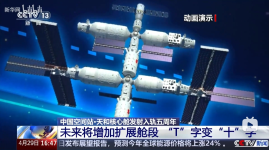
According to Xinhua News Agency, China’s space station is set to undergo expansion.

At present, the space station has deployed and implemented 267 scientific and application projects in orbit. In the future, not only will astronauts from Hong Kong and Macau be stationed there, but a Pakistani astronaut will also participate in a short-term flight mission as a payload specialist. In addition, cooperative projects with the UN Office for Outer Space Affairs are continuously being promoted and implemented. At this pace, the most important “space” in the space station will soon be insufficient. According to relevant experts, the space station will later welcome a sky-survey space telescope. The Long March 5B will also be upgraded for subsequent space station missions, with the development of a new, larger-diameter fairing, and an additional stage will be added on the basis of the original Long March 5B to accommodate the Chinese space station project, thus entering a new “expansion” cycle.

This expansion will take the following shape.
1777693303393.png
 
Tokamak regime sustains stable fusion plasma for one minute while easing heat loads
To view this content we will need your consent to set third party cookies.
For more detailed information, see our cookies page.
 
The Idea That China Can't Have AI Chips Is Nonsense - Jensen Huang

To view this content we will need your consent to set third party cookies.
For more detailed information, see our cookies page.


@Beijingwalker what is the update on Chinese 3 nm chips ? And last I heard China was producing 7 nm chips but using DUV which is less efficient that EUV. So how is the progress on that front ?

Also, there used to be a thread on previous pdf about Chinese university campuses and their details. Do we have something similar on this pdf ?
 

Users who are viewing this thread

Pakistan Defence Latest

Latest Posts

Back
Top