Another good article . Very important point about the satellite pics and Pakistan opening their side for scrutiny …..
“Contrary to official narratives on both sides, the four-day conflict that followed did not end in a neat victory for either nation.
Pakistan can point to the
aerial exchange on the night of May 6-7. Its Chinese-built J-10C jets shot down Indian aircraft, including Rafales, during the opening phase of the conflict.
At the Shangri-La Dialogue in Singapore in June 2025, India’s second chief of defence staff, General Anil Chauhan,
admitted to jet losses on the first day of the fighting. Air Marshal Bharti had framed it more plainly days earlier: “Losses are a part of combat.”
Pakistan also emerged with what many analysts saw as a diplomatic and narrative advantage. It accepted US President Donald Trump’s assertion that he had brought about the ceasefire that ended the war on May 10, nominated Trump for a Nobel Peace Prize, and has, over the past year, emerged as a significant diplomatic force, acting as the
main mediator of a ceasefire in the US war on Iran.
For its part, India can also point to significant military outcomes. Its BrahMos long-range missiles struck multiple Pakistani airbases, including Nur Khan in Rawalpindi and Bholari in the Sindh province.
India also used Israeli-made drones that penetrated as far as Karachi and Lahore, and
walked out of the Indus Waters Treaty on April 23, 2025, a pact that governs river-water sharing between the neighbours. The decision carries consequences far beyond the military exchange.
While commercial satellite imagery released by Western companies extensively documented damage at Pakistani military installations, the same companies, Maxar, now renamed Vantor, and Planet Labs, released no imagery of the Indian military sites allegedly struck by Pakistan during or after the conflict.
Meanwhile, Pakistani losses were subjected to open-source scrutiny, while Indian losses were not. Both readings of the conflict contain elements of truth. Yet, neither is complete.”
India and Pakistan each claim strategic successes after the four-day conflict, as tensions continue to simmer.

www.aljazeera.com
Exactly the point I was making and getting attacked ….. we need to worry about our ground based defences …..
“Beyond the hardware
Despite these upgrades, Pakistan’s air defence posture remains its most exposed vulnerability, analysts point out.
Its Chinese-supplied HQ-9B surface-to-air missile system failed to intercept the BrahMos missiles during the May 2025 conflict.
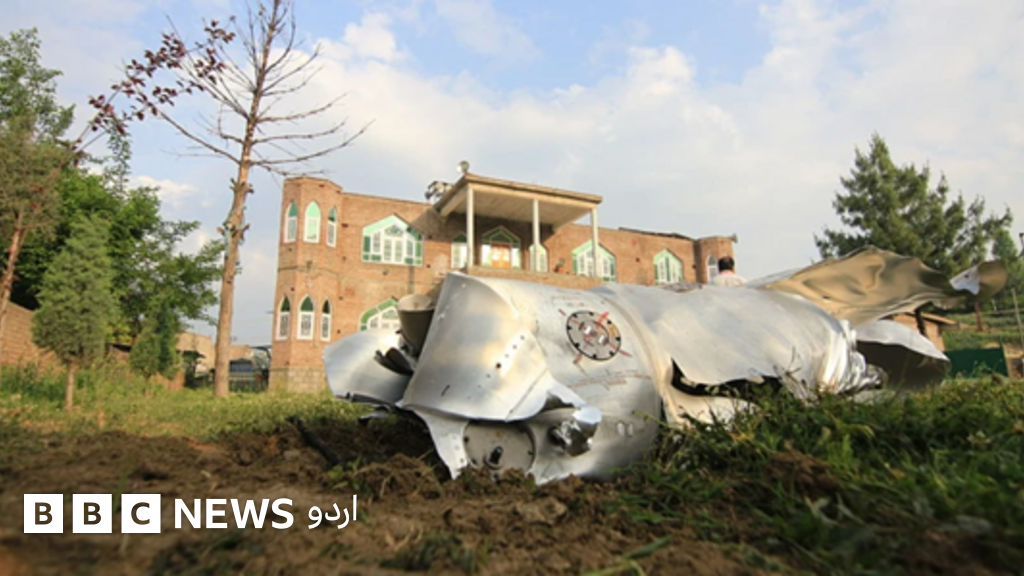
A mosque in Muridke, Pakistan, was hit by Indian missiles on the night of May 6-7 last year [File: Abid Hussain/Al Jazeera]Islamabad, according to Pakistani defence analyst Yamin, is now pursuing the longer-range HQ-19 ballistic missile defence system, with induction anticipated later in 2026.
Faisal, the Sydney-based analyst, described the Pakistani Air Force’s (PAF) opening performance on May 7, 2025, as impressive, but said that the later stages of the conflict exposed significant weaknesses.
“The PAF’s performance in the first phase of the conflict was genuinely remarkable,” he said. “It displayed both coherence and escalation discipline. However, later BrahMos strikes on airbases depicted gaps in ground air defences.”
New weapons systems alone, Faisal argued, would not be enough.
“Pakistan will have to meet this challenge through hardened shelters, dispersals, and urgent runway repair capacities to avoid being incapacitated in the next conflict,” he said.
The University at Albany’s Clary noted that the BrahMos missile’s combat debut had altered the strategic calculations for both sides.
“The BrahMos had never been used before in combat”, he said, “and so its use in 2025 will have given Pakistani air defence planners, and the Chinese manufacturers that make many of the Pakistani systems, a look at the technology”.
Whether there are straightforward countermeasures, or whether dealing with a hypersonic cruise missile like BrahMos remains beyond Pakistan’s current technological reach, is still unclear.
Yamin argued that the conflict also underscored the diminishing value of geography as strategic depth.
Strikes reached Nur Khan, Bholari and installations as far south as Sukkur.
“The conflict demonstrated that geography alone no longer provides strategic depth in the age of long-range precision weapons, drones, cyber capabilities, and satellite-guided systems,” he said.
Faisal put the doctrinal implications more directly.
“Deep strikes into Lahore, Karachi, and Rawalpindi demonstrate that ‘geographic immunity’ has eroded,” he said. “Doctrinally, Pakistan’s military is indicating preparation for conventional strikes from both ground and sea-based platforms to strike the Indian heartland, even at its southern shores, far from Pakistan.”
But that assessment is complicated by fiscal realities. Islamabad increased defence spending even as it cut overall federal expenditure by 7 percent to comply with its International Monetary Fund loan programme.
Meanwhile, India’s defence budget for 2025-26, according to Indian budget documents, stands at approximately $78.7bn, nearly nine times Pakistan’s official allocation.
Beyond the hardware
Despite these upgrades, Pakistan’s air defence posture remains its most exposed vulnerability, analysts point out.
Its Chinese-supplied HQ-9B surface-to-air missile system failed to intercept the BrahMos missiles during the May 2025 conflict.
A mosque in Muridke, Pakistan, was hit by Indian missiles on the night of May 6-7 last year [File: Abid Hussain/Al Jazeera]
Islamabad, according to Pakistani defence analyst Yamin, is now pursuing the longer-range HQ-19 ballistic missile defence system, with induction anticipated later in 2026.
Faisal, the Sydney-based analyst, described the Pakistani Air Force’s (PAF) opening performance on May 7, 2025, as impressive, but said that the later stages of the conflict exposed significant weaknesses.
“The PAF’s performance in the first phase of the conflict was genuinely remarkable,” he said. “It displayed both coherence and escalation discipline. However, later BrahMos strikes on airbases depicted gaps in ground air defences.”
New weapons systems alone, Faisal argued, would not be enough.
“Pakistan will have to meet this challenge through hardened shelters, dispersals, and urgent runway repair capacities to avoid being incapacitated in the next conflict,” he said.
The University at Albany’s Clary noted that the BrahMos missile’s combat debut had altered the strategic calculations for both sides.
“The BrahMos had never been used before in combat”, he said, “and so its use in 2025 will have given Pakistani air defence planners, and the Chinese manufacturers that make many of the Pakistani systems, a look at the technology”.
Whether there are straightforward countermeasures, or whether dealing with a hypersonic cruise missile like BrahMos remains beyond Pakistan’s current technological reach, is still unclear.
Yamin argued that the conflict also underscored the diminishing value of geography as strategic depth.
Strikes reached Nur Khan, Bholari and installations as far south as Sukkur.
“The conflict demonstrated that geography alone no longer provides strategic depth in the age of long-range precision weapons, drones, cyber capabilities, and satellite-guided systems,” he said.
Faisal put the doctrinal implications more directly.
“Deep strikes into Lahore, Karachi, and Rawalpindi demonstrate that ‘geographic immunity’ has eroded,” he said. “Doctrinally, Pakistan’s military is indicating preparation for conventional strikes from both ground and sea-based platforms to strike the Indian heartland, even at its southern shores, far from Pakistan.”
But that assessment is complicated by fiscal realities. Islamabad increased defence spending even as it cut overall federal expenditure by 7 percent to comply with its International Monetary Fund loan programme.
Meanwhile, India’s defence budget for 2025-26, according to Indian budget documents, stands at approximately $78.7bn, nearly nine times Pakistan’s official allocation.”





![Buildings in Muridke, Pakistan, hit by Indian missiles [Abid Hussain/Al Jazeera]](https://www.aljazeera.com/wp-content/uploads/2025/05/WhatsApp-Image-2025-05-07-at-15.45.34-1-1746622293.jpeg?resize=770%2C579 "Buildings in Muridke, Pakistan, hit by Indian missiles [Abid Hussain/Al Jazeera]")


