China Confirms Technical Support for Pakistan Air Force During India Conflict

Status
Not open for further replies.

Beijingwalker

VIP Member
Joined
Nov 4, 2011
Messages
94,182
Reaction score
114,365
Reputation
1,912.9
Country of Origin
Country of Residence

China Confirms Technical Support for Pakistan Air Force During India Conflict​

Dmytro Shumlianskyi​

May 10, 2026

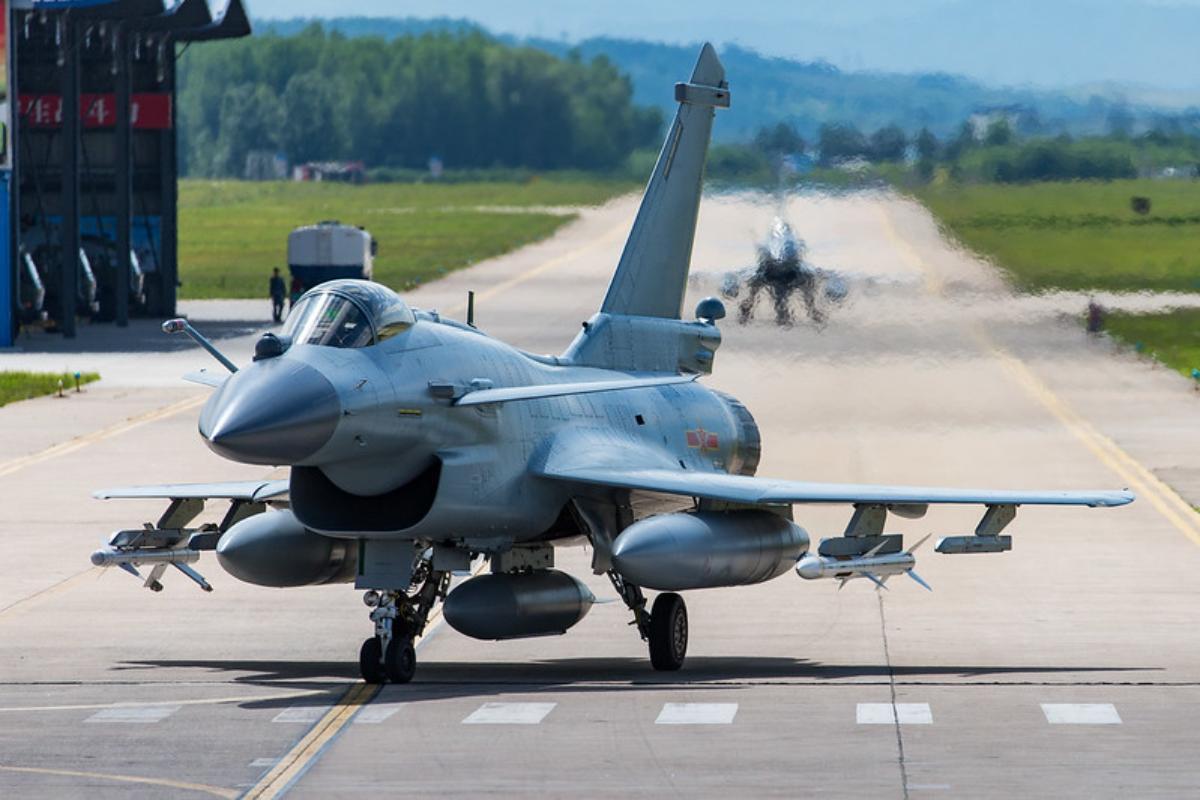
Pakystanskyj-J-10C.jpg
A Pakistani J-10C equipped with Chinese-made PL-15 long-range missiles. Photo credits: The STRATCOM Bureau

Chinese aviation engineers told state media that they provided technical support to the Pakistan Air Force during hostilities with India in May 2025.

South China Morning Post reported on this.

Chinese state broadcaster CCTV aired an interview with Zhang Heng, an engineer at the Chengdu Aircraft Design and Research Institute of the Aviation Industry Corporation of China (AVIC).

The Pakistan Air Force operates a fleet of Chinese-made J-10CE fighter jets, produced by a subsidiary of AVIC. It is estimated that one of these aircraft shot down at least one Rafale fighter jet during the conflict with India.

Zhang Heng said, recalling his trip to Pakistan, that at the support base one could often hear the roar of fighter jets taking off and constant air raid sirens. In May, around noon, the temperature was already approaching 50 °C. He said they were more concerned about how to better carry out the support work on site so that the equipment could show real combat effectiveness.
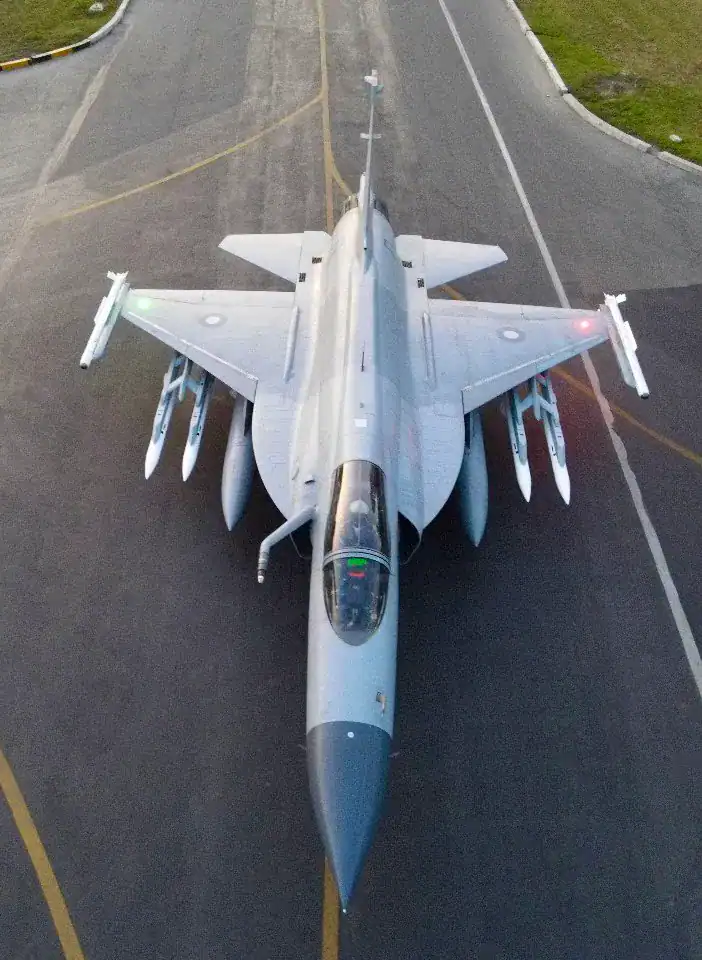
Pakistan-s-JF-17-Block-III-Thunder-equipped-with-Chinese-long-range-PL-15-missiles.webp

Pakistan’s JF-17 Block III Thunder equipped with Chinese long-range PL-15 missiles. Photo credits: The STRATCOM Bureau

It was previously reported that China supported Pakistan in its confrontation with India, but this referred to weapons supplies rather than the deployment of specialists. Pakistan initially equipped its fourth-generation JF-17 Thunder fighters with Chinese long-range PL-15 missiles amid the Kashmir crisis.

As reported by Pakistani media outlet STRATCOM, the missiles had recently arrived from China and were to be deployed across the JF-17C fleet amid rising regional tensions. The publication also said the missiles supplied to Pakistan came from the Chinese Air Force and did not carry restrictions typical of export variants.

In addition, photos of Chinese J-10C multirole fighters in service with the Pakistani military were published. These aircraft are also equipped with PL-15 and PL-10 missiles.

May conflict between India and Pakistan​

On April 22, 2025, a terrorist attack took place in the Baisaran Valley in Kashmir, in which Islamist militants killed about 50 tourists, resulting in 26 deaths.

The following day, India’s security committee announced evidence of cross-border links between the terrorist group and Pakistan. India closed the only border crossing in the region and ordered the expulsion of all Pakistani citizens within 48 hours.
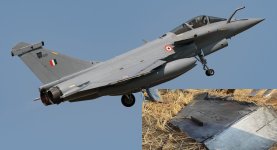
Indian-Dassault-Rafale-fighter-jet-with-tail-number-BS-001-and-its-tail-section-fragment-found...jpg
Indian Dassault Rafale fighter jet with tail number BS-001 and its tail section fragment, found on May 8

However, a key decision was the suspension of the Indus Waters Treaty, which governs shared river water use between India and Pakistan.

Three days after the attack, on the night of April 24-25, the first exchange of small-arms fire occurred along the Line of Control, followed by further accusations from both sides.

The border clashes escalated into exchanges of artillery fire, missile strikes and air combat between aircraft. Fighting continued until May 10.

Pakistan claims it shot down five Indian aircraft during the conflict, partly supported by footage of wreckage from at least two Indian fighter jets.
 

China admits aiding Pakistan during 2025 Operation Sindoor​

May 10, 2026
China’s rare admission: Beijing confirmed its engineers supported Pakistan’s J-10CE jets during 2025’s Operation Sindoor, marking its first public acknowledgment of direct involvement.

Political heat in Delhi: Congress has demanded a Parliament discussion, questioning why trade curbs on China are easing despite its wartime support to Pakistan.

Weapons and war lessons: Pakistan’s Chinese HQ-9B defence systems failed in battle, boosting India’s indigenous arms credibility and raising doubts over Beijing’s military hardware.

China’s on-ground role in 2025 conflict​

In a first, China publicly admitted deploying engineers from its state-owned Aviation Industry Corporation to Pakistani bases during Operation Sindoor. The technicians, working under extreme heat, ensured J-10CE fighter jets operated at full combat potential. This revelation underscores Beijing’s deep defence ties with Islamabad, with nearly 80% of Pakistan’s arms imports from 2021–2025 originating from China. The Pioneer + 1

"At the support base, we frequently heard the roar of fighter jets taking off and the constant wail of air-raid sirens. By late morning, in May, the temperature was already approaching 50 degrees Celsius [122 degrees Fahrenheit]. It was a real ordeal for us, both mentally and physically."
WION+ 1
Zhang Heng, AVIC engineer

Opposition questions India’s China policy​

Following China’s disclosure, Congress leader Jairam Ramesh accused the Modi government of easing trade restrictions and deepening industrial dependence on Beijing despite its hostile actions. He demanded a parliamentary debate, recalling earlier concessions to China and alleging loss of patrolling rights in Ladakh. The political challenge frames the admission as both a security and policy failure for the government. The New Indian Express


We need engineers from Hainan Island and Southern Yunnan province. They are used to warm weather. :)
 

“Multiple Kills, Zero Losses”: China Upgrades J-10CE & Ramps Up Export Drive One Year After Indo-Pak Clash​


May 10, 2026

China appears to have reinvigorated its export campaign for the J-10 CE multi-role fighter, highlighting that the aircraft “shot down multiple hostile aircraft with zero losses” in the Indo-Pakistan conflict last year and subtly hinting that it may be poised for further upgrades.

On May 7, 2026, Chinese state media aired an interview with Zhang Heng, an engineer from the Aviation Industry Corporation of China’s (AVIC) Chengdu Aircraft Design and Research Institute, which produces the J-10C fighter. Zhang and his colleagues admitted to providing technical support to Pakistan during the war, including for the J-10CE, as EurAsian Times reported in detail.

As India and Pakistan mark the one-year anniversary of their intense hostilities that shook up the South Asian subcontinent, China appears to have adopted a two-pronged strategy.

First, the Chinese media has deployed all its media resources to amplify Pakistan’s claims about downing the IAF Rafales using PL-15 long-range missiles fired from the J-10C during the intense four-day conflict, in an attempt to promote its aircraft as a world-class military platform. For instance, Chinese journalist Li Zexin published a video of the J-10C on X, reiterating the claims for wider global consumption.

The video was originally posted to the Chinese internet by the aircraft’s manufacturer.


For its part, India has not accepted any combat losses, although one Rafale allegedly crashed during the hostilities due to a technical malfunction, not a kinetic strike.

 
So Pakistan used chinese equipment. ( thanks to China no doubt). Engineers are required to equip/integrate new (orignal) varient of PL15 to aircraft. Only Chinese can do that so fast for military equipment.

If that is the case why can't Pakistan say India had Russian french and Isr-ael support?
 

China admits aiding Pakistan during 2025 Operation Sindoor​

May 10, 2026
China’s rare admission: Beijing confirmed its engineers supported Pakistan’s J-10CE jets during 2025’s Operation Sindoor, marking its first public acknowledgment of direct involvement.

Political heat in Delhi: Congress has demanded a Parliament discussion, questioning why trade curbs on China are easing despite its wartime support to Pakistan.

Weapons and war lessons: Pakistan’s Chinese HQ-9B defence systems failed in battle, boosting India’s indigenous arms credibility and raising doubts over Beijing’s military hardware.

China’s on-ground role in 2025 conflict​

In a first, China publicly admitted deploying engineers from its state-owned Aviation Industry Corporation to Pakistani bases during Operation Sindoor. The technicians, working under extreme heat, ensured J-10CE fighter jets operated at full combat potential. This revelation underscores Beijing’s deep defence ties with Islamabad, with nearly 80% of Pakistan’s arms imports from 2021–2025 originating from China. The Pioneer + 1

"At the support base, we frequently heard the roar of fighter jets taking off and the constant wail of air-raid sirens. By late morning, in May, the temperature was already approaching 50 degrees Celsius [122 degrees Fahrenheit]. It was a real ordeal for us, both mentally and physically."
WION+ 1
Zhang Heng, AVIC engineer

Opposition questions India’s China policy​

Following China’s disclosure, Congress leader Jairam Ramesh accused the Modi government of easing trade restrictions and deepening industrial dependence on Beijing despite its hostile actions. He demanded a parliamentary debate, recalling earlier concessions to China and alleging loss of patrolling rights in Ladakh. The political challenge frames the admission as both a security and policy failure for the government. The New Indian Express

50 Celsius in early May......ok.....

And it is normal to have a few personnel. What the Chinese probably didn't expect was to see how PAF take the jets to war.
 
50 Celsius in early May......ok.....

And it is normal to have a few personnel. What the Chinese probably didn't expect was to see how PAF take the jets to war.

Might have felt that way bro, East Asian folks do terribly in the heat and 20 degrees Celsius feels like 30 for them. :D
 
Great to hear, because we are allies.

China also has a stake in the Kashmir conflict as well such as Aksai Chin.
 

China Confirms Technical Support for Pakistan Air Force During India Conflict​

Dmytro Shumlianskyi​

May 10, 2026

View attachment 196747
A Pakistani J-10C equipped with Chinese-made PL-15 long-range missiles. Photo credits: The STRATCOM Bureau

Chinese aviation engineers told state media that they provided technical support to the Pakistan Air Force during hostilities with India in May 2025.

South China Morning Post reported on this.

Chinese state broadcaster CCTV aired an interview with Zhang Heng, an engineer at the Chengdu Aircraft Design and Research Institute of the Aviation Industry Corporation of China (AVIC).

The Pakistan Air Force operates a fleet of Chinese-made J-10CE fighter jets, produced by a subsidiary of AVIC. It is estimated that one of these aircraft shot down at least one Rafale fighter jet during the conflict with India.

Zhang Heng said, recalling his trip to Pakistan, that at the support base one could often hear the roar of fighter jets taking off and constant air raid sirens. In May, around noon, the temperature was already approaching 50 °C. He said they were more concerned about how to better carry out the support work on site so that the equipment could show real combat effectiveness.

Pakistan-s-JF-17-Block-III-Thunder-equipped-with-Chinese-long-range-PL-15-missiles.webp

Pakistan’s JF-17 Block III Thunder equipped with Chinese long-range PL-15 missiles. Photo credits: The STRATCOM Bureau

It was previously reported that China supported Pakistan in its confrontation with India, but this referred to weapons supplies rather than the deployment of specialists. Pakistan initially equipped its fourth-generation JF-17 Thunder fighters with Chinese long-range PL-15 missiles amid the Kashmir crisis.

As reported by Pakistani media outlet STRATCOM, the missiles had recently arrived from China and were to be deployed across the JF-17C fleet amid rising regional tensions. The publication also said the missiles supplied to Pakistan came from the Chinese Air Force and did not carry restrictions typical of export variants.

In addition, photos of Chinese J-10C multirole fighters in service with the Pakistani military were published. These aircraft are also equipped with PL-15 and PL-10 missiles.

May conflict between India and Pakistan​

On April 22, 2025, a terrorist attack took place in the Baisaran Valley in Kashmir, in which Islamist militants killed about 50 tourists, resulting in 26 deaths.

The following day, India’s security committee announced evidence of cross-border links between the terrorist group and Pakistan. India closed the only border crossing in the region and ordered the expulsion of all Pakistani citizens within 48 hours.

View attachment 196748
Indian Dassault Rafale fighter jet with tail number BS-001 and its tail section fragment, found on May 8

However, a key decision was the suspension of the Indus Waters Treaty, which governs shared river water use between India and Pakistan.

Three days after the attack, on the night of April 24-25, the first exchange of small-arms fire occurred along the Line of Control, followed by further accusations from both sides.

The border clashes escalated into exchanges of artillery fire, missile strikes and air combat between aircraft. Fighting continued until May 10.

Pakistan claims it shot down five Indian aircraft during the conflict, partly supported by footage of wreckage from at least two Indian fighter jets.
Posted many times already
 
Status
Not open for further replies.

Users who are viewing this thread

Pakistan Defence Latest

Latest Posts

Back
Top