Pakistan Minerals and Mining Updates

Mining gains traction despite Reko Diq delays​

Usman Hanif

KARACHI:
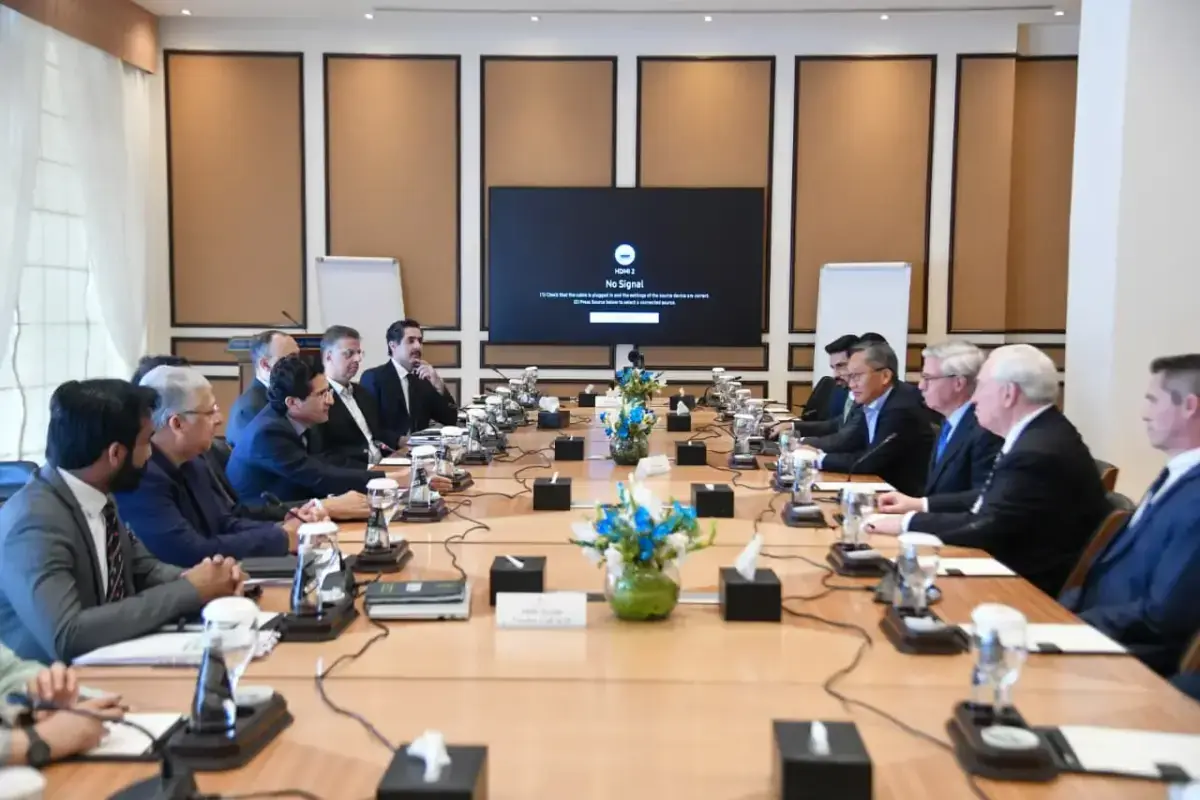
Although some voices that once loudly touted Pakistan's rare earth potential have faded as attention shifts to geopolitical developments, particularly the country's perceived role in easing tensions between the United States and Iran, Pakistan's emergence in the global race for critical minerals is gaining traction. Backed by multilateral financing and large-scale mining investments, anchored by the Reko Diq copper-gold project, this shift is beginning to reshape the country's export profile and industrial landscape.

An industry insider remarked that the pace of the mineral sector doesn't quite match the "adrenaline-fueled claims of the gentlemen boasting that the country will pick up pace by 2027 and will be standing among developed countries by 2030," instead, mining is following a natural course that will eventually benefit the entire economy. The Asian Development Bank (ADB) has signalled continued financial backing for Pakistan, including an approved $800 million package comprising $300 million in loans and $500 million in guarantees, while officials indicate that additional financing of up to $1 billion could be mobilised. The support reflects a broader push to position Pakistan within global supply chains for copper and other strategic minerals essential for energy transition, electrification and manufacturing.

"Under ADB's approach for supporting critical minerals-to-manufacturing value chains, the bank approved an innovative financing package for a copper-gold mine in Pakistan to strengthen the global copper supply chain. ADB's financing will help unlock greater private capital by derisking the investment," the ADB Annual Report 2025 noted.

At the centre of this shift is the Reko Diq project in Balochistan, one of the world's largest undeveloped copper-gold deposits, which has drawn renewed international attention amid intensifying competition for mineral resources. However, project momentum has encountered fresh headwinds. According to a March 26, 2026 report by Reuters, Barrick Mining is extending its review of the Reko Diq project and slowing development activity due to rising security concerns in Pakistan and the broader Middle East. The review, initially announced on February 5, covers all aspects of the project, including capital allocation and risk assessment. A company spokesperson confirmed that the review timeline will now be extended by 12 months from July, potentially affecting previously disclosed budgets and project timelines. The extended assessment aims to refine the delivery strategy and evaluate evolving geopolitical and operational risks.

Despite these delays, stakeholders within Pakistan's mining ecosystem continue to frame Reko Diq as a transformational project with far-reaching economic implications. Shamsuddin A Shaikh, CEO of National Resources Limited, described the project as critical to Pakistan's long-term economic trajectory. "A huge project for Reko Diq is underway. It was delayed due to security concerns, but it remains extremely important for Pakistan's destiny," he said in a conversation with The Express Tribune. He emphasised that the project serves as an anchor for broader mining activity in the region. "Several smaller projects are already taking place in the surrounding areas. If Reko Diq succeeds, it will create momentum for other ventures and attract both local and foreign investment," he noted.

Industry participants argue that while rare earth minerals are not currently identified in the Chagai district, the success of large-scale copper and gold mining could catalyse exploration and development across adjacent regions, including Khyber-Pakhtunkhwa and Chitral, where such deposits are more likely.

Local participation in the mining sector is also expanding. Alongside National Resources Limited, entities such as the Balochistan Mineral Exploration Company (BMEC), Mari Mining, Hubco and the Frontier Works Organisation (FWO) are actively engaged in exploration and related activities. New entrants continue to apply, reflecting growing investor interest despite the sector's high capital intensity and technical complexity.

"Mining and exploration require significant investment and expertise, but Pakistani companies are increasingly willing to take the risk," Shaikh said, adding that capacity building, technology transfer and workforce development remain key challenges.

Beyond upstream extraction, experts highlight the need to develop downstream industrial capacity to fully capture value from mineral resources. This includes establishing smelting and refining capabilities to produce finished metals domestically rather than exporting raw ore."If Pakistan can move towards producing refined copper, it will enable the development of downstream industries such as electrical wiring, automotive components and manufacturing inputs," Shaikh explained. "Exporting raw materials without processing limits economic gains."

Such industrial integration could reduce import dependence, lower production costs for domestic industries and enhance export competitiveness, particularly in sectors linked to electrification and infrastructure. Despite near-term uncertainties surrounding Reko Diq's timeline, industry stakeholders remain optimistic about its eventual execution. "Even if timelines shift or costs fluctuate, the project will move forward," Shaikh said, pointing to changes in management and ongoing strategic reviews by international partners.
 

Inside Pakistan's $13 Billion Pink Salt Opportunity


To view this content we will need your consent to set third party cookies.
For more detailed information, see our cookies page.


Pakistan is home to the world’s only Himalayan Pink Salt reserves.
Yet most of the value is still captured outside Pakistan.
In this episode of Unlocking Growth, we break down the hidden business opportunity inside Pakistan’s pink salt industry — from edible salt and exports to wellness products, branding, and global e-commerce.
We explore:
• Why Pakistan exports raw pink salt for cents — while branded products sell globally for 10–20x more
• The global Himalayan Pink Salt market and fastest-growing segments
• How India historically captured value through branding and re-exporting
• The impact of the GI Tag, export policy changes, and wellness trends
• The real CAPEX, OPEX, and unit economics of starting a pink salt business
• How entrepreneurs can enter through processing, branding, or exports
This episode is based on real industry numbers, export data, and operational insights.

Timestamps:
00:00
— Pakistan’s Pink Gold Rush
01:04 — Global Pink Salt Market Overview
01:52 — Pakistan’s Position in the Industry
02:38 — Why Pakistan Missed the Opportunity
03:41 — GI Tag, Export Ban & What’s Changing
04:58 — Wellness Trends & E-Commerce Opportunity
05:41 — How to Enter the Pink Salt Business
06:08 — CapEx Breakdown
07:02 — OpEx Breakdown
07:48 — Unit Economics & Margins
08:34 — Scaling Into Lamps & Wellness Products
09:42 — Pakistani Success Stories
10:25 — Who Should Enter This Opportunity?
11:27 — Webinar & Additional Resources
 
No reason, anyone accept Pakistan and Pakistani companies should be exporting pink salt to anywhere

If its indeed a multi billion dollar opportunity then we should be aiming to ensure almost all that money comes to Pakistan

We should especially be aware of any needless Indian involvement
 
Pink Salt (Himalayan Salt). In China, this type of salt is limited to industrial use. Due to its excessive heavy metal content, it does not meet the safety standards for edible salt and cannot be distributed or used as edible salt.
 

Inside Pakistan's $13 Billion Pink Salt Opportunity


To view this content we will need your consent to set third party cookies.
For more detailed information, see our cookies page.


Pakistan is home to the world’s only Himalayan Pink Salt reserves.
Yet most of the value is still captured outside Pakistan.
In this episode of Unlocking Growth, we break down the hidden business opportunity inside Pakistan’s pink salt industry — from edible salt and exports to wellness products, branding, and global e-commerce.
We explore:
• Why Pakistan exports raw pink salt for cents — while branded products sell globally for 10–20x more
• The global Himalayan Pink Salt market and fastest-growing segments
• How India historically captured value through branding and re-exporting
• The impact of the GI Tag, export policy changes, and wellness trends
• The real CAPEX, OPEX, and unit economics of starting a pink salt business
• How entrepreneurs can enter through processing, branding, or exports
This episode is based on real industry numbers, export data, and operational insights.

Timestamps:
00:00
— Pakistan’s Pink Gold Rush
01:04 — Global Pink Salt Market Overview
01:52 — Pakistan’s Position in the Industry
02:38 — Why Pakistan Missed the Opportunity
03:41 — GI Tag, Export Ban & What’s Changing
04:58 — Wellness Trends & E-Commerce Opportunity
05:41 — How to Enter the Pink Salt Business
06:08 — CapEx Breakdown
07:02 — OpEx Breakdown
07:48 — Unit Economics & Margins
08:34 — Scaling Into Lamps & Wellness Products
09:42 — Pakistani Success Stories
10:25 — Who Should Enter This Opportunity?
11:27 — Webinar & Additional Resources


Been hearing about this for the last 10 years, still they are talking about it!!!
 
Been hearing about this for the last 10 years, still they are talking about it!!!
Yeah cause some mafia clan stalwart of the patwari/f@ujeet holy alliance has it in their interest to profit from exporting it in raw form to their Indian handlers in UAE.
 
Pink Salt (Himalayan Salt). In China, this type of salt is limited to industrial use. Due to its excessive heavy metal content, it does not meet the safety standards for edible salt and cannot be distributed or used as edible salt.
What are u talking about? We are using it left, right, and center across the Western world.
 
What are u talking about? We are using it left, right, and center across the Western world.

Agree - it is sold here in the UK, which has one of the very highest world food standards in the world !!!!

In China you get this kind of crap and have to be very very careful on what you buy and eat.

To view this content we will need your consent to set third party cookies.
For more detailed information, see our cookies page.
 
What are u talking about? We are using it left, right, and center across the Western world.
Do you think this is a lie I personally made up?

This is the official news from China:
1778814653909.png
Original text link.

Every country has its own food safety standards. Their specific data are not the same.

China has not banned the sale of Himalayan salt in China. However, it can only be sold as 'for industrial use' and cannot be sold as 'edible salt'.
 
What are u talking about? We are using it left, right, and center across the Western world.
Is the West your ancestor?
are western standards international standards?
 
Last edited:
Agree - it is sold here in the UK, which has one of the very highest world food standards in the world !!!!

In China you get this kind of crap and have to be very very careful on what you buy and eat.

To view this content we will need your consent to set third party cookies.
For more detailed information, see our cookies page.

China fake everything
why you still always beg china in difficult times.

Have some backbone and some shame! Why don’t you go beg your British daddy at a time like this?
 
You people work and live in Europe and think you are superior. Deep down, you actually look down on your own motherland, look down on Asia, and look down on China, which helps your motherland.

But in reality, Europe today is nothing—absolutely nothing. In front of China and the United States, Europe can only be used as a bargaining chip. Yet you still have an inflated sense of yourselves and take Europe as the standard for everything.After spending too long living like a dog, you forget how to stand up straight like a human.

Who still takes Europe as the standard nowadays? In the eyes of China and the United States, Europe is merely second-rate.
Moreover, Europe has already fallen far behind in the information age and the coming age of intelligence, and there is no hope of catching up. Europe’s future may even be worse than that of some emerging Asia-Pacific and Middle Eastern countries.
 

Users who are viewing this thread

Country Watch Latest

Latest Posts

Back
Top