PAF J-10CE News Updates and Discussions part ll

Indeed, he is right ...
For a considerable period of time:

We have observed no new reports from CAC’s headquarters in Chengdu regarding the mass production or flight testing of the J-10CE.

Similarly, there has been no relevant news from AVIC Guizhou Aircraft Co., Ltd., located in Anshun. Nor have they announced any plans for new facility expansions.

According to the latest documents released by the Guizhou provincial government, the province has indeed designated the aerospace industry as a major strategic direction for future development. However, these documents indicate that the core enterprise of this initiative is AECC Liyang, and that AVIC Guizhou Aircraft Co., Ltd. is not included in this plan.

This information suggests that AVIC’s primary focus for the future development of export-oriented fighter aircraft lies with the FC-31/J-35 platform. Production of the J-10CE appears to be limited to small-batch manufacturing at its current scale, with no further expansion of production capacity.

If the PAF were indeed to place an additional order for the J-10CE, the following scenarios might ensue:

1. The production and delivery lead times for the newly ordered J-10CE fighters would likely be relatively long.

2. PAC might seek to establish an assembly line for the J-10CE fighter within Pakistan. (If PAC were to pursue this course of action, it would severely erode the market share of the JF-17 fighter.)

This is my personal analysis, provided for reference only.
 
For a considerable period of time:

We have observed no new reports from CAC’s headquarters in Chengdu regarding the mass production or flight testing of the J-10CE.

Similarly, there has been no relevant news from AVIC Guizhou Aircraft Co., Ltd., located in Anshun. Nor have they announced any plans for new facility expansions.

According to the latest documents released by the Guizhou provincial government, the province has indeed designated the aerospace industry as a major strategic direction for future development. However, these documents indicate that the core enterprise of this initiative is AECC Liyang, and that AVIC Guizhou Aircraft Co., Ltd. is not included in this plan.

This information suggests that AVIC’s primary focus for the future development of export-oriented fighter aircraft lies with the FC-31/J-35 platform. Production of the J-10CE appears to be limited to small-batch manufacturing at its current scale, with no further expansion of production capacity.

If the PAF were indeed to place an additional order for the J-10CE, the following scenarios might ensue:

1. The production and delivery lead times for the newly ordered J-10CE fighters would likely be relatively long.

2. PAC might seek to establish an assembly line for the J-10CE fighter within Pakistan. (If PAC were to pursue this course of action, it would severely erode the market share of the JF-17 fighter.)

This is my personal analysis, provided for reference only.
All that Yap just to say absolutely nothing.
 
Why a AWAC was Stationed so near the enemy Border- and why AIR DEFENCE failed here - what’s lecture for future?
The way SAAB2000 was targeted, there could be one of the three possibilities:

1. Indians had been tracking that particular a/c and exactly knew where it landed prior to the strike. There was this confusion regarding the cessation of hostilities and PAF was caught off guard. The enemy could track the plane right up to the hanger where it was parked, either through the almost real time satellite imagery from their own birds in the space or guessed the parking location once it was clear that it landed at Bholari.

2. Americans shafted us really good and gave the exact coordinates to the Indians. There were similar rumors that Shahbaz AFB strike was coordinated between the Yankees and Indians.

3. Internal treachery. Someone present at the base (may be airman or lower staff) gave the exact location to get some quick bucks. You wont imagine how cheap people sell.

Whatever the case might have been, it was totally avoidable.
We had came out of the May conflict almost scratch free (a/c wise) but this last minute strike did the most unneccessary damage.
 
The way SAAB2000 was targeted, there could be one of the three possibilities:

1. Indians had been tracking that particular a/c and exactly knew where it landed prior to the strike. There was this confusion regarding the cessation of hostilities and PAF was caught off guard. The enemy could track the plane right up to the hanger where it was parked, either through the almost real time satellite imagery from their own birds in the space or guessed the parking location once it was clear that it landed at Bholari.

2. Americans shafted us really good and gave the exact coordinates to the Indians. There were similar rumors that Shahbaz AFB strike was coordinated between the Yankees and Indians.

3. Internal treachery. Someone present at the base (may be airman or lower staff) gave the exact location to get some quick bucks. You wont imagine how cheap people sell.

Whatever the case might have been, it was totally avoidable.
We had came out of the May conflict almost scratch free (a/c wise) but this last minute strike did the most unneccessary damage.
He was talking about the India AWACs
 
For a considerable period of time:

We have observed no new reports from CAC’s headquarters in Chengdu regarding the mass production or flight testing of the J-10CE.

Similarly, there has been no relevant news from AVIC Guizhou Aircraft Co., Ltd., located in Anshun. Nor have they announced any plans for new facility expansions.

According to the latest documents released by the Guizhou provincial government, the province has indeed designated the aerospace industry as a major strategic direction for future development. However, these documents indicate that the core enterprise of this initiative is AECC Liyang, and that AVIC Guizhou Aircraft Co., Ltd. is not included in this plan.

This information suggests that AVIC’s primary focus for the future development of export-oriented fighter aircraft lies with the FC-31/J-35 platform. Production of the J-10CE appears to be limited to small-batch manufacturing at its current scale, with no further expansion of production capacity.

If the PAF were indeed to place an additional order for the J-10CE, the following scenarios might ensue:

1. The production and delivery lead times for the newly ordered J-10CE fighters would likely be relatively long.

2. PAC might seek to establish an assembly line for the J-10CE fighter within Pakistan. (If PAC were to pursue this course of action, it would severely erode the market share of the JF-17 fighter.)

This is my personal analysis, provided for reference only.


It is indeed a mystery even if on New year we saw for the first time a J-10CE at GAIC.

J-10CE at GAIC - 20260225 - 1.jpg

Additionally - and hopefully you correct me if I'm wrong!? - we have hints that there is a large customer for J-10C.


Even more he allegedly said:

"The J-10C has far more than just two customers. The publicly known ones, as everyone knows, are Pakistan and Uzbekistan. Uzbekistan is currently taking delivery, but in reality, there are far more than two users. That's all I can say"

So my feeling is that we have been all too much focused on the J-36, J-35 & J-XDS but neglected the J-10C.
 
He contributes far far far more then you to the forum, maybe ad something rather then literally going around insulting members all the time, this seems to be form for you these days
Some Pakistanis are unfamiliar with the operational mechanisms of Chinese enterprises and lack the proficiency to look beyond surface-level news to conduct in-depth analysis. This is a normal phenomenon.

Currently, CAC is a publicly listed company on China's stock market. In accordance with relevant Chinese regulations, listed companies are required to disclose significant activities occurring within the scope of their daily operations.

The scope of the CAC listed entity encompasses the following:
1. Chengdu Aircraft Industry (Group) Co., Ltd.
2. AVIC Guizhou Aircraft Co., Ltd.
3. Changsha 5712 Aircraft Industry Co., Ltd.
4. AVIC CAC Civil Aircraft Co., Ltd.

This means that any significant business activities of AVIC Guizhou Aircraft Co., Ltd. also fall within the scope of mandatory public disclosure.
It is indeed a mystery even if on New year we saw for the first time a J-10CE at GAIC.

View attachment 197462

Additionally - and hopefully you correct me if I'm wrong!? - we have hints that there is a large customer for J-10C.


Even more he allegedly said:

"The J-10C has far more than just two customers. The publicly known ones, as everyone knows, are Pakistan and Uzbekistan. Uzbekistan is currently taking delivery, but in reality, there are far more than two users. That's all I can say"

So my feeling is that we have been all too much focused on the J-36, J-35 & J-XDS but neglected the J-10C.
Yes, that is not a problem.

My analysis does not conflict with this point. CAC (including GAIC) has not halted production of the J-10CE. However, neither CAC's Chengdu headquarters nor GAIC has expanded the production capacity for the J-10CE. At the very least, all currently available public information indicates no signs of such capacity expansion.

As of now, entities such as CAC, AVIC, and CATIC have issued no official statements regarding "new orders for the J-10CE." All such information stems solely from media speculation. Furthermore, there are no indications of any expansion in the production lines associated with the J-10CE. However, we have indeed observed imagery showing the J-10CE currently in production.

This information suggests that while it is highly probable that a new customer for the J-10CE exists, the order volume is likely neither substantial nor urgent. Alternatively, there remains the possibility that the export of J-10CE assembly lines is under consideration.
 
Last edited:
It is indeed a mystery even if on New year we saw for the first time a J-10CE at GAIC.

View attachment 197462

Additionally - and hopefully you correct me if I'm wrong!? - we have hints that there is a large customer for J-10C.


Even more he allegedly said:

"The J-10C has far more than just two customers. The publicly known ones, as everyone knows, are Pakistan and Uzbekistan. Uzbekistan is currently taking delivery, but in reality, there are far more than two users. That's all I can say"

So my feeling is that we have been all too much focused on the J-36, J-35 & J-XDS but neglected the J-10C.

Potentially Egypt(?), there was "talk" of Bangladesh(but all Bangladesh does it talk, as it has for the last 20 odd years) and Indonesia (thought the talks were for second hand J10A variants ).

It will be interesting to know who it turns out to be eventually!
 
Last edited:
For a considerable period of time:

We have observed no new reports from CAC’s headquarters in Chengdu regarding the mass production or flight testing of the J-10CE.

Similarly, there has been no relevant news from AVIC Guizhou Aircraft Co., Ltd., located in Anshun. Nor have they announced any plans for new facility expansions.

According to the latest documents released by the Guizhou provincial government, the province has indeed designated the aerospace industry as a major strategic direction for future development. However, these documents indicate that the core enterprise of this initiative is AECC Liyang, and that AVIC Guizhou Aircraft Co., Ltd. is not included in this plan.

This information suggests that AVIC’s primary focus for the future development of export-oriented fighter aircraft lies with the FC-31/J-35 platform. Production of the J-10CE appears to be limited to small-batch manufacturing at its current scale, with no further expansion of production capacity.

If the PAF were indeed to place an additional order for the J-10CE, the following scenarios might ensue:

1. The production and delivery lead times for the newly ordered J-10CE fighters would likely be relatively long.

2. PAC might seek to establish an assembly line for the J-10CE fighter within Pakistan. (If PAC were to pursue this course of action, it would severely erode the market share of the JF-17 fighter.)

This is my personal analysis, provided for reference only.

J-10CE Assembly Line Would Not Undermine the JF‑17

1. The J-10CE and JF‑17 Do Not Compete, They Occupy Different Roles

The J-10CE is a heavier, more expensive, higher‑end 4.5‑generation fighter.
The JF‑17 is a lightweight, low‑cost, high‑volume multirole platform.

They serve different doctrinal purposes, not overlapping ones:

• J-10CE → air‑superiority, BVR dominance, escort, high‑end deterrence
• JF‑17 → mass‑strike, patrol, CAS, interdiction, scalable munitions delivery

This is the same logic behind:

• F‑16 + F‑35
• Rafale + Tejas
• J‑10 + JF‑17
• Gripen + F‑18 (in some mixed fleets)

No air force replaces its light fighter backbone with a heavier, costlier platform.

2. An Assembly Line Does Not Mean Mass Procurement

Even if PAC assembled J‑10CE kits, it would be:

• CKD/SKD assembly, not full manufacturing
• Limited to 2 to 3 squadrons per decade
• Dependent on Chinese supply chains
• Far more expensive per unit than JF‑17

The JF‑17’s market is built on:

• affordability
• sovereign customization
• exportability
• low operating cost

The J‑10CE cannot match these attributes.

3. The JF‑17’s Export Market Is Not Threatened

Countries that buy the JF‑17 do so because they cannot afford or do not need a heavier fighter like the J‑10CE.

JF‑17 customers prioritize:

• $25–35M unit cost
• cheap flight hour cost
• sovereign weapons integration
• flexible financing
• low infrastructure requirements

J‑10CE customers require:

• larger budgets
• hardened infrastructure
• higher maintenance capacity
• deeper political alignment with China

These are two different customer universes.

4. A J‑10CE Line Would Strengthen the JF‑17, Not Weaken It

A local J‑10CE assembly line would:

• increase PAC’s industrial capability
• deepen China–Pakistan aerospace integration
• improve supply chain resilience
• create shared avionics, EW, and weapons ecosystems
• accelerate technology spillover into Block IV and JF‑17 upgrades

This is the same pattern seen in:

• Turkey (F‑16 assembly → KAAN development)
• South Korea (F‑16 assembly → KF‑21 development)
• Japan (F‑15 assembly → F‑2 development)

Industrial growth in the high‑end segment always benefits the low‑end domestic program.

5. The PAF Doctrine Requires Both Platforms

The PAF’s own public statements (e.g., AVM Ghazi) confirm:

• J‑10CE = high‑end air‑superiority
• JF‑17 = mass‑strike backbone

The doctrine is built around:

• platform depth
• munitions scalability
• ISTAR‑driven targeting

Removing the JF‑17 would collapse the entire “many platforms carrying many smart weapons” strategy.

The J‑10CE cannot replace the JF‑17 in this architecture.

6. Economically, the JF‑17 Is Irreplaceable

The J‑10CE costs:

• 3× more to buy
• 2× more to operate
• requires more infrastructure

Pakistan cannot afford:

• 150 J‑10CEs
• nor can any JF‑17 export customer

The JF‑17 is the only sustainable mass‑fleet option for Pakistan and its export partners.

A J‑10CE assembly line in Pakistan would not erode the JF‑17’s market share.
Instead, it would:

• strengthen Pakistan’s aerospace ecosystem
• enhance PAF’s high‑end capabilities
• complement the JF‑17’s role
• expand PAC’s industrial capacity
• improve technology transfer for future upgrades

The two platforms are complementary, not competitive.
 
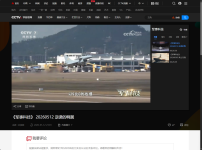
A CCTV military program reported that during joint military exercises between Pakistan and Qatar in 2024, the J-10CE fighter jet achieved a decisive 9–0 victory over the Typhoon fighter jet.
1778938816331.png

J-10CE Assembly Line Would Not Undermine the JF‑17

1. The J-10CE and JF‑17 Do Not Compete, They Occupy Different Roles

The J-10CE is a heavier, more expensive, higher‑end 4.5‑generation fighter.
The JF‑17 is a lightweight, low‑cost, high‑volume multirole platform.

They serve different doctrinal purposes, not overlapping ones:

• J-10CE → air‑superiority, BVR dominance, escort, high‑end deterrence
• JF‑17 → mass‑strike, patrol, CAS, interdiction, scalable munitions delivery

This is the same logic behind:

• F‑16 + F‑35
• Rafale + Tejas
• J‑10 + JF‑17
• Gripen + F‑18 (in some mixed fleets)

No air force replaces its light fighter backbone with a heavier, costlier platform.

2. An Assembly Line Does Not Mean Mass Procurement

Even if PAC assembled J‑10CE kits, it would be:

• CKD/SKD assembly, not full manufacturing
• Limited to 2 to 3 squadrons per decade
• Dependent on Chinese supply chains
• Far more expensive per unit than JF‑17

The JF‑17’s market is built on:

• affordability
• sovereign customization
• exportability
• low operating cost

The J‑10CE cannot match these attributes.

3. The JF‑17’s Export Market Is Not Threatened

Countries that buy the JF‑17 do so because they cannot afford or do not need a heavier fighter like the J‑10CE.

JF‑17 customers prioritize:

• $25–35M unit cost
• cheap flight hour cost
• sovereign weapons integration
• flexible financing
• low infrastructure requirements

J‑10CE customers require:

• larger budgets
• hardened infrastructure
• higher maintenance capacity
• deeper political alignment with China

These are two different customer universes.

4. A J‑10CE Line Would Strengthen the JF‑17, Not Weaken It

A local J‑10CE assembly line would:

• increase PAC’s industrial capability
• deepen China–Pakistan aerospace integration
• improve supply chain resilience
• create shared avionics, EW, and weapons ecosystems
• accelerate technology spillover into Block IV and JF‑17 upgrades

This is the same pattern seen in:

• Turkey (F‑16 assembly → KAAN development)
• South Korea (F‑16 assembly → KF‑21 development)
• Japan (F‑15 assembly → F‑2 development)

Industrial growth in the high‑end segment always benefits the low‑end domestic program.

5. The PAF Doctrine Requires Both Platforms

The PAF’s own public statements (e.g., AVM Ghazi) confirm:

• J‑10CE = high‑end air‑superiority
• JF‑17 = mass‑strike backbone

The doctrine is built around:

• platform depth
• munitions scalability
• ISTAR‑driven targeting

Removing the JF‑17 would collapse the entire “many platforms carrying many smart weapons” strategy.

The J‑10CE cannot replace the JF‑17 in this architecture.

6. Economically, the JF‑17 Is Irreplaceable

The J‑10CE costs:

• 3× more to buy
• 2× more to operate
• requires more infrastructure

Pakistan cannot afford:

• 150 J‑10CEs
• nor can any JF‑17 export customer

The JF‑17 is the only sustainable mass‑fleet option for Pakistan and its export partners.

A J‑10CE assembly line in Pakistan would not erode the JF‑17’s market share.
Instead, it would:

• strengthen Pakistan’s aerospace ecosystem
• enhance PAF’s high‑end capabilities
• complement the JF‑17’s role
• expand PAC’s industrial capacity
• improve technology transfer for future upgrades

The two platforms are complementary, not competitive.
The crux of the matter lies in economic cost-effectiveness and the PAC's response capabilities.
 
The full video

To view this content we will need your consent to set third party cookies.
For more detailed information, see our cookies page.

A frigging cattle market right next to an airbase!! attracting all sorts of birds like vultures, leading to bird strikes, don't be surprised when a J10C crashes soon. I've said this repeatedly before but PAF airbases nestled amongst densely populated areas is a severe security risk, not just from bird strikes but terrorist attacks.
 
A frigging cattle market right next to an airbase!! attracting all sorts of birds like vultures, leading to bird strikes, don't be surprised when a J10C crashes soon. I've said this repeatedly before but PAF airbases nestled amongst densely populated areas is a severe security risk, not just from bird strikes but terrorist attacks.
yes, during eid they always publish a circular asking people not to dump carcasses. Infact, perhaps even they clean up carcasses.

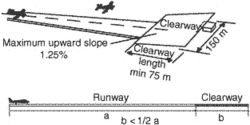
IMO the only workable solution is the PAF buys up the land around the runways and increases the length of the clearways at the ends of the runway, this means the aircraft are within airport grounds while descending and that way theyre less likely to meet a vulture, because they'd be higher than before.

1778941453022.png

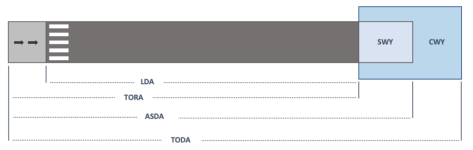
the clearway is basically an amount of area which starts at the runway threshold, encompassing the stopway which runs beyond the runway and is under the control of the airport authority, this ensures aircraft are able to climb to their screen height (50 feet at the end of the takeoff distance/50 ft at the arrival, variable- depending on aircraft class/conditions) ensuring obstacle clearance

1778941619349.png

with fast jets, i believe they dont need to comply with rules like these, these are mostly civillian rules, wrt screen height etc, but the runway layout and approach path design is the same i assume, however, increasing the length of the clearway creates a guaranteed carcass free area, at which point you could probably even conduct some sort of tactical descent, having you get down fast enough within the boundaries of the airfield, ensuring youre clear of vultures
 
The way SAAB2000 was targeted, there could be one of the three possibilities:

1. Indians had been tracking that particular a/c and exactly knew where it landed prior to the strike. There was this confusion regarding the cessation of hostilities and PAF was caught off guard. The enemy could track the plane right up to the hanger where it was parked, either through the almost real time satellite imagery from their own birds in the space or guessed the parking location once it was clear that it landed at Bholari.

2. Americans shafted us really good and gave the exact coordinates to the Indians. There were similar rumors that Shahbaz AFB strike was coordinated between the Yankees and Indians.

3. Internal treachery. Someone present at the base (may be airman or lower staff) gave the exact location to get some quick bucks. You wont imagine how cheap people sell.

Whatever the case might have been, it was totally avoidable.
We had came out of the May conflict almost scratch free (a/c wise) but this last minute strike did the most unneccessary damage.
All our bases are close to Indian border so there is no argument of basing these assets deep. The biggest problem is that we have not built hardened hangars for these precious aircraft instead they only have soft skinned hangars. Similar damage was sustained to such hangar at Murid too I believe. Some genius thought such aircraft won't be at risk from Indians so they only erected walls around these hangars after the Kamra attack, to protect from terrorists.PAF must harden these vulnerable hangars immediately.
 

Users who are viewing this thread

Pakistan Defence Latest

Country Watch Latest

Back
Top