Chinese Aircraft Carriers - Liaoning, Shandong, Fujian and the future

China’s New Nuclear Aircraft Carrier Just Leveled Up—What It Means Globally?!

Apr 27, 2026

To view this content we will need your consent to set third party cookies.
For more detailed information, see our cookies page.


“China’s New Nuclear Aircraft Carrier Just Leveled Up—What It Means Globally?!”

China is developing its most advanced aircraft carrier yet—the Type 004 nuclear-powered supercarrier. Expected to be larger than current carriers and capable of carrying over 100 aircraft, this platform represents a major step forward in naval technology. With features like nuclear propulsion, electromagnetic launch systems, and extended operational range, China’s new aircraft carrier could operate for longer periods and across greater distances than ever before.

In this video, we break down what makes the Type 004 unique, how it compares to other modern aircraft carriers, and what it means for global naval strategy. Is this just an upgrade, or a shift in how power is projected at sea?
 
  • Like
Reactions: Waz
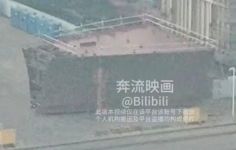
Update on the 004! ... likely part of the bow section.

1777269174219.png
 
China's New Fujian Carrier Changes Everything - Here's Why

To view this content we will need your consent to set third party cookies.
For more detailed information, see our cookies page.


> Review of US Aircraft carriers by a retired USN submariner.
 

China: The Next Aircraft Carrier Superpower


By Caleb Larson
Published May 5 2026

CV-18 Fujian

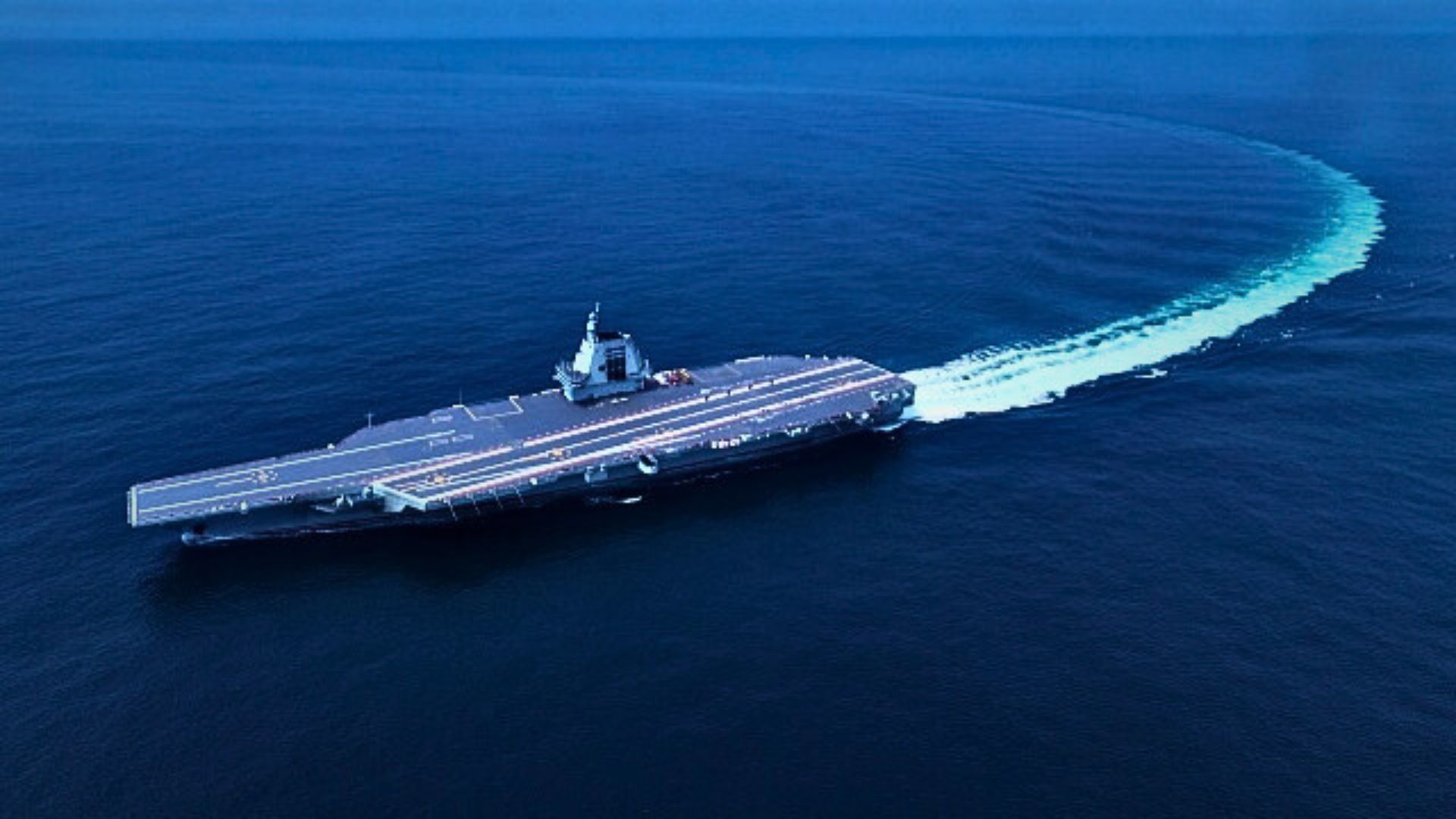
CV-18 Fujian aircraft carrier from China. Image Credit: Creative Commons.

China’s Type 004 aircraft carrier will be the country’s first nuclear-powered supercarrier—a leap forward that will put Beijing in an exclusive club currently shared only by the U.S. Navy and France. Once the Type 004 enters service, China will join a small group of nations operating nuclear-powered carriers with virtually unlimited range constrained only by crew sustainment requirements.

China Is About to Join the Exclusive Nuclear Aircraft Carrier Club

China Aircraft Carrier on the High Seas

China Aircraft Carrier on the High Seas. Image Credit: Creative Commons.

China’s Navy, the People’s Liberation Army Navy, or PLAN, counts more ships in its fleet than any other navy in the world — and the PLAN’s carrier building is picking up pace too. China’s carrier construction over the past several decades has aimed to give Beijing a robust power-projection capability in its near abroad.

The PLAN began carrier operations in the 1990s after it purchased the Varyag, an incomplete ex-Soviet aircraft carrier sold at the end of the Cold War and subsequent defense drawdowns.

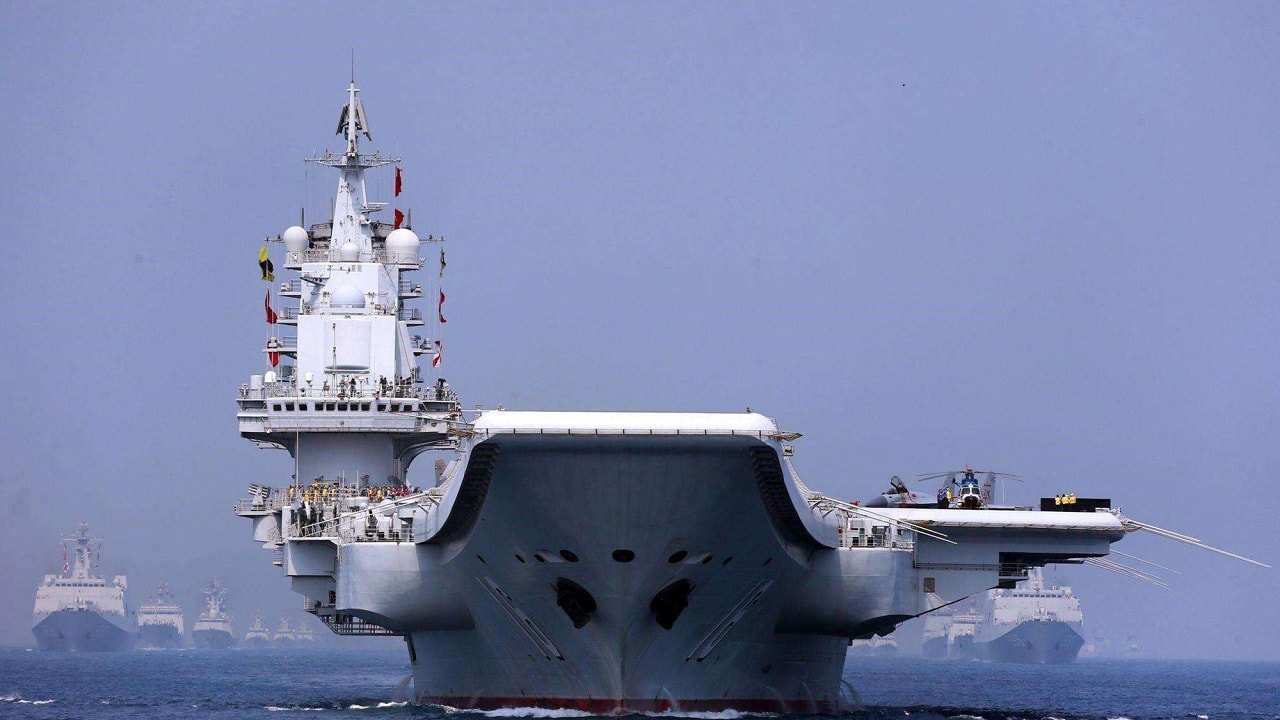
Following extensive retrofitting and repairs, the complete carrier entered PLAN service in 2012 as the Liaoning. It was the first relatively modern aircraft carrier in PLAN service, but its role was ultimately to gather information on carrier design and operations rather than to serve as a combat aircraft carrier.

Following the Liaoning’s entry into service, the PLAN built the first entirely domestically-built aircraft carrier, the Shandong, which entered service in 2019. Though outwardly rather similar to the earlier Liaoning, the newer Shandong incorporated updated elements in its design.

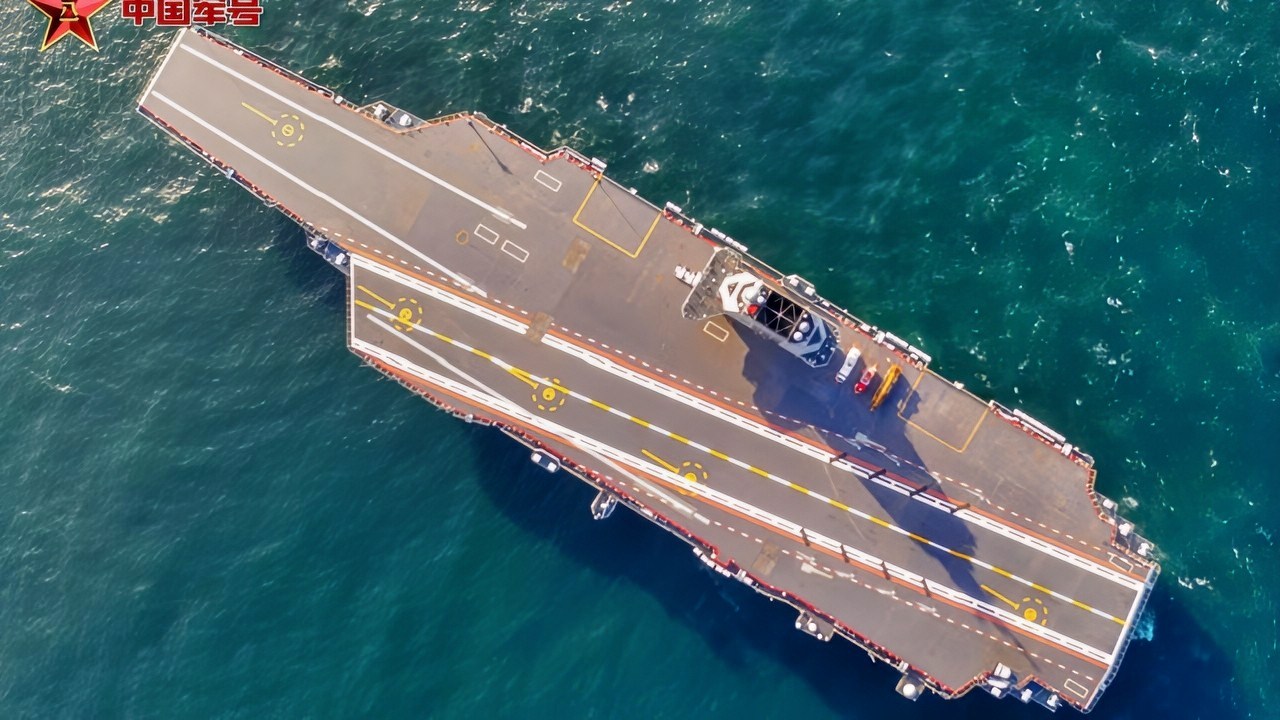
Fast forward to today, China’s third carrier, the Fujian, is undergoing sea trials following its entry into service in 2022. The Fujian is more modern than its two predecessors and features an electromagnetic catapult launch system, similar to that seen on the upcoming U.S. Navy Ford-class carriers. It can launch heavier aircraft at high rates and optimize carrier operations.

Though certainly more advanced, the PLAN’s carrier aspirations do not end there. China’s newest aircraft carrier, provisionally known as the Type 004, will be an entirely new kind of aircraft carrier.

China-J-35-Fighter-on-Aircraft-Carrier.jpg


China Aircraft Carrier Operations

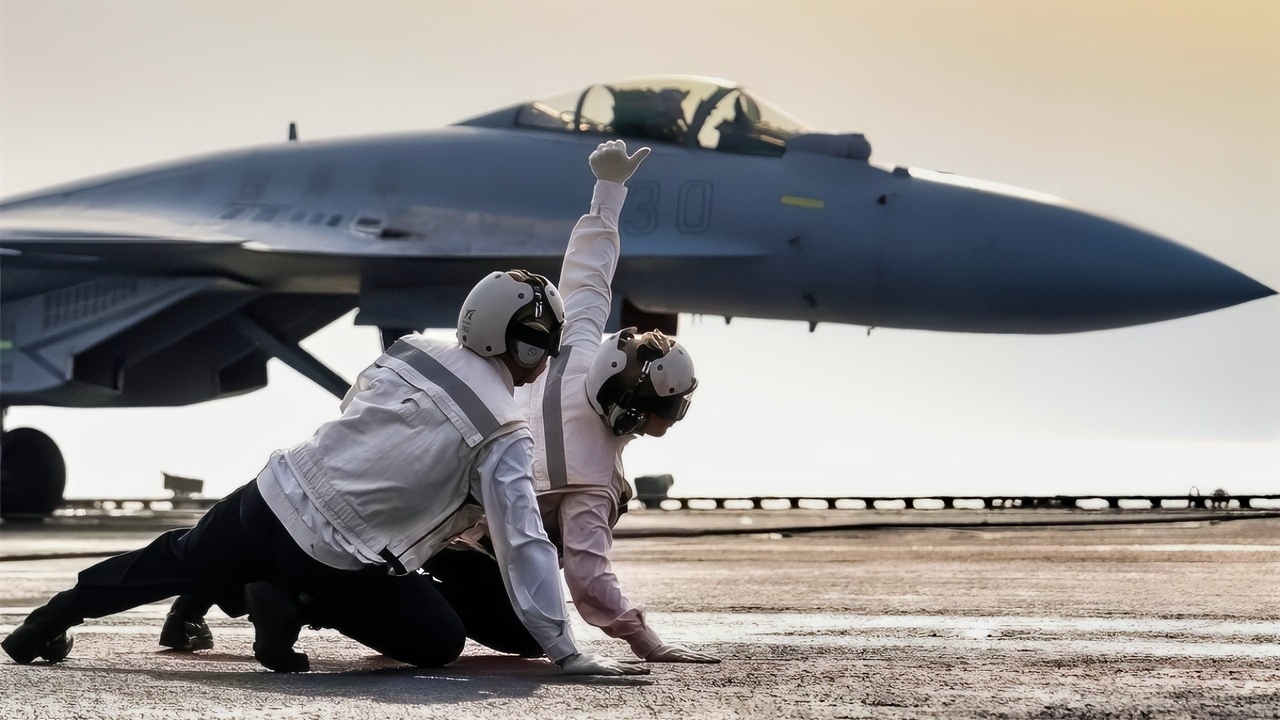
China Aircraft Carrier Operations. Image Credit: Chinese Navy.
China Aircraft Carrier in Port

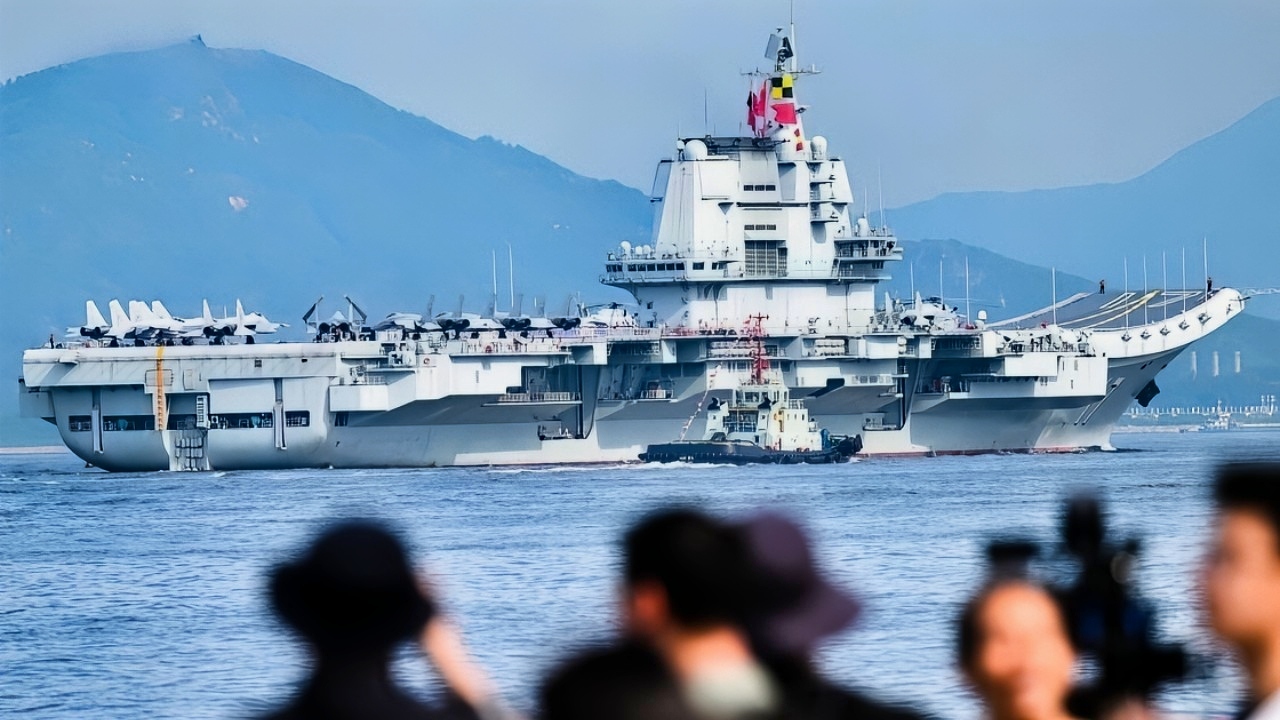
China Aircraft Carrier in Port. Image Credit: Chinese Navy.

The Type 004

China’s carrier development has followed a logical linear progression: finishing a foreign carrier, tailoring that design for seamless operations, then a homegrown, advanced carrier, and now China’s first nuclear-powered aircraft carrier.

Despite the challenges of mating nuclear reactors to a ship’s engine room, the advantages of nuclear propulsion are clear: virtually unlimited range constrained only by crew sustainment requirements.

Once in service, the People’s Liberation Army Navy will join a very exclusive club: nations that operate nuclear-powered aircraft carriers.

Today, that club counts only two members: the United States Navy, which operates 11 nuclear-powered aircraft carriers, and the French Navy, which operates a single nuclear-powered carrier, the Charles de Gaulle.

Like its Fujian predecessor, the Type 004 carrier will also sport an electromagnetic catapult launch system.

 
Finally an update on the 004 Aircraft Carrier via ᵀ¹ᵐᵉ / @WZZJWZ on X

IMG_8947.jpegIMG_8948.jpeg
 
1779178415894.png
Google Translate:

In recent years, a number of military enthusiasts have engaged in unauthorized "illegal drone flights," surreptitiously photographing military facilities—such as airbases, fighter jets, and warships—thereby posing a grave threat to national defense security. In late 2021, an individual surnamed Luo illegally utilized a high-definition camera drone for aerial photography, thereby illicitly obtaining a large volume of high-resolution images of an aircraft carrier. These photographs could easily be exploited to deduce state secrets—including the progress of the carrier's construction, the specifications of sensitive equipment, and the sophistication of core technologies—thereby directly jeopardizing national defense security and undermining the nation's core interests.
 

China’s J-35 stealth jets could be deployed on every aircraft carrier, state media says

Beijing appears to be preparing its older carriers for operations with the new J-35 stealth fighter.

ByChristopher McFadden
InnovationMay 23, 2026 07:47 AM EST
Canva-Photo-2025-11-07T122050.jpeg
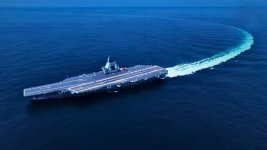
Representative image of China's Fujian aircraft carrier.China's Ministry of National Defense

According to Chinese state media, all three of China’s aircraft carriers could soon field the J-35 stealth fighter. At present, only the People’s Liberation Army Navy’s (PLAN) most advanced carrier, the Fujian, can do so.

According to reports, China’s other carriers, the Liaoning and Shandong, could be upgraded to handle the J-35 too. If true, this would significantly bolster China’s naval force projection capabilities.

Speculation around this came when Chinese state broadcaster China Central Television (CCTV) said in a social media post on Wednesday. “The Liaoning is training in the western Pacific. Could the J-35 be on board?” CCTV posted.

Both of these older carriers launch aircraft using a ski-jump ramp setup.

Ramping up China’s carriers​

These launch aircraft into the air using their own power, meaning they must be light enough to do so. This translates into less fuel and weapons per aircraft, per launch. Heavier aircraft (like early warning aircraft), or more laden ones, often struggle to get airborne using this older technology.

The Fujian, on the other hand, reportedly operates a functional electromagnetic catapult system (EMALS), similar in concept to the newest US carriers. This launches aircraft by accelerating them rapidly using a rail system built into the deck.
This enables much heavier aircraft to get airborne from the flight deck, meaning more fuel and weapons can be launched per aircraft. It also enables a faster launch tempo, and such a system is ideal for China’s stealth-capable J-35 (China’s equivalent of the F-35 Lightning II).

The J-35 is designed to be harder to detect by radar and can perform a long-range strike capability. It has advanced sensors, networked warfare capability, and improved survivability against modern air defenses.

The ability to launch these from all three of its carriers would be a huge boon to the PLAN. However, getting these planes to deploy from older carriers will likely require a significant retrofit of them (or the J-35 itself, of course).

“Even if [CCTV] did not make that implication, I think electromagnetic-launched [jets] could totally use a ski-jump,” Chinese military analyst Fu Qianshao told The South China Morning Post (SCMP). “There is no technical difficulty for electromagnetic-launched fighters to ski-jump off Liaoning and Shandong,” he said.

Increasing the potency of China’s navy​

“This means the carrier strike groups’ combat capability has improved significantly, both in terms of battlefield situational awareness and long-range attack capabilities,” Fu explained.

There are also reportedly tantalizing satellite images that could hint that Shandong is undergoing possible upgrades. Jane’s Defence Weekly reports that US firm Vantor released images of construction work being undertaken on her deck.

“The stern arresting gear is designed to allow aircraft to enter a safe taxiing or stationary position within a short distance during landing, so modifications to this device may aim to increase the arresting gear’s reliability,” a PLA instructor, Song Zhongping, explained to SCMP.

“The bow brake wheel chocks are designed to allow aircraft to obtain maximum thrust before take-off; modifications to this device may be to adjust the thrust and safety of catapult-launched aircraft,” he added.


New Satellite Images Reveal China’s Massive Type 004 Carrier!​


To view this content we will need your consent to set third party cookies.
For more detailed information, see our cookies page.


May 25, 2026

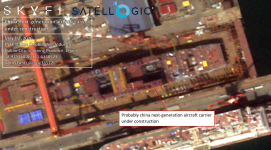
“New Satellite Images Reveal China’s Massive Type 004 Carrier!” New satellite imagery from Dalian Shipyard is fueling intense discussion about China’s mysterious Type 004 aircraft carrier.
 
To view this content we will need your consent to set third party cookies.
For more detailed information, see our cookies page.
 

China's New Supercarrier Signals Dramatic Shift in Naval Power Balance, Alarming U.S. Military Strategists​

The rapid deployment of advanced carrier strike capabilities marks Beijing's most significant naval modernization milestone yet

Beijing's Naval Ambitions Reach New Heights​

China's People's Liberation Army Navy has fundamentally transformed from a regionally-focused coastal defense force into a technologically advanced blue-water maritime power capable of global power projection. The recent commissioning of the Type 003 Fujian supercarrier—coupled with concurrent carrier qualifications for China's first stealth fighter aircraft—represents a watershed moment in military aviation that has prompted urgent strategic reassessment within Pentagon leadership.

The acceleration of these developments has caught the attention of defense analysts worldwide. Unlike the decades-long developmental cycles that characterized U.S., British, and French carrier programs, China's carrier strike group expansion is progressing at an unprecedented tempo, threatening to fundamentally alter the balance of naval power in the Indo-Pacific region and beyond.

The Type 003 Fujian: A Game-Changing Asset​

The Fujian represents the culmination of China's carrier technology ambitions, embodying advancements in electromagnetic catapult systems and flight deck design that position it as a peer competitor to America's Nimitz-class carriers. Coupled with the simultaneous carrier qualification trials of China's advanced stealth fighter aircraft, the PLAN is demonstrating an integrated carrier air wing capability that military strategists describe as operationally formidable.

Accelerated Timeline Outpacing Western Naval Development​

What distinguishes China's approach is the compressed timeline for fielding multiple carrier strike groups. Where traditional naval powers required generations to develop comparable capabilities, Beijing's industrial capacity and strategic focus appear positioned to achieve fleet multiplication significantly faster. This acceleration reflects not only technological advancement but also China's commitment to asserting sustained regional dominance and projecting power across contested waters.

Strategic Implications for Global Security​

The implications extend beyond naval competition. As China consolidates carrier strike capabilities, Washington's strategic calculations regarding potential regional conflicts—particularly in the Taiwan Strait and South China Sea—face fundamental recalibration. Allied navies, including those of Japan, South Korea, and Australia, are simultaneously reassessing their own deterrent architectures.

Military analysts emphasize that the convergence of these developments signals Beijing's determination to challenge U.S. naval supremacy within the first island chain and potentially beyond. The integration of stealth aviation with supercarrier platforms creates a synergistic capability gap that cannot be addressed through incremental improvements to existing Western platforms.

Looking Forward​

The PLAN's trajectory suggests that multiple operationally-ready carrier strike groups could enter service within the coming decade—a timeline that has prompted urgent discussions within NATO and Indo-Pacific security partnerships regarding collective deterrence strategies and military modernization priorities.

 
Via 伏尔戈星图

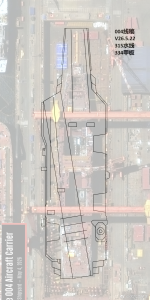
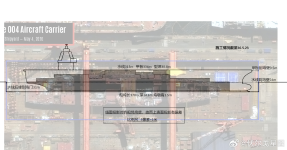
315 waterline
334 flight deck

View attachment 198750View attachment 198751

Even it has only 315 meters waterline, it is still going to outweigh the Ford class by more than 10,000 tons, because it has 43 meters beam, and more than 13 meters of draft.

Fujian has only 305 meters of waterline, and 41 meters of beam and 13 meters of draft, and its actual displacement is very close to the Ford class.
 

Users who are viewing this thread

Back
Top