Pakistan Minerals and Mining Updates

The term "Himalayan" Pink salt was coined by Indians to circumvent Pakistani control of the real pink salt. The Indians did the same thing with Himalayanrice for Basmati etc.

They failed with basmati rice which originated in Pakistan punjab. Even now Pakistan can take back ownership of pink salt by not exporting it in raw form and just name it Pakistan salt. Practically 98% of world pink salt extracted is from Pakistan.
 
They failed with basmati rice which originated in Pakistan punjab. Even now Pakistan can take back ownership of pink salt by not exporting it in raw form and just name it Pakistan salt. Practically 98% of pink salt extracted is from Pakistan.

"Pink Salt" is the global brand name that the world recognises the product by... just saying. The brand name is equally as important as the product.
 

The Potential: A Billion-Dollar Industry​

The global market for pink salt is projected to be worth roughly $12 billion (with the broader global salt market nearing $20 billion).

By partnering with China, Pakistan is shifting its strategy to capture that lost value:

  • Value Addition: Instead of selling raw rocks at $80 a ton, local processing facilities will refine the salt into high-margin products. This includes consumer-ready edible pink salt, salt lamps, and specialized industrial or medical-grade salt (like high-purity salt used in pharmaceuticals, which China heavily imports).

  • The Projection: The Islamabad Chamber of Commerce and Industry (ICCI) and other trade bodies project that by halting the export of raw salt and focusing strictly on value-added, processed salt products, Pakistan's salt export revenues could surge past the $1 billion mark annually, becoming a major pillar of its export economy.
By integrating into international supply chains through this agreement, Pakistan isn't just mining more salt—it's completely changing the price tag of what it sells.

Pakistan pink salt could earn as much as Reko Diq and unlike Reko Diq which only last 70-80 years. Pakistan pink salt reserves will outlast humanity.
 
"Pink Salt" is the global brand name that the world recognises the product by... just saying. The brand name is equally as important as the product.
Interestingly, this came up in a discussion several of us were having yesterday about heat, dehydration, cramps, and losing too much salt from over-hydration.

Himalayan Pink Salt was mentioned by a couple of the participants of what they use to help with the cramping.
 
Nothing wrong with that.

If we're happy to sell it to the Emiratis without imposing any special conditions, it's not their fault. They can do with the product whatever they like.

Pakistan does care. The government has registered pink salt as a Geographical Indication (GI) to prevent unauthorized exploitation by other countries, albeit somewhat late.

Pakistan never sold pink salt to the UAE with the intention that the UAE would sell it to India for repackaging. There is a terribly lot wrong with the UAE backstabbing Pakistan in such a manner.
 
Last edited:
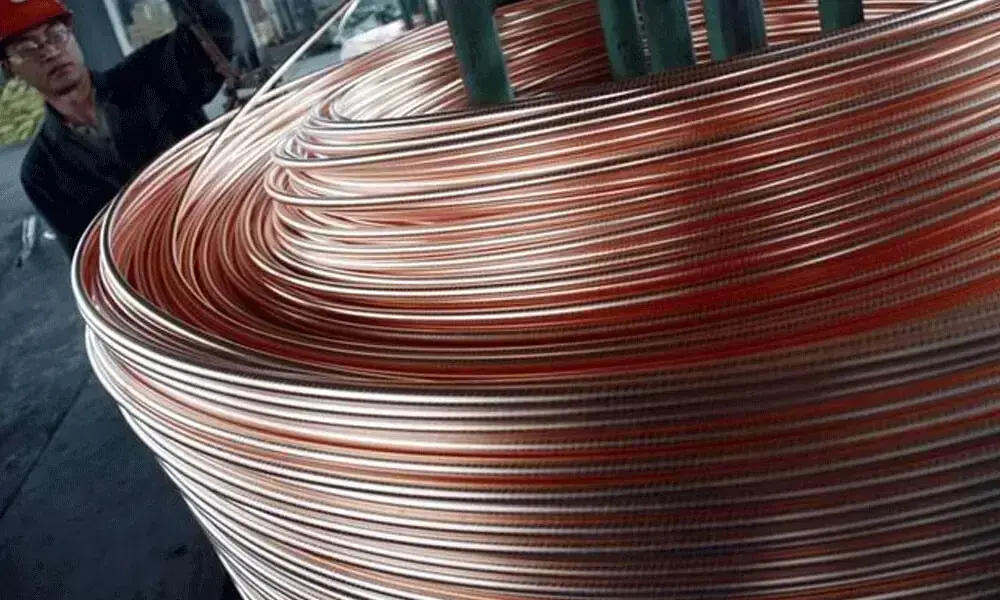
Pakistan’s copper exports to China crossed $1 billion during the first eight months of FY2025-26, emerging as one of the fastest-growing segments in the country’s industrial export sector, according to customs export data.

Pakistan exported copper products worth more than $1.30 billion between July and February of the current fiscal year. Of the total exports, copper ingots shipped to China accounted for $1.02 billion, while another $280 million came from exports of other copper-related products.

Data showed copper ingot exports increased from $52.894 million in July 2025 to $393.126 million in March, reflecting a nearly six-fold increase over the period.

Industry sources said Pakistani copper exports were also reaching markets such as the United States and Canada, indicating broader international demand for the country’s processed and recycled metal products.

They attributed much of the sector’s growth to the Export Facilitation Scheme (EFS), which has become a key framework for the recycled metals trade.


Under S.R.O. 1435(I)/2025 issued by the Federal Board of Revenue (FBR), duties and taxes on imported iron and steel content are collected at the import stage, while copper recovered through domestic processing is exported as a value-added product under a documented regulatory system.

Industry participants said the arrangement had helped support exports while discouraging undocumented trade and encouraging value addition within Pakistan instead of exporting raw material.

The expansion in copper exports has also supported related sectors including processors, refiners, logistics companies, warehouse operators, labour contractors and small and medium enterprises linked to the supply chain.

Industry estimates suggest Pakistan’s copper export potential could rise to between $2 billion and $3 billion in the coming years if the existing policy framework remains in place.
 
Pakistan’s copper exports to China crossed $1 billion during the first eight months of FY2025-26, emerging as one of the fastest-growing segments in the country’s industrial export sector, according to customs export data.

Pakistan exported copper products worth more than $1.30 billion between July and February of the current fiscal year. Of the total exports, copper ingots shipped to China accounted for $1.02 billion, while another $280 million came from exports of other copper-related products.

Data showed copper ingot exports increased from $52.894 million in July 2025 to $393.126 million in March, reflecting a nearly six-fold increase over the period.

Industry sources said Pakistani copper exports were also reaching markets such as the United States and Canada, indicating broader international demand for the country’s processed and recycled metal products.

They attributed much of the sector’s growth to the Export Facilitation Scheme (EFS), which has become a key framework for the recycled metals trade.


Under S.R.O. 1435(I)/2025 issued by the Federal Board of Revenue (FBR), duties and taxes on imported iron and steel content are collected at the import stage, while copper recovered through domestic processing is exported as a value-added product under a documented regulatory system.

Industry participants said the arrangement had helped support exports while discouraging undocumented trade and encouraging value addition within Pakistan instead of exporting raw material.

The expansion in copper exports has also supported related sectors including processors, refiners, logistics companies, warehouse operators, labour contractors and small and medium enterprises linked to the supply chain.

Industry estimates suggest Pakistan’s copper export potential could rise to between $2 billion and $3 billion in the coming years if the existing policy framework remains in place.
Posted already
 
Pakistan’s copper exports to China crossed $1 billion during the first eight months of FY2025-26, emerging as one of the fastest-growing segments in the country’s industrial export sector, according to customs export data.

Pakistan exported copper products worth more than $1.30 billion between July and February of the current fiscal year. Of the total exports, copper ingots shipped to China accounted for $1.02 billion, while another $280 million came from exports of other copper-related products.

Data showed copper ingot exports increased from $52.894 million in July 2025 to $393.126 million in March, reflecting a nearly six-fold increase over the period.

Industry sources said Pakistani copper exports were also reaching markets such as the United States and Canada, indicating broader international demand for the country’s processed and recycled metal products.

They attributed much of the sector’s growth to the Export Facilitation Scheme (EFS), which has become a key framework for the recycled metals trade.


Under S.R.O. 1435(I)/2025 issued by the Federal Board of Revenue (FBR), duties and taxes on imported iron and steel content are collected at the import stage, while copper recovered through domestic processing is exported as a value-added product under a documented regulatory system.

Industry participants said the arrangement had helped support exports while discouraging undocumented trade and encouraging value addition within Pakistan instead of exporting raw material.

The expansion in copper exports has also supported related sectors including processors, refiners, logistics companies, warehouse operators, labour contractors and small and medium enterprises linked to the supply chain.

Industry estimates suggest Pakistan’s copper export potential could rise to between $2 billion and $3 billion in the coming years if the existing policy framework remains in place.

Didn't know recycled copper industry have been this successful in short period of time. At this rate exports will surpass $3bn in few years.
 
Interestingly, this came up in a discussion several of us were having yesterday about heat, dehydration, cramps, and losing too much salt from over-hydration.

Himalayan Pink Salt was mentioned by a couple of the participants of what they use to help with the cramping.
Ironically, I needed to go to Costco this morning. So went through the aisle where the spices, etc. are located. Confirmed the label on the "Pink Salt": "Product of Pakistan. Packaged in the US".
 

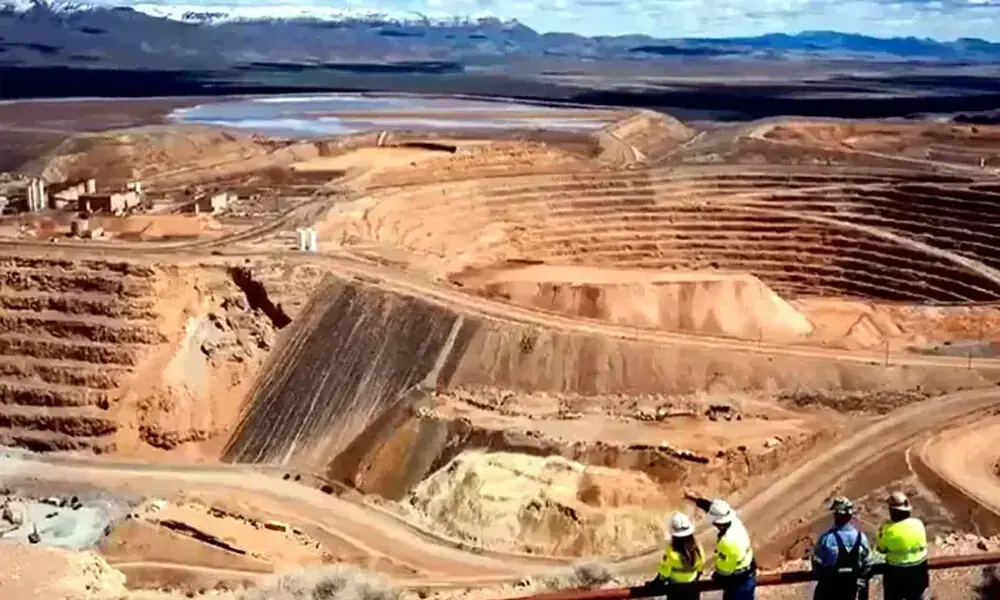
Reko Diq project: Barrick team arrives to assess security & procurement

Published June 4, 2026 Updated about 2 hours ago
Save


Comments

By Wasim Iqbal
Add BRecorder as a trusted
source on Google
Google Preferred Source

ISLAMABAD: Representatives of Barrick Mining Corporation arrived here on Wednesday on an official visit to evaluate security protocols and procurement strategies for the RekoDiq copper-gold project in Balochistan. The delegation is planning to acquire state-of-the-art equipment and discuss expanding the company’s lending and credit frameworks.

Speaking to journalists, Managing Director of the Oil and Gas Development Company Limited (OGDCL)- a partner in the RekoDiq copper-gold project, Ahmed Hayat Lak, stated that a foreign delegation has arrived to review security arrangements. Under the project agreement, the review will determine whether security needs to be enhanced and what additional financing may be required. However, he emphasized that providing security remains the sole responsibility of the host country.

READ ALSO: Pakistan, Barrick reaffirm coordination on Reko Diq development


Lak added that both sides will also discuss procuring robust equipment through a competitive bidding process.

Addressing concerns regarding the mining project’s lending, the Managing Director noted that during a recent meeting in Canada, lenders expressed satisfaction with the existing protocols, having already conducted their own security assessments before financing. Furthermore, he revealed that more lenders have shown keen interest in joining the mining venture.

The mine is operated by RekoDiq Mining Company (RDMC) with 50 percent shares owned by Barrick Mining Corporation, 25 percent by the federal government, and 25 percent by the Balochistan government.

Copyright Business Recorder, 2026


Users who are viewing this thread

Back
Top