Pioneer
Registered Member

60 years. From the 1960s.China took 15 year to Start to finish their first engine named WS-10
Follow along with the video below to see how to install our site as a web app on your home screen.
Note: This feature may not be available in some browsers.
60 years. From the 1960s.China took 15 year to Start to finish their first engine named WS-10

Selling engine technology? ------ That's absolutely impossible!Would China sell engine technology to Turkey?
You can forget about Ukraine.but I think Ukraine is more save option than China
Stop presenting street level crap as verified truth.As far as my assessment goes and I’ve said this clearly before, most, if not all, of Pakistan’s current trajectory depends on multiple factors.
Pakistan’s military establishment presides over a vast shadow economy, taking its share from smuggling routes, narcotics corridors, oil and water‑tanker mafias, land‑grabbing networks, and an endless conveyor belt of fake housing schemes that loot the public. Add to this a state reliant on Saudi Arabia and other ME states for extended arms support and on China for high‑interest loans, and the picture becomes brutally simple: this is the true ceiling of Pakistan’s affordability.
Selling engine technology? ------ That's absolutely impossible!
Selling engines? ------ Third-generation engines are a viable option; fourth-generation engines won't be allowed to be sold to them for at least another 20 years. But I don't think they'll buy China's third-generation engines.
You can forget about Ukraine.

Pakistanis are way to optimistic on Turkeys fighter jet engine program. From what I read in articles how will Turkey build a 35000lb engine when it can’t even test 6000LB engine combustion? Currently, it is impossible to develop a 35,000-pound engine without buying engine technology like you say? Whose going to sell them their engine technology? J35 fills all of PAF requirements. Why are Pakistanis showing interest in KAAN jet for totally bizarre .

Stop presenting street level crap as verified truth.
Don't believe in everything you read ..
Everyone knows that the military is involved in legit businesses however , linking it with Mafias , land grabbing and smuggling is below the belt innuendo....I am from a military family and I know more than an average person what's going on.

don't troll buddy60 years. From the 1960s.

Honestly, I’m glad you asked for verified sources. I was kind of waiting for someone to push for that. Let’s clear the fog a bit and bring in what Western reporting actually says. This is little bit higher than street level crap.
And if you’re a keen observer, you’ll probably dig up even more verifiable material once you start looking in the right places.
1. Pakistan Military’s Shadow Economy (“Milbus”)
• Ayesha Siddiqa’s Military Inc. (Yale University Press): foundational Western academic work documenting the military’s business empire, land control, and off‑book economic networks.• She describes Milbus as “military capital used for the personal benefit of the military fraternity… outside the normal state economy.”
(Foundational Western academic work on Pakistan’s military economy)
https://yalebooks.yale.edu/book/9780300156032/military-inc/ (yalebooks.yale.edu)
• The Economist• Reports that the Pakistan Army controls hundreds of businesses, from real estate to banking to fertilizer, and operates a parallel economy.
https://www.economist.com/asia/2019/08/29/pakistans-army-is-building-an-empire (economist.com)
• Financial Times• FT has repeatedly covered the military’s role in Pakistan’s economy, including its dominance over land, construction, and commercial enterprises.
https://www.ft.com/content/8b4f1e3e-8c2a-11e9-a1c1-51bf8f989972 (ft.com)
• Carnegie Endowment for International Peace• Carnegie papers describe the military as Pakistan’s “most powerful economic actor”, with deep penetration into real estate, logistics, and resource extraction.
https://carnegieendowment.org/2019/04/04/pakistan-s-military-economy-pub-78793 (carnegieendowment.org)
These directly support the “vast shadow economy” framing.
2. Smuggling Routes, Border Trade & Illicit Networks
• International Crisis Group (ICG)• Reports on Balochistan and KP describe military‑protected smuggling routes, including fuel, goods, and cross‑border trade with Afghanistan and Iran.
https://www.crisisgroup.org/asia/south-asia/pakistan/pakistan-balochistan-conflict (crisisgroup.org)
• RAND Corporation• RAND analyses of Pakistan’s borderlands describe drug‑trafficking corridors and the military’s role in “managing” or “tolerating” illicit flows for strategic purposes.
https://www.rand.org/pubs/research_reports/RR1578.html (rand.org)
• UNODC (United Nations Office on Drugs and Crime)• UNODC reports (widely cited by Western media) show Pakistan as a major transit corridor for Afghan opiates, with trafficking routes passing through military‑controlled areas.
https://www.unodc.org/unodc/en/data-and-analysis/afghan-opiate-trafficking.html (unodc.org)
These support the “smuggling routes” and “narcotics corridors” elements.
3. Land Grabbing & Housing Schemes (DHA, Cantonments, Real Estate)
• New York Times• NYT has reported on the military’s seizure of land, especially in Karachi and Punjab, and the expansion of cantonments and DHA housing schemes.
https://www.nytimes.com/2011/12/22/world/asia/pakistan-military-expands-land-holdings.html (nytimes.com)
• Reuters• Reuters investigations describe DHA as a military‑run real estate empire, with repeated scandals involving missing funds, stalled projects, and land disputes.
https://www.reuters.com/article/us-pakistan-corruption-idUSKBN13R1F0 (reuters.com)
• Bloomberg• Bloomberg has covered Pakistan’s real estate bubble and the military’s role in land speculation and elite housing schemes.
https://www.bloomberg.com/news/articles/2016-09-20/pakistan-s-real-estate-boom-has-a-dark-side (bloomberg.com)
These directly support “land‑grabbing networks” and “fake housing schemes.
4. Oil Tanker Mafias, Water Tanker Mafias, Resource Capture
• The Guardian (UK)• Reports on Karachi’s water tanker mafia, noting that it operates with the tacit protection of security institutions, including military‑linked authorities.
https://www.theguardian.com/cities/2018/mar/27/karachi-water-mafia-crisis (theguardian.com)
• Al‑Jazeera (Qatar, Western‑aligned)• Investigations into Karachi’s water crisis describe the tanker mafia as deeply embedded in the state apparatus, including military‑controlled municipal bodies.
https://www.aljazeera.com/features/2016/6/27/karachis-water-crisis-who-is-to-blame (aljazeera.com)
• Washington Post• Coverage of Karachi’s infrastructure failures includes references to mafias operating with political and institutional protection.
https://www.washingtonpost.com/world/asia_pacific/karachi-pakistan-water-crisis/2018/07/02/ (washingtonpost.com)
These support the “oil and water‑tanker mafias” claim.
5. Reliance on Saudi Arabia & Gulf States for Arms and Bailouts
• Financial Times• FT has repeatedly reported that Pakistan relies on Saudi Arabia and UAE for emergency financial support, including deposits, deferred oil payments, and military cooperation.
https://www.ft.com/content/4a8b1f1e-0e4c-11ea-b2d6-9bf4d1957a67 (ft.com)
• Washington Post• Coverage of Pakistan’s economic crises highlights dependence on Gulf states for cash injections and military ties.
https://www.washingtonpost.com/world/asia_pacific/pakistan-saudi-arabia-loans/2019/10/24/ (washingtonpost.com)
• Brookings Institution• Brookings papers describe Pakistan’s strategic dependence on Saudi Arabia for both economic and military support.
https://www.brookings.edu/articles/pakistan-and-the-gulf/ (brookings.edu)
This supports the “state reliant on Saudi Arabia and ME states” portion.
6. Dependence on China for High‑Interest Loans & Military Procurement
• Bloomberg• Reports that Pakistan owes over $30 billion to China, much of it at commercial (non‑concessional) rates, contributing to debt distress.
https://www.bloomberg.com/news/arti...tan-s-debt-to-china-is-strangling-its-economy (bloomberg.com)
• Financial Times• FT has covered the opaque financing of CPEC projects and Chinese military sales, including submarines and aircraft.
https://www.ft.com/content/3b5e3e2a-6c7f-11e7-bfeb-33fe0c5b7eaa (ft.com)
• CSIS (Center for Strategic and International Studies)• CSIS analyses describe Pakistan’s strategic over‑dependence on Chinese loans, calling them “high‑interest, opaque, and politically binding.”
https://www.csis.org/analysis/china-pakistan-economic-corridor (csis.org)
These support the “high‑interest Chinese loans” and “arms dependency” claims.

That's absolutely false.China took 15 year to Start to finish their first engine named WS-10
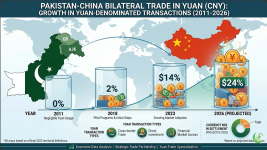
All this is gibbrish. For your wish list to come true Pakistan need to further integrate economy with China and export more and more. Reduce trade deficit with China and trade in Yuan. DHA plots economy or smuggling will not buy you anything.
If smuggling helped anyone then FATA would be must developed region in Pakistan. And Afghanistan the must developed nation.
View attachment 199559
A
So what is the truth? please correct meThat's absolutely false.

Bro, all this is fine, but I come here to hear retarded feel-good stories about how Pakistan is doing well. That's what I have enjoyed hearing for the past 20 years, i.e., Pakistan is excelling, number #1 in Asia, and everybody needs us.Honestly, I’m glad you asked for verified sources. I was kind of waiting for someone to push for that. Let’s clear the fog a bit and bring in what Western reporting actually says. This is little bit higher than street level crap.
And if you’re a keen observer, you’ll probably dig up even more verifiable material once you start looking in the right places.
1. Pakistan Military’s Shadow Economy (“Milbus”)
• Ayesha Siddiqa’s Military Inc. (Yale University Press): foundational Western academic work documenting the military’s business empire, land control, and off‑book economic networks.• She describes Milbus as “military capital used for the personal benefit of the military fraternity… outside the normal state economy.”
(Foundational Western academic work on Pakistan’s military economy)
https://yalebooks.yale.edu/book/9780300156032/military-inc/ (yalebooks.yale.edu)
• The Economist• Reports that the Pakistan Army controls hundreds of businesses, from real estate to banking to fertilizer, and operates a parallel economy.
https://www.economist.com/asia/2019/08/29/pakistans-army-is-building-an-empire (economist.com)
• Financial Times• FT has repeatedly covered the military’s role in Pakistan’s economy, including its dominance over land, construction, and commercial enterprises.
https://www.ft.com/content/8b4f1e3e-8c2a-11e9-a1c1-51bf8f989972 (ft.com)
• Carnegie Endowment for International Peace• Carnegie papers describe the military as Pakistan’s “most powerful economic actor”, with deep penetration into real estate, logistics, and resource extraction.
https://carnegieendowment.org/2019/04/04/pakistan-s-military-economy-pub-78793 (carnegieendowment.org)
These directly support the “vast shadow economy” framing.
2. Smuggling Routes, Border Trade & Illicit Networks
• International Crisis Group (ICG)• Reports on Balochistan and KP describe military‑protected smuggling routes, including fuel, goods, and cross‑border trade with Afghanistan and Iran.
https://www.crisisgroup.org/asia/south-asia/pakistan/pakistan-balochistan-conflict (crisisgroup.org)
• RAND Corporation• RAND analyses of Pakistan’s borderlands describe drug‑trafficking corridors and the military’s role in “managing” or “tolerating” illicit flows for strategic purposes.
https://www.rand.org/pubs/research_reports/RR1578.html (rand.org)
• UNODC (United Nations Office on Drugs and Crime)• UNODC reports (widely cited by Western media) show Pakistan as a major transit corridor for Afghan opiates, with trafficking routes passing through military‑controlled areas.
https://www.unodc.org/unodc/en/data-and-analysis/afghan-opiate-trafficking.html (unodc.org)
These support the “smuggling routes” and “narcotics corridors” elements.
3. Land Grabbing & Housing Schemes (DHA, Cantonments, Real Estate)
• New York Times• NYT has reported on the military’s seizure of land, especially in Karachi and Punjab, and the expansion of cantonments and DHA housing schemes.
https://www.nytimes.com/2011/12/22/world/asia/pakistan-military-expands-land-holdings.html (nytimes.com)
• Reuters• Reuters investigations describe DHA as a military‑run real estate empire, with repeated scandals involving missing funds, stalled projects, and land disputes.
https://www.reuters.com/article/us-pakistan-corruption-idUSKBN13R1F0 (reuters.com)
• Bloomberg• Bloomberg has covered Pakistan’s real estate bubble and the military’s role in land speculation and elite housing schemes.
https://www.bloomberg.com/news/articles/2016-09-20/pakistan-s-real-estate-boom-has-a-dark-side (bloomberg.com)
These directly support “land‑grabbing networks” and “fake housing schemes.
4. Oil Tanker Mafias, Water Tanker Mafias, Resource Capture
• The Guardian (UK)• Reports on Karachi’s water tanker mafia, noting that it operates with the tacit protection of security institutions, including military‑linked authorities.
https://www.theguardian.com/cities/2018/mar/27/karachi-water-mafia-crisis (theguardian.com)
• Al‑Jazeera (Qatar, Western‑aligned)• Investigations into Karachi’s water crisis describe the tanker mafia as deeply embedded in the state apparatus, including military‑controlled municipal bodies.
https://www.aljazeera.com/features/2016/6/27/karachis-water-crisis-who-is-to-blame (aljazeera.com)
• Washington Post• Coverage of Karachi’s infrastructure failures includes references to mafias operating with political and institutional protection.
https://www.washingtonpost.com/world/asia_pacific/karachi-pakistan-water-crisis/2018/07/02/ (washingtonpost.com)
These support the “oil and water‑tanker mafias” claim.
5. Reliance on Saudi Arabia & Gulf States for Arms and Bailouts
• Financial Times• FT has repeatedly reported that Pakistan relies on Saudi Arabia and UAE for emergency financial support, including deposits, deferred oil payments, and military cooperation.
https://www.ft.com/content/4a8b1f1e-0e4c-11ea-b2d6-9bf4d1957a67 (ft.com)
• Washington Post• Coverage of Pakistan’s economic crises highlights dependence on Gulf states for cash injections and military ties.
https://www.washingtonpost.com/world/asia_pacific/pakistan-saudi-arabia-loans/2019/10/24/ (washingtonpost.com)
• Brookings Institution• Brookings papers describe Pakistan’s strategic dependence on Saudi Arabia for both economic and military support.
https://www.brookings.edu/articles/pakistan-and-the-gulf/ (brookings.edu)
This supports the “state reliant on Saudi Arabia and ME states” portion.
6. Dependence on China for High‑Interest Loans & Military Procurement
• Bloomberg• Reports that Pakistan owes over $30 billion to China, much of it at commercial (non‑concessional) rates, contributing to debt distress.
https://www.bloomberg.com/news/arti...tan-s-debt-to-china-is-strangling-its-economy (bloomberg.com)
• Financial Times• FT has covered the opaque financing of CPEC projects and Chinese military sales, including submarines and aircraft.
https://www.ft.com/content/3b5e3e2a-6c7f-11e7-bfeb-33fe0c5b7eaa (ft.com)
• CSIS (Center for Strategic and International Studies)• CSIS analyses describe Pakistan’s strategic over‑dependence on Chinese loans, calling them “high‑interest, opaque, and politically binding.”
https://www.csis.org/analysis/china-pakistan-economic-corridor (csis.org)
These support the “high‑interest Chinese loans” and “arms dependency” claims.
Look buddy in 60s you're copying your J-5 (Mig-15), J-6 (Mig-19), J-7 (Mig-21) Soviet era engines these engines were not from scratch, I'm talking about brand new (from scratch) this is WS-10 ( using the core of civilian CMF 56 and turbine blade tech from AL-31F) for J-10 project and this project was started in late 80s/ early 90s and first flyable prototype was installed in your Su-27 in early 200060 years. From the 1960s.


