
Yasser76
Elite Member


When did I say that? By the whole point is about wartime that the surface fleet is simply not ready for.
Yeah no shit.
This is why most debates with you on here are pointless.
Follow along with the video below to see how to install our site as a web app on your home screen.
Note: This feature may not be available in some browsers.
When did I say that? By the whole point is about wartime that the surface fleet is simply not ready for.
Yeah no shit.
Because peacetime patrols is not same as sailing out when you are in conflict with a adversary with a far more capable surface fleet.

These peace time patrols are important for Pakistani security, economy and diplomacy, are you saying we should give them up?


This is why most debates with you on here are pointless
stealthy fast missile boats can approach a Indian flotilla far closer then a frigate or destroyer can

I am not saying we saying we should only rely on missiles or that they even be more primary offense also not talking about Iranian missile speedboats but proper multiple hundred ton FAC something like the Norwegian skjold class.Hi bro, I used to think on such lines too. But as I studied naval warfare, its history and future trends so my thinking changed on subject. Let me give you few pointers.
Iran have 100s of missile boats. Their approach was also to ambush US navy warships but missile boats have severe limitations due to size. US navy has effectively done blockade of Iran and missile boats alone cannot undo that.
At sea dominance, the key factors are always range and endurance. A large warship with its continuous presence (upto several weeks) can create deterrence and fullfill operational needs. A missile boat lacks range and have no endurance.
Many times, you just need presence and need operations are deep sea. How you can even imagine to do that with missile boats.
What if Indian navy do a blockade at a larger diameter (away from range of missile boats) then how we are going to tackle that if PN only relied on missile boats? You need large surface combatants that can do multirole operations including Anti-sub and anti-air.
What if India start blocking our merchant ships much farther away around arabian penisula / red sea. How we are going to do anything about it with only missile boats?
One thing that has stood test of time for naval warfare is always bigger is better. Large warship means more endurance, more range, more firepower, more powerul EW weapon system, more powerful missiles, more powerful radar systems, and future weapons accommodations (energy based weapons) needs large platforms anyways.
So yes, missile boats and coastal batteries are good for last tier of defence. But you can't rely on those to win a war. You simply cannot afford your enemy to create sea dominance in the region around you. With Pakistan's growing geopolitical / defense responsibilities, and growing Indian naval fleet, it is now more than important for Pakistan to seek large platforms.
The importance of modern large warships is already on display in this war. US navy has created a blockade of Iran and Iranian missile boats cannot do anything about it, secondly in one instance the arleigh burkes passed through the strait, Iranian coastal batteries fired upon those but those ships are unsinkable due to their size, powerful EW/radars and so many air defense missiles.
Point is large surface combatants have their critical benefits which are irreplaceable by another other platform. Missile boats / coastal missile batteries should always be the last tier of defence.

I feel this argument would have been valid, had the iranians actually made large scale deployments of them, and they were not sunk at port. But also, the iranian strategy relied old, clunky, close in missile systems, like the Nasr, which was a C704, which in itself, a copy of the early exocet. Even with this however, they were able to get some shots off, but the reality is their strike options were really limited:Hi bro, I used to think on such lines too. But as I studied naval warfare, its history and future trends so my thinking changed on subject. Let me give you few pointers.
Iran have 100s of missile boats. Their approach was also to ambush US navy warships but missile boats have severe limitations due to size. US navy has effectively done blockade of Iran and missile boats alone cannot undo that.
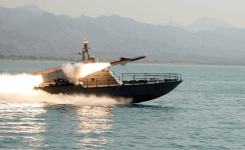
But this is the difference in idea here. Pak Navy will never rely on its surface fleet for sea dominance, not only that, the PN cannot achieve sea dominance. Full stop. The PN is at a HUGE surface disadvantage, hence the asymmetric push to undersea vessels. The reality is, in the opening days, the goal of the IN will be to try to take out every surface vessel, launching huge brahmos attacks against the PN's surface fleet. Its a given. For the PN to venture deeper into the seas is suicide. IMO, the ideal scenario would be the naval fleet will stay relatively close to shores, providing a protective bubble eastwards to ensure energy supplies remain untouched, while submarines venture out deeper to push the IN backwards, keeping the PN fleet out of range of Indian strike vectors.At sea dominance, the key factors are always range and endurance. A large warship with its continuous presence (upto several weeks) can create deterrence and fullfill operational needs. A missile boat lacks range and have no endurance.
In the Pak Navy's case, i dont agree. In wartime, i dont think the PN will be interested in deep sea ops beyond the eastern flank to ensure any bullying of naval ships does not occur. I dont expect any deep sea ops in the western flank, rather, just attempts at ensuring pak waters dont end up with any Indians making misadventures, but also providing air cover against any cruise missiles.Many times, you just need presence and need operations are deep sea. How you can even imagine to do that with missile boats.
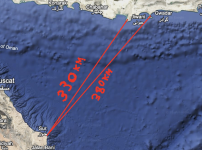
Again, i dont believe this is the case. The entire idea behind the huge submarine fleet is to prevent this in its entirety, making any blockades a deadly idea. The IN will not be able to conduct ASW ops near our shores, the PAF would be responsible for ensuring that doesnt happen, so the hangors could very well enforce a "no indian zone" a few hundred KM out from our shores, hell, we could possibly even make life hell for indian trade coming out of the ME, limiting potential energy shipments from them, because there is a chokepoint that could in theory be enforced. Between Jiwani and Sur is about 300km, thats not a ton.What if Indian navy do a blockade at a larger diameter (away from range of missile boats) then how we are going to tackle that if PN only relied on missile boats? You need large surface combatants that can do multirole operations including Anti-sub and anti-air.
As above, if this was to occur, it would only occur as a result of a massive failure on the Pak Navy's part to ensure that they could hold on control. The smallest chokepoint is within range of basically every Pakistani anti ship missile... anything beyond that point westwards should be under the control of PN submarinesWhat if India start blocking our merchant ships much farther away around arabian penisula / red sea. How we are going to do anything about it with only missile boats?
This is somewhat valid, not entirely, but to an extent. However, it also means more cost, it also means more risk and also means less numbers. All of which are deadly for Pak. PN cant afford huge capital ships. Its a bad investment. You as a ship need to get lucky every time, defending yourself, whereas an attacker only needs to get lucky once. They dont even need to destroy you, but they could get a mission kill. Its a gamble sinking tons of money into one platform type. At best, the kind of ship you describe would cost 2/3x the current setups, reducing numbers by as much too then, it just doesnt work for a navy like ours.One thing that has stood test of time for naval warfare is always bigger is better. Large warship means more endurance, more range, more firepower, more powerul EW weapon system, more powerful missiles, more powerful radar systems, and future weapons accommodations (energy based weapons) needs large platforms anyways.
And this is the misconception. Sea Dominance isnt a result of large capital ships in a handful of numbers. It works for the USN because they can deploy a staggering amount of assets to a combat zone. Pak cant. What pak really needs is a proper ship, procurable in lower cost, but capable of carrying proper missiles and sensors, while operating at high speeds.So yes, missile boats and coastal batteries are good for last tier of defence. But you can't rely on those to win a war. You simply cannot afford your enemy to create sea dominance in the region around you. With Pakistan's growing geopolitical / defense responsibilities, and growing Indian naval fleet, it is now more than important for Pakistan to seek large platforms.
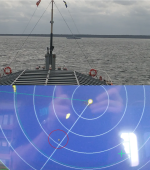
I would put this more down to Iranian inadequacy but also the insane capabilities the USN brings to the fight, which the PN cant do.The importance of modern large warships is already on display in this war. US navy has created a blockade of Iran and Iranian missile boats cannot do anything about it, secondly in one instance the arleigh burkes passed through the strait, Iranian coastal batteries fired upon those but those ships are unsinkable due to their size, powerful EW/radars and so many air defense missiles.
Anyway, what i propose here is offensive packages of FAC's to go beyond the protective bubble setup by the large ships, to then focus on launching attacks on Indian facilities from hundreds of KM away, all while staying hidden to radar and targeting solutions, and being able to safely return to the 'safe zone' bubbles.Point is large surface combatants have their critical benefits which are irreplaceable by any other platform. Missile boats / coastal missile batteries should always be the last tier of defence.
Aw someone's hurt. Please do impart your wisdom. I'm waitingGonna be a great day on this forum when you finally add value
How about a larger USV? Arming it with Anti Ship missiles, say something similar to HD-1? Deploying it along side FACs, where FACs can do shoot and scoots from a distance but USV? Can directly go into a suicide mission.Anyway, what i propose here is offensive packages of FAC's to go beyond the protective bubble setup by the large ships, to then focus on launching attacks on Indian facilities from hundreds of KM away, all while staying hidden to radar and targeting solutions, and being able to safely return to the 'safe zone' bubbles
Aw someone's hurt. Please do impart your wisdom. I'm waiting

It's why I've advocated for a dedicated fleet air arm with a couple of squadrons.Honestly aircraft can do the job of a missile boat better.
It's why I've advocated for a dedicated fleet air arm with a couple of squadrons.
I was thinking more in terms of command, have them directly under navy command rather than PAF.I think that wasteful duplication, we may as well just expand the PAF and it seems like at least one JF-17 unit is already doing this. If you look at say the Italian and British Navies, many are consolidating bases, traning, leadership with their respective air forces. For all intents and purposes the Italian and British F-35 forces are basically one organisation with some people in navy and some people in air force uniforms.
Two navy dedicated JF-17 units is all we need here, no need for the navy to set up another branch


We use essential cookies to make this site work, and optional cookies to enhance your experience.
