Navigation
Install the app
How to install the app on iOS
Follow along with the video below to see how to install our site as a web app on your home screen.
Note: This feature may not be available in some browsers.
More options
Style variation
You are using an out of date browser. It may not display this or other websites correctly.
You should upgrade or use an alternative browser.
You should upgrade or use an alternative browser.
India Economy Thread
- Thread starter indushek
- Start date
More options
Who Replied?

NeptunesVortex
Registered Member


onlinpunit
Trusted Member
Yeah ! We are doomed.! Very soon IMG will have to bail out indian Economy!There is nothing to wow about. India services boom is about to end. Markets are telling you the future. Now tiny countries like Taiwan, South Korea have higher market cap then India thanks to AI.
Prepare for IMF program in 2030.

NeptunesVortex
Registered Member
Avaada to Commission India’s Largest Solar Cell Manufacturing Facility in Nagpur

 solarquarter.com
Indian steelmakers enter major capex cycle as capacity expansion hits 300 million tonnes target

 www.thehindubusinessline.com
Avaada to Commission India's Largest Solar Cell Manufacturing Facility in Nagpur
Avaada Group will start operations at its 6 GW solar cell manufacturing plant in Nagpur, India’s largest of its kind. This facility, part of a ₹13,000 crore investment, aims to reduce solar cell imports and strengthen domestic manufacturing, creating jobs and enhancing supply chain resilience in...
solarquarter.com
Indian steelmakers enter major capex cycle as capacity expansion hits 300 million tonnes target
Indian steelmakers enter multi-year capex cycle as capacity expansion accelerates
Indian steelmakers boost capex 40% to Rs 70,000 crore as India targets 300 mn tonnes steel capacity by 2030, driven by strong demand and policy support.
Last edited:

K2RULEZ
Elite Member


Before Nepal, Japan last month suspended mango imports from India after its quarantine officials found lapses in pest-control procedures at Indian treatment facilities during inspections earlier this year.
After Japan, neighbouring Nepal has also reportedly banned the import of mangoes and several other fruits from India. The Balen Shah government in Nepal imposed the abrupt ban after border quarantine inspectors detected excessive levels of chemical pesticides in imported shipments, according to a report by The Rising Nepal.
The restrictions imposed by Nepal's Ministry of Agriculture and Livestock Development have reportedly been in place since April-May. The move is expected to disrupt exports during the crucial summer mango season and affect premium Indian varieties such as Alphonso, Dasheri, Chausa, Kesar, Langra and Banganapalli.
Bhuvaneshwar Purbe, general secretary of the Fruit and Vegetable Traders' Association in Janakpurdham, told the Nepali publication that the local production alone may not be sufficient to meet the overall demand for mangoes in the country.
"Demand for mangoes is exceptionally high in summer, and the halt in Indian imports could create shortages in the market," he said.
He urged the Prime Minister Balen Shah-led government to strengthen quarantine systems and allow Indian fruits to enter after proper quality testing instead of imposing a complete import ban.
"The federal government's decision will provide additional encouragement to local production, while citizens will have access to healthier and safer produce," he said.
India produces nearly 28 million metric tonnes of mangoes every year, making it the world's largest producer. Most of the produce is consumed within the country, but exports to high-end markets like Japan bring significantly higher profits for growers and traders.
Exporters now fear the ban could damage confidence in India's agricultural quality-control systems and raise concerns among other importing countries as well.
After Japan, neighbouring Nepal has also reportedly banned the import of mangoes and several other fruits from India. The Balen Shah government in Nepal imposed the abrupt ban after border quarantine inspectors detected excessive levels of chemical pesticides in imported shipments, according to a report by The Rising Nepal.
The restrictions imposed by Nepal's Ministry of Agriculture and Livestock Development have reportedly been in place since April-May. The move is expected to disrupt exports during the crucial summer mango season and affect premium Indian varieties such as Alphonso, Dasheri, Chausa, Kesar, Langra and Banganapalli.
Local Markets Under Stress
Local traders told The Rising Nepal that restrictions were introduced without adequate preparation or a long-term strategy and have created difficulties for businesses.Bhuvaneshwar Purbe, general secretary of the Fruit and Vegetable Traders' Association in Janakpurdham, told the Nepali publication that the local production alone may not be sufficient to meet the overall demand for mangoes in the country.
"Demand for mangoes is exceptionally high in summer, and the halt in Indian imports could create shortages in the market," he said.
He urged the Prime Minister Balen Shah-led government to strengthen quarantine systems and allow Indian fruits to enter after proper quality testing instead of imposing a complete import ban.
What The Government Said
Nepali authorities, however, are framing the move as an opportunity to promote domestic fruit varieties. Manish Kumar Pal, spokesperson for the Ministry of Land Management, Agriculture and Cooperatives of Madhes Province, told The Rising Nepal that the restriction has created greater opportunities for locally produced, "healthier fruit"."The federal government's decision will provide additional encouragement to local production, while citizens will have access to healthier and safer produce," he said.
Mango Ban In Japan
Last month, Japan had suspended mango imports from India after its quarantine officials found lapses in pest-control procedures at Indian treatment facilities during inspections earlier this year. The suspension marks the first such restriction in nearly two decades. Japan had earlier banned Indian mangoes over fruit fly concerns and lifted those curbs only in 2006 after India strengthened its treatment protocols.India produces nearly 28 million metric tonnes of mangoes every year, making it the world's largest producer. Most of the produce is consumed within the country, but exports to high-end markets like Japan bring significantly higher profits for growers and traders.
Exporters now fear the ban could damage confidence in India's agricultural quality-control systems and raise concerns among other importing countries as well.
NeptunesVortex
Registered Member
Kubota to build a new factory in northern India as part of its strategy to expand exports to Africa and Southeast Asia while strengthening its position in the Indian market.

 asia.nikkei.com
Tractor maker Kubota plans 5th Indian factory in export push
Japanese manufacturer seeks to double output in the South Asian country by 2030
asia.nikkei.com

To the ignorant fools saying Indian service industry and info technology services is threatened due to Artfucial intelligence
Please see below

 www.visualcapitalist.com
USA china and India will add more than half the gdp total growth of the entire world next five years
India will.add over 2 trillion to its gdp by 2030
So please stop your biased wishes it's not happening
Please see below
Ranked: The Countries Adding the Most to Global GDP (2026–2030)
Nearly half of global GDP growth through 2030 will come from China, the U.S., and India.
www.visualcapitalist.com
USA china and India will add more than half the gdp total growth of the entire world next five years
India will.add over 2 trillion to its gdp by 2030
So please stop your biased wishes it's not happening

Beijingwalker
Banned

India's productivity gap with China widens despite strong GDP growth: Equirus Securities
The report noted that while emerging market labour productivity has grown steadily over the past three decades, the current phase is marked by sharp divergence across countries
By ANI
Updated - June 13, 2026 at 04:13 PM.| New Delhi

India's labour productivity gap with China has widened by more than $30,000 per worker since 2000, despite decades of strong economic growth, with the country yet to achieve the industry-led productivity transformation seen in economies such as China, South Korea and Vietnam, according to an Equirus Securities research report.
The report, titled "Labour Productivity in Emerging Economies: Catch-up, Innovation, and now AI", said India's GDP per worker has more than tripled since 1995, but productivity gains have lagged behind some of its Asian peers.
"India's productivity gap with China has widened by over USD 30,000 per worker in absolute terms since 2000, despite decades of strong GDP growth. India and Bangladesh today sit at near-identical productivity levels," the report said.
The report noted that while emerging market labour productivity has grown steadily over the past three decades, the current phase is marked by sharp divergence across countries.
It identified Vietnam as the standout performer in the post-pandemic period, driven by manufacturing-led foreign investment, while India continues to face structural constraints.
According to Equirus, India has "not yet executed the industry-led productivity leap that China, Korea, and Vietnam delivered in their high-growth phases."
The report said India's labour productivity growth accelerated to 5.3 per cent annually in the 2000s on the back of the IT and services boom, but slowed to 3.4 per cent in the 2010s due to a series of economic disruptions.
It pointed out that India's productivity performance suffered from "the demonetisation shock (2016), GST implementation disruption (2017), and NBFC liquidity crises" that weighed on the informal economy.
The report also highlighted the severe impact of the pandemic on India's productivity. "India's COVID shock (-12.3 per cent in 2020) was the sharpest in this dataset - a direct consequence of informal sector dependence, migrant labour exposure, and strict lockdowns," it said.
While productivity growth has recovered in recent years, Equirus said the rebound remains uneven because India's most productive sectors account for a relatively small share of employment.
"The services-manufacturing divide means India's headline productivity is highly uneven. If services are stripped out, productivity growth in goods-producing sectors has been far more modest," the report noted.
It said schemes such as the Production Linked Incentive (PLI) programme and the China+1 investment shift are supporting growth in sectors including electronics, pharmaceuticals and auto components.
However, these gains have not yet translated into a structural increase in manufacturing's contribution to the economy.
"The PLI scheme and China+1 FDI thesis are real tailwinds - electronics, pharma, and auto components are showing genuine output gains. But manufacturing's share of GDP has not structurally risen," the report said.
Equirus identified labour market rigidities and high logistics costs as key barriers to stronger productivity growth, noting that logistics costs remain around 13-14 per cent of GDP compared with 8-9 per cent in China.
The report concluded that India's long-term fundamentals remain favourable due to its demographic profile, capital markets, foreign investment inflows and digital infrastructure.
However, it cautioned that sustaining higher productivity growth would require deeper structural reforms beyond capital expenditure and incentive schemes.
"The current administration's focus on capital expenditure and PLI is necessary but not sufficient - transportation costs, commodity pressures, land reforms; would be crucial to push the needle towards a high-productivity story akin to China," it said.
Beijingwalker
Banned
India's productivity gap with China widens despite strong GDP growth; manufacturing leap still missing: Report
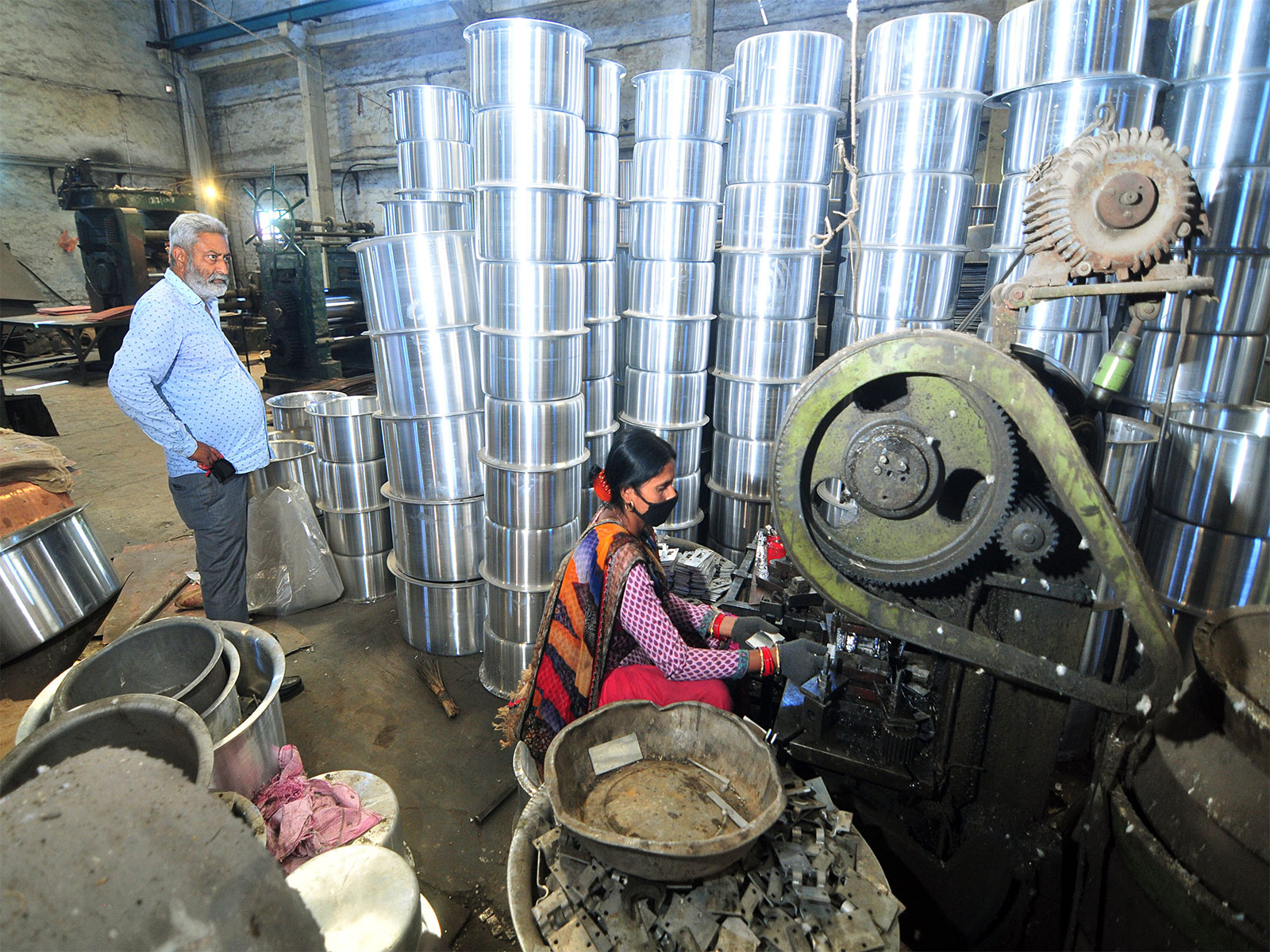
New Delhi [India], June 13 (ANI): India's labour productivity gap with China has widened by more than USD 30,000 per worker since 2000, despite decades of strong economic growth, with the country yet to achieve the industry-led productivity transformation seen in economies such as China, South Korea and Vietnam, according to an Equirus Securities research report.
The report, titled "Labour Productivity in Emerging Economies: Catch-up, Innovation, and now AI", said India's GDP per worker has more than tripled since 1995, but productivity gains have lagged behind some of its Asian peers.
"India's productivity gap with China has widened by over USD 30,000 per worker in absolute terms since 2000, despite decades of strong GDP growth. India and Bangladesh today sit at near-identical productivity levels," the report said.
The report noted that while emerging market labour productivity has grown steadily over the past three decades, the current phase is marked by sharp divergence across countries. It identified Vietnam as the standout performer in the post-pandemic period, driven by manufacturing-led foreign investment, while India continues to face structural constraints.
According to Equirus, India has "not yet executed the industry-led productivity leap that China, Korea, and Vietnam delivered in their high-growth phases.
The report said India's labour productivity growth accelerated to 5.3 per cent annually in the 2000s on the back of the IT and services boom, but slowed to 3.4 per cent in the 2010s due to a series of economic disruptions.It pointed out that India's productivity performance suffered from "the demonetisation shock (2016), GST implementation disruption (2017), and NBFC liquidity crises" that weighed on the informal economy.
The report also highlighted the severe impact of the pandemic on India's productivity."India's COVID shock (-12.3% in 2020) was the sharpest in this dataset - a direct consequence of informal sector dependence, migrant labour exposure, and strict lockdowns," it said.While productivity growth has recovered in recent years, Equirus said the rebound remains uneven because India's most productive sectors account for a relatively small share of employment."The services-manufacturing divide means India's headline productivity is highly uneven. If services are stripped out, productivity growth in goods-producing sectors has been far more modest," the report noted.It said schemes such as the Production Linked Incentive (PLI) programme and the China+1 investment shift are supporting growth in sectors including electronics, pharmaceuticals and auto components. However, these gains have not yet translated into a structural increase in manufacturing's contribution to the economy."The PLI scheme and China+1 FDI thesis are real tailwinds - electronics, pharma, and auto components are showing genuine output gains. But manufacturing's share of GDP has not structurally risen," the report said.Equirus identified labour market rigidities and high logistics costs as key barriers to stronger productivity growth, noting that logistics costs remain around 13-14 per cent of GDP compared with 8-9 per cent in China.The report concluded that India's long-term fundamentals remain favourable due to its demographic profile, capital markets, foreign investment inflows and digital infrastructure. However, it cautioned that sustaining higher productivity growth would require deeper structural reforms beyond capital expenditure and incentive schemes."The current administration's focus on capital expenditure and PLI is necessary but not sufficient - transportation costs, commodity pressures, land reforms; would be crucial to push the needle towards a high-productivity story akin to China," it said. (ANI)
New Delhi [India], June 13 (ANI): India's labour productivity gap with China has widened by more than USD 30,000 per worker since 2000, despite decades of strong economic growth, with the country yet to achieve the industry-led productivity transformation seen in economies such as China, South Korea and Vietnam, according to an Equirus Securities research report.
The report, titled "Labour Productivity in Emerging Economies: Catch-up, Innovation, and now AI", said India's GDP per worker has more than tripled since 1995, but productivity gains have lagged behind some of its Asian peers.
"India's productivity gap with China has widened by over USD 30,000 per worker in absolute terms since 2000, despite decades of strong GDP growth. India and Bangladesh today sit at near-identical productivity levels," the report said.
The report noted that while emerging market labour productivity has grown steadily over the past three decades, the current phase is marked by sharp divergence across countries. It identified Vietnam as the standout performer in the post-pandemic period, driven by manufacturing-led foreign investment, while India continues to face structural constraints.
According to Equirus, India has "not yet executed the industry-led productivity leap that China, Korea, and Vietnam delivered in their high-growth phases.
The report said India's labour productivity growth accelerated to 5.3 per cent annually in the 2000s on the back of the IT and services boom, but slowed to 3.4 per cent in the 2010s due to a series of economic disruptions.It pointed out that India's productivity performance suffered from "the demonetisation shock (2016), GST implementation disruption (2017), and NBFC liquidity crises" that weighed on the informal economy.
The report also highlighted the severe impact of the pandemic on India's productivity."India's COVID shock (-12.3% in 2020) was the sharpest in this dataset - a direct consequence of informal sector dependence, migrant labour exposure, and strict lockdowns," it said.While productivity growth has recovered in recent years, Equirus said the rebound remains uneven because India's most productive sectors account for a relatively small share of employment."The services-manufacturing divide means India's headline productivity is highly uneven. If services are stripped out, productivity growth in goods-producing sectors has been far more modest," the report noted.It said schemes such as the Production Linked Incentive (PLI) programme and the China+1 investment shift are supporting growth in sectors including electronics, pharmaceuticals and auto components. However, these gains have not yet translated into a structural increase in manufacturing's contribution to the economy."The PLI scheme and China+1 FDI thesis are real tailwinds - electronics, pharma, and auto components are showing genuine output gains. But manufacturing's share of GDP has not structurally risen," the report said.Equirus identified labour market rigidities and high logistics costs as key barriers to stronger productivity growth, noting that logistics costs remain around 13-14 per cent of GDP compared with 8-9 per cent in China.The report concluded that India's long-term fundamentals remain favourable due to its demographic profile, capital markets, foreign investment inflows and digital infrastructure. However, it cautioned that sustaining higher productivity growth would require deeper structural reforms beyond capital expenditure and incentive schemes."The current administration's focus on capital expenditure and PLI is necessary but not sufficient - transportation costs, commodity pressures, land reforms; would be crucial to push the needle towards a high-productivity story akin to China," it said. (ANI)
Beijingwalker
Banned
The gap is not narrowing, it's widenning, so much for so called fast growth.
K2RULEZ
Elite Member
The gap is not narrowing, it's widenning, so much for so called fast growth.
India is at best a service orientated economy. It is not a industrial behemoth like China. China produces everything.

NGAD IS THE BEST
Elite Member

But they are claiming to be superpower of the world and think that world revolving around them lolNot even a contest.
K2RULEZ
Elite Member
But they are claiming to be superpower of the world and think that world revolving around them lol
India is indulging in wishful thinking, emboldened by the support of its Western allies. In their bid to curtail China, Western nations attempted to position India as a pivotal element of their containment strategy. However, the West now fully grasps that India is not the definitive counterweight to China.
Despite its economic success, India remains an aspiring power seeking to join the ranks of China and the United States.
NeptunesVortex
Registered Member
Users who are viewing this thread
Total: 8 (members: 0, guests: 8)
Pakistan Defence Latest
-
-

-
-
-
Pak Ship Collides With Indian Navy Unit, Delhi Summons Islamabad's Envoy (11 Viewers)
- Latest: Be dazzled


