US Political News and Trump’s China visit

Mamdani paid $1000 for Knicks tickets normally reserved for VIP's.

Knicks did it in 5.
Orange and Blue.
Let’s go Knicks

Per ethics rules Mamdani had to pay the face value of the cheapest ticket; $1000

Mamdani led the city while the Knicks unified the city.

To view this content we will need your consent to set third party cookies.
For more detailed information, see our cookies page.


This is how the chants were ahead of Game 5: My Mayor is Still Muslim, My Bagels are still Jewish, The Pope is on our side, Knicks in 5.

To view this content we will need your consent to set third party cookies.
For more detailed information, see our cookies page.


NYC feels electric right now.

To view this content we will need your consent to set third party cookies.
For more detailed information, see our cookies page.


Zohran out with the people.
To view this content we will need your consent to set third party cookies.
For more detailed information, see our cookies page.
 
Last edited:
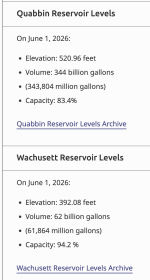
reservoir.png

Let's see...reservoir levels at 83.4% and 94.2% (y)

wait..what...

Drought status worsens across Mass. amid rainfall shortage​


they banned watering of lawns. A new law says if there are drought conditions water bans go into effect no matter how high the reservoir levels are. I guess that's a good idea but geez.

To view this content we will need your consent to set third party cookies.
For more detailed information, see our cookies page.

Quabbin Reservoir 6/9/2026​


To view this content we will need your consent to set third party cookies.
For more detailed information, see our cookies page.

These Smallmouth are BIG & AGGRESSIVE | Fishing at Wachusett Reservoir​

 
Last edited:
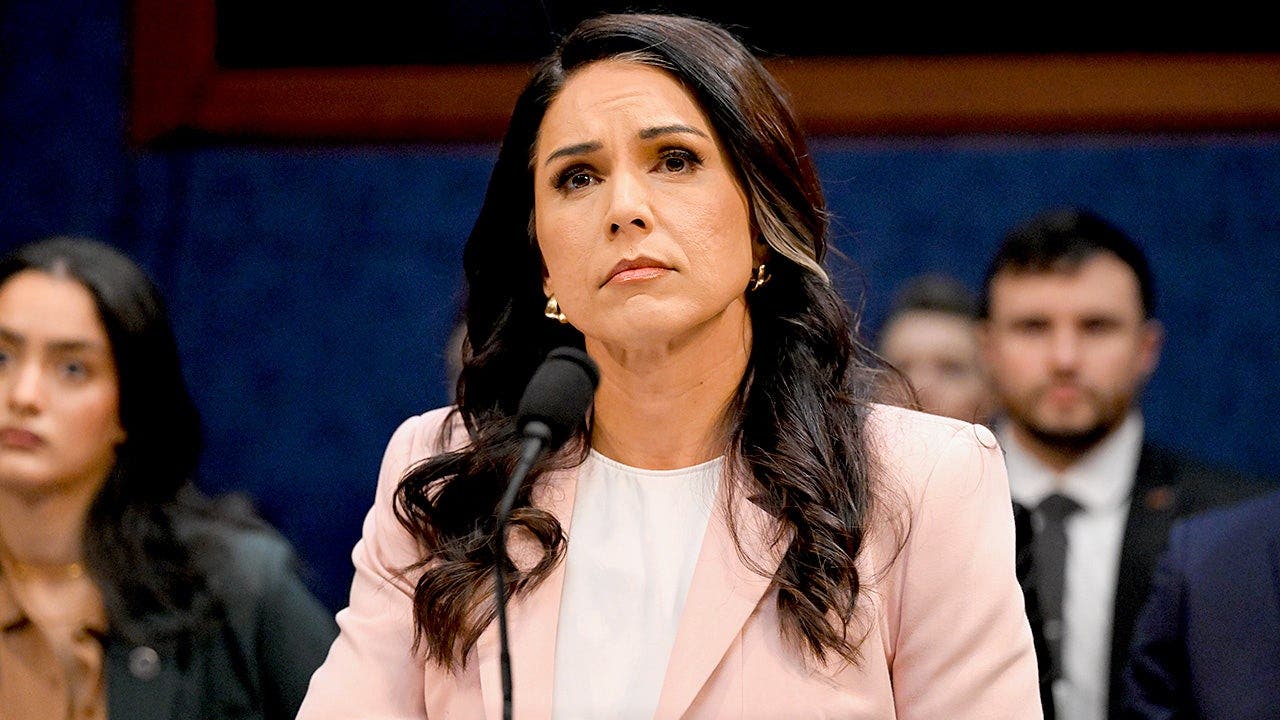
Tulsi Gabbard was right. As I said on a different forum, Victoria Nuland downplayed this and chose her words very carefully:

isn't this presenting the mundane as something spectacular ? The Soviet Union had a huge biological/chemical weapons program and the remnants of those were in Ukraine. The US paid Ukraine some money to protect and upkeep the labs.

The US also paid for the dismantling of Ukraine's nuke weapons and capability. You don't see Putin complaining about that.
 
isn't this presenting the mundane as something spectacular ? The Soviet Union had a huge biological/chemical weapons program and the remnants of those were in Ukraine. The US paid Ukraine some money to protect and upkeep the labs.

The US also paid for the dismantling of Ukraine's nuke weapons and capability. You don't see Putin complaining about that.
Correct on both counts.

What Gabbard is pointing out, and Nuland kept quiet, is the US was paying Ukraine for certain research. Similar to what Dr. Fauci was doing with the Chinese in regards to covid.

Gain of function.
 
:ROFLMAO:

Weather channel with TDS.

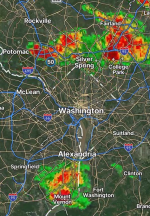
-UFC Freedom 250 is facing a chaotic weather setup on the White House South Lawn, with a 60% chance of thunderstorms, heavy downpours, and wind gusts up to 34 mph threatening to delay the outdoor fights. On top of the storm risk, brutal D.C. humidity is driving a triple-digit heat index alongside massive swarms of mosquitos and gnats that fighters will have to battle inside the cage. While the venue’s massive 92-foot overhang will keep the octagon dry, a single lightning strike within eight miles will trigger an automatic 30-minute freeze on the entire event.
To view this content we will need your consent to set third party cookies.
For more detailed information, see our cookies page.

To view this content we will need your consent to set third party cookies.
For more detailed information, see our cookies page.

1781500131896.png

UFC Whitehouse edition brought to you by HAARP.
 

Why Trump’s talk of a ‘G2’ hits a nerve with allies

The president has made clear he prefers a one-on-one approach to China, complicating allies' push for a united front.

Donald Trump shakes hands with Xi Jinping.

U.S. President Donald Trump, right, shakes hands with Chinese President Xi Jinping while leaving after a visit to the Zhongnanhai Garden in Beijing, May 15, 2026. | Evan Vucci/AP

06/15/2026 10:00 AM EDT

The world’s largest economies want to come together to act on China’s growing economic threat. President Donald Trump is more interested in going it alone.

Trump basically spelled out as much in a summit with Chinese leader Xi Jinping in Beijing last month, declaring the tête-à-tête “the G2.”
The president has made clear he prefers a one-on-one approach to China, complicating allies' push for a united front.

“This is the G2,” the president told reporters, referring to a knock off of the Group of 7 summit of the world’s largest economies and democracies. “They have G7, they have the G8, this is the G2.”

That approach is undercutting efforts by traditional allies, led by Europe, to present a united front against China and its flood of cheap exports that are swamping Western markets. French President Emmanuel Macron has made the issue a priority as he hosts the G7 summit this week in Évian-les-Bains , France — convening a call last week with fellow G7 leaders as well China, India and Brazil to discuss the problem. But the White House didn’t even mention China in the list of priorities it has for the summit.

Further complicating the picture, Trump’s tariff buildup against China has pushed more Chinese exports into other Western markets, none more so than Europe.

“The United States is not waiting for the world to hold hands and find a coordinated way to address [China’s behavior]. We’re taking action now through a variety of measures,” a senior administration official told reporters at a Saturday briefing. But the official added, “we are happy to cooperate and coordinate with other countries on how to resolve those massive imbalances.” They were granted anonymity per the ground rules of the call.

The Trump administration plans to hold more one-on-one conversations with Chinese officials on the subject — indeed Trump and Xi have already slated another summit in Washington in September.

A separate White House official, granted anonymity to preview the G7 summit in France, said the administration’s policy priorities there include investment partnerships, innovation in artificial intelligence, Ebola outbreak response, critical mineral supply chain resilience, illegal immigration and drug smuggling and energy exports.

Europe is starting to recognize it will need to take initiative,on its own.

In addition to the Macron call, which didn’t yield substantive results, European Commission President Ursula von der Leyen is hosting a summit with fellow EU leaders on Thursday to discuss policy options for curbing the Chinese supply glut. In May, the European Union voted to raise steel tariffs, a move that brought it in alignment with U.S. efforts to address China’s manufacturing capabilities in steel.

“Where others fail to comply with common rules, we cannot and will not stand idly by,” German Chancellor Friedrich Merz said in the German parliament last week, adding that Berlin “is on alert against trade practices by other countries that distort competition.” Germany is particularly vulnerable to low-priced imports because its key industrial sectors — autos, pharmaceuticals and chemical manufacturing — are under siege from imported Chinese competitors backed by government subsidies.

“Europe seems ready to move on China,” said Chad Bown, who served as the chief economist in the State Department during the Biden administration. “It’s the moment we’ve been waiting for in the United States for a really long time. And there just doesn’t seem to be any interest in it” from the Trump administration.

Andrew Puzder, the U.S. ambassador to the EU, embodied that attitude at an event at the Reagan National Economic Forum at the end of May. “I think the relationship between President Trump and President Xi is real. That may make Europe nervous,” Puzder said. “But the things that [China] was dumping on the U.S., they’re now dumping on Europe. So they’re concerned and they’re reacting to China for sure.”

EU countries, however, are not ready to pursue some of Trump’s most confrontational trade policies, like unilateral tariffs, fearing it would trigger a trade war that could backfire very fast. Instead, the 27-nation bloc is pledging a diplomatic approach — intensifying talks with Beijing and diversifying trade partners.

The lack of Western unity is hampering G7 countries’ response to China’s oversupply, even as every member — from the U.S. to Germany to Canada to Japan — struggles with similar issues.

In Europe, “part of what slows them down is the fear of retaliation,” Bown said. “And the fear that we don’t have their back if they face that coercion and retaliation by the Chinese.”

Japan has already experienced that.

Angered last fall by the new Japanese prime minister’s saber rattling on Taiwan, a self-governing island China considers part of its territory, Beijing has been choking off exports of rare earths for more than four months, threatening Tokyo’s manufacturing of everything from cars to cell phones and other high-tech products.

Trump, meanwhile, traveled to Beijing for chummy photo-ops with China’s authoritarian ruler while bringing up the idea of replacing the G7 with a G2, an idea he also floated last fall.

A former official in Tokyo said government officials there have watched warily as Trump praised Xi, calling him, among other things, a “friend,” “a tremendous leader” and “very powerful.”

“Japan has very good reason to be alarmed about the concept,” of a G2, whether formal or de facto, said the former official.

So do the rest of the G7.

Even talk of cutting out Europe, Canada and Japan feeds suspicions that Trump’s transactional approach to diplomacy will lead the U.S. to make investment agreements that could harm the interests of its traditional allies and partners. A year of punitive tariffs, threats to invade Greenland and insistence that Canada become the 51st state have heightened those concerns around the world.

When talking to reporters Friday, Canadian Prime Minister Mark Carney was asked about the idea that the U.S. is out-of-step with the rest of the G7.

“There will be some issues where there are strongly held views by one of the G7 partners that, you know, are more extreme than others,” Carney replied, though he rejected the idea of there being a “G6 plus one” with the U.S. operating entirely separately. “I mean, each of us may have examples of that,” Carney said.

At the same time, foreign leaders doubt Trump can meaningfully curb Chinese behavior on his own.

“The Chinese government will 200 percent capitalize on this idea of a G2, but they’ll suck out the sweet and spit out the sour,” said a Washington-based Asian diplomat granted anonymity to speak freely.It’s similar to when China was admitted to the World Trade Organization on the belief that it would transform China into a responsible, reliable rule-following country — in reality it hasn’t happened at all.”
 

Why Trump’s talk of a ‘G2’ hits a nerve with allies

The president has made clear he prefers a one-on-one approach to China, complicating allies' push for a united front.

Donald Trump shakes hands with Xi Jinping.

U.S. President Donald Trump, right, shakes hands with Chinese President Xi Jinping while leaving after a visit to the Zhongnanhai Garden in Beijing, May 15, 2026. | Evan Vucci/AP

06/15/2026 10:00 AM EDT

The world’s largest economies want to come together to act on China’s growing economic threat. President Donald Trump is more interested in going it alone.

Trump basically spelled out as much in a summit with Chinese leader Xi Jinping in Beijing last month, declaring the tête-à-tête “the G2.”
The president has made clear he prefers a one-on-one approach to China, complicating allies' push for a united front.

“This is the G2,” the president told reporters, referring to a knock off of the Group of 7 summit of the world’s largest economies and democracies. “They have G7, they have the G8, this is the G2.”

That approach is undercutting efforts by traditional allies, led by Europe, to present a united front against China and its flood of cheap exports that are swamping Western markets. French President Emmanuel Macron has made the issue a priority as he hosts the G7 summit this week in Évian-les-Bains , France — convening a call last week with fellow G7 leaders as well China, India and Brazil to discuss the problem. But the White House didn’t even mention China in the list of priorities it has for the summit.

Further complicating the picture, Trump’s tariff buildup against China has pushed more Chinese exports into other Western markets, none more so than Europe.

“The United States is not waiting for the world to hold hands and find a coordinated way to address [China’s behavior]. We’re taking action now through a variety of measures,” a senior administration official told reporters at a Saturday briefing. But the official added, “we are happy to cooperate and coordinate with other countries on how to resolve those massive imbalances.” They were granted anonymity per the ground rules of the call.

The Trump administration plans to hold more one-on-one conversations with Chinese officials on the subject — indeed Trump and Xi have already slated another summit in Washington in September.

A separate White House official, granted anonymity to preview the G7 summit in France, said the administration’s policy priorities there include investment partnerships, innovation in artificial intelligence, Ebola outbreak response, critical mineral supply chain resilience, illegal immigration and drug smuggling and energy exports.

Europe is starting to recognize it will need to take initiative,on its own.

In addition to the Macron call, which didn’t yield substantive results, European Commission President Ursula von der Leyen is hosting a summit with fellow EU leaders on Thursday to discuss policy options for curbing the Chinese supply glut. In May, the European Union voted to raise steel tariffs, a move that brought it in alignment with U.S. efforts to address China’s manufacturing capabilities in steel.

“Where others fail to comply with common rules, we cannot and will not stand idly by,” German Chancellor Friedrich Merz said in the German parliament last week, adding that Berlin “is on alert against trade practices by other countries that distort competition.” Germany is particularly vulnerable to low-priced imports because its key industrial sectors — autos, pharmaceuticals and chemical manufacturing — are under siege from imported Chinese competitors backed by government subsidies.

“Europe seems ready to move on China,” said Chad Bown, who served as the chief economist in the State Department during the Biden administration. “It’s the moment we’ve been waiting for in the United States for a really long time. And there just doesn’t seem to be any interest in it” from the Trump administration.

Andrew Puzder, the U.S. ambassador to the EU, embodied that attitude at an event at the Reagan National Economic Forum at the end of May. “I think the relationship between President Trump and President Xi is real. That may make Europe nervous,” Puzder said. “But the things that [China] was dumping on the U.S., they’re now dumping on Europe. So they’re concerned and they’re reacting to China for sure.”

EU countries, however, are not ready to pursue some of Trump’s most confrontational trade policies, like unilateral tariffs, fearing it would trigger a trade war that could backfire very fast. Instead, the 27-nation bloc is pledging a diplomatic approach — intensifying talks with Beijing and diversifying trade partners.

The lack of Western unity is hampering G7 countries’ response to China’s oversupply, even as every member — from the U.S. to Germany to Canada to Japan — struggles with similar issues.

In Europe, “part of what slows them down is the fear of retaliation,” Bown said. “And the fear that we don’t have their back if they face that coercion and retaliation by the Chinese.”

Japan has already experienced that.

Angered last fall by the new Japanese prime minister’s saber rattling on Taiwan, a self-governing island China considers part of its territory, Beijing has been choking off exports of rare earths for more than four months, threatening Tokyo’s manufacturing of everything from cars to cell phones and other high-tech products.

Trump, meanwhile, traveled to Beijing for chummy photo-ops with China’s authoritarian ruler while bringing up the idea of replacing the G7 with a G2, an idea he also floated last fall.

A former official in Tokyo said government officials there have watched warily as Trump praised Xi, calling him, among other things, a “friend,” “a tremendous leader” and “very powerful.”

“Japan has very good reason to be alarmed about the concept,” of a G2, whether formal or de facto, said the former official.

So do the rest of the G7.

Even talk of cutting out Europe, Canada and Japan feeds suspicions that Trump’s transactional approach to diplomacy will lead the U.S. to make investment agreements that could harm the interests of its traditional allies and partners. A year of punitive tariffs, threats to invade Greenland and insistence that Canada become the 51st state have heightened those concerns around the world.

When talking to reporters Friday, Canadian Prime Minister Mark Carney was asked about the idea that the U.S. is out-of-step with the rest of the G7.

“There will be some issues where there are strongly held views by one of the G7 partners that, you know, are more extreme than others,” Carney replied, though he rejected the idea of there being a “G6 plus one” with the U.S. operating entirely separately. “I mean, each of us may have examples of that,” Carney said.

At the same time, foreign leaders doubt Trump can meaningfully curb Chinese behavior on his own.

“The Chinese government will 200 percent capitalize on this idea of a G2, but they’ll suck out the sweet and spit out the sour,” said a Washington-based Asian diplomat granted anonymity to speak freely.It’s similar to when China was admitted to the World Trade Organization on the belief that it would transform China into a responsible, reliable rule-following country — in reality it hasn’t happened at all.”

Why Trump’s talk of a ‘G2’ hits a nerve with allies

The president has made clear he prefers a one-on-one approach to China, complicating allies' push for a united front.

Donald Trump shakes hands with Xi Jinping.

U.S. President Donald Trump, right, shakes hands with Chinese President Xi Jinping while leaving after a visit to the Zhongnanhai Garden in Beijing, May 15, 2026. | Evan Vucci/AP

06/15/2026 10:00 AM EDT

The world’s largest economies want to come together to act on China’s growing economic threat. President Donald Trump is more interested in going it alone.

Trump basically spelled out as much in a summit with Chinese leader Xi Jinping in Beijing last month, declaring the tête-à-tête “the G2.”
The president has made clear he prefers a one-on-one approach to China, complicating allies' push for a united front.

“This is the G2,” the president told reporters, referring to a knock off of the Group of 7 summit of the world’s largest economies and democracies. “They have G7, they have the G8, this is the G2.”

That approach is undercutting efforts by traditional allies, led by Europe, to present a united front against China and its flood of cheap exports that are swamping Western markets. French President Emmanuel Macron has made the issue a priority as he hosts the G7 summit this week in Évian-les-Bains , France — convening a call last week with fellow G7 leaders as well China, India and Brazil to discuss the problem. But the White House didn’t even mention China in the list of priorities it has for the summit.

Further complicating the picture, Trump’s tariff buildup against China has pushed more Chinese exports into other Western markets, none more so than Europe.

“The United States is not waiting for the world to hold hands and find a coordinated way to address [China’s behavior]. We’re taking action now through a variety of measures,” a senior administration official told reporters at a Saturday briefing. But the official added, “we are happy to cooperate and coordinate with other countries on how to resolve those massive imbalances.” They were granted anonymity per the ground rules of the call.

The Trump administration plans to hold more one-on-one conversations with Chinese officials on the subject — indeed Trump and Xi have already slated another summit in Washington in September.

A separate White House official, granted anonymity to preview the G7 summit in France, said the administration’s policy priorities there include investment partnerships, innovation in artificial intelligence, Ebola outbreak response, critical mineral supply chain resilience, illegal immigration and drug smuggling and energy exports.

Europe is starting to recognize it will need to take initiative,on its own.

In addition to the Macron call, which didn’t yield substantive results, European Commission President Ursula von der Leyen is hosting a summit with fellow EU leaders on Thursday to discuss policy options for curbing the Chinese supply glut. In May, the European Union voted to raise steel tariffs, a move that brought it in alignment with U.S. efforts to address China’s manufacturing capabilities in steel.

“Where others fail to comply with common rules, we cannot and will not stand idly by,” German Chancellor Friedrich Merz said in the German parliament last week, adding that Berlin “is on alert against trade practices by other countries that distort competition.” Germany is particularly vulnerable to low-priced imports because its key industrial sectors — autos, pharmaceuticals and chemical manufacturing — are under siege from imported Chinese competitors backed by government subsidies.

“Europe seems ready to move on China,” said Chad Bown, who served as the chief economist in the State Department during the Biden administration. “It’s the moment we’ve been waiting for in the United States for a really long time. And there just doesn’t seem to be any interest in it” from the Trump administration.

Andrew Puzder, the U.S. ambassador to the EU, embodied that attitude at an event at the Reagan National Economic Forum at the end of May. “I think the relationship between President Trump and President Xi is real. That may make Europe nervous,” Puzder said. “But the things that [China] was dumping on the U.S., they’re now dumping on Europe. So they’re concerned and they’re reacting to China for sure.”

EU countries, however, are not ready to pursue some of Trump’s most confrontational trade policies, like unilateral tariffs, fearing it would trigger a trade war that could backfire very fast. Instead, the 27-nation bloc is pledging a diplomatic approach — intensifying talks with Beijing and diversifying trade partners.

The lack of Western unity is hampering G7 countries’ response to China’s oversupply, even as every member — from the U.S. to Germany to Canada to Japan — struggles with similar issues.

In Europe, “part of what slows them down is the fear of retaliation,” Bown said. “And the fear that we don’t have their back if they face that coercion and retaliation by the Chinese.”

Japan has already experienced that.

Angered last fall by the new Japanese prime minister’s saber rattling on Taiwan, a self-governing island China considers part of its territory, Beijing has been choking off exports of rare earths for more than four months, threatening Tokyo’s manufacturing of everything from cars to cell phones and other high-tech products.

Trump, meanwhile, traveled to Beijing for chummy photo-ops with China’s authoritarian ruler while bringing up the idea of replacing the G7 with a G2, an idea he also floated last fall.

A former official in Tokyo said government officials there have watched warily as Trump praised Xi, calling him, among other things, a “friend,” “a tremendous leader” and “very powerful.”

“Japan has very good reason to be alarmed about the concept,” of a G2, whether formal or de facto, said the former official.

So do the rest of the G7.

Even talk of cutting out Europe, Canada and Japan feeds suspicions that Trump’s transactional approach to diplomacy will lead the U.S. to make investment agreements that could harm the interests of its traditional allies and partners. A year of punitive tariffs, threats to invade Greenland and insistence that Canada become the 51st state have heightened those concerns around the world.

When talking to reporters Friday, Canadian Prime Minister Mark Carney was asked about the idea that the U.S. is out-of-step with the rest of the G7.

“There will be some issues where there are strongly held views by one of the G7 partners that, you know, are more extreme than others,” Carney replied, though he rejected the idea of there being a “G6 plus one” with the U.S. operating entirely separately. “I mean, each of us may have examples of that,” Carney said.

At the same time, foreign leaders doubt Trump can meaningfully curb Chinese behavior on his own.

“The Chinese government will 200 percent capitalize on this idea of a G2, but they’ll suck out the sweet and spit out the sour,” said a Washington-based Asian diplomat granted anonymity to speak freely.It’s similar to when China was admitted to the World Trade Organization on the belief that it would transform China into a responsible, reliable rule-following country — in reality it hasn’t happened at all.”

To view this content we will need your consent to set third party cookies.
For more detailed information, see our cookies page.
 
Last edited:
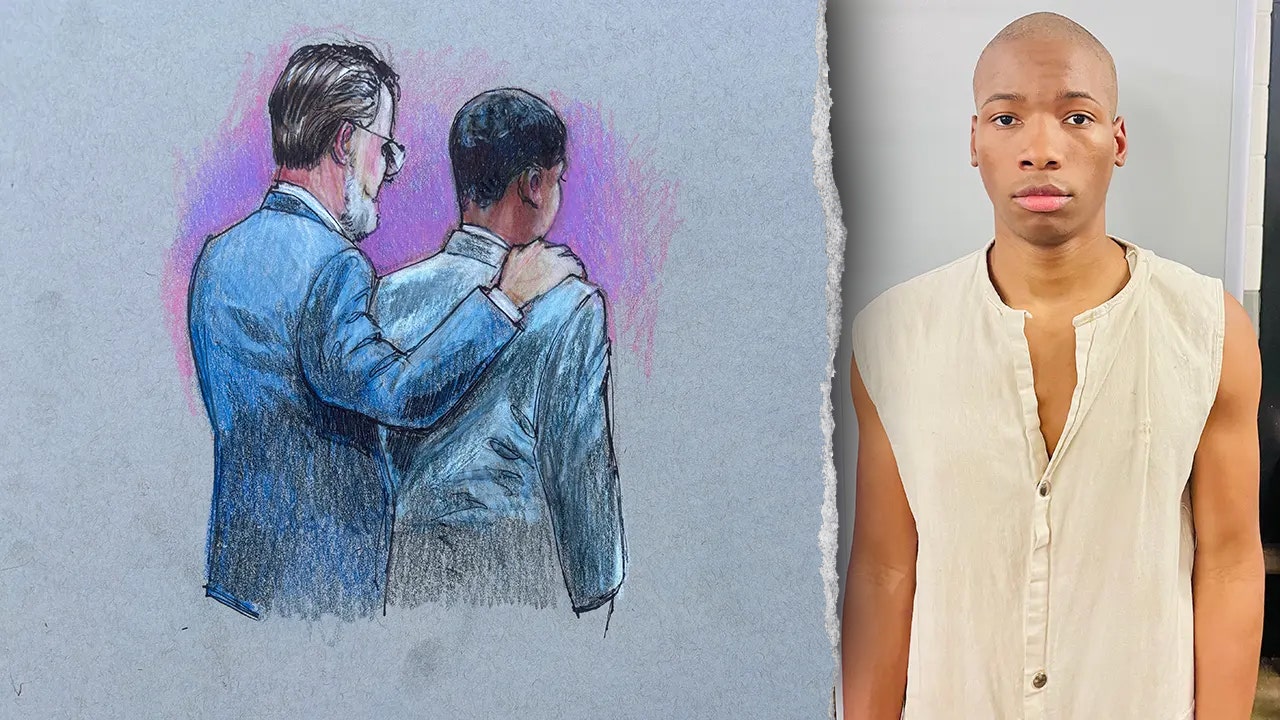
Usual suspects continue to whine Karmelo Anthony did not get a fair trial or a jury of his peers:


The Constitution is clear: a jury of your peers does NOT mean a jury of your race.

These people are simply trying to stir up tensions, that's all.
 

Why Trump’s talk of a ‘G2’ hits a nerve with allies

The president has made clear he prefers a one-on-one approach to China, complicating allies' push for a united front.

Donald Trump shakes hands with Xi Jinping.

U.S. President Donald Trump, right, shakes hands with Chinese President Xi Jinping while leaving after a visit to the Zhongnanhai Garden in Beijing, May 15, 2026. | Evan Vucci/AP

06/15/2026 10:00 AM EDT

The world’s largest economies want to come together to act on China’s growing economic threat. President Donald Trump is more interested in going it alone.

Trump basically spelled out as much in a summit with Chinese leader Xi Jinping in Beijing last month, declaring the tête-à-tête “the G2.”
The president has made clear he prefers a one-on-one approach to China, complicating allies' push for a united front.

“This is the G2,” the president told reporters, referring to a knock off of the Group of 7 summit of the world’s largest economies and democracies. “They have G7, they have the G8, this is the G2.”

That approach is undercutting efforts by traditional allies, led by Europe, to present a united front against China and its flood of cheap exports that are swamping Western markets. French President Emmanuel Macron has made the issue a priority as he hosts the G7 summit this week in Évian-les-Bains , France — convening a call last week with fellow G7 leaders as well China, India and Brazil to discuss the problem. But the White House didn’t even mention China in the list of priorities it has for the summit.

Further complicating the picture, Trump’s tariff buildup against China has pushed more Chinese exports into other Western markets, none more so than Europe.

“The United States is not waiting for the world to hold hands and find a coordinated way to address [China’s behavior]. We’re taking action now through a variety of measures,” a senior administration official told reporters at a Saturday briefing. But the official added, “we are happy to cooperate and coordinate with other countries on how to resolve those massive imbalances.” They were granted anonymity per the ground rules of the call.

The Trump administration plans to hold more one-on-one conversations with Chinese officials on the subject — indeed Trump and Xi have already slated another summit in Washington in September.

A separate White House official, granted anonymity to preview the G7 summit in France, said the administration’s policy priorities there include investment partnerships, innovation in artificial intelligence, Ebola outbreak response, critical mineral supply chain resilience, illegal immigration and drug smuggling and energy exports.

Europe is starting to recognize it will need to take initiative,on its own.

In addition to the Macron call, which didn’t yield substantive results, European Commission President Ursula von der Leyen is hosting a summit with fellow EU leaders on Thursday to discuss policy options for curbing the Chinese supply glut. In May, the European Union voted to raise steel tariffs, a move that brought it in alignment with U.S. efforts to address China’s manufacturing capabilities in steel.

“Where others fail to comply with common rules, we cannot and will not stand idly by,” German Chancellor Friedrich Merz said in the German parliament last week, adding that Berlin “is on alert against trade practices by other countries that distort competition.” Germany is particularly vulnerable to low-priced imports because its key industrial sectors — autos, pharmaceuticals and chemical manufacturing — are under siege from imported Chinese competitors backed by government subsidies.

“Europe seems ready to move on China,” said Chad Bown, who served as the chief economist in the State Department during the Biden administration. “It’s the moment we’ve been waiting for in the United States for a really long time. And there just doesn’t seem to be any interest in it” from the Trump administration.

Andrew Puzder, the U.S. ambassador to the EU, embodied that attitude at an event at the Reagan National Economic Forum at the end of May. “I think the relationship between President Trump and President Xi is real. That may make Europe nervous,” Puzder said. “But the things that [China] was dumping on the U.S., they’re now dumping on Europe. So they’re concerned and they’re reacting to China for sure.”

EU countries, however, are not ready to pursue some of Trump’s most confrontational trade policies, like unilateral tariffs, fearing it would trigger a trade war that could backfire very fast. Instead, the 27-nation bloc is pledging a diplomatic approach — intensifying talks with Beijing and diversifying trade partners.

The lack of Western unity is hampering G7 countries’ response to China’s oversupply, even as every member — from the U.S. to Germany to Canada to Japan — struggles with similar issues.

In Europe, “part of what slows them down is the fear of retaliation,” Bown said. “And the fear that we don’t have their back if they face that coercion and retaliation by the Chinese.”

Japan has already experienced that.

Angered last fall by the new Japanese prime minister’s saber rattling on Taiwan, a self-governing island China considers part of its territory, Beijing has been choking off exports of rare earths for more than four months, threatening Tokyo’s manufacturing of everything from cars to cell phones and other high-tech products.

Trump, meanwhile, traveled to Beijing for chummy photo-ops with China’s authoritarian ruler while bringing up the idea of replacing the G7 with a G2, an idea he also floated last fall.

A former official in Tokyo said government officials there have watched warily as Trump praised Xi, calling him, among other things, a “friend,” “a tremendous leader” and “very powerful.”

“Japan has very good reason to be alarmed about the concept,” of a G2, whether formal or de facto, said the former official.

So do the rest of the G7.

Even talk of cutting out Europe, Canada and Japan feeds suspicions that Trump’s transactional approach to diplomacy will lead the U.S. to make investment agreements that could harm the interests of its traditional allies and partners. A year of punitive tariffs, threats to invade Greenland and insistence that Canada become the 51st state have heightened those concerns around the world.

When talking to reporters Friday, Canadian Prime Minister Mark Carney was asked about the idea that the U.S. is out-of-step with the rest of the G7.

“There will be some issues where there are strongly held views by one of the G7 partners that, you know, are more extreme than others,” Carney replied, though he rejected the idea of there being a “G6 plus one” with the U.S. operating entirely separately. “I mean, each of us may have examples of that,” Carney said.

At the same time, foreign leaders doubt Trump can meaningfully curb Chinese behavior on his own.

“The Chinese government will 200 percent capitalize on this idea of a G2, but they’ll suck out the sweet and spit out the sour,” said a Washington-based Asian diplomat granted anonymity to speak freely.It’s similar to when China was admitted to the World Trade Organization on the belief that it would transform China into a responsible, reliable rule-following country — in reality it hasn’t happened at all.”

no one worries because USA won't get anything from China 1 on 1
 
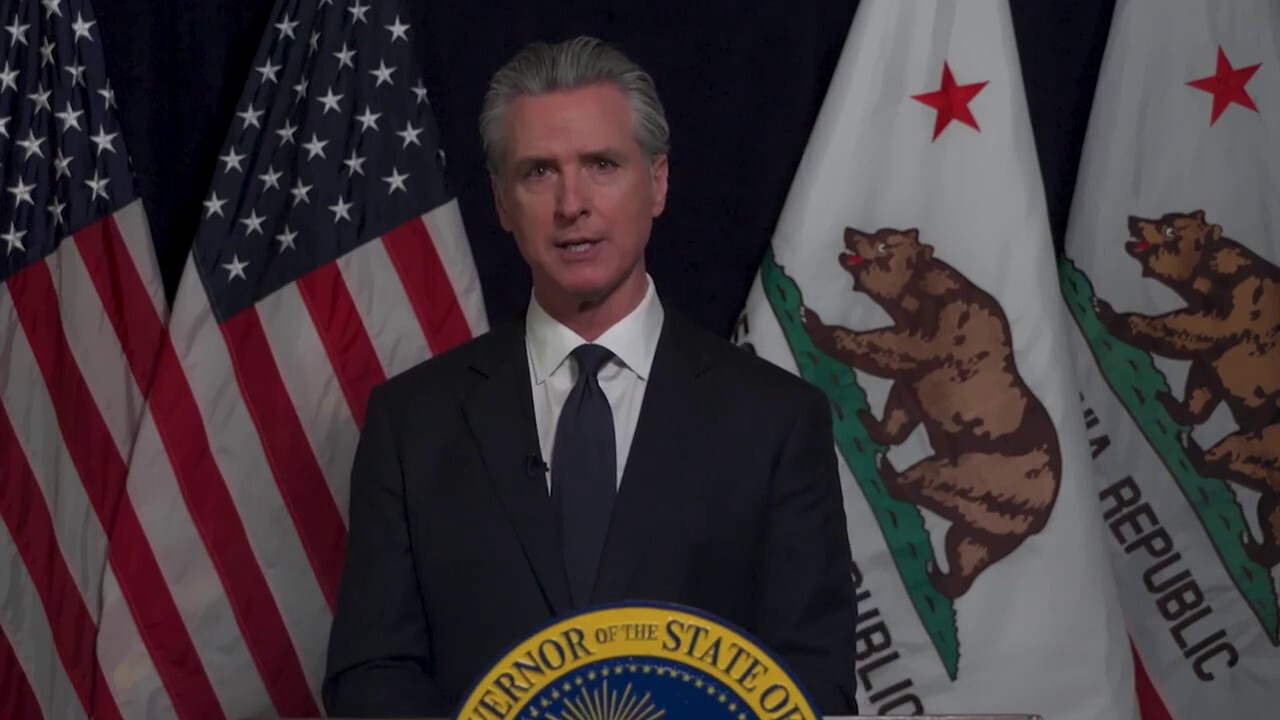
Looks like Gavin Newsom is getting a taste of what Trump experienced:

And nothing ever comes of it. How many times have we heard from this administration DOJ that dems and their allies are under investigation and we never hear anything about it again.
 
Looks like Austine Metcalf is openly letting the world know what he thinks about these urban savages. Good for him.
To view this content we will need your consent to set third party cookies.
For more detailed information, see our cookies page.
 

Users who are viewing this thread

Pakistan Defence Latest

Back
Top