Afghanistan: 'We have won the war, America has lost', say Taliban

So why Taliban attacks us from Afghanistan?
Perhaps its revenge for past betrayal and a lack of open trade

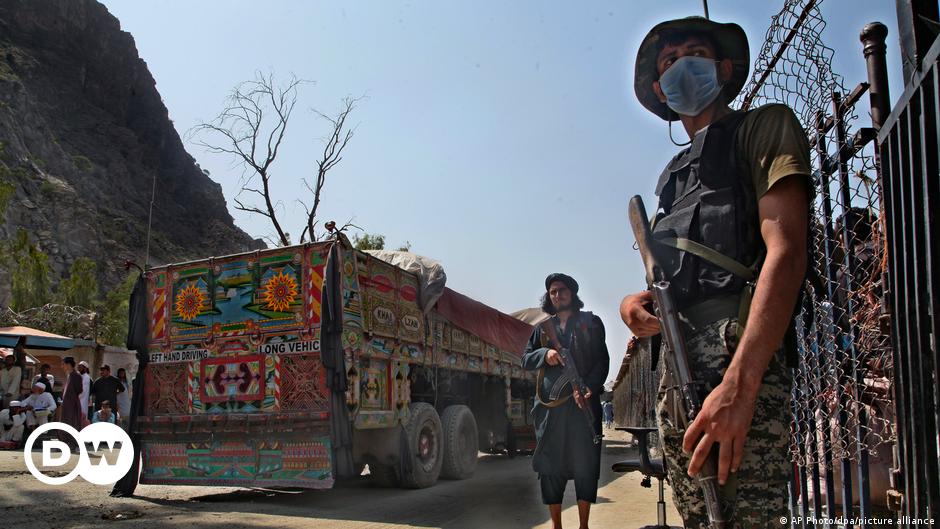
While acknowledging Pakistan's past assistance, Taliban leaders have claimed the harassment, detentions, and handover of Taliban leaders to the US are also evidence of Islamabad's duplicity.

But some of Islamabad's recent actions have also embittered the Taliban regime — last year, Pakistan enforced trade restrictions on its neighboring country, expelled 500,000 undocumented Afghan migrants, and implemented stricter visa policies at border crossings.

 
Perhaps its revenge for past betrayal and a lack of open trade
This not the point, they hate us to core, we received more than 35 million Afghans during soviet invasion of Afghanistan and they still doing terrorism in Pakistan, they most traitor people on earth, they want to break Pakistan into pieces, especially want to take KPK , they are most disgusting people on earth, don't gives a respect to us which received 35 million refugees

And last are you Afghani or Pashtoon taking their sides?
 
They want to break Pakistan into pieces, especially they want to take our North West Frontier Province today's KHAIBER PAKHTUINKHA Province
Bilkul bro…..Jitna ye harami hamain hate kartay hain, nobody else comes even in da ball park.

Ajeeb baat hae…..
 
Doesn't matter, Afghan Taliban are in control of Afghanistan and are here to stay.
Pakistan, GCC, China, and Russia should rush to recognize Afghan Taliban Afghanistan.

Its over now, and now the Afghan Taliban are VICTORIOUS. No doubt about it.


They are highly victorious in bacha bazi but feel insecure around women........:confused:
 
Perhaps its revenge for past betrayal and a lack of open trade


BIGGEST myth going. The biggest traitors and backstabbers of afghans were other afghans siding with the americans in the murder, massacre and rape of their own fellow afghans. What Pakistan did was NOT EVEN 1% of what the afghans did to each other in order to please their american and indian hindu gods. The so called Pakistan "betrayal" is an afghan myth created to hide the disturbing truth of extreme afghan betrayal of their fellow countrymen.
 
BIGGEST myth going. The biggest traitors and backstabbers of afghans were other afghans siding with the americans in the murder, massacre and rape of their own fellow afghans. What Pakistan did was NOT EVEN 1% of what the afghans did to each other in order to please their american and indian hindu gods. The so called Pakistan "betrayal" is an afghan myth created to hide the disturbing truth of extreme afghan betrayal of their fellow countrymen.

It is not betrayal, but different ideology from Afghan people. Those who belief with democracy and those who dont support democracy.

Pakistan should stop interfering with Afghan matter, as we see Today there is no use of supporting Hakani faction within Taliban. Taliban itself is created inside Pakistan.
 
Agreed somewhat. But Pakistan needs to make sure that the afghan factions who claim Pakistani territory as their own, need to be neutralized. afghans never accepted the creation of Pakistan and they are in bed with their indian hindu overlords in calling for the destruction of Pakistan. They need to be eradicated by any means necessary.

Afghan always in war since Cold War. Their population is highly uneducated. I think the best thing to do is to be patience while we have neighbor like that. I believe as soon as Afghan becomes more stable, education is more wide spread, and new leaders emerges, then more rational decision will likely become the norm and rational policy will more likely tend to favor good relationship with Pakistan.
 
The real question is not whether Taliban won or US lost, question is whether Pakistan won or lost ?.
 
BIGGEST myth going. The biggest traitors and backstabbers of afghans were other afghans siding with the americans in the murder, massacre and rape of their own fellow afghans. What Pakistan did was NOT EVEN 1% of what the afghans did to each other in order to please their american and indian hindu gods. The so called Pakistan "betrayal" is an afghan myth created to hide the disturbing truth of extreme afghan betrayal of their fellow countrymen.
True, Afghans siding with USA in murder and rape of fellow Afghans were the TRUE TRAITORS.

NOW AFGHAN TALIBAN HAS WON THE WAR!


The Taliban, not the West, won Afghanistan’s technological war​

The US-led coalition had more firepower, more equipment, and more money. But it was the Taliban that gained most from technological progress.
By
August 23, 2021
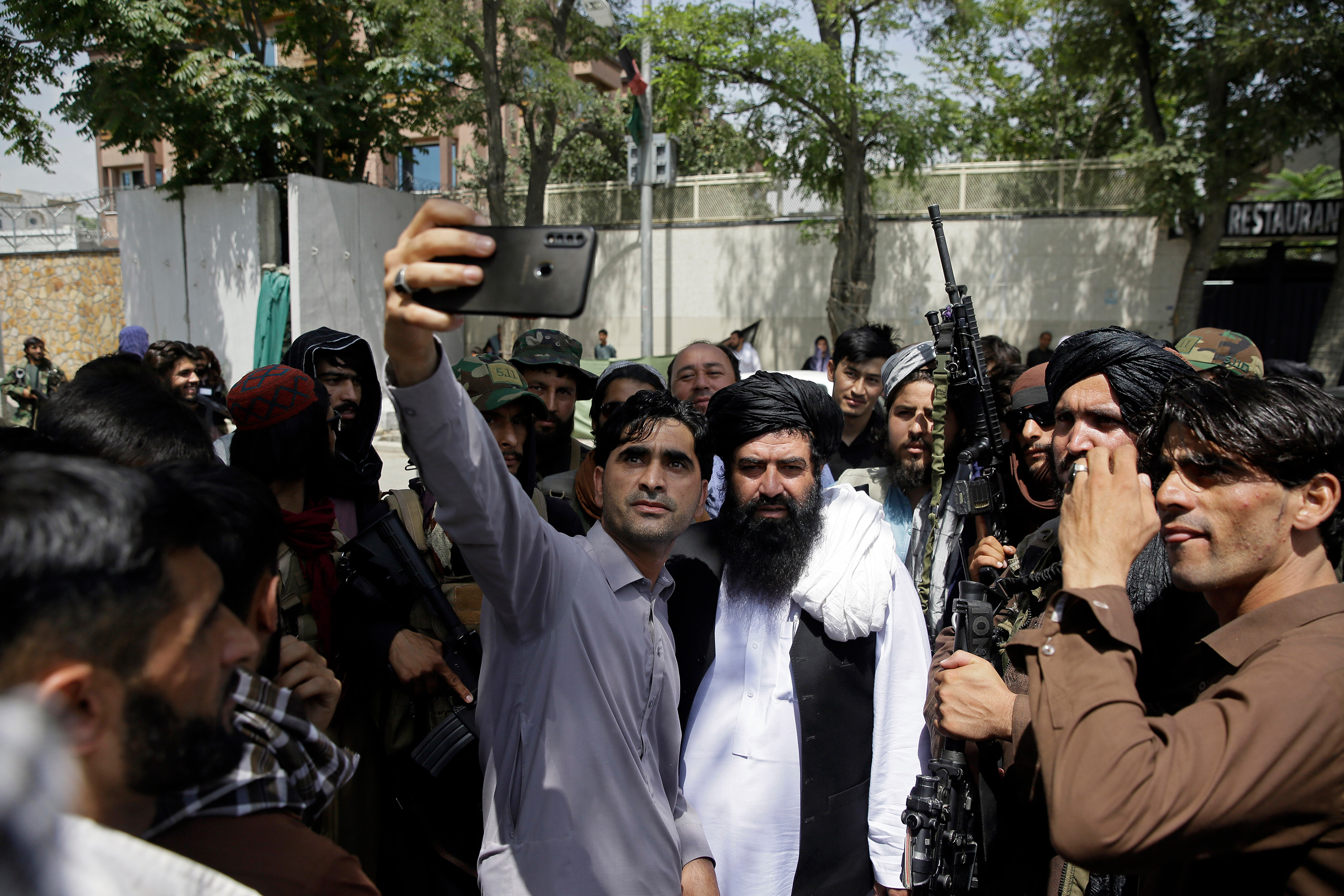
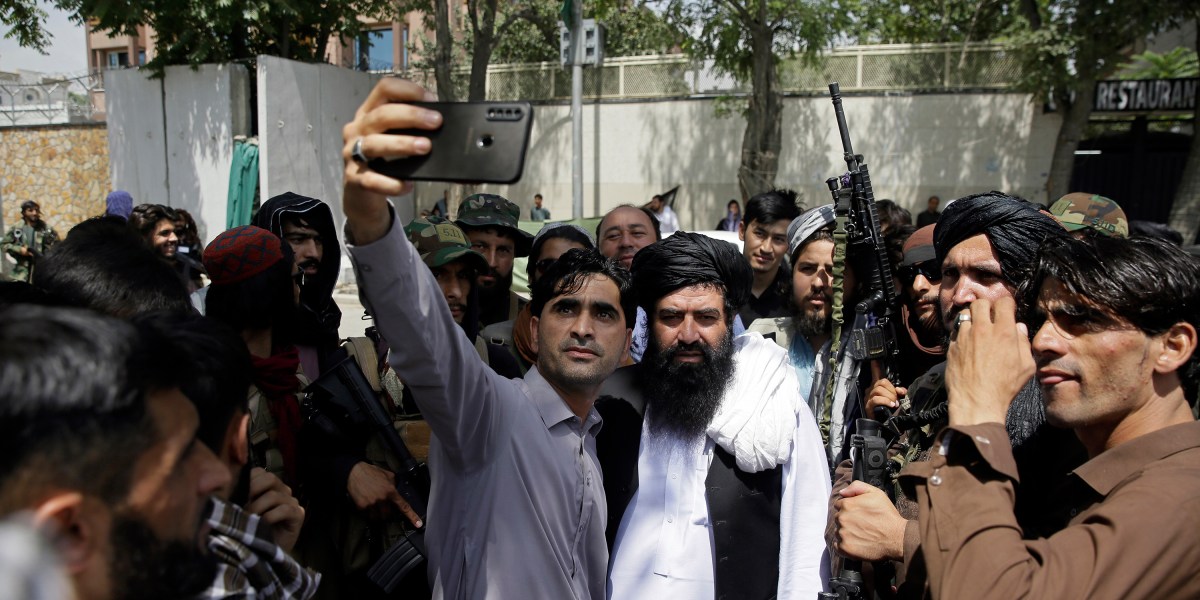
Afghan cell phone photo with Taliban fighters
AP Photo/Rahmat Gul


Despite their terrible human costs—or perhaps because of them—wars are often times of technological innovation. The Napoleonic Wars brought us canned goods; the American Civil War drove the development of submarines. The Second World War, meanwhile, began with biplanes, cavalry charges, and horse-drawn wagons but ended with radar, V2 rockets, jet fighters, and atomic bombs. (Perhaps most fundamentally, via the breaking of German codes at Bletchley Park, the war also ushered in the start of the computing revolution.)

The victor, goes the story, is the side that is the most technologically advanced. New inventions allow these forces to adapt to changing conditions, new systems help them track down their targets, and new weapons mean they can crush the enemy more efficiently than before.
But Afghanistan is different. There has been technological progress—the evolution of drone warfare, for example. But the advances made by the US and its allies have not been as pronounced as those seen before, and they haven’t been as profound as some experts have claimed. In fact, contrary to the typical narrative, the technological advances that have taken place during the 20 years of conflict have actually helped the Taliban more than the West. If wars are fought through innovation, the Taliban won.

Related Story​

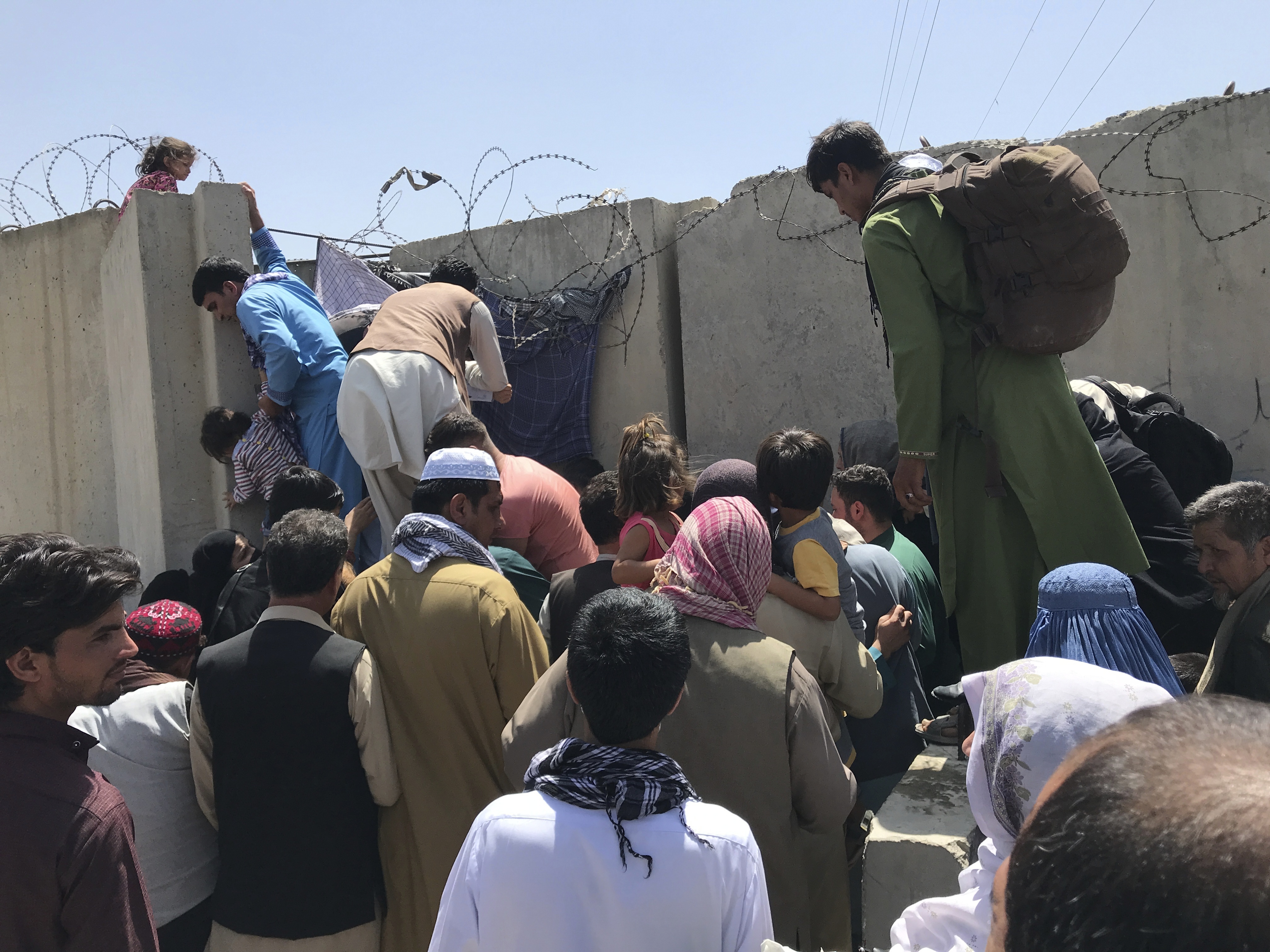
People struggle to cross the boundary wall of Hamid Karzai International Airport in Kabul.
Afghans are being evacuated via WhatsApp, Google Forms, or by any means possible
What do we mean? The West fought the war in much the same way from beginning to end. The first airstrikes in 2001 were conducted by B-52 bombers, the same model that first saw service in 1955; in August, the attacks that marked the end of US presence came from the same venerable model of aircraft.


The Taliban, meanwhile, made some huge leaps. They began this war with AK-47s and other simple, conventional weapons, but today they have harnessed mobile telephony and the internet—not just to improve their weapons and their command-and-control systems, but even more crucially, to carry out their strategic communications and their influence operations.

What accounts for this underwhelming and unevenly distributed technological gain?


Existential war vs war of choice​

For the Taliban, the war in Afghanistan has been existential. Confronted with hundreds of thousands of foreign troops from NATO countries, and hunted on the ground and from the air, they had to adapt in order to survive. While the bulk of their fighting equipment has remained simple and easy to maintain (often no more than a Kalashnikov, some ammunition, a radio, and a headscarf), they have had to seek out new technology from other insurgent groups or develop their own.

The West fought the war in much the same way from beginning to end. The Taliban, meanwhile, made some huge leaps.
One key example: roadside bombs, or IEDs. These simple weapons caused more allied casualties than any other. Originally activated by pressure plates, like mines, they had evolved by the midpoint of the war so that the Taliban could set them off with mobile phones from anywhere with a cell signal. Because the Taliban’s technological baseline was lower, the innovations they have made are all the more significant.

But the real technological advance for the Taliban took place at the strategic level. Acutely aware of their past shortcomings, they have attempted to overcome the weaknesses of their previous stint in government. Between 1996 and 2001, they preferred to be reclusive, and there was only one known photo of their leader, Mullah Omar. Since then, though, the Taliban have developed a sophisticated public affairs team, harnessing social media domestically and abroad. IED attacks would usually be recorded by mobile phone and uploaded to one of the many Taliban Twitter feeds to help with recruitment, fundraising, and morale. Another example is the technique of automatically scraping social media for key phrases like “ISI support”—referring to Pakistan’s security service, which has a relationship with the Taliban—and then unleashing an army of online bots to send messages that attempt to refashion the image of the movement.

Related Story​

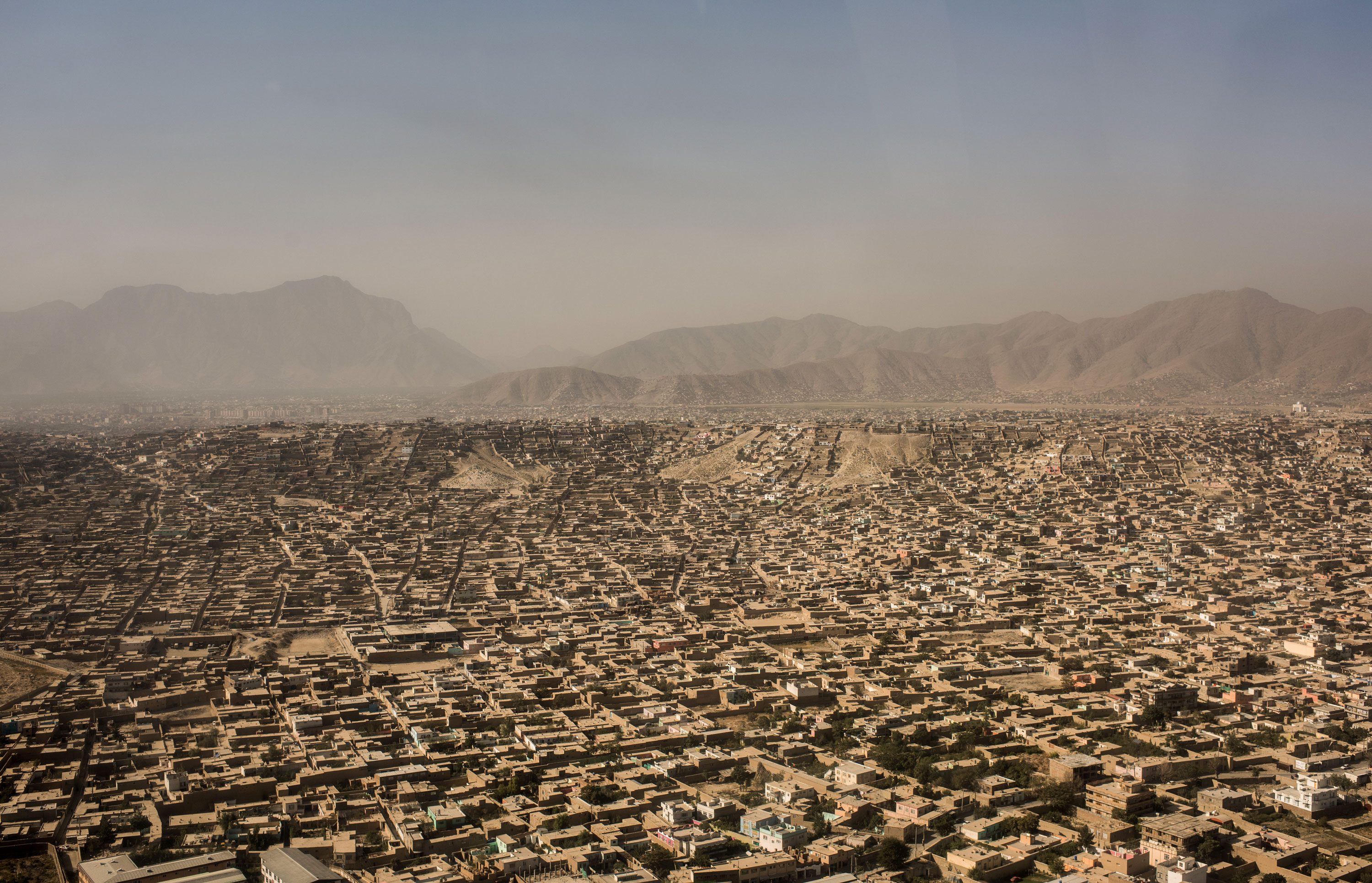
Aerial view of Kabul, Afghanistan
Life in the most drone-bombed country in the world
For the coalition, things were quite different. Western forces did have access to a wide range of world-class technology, from space-based surveillance to remotely operated systems like robots and drones. But for them, the war in Afghanistan was not a war of survival; it was a war of choice. And because of this, much of the technology was aimed at reducing the risk of casualties rather than achieving outright victory. Western forces invested heavily in weapons that could remove soldiers from harm’s way—air power, drones—or technology that could speed up the delivery of immediate medical treatment. Things that keep the enemy at arm’s length or protect soldiers from harm, such as gunships, body armor, and roadside-bomb detection, have been the focus for the West.
The West’s overarching military priority has been elsewhere: in the battle between greater powers. Technologically, that means investing in hypersonic missiles to match those of China or Russia, for instance, or in military artificial intelligence to try outwitting them.

Technology is not a driver of conflict, nor a guarantor of victory. Instead, it is an enabler.
The Afghan government, caught between these two worlds, ended up having more in common with the Taliban than the coalition. This was not a war of choice but a fundamental threat. Yet the government couldn’t progress the same way the Taliban did; its development was hobbled by the fact that foreign militaries provided the main technologically advanced forces. While the Afghan army and police have certainly provided bodies to the fight (with many lives lost in the process), they have not been in a position to create or even operate advanced systems on their own. Western nations were reluctant to equip Afghans with cutting-edge weapons, fearing that they would not be maintained or might even end up in the hands of the Taliban.

Take the Afghan air force. It was provided with, and trained on, fewer than two dozen propeller aircraft. This enabled a modicum of close air support, but it was far from cutting edge. And working with the US meant that Afghanistan was not free to look elsewhere for technology transfer; it was, in effect, stuck in a stunted phase of development.

So what does this tell us? It says technology is not a driver of conflict, nor a guarantor of victory. Instead, it is an enabler. And even rudimentary weapons can carry the day in the hands of motivated, patient humans who are prepared—and able—to make whatever progress is required.


It also tells us that the battlefields of tomorrow might look a lot like Afghanistan: we will see fewer purely technological conflicts that are won by the military with the greatest firepower, and more old and new technologies fielded side by side. It already looks that way in conflicts such as the one between Armenia and Azerbaijan, and the pattern is one we may see more over time. Technology may not win wars anymore, but innovation can—particularly if one side is fighting an existential battle.


Christopher Ankersen is clinical associate professor of global affairs at New York University. He served in the United Nations across Europe and Asia from 2005 to 2017 and with the Canadian Armed Forces from 1988 to 2000. The author and editor of several books, including The Politics of Civil Military Cooperation and The Future of Global Affairs, he holds a PhD from the London School of Economics and Political Science.

Mike Martin is a Pushtu-speaking former British army officer who served multiple tours in Afghanistan as a political officer, advising British generals on their approach to the war. He is now a visiting war studies fellow at King’s College London and the author of An Intimate War, which charts the war in the south of Afghanistan since 1978. He holds a PhD from King’s College London.

 
Last edited:
The real question is not whether Taliban won or US lost, question is whether Pakistan won or lost ?.
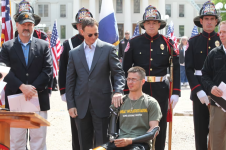
I know an Inddiot like you is burning in the inside, because the Afghan Taliban has returned. That means quite a few things. All the lost American limbs and money lost. lol. All the Amputees?
1782595204972.png1782595873477.png
 
Last edited:
Perhaps its revenge for past betrayal and a lack of open trade


Looks like the Truth is finally coming out now.

LOL! AFGHANS SIDING WITH USA WERE THE TRUE TRAITORS TO THE AFGHAN PEOPLE LOL!!!

AFGHAN TALIBAN HAS WON THE WAR! LOL! THEY HAVE RETURNED!
 

America's humiliation in Afghanistan reveals a terminal crisis of empire​


Junaid S. Ahmad
23 August 2021 11:52 BST | Last update: 4 years 9 months ago
There are parallels between the retreats from Saigon and Kabul, but one major difference: there is a new global context, and this time US hegemony will not survive

US President Joe Biden speaks during an update on the situation in Afghanistan on 22 August, 2021 (AFP)

"Vietnam is a unique case - culturally, historically and politically. I hope that the United States will not repeat its Vietnam blunders elsewhere."

So wrote the late Pakistani intellectual Eqbal Ahmad, one of the great gurus of matters related to colonialism, hegemony and resistance, in his 1965 essay for The Nation, 1965-1975: How to Tell the Rebels Have Won.

In it, Ahmad offered some sober advice to Washington planners. Sadly, not only was it not heeded, but it no longer makes sense to categorise the compiling and cascading imperial mistakes as merely "blunders".

Will Taliban victory mark the beginning of the end of the western empire?
David Hearst
Read More »
Every nation has its unique objective and subjective specificities. These are what ultimately define and situate the country - geostrategically - in the world system. The Vietnamese were, objectively, just another nation in the third world. However, the formidable organised resistance mounted against unquestioned US supremacy is the striking subjective, particularly characteristic of Vietnam at that time.

The Vietnamese insurgency, led by the Viet Cong, was heavily armed and supported by the two other global behemoths at the time: the Soviet Union and China. That was no secret. And despite the enormous human toll on Vietnam, with between three to five million killed and a nation flattened, the more-than-a-decade-long brutal American air and ground war could not defeat the resistance. At least, not militarily.

New MEE newsletter: Jerusalem Dispatch​

Sign up to get the latest insights and analysis on​

However, politically speaking, Washington’s message was sent, loud and clear. If a nation of the third world, or the global south, did not submit to America’s grand design for the world, it would pay a heavy price. Even though the Vietnamese were able to humiliate the US militarily, the country was utterly destroyed by massive carpet bombing sustained year after year.

Expansionism by other means​

What type of independence and sovereignty was there to be had when there was barely a dent made to unhinged American hegemony. US global domination would continue to manifest itself in the coups and proxy wars that America continued to indulge in - successfully in terms of its imperial ambitions - for the decades to come. The "Vietnam syndrome" did not mean less global interventionism by the US. It was simply expansionism by other - indirect - means. And, anyway, that "syndrome" was short-lived. It had been overcome by the time of the heavy US military deployment in the Gulf War of 1990-91.

The scenarios of Saigon in 1975, and Kabul in 2021, are remarkably similar - despite the considerable ideological differences of the indigenous political forces involved. The utter humiliation of the US in both cases is all too palpable. Nevertheless, there is a crucial difference: the two events take place in vastly different global contexts. And that has defined the way the Taliban has retaken Afghanistan now.

US global domination would continue to manifest itself in the coups and proxy wars that America continued to indulge in for the decades to come
By 1996, it had taken the nascent Taliban two years to defeat a bunch of warlords before establishing its reign over the country from Kabul. The new movement of "students", or Taliban, were openly and fully backed, in all ways including militarily, by Pakistan. Not only has the Taliban not been supported anything remotely like that this time by Islamabad or elsewhere, but it has also had to confront what on paper is a much more daunting enemy: heavily trained and armed Afghan security and military personnel numbering well over 300,000. And, of course, American air strikes.

We have seen before our very eyes how astonishingly quickly this ethnic Pashtun insurgency took over Afghanistan once the officially announced beginning-of-the-end of the western occupation began. The American puppet government in Saigon lasted a good three years after the US withdrawal there in 1972. Indeed, even the Soviet puppet regime in Kabul lasted a good three years after the Soviets withdrew in 1989. The Ashraf Ghani government, on the other hand, collapsed even before the American deadline for withdrawal.

Syria's 'moderate rebels'​

To emphasise this fact again: the Taliban today, unlike the Taliban of the 1990s, has accomplished what it has in Afghanistan more or less on its own. It becomes remarkable when comparing its achievement with the lack thereof, for example, of the "moderate rebels" in Syria. Funded to the tune of hundreds of millions of dollars (maybe billions) and armed to the teeth by an array of both regional actors as well as western ones (principally the US), this not-so-moderate proxy opposition could not bring down the Assad regime.

However critical Russian and Iranian/Hezbollah support was for the Syrian government, it in no way approximates the scale of the two decades of western occupation of Afghanistan. The country has witnessed 20 years of US/Nato air strikes, ground operations by up to 150,000 foreign forces, an equal if not larger number of mercenaries and private contractors, and the arming and training of the Afghan National Army (ANA) and security personnel - with a tally of around $2tn for this entire venture. Only to see, in the end, the propped-up puppet fiefdom in Kabul lose power so quickly and so embarrassingly when having to confront any resistance on its own.

The larger political meaning of what has happened now in Afghanistan is what distinguishes it from the fall of Saigon in 1975. The war and military defeat in Vietnam, as Eqbal Ahmad noted, was a colossal American blunder. Beyond its geopolitical significance, the Vietnam war took a tragic human toll of epic proportions.

But the US could easily survive that military defeat - again, politically speaking. It maintained its global hegemonic status of the superpower that "calls all the shots". A country dreaming of independence and sovereignty may put up a valiant resistance to the American imperium, but even if such resistance "wins", as the Viet Cong did, its country would have been flattened to a moonscape. Ultimately, such a nation would be politically and economically compelled to return to its subservient status in the US-run global order.

America's precipitous decline​

And that is what differentiates the Saigon defeat in 1975 from the Kabul one in 2021. Over the past few decades, the US has gone from a steady decline as the hegemonic power to a precipitous one. The disastrous wars in Iraq and Afghanistan have further validated such an assessment.

Thus, what has occurred in Afghanistan is not just another imperial "blunder". It is a naked manifestation, with its startling sequence of events and spectacular optics, of the terminal crisis of empire. The past two weeks, culminating in the Taliban’s capture of Kabul, represent nothing less than the final stage of the post-war American imperium.

Shanghai skyline

'The world has become definitively multipolar, especially with the phenomenal rise of China.' The Shanghai skyline (AFP)
Rather than simply examining the two events in and of themselves - Saigon in 1975 and Kabul in 2021, respectively - we must evaluate the objective structural global position of the US both before and after each military intervention. And therein lies the crux of the matter. The US was utterly dominant both before and after the blunder in Vietnam. Even after that blunder, the world was still divided between the winning West and the remaining Rest. Prosperity would still be primarily found in New York, London, Berlin, and so on.

That is no longer the case. The fall of Kabul was symptomatic and a product of the decades-long process of the severe weakening of American power, authority, legitimacy - in short, its hegemony. The world has become definitively multipolar, especially with the phenomenal rise of China. There has been a profound decentring of the West in the world system that it has attempted to dominate for more than 500 years now. In other words, the world is not necessarily buying the "West knows/is best" mantra anymore.

The world is not necessarily buying the 'West knows/is best' mantra anymore
And prosperity in 2021 can be found in Doha, Shanghai, Singapore, and so on.

The retreating US forces in Kabul, therefore, may not only be the symbolic death knell of American exceptionalism and expansionism - narratives and processes that define the nation since its birth. It may also be one of the last pages of the chapter of Eurocentric history that arguably began in 1492.

The surge of American militarism at the beginning of this century is akin to the vociferous roars of the king of the jungle, meant to compensate for and conceal its irreversible wounded and weakened condition. The anxious lion may be in partial denial, but deep down it knows that its deranged actions are no longer merely mistakes or blunders, but the logical outcome of its emaciated predicament.

After Saigon in 1975, the American sheriff could simply pull up his bootstraps and get back to the business of running the world. After Kabul in 2021, the sheriff will have to belatedly acknowledge that he no longer is the only sheriff in town.

The views expressed in this article belong to the author and do not necessarily reflect the editorial policy of Middle East Eye.

This article is available in French on Middle East Eye French edition.


Junaid S. Ahmad teaches Religion and World Politics and is the Director of the Center for the Study of Islam and Decoloniality, Islamabad, Pakistan


USA IS HUMILIATED in AFGHANISTAN!
 
Last edited:
If by Winning means a country still living in 10,000 BC, with cavemen mentality, where women are treated worse than dogs, and just baby making machine, with no economy, no future to offer to its population, hosting all and every Terrorist group in the world, being bombed for 20 years, no industry , no prospect of Foreign investments beside India, only because the might Warriors of Allah were sitting with Idol worshippers who were destroying Mosques, and prosecuting Muslims in their own country, so yeah Afghanistan wins for sure.
 
If by Winning means a country still living in 10,000 BC, with cavemen mentality, where women are treated worse than dogs, and just baby making machine, with no economy, no future to offer to its population, hosting all and every Terrorist group in the world, being bombed for 20 years, no industry , no prospect of Foreign investments beside India, only because the might Warriors of Allah were sitting with Idol worshippers who were destroying Mosques, and prosecuting Muslims in their own country, so yeah Afghanistan wins for sure.
Don't be such an idiot. Afghan Taliban has returned, which means quite a few things. Afghanistan war was an imperial crusade against them. Now there is a new wave of anger and hatred.
 
I know an Inddiot like you is burning in the inside, because the Afghan Taliban has returned. That means quite a few things. All the lost American limbs and money lost. lol. All the Amputees?
View attachment 203465View attachment 203471
What's wrong with that? they are just ordinary soldiers, obeying their higher command orders, no one want to go 8000 miles away and lose limbs and hands? Can you imagine PA higher command select a solider for UN peace missions in Africa, If this solider deny PA higher command, do you know what's the consequences of his denial? and same goes these US soldiers, think about it
 

Users who are viewing this thread

Pakistan Defence Latest

Latest Posts

Back
Top