
Navigation
Install the app
How to install the app on iOS
Follow along with the video below to see how to install our site as a web app on your home screen.
Note: This feature may not be available in some browsers.
More options
Style variation
You are using an out of date browser. It may not display this or other websites correctly.
You should upgrade or use an alternative browser.
You should upgrade or use an alternative browser.
US Perspective on the Iran - Israel / US War
- Thread starter AZ_HighCountry
- Start date
More options
Who Replied?


NGAD IS THE BEST
Elite Member
Bro you should ignore @Lulldapull he is nutsYou mean there'll be no gas left in the world?
Or, just that US reserves will be depleted?
Are you imagining a Mad Max kind of scenario?
You do realise that Russia is still busy supplying as much gas as possible to Europe despite the war, and has offered and wants to expand exporting more to Europe?
The Russians wouldn't waste a second exporting the same to the US if a request came in.
On top of that ..
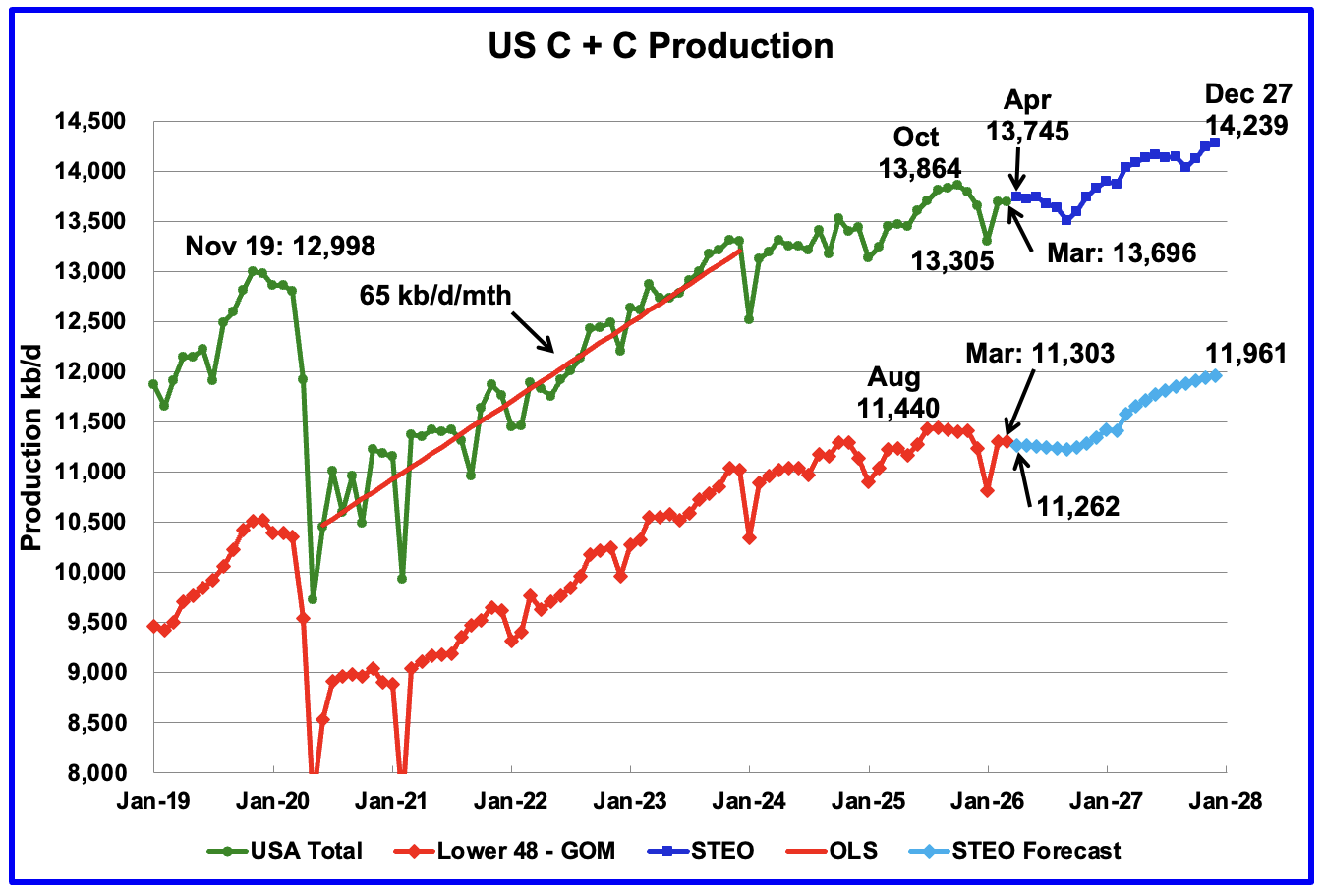
30/06/2026: US oil production rises to record high in April, EIA says: Reuters


Fatman17
THINK TANK: CONSULTANT
US Oil stocks fall

AZ_HighCountry
INT'L MOD
- Thread starter
- #4,925
Not good.
US Oil stocks fall

Pakistani Dragon
Elite Member

It was quick and easy.I don't believe there will be any resumption of a full blown war. Trump has realized he was conned by Netanyahu and the Pentagon-CIA-MIC gang that has been telling Presidents since the 1960s that the Op will be quick and easy.
- 13,000 airstrikes in just 40 days.
- USAF/USN fighter aircraft flying over Iran almost unchallenged.
- Khamenei Sr - dead.
- Khamenei Jr - hiding.
- Where Iranian Air Force?
- Where's Iranian Navy?
| Date | Event | Source |
| 22/02/2011 | Iranian warships cross Suez canal | The Guardian |
| 18/02/2012 | Iran warships enter Mediterranean via Suez Canal | BBC News |
| 29/05/2021 | U.S. monitoring Iranian warships that may be headed to Venezuela | Politico |
| 02/01/2024 | Iranian warship enters Red Sea as tensions rise | Politico |
Pakistani Dragon
Elite Member
Negotiate what exactly? Surrender of Iran's nuclear and missile program? Or, removing Iran's terror tentacles from the region?If everything was just sweet ass like you imagining, then why bother negotiating with Iran?
Depend upon imam Putin no?
By the way when is victorious and brave Khamenei Jr going to come out of his hiding. It's been 4 months already.

BHAN85
Trusted Member

Article by a Spanish scientist, PhD in physics, he sometimes talks about peak oil in Spanish television. He analyzes the USA vs Iran war from a crude oil, energy resources point of view.
His conclusion is that USA will come back to Latin America oil, the article was written 5 days before Venezuela earthquake.
The original article is in Spanish, this is a Google Translate translation:

 crashoil.blogspot.com
The surrender

Dear readers:
Taking advantage of President Emmanuel Macron's invitation to visit the Palace of Versailles after the G7 summit in Évian, Donald Trump physically signed the Memorandum of Understanding with Iran to end the hostilities that began more than three months ago.
Last week's announcement of the agreement sent stock markets soaring and oil prices plummeting. Brent crude has remained hovering around $80 ever since. Analysts are celebrating the deal and preparing for an oil boom that will drive prices down to levels not seen in years, along with an economic boom that will dispel all the gloom. Worries are easing, and news reports are turning to more local issues (without further straining the focus away from the central conflict ), such as ongoing corruption cases or, on a lighter note, the best holiday destinations.
There is, however, a problem with this narrative: it is a complete and utter lie. In reality, nothing has changed. The situation remains dire, and we are still headed for a crash with severe supply problems in the coming weeks and months. Even in the best-case scenario, it would take many months to return to anything resembling the previous situation, and we don't have that much time. But then again, we're not even in the best-case scenario.
Let's start with the basics: a Peace Agreement has not been signed. What has been signed is a Memorandum of Understanding. This is a commitment to negotiate a Peace Agreement over the next 60 days, which can be extended if both parties agree. During these 60 days, both parties must demonstrate goodwill that confirms their genuine desire to reach an agreement.
But many elements make the agreement very fragile. To begin with, something very basic: Israel, with whom the US started this war, is not a party to it. And for the current Israeli government, the terms of the agreement are completely unacceptable because it imposes not only the impossibility of attacking Iran, but also other countries like Lebanon. For Benjamin Netanyahu's delusional government, the only acceptable outcome of this war is the collapse of the ayatollahs' regime, and that is why this agreement is a capitulation on a non-negotiable condition (and if the war were to end in a false one, Netanyahu would have to face multiple domestic fronts that could ultimately bring down his government). In fact, the early morning bombings in Lebanon today caused Iran to close the Strait of Hormuz again for a few hours.
The agreement is also unacceptable to the most hardline sectors of the US. The terms of the Memorandum of Understanding that have been circulated resemble an unconditional surrender by the US more than anything else. To begin with, the US will lift its naval blockade of Iran, eliminate all sanctions against the country, and unfreeze all its frozen assets abroad. Furthermore, the US commits to non-interference in Iran, both politically and militarily. Finally, the US will establish a $300 billion fund, which can only be described as war reparations. On Iran's side, it only commits to not developing an atomic bomb (something Iran has always said it does not want to do; its religious leaders have forbade Iran from trying to possess such a demonic weapon on more than one occasion), to holding talks later on enriched uranium, and to allowing free passage through Hormuz for 60 days (but after those 60 days it will establish a toll system, which will permanently increase the cost of transport through that area and give Iran extra income permanently).
Note that with this agreement, the US has not only failed to achieve the objectives it set when it launched the military operation, but has also taken a step backward, creating a new situation worse than the initial one. This clearly demonstrates a structural weakening of US hegemony in the region and, by extension, in the world. Most US military bases in countries neighboring Iran have been destroyed or are severely damaged, and in fact, most will not reopen—given their complete lack of military effectiveness and the risk of maintaining such vulnerable and economically costly targets. US allies in the region have confirmed that not only is the US militarily powerless against Iran, but when push comes to shove, it fails to provide them with sufficient protection (all have suffered serious damage to key infrastructure) and, moreover, abandons them at the first opportunity, fleeing the scene. They are surely all taking note and will reconfigure their alliances in the future along new axes (for example, BRICS+). Finally, the reparations fund of no less than $300 billion represents an acknowledgment of the injustice of the initial aggression and the moral obligation to repair the damage, and will most likely be funded by US allies.
Since everything surrounding Donald Trump has that characteristic crude and grotesque tone, it's difficult to know whether the choice of Versailles to sign the Memorandum of Understanding was made out of extreme clumsiness or with truly diabolical cunning. Versailles was the birthplace of the infamous Treaty of Versailles of 1919, by which the Allied powers, and particularly France, imposed utterly ignominious and abusive reparations on Germany for the First World War. These terms not only fostered a sense of humiliation and a desire for revenge among the German people, but also contributed to the economic collapse of the Weimar Republic after the 1929 stock market crash, the rise of Adolf Hitler, and the Second World War. The clumsy, even foolish, manner in which Trump acknowledged that he had no choice but to sign this agreement—because the US only had four weeks' worth of oil left and chaos would ensue —might lead one to think that, indeed, the guy is a complete buffoon. But let's go further and consider who really loses here.
Objectively, the US is not that dependent on oil from the Persian Gulf. It is true that in 2025 the US consumed 20.6 million barrels per day (Mb/d), of which it only produced about 13.6 Mb/d domestically, and therefore had to import around 7 Mb/d to cover its consumption (actually, they imported 8 Mb/d, as we will explain). But in reality, part of US oil consumption goes to its refined product export industry, which totals about 7 Mb/d, apart from the direct export of low-quality crude produced through fracking, totaling about 10 Mb/d (compared to the 8 Mb/d imported).
U.S. total primary energy trade by source (2000-2025)
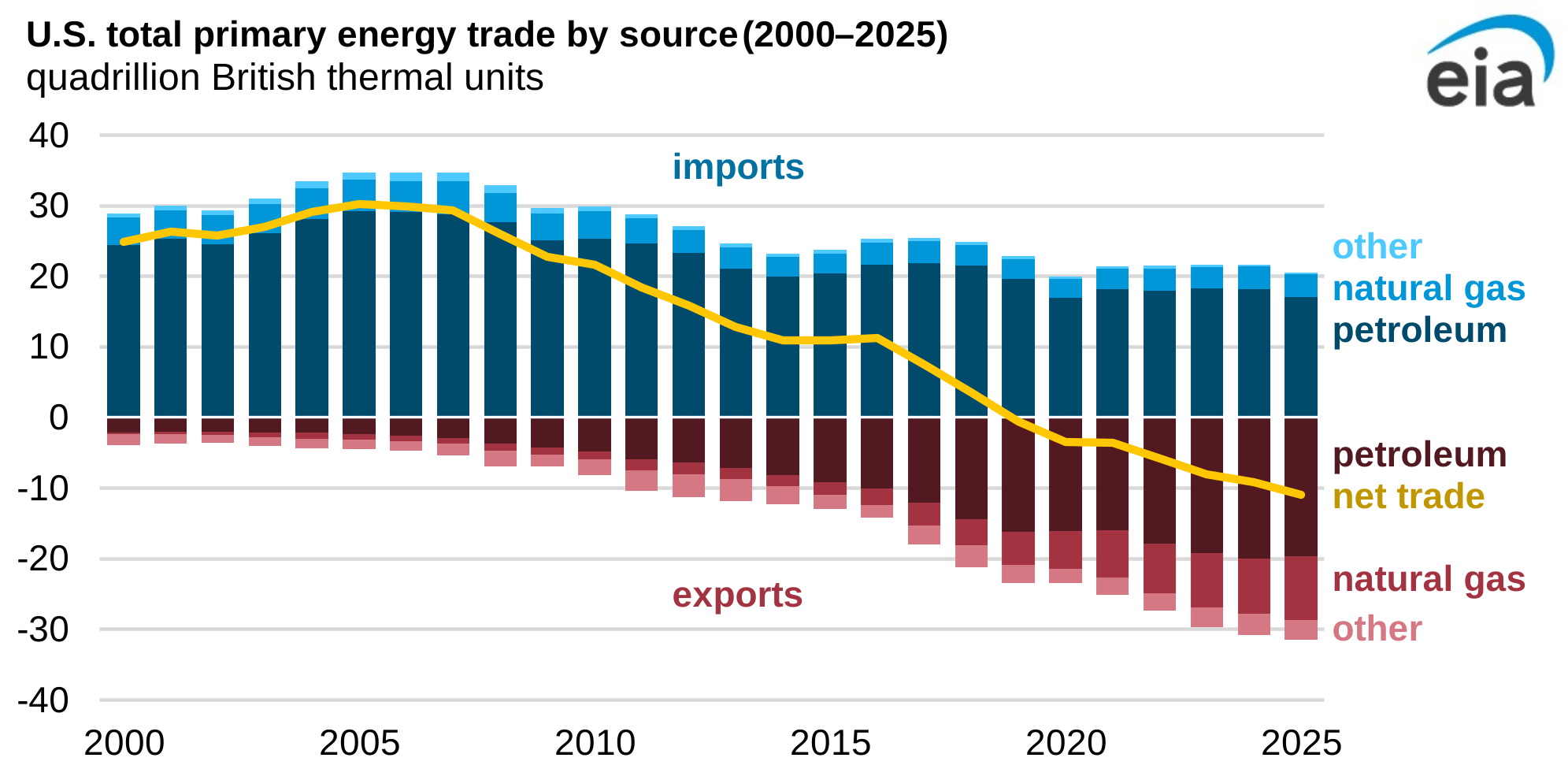
So, its net balance is slightly more than 2 million barrels per day (Mb/d) exported. Of course, it's all more complex. These statistics combine volumes of different substances, which not only have different energy contents but also different uses and demands. For example, the US can produce a lot of light crude, but lacks medium crude to produce diesel, which it has to import; and once refined, it produces more gasoline than it needs (that's unavoidable, since a certain percentage of each product comes out of a given refinery). Therefore, to maintain its domestic consumption levels, it needs to import suitable crude oil to refine what it needs, and other countries can absorb its surplus of some products. At the same time, the oil industry is a major industry for the US economy, so the issue isn't limited to just the petroleum products actually consumed on US soil. However, these numbers show that the US has more flexibility than it seems to manage a situation involving a more or less permanent closure of the Strait of Hormuz. And especially after the strategic move to seize Venezuela's oil assets .
The US can look (and in fact has been looking for some time) towards Latin America. The US can guarantee enough oil to sustain itself (likely with a restructured industry, but sustain itself nonetheless) with the oil it can obtain from Brazil (Latin America's main exporter, with more than 2 million barrels per day in 2025) and possibly from other countries. Of course, that would imply that these countries would break their contracts with China and Europe. But, let's remember that the Monroe Doctrine has made a strong comeback...
The US may have lost the war in Iran, that's true. But the US isn't going to abandon its belligerence. It's simply going to redirect it toward closer territories. US oil production is going to remain stagnant or trend slightly downward for the rest of the year, and although the US Department of Energy now anticipates a rebound next year, the truth is that US fracking is reaching its final stage.
Therefore, what can be expected in the coming months is that the US will begin an escalation of aggression in some corners of that part of the world, until it ensures that it redirects the flows of oil towards itself.
In this context, the Memorandum of Understanding can also be understood within the framework of a shift in US strategy. Iran will have been the last attempt to exert control over the global oil market; but if that proves impossible, the US will focus on controlling the oil of the entire American continent. Thus, the Agreement is merely a strategy to buy time while everything is repositioned.
So who really loses with this fragile Memorandum of Understanding? One might think that China, and certainly Asia as a whole, is the main loser, but then comes Europe.
There is no peace agreement. Both the US and Israel can force partial or total closures of the Strait of Hormuz as many times as they want for varying periods of time, if it suits them; Israel, for its geostrategic objectives; the US, to consolidate its control of the resources of the American continent and its hegemonic position in that part of the world.
Oil tankers aren't going to return en masse to the Persian Gulf. A supertanker with a 2 million barrel capacity can cost $250 million: no shipowner is going to blithely risk losing that much money, not to mention that building a new one takes more than two years—and no one can afford such a large capacity loss for that long. Ships will proceed cautiously, testing the waters, but with great prudence, and at the first sign of closure, all operations to the area will cease. Shipowners will opt for routes where their main assets aren't at such high risk, regardless of whether that means (less) oil will reach some regions of the world.
Furthermore, after all the damage inflicted on cargo terminals and refineries in recent months, many lengthy and costly repairs will be necessary over several months before full capacity is restored. And, once again, they will proceed with extreme caution, because if hostilities escalate, these facilities could be attacked again, rendering the effort and expenditure pointless.
On the other hand, the prolonged shutdown of oil extraction from the Persian Gulf fields will have already taken its toll in terms of reservoir rock underpinning and sealing due to tar buildup. We don't yet know how much production has been lost forever, but it's probably in the range of 1-2 million barrels per day.
The US is shifting the focus of resource control in another direction. Ukraine's recent move to attack Russian refineries is no coincidence, as it compromises the export capacity of the only country that could potentially jeopardize the new situation. And to further complicate matters for Europe, if gasoline prices in the US continue to rise (and they are likely to, given the volatility of the situation), the Trump administration could impose an oil export embargo at any moment. This would be catastrophic for Europe and for Spain, both of which import approximately 15% of their oil from the US.
Here, meanwhile, we continue to consume our commercial reserves without restraint, hoping for a swift restoration of oil flow that isn't going to happen, and without factoring in the risk of the US's strategic redefinition, as if it were still our ally, as if its interests weren't increasingly the exact opposite of our own. Perhaps, with his signature at Versailles, Trump represented what France was in 1919, and we, without even signing that document, have adopted the role of Germany back then.
That's not over. This is just the beginning.
Incidentally, it's worth mentioning that The Honest Sorcerer has written an article that follows the same line as what I've written here (and which has certainly served as a reference for me).
Greetings.
His conclusion is that USA will come back to Latin America oil, the article was written 5 days before Venezuela earthquake.
The original article is in Spanish, this is a Google Translate translation:
La rendición
Queridos lectores: Aprovechando la invitación del presidente Emmanuel Macron de visitar el palacio de Versalles después de la cumbre del G7 ...
crashoil.blogspot.com
The surrender
Dear readers:
Taking advantage of President Emmanuel Macron's invitation to visit the Palace of Versailles after the G7 summit in Évian, Donald Trump physically signed the Memorandum of Understanding with Iran to end the hostilities that began more than three months ago.
Last week's announcement of the agreement sent stock markets soaring and oil prices plummeting. Brent crude has remained hovering around $80 ever since. Analysts are celebrating the deal and preparing for an oil boom that will drive prices down to levels not seen in years, along with an economic boom that will dispel all the gloom. Worries are easing, and news reports are turning to more local issues (without further straining the focus away from the central conflict ), such as ongoing corruption cases or, on a lighter note, the best holiday destinations.
There is, however, a problem with this narrative: it is a complete and utter lie. In reality, nothing has changed. The situation remains dire, and we are still headed for a crash with severe supply problems in the coming weeks and months. Even in the best-case scenario, it would take many months to return to anything resembling the previous situation, and we don't have that much time. But then again, we're not even in the best-case scenario.
Let's start with the basics: a Peace Agreement has not been signed. What has been signed is a Memorandum of Understanding. This is a commitment to negotiate a Peace Agreement over the next 60 days, which can be extended if both parties agree. During these 60 days, both parties must demonstrate goodwill that confirms their genuine desire to reach an agreement.
But many elements make the agreement very fragile. To begin with, something very basic: Israel, with whom the US started this war, is not a party to it. And for the current Israeli government, the terms of the agreement are completely unacceptable because it imposes not only the impossibility of attacking Iran, but also other countries like Lebanon. For Benjamin Netanyahu's delusional government, the only acceptable outcome of this war is the collapse of the ayatollahs' regime, and that is why this agreement is a capitulation on a non-negotiable condition (and if the war were to end in a false one, Netanyahu would have to face multiple domestic fronts that could ultimately bring down his government). In fact, the early morning bombings in Lebanon today caused Iran to close the Strait of Hormuz again for a few hours.
The agreement is also unacceptable to the most hardline sectors of the US. The terms of the Memorandum of Understanding that have been circulated resemble an unconditional surrender by the US more than anything else. To begin with, the US will lift its naval blockade of Iran, eliminate all sanctions against the country, and unfreeze all its frozen assets abroad. Furthermore, the US commits to non-interference in Iran, both politically and militarily. Finally, the US will establish a $300 billion fund, which can only be described as war reparations. On Iran's side, it only commits to not developing an atomic bomb (something Iran has always said it does not want to do; its religious leaders have forbade Iran from trying to possess such a demonic weapon on more than one occasion), to holding talks later on enriched uranium, and to allowing free passage through Hormuz for 60 days (but after those 60 days it will establish a toll system, which will permanently increase the cost of transport through that area and give Iran extra income permanently).
Note that with this agreement, the US has not only failed to achieve the objectives it set when it launched the military operation, but has also taken a step backward, creating a new situation worse than the initial one. This clearly demonstrates a structural weakening of US hegemony in the region and, by extension, in the world. Most US military bases in countries neighboring Iran have been destroyed or are severely damaged, and in fact, most will not reopen—given their complete lack of military effectiveness and the risk of maintaining such vulnerable and economically costly targets. US allies in the region have confirmed that not only is the US militarily powerless against Iran, but when push comes to shove, it fails to provide them with sufficient protection (all have suffered serious damage to key infrastructure) and, moreover, abandons them at the first opportunity, fleeing the scene. They are surely all taking note and will reconfigure their alliances in the future along new axes (for example, BRICS+). Finally, the reparations fund of no less than $300 billion represents an acknowledgment of the injustice of the initial aggression and the moral obligation to repair the damage, and will most likely be funded by US allies.
Since everything surrounding Donald Trump has that characteristic crude and grotesque tone, it's difficult to know whether the choice of Versailles to sign the Memorandum of Understanding was made out of extreme clumsiness or with truly diabolical cunning. Versailles was the birthplace of the infamous Treaty of Versailles of 1919, by which the Allied powers, and particularly France, imposed utterly ignominious and abusive reparations on Germany for the First World War. These terms not only fostered a sense of humiliation and a desire for revenge among the German people, but also contributed to the economic collapse of the Weimar Republic after the 1929 stock market crash, the rise of Adolf Hitler, and the Second World War. The clumsy, even foolish, manner in which Trump acknowledged that he had no choice but to sign this agreement—because the US only had four weeks' worth of oil left and chaos would ensue —might lead one to think that, indeed, the guy is a complete buffoon. But let's go further and consider who really loses here.
Objectively, the US is not that dependent on oil from the Persian Gulf. It is true that in 2025 the US consumed 20.6 million barrels per day (Mb/d), of which it only produced about 13.6 Mb/d domestically, and therefore had to import around 7 Mb/d to cover its consumption (actually, they imported 8 Mb/d, as we will explain). But in reality, part of US oil consumption goes to its refined product export industry, which totals about 7 Mb/d, apart from the direct export of low-quality crude produced through fracking, totaling about 10 Mb/d (compared to the 8 Mb/d imported).
U.S. total primary energy trade by source (2000-2025)
So, its net balance is slightly more than 2 million barrels per day (Mb/d) exported. Of course, it's all more complex. These statistics combine volumes of different substances, which not only have different energy contents but also different uses and demands. For example, the US can produce a lot of light crude, but lacks medium crude to produce diesel, which it has to import; and once refined, it produces more gasoline than it needs (that's unavoidable, since a certain percentage of each product comes out of a given refinery). Therefore, to maintain its domestic consumption levels, it needs to import suitable crude oil to refine what it needs, and other countries can absorb its surplus of some products. At the same time, the oil industry is a major industry for the US economy, so the issue isn't limited to just the petroleum products actually consumed on US soil. However, these numbers show that the US has more flexibility than it seems to manage a situation involving a more or less permanent closure of the Strait of Hormuz. And especially after the strategic move to seize Venezuela's oil assets .
The US can look (and in fact has been looking for some time) towards Latin America. The US can guarantee enough oil to sustain itself (likely with a restructured industry, but sustain itself nonetheless) with the oil it can obtain from Brazil (Latin America's main exporter, with more than 2 million barrels per day in 2025) and possibly from other countries. Of course, that would imply that these countries would break their contracts with China and Europe. But, let's remember that the Monroe Doctrine has made a strong comeback...
The US may have lost the war in Iran, that's true. But the US isn't going to abandon its belligerence. It's simply going to redirect it toward closer territories. US oil production is going to remain stagnant or trend slightly downward for the rest of the year, and although the US Department of Energy now anticipates a rebound next year, the truth is that US fracking is reaching its final stage.
Therefore, what can be expected in the coming months is that the US will begin an escalation of aggression in some corners of that part of the world, until it ensures that it redirects the flows of oil towards itself.
In this context, the Memorandum of Understanding can also be understood within the framework of a shift in US strategy. Iran will have been the last attempt to exert control over the global oil market; but if that proves impossible, the US will focus on controlling the oil of the entire American continent. Thus, the Agreement is merely a strategy to buy time while everything is repositioned.
So who really loses with this fragile Memorandum of Understanding? One might think that China, and certainly Asia as a whole, is the main loser, but then comes Europe.
There is no peace agreement. Both the US and Israel can force partial or total closures of the Strait of Hormuz as many times as they want for varying periods of time, if it suits them; Israel, for its geostrategic objectives; the US, to consolidate its control of the resources of the American continent and its hegemonic position in that part of the world.
Oil tankers aren't going to return en masse to the Persian Gulf. A supertanker with a 2 million barrel capacity can cost $250 million: no shipowner is going to blithely risk losing that much money, not to mention that building a new one takes more than two years—and no one can afford such a large capacity loss for that long. Ships will proceed cautiously, testing the waters, but with great prudence, and at the first sign of closure, all operations to the area will cease. Shipowners will opt for routes where their main assets aren't at such high risk, regardless of whether that means (less) oil will reach some regions of the world.
Furthermore, after all the damage inflicted on cargo terminals and refineries in recent months, many lengthy and costly repairs will be necessary over several months before full capacity is restored. And, once again, they will proceed with extreme caution, because if hostilities escalate, these facilities could be attacked again, rendering the effort and expenditure pointless.
On the other hand, the prolonged shutdown of oil extraction from the Persian Gulf fields will have already taken its toll in terms of reservoir rock underpinning and sealing due to tar buildup. We don't yet know how much production has been lost forever, but it's probably in the range of 1-2 million barrels per day.
The US is shifting the focus of resource control in another direction. Ukraine's recent move to attack Russian refineries is no coincidence, as it compromises the export capacity of the only country that could potentially jeopardize the new situation. And to further complicate matters for Europe, if gasoline prices in the US continue to rise (and they are likely to, given the volatility of the situation), the Trump administration could impose an oil export embargo at any moment. This would be catastrophic for Europe and for Spain, both of which import approximately 15% of their oil from the US.
Here, meanwhile, we continue to consume our commercial reserves without restraint, hoping for a swift restoration of oil flow that isn't going to happen, and without factoring in the risk of the US's strategic redefinition, as if it were still our ally, as if its interests weren't increasingly the exact opposite of our own. Perhaps, with his signature at Versailles, Trump represented what France was in 1919, and we, without even signing that document, have adopted the role of Germany back then.
That's not over. This is just the beginning.
Incidentally, it's worth mentioning that The Honest Sorcerer has written an article that follows the same line as what I've written here (and which has certainly served as a reference for me).
Greetings.

BHAN85
Trusted Member
It will be his father funeral soon, maybe he will appear in public then.Negotiate what exactly? Surrender of Iran's nuclear and missile program? Or, removing Iran's terror tentacles from the region?
By the way when is victorious and brave Khamenei Jr going to come out of his hiding. It's been 4 months already.
It would be very strange the funeral without him.
F-22Raptor
Elite Member
Ships continue to successfully traverse the Strait using the Omani American passage
AZ_HighCountry
INT'L MOD
- Thread starter
- #4,934
Depending on how much is destined for the US, that could help alleviate the shortfalls in the US SPR.
The issue though is still refinery capacity and efficiency. A refinery operating at 95-96% of capacity is doing good. It's the final output that is the problem. Under the best refining methods, only 45% of a barrel of oil can be processed into gasoline. That would be just under 25 gallons based on a 55 gallon barrel.
Typical refinery output is 35-40%. Or, 19-22 gallons.
HAIDER
THINK TANK: CONSULTANT
How IMF predict the countries growth , who has no recorded trade to any country in the world except China and Russia.
Users who are viewing this thread
Total: 7 (members: 0, guests: 7)
Pakistan Defence Latest
-

-
 PTI Murad Saeed in Afghanistan, was 'controlling KP govt' from there: Rana Sanaullah (8 Viewers)
- Latest: prothought
-

-
Federal cabinet gives nod to imposition of emergency in KP; summary sent to president (12 Viewers)
- Latest: prothought
-
Country Watch Latest
-
 Iran - Israel/US War: Israel-US declare war on Iran, Iran responds (126 Viewers)
- Latest: Persian Gulf
-
-

-
-

Latest Posts
-
Iran - Israel/US War: Israel-US declare war on Iran, Iran responds (126 Viewers)
- Latest: Persian Gulf
-
-
-
China’s 400km/h trains getting closer to debut, numbering-system change hints (15 Viewers)
- Latest: ety
-