xAI Grok - News and Discussion

Musk’s xAI in Talks With Saudi’s Humain on Data Center Deal​


Elon Musk’s artificial intelligence startup, xAI, is in discussions to lease data center capacity in Saudi Arabia, according to people familiar with the matter, part of an effort to expand its infrastructure in regions offering cheap energy and political goodwill.

The company is in early talks with two potential partners: Humain, a Saudi-backed artificial intelligence firm offering xAI several gigawatts of capacity, and another company building a smaller but more immediately available 200-megawatt facility, the people said, asking not to be named discussing private talks.

The Humain proposal, while massive in ambition, remains distant. While the AI company is backed by Saudi’s Public Investment Fund, the firm has yet to break ground on much of the infrastructure it’s pledged to build. Any arrangement with xAI would offer Musk computing resources years down the road instead of being a near-term solution.

By contrast, the other potential partner is already working on a 200-megawatt facility, one of the people said, making it a more realistic short-term option for xAI. In both cases, xAI would not own the facilities but instead rent capacity — essentially leasing space in the data centers to power its compute-intensive AI models.
 

SpaceXAI launches Grok 4.5 model for coding, agentic tasks​

 
I alwaysfind Grok to be boring/less interesting Ai assistant. I have ChatGPT Pro account. I also use Claude for software security.

Grok/Gemini are 2 years behind
 
Last edited:
I alwaysfind Grok to be boring/less interesting Ai assistant. I have ChatGPT Pro account. I also use Claude for software security.

Grok/Gemini are 2 years behind

The Grok in my Tesla definitely is not boring and definitely has more personality than others.


I Test Tesla GROK in Australia: Is This The Ultimate Car Assistant?

I once told it I was thinking of going to search for bigfoot with a bunch of friends and stuff it in the trunk. Grok laughed and said it would be more likely Bigfoot would make me the new hood ornament for the car. :ROFLMAO:
 
Last edited:
Grok Build is definitely not on par yet with Codex and Claude Code. Still for very specific cases, Grok can be quite helpful. If you use X a lot, Grok can access and fetch content, even images and videos, from tweets. The search is almost real time. And let's say, if your queries in ChatGPT or Claude do not trigger their own training data and instead rely on web search then you will depend a lot on Bing's and Google's crawling and indexing.
 

SpaceXAI Adopts NVIDIA Vera CPU to Accelerate Agentic AI at Massive Scale​


News Summary:

  • SpaceXAI will deploy NVIDIA Vera CPUs to accelerate the work behind its next generation of agentic AI workloads.
  • SpaceXAI is expanding its AI infrastructure for Grok with the NVIDIA Vera Rubin platform as it scales toward gigawatts of computing capacity.
  • SpaceXAI plans to extend its use of NVIDIA accelerated computing into space, with the first-generation Starmind AI satellite based on an optimized NVIDIA Vera Rubin NVL72 system.
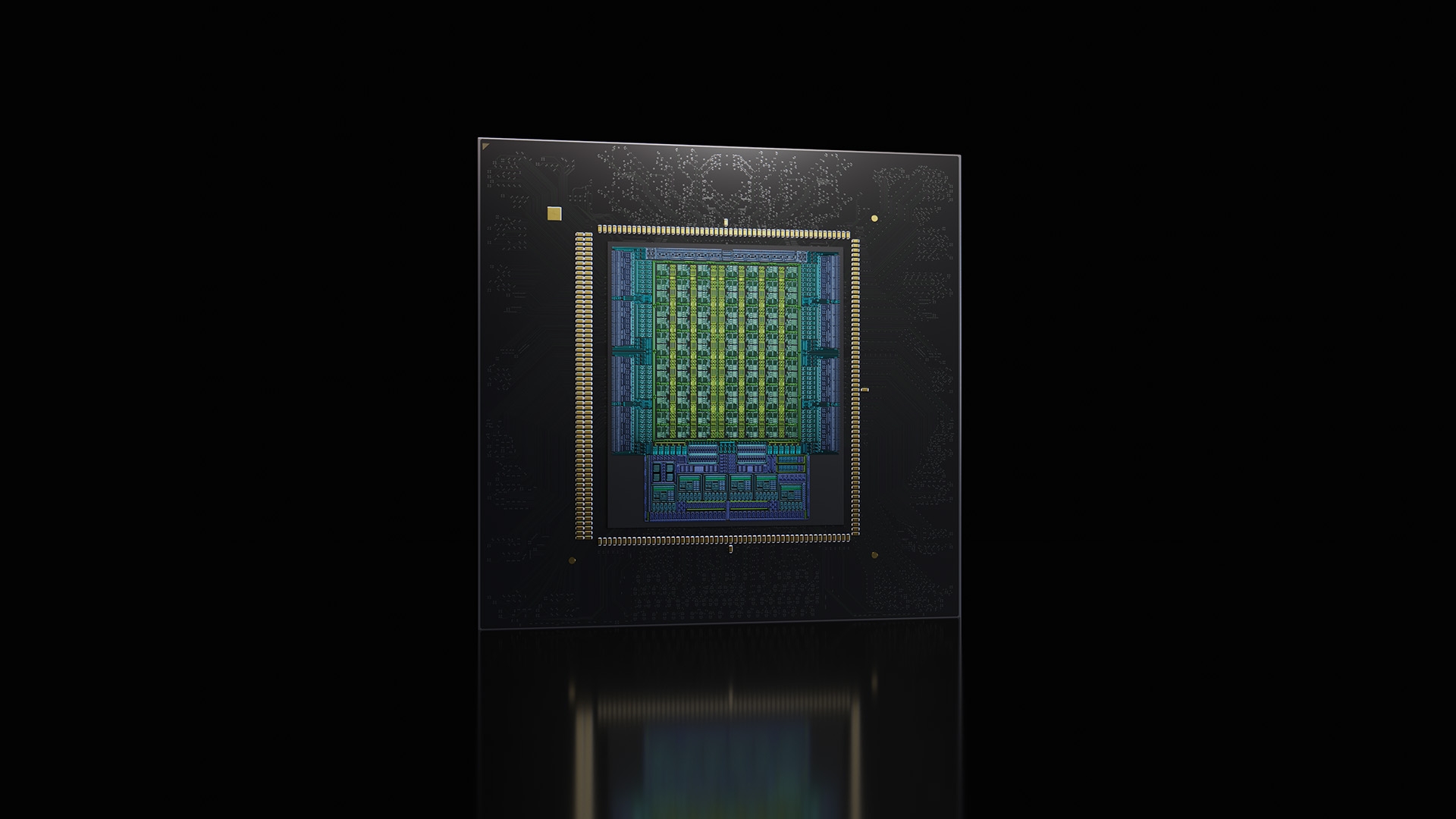
NVIDIA today announced that SpaceXAI will deploy NVIDIA Vera CPUs to accelerate its next generation of agentic AI applications, bringing the first CPU built for AI agents to one of the world’s most ambitious AI deployments.

Agentic AI applications increasingly rely on CPUs to orchestrate tools, execute code, process data and run simulations between model calls. SpaceXAI will use Vera to accelerate these application workloads, helping AI agents act faster while keeping GPUs fed and fully utilized.

SpaceXAI plans to expand its AI infrastructure behind Grok on NVIDIA Vera Rubin, while extending an optimized Vera Rubin NVL72 into space with its first-generation Starmind satellite.

“Agentic AI requires a new kind of computing system — one built not only to generate answers, but to take action,” said Ian Buck, vice president of hyperscale and high-performance computing at NVIDIA. “Vera gives AI agents the CPU performance to act in real time — executing code, processing data and coordinating complex tasks. SpaceXAI is taking this architecture from massive AI factories to the next frontier of computing in orbit.”

“Vera gives us the CPU performance and memory bandwidth to run enormous amounts of orchestration, code and data processing while keeping GPUs doing what they do best,” said Mike Nicolls, president of SpaceXAI. “That means higher-performance AI agents and more useful work from every watt of compute.”

NVIDIA Vera — The CPU for Agents
NVIDIA Vera is the first CPU built for AI agents, designed to accelerate the CPU-intensive work that surrounds model inference — from tool use and code execution to data processing, orchestration and simulation.

Vera features 88 NVIDIA-designed Olympus cores, NVIDIA Spatial Multithreading technology and high-bandwidth LPDDR5X memory, delivering up to 1.2TB/s of bandwidth. Vera enables up to 1.8x faster task completion compared with x86 CPUs across workloads including agentic AI, reinforcement learning and data processing.

SpaceXAI Scales AI Infrastructure With NVIDIA Vera Rubin
At massive scale, AI infrastructure must support demanding training, reasoning and inference workloads while maximizing performance, power efficiency and utilization. NVIDIA Vera Rubin is codesigned across compute, networking and software to optimize the AI factory as a whole.

The platform brings together NVIDIA accelerated computing, NVIDIA NVLink™ interconnect technology, NVIDIA Spectrum-X™ Ethernet networking, NVIDIA BlueField® data processing and NVIDIA software in an integrated architecture designed to deliver high performance and energy efficiency at scale while driving down cost per token.

As SpaceXAI expands toward gigawatts of computing capacity, Vera Rubin provides a common architecture to efficiently scale its next generation of AI factories — a foundation SpaceXAI plans to take beyond terrestrial data centers and into orbital computing.

NVIDIA Accelerated Computing, From Earth to Orbit
SpaceXAI’s work with NVIDIA is moving beyond AI factories on Earth.

SpaceXAI is developing AI computing infrastructure for orbit, where power, thermal management, bandwidth, reliability and physical integration impose dramatically different constraints from conventional data centers.

SpaceXAI’s planned first-generation Starmind AI satellite will be based on the optimized NVIDIA Vera Rubin NVL72 rack-scale system, extending the same accelerated computing architecture powering next-generation AI factories on Earth into space.

NVIDIA and SpaceXAI are working to adapt that foundation to the requirements of orbital computing while preserving a common NVIDIA architecture and software ecosystem.

This delivers one computing foundation across a wide range of environments: Vera CPUs accelerating increasingly sophisticated AI agents, Vera Rubin powering the AI infrastructure behind Grok and gigawatt-scale AI factories on Earth, and NVIDIA accelerated computing extending into orbital AI infrastructure.
 

Grok Bot is an all-new iPhone and Mac app from SpaceXAI and Cursor​


SpaceXAI and Cursor are in the process of becoming a single company, but first, the two firms are releasing an all-new iPhone and Mac app called Grok Bot.

According to SpaceXAI’s announcement, Grok Bot is a new kind of AI agent described as “AI teammates you can give real work to.”

Each Bot gets its own computer, then signs into the apps and services you already use to take on work across inboxes and other tools.

SpaceXAI says Bots can complete jobs end to end, only returning when approval is needed.

You can message one “like a colleague,” the company says, and the agent will remember conversations, learn preferences, and improve with more use.

Grok Bot launches in beta today on Mac and iOS. Windows and Linux desktop versions are also available. Android is listed as coming soon.

Access is initially restricted to SuperGrok Heavy, Cursor Ultra, and Cursor Teams Premium subscribers.

You can learn more from the official announcement here.


August 21, 2026: SpaceXAI has expanded access to Grok Bot after 10 days.


Meanwhile, my colleague Fernando is apparently a fan. It does sound like SpaceXAI and Cursor have designed an approachable system for using agentic AI that other companies should consider following.


I’m an AI Skeptic… Grok Bot Is Changing My Mind, Here's How!
 
so xAI has found that processing is expensive


Grok Bot Throttled After xAI Costs Outpaced Subscription Revenue​


Elon Musk confirmed that serving Grok Bot was unsustainably expensive relative to subscription revenue, and paying customers discovered the change before any public announcement was made.

Your Weekly Allowance Ran Out in an Hour​

Some users say their Grok Bot limits evaporated days ahead of schedule, with no warning from xAI.

Users reported their weekly allowances disappearing far faster than expected. According to TechSpot, some claimed their effective limit had been cut roughly in half.

Musk Confirms the Math Didn't Work​

Musk attributed the change to cost pressure, not a technical failure.

In a post on X, Musk wrote: "The cost of serving Grok Bot was unsustainably high relative to revenue." TechCrunch characterized the change as deliberate throttling rather than a glitch.

No advance public announcement was identified in the available reporting before the limits changed.

Users Cried Foul. The Numbers Remain Disputed.​

Subscriber complaints spread quickly, though the exact scope of any reduction has not been independently verified.

Some users reported usage jumping from 56% to 100% consumed within a single hour. These are user reports, not independently audited measurements; xAI has not publicly documented what the limits were before or after the change.

Online frustration coalesced around the phrase "indirect rug pull." TechSpot's reporting used that characterization to capture the core complaint: subscribers felt a paid service had become less valuable without adequate notice. When one user raised the issue directly, Musk reportedly asked whether upgrading to a higher-tier plan would be too expensive, according to TechSpot. No restoration timeline was offered.

Three Tiers, One Cost Problem​

The cost pressure appears structural, regardless of which subscription tier a user holds.

Grok Bot is available through X's Premium plan at $30 per month, Super at $100, and Ultra at $200, with higher tiers providing larger usage allowances. It remains unclear whether the reported reductions affected all three tiers or only lower-cost subscribers.

The underlying cost pressure applies across tiers. Unlike a standard chatbot reply, an AI agent may complete tasks by making repeated model calls, browsing the web, and taking computer actions in sequence. Each additional step can increase serving costs, while a fixed monthly fee does not scale with that usage.

Fastest-Growing Product, Fastest-Growing Bill​

Rapid adoption made xAI's cost problem more urgent, not less.

The timing is notable: Musk had recently described Grok Bot as the fastest-growing product he had ever seen. According to reporting from TechSpot, SpaceX President Gwynne Shotwell cited approximately 800,000 paying weekly users in early October, a figure that reportedly doubled the prior month's count.
Rapid growth could worsen the problem if additional usage costs exceed incremental revenue per user. The broader challenge of AI infrastructure spending looms over the entire industry.

An Industry-Wide Arithmetic Problem​

The gap between flat-rate subscription pricing and actual inference costs extends well beyond xAI.

A separate analysis cited by TechSpot estimated that fully utilizing a $200 ChatGPT Pro subscription could correspond to approximately $14,000 in equivalent API charges; that figure represents a modeled cost comparison, not evidence of what OpenAI charges any individual subscriber. According to TechSpot's reporting, OpenAI's cost of revenue in 2025 reached roughly $7.5 billion, illustrating how expensive large-scale AI service delivery is at any provider.

Those figures have intensified questions about whether massive AI agent and infrastructure spending can generate sustainable returns.

The Numbers That Would Settle This Remain Private​

Musk confirmed a cost problem exists, but xAI has disclosed none of the figures that would define its scale.

xAI has not publicly disclosed Grok Bot's operating costs, per-user cost, subscription revenue, or profit margin. Musk confirmed that a cost-to-revenue problem exists; the precise scale was not disclosed in the sources reviewed.

For subscribers, the practical implication is clear: a flat monthly price may not guarantee a stable level of access when the underlying product performs expensive autonomous tasks.


Users who are viewing this thread

Back
Top